
Tulsi can grow without any natural sunlight, but it absolutely cannot grow without light. The distinction matters. What you're replacing isn't sunlight specifically, it's the light energy tulsi uses to photosynthesize. Give it the right amount of artificial light at the right intensity and schedule, and it will grow just fine in a room with zero windows. Skip the light entirely and it will die. So yes, a fully dark room works, but only if you're running a grow light or decent fluorescent setup on a timer. Here's exactly how to do that.
Can Tulsi Grow Without Sunlight Indoors? How to Set Up Light
Marcus Hartley
8 Jun 2026
Why tulsi can't just 'get by' with less light
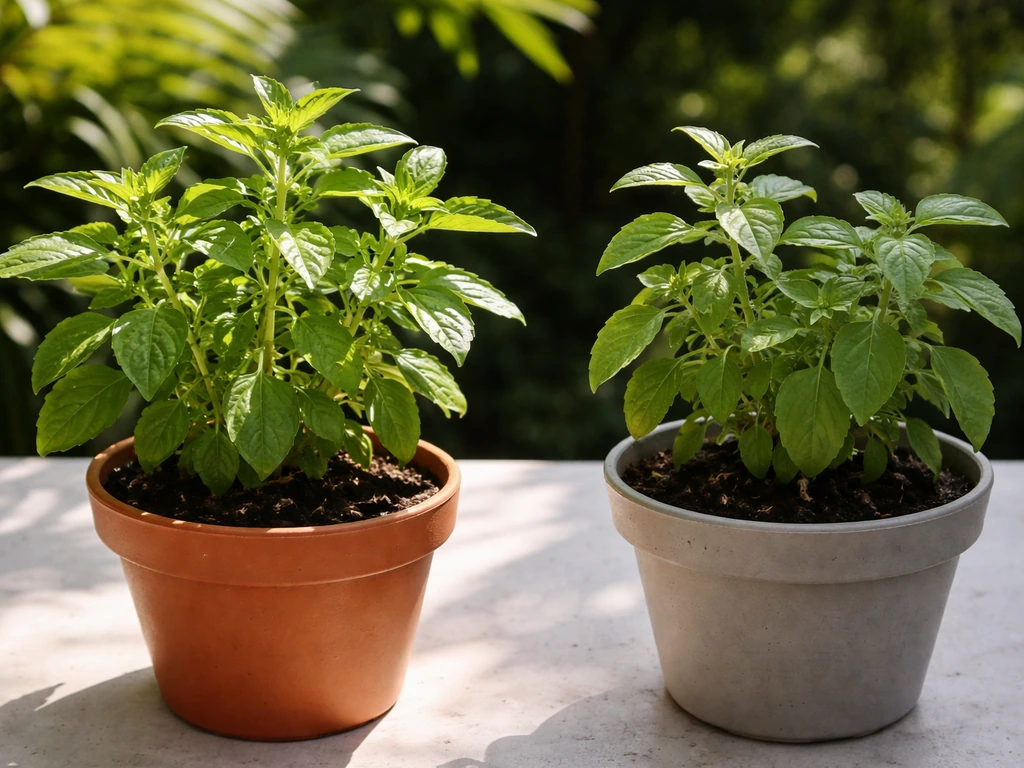
Tulsi (Ocimum tenuiflorum, also called holy basil) is a sun-loving tropical herb. In its natural habitat, it grows under full tropical sun, which means it's used to high light intensity for long stretches of the day. Chlorophyll in its leaves captures light energy and converts it into the sugars the plant uses to grow, develop leaves, and produce the essential oils that give tulsi its distinctive scent. Without enough of that energy input, the plant can't build new tissue properly. It either grows very slowly, stretches itself thin trying to find light, or just stalls out.
Research growing tulsi in fully controlled plant factory environments (no sunlight at all, only artificial LED lighting) has confirmed it can be produced successfully indoors under the right spectra and intensities. Scientists have studied exactly which ratios of red and blue light produce the healthiest tulsi plants, and the results are encouraging for indoor growers: this is a plant that responds well to artificial light when the setup is done right.
How much light tulsi actually needs
Think of tulsi as a 'high light' plant. It wants somewhere between 14 and 16 hours of artificial light per day when it has no access to natural sunlight. That longer photoperiod compensates for the fact that artificial lights, especially affordable ones, don't deliver the same intensity as direct sun. You're making up in duration what you can't fully replicate in raw power.
In terms of intensity, tulsi does best with a moderately strong light source placed close to the plant. A light that's too dim or too far away is the most common reason people fail with indoor tulsi. If you're using a full-spectrum LED grow light, aim for at least 2,000 to 3,000 lux at leaf level as a rough target. Most budget LED panels designed for herbs will cover this when positioned correctly. The good news is you don't need to buy a meter: placement distance (covered below) does most of the work for you.
LED vs fluorescent: which light is worth your money
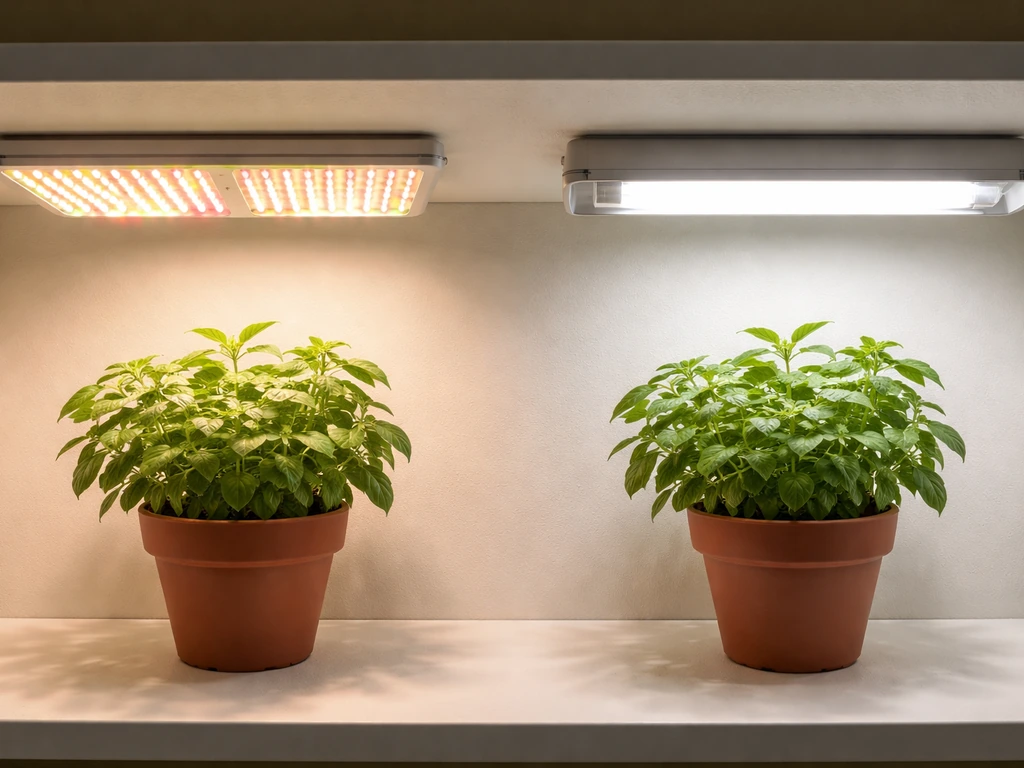
Both LED grow lights and fluorescent tubes can grow tulsi successfully, but they're not equal in cost, efficiency, or convenience. Here's the honest comparison:
| Feature | Full-Spectrum LED Grow Light | Fluorescent (T5 or CFL) |
|---|---|---|
| Energy efficiency | High: uses 30-50% less power for the same output | Moderate: decent output but more heat and power draw |
| Upfront cost | Budget panels from $20-$40 work fine for one or two plants | T5 fixtures are similarly priced; CFLs are very cheap |
| Light spectrum | Excellent: quality LEDs cover red and blue spectra tulsi needs | Good: T5 full-spectrum bulbs are reliable for herbs |
| Heat output | Low: stays cool close to plants | Moderate to high: especially CFLs at close range |
| Lifespan | 25,000-50,000 hours typical | 8,000-20,000 hours typical |
| Best for | Long-term setup, efficiency, small to medium grows | Budget beginners, seed starting, supplementing dim spaces |
For a beginner growing tulsi in a dark room, a full-spectrum LED panel in the $25 to $45 range is the best starting point. It runs cool, lasts a long time, and pulls minimal electricity. Research on tulsi under controlled LED conditions confirms that combinations of red and blue light (the primary wavelengths LEDs are tuned for) produce healthy, vigorous plants with strong leaf development and good essential oil content. A T5 fluorescent fixture is a perfectly solid backup option, especially if you already have one. Just keep it closer to the plant than you'd expect, around 3 to 6 inches from the canopy.
Setting up your indoor tulsi grow: step by step
This is the setup I'd use if I were starting from scratch in a windowless room today. Bamboo behaves similarly in that it cannot truly grow without sunlight, so it needs an alternative light source to survive indoors can bamboo grow without sunlight. It's designed to be beginner-friendly and budget-conscious.
- Choose your container: A 6 to 8 inch pot with drainage holes works well for a single tulsi plant. Terracotta breathes well and helps prevent overwatering.
- Position the light above the plant: For a full-spectrum LED panel, start at 12 to 18 inches above the top of the plant. For T5 fluorescent, drop that to 4 to 6 inches. These distances keep intensity in the right range without burning leaves.
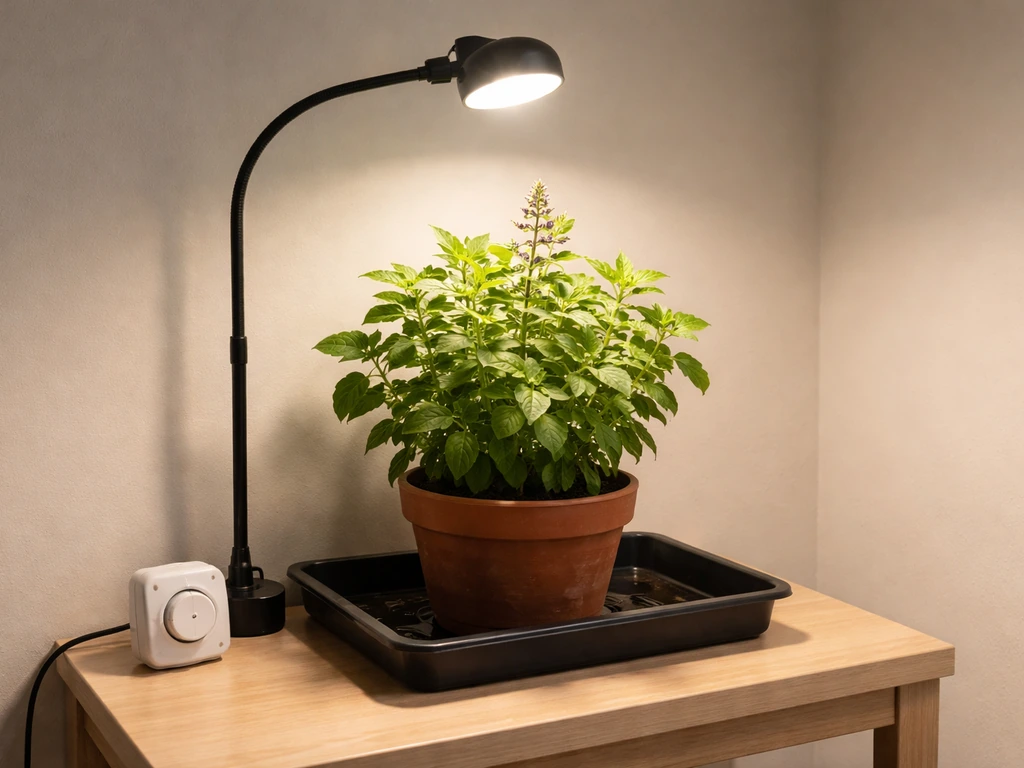
- Set a timer immediately: Don't try to manage this manually. Plug your light into an outlet timer and set it for 16 hours on, 8 hours off. Tulsi, like most herbs, benefits from a consistent day/night cycle. A cheap mechanical timer costs about $8 and removes all the guesswork.
- Run the 'on' period during your waking hours: It doesn't matter whether your light cycle starts at 6am or noon, but keeping the light on while you're around makes it easy to check on the plant and notice problems early.
- Keep the room temperature between 65°F and 85°F (18°C to 29°C): Tulsi is tropical. It hates cold drafts and will sulk below 60°F even if the lighting is perfect. Near an LED light is usually warm enough in a typical apartment.
- Check distance weekly as the plant grows: Tulsi grows fast once it's established. As the canopy rises, adjust the light upward to maintain the target distance and avoid leaf burn.
Soil, watering, and pruning: the basics that make or break it
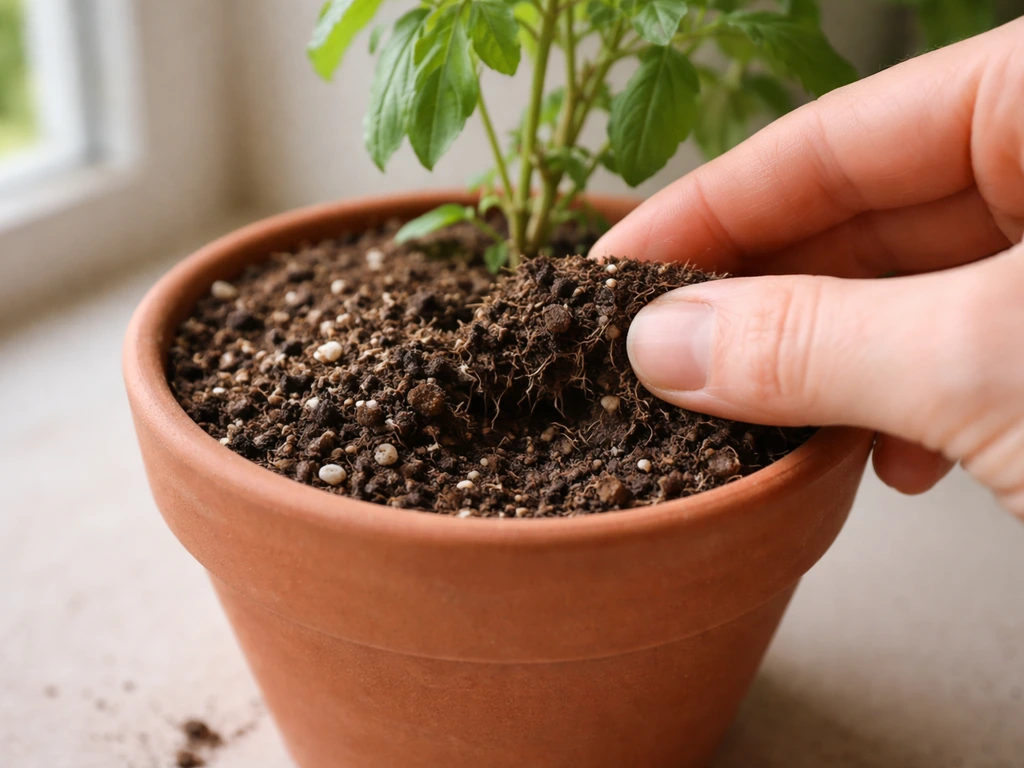
Light gets all the attention, but plenty of indoor tulsi setups fail because of soil and watering mistakes rather than anything to do with the light. Here's what actually matters:
Soil
Use a well-draining potting mix. A standard herb or vegetable potting mix works well. If you want to be extra safe, mix in about 20% perlite to improve drainage. Heavy, soggy soil in a low-light or artificial-light environment is a recipe for root rot because the plant isn't transpiring as fast as it would in full sun, so water sits in the medium longer.
Watering
Water when the top inch of soil feels dry. Under artificial light with no direct sun, tulsi dries out more slowly than it would on a sunny windowsill, so you'll likely water less often than you expect. Stick your finger an inch into the soil before watering. If it still feels damp, wait. Overwatering is the single most common way people kill tulsi indoors.
Pruning
Pinch off flower buds as soon as they appear. Tulsi puts enormous energy into flowering and going to seed, and once it does, leaf production slows down and the plant starts to decline. Under artificial light, it may flower a bit later than it would in a sunny outdoor garden, but stay vigilant. Pinch the top growing tips regularly (every 2 to 3 weeks) to encourage bushy, compact growth rather than tall, leggy stems, which is especially important indoors where light intensity isn't as strong as the sun.
Signs it's working, and what to do when it's not
Healthy tulsi under artificial light looks compact, dark green, and aromatic. New leaves should appear at least every week or two once the plant is established. The stems should be sturdy, not floppy, and the leaves should be broad and flat rather than small and curled. If you see that, your setup is working.
If things look off, the symptoms almost always point to a specific fixable problem:
- Leggy, stretched stems reaching toward the light: The plant isn't getting enough light intensity. Move the light closer by 3 to 4 inches, or increase your photoperiod to 16 hours if you're running fewer.
- Small, pale, or yellowing new leaves: Could be low light or a nitrogen deficiency. Check distance first. If the light is already close, try a diluted liquid fertilizer (half strength) once every two weeks.
- Leaves turning brown at the edges or tips: Light may be too close and causing mild burn, especially with fluorescents. Move the fixture up 2 to 3 inches.
- No new growth after two weeks: Check your timer is actually working, that the bulb hasn't failed, and that the room temperature isn't too cold. Also check roots: if the pot is rootbound, the plant is stressed regardless of light.
- Wilting even when soil is moist: This is usually overwatering and root stress, not a light problem. Let the soil dry out more between waterings.
- Slow growth overall: Tulsi under artificial light is slightly slower than in full outdoor sun, but not dramatically so. If growth feels very sluggish, try extending the light period to 16 to 18 hours and make sure you're pruning to redirect energy into leaves.
Quick-start checklist for the darkest room in your place
If you're ready to get started today, here's everything in one place. Run through this list before you plant and you'll avoid the most common beginner pitfalls.
- Get a full-spectrum LED grow light (a basic panel for $25 to $45 is plenty for one to two plants).
- Pick up a mechanical outlet timer, set it to 16 hours on and 8 hours off.
- Use a 6 to 8 inch pot with drainage holes and a well-draining potting mix.
- Position the LED 12 to 18 inches above the plant canopy (or 4 to 6 inches for T5 fluorescent).
- Keep the room above 65°F at all times.
- Water only when the top inch of soil is dry.
- Pinch flower buds off as soon as they appear.
- Check the plant weekly: adjust light distance as it grows upward.
- If growth looks leggy within the first two weeks, move the light closer by a few inches.
- Start feeding with half-strength liquid fertilizer once every two weeks after the first month.
Tulsi is genuinely one of the more rewarding herbs to grow under artificial light because it grows relatively fast, smells incredible, and gives you clear signals when something is off. If you are wondering whether lucky bamboo can grow without sunlight, the rules are different from tulsi and it still needs light of some kind. Other light-dependent plants like lotus or mung beans have their own quirks indoors, but tulsi is forgiving once the light setup is dialed in.
Other light-dependent plants like lotus or mung beans have their own quirks indoors, so if you're growing mung beans, you’ll still need to match their light requirements. Other light-dependent plants like lotus can be tricky indoors because they generally need strong, consistent light to grow well can lotus grow without sunlight. Get the hours and distance right, keep the soil on the drier side, and you'll have a productive indoor plant even in the most window-free apartment.
FAQ
Can tulsi survive in total darkness if I turn the light on occasionally?
Not really. In a windowless room you still need an artificial light source, and if you miss your daily schedule even once the plant can stall because tulsi is a high-light grower. A practical backup is a plug timer plus a light with a stable output, so the light turns on and stays on for the full 14 to 16 hours.
How will I know if my indoor tulsi light is too weak?
The first sign is usually stretching (taller, thinner stems) plus smaller, lighter leaves. Use this as a quick diagnostic: if the plant reaches upward within a week or two, raise the intensity by moving the light closer or increasing duration, then reassess after 7 to 10 days.
Is 14 to 16 hours of light always required, or can I use shorter days?
Yes, but they still need to be “on long enough.” Using fewer than 14 hours often slows growth indoors, while giving much more can encourage stress or excess legginess if your intensity is low. A good starting point is 14 hours on, 10 hours off, then adjust only one variable (duration or distance) at a time.
Do I need to change the light distance as tulsi grows?
It helps to keep light intensity consistent at leaf level. As seedlings grow, the same fixed light distance can become too far, so re-check placement every 1 to 2 weeks and lower the light to maintain the same canopy-level brightness.
What are the risks of putting the grow light too close to tulsi?
Avoid running LEDs or fluorescents too close without checking heat. Even though LEDs run cooler than many fixtures, the top leaves can still dry or bleach if the light is extremely close. Aim for the distances in the article (for T5, typically 3 to 6 inches) and watch for scorched or faded leaf patches.
Does the “dark period” matter as much as the light hours?
Not exactly. Light is mostly about photosynthesis, but tulsi also uses the darkness period to regulate growth. If you want to reduce flowering pressure, keep a stable on/off cycle and pinch buds early, because erratic light schedules can make the plant behave unpredictably indoors.
My tulsi gets light on a timer, but it’s not thriving, what else should I check first?
Often. If your tulsi looks pale or droopy despite correct light timing, the most common culprit is overwatering in slower-drying indoor conditions. Confirm by feeling the top inch of soil, and if it’s still damp, wait longer rather than watering on a calendar.
Will a small LED panel work if it does not cover the entire pot area evenly?
Yes, especially with budget panels. If your panel is small, the edges of the pot may get less light than the center, leading to uneven growth. Rotate the pot every week so the whole plant gets similar exposure, or choose a fixture wide enough to cover the canopy.
How do fluorescent lights differ from LED lights for growing tulsi indoors?
T5 fluorescent setups can work, but their effective intensity drops quickly with distance and with plant canopy height. If you use fluorescents, keep them closer to the canopy than you would for LEDs, then monitor growth rate and stretching to fine-tune.
What should I do if my indoor tulsi starts producing flower buds?
If tulsi starts flowering under artificial light, the plant will redirect energy into buds and seeds. Pinch buds as soon as they appear, and also keep the plant bushy by trimming the tops every 2 to 3 weeks to maintain a dense leaf-producing shape.