
Lucky bamboo can absolutely grow without direct sunlight, and it actually prefers it that way. Direct sun burns its leaves. What it cannot do is grow in complete darkness. It needs some consistent light source, whether that's a bright window across the room, a fluorescent desk lamp, or a small LED grow light. Aim for roughly 50–200 foot-candles of indirect or artificial light for 10–14 hours a day, and your plant will stay healthy even in a windowless office or a dim apartment corner.
Can Lucky Bamboo Grow Without Sunlight? Indoor Light Guide
Marcus Hartley
6 Jun 2026
What 'no sunlight' actually means for lucky bamboo
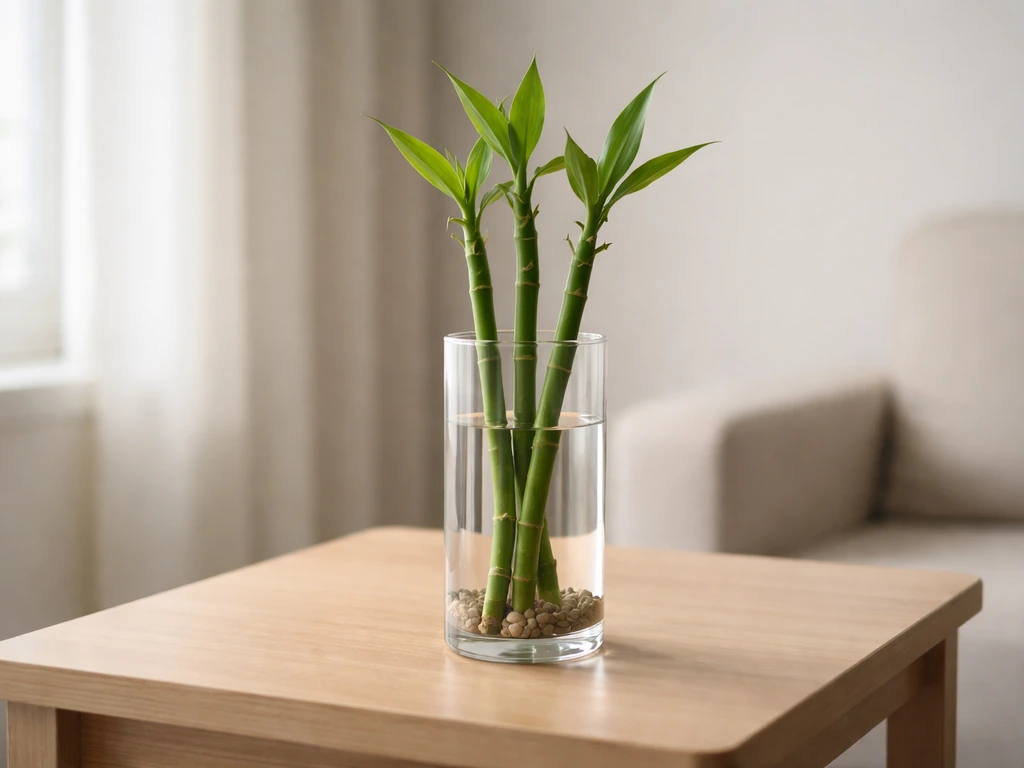
When people ask whether lucky bamboo can grow without sunlight, they usually mean one of two very different things: no direct sun hitting the leaves, or literally zero light. The first scenario is not just fine for lucky bamboo, it's ideal. Direct sunlight scorches and yellows the leaves fast. The second scenario, complete darkness, is not survivable for any plant. Lucky bamboo still needs light for photosynthesis; it just needs far less than most plants, and filtered or artificial light works perfectly well.
Here's how indoor light levels break down in real numbers, because vague terms like 'low light' or 'bright indirect' can be genuinely misleading. UF/IFAS extension advice recommends measuring in foot-candles or lux rather than relying on those labels. For reference, bright indirect light near a window is roughly 400–800 foot-candles (4,000–8,000 lux), while true low light is 25–100 foot-candles (250–1,000 lux). Lucky bamboo sits comfortably in that 50–200 foot-candle range, which is achievable even far from a window or entirely under artificial lighting.
Growing lucky bamboo with indirect light or artificial light
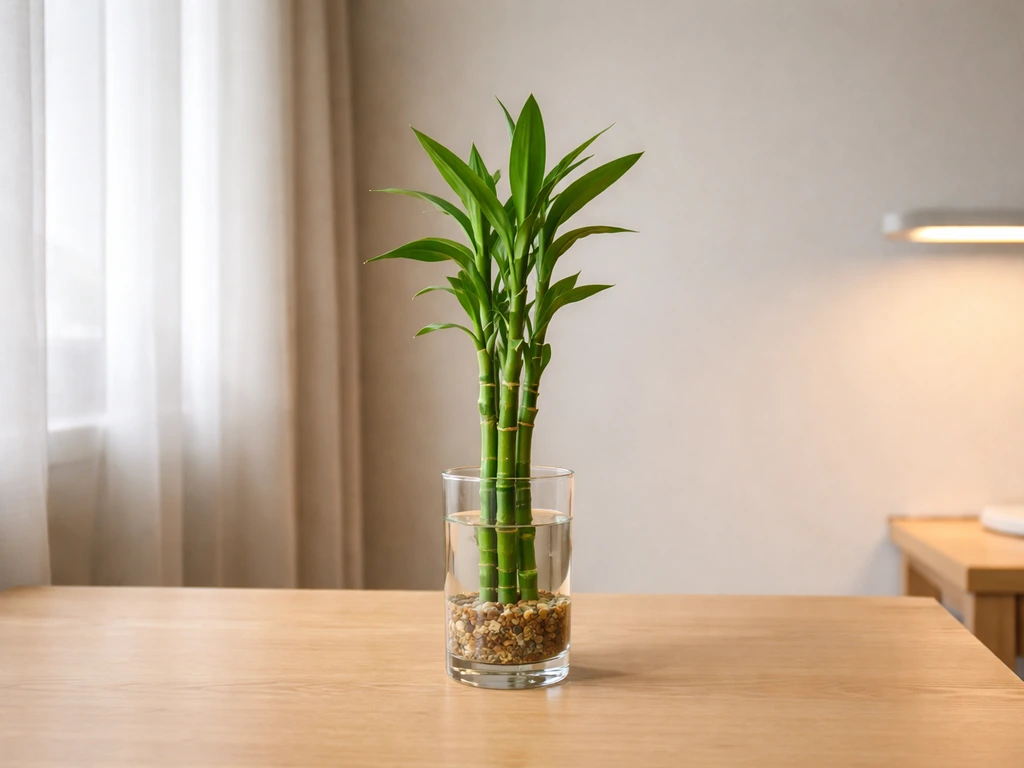
The easiest setup is placing your plant 6–8 feet from a sunny window. That distance filters out the harshest rays while still delivering enough light to keep growth steady. A north-facing window works well too, especially in summer. If you have no usable window light at all, artificial light is a completely viable substitute and plenty of indoor gardeners rely on it full-time.
Using fluorescent lights
Standard fluorescent tubes and compact fluorescent bulbs (CFLs) have been used for growing lucky bamboo for decades, and they work well. Look for bulbs in the 5000K–6500K color temperature range for the cleanest spectrum for foliage, though 2700K warm bulbs will also sustain the plant. A 13W CFL positioned about 6–12 inches above the plant and run for 12–14 hours a day is enough to maintain healthy growth. Petitti Garden Centers specifically recommends 12–14 hours of fluorescent lighting as an alternative to window placement for lucky bamboo, and that guidance lines up with what I've seen work in practice.
Using LED grow lights
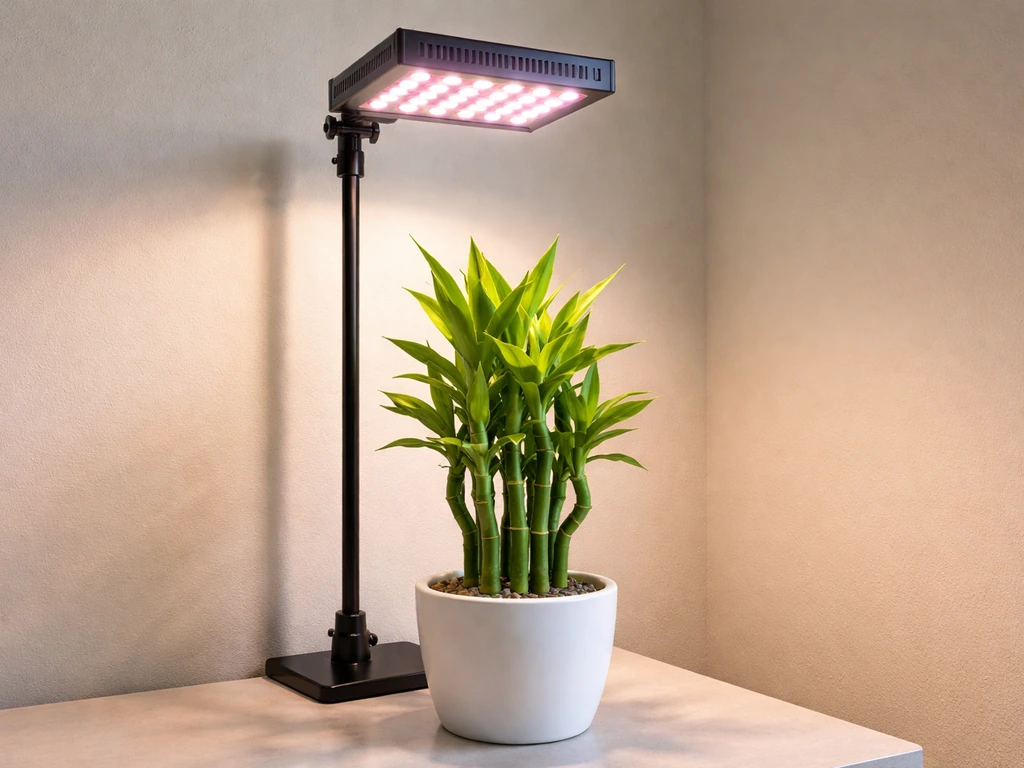
LED grow lights are even more efficient and run cooler, which matters if your plant is in a small enclosed space. A low-wattage full-spectrum LED panel or grow bulb works well here. Keep it 12–18 inches above the plant and run it for 12–14 hours per day. You do not need anything high-powered or expensive. Lucky bamboo's light requirements are modest, and a basic grow bulb screwed into a clip lamp is genuinely sufficient. Avoid running any grow light 24 hours a day; plants need a dark period, and lucky bamboo is no exception.
Signs your lucky bamboo isn't getting enough light
Lucky bamboo is slow to complain, which means by the time you notice a problem, it has often been underlit for weeks. Here are the clearest signals to watch for, and what each one is telling you.
- Leaning or stretching toward a light source: classic etiolation, meaning the plant is reaching because it isn't getting enough where it currently sits. Move it closer to the window or light.
- Pale green or washed-out color: the plant is producing less chlorophyll. Increase light intensity or duration.
- Slow or completely stalled growth: dracaenas need roughly 200–400 foot-candles for steady growth. Below that, they stall. Check your light source and distance.
- Yellowing of the whole stalk rather than just leaf tips: low light causes a general yellowing and weakening of the stalk. This is different from direct-sun yellowing, which is more localized and often crispy.
- Leaf drop without obvious other cause: extended low-light stress causes the plant to shed older leaves to conserve energy.
If you see any of these, the fix is almost always the same: move the plant closer to a natural light source, add an artificial light source, or extend the photoperiod to 12–14 hours per day. Give it two to three weeks after making the change before judging whether it worked.
Lighting setup: placement, distance, duration, and lamp types
Light intensity drops sharply with distance, so positioning matters more than most people realize. A lamp that looks bright from across the room may be delivering almost no usable light to your plant. Here's a practical setup guide based on the most common scenarios.
| Light Source | Recommended Distance | Hours Per Day | Notes |
|---|---|---|---|
| Bright indirect window light | 6–8 feet from window | Natural daylight hours | Best near east or north-facing window; avoid direct sun patches |
| CFL bulb (5000K–6500K, 13W+) | 6–12 inches above plant | 12–14 hours | Use a timer; cool white or daylight spectrum preferred |
| LED grow light (full spectrum) | 12–18 inches above plant | 12–14 hours | Low wattage is fine; use a timer and always give a dark period |
| Standard warm white LED bulb | 6–10 inches above plant | 12–14 hours | Works in a pinch; less ideal spectrum but survivable for lucky bamboo |
A plug-in timer is one of the most useful things you can add to any artificial light setup. It removes the guesswork and makes sure your plant gets a consistent photoperiod every day without you having to remember to switch the lamp on and off. Most inexpensive mechanical outlet timers cost a few dollars and last for years.
Water and container care matters more in low light
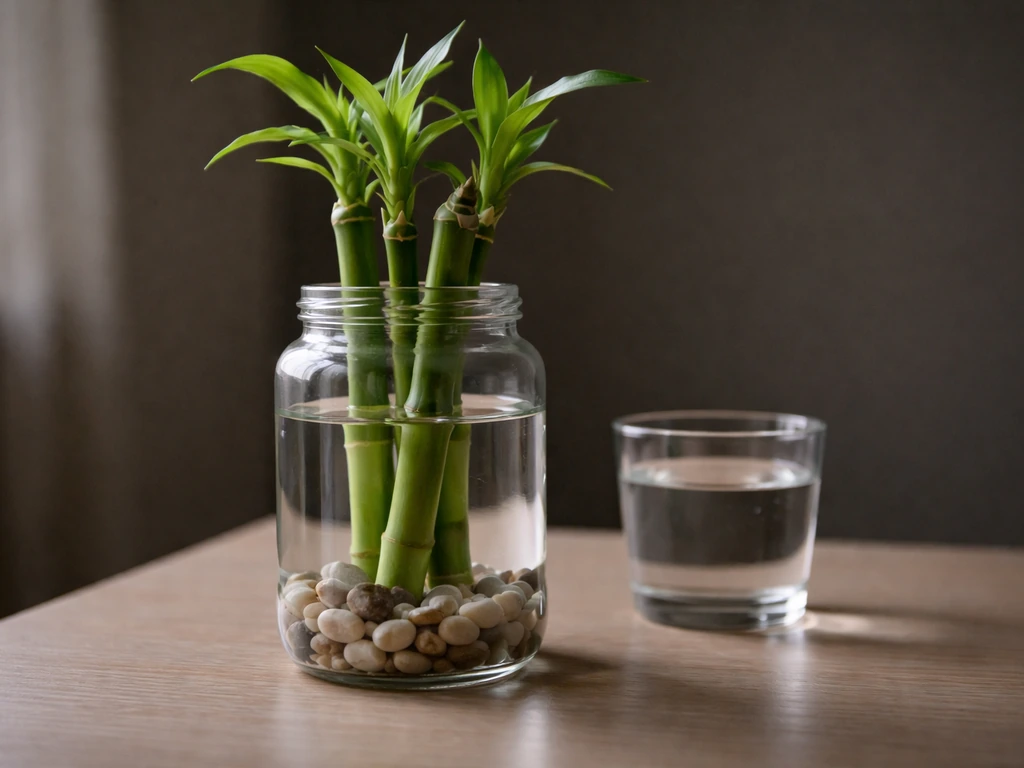
Most lucky bamboo is grown in water, either in a vase of pebbles or just stems in a jar, and low-light conditions make water quality more important, not less. Here's why: in brighter conditions, the plant metabolizes faster and water changes are slightly more forgiving. In low light, the plant is running slower, and stagnant water has more time to develop bacteria, algae, and the conditions that lead to root rot.
Change the water every 7–14 days. Use distilled or filtered water, or let tap water sit uncovered overnight to off-gas chlorine before using it. Avoid clear glass containers if you can, because light hitting the water directly encourages algae growth. An opaque or dark-colored container cuts this down significantly. Keep the water level just covering the roots, not the entire stem, because submerging the stalk is one of the fastest ways to cause stem rot.
If you're growing lucky bamboo in soil instead of water, low light means the soil stays wet longer since the plant isn't transpiring as actively. Water less frequently than you normally would, and make sure the pot has drainage. Overwatering in low light is extremely common and looks almost identical to under-lighting at first glance.
Troubleshooting: yellowing, drooping, mold, and root rot
Low light doesn't just slow growth; it can set off a chain of secondary problems that get misdiagnosed as something else. If you're also growing mung beans indoors, you may be wondering can mung beans grow without sunlight, since they have different light needs than lucky bamboo. Here's how to tell what's actually going wrong and what to do about it.
Yellowing stalks or leaves
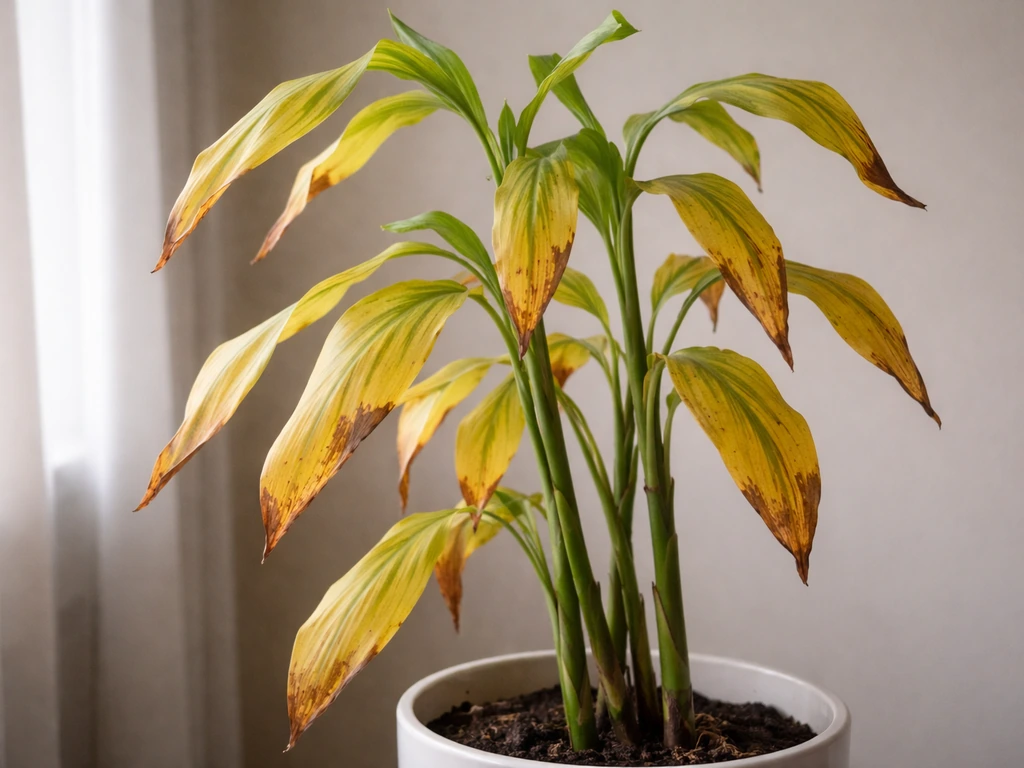
General yellowing across the stalk points to insufficient light. Yellowing with crispy brown tips or patches usually means the light source is too intense or too close, or there's a fertilizer issue. Clemson HGIC also notes that dracaena symptoms like yellowing or leaf-tip and margin burning can be worsened by fertilizer over-application, which helps distinguish fertilizer burn from low-light stress fertilizer issue. Yellowing with soft, mushy texture on the stalk means rot, not a light problem at all. Check the roots immediately if the stalk feels squishy. Fertilizer buildup can also yellow and scorch leaves, so if you've been adding fertilizer to your water, stop and do a full water change.
Drooping or leaning
Leaning toward a light source is etiolation and means your plant wants more light where it currently sits. Drooping without leaning is more likely a root or water issue. Check whether the roots look healthy (firm and light-colored) or compromised (dark, mushy, or slimy).
Mold and algae in the water
Green algae in the water is a sign that light is hitting the container directly. Switch to an opaque container or move the plant away from the light source slightly. White or gray fuzzy mold on the pebbles or the base of the stem means the water is stagnant and not being changed often enough. Rinse everything thoroughly, including the pebbles and the inside of the container, and increase your water change frequency.
Root rot
Root rot is one of the most common reasons lucky bamboo declines in low-light setups, partly because dim conditions slow the plant's metabolism and give pathogens more time to establish. If you see black or dark brown mushy roots, remove the plant from its container, rinse the roots and stems in filtered water, and trim off everything that's soft or discolored with clean scissors. Cut above any mushy sections until you reach firm tissue. Return the plant to a clean container with fresh water and monitor closely. Severe lack of light can worsen root rot by keeping the plant too weak to fight back, so improving light conditions is part of the recovery, not just a nice-to-have.
A quick diagnostic checklist
- Is the stalk yellowing overall with no mushy texture? Increase light intensity or hours.
- Is the plant leaning or stretching toward a specific direction? Move it closer to that light source or increase lamp intensity.
- Are the roots dark, mushy, or slimy? Root rot. Trim, rinse, refresh water, improve light.
- Is there algae in the water? Switch to an opaque container and reduce direct light on the vessel.
- Are leaf tips browning while the rest looks okay? Check humidity and water quality before blaming light.
- Is the stem soft or squishy at the base? Stem rot from prolonged submersion or stagnant water. Act fast: trim above the rot, sterilize your tools, and restart in clean conditions.
Lucky bamboo is genuinely one of the more forgiving plants for low-light spaces, and that's a big part of why it's so popular for offices, bathrooms, and dim apartment corners. It won't thrive in complete darkness, but it doesn't need a sunny windowsill either. A consistent indirect light source or a simple lamp on a timer is usually all it takes to keep it looking good for years.
If you're also wondering how other plants handle low-light situations, the calculus is very different for something like tulsi or lotus, which are much more light-hungry. If you are also wondering can lotus grow without sunlight, the answer depends on the water depth and how much natural light or artificial grow light you can provide.
Tulsi generally needs more regular light than lucky bamboo, so you may need a brighter window or a grow light to keep it healthy. Lucky bamboo is genuinely in its element away from direct sun.
FAQ
How much light can I skip before my lucky bamboo starts failing? (For example, lights off at night)?
You can, as long as the room has measurable light. If it is truly dark for long stretches (no daylight, lights off, and no lamp), the plant will slowly weaken and the water quality will deteriorate faster, increasing rot risk.
Is it okay to run a grow light for 24 hours so I can keep it in low light?
Yes, but treat the “dark period” as part of the schedule. Use the same daily window (about 12 to 14 hours light, then 10 to 12 hours dark), because running a grow light 24/7 can lead to weak growth and more algae or mold in the container.
Can lucky bamboo grow without sunlight if I put it outside in partial shade?
Outdoors is usually unnecessary and can be risky because sunlight is harder to control. If you move it outside, use only gentle, indirect light (morning shade or bright shade), and keep it away from hot surfaces that can warm the water and stress the roots.
What’s the best way to set up a schedule when my room is naturally bright only part of the day?
Use a timer and create a consistent routine. If you are relying on a lamp, keep the light on during the hours you want growth to occur (for most setups, daytime hours plus a set evening window), and avoid frequent on off changes that can confuse the plant’s slow growth pattern.
My grow bulb seems bright in the room, but my plant is pale. What should I adjust first?
Measure distance and placement, not just the lamp label. Move the plant closer first (because intensity drops quickly with distance), then adjust bulb wattage or height (typically 12 to 18 inches for LEDs) to hit the target light range without scorching.
If it needs less light, do I still need to change the water on a schedule?
Yes. Growth rate changes with light, but health depends heavily on water stability. Even in low light, do not let the stalk sit submerged, keep water level just covering the roots, and do regular changes to prevent algae and stagnant-water mold.
Can I fertilize lucky bamboo when it’s not getting much light?
Be careful with fertilizers in low light. If you fertilize, use a much lighter dose or pause entirely until growth resumes, because buildup can yellow and scorch and low light slows the plant’s ability to handle salts.
My lucky bamboo is leaning toward one side. Is that a sign it needs more light everywhere?
Flip the plant’s position periodically so it does not keep leaning. If you notice it consistently growing toward one side, rotate it every couple of weeks so the light hits more evenly.
How long should I wait after changing the light before deciding it worked?
A plant can look “fine” for a while, but underlit setups often show up as slow recovery after you fix the light. Give it two to three weeks after you adjust lighting or distance, then reassess by checking texture (mushy versus firm) and color changes.
Will a clear glass vase be okay if my room has only indirect light?
Usually not. In low light, algae and mineral buildup can become more obvious because the container gets light but the plant does not use it quickly. Prefer opaque or dark containers and avoid placing clear glass where it catches direct ambient light.