No plant can grow in complete darkness, but plenty of them come remarkably close. If what you're really asking is which plants can survive and look decent without a sunny window or any direct sunlight, the answer is a solid list: snake plant, pothos, ZZ plant, Chinese evergreen, cast iron plant, peace lily, dracaena, and a few others. These plants tolerate the kind of dim, indirect light found in north-facing rooms, shaded corners, and offices. Some will even get by under nothing but fluorescent or LED room lighting. The trick is understanding what 'low light' actually means, because most of the confusion around this topic comes from that one phrase meaning very different things to different people.
What Plants Don’t Need Sunlight to Grow Indoors
Marcus Hartley
3 May 2026
First, let's clear up 'no sunlight' vs. 'no light at all'
This distinction matters a lot. No plant on earth photosynthesizes without some form of light. Algae has different needs than houseplants, but it still cannot grow without light grow without sunlight. What people usually mean when they say 'no sunlight' is no direct sun through a window, or no bright sunny spot. That's a very solvable problem. What would actually kill almost every houseplant is complete darkness, like being sealed in a closet permanently. Even the toughest shade-tolerant plants need a measurable amount of light to keep their cells running.
In practical terms, indoor plant light is measured in foot-candles (ft-c) or lux. University of Missouri Extension defines low-light plants as those adapted to roughly 50 to 250 foot-candles, which is about 540 to 2,700 lux. For comparison, a north-facing room on a cloudy day might sit around 200 lux at plant height. That's genuinely dim, but it's not zero. Plants can work with that. A sealed interior room with no windows and only a distant overhead bulb might drop below 50 lux, which is where even the toughest plants start to struggle and eventually decline. Mississippi State Extension notes that intensities blank" rel="noopener noreferrer">below about 50 foot-candles will not sustain plants for long-term survival. So when you see a plant labeled 'grows without sunlight,' what it really means is 'tolerates very low light, including artificial light, without needing direct sun.'
One more useful concept: lux measures human-perceived brightness, but plants actually use a different part of the light spectrum for photosynthesis, measured as PPFD (photosynthetic photon flux density). A warm yellow lamp might look bright to you but deliver very little plant-usable light. This is why light source type matters alongside intensity, especially if you're relying on artificial lighting.
The best plants for very low light indoors
These are the plants that genuinely perform well in dim spaces. They won't all grow fast, and some will essentially just hold steady, but they'll stay healthy and green without a bright window.
| Plant | Light tolerance | Notes |
|---|---|---|
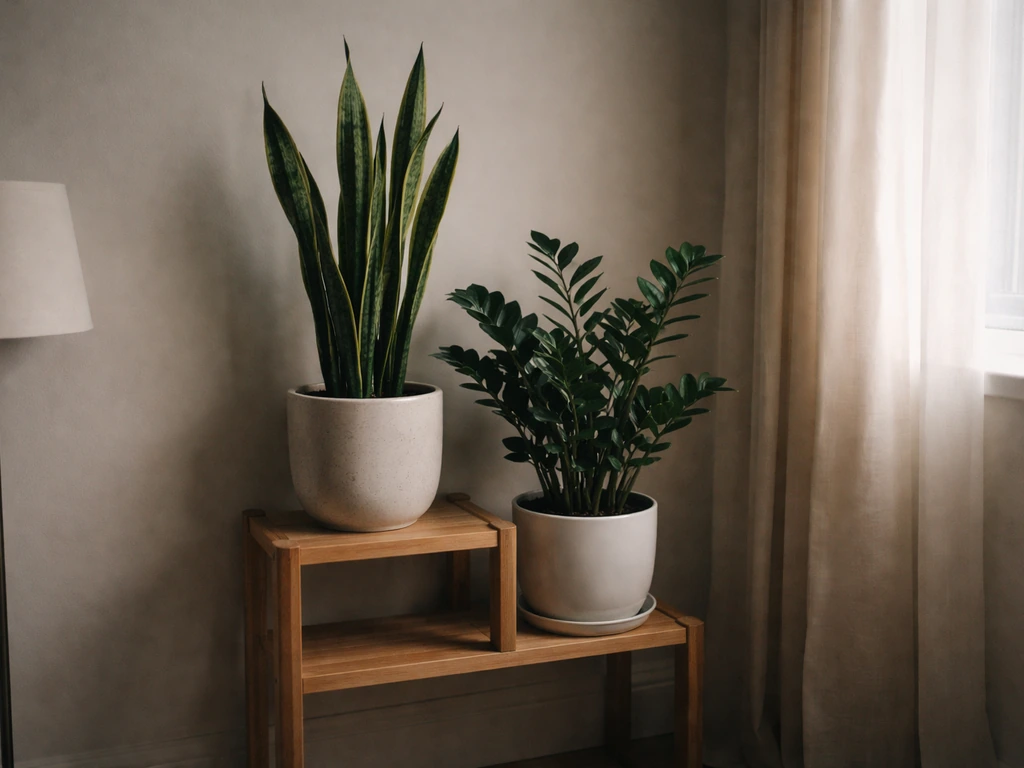
| Snake plant (Dracaena trifasciata) | Very low, ~50–250 ft-c | Survives dim corners; grows very slowly in low light but stays healthy |
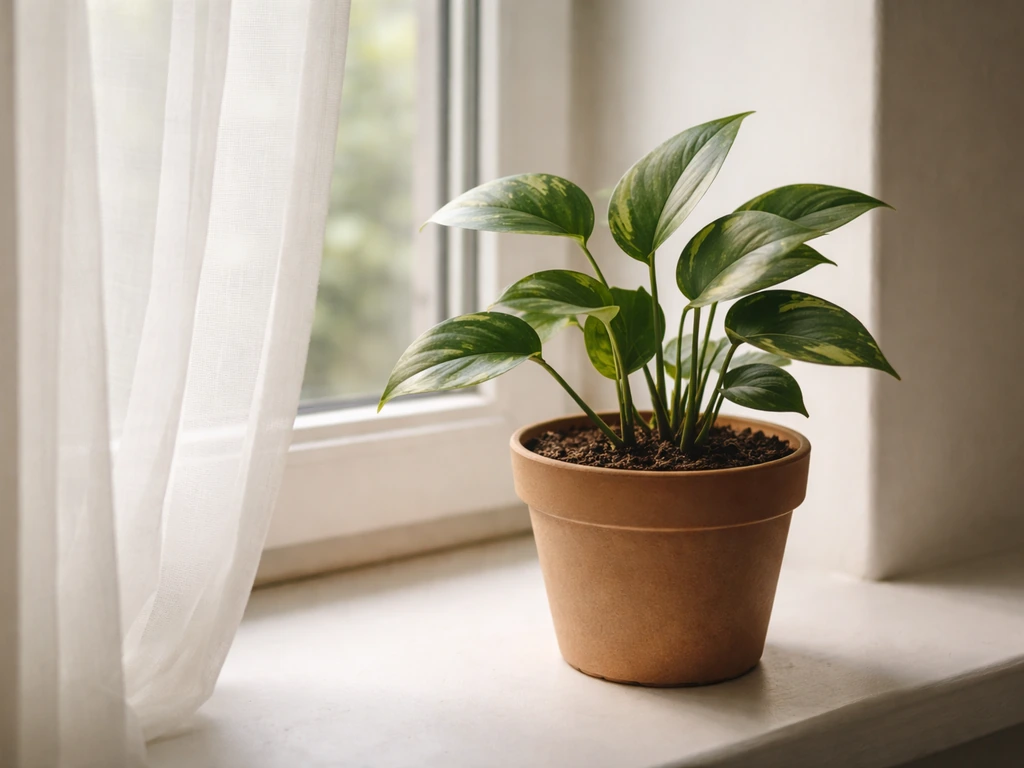
| Pothos (Epipremnum aureum) | Low to moderate | One of the most forgiving; trails well in shaded spots |
| ZZ plant (Zamioculcas zamiifolia) | Extremely low; tolerates windowless offices | Stores water in rhizomes; drought-tolerant; great for neglect-prone spots |
| Chinese evergreen (Aglaonema) | Low to moderate indirect light | Beautiful patterned foliage; Clemson Extension recommends low to moderate indirect light |
| Cast iron plant (Aspidistra elatior) | Any level except total darkness or full sun | Lives up to its name; extremely tough in dim, shaded spaces |
| Peace lily (Spathiphyllum) | Low to moderate indirect light | One of few flowering plants that tolerates dim rooms |
| Rubber plant (Ficus elastica) | Partial shade or low light | Does best with some indirect brightness but adapts to dimmer conditions |
| Dracaena (various species) | Low light | Reliable foliage plant; referenced by UMN Extension as a low-light choice |
| Peperomia (various) | Low to bright indirect light | NCSU Extension notes they tolerate low light well; compact and easy to fit anywhere |
A few notes on what to expect: in genuinely low light, most of these plants will grow slowly. That's normal and not a sign something is wrong. The blank" rel="noopener noreferrer">ZZ plant in particular can go weeks without doing much visibly and still be perfectly healthy. The cast iron plant earns its name because it genuinely doesn't care, adapting to dim conditions better than almost anything else you can buy at a garden center. If you're looking at growing specific plants like areca palms or trees indoors without sunlight, those are harder cases since even shade-tolerant palms like areca still want a few hours of meaningful light daily. Trees generally need enough light to photosynthesize, so growing them indoors without sunlight is usually difficult unless you use strong grow lights grow indoors without sunlight. Crops and food plants are a different story entirely, since most need far more light than these foliage plants and typically require supplemental lighting to produce any yield. If you want crops specifically, you'll usually need grow lights because most edible plants need far more light than true low-light houseplants.
How to figure out how much light your room actually has
Most people overestimate how bright their rooms are. A room that feels comfortable and well-lit to you might only be delivering 100 to 200 lux at plant height, which is on the lower end of survival light for even shade-tolerant species. Here are a few ways to get a realistic read.
The shadow test
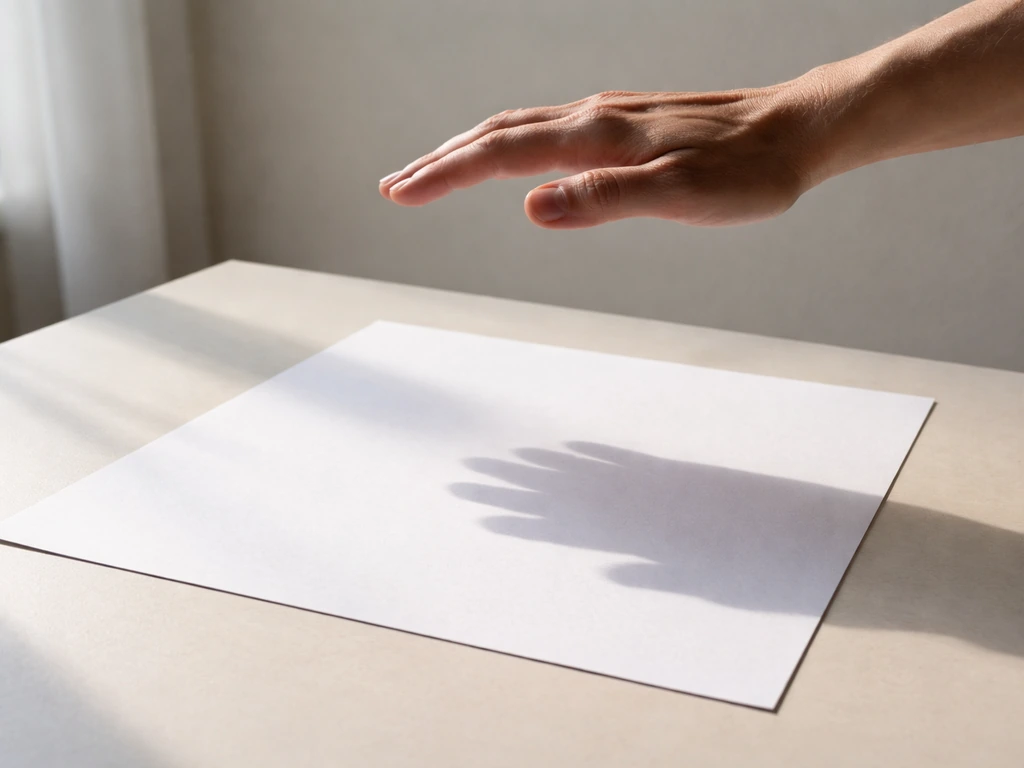
Hold your hand about a foot above a white piece of paper in the spot where your plant will sit. If you see a sharp, well-defined shadow, you have enough light for most medium-light plants. A faint, fuzzy shadow means low light. No shadow at all means you're in very low or near-zero light territory and will likely need supplemental lighting for even the toughest plants.
Use a light meter app
Free or cheap apps like Photone can measure lux, PPFD, and DLI directly from your phone's camera. It's not lab-grade precision, but it's genuinely useful for plant selection. UF/IFAS Extension confirms that a handheld digital meter reading in foot-candles or lux is 'good enough' for houseplant decisions. Take the reading at the actual leaf plane, meaning where your plant's leaves will be, not at eye level or near the window. Light intensity drops fast with distance, so a spot two feet back from a north window can have dramatically less light than right at the sill.
Quick light level reference
| Light level | Foot-candles | Approximate lux | What it looks like |
|---|---|---|---|
| High | 1,000+ ft-c | 10,760+ lux | Direct sun through south/west window |
| Medium | 500–1,000 ft-c | 5,380–10,760 lux | Bright indirect light, near east window |
| Low | 50–250 ft-c | 540–2,690 lux | North window, shaded corner |
| Very low / survival | Below 50 ft-c | Below 540 lux | Dim interior, no nearby windows |
If your space falls in that bottom row and you want living plants, you'll need grow lights. More on that below. If you're in the low band (50 to 250 ft-c), you have real options from the plant list above.
Care tips that actually matter for shade-tolerant plants
The biggest mistake people make with low-light plants isn't related to light at all. It's overwatering. In dim conditions, plants grow slowly and use very little water, so the soil stays wet longer. Sitting in wet soil kills roots faster than almost anything else. This is the number one way people accidentally destroy an otherwise indestructible plant like a ZZ or snake plant.
- Water less, not more. In low light, a snake plant or ZZ might only need water every 2 to 4 weeks. Let the top 1 to 2 inches of soil dry out before watering again.
- Use well-draining potting mix. A standard houseplant mix works, but adding perlite improves drainage noticeably. Avoid dense, moisture-retaining mixes for shade plants.
- Make sure pots have drainage holes. UMN Extension warns that sitting in standing water leads directly to root rot, and a plant with root rot will wilt even if the soil feels wet.
- Go easy on fertilizer. In low light, growth slows dramatically. MU Extension advises skipping fertilizer during winter or whenever new growth isn't apparent. When you do feed, use half-strength balanced fertilizer every 2 to 4 weeks during active growth periods, per UMN Extension guidance.
- Give leaves some space. Dust blocks light at the leaf surface, and in dim conditions every bit counts. Wipe leaves occasionally with a damp cloth.
- Avoid crowding plants. In low-light spots especially, poor air circulation combined with wet soil creates conditions where fungus gnats and root issues thrive.
If your space has almost no natural light, here's how to fix it simply
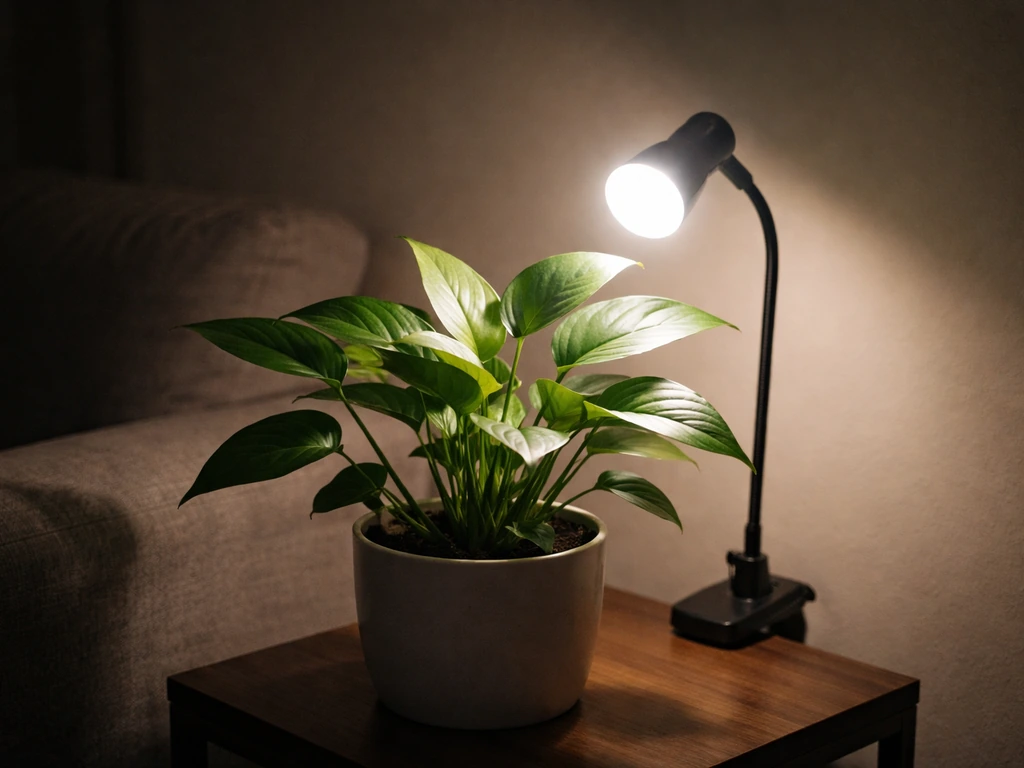
You don't need an elaborate grow light setup to keep low-light houseplants alive. For foliage plants in dim rooms or offices, the simplest solution works well. A single full-spectrum LED grow bulb screwed into a standard lamp socket can make a windowless desk or dark corner genuinely plant-friendly.
- Choose a full-spectrum LED bulb or a small LED grow light panel. Look for bulbs labeled 'full spectrum' or with a color temperature of 5,000 to 6,500K for foliage plants. They're widely available for under $15 at most home improvement or garden stores.
- Position the light 6 to 12 inches above the plant's foliage. MU Extension specifies this range as the practical distance for most houseplants under artificial light. Too far away and the intensity drops significantly.
- Run the light for 12 to 16 hours per day for good growth. MU Extension notes that in spaces with no outdoor light, plants may need 16 to 18 hours of artificial light daily. A simple outlet timer makes this automatic and consistent.
- Don't run lights 24 hours. Plants need a dark period too, and continuous light can stress them over time.
- Use a light meter app to confirm you're delivering enough. You want to hit at least 50 to 100 foot-candles (540 to 1,080 lux) at leaf level for the most shade-tolerant species, and more for plants in the medium-light category.
For a desk plant or small shelf garden, this setup is genuinely all you need. A clip-on grow light or a gooseneck lamp with a full-spectrum bulb pointed at your plant is a perfectly functional solution. You don't need a grow tent, ballasts, or expensive fixtures unless you're trying to grow crops, vegetables, or flowering plants that need much higher light intensity.
When your low-light plant starts struggling
Even the toughest shade plants show warning signs when something's off. Here's how to read what your plant is telling you.
| Symptom | Likely cause | What to do |
|---|---|---|
| Long, stretched stems with wide gaps between leaves (etiolation) | Not enough light | Move closer to a light source or add a grow light 6–12 inches above |
| Yellowing leaves (lower or overall) | Overwatering, root rot, or insufficient light | Check soil moisture first; feel roots for mushiness; reduce watering frequency |
| Wilting despite moist soil | Root rot from overwatering | Remove from pot, inspect roots, trim rotted sections, repot in fresh dry mix |
| Dropping leaves | Low light combined with stress (drafts, temp swings, overwatering) | Stabilize environment; diagnose light and watering together |
| Very slow or zero new growth over several months | Light is survivable but not enough for active growth | Supplement with artificial light or accept slow/maintenance-mode growth |
| Pale, washed-out leaf color | Can be too much direct light or too little overall | Confirm light level with a meter; shade plants can bleach in direct sun too |
The stretched-stem symptom (technically called etiolation) is one of the clearest signals that your plant wants more light. UMN Extension describes it as long spaces between leaf nodes caused by the plant reaching toward any available light source. It's not a catastrophe, but it does mean the plant won't get better without more light, and you won't prune your way out of it permanently. SDSU Extension also points out that root rot is a deceptively common failure point: the plant looks like it needs water, you water it more, and the problem gets worse. When in doubt, check the roots before adding more water.
Quick picks by situation
Dark interior room with no windows
This is the only scenario where you genuinely can't just pick a plant and hope for the best. You need supplemental lighting. Start with a ZZ plant or snake plant (they're the most forgiving when light is inconsistent), add a full-spectrum LED bulb on a timer for 14 to 16 hours daily, and position it 8 to 10 inches from the foliage. These two plants will hold up better than anything else if you miss a day on the timer or need to travel.
North-facing window
A north window is low light, not no light. You have real options here without any supplemental lighting. Chinese evergreen, pothos, peace lily, cast iron plant, and dracaena all do well right at or near a north window. Keep the plant within 3 to 4 feet of the window for best results, because light intensity drops off quickly with distance even from the sill.
Office desk with overhead fluorescent or LED office lighting
Standard office overhead lighting is typically in the 200 to 500 lux range at desk height, which is genuinely usable for the most shade-tolerant plants. ZZ plant is the classic office choice because it tolerates low light, infrequent watering, and the kind of irregular care that comes with vacations and busy weeks. Pothos is a close second and gives you the option to trail it across a shelf. A small peperomia is another solid choice for a compact, easy desk plant that won't complain about office light levels.
FAQ
How do I know whether my room is low-light enough for plants that don’t need sunlight?
If a plant is truly in complete darkness, it will decline no matter what species you choose. For the “doesn’t need sunlight” plants, what matters is getting some measurable light (often roughly 50 to 250 foot-candles, or about 540 to 2,700 lux) at the leaf level. If your interior spot feels dim, it can still work, but if it produces no shadow at all, plan on using a grow light.
Does placing a plant near a window count if it doesn’t get direct sun?
Avoid using “time near the window” as a proxy for light. Two locations can both be near a north-facing window, but one spot may be far enough from the glass that intensity drops a lot. Measure at the leaf plane, or do the shadow test where the plant will sit, then choose plants based on that result.
Can low-light houseplants stay healthy in a workplace with only overhead lights?
Low-light plants often survive in offices, but they still need a consistent rhythm. If you use only overhead office lighting, check your plant after a couple weeks for etiolation (stretched growth) and slow, steady new leaves. If growth is only elongating or stops completely, add a supplemental bulb for part of the day.
What’s the right way to use LED lights for plants that don’t need sunlight?
For artificial lighting, lamp type matters as much as brightness. A warm bulb might look bright to you but deliver fewer plant-usable photons. Use full-spectrum LEDs, and run them on a timer for the long daily window recommended for low-light rescue (often 14 to 16 hours), so the plant gets enough usable light each day.
Will low-light plants eventually die if I keep them in very dim corners?
Yes, but treat it as “tolerates low light,” not “will grow in the dark.” Even shade-tolerant plants can lose vigor over time if the light stays near the minimum, especially if you also overwater. Consider placing them closer to the light source and using a timer grow bulb if you notice persistent slow decline.
Why do I keep killing my snake plant or ZZ plant in a dark room, even though they are “indestructible”?
Most low-light houseplants prefer being allowed to dry slightly between waterings. Because growth slows in dim light, they use less water and take longer to dry, so your watering schedule should be less frequent than you’d use in a bright room. If the soil stays wet for many days, back off and consider checking the roots.
What warning signs tell me a low-light plant needs more light or less water?
Etiolation is the big warning sign, but there are others. Yellowing or blackened, mushy tissue often points to excess moisture and root issues, not a need to water more or more light. If you see limp leaves plus wet soil, pause watering and inspect the roots before changing light.
Can I use low-light plants techniques to grow herbs or vegetables indoors without sunlight?
If you want to grow “food,” expect a mismatch. Many edible plants need far more light than low-light foliage houseplants, so low-light window conditions usually won’t produce meaningful harvests. For crops, you’ll typically need supplemental grow lights and a stronger intensity plan than you would for snake plant or pothos.
How far from a north-facing window should I place a low-light plant?
A north window is usually workable, but keep the plant close. Light drops quickly with distance, so staying within about 3 to 4 feet of the glass gives the best chance of success for low-light varieties. If you put it farther away, consider a small full-spectrum bulb.
What does “grows without sunlight” really mean on plant labels?
When you see a “grows without sunlight” label, interpret it as “no direct sun required,” not “no light required.” Look for whether the plant can handle indirect light and occasional artificial light, and then confirm your setup meets minimum brightness or use supplemental lighting to avoid slow long-term decline.