Yes, plants can grow under normal white LED lights, but whether they actually thrive depends on three things: how bright those lights are, what part of the light spectrum they emit, and how many hours a day the plant gets exposure. Most standard household LEDs can keep low-light houseplants alive and even growing reasonably well. For anything that needs more light, like herbs, vegetables, or flowering plants, you'll likely hit a wall pretty fast.
Will Plants Grow Under Normal LED Lights? A Practical Guide
Marcus Hartley
5 May 2026
What normal white LEDs actually do for plants
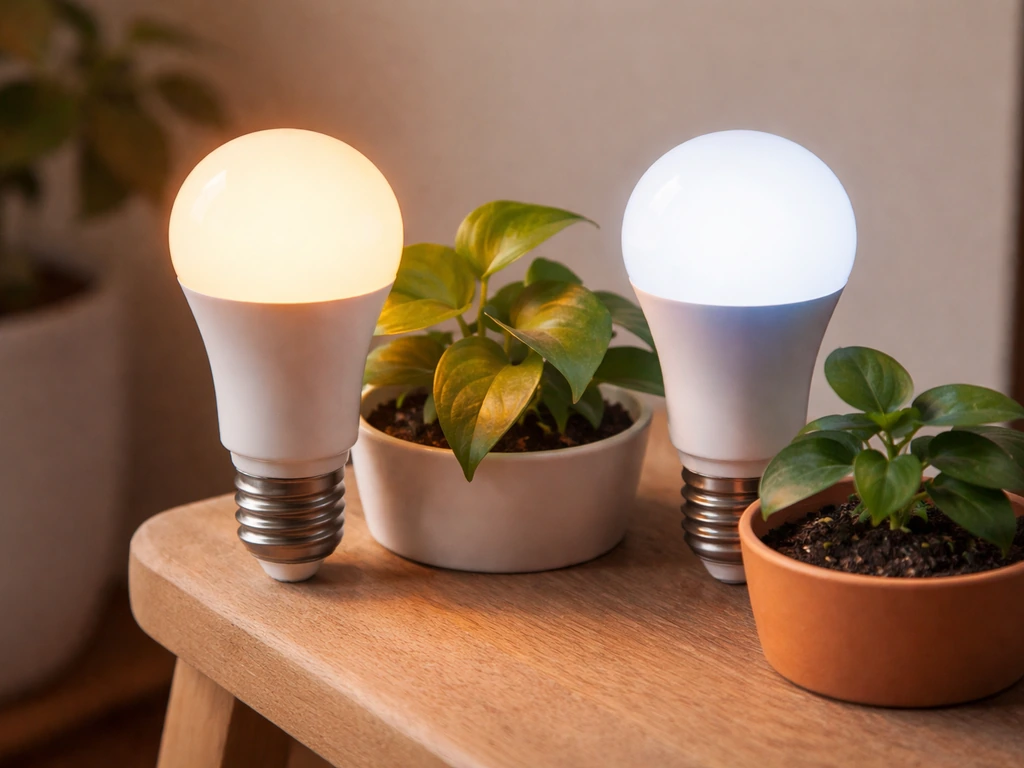
Here's the short version: white LEDs do contain some wavelengths that plants use for photosynthesis. Blue light (around 400–500 nm) drives leafy, vegetative growth. Red light (around 600–700 nm) supports flowering and fruiting. White LEDs produce a broad spectrum that includes both of these ranges, which is why they're not totally useless for plants. The problem isn't really the spectrum. It's intensity. Most household LEDs are designed to light a room for human eyes, not to saturate leaves with photons at the right energy levels. They're simply not bright enough, close enough, or on long enough to fuel real growth in most plants.
That said, "normal LED" covers a wide range. A warm 800-lumen bulb sitting in a floor lamp five feet from your plant is very different from a bright 5000K daylight LED panel mounted a foot above a shelf. Intensity drops off fast with distance, so placement matters enormously. Think of it less as a yes/no question and more as a spectrum of outcomes: some setups with regular LEDs will genuinely work, others will only delay the inevitable slow decline of a struggling plant.
What actually drives plant growth: intensity, spectrum, and hours
Plants don't care what your light looks like to your eyes. They care about photosynthetically active radiation (PAR), which is the light energy in the 400–700 nm range that chlorophyll actually absorbs. On Wikipedia, photosynthetically active radiation (PAR) is defined as the 400, 700 nm wavelength range photosynthetic organisms can use, where chlorophyll is most efficient at capturing red and blue light PAR is the wavelength range 400–700 nm that chlorophyll absorbs. The measurement you'll see most often is PPFD (photosynthetic photon flux density), measured in micromoles per square meter per second (µmol/m²/s). Here's how the categories break down in practical terms:
| Light Level | PPFD Range | Foot-Candle Equivalent | Typical Plants |
|---|---|---|---|
| Low light | 50–150 µmol/m²/s | 50–250 foot-candles | Pothos, snake plant, ZZ plant, peace lily |
| Medium light | 150–250 µmol/m²/s | 250–1,000 foot-candles | Philodendrons, ferns, most foliage houseplants |
| High light | 250–450+ µmol/m²/s | 1,000+ foot-candles | Herbs, succulents, flowering plants, vegetables |
Duration matters just as much as intensity. Plants need a blank" rel="noopener noreferrer">daily light integral (DLI) that's essentially the total amount of light energy received over the course of a day. Low-light plants can get by with 10–12 hours of modest illumination. High-light plants may need 14–16 hours under artificial light to compensate for lower intensity. This is where timers become your best friend. Most people forget their lights entirely or leave them on 24/7, both of which cause problems.
Spectrum is real but often overstated for basic houseplants. The blue-heavy output of cool white (5000–6500K) LEDs actually makes them decent for foliage plants. Warm white LEDs (2700–3000K) lean toward the red end and can be okay for general maintenance. Full-spectrum or daylight-balanced LEDs are your best bet among household bulbs, but none of them will match a purpose-built grow light when it comes to total PAR output.
How to check if your current lights are strong enough
You don't need expensive equipment to get a rough sense of whether your setup is working. Here are some practical checks you can do right now.
The shadow test
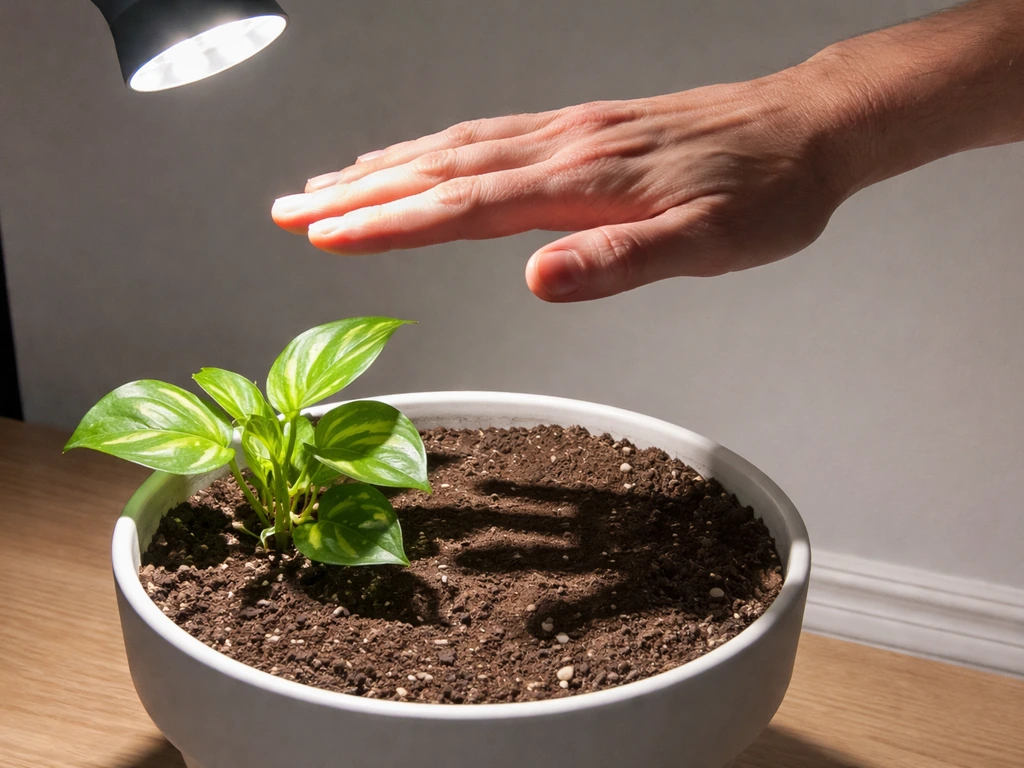
Hold your hand about a foot above the plant's soil under your LED light. If you can see a sharp, clear shadow, the light intensity is at least reasonable. If the shadow is faint or barely visible, the light is probably too dim for anything beyond the most shade-tolerant plants.
Use a free lux meter app
Your phone's camera can give you a rough lux reading using free apps like Lux Light Meter (iOS/Android). It's not lab-accurate, but it gets you in the ballpark. Hold your phone at leaf level, point it at the light source, and check the reading. Under 500 lux means you're in low-light territory. Between 500 and 2,000 lux is workable for many houseplants. Above 2,000 lux is where things start to get genuinely useful for more demanding plants.
Watch your plant for 3–4 weeks
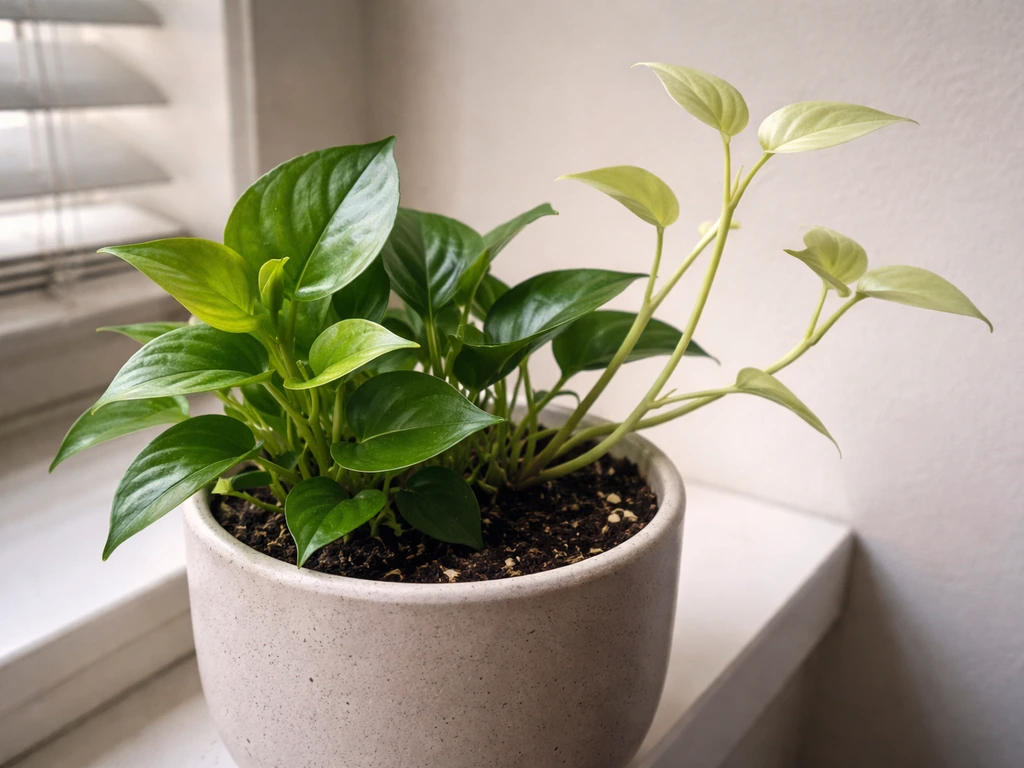
The plant itself is your best diagnostic tool. New growth that comes in smaller, lighter in color, or on stretched, weak stems is a clear sign of insufficient light. Yellowing older leaves (when you're not overwatering) often points to the same problem. If the plant is just sitting there, not visibly declining but not producing new leaves either, it's probably in survival mode, technically alive but not truly growing.
Plants most likely to succeed under normal LEDs (and which ones won't)
Some plants are genuinely forgiving under regular LED lighting. Others will frustrate you no matter how well you set things up. Knowing which is which saves a lot of time and disappointment.
Good candidates for normal white LEDs
- Pothos (Epipremnum aureum): one of the most light-tolerant plants you can own, will grow under almost anything
- Snake plant (Sansevieria/Dracaena trifasciata): thrives in low light, very forgiving
- ZZ plant (Zamioculcas zamiifolia): slow grower that tolerates dim conditions well
- Peace lily (Spathiphyllum): handles low-medium light, may not bloom but stays healthy
- Heartleaf philodendron: adaptable, does well in medium light indoors
- Cast iron plant (Aspidistra elatior): lives up to its name
- Chinese evergreen (Aglaonema): tolerates a range of light conditions
- Spider plant (Chlorophytum comosum): grows well under moderate artificial light
Plants that will probably struggle or fail
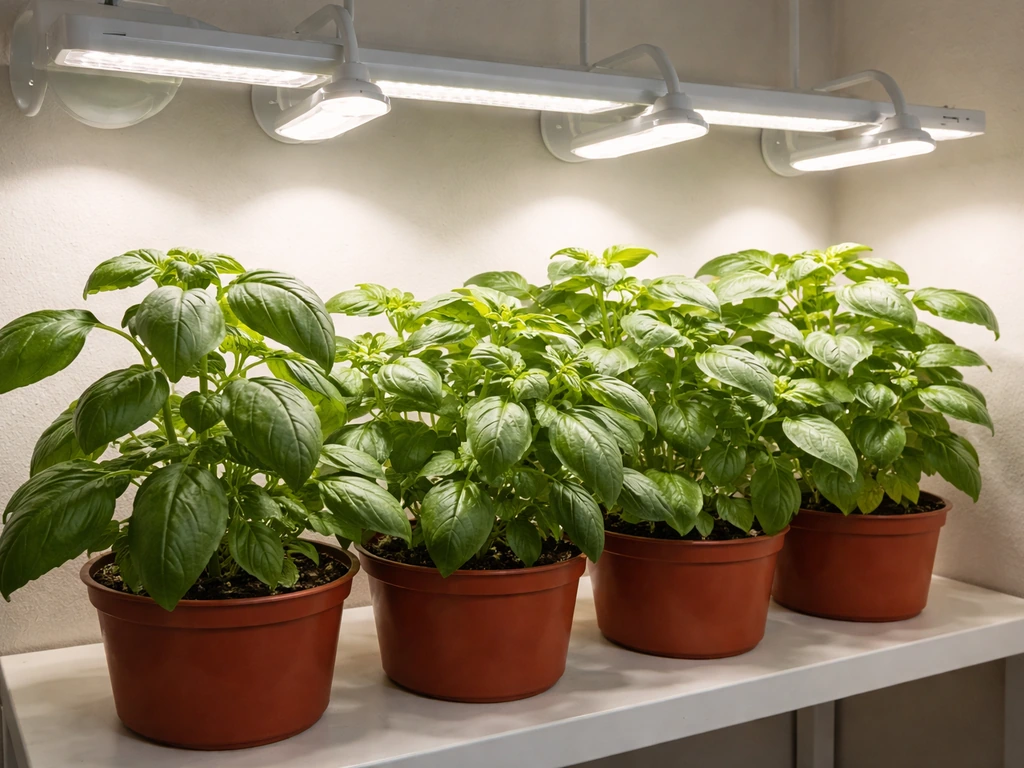
- Herbs (basil, mint, cilantro): need high light intensity for flavourful, bushy growth
- Vegetables (tomatoes, peppers, lettuce): require very high DLI that regular LEDs can't realistically deliver
- Succulents and cacti: evolved for intense sun, will etiolate (stretch and pale) under weak artificial light
- Flowering plants like orchids, African violets, and hibiscus: need stronger light to trigger and sustain blooms
- Fruiting plants of any kind: simply need more photons than a household bulb can provide
If you're growing house plants just to have greenery indoors, normal LEDs can genuinely work for the first list. If you want to grow food or get flowers, you'll need to either move to true grow lights or find a sunny windowsill to supplement. In winter, many people end up deciding whether they do plants need grow lights in winter to keep enough light for steady growth.
That same idea applies to aquariums too, so it's worth checking whether can aquarium plants grow with LED lights before you commit to your hardware and photoperiod. If you are wondering, will plants grow with LED lights, the answer is yes for many low-light houseplants, but stronger growth usually needs brighter, purpose-built lighting or good window sun.
Setting up a workable normal LED system
If you decide to give normal LEDs a real shot, setup matters more than the bulb itself. Getting this right can make the difference between a plant that grows and one that just slowly fades.
Distance: closer is almost always better
Light intensity drops off according to the inverse square law, meaning if you double the distance between the light and the plant, the light intensity at the leaf drops to one quarter of what it was. With a typical household LED bulb, you want the light source no more than 6–12 inches above the top of the plant for meaningful intensity.
If you’re trying to maximize growth, keeping lights close to the canopy and effectively “directly under” them is usually what makes the biggest difference 6–12 inches above the top of the plant. If you want to know whether your specific setup can support growth, check the light intensity and your plant's light needs for daily hours under the LED will house plants grow under led lights. At 24 inches, most regular bulbs are delivering very little usable PAR.
This is the single biggest setup mistake people make: they assume a lamp across the room is doing something useful.
Placement: aim the light at the leaves
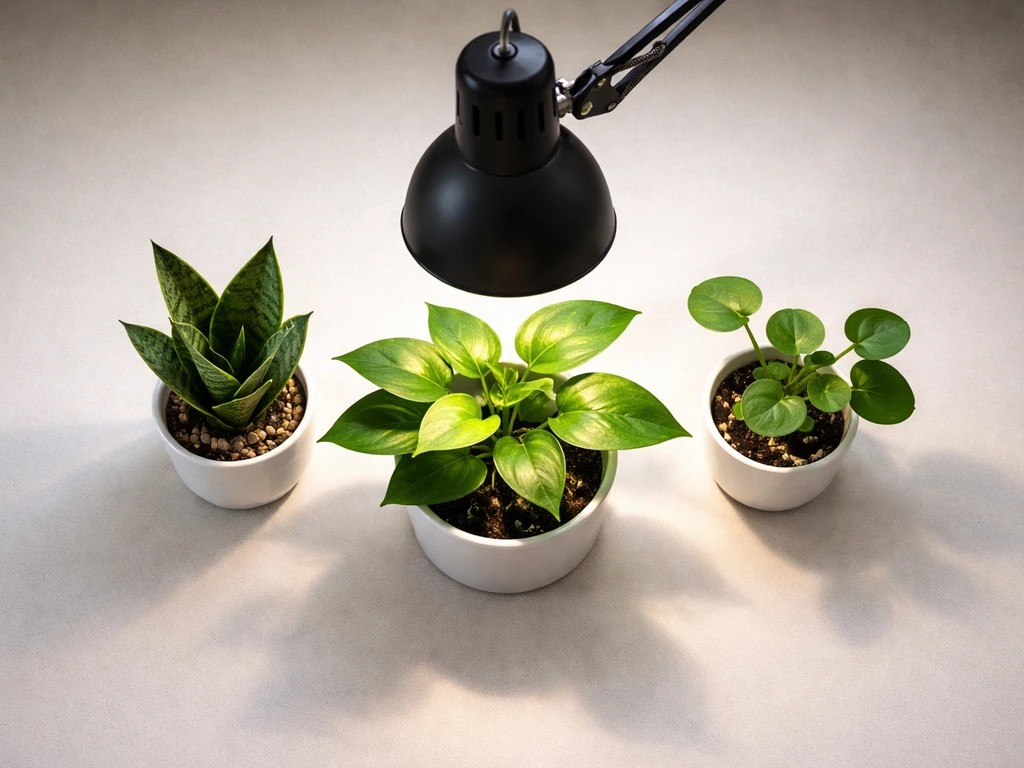
Position lights directly above plants whenever possible. Side-lit plants tend to grow toward the light source and develop uneven, leaning growth. If you're using a desk lamp or clip light, angle it so the beam is centered on the plant canopy. Reflective surfaces nearby (white walls, foil reflectors) can help bounce additional light onto lower leaves without adding hardware.
Timers: don't skip this step
Plants need consistent photoperiods, meaning regular cycles of light and dark. Most houseplants do well on 12–16 hours of light per day under artificial lighting. A simple plug-in outlet timer costs a few dollars and takes the guesswork out entirely. Set it, forget it, and your plants get reliable light cycles every day. Leaving lights on 24/7 isn't helpful and can actually stress some plants by disrupting their natural rest cycle.
Choosing the right bulb if you're starting from scratch
If you're buying LEDs specifically to grow plants (but still want "normal" rather than a grow light), go for the brightest daylight-spectrum LED you can find in the 5000–6500K color temperature range. Look for the highest lumen output available in a standard bulb format. A 1600-lumen or higher LED in a reflector-style BR30 bulb, mounted close to the plant in a clip or gooseneck lamp, will outperform a dim warm-white lamp across the room every time.
When normal LEDs aren't cutting it: signs you need to upgrade
Sometimes the honest answer is that regular household LEDs just aren't going to get the job done for what you're trying to grow. Here are the signs that tell you it's time to consider actual grow lights.
- New leaves consistently come in smaller than the previous ones despite adequate watering and fertilizing
- Stems are stretching and becoming weak or spindly (etiolation), especially in succulents or herbs
- Flowering plants never form buds, or existing buds drop before opening
- Plant growth has stalled completely over 6–8 weeks
- Pale, washed-out foliage that doesn't respond to fertilizer
- Seedlings that become leggy within days of germinating
If you're seeing these signs and you've already optimized placement and duration, it's not a setup problem, it's a hardware limitation. At that point, a purpose-built LED grow light is the logical next step. The good news is that decent grow lights don't have to be expensive. A full-spectrum LED panel in the 30–50W range (true draw, not equivalent) can handle a small shelf of plants and costs well under $50. Look for lights that list their actual PPFD output at a given distance, ideally 150–250+ µmol/m²/s at the mounting height you plan to use. Avoid lights that only advertise wattage without any PAR data.
It's also worth noting that regular white LEDs and purpose-built grow lights aren't always mutually exclusive. Some people use a grow light as their primary source for higher-demand plants and supplement with regular ambient LEDs for the low-light corners. That layered approach works well in a room where plants live alongside your furniture and everyday life.
Common mistakes that trip people up
Heat stress (or lack of it)
LEDs run cool compared to incandescent or fluorescent bulbs, which is mostly a good thing. You can place them closer to plants without burning leaves. But don't assume LED means zero heat risk: very high-wattage LED panels can still produce enough heat at close range to stress tender plants. Check the underside of leaves closest to the light after 30 minutes and look for any signs of wilting or curling. If you're using regular household bulbs, heat is rarely the issue.
Getting the photoperiod wrong
Leaving grow lights on all night isn't helpful and can confuse plants that rely on dark periods to trigger certain growth stages. Some flowering plants (called short-day plants) like poinsettias and kalanchoe actually need long uninterrupted dark periods to initiate blooming. Even for non-photoperiod-sensitive plants, consistent light/dark cycles support healthier circadian rhythms. Stick to 12–16 hours on, 8–12 hours off, and use a timer.
Overwatering because the light is weak
This is a sneaky one. When plants aren't getting enough light, they slow down their metabolic processes, including water uptake. If you're watering on your usual schedule but the plant is in low light, you're almost certainly overwatering it. Slow-growing, light-deprived plants need less water than you'd expect. Always check soil moisture before watering, and err on the dry side when light levels are low.
Expecting too much too fast
Even under ideal artificial lighting, most houseplants grow slowly compared to the same plant in a sunny outdoor spot. Under normal LEDs, growth will be slower still. Give any new setup at least 4–6 weeks before drawing conclusions. Look for small signs of progress: a new leaf unfurling, roots emerging from drainage holes, or the plant simply holding its color well. Those are wins worth noticing. If after 6–8 weeks you're seeing active decline rather than slow progress, that's when you revisit your setup or plant selection.
FAQ
How do I know if my LED is close enough for growth, not just room lighting?
If your “normal LED” bulb is several feet away, the intensity usually becomes too low for anything beyond survival, even if it feels bright to you. A practical rule is to keep the light close enough that you can see crisp leaf-level shadows, then verify with a rough lux check around leaf height.
Is lux enough to determine whether normal LEDs will grow plants?
Lux is helpful as a quick screen, but it does not directly tell you PAR or PPFD. If you cannot measure PPFD, use lux only to compare setups you try in the same spot, and focus on plant response (new growth versus yellowing or stretching).
Do I have to turn the lights off at night for LED-grown plants?
Many plants need a dark period to stay healthy, even when the light source is LED. Use a timer and keep a consistent light cycle like 12 to 16 hours on, 8 to 12 hours off, because leaving lights on 24/7 can disrupt normal rest and slow or stress growth.
Will cool white or warm white LED work better for plants?
Yes, but the “right” spectrum is mostly about meeting the plant’s overall photon needs, not matching a color temperature to a label. For many houseplants, cool to daylight white (around 5000 to 6500K) supports foliage growth well, while warm white can maintain plants but often yields slower results for demanding growth.
Can plants grow under normal LED lights without grow lights if I just want them to look healthy?
Probably, especially if you are growing low-light houseplants for greenery. But you should still expect slow growth, and you may need a higher-light arrangement than you think (closer placement, longer photoperiod within limits). If your goal is herbs, vegetables, or flowering, “normal” LEDs often fall short.
If one LED is too weak, is it better to use more bulbs or move the light closer?
Stacking multiple bulbs or using a higher-lumen fixture can work, but distance still dominates because intensity drops quickly with separation. If you add more LEDs, place them so the canopy receives overlapping light from above, not from the sides, and keep the total on-time consistent.
My plant is stretching and leaning. How should I adjust my LED setup?
If the stems stretch, leaves get lighter, or the plant leans toward the lamp, the issue is usually insufficient effective light at the canopy. Before changing plants, reposition so the beam is centered over the foliage, then increase duration up to the typical 12 to 16 hour window using a timer.
Why does my plant look droopy or unhealthy under LEDs even when I water correctly?
Not necessarily. If a plant is slow-growing, it can also take up less water, so watering on your old schedule can lead to soggy soil and root stress. Check soil moisture at the pot depth before watering, and wait longer between waterings when light is low.
How long should I wait to decide whether my LEDs are working?
Yes, new setups often look unchanged for several weeks, and that is not always failure. Give at least 4 to 6 weeks for a fair read on growth (watch for small new leaves or steady leaf color), then reassess placement, duration, and the plant’s light needs at 6 to 8 weeks.
Can LEDs burn or damage plants even though they run cool?
LEDs can run cool, but high-wattage panels or very close bulbs can still stress plants, especially tender leaves. After about 30 minutes of operation, check the closest leaves for curling, wilting, or unusual droop, and raise or reduce intensity if you see heat-like stress.
When shopping for brighter LEDs, what should I look for besides color temperature?
Full-spectrum or “daylight” marketing helps, but the most important practical spec is how much usable light reaches your leaves. If a grow light or LED product lists PPFD at a distance you can use, that is far more actionable than wattage alone.
Can wrong lighting schedules stop plants from flowering under LED lights?
For plants with photoperiod requirements (like some flowering species), dark interruptions can prevent blooming even if the plant is otherwise healthy. Keep long uninterrupted dark periods for short-day plants (for example, poinsettia-type timing) and use a timer so the off window stays consistent.
Will adding a reflector or moving the plant to a white wall help under normal LEDs?
Yes, reflective surfaces can improve results without adding equipment. Place the plant near white walls or use a simple foil or white reflector to bounce light into lower leaves, but avoid creating hotspots directly beneath the fixture.