Yes, plants can absolutely grow under LED lights. The more useful question is whether the specific LED you have (or are thinking about buying) will actually deliver what your plants need. A purpose-built LED grow light from a reputable brand? Great. A single warm-white LED bulb from the hardware store? Probably not enough for most plants, though it might keep a low-light houseplant alive. The difference comes down to three things: spectrum, intensity, and how long you run it. Get those right, and LED lighting works remarkably well for everything from herbs on a kitchen shelf to full tomato plants under a dedicated grow tent.
Will Plants Grow With LED Lights? How to Set Up Properly
Marcus Hartley
17 Apr 2026
Can plants actually grow with LED light?
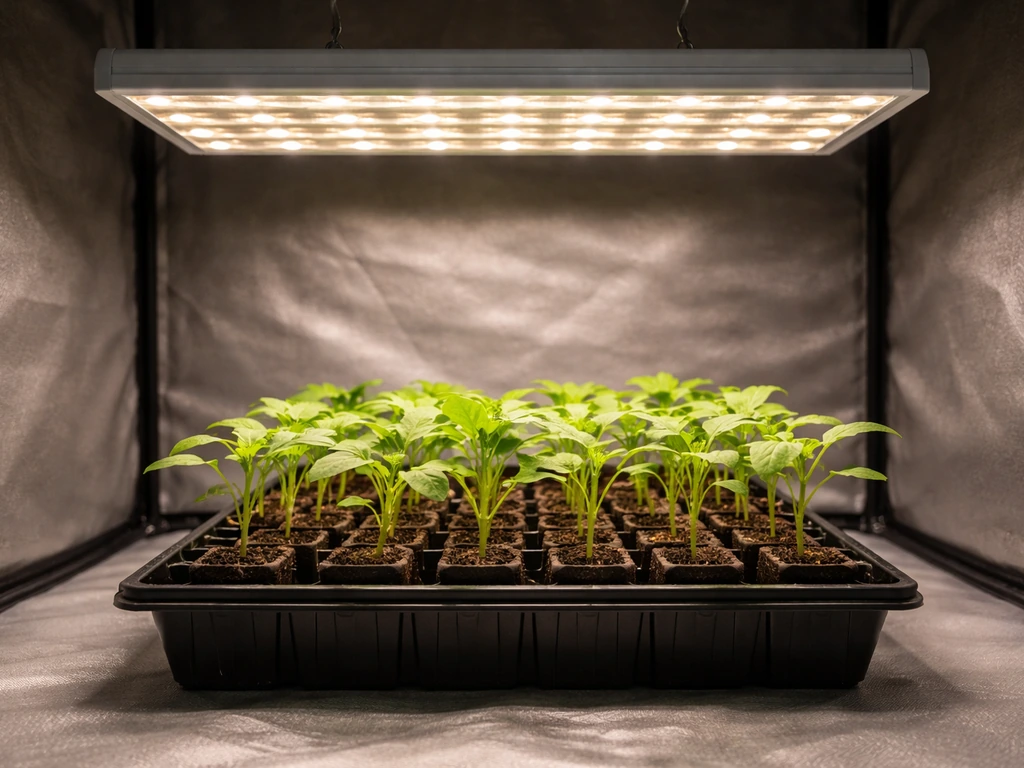
Plants need light to drive photosynthesis, the process that converts light energy into sugars they use to grow. What matters is not the light source itself but the quality and quantity of photons hitting the leaves. LEDs can deliver those photons just as well as the sun or a fluorescent tube, and in some ways better, because modern grow-specific LEDs are engineered to output exactly the wavelengths plants use most. So yes, plants grow with LED light. The caveat is that the LED has to produce light in the right range, at a high enough intensity, for enough hours per day. If any of those are off, growth suffers.
This is also worth saying plainly for anyone comparing options: plants can grow with indoor lights in general, not just dedicated grow lights. The key is understanding what your plants actually need before you assume any light source will do the job.
Not all LEDs are created equal: regular bulbs, strips, and shop lights
This is where a lot of people get confused, and honestly where I made my first mistakes. Here is the honest breakdown of the most common LED types people try to use for plants.
Standard household LED bulbs
Regular LED bulbs (the kind in your lamps and ceiling fixtures) are designed to mimic daylight or warm incandescent light for human vision, not to maximize photosynthetically useful output. They do emit some light in the PAR range (400 to 700 nm), which is the photosynthetically active radiation range plants use, but the intensity is typically too low for most plants unless the bulb is placed very close. They can work for very low-light tolerant plants like pothos, ZZ plants, or snake plants, but do not expect them to grow herbs, vegetables, or flowering plants well. If you are wondering specifically about whether plants will grow under normal LED lights, the short answer is: only the most shade-tolerant species, and growth will be slow.
LED strips
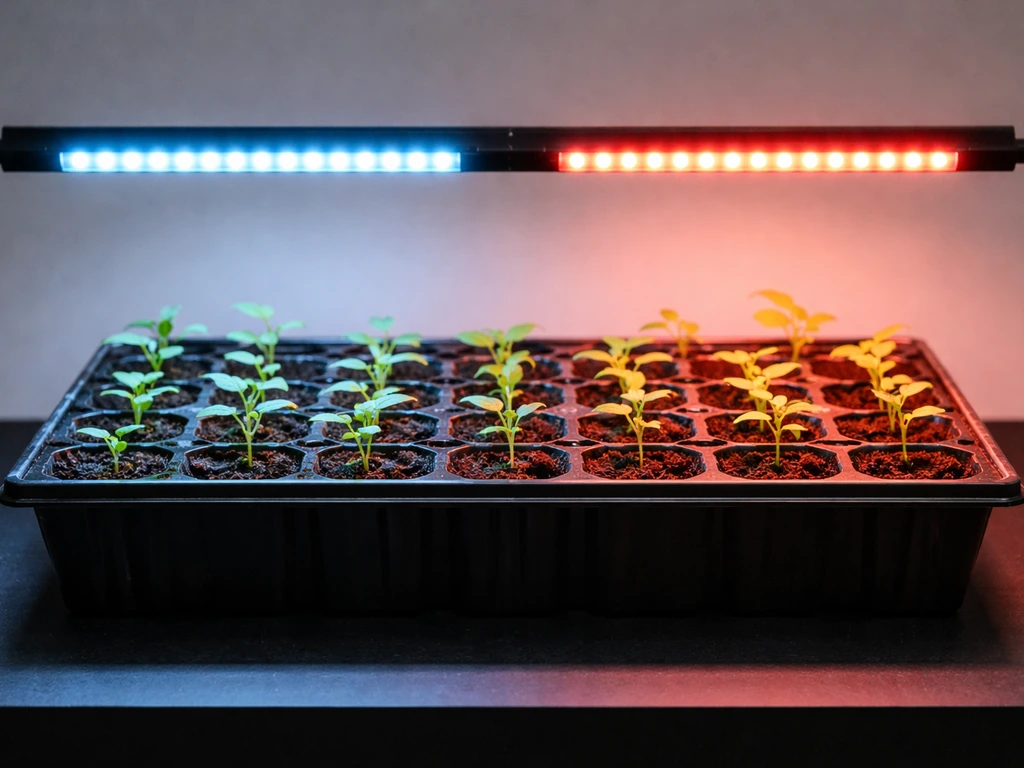
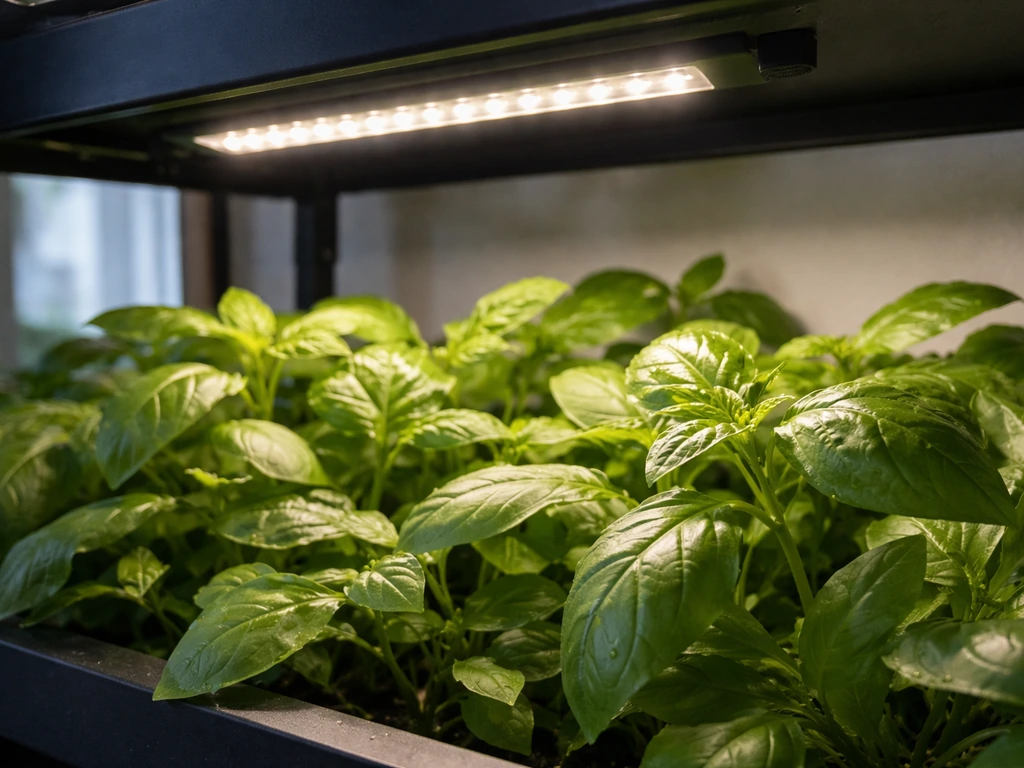
LED strips are popular for aesthetic shelf lighting and some growers try to repurpose them for plants. Cheap white LED strips have similar limitations to regular bulbs, low PAR output and insufficient intensity. However, there are horticulture-specific LED strip lights (often called quantum board strips or grow strips) that use high-efficiency diodes tuned for plant growth and can genuinely supplement or even replace other light sources for low-to-medium light plants. If you go this route, look for strips that specify their PPFD output and spectrum rather than just wattage or lumen output.
Shop lights and utility fluorescent-style LEDs
LED shop lights (T8 or T5 LED tubes) in the 5000K to 6500K color temperature range are a legitimate and affordable option for many indoor gardeners. They produce reasonable intensity in a broad white spectrum that includes useful PAR wavelengths, and when positioned close enough (6 to 12 inches for herbs, 12 to 24 inches for low-light plants), they can drive real growth. They are not as efficient as purpose-built grow lights, but they cost a fraction of the price and work well for starting seeds, growing microgreens, or maintaining leafy greens and herbs.
Purpose-built LED grow lights
These are what most commercial growers and serious home growers use. They come as panels, quantum boards, or bar-style fixtures, and they are engineered specifically to maximize PAR output per watt. Good ones include a full spectrum that covers red and blue peaks (around 660 nm and 450 nm respectively), and sometimes include far-red and UV. They specify PPFD values at different distances, which is the only useful way to know if a light will work for your plants. These are worth the investment if you want to grow fruiting plants, high-light herbs, or anything beyond basic foliage maintenance.
What actually drives plant growth: spectrum, PPFD, distance, and photoperiod
If you only remember four things about LED grow lighting, make it these.
Spectrum: the wavelengths that matter
Plants do not use all light equally. Chlorophyll absorbs most strongly in the blue range (around 400 to 500 nm) and red range (around 620 to 700 nm). Blue light drives compact, leafy growth and is important during vegetative stages. Red light is critical for flowering and fruiting. Research consistently shows that spectral quality and photoperiod both strongly affect plant morphogenesis, growth, and metabolism, which is why grow lights designed with the right red-to-blue balance outperform generic white lights for most crops. A full-spectrum LED that covers 400 to 700 nm with peaks in those red and blue zones is the practical standard to aim for.
PPFD: intensity in the language plants understand
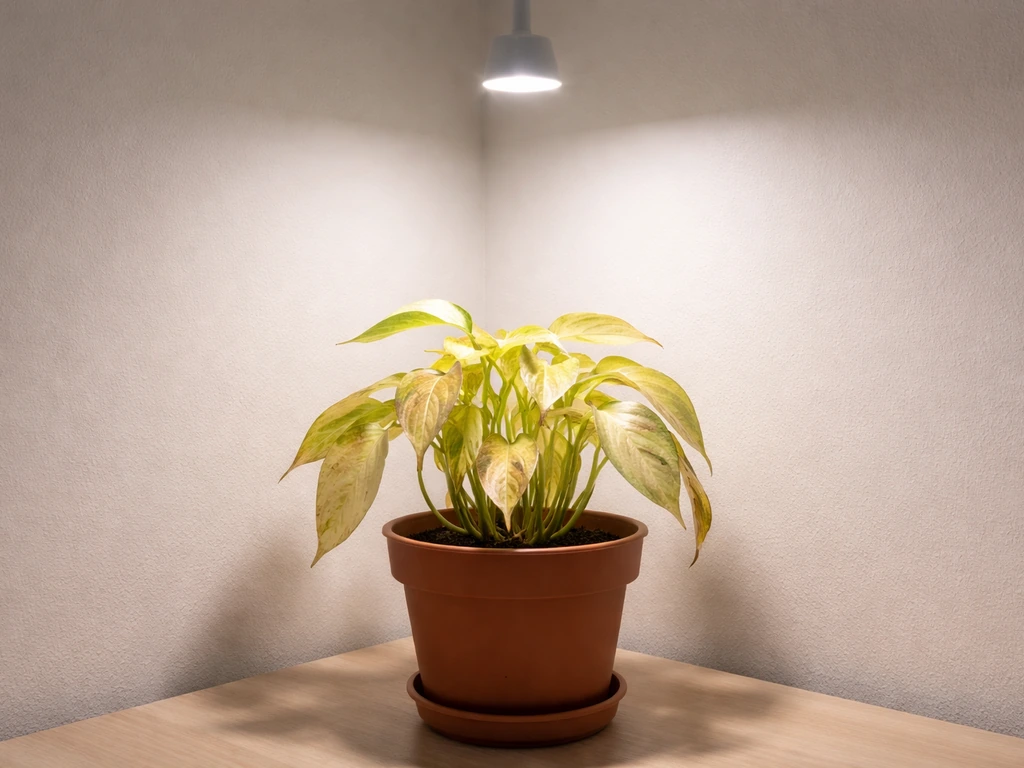
Lumens measure how bright a light looks to human eyes, which is completely irrelevant to plants. What matters is PPFD: photosynthetic photon flux density, measured in micromoles per square meter per second (µmol·m⁻²·s⁻¹). This measures the actual photons in the PAR range (400 to 700 nm) hitting a surface every second. Oklahoma State University Extension recommends a PPFD between 400 and 800 µmol·m⁻²·s⁻¹ for improved plant growth. Low-light houseplants can get by with 50 to 150 µmol·m⁻²·s⁻¹, leafy greens and herbs want 200 to 400, and fruiting plants like tomatoes and peppers need 400 to 700 or more during flowering. If a light does not specify PPFD at a given distance, that is a red flag.
Distance: how far from the plant
Light intensity drops sharply as distance increases (following the inverse square law). A grow light that delivers 600 µmol·m⁻²·s⁻¹ at 12 inches might only deliver 150 at 24 inches. This means placement is everything, and it also means a light that seems weak might just need to be repositioned closer to your plants. Most LED grow light manufacturers publish PPFD charts at various distances. Use those numbers, not wattage, to make placement decisions. If you are wondering whether plants have to be directly under grow lights, the answer depends on PPFD spread and plant needs, but most plants benefit from being as close to the light center as possible.
Photoperiod: how many hours per day
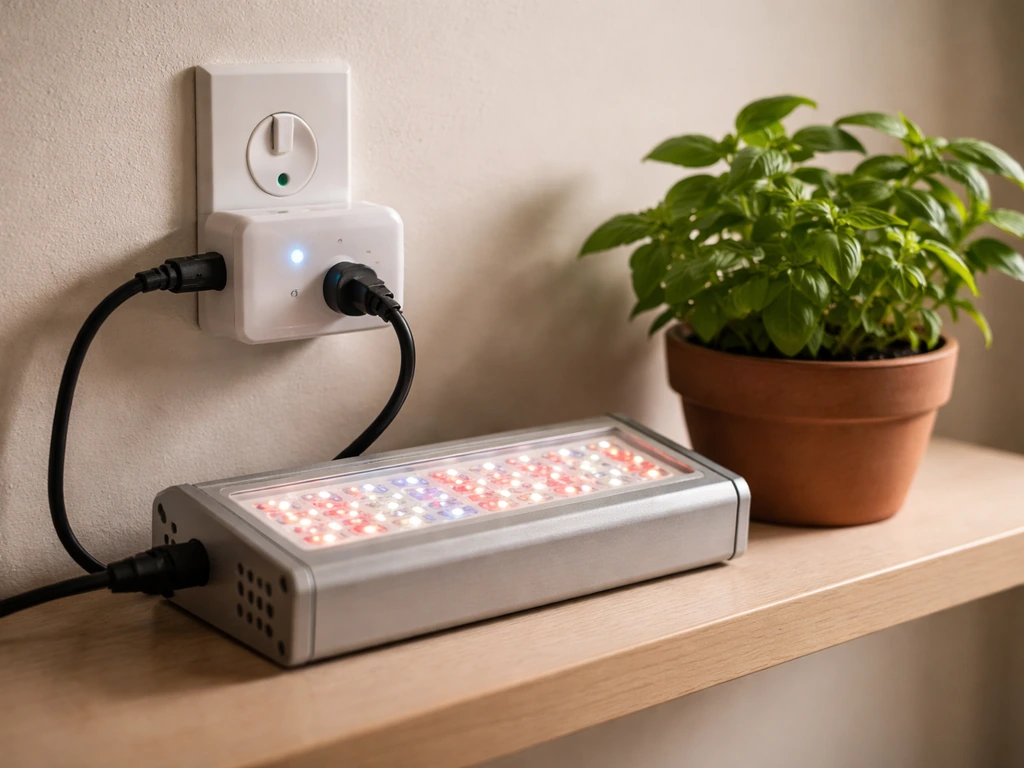
Most plants need 12 to 18 hours of light per day under artificial lighting. Leafy greens and herbs generally do well at 14 to 16 hours. Fruiting and flowering plants often need 16 to 18 hours during vegetative growth, then a switch to 12 hours to trigger flowering (if they are photoperiod-sensitive). Some plants, like strawberries or chrysanthemums, are genuinely sensitive to day length. A timer is one of the best investments you can make for any grow light setup because consistency matters more than most people realize. A related metric is DLI (Daily Light Integral), which combines PPFD and photoperiod: for example, tomatoes during flowering and fruiting need a DLI of around 20 to 30 mol·m⁻²·d⁻¹, which requires both adequate intensity and sufficient daily hours. Cornell greenhouse tomato thesis work also uses DLI targets such as 15, 20, 25, and 30 mol·m⁻²·d⁻¹ as practical light treatments for tomatoes blank" rel="noopener noreferrer">DLI of around 20 to 30 mol·m⁻²·d⁻¹.
How to set up LED grow lighting today
Here is a practical setup process you can start with right now, whether you are using a budget shop light or a proper grow panel.
- Match the light to your plants' needs: check the PPFD requirements for what you are growing and confirm your LED can deliver that at a reasonable distance. Low-light plants need 50 to 200 µmol·m⁻²·s⁻¹, medium-light plants need 200 to 400, high-light plants need 400 to 800 or more.
- Position the light correctly: for most LED grow panels, start at the manufacturer's recommended distance (often 18 to 24 inches for full-sun plants, 12 to 18 inches for medium-light plants). Adjust based on how your plants respond over 1 to 2 weeks.
- Cover the canopy evenly: a single small LED creates a hot spot directly underneath and drops off fast toward the edges. OSU Extension recommends overlapping light from multiple LED devices to create more even spread across the growth area. For a 2x2 foot shelf, one or two T8 shop lights or a small quantum board panel work well.
- Set a consistent photoperiod with a timer: 14 to 16 hours for most herbs and leafy greens, 16 to 18 hours for vegetative growth of fruiting plants, 12 hours to trigger flowering in photoperiod-sensitive species.
- Leave a dark period: plants need darkness to complete metabolic processes. Do not run lights 24 hours even if you think more is better.
- Watch for heat: while LEDs run cooler than HPS or MH lights, high-powered LEDs at close range can still raise leaf temperature. If leaves feel warm or start to look bleached, raise the light a few inches.
This setup logic applies whether you are growing a windowsill herb garden or a more ambitious indoor vegetable setup. The principles scale. And if you are concerned about specific seasonal gaps in natural light, understanding whether plants need grow lights in winter can help you decide whether to supplement or fully replace sunlight during the darker months.
Which plants actually do well under LED lighting
Not every plant is a good candidate for indoor LED growing, and that is okay. Here is a realistic breakdown by light requirement.
| Plant Type | PPFD Needed | LED Setup | Notes |
|---|---|---|---|
| Low-light houseplants (pothos, ZZ, snake plant, peace lily) | 50–150 µmol·m⁻²·s⁻¹ | Standard LED bulb or shop light at 24+ inches | Most forgiving. Even weak LEDs can maintain these. |
| Medium-light foliage (philodendron, ferns, calathea) | 150–300 µmol·m⁻²·s⁻¹ | Shop light or small grow panel at 12–18 inches | Good candidates for LED supplementation. |
| Herbs (basil, mint, parsley, cilantro) | 200–400 µmol·m⁻²·s⁻¹ | T5/T8 LED shop light or grow panel at 6–12 inches | Thrive under LEDs with 14–16 hr photoperiod. |
| Leafy greens (lettuce, spinach, kale) | 200–400 µmol·m⁻²·s⁻¹ | Shop light or grow panel at 12–18 inches | Excellent LED candidates. Fast results. |
| Fruiting plants (tomatoes, peppers, strawberries) | 400–700+ µmol·m⁻²·s⁻¹ | Dedicated LED grow light (quantum board or panel) | Need high PPFD and long photoperiods. Invest in real grow lights. |
| Succulents and cacti | 150–300 µmol·m⁻²·s⁻¹ | Grow light or bright shop light at 12–18 inches | Need good intensity but tolerate shorter photoperiods. |
Houseplants in particular are some of the best candidates for LED supplementation, and house plants grow well under LED lights when you match the fixture to their actual needs rather than assuming any overhead bulb will do. Similarly, if you have an aquarium with live plants, the considerations are slightly different but equally important: aquarium plants can grow with LED lights too, provided the fixtures used are designed for submerged or aquatic plant needs.
When growth looks wrong: troubleshooting LED plant problems
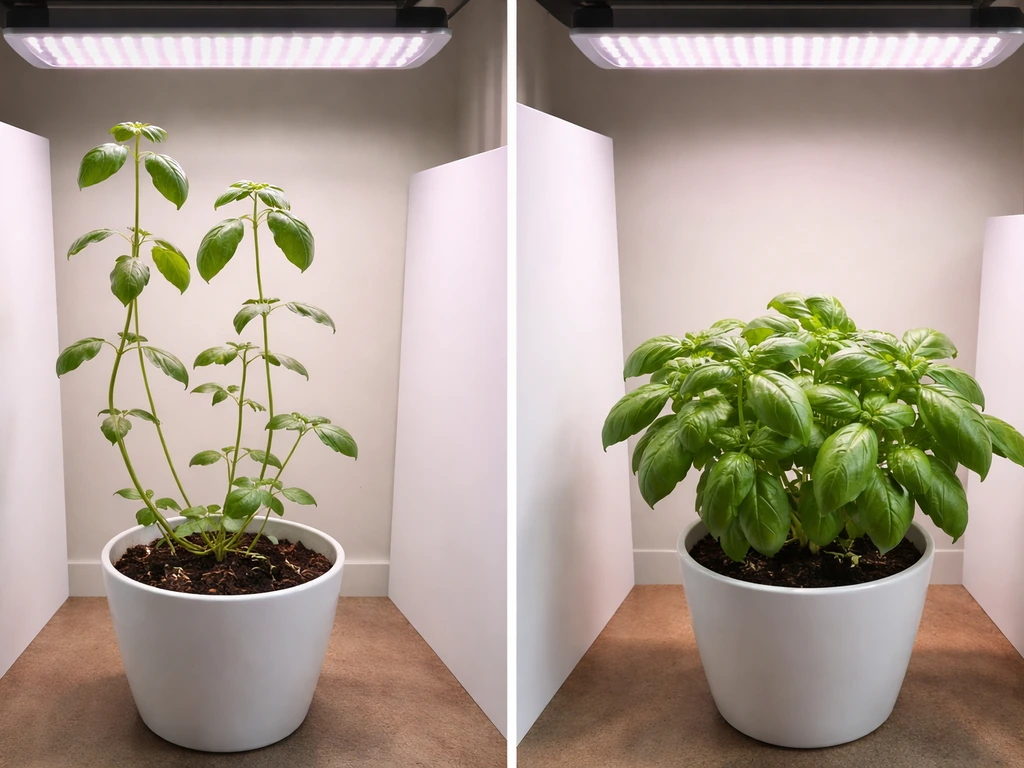
Even with an LED grow light in place, things can go sideways. Here are the most common problems and what they usually mean.
Leggy, stretched growth
If stems are elongating rapidly and leaves are small or spaced far apart, your plants are not getting enough light. This is called etiolation, and it is the plant stretching toward a light source that is too dim or too far away. Fix: move the light closer, add a second light source, or switch to a higher-output fixture. This is the most common problem with generic LED bulbs used as grow lights.
Slow or stunted growth
If plants are alive but barely growing, intensity is usually the issue, though photoperiod matters too. Check how many hours your light is running (should be 14 to 16 hours for most plants) and how close it is to the canopy. Also confirm you are not overwatering, which mimics light deficiency symptoms.
Yellowing leaves
Yellowing can mean a few things: not enough light (lower leaves yellow first), too much light causing bleaching (upper leaves yellow or turn white), or a nutrient issue. If leaves closest to the light are yellowing or developing pale patches, the light is probably too close or too intense. If lower leaves are yellowing while upper leaves look fine, you need more light or longer photoperiod.
Leaf drop or wilting
Sudden leaf drop can indicate light stress (either too much or a dramatic change from low light to high light too quickly). When transitioning plants to a new grow light setup, introduce the new intensity gradually over 7 to 10 days by starting with the light higher up and slowly lowering it. Wilting under grow lights despite adequate watering often points to heat stress: check leaf temperature and raise the light if necessary.
No flowers or fruit
If a fruiting or flowering plant is growing leaves fine but not producing flowers, the two most common causes are insufficient PPFD (not reaching the 400 to 700 µmol·m⁻²·s⁻¹ threshold for fruiting plants) and incorrect photoperiod. Tomatoes and peppers need high intensity and long days. Photoperiod-sensitive plants like certain flowers or cannabis need a specific day-length trigger to bloom. Review both intensity and your light timer schedule.
The practical bottom line
LED lights work for plants, and they work well when you choose the right type and set it up properly. If you are growing low-light houseplants, almost any LED will help. If you want herbs, greens, or vegetables, step up to an LED shop light or a proper grow panel. If you want fruiting crops, invest in a quality LED grow light and pay attention to PPFD, spectrum, distance, and photoperiod. The technology is genuinely good. The failures almost always come down to underpowered lights, wrong placement, or inconsistent light schedules, all of which are fixable once you know what to look for.
FAQ
How can I tell if my LED light is actually strong enough for my plants (not just “bright”)?
If your LED label only lists lumens or “brightness,” you cannot reliably predict plant performance. Look for PPFD values (often given at set distances like 6, 12, or 24 inches) and, if possible, the spectrum or at least red and blue peaks. Without PPFD, the same wattage rating can perform very differently from one fixture to another.
Do plants have to be directly under LED grow lights, or can they be off to the side?
Most plants are fine when they are not perfectly centered under the light, but you need enough PPFD across the leaves. If your fixture has a narrow beam or high falloff, moving the plant slightly can reduce intensity enough to stall growth. Use the manufacturer’s PPFD spread chart (or test by moving a leaf position and observing growth rate).
Can I use fewer hours of LED light, or does the daily schedule need to be exact?
Yes, but you should avoid frequent on-off cycling without a timer. Photoperiod is the daily schedule the plant receives, not just total light. If you must shorten the day, do it gradually (like reducing by 30 to 60 minutes per day) rather than making a sudden big change, especially for plants that flower based on day length.
What does “full spectrum” mean on LED lights, and is it always good for plants?
Not always. “Full spectrum” on a box does not guarantee useful red and blue photon output, and some fixtures emphasize white light for humans while leaving plants short on PPFD. Check for actual PPFD specs and whether the spectrum includes meaningful blue (around 400 to 500 nm) and red (around 620 to 700 nm) output for your crop.
How close should I place an LED light to seedlings or herbs?
For most indoor setups, 6 to 12 inches is a typical starting point for herbs and leafy plants with shop-style LEDs, and more distance usually means less PPFD on the canopy. Instead of guessing, use the PPFD chart at the distance you plan to mount, then adjust height so leaves sit in the target PPFD range without bleaching or heat stress.
How do I tell whether my plant is struggling due to light versus watering or nutrients?
A common issue is nutrient or watering problems that look like light problems. Light deficiency usually starts with slower growth and yellowing of lower leaves, while overwatering can cause droop or pale leaves without the same consistent pattern. Before you change the light, verify soil moisture, pH, and that you are not accidentally underfeeding, since plants can only use light to grow if nutrients are available.
If my plants are growing slowly, should I raise the light hours or buy a stronger LED?
Increasing hours helps up to the plant’s needs, but there are diminishing returns if PPFD is too low. If you are already running long days, first improve intensity (more output or closer placement) before extending beyond typical ranges. For photoperiod-sensitive plants, longer light periods can actually prevent flowering.
What’s the safest way to switch a plant to a stronger LED grow light?
Yes, start with gradual transitions. When moving from a weak source (window or basic bulb) to a stronger grow light, reduce stress by starting the light higher and lowering it over 7 to 10 days, or by using a shorter initial photoperiod. Sudden increases can cause leaf drop or bleaching, even if the final setup is correct.
Is it harmful to run LED grow lights all day or 24/7?
Most houseplants can tolerate LEDs running 14 to 16 hours, but avoid leaving lights on 24 hours unless you specifically know the plant and goals. Constant light can lead to slower, weaker growth in some cases because plants still need a dark period to maintain normal metabolism. Use a timer for consistency.
How do I know if my LED is too hot, not just too bright?
Watering, fertilizer, and airflow change how “hot” the setup feels to leaves. If leaves feel warm to the touch or show bleaching from the top side, raise the fixture or improve ventilation. Heat stress often presents as wilting or leaf curl even when watering is correct, especially with fixtures placed too close or with poor airflow.