Vegetables don't strictly need direct sunlight, but they do need a lot of light. Most vegetables are what gardeners call 'full sun' crops, which means at least 6 hours of direct sun per day outdoors. Peas typically do best with several hours of direct sun each day, similar to other full-sun vegetables. Indoors, you can replace that with strong artificial lighting if you hit the right intensity and daily duration. The catch is that the bright light coming through a typical apartment window usually isn't enough on its own, and the vegetables will tell you pretty quickly when it isn't working. The good news: with the right setup, you can grow leafy greens, herbs, and even some compact fruiting crops indoors without a single ray of direct sun.
Do Vegetables Need Direct Sunlight to Grow? A Guide
Marcus Hartley
4 Jun 2026
What 'direct sunlight' and 'full sun' actually mean for vegetables
When a seed packet or plant tag says 'full sun,' it has a specific definition: at least 6 hours of direct, unobstructed sunlight per day. Penn State Extension and Oklahoma State University Extension both use that 6-hour threshold as the baseline. For vegetables, more is better. UMN Extension puts the ideal range at 8 to 10 hours of direct midday sun, with 5 to 6 hours being a workable minimum.
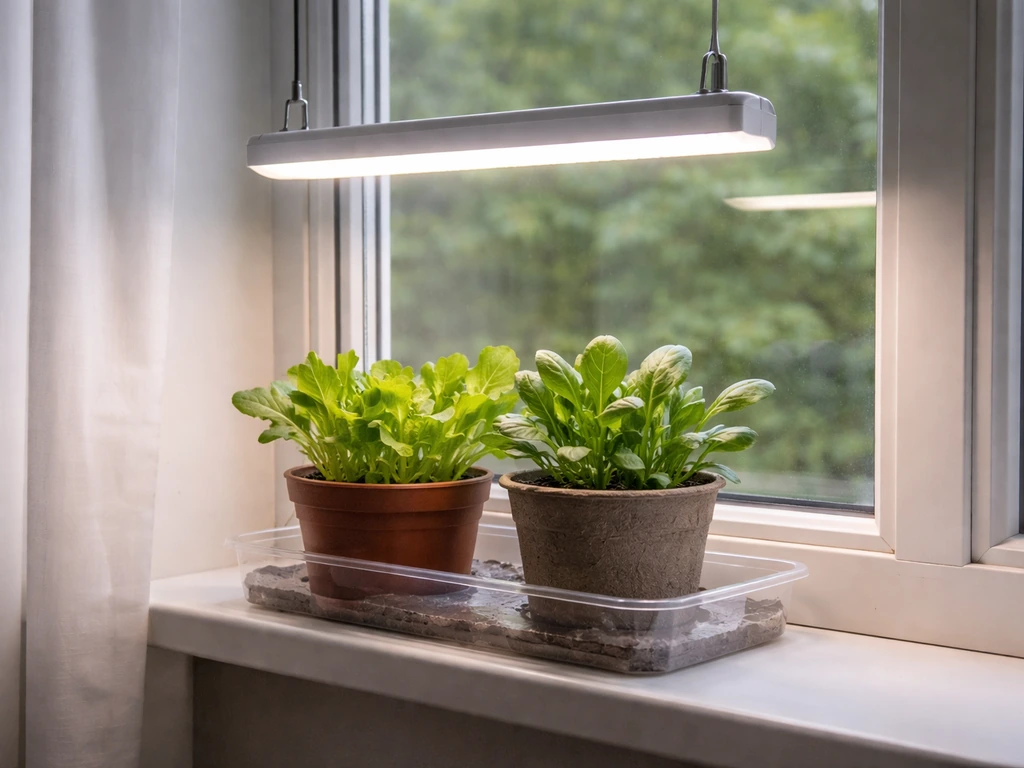
Direct sunlight means the sun is actually hitting the plant, not bouncing off walls or filtering through a sheer curtain. Bright indirect light is still useful, but it delivers far fewer photons to the leaf surface than direct exposure does. 'Part shade' is its own category: areas that get direct sun for only a portion of the day, with intensity dropping significantly during shaded hours. Vegetables labeled full sun really struggle to perform in anything less.
Indoors, true direct sunlight is rare. Even a south-facing window in midsummer delivers direct sun for only a few hours, and that window glass filters out some wavelengths plants actually want. So for indoor growers, the goal shifts from chasing 'direct sun' to delivering enough total light energy across the day, which is where the science of plant lighting becomes your best tool.
How vegetables actually use light: intensity, duration, and spectrum
Plants don't care if the light is from the sun or a bulb. What they care about is how many usable photons are hitting their leaves and for how long. There are three variables that matter: intensity (how bright the light is at the leaf surface), duration (how many hours per day the light is on), and spectrum (which wavelengths of light are in the beam).
Intensity: PPFD and why wattage alone is misleading
The measurement for intensity that actually matters to plants is PPFD, or photosynthetic photon flux density. It measures the number of plant-usable photons hitting a square meter of leaf surface per second, expressed as micromoles per square meter per second (µmol/m²/s). Watts, lumens, and lux are human metrics that don't map cleanly onto plant needs. PPFD drops sharply as you move a light source farther away, which is why placement distance matters so much.
Duration: daily light integral adds it all up
Duration is tracked through a concept called Daily Light Integral, or DLI. DLI is the total amount of plant-usable light a plant receives in a full day, calculated as PPFD multiplied by hours multiplied by 0.0036. It's expressed in moles of photons per square meter per day (mol/m²/day). A plant running under moderate PPFD for 14 hours can hit the same DLI as a plant under brighter light for fewer hours. For leafy greens, a DLI of 12 to 17 mol/m²/day is a solid target. Fruiting crops like peppers need much more, often 20 to 30 mol/m²/day, which is why they're genuinely hard to grow under typical indoor artificial light.
Spectrum: red and blue are the workhorses
Chlorophyll absorbs light most efficiently in the blue (around 400 to 500 nm) and red (around 600 to 700 nm) wavelength ranges. Blue light drives compact, leafy growth and is especially important for seedlings. Red light fuels photosynthesis and encourages flowering. Most quality LED grow lights are designed to deliver a mix of both, either as a 'full spectrum' white LED or as a dual-band red/blue panel. For starting seeds and growing leafy greens, a blue-dominant or full-spectrum light works well.
What happens to vegetables when they don't get enough light indoors
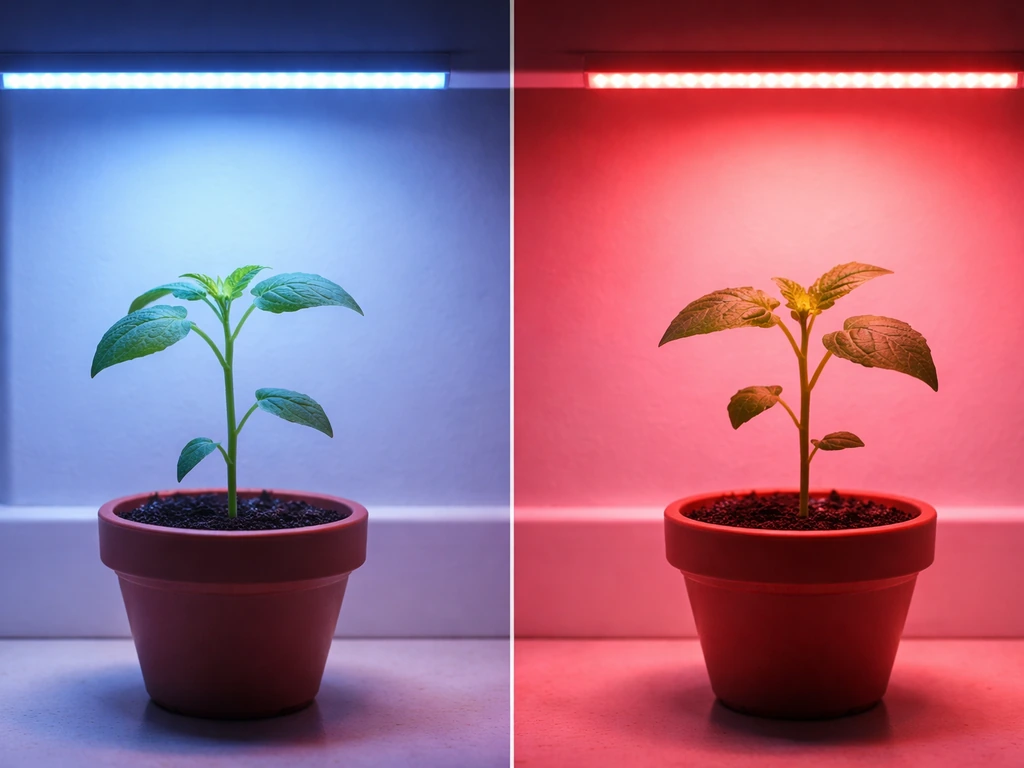
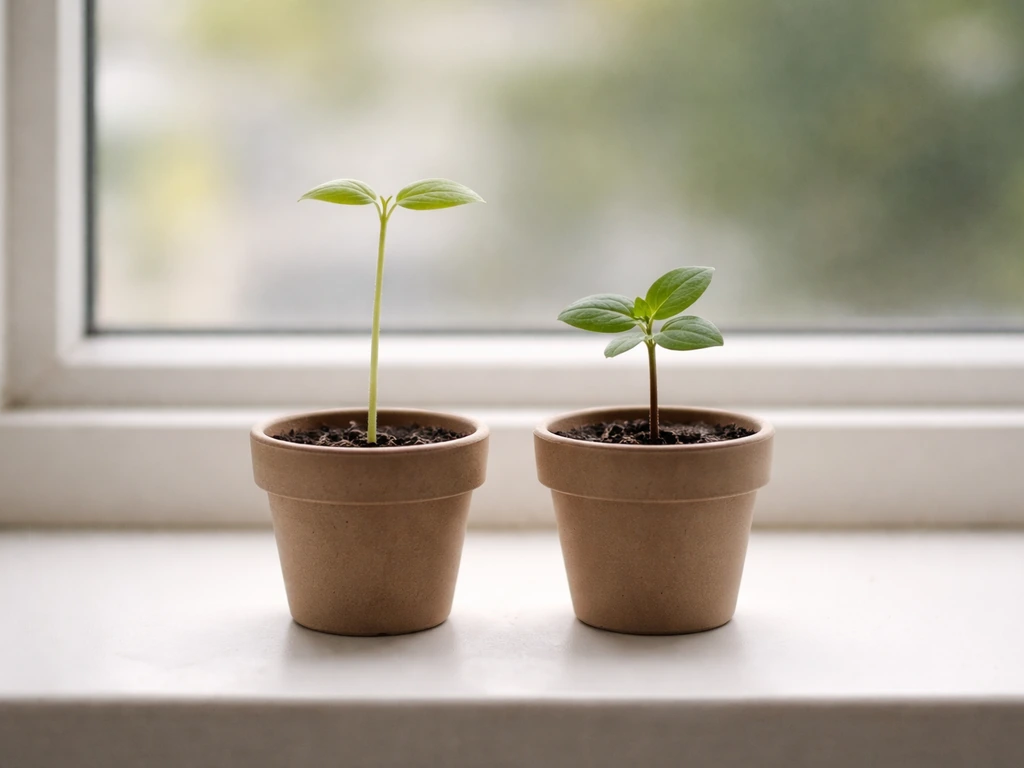
This is the part most people learn the hard way. When a vegetable isn't getting enough light, it doesn't just grow slowly. It actively changes shape and color in ways that signal stress. The plant is essentially trying to find the light, even when it means making structural sacrifices to do so.
- Etiolation (legginess): stems stretch long and thin, reaching toward the light source. Nodes get farther apart. The plant looks spindly and weak instead of compact.
- Pale or yellowing leaves: chlorophyll production drops when light is insufficient. Leaves that should be deep green turn pale green, yellowish, or almost white.
- Slow or stalled growth: without enough photons to drive photosynthesis, the plant simply can't produce enough energy to grow at a normal rate.
- Weak stems: low-light plants can't support themselves properly. They flop over or lean heavily toward any available light source.
- Poor yield: fruiting crops like tomatoes and peppers may flower but fail to set fruit, or the fruits that do develop are small and flavorless.
On the other side, too much direct light on plants not acclimated to it causes leaf scorch: the edges or surfaces turn pale, then brown, then crispy. If you move a low-light-grown plant into intense direct sun without a transition period, you'll see bleached patches or outright dead tissue within a day or two.
Best vegetables for low-light and partial-sun indoor setups
No vegetable genuinely thrives in deep shade. Oregon State University Extension is direct about this: full shade is not a workable environment for any vegetable crop. But there's a meaningful difference between 'needs 8+ hours of direct sun' and 'can manage with 4 to 6 hours of indirect or dappled light. Penn State Extension also notes that most vegetables need at least 6+ hours of full sun each day needs 8+ hours of direct sun. ' Leafy greens are the sweet spot for low-light indoor growing.
| Vegetable | Minimum Light Needed | DLI Target | Low-Light Friendly? |
|---|---|---|---|
| Lettuce | 4–6 hours / low PPFD OK | 12–17 mol/m²/day | Yes |
| Spinach | 4–6 hours | 12–17 mol/m²/day | Yes |
| Kale | 4–6 hours | 12–17 mol/m²/day | Yes |
| Swiss chard | 4–6 hours | 12–17 mol/m²/day | Yes |
| Mustard greens | 4–6 hours | 12–17 mol/m²/day | Yes |
| Herbs (basil, parsley, chives) | 4–6 hours | 12–17 mol/m²/day | Yes |
| Radishes | 6+ hours preferred | 17–20 mol/m²/day | Marginal |
| Peas | 6+ hours preferred | 17–20 mol/m²/day | Marginal |
| Carrots | 6–8 hours | 17–25 mol/m²/day | Challenging |
| Tomatoes | 8–10 hours direct | 25–35 mol/m²/day | No (needs strong grow lights) |
| Peppers | 8–10 hours direct | 20–30 mol/m²/day | No (needs strong grow lights) |
If you're working with a bright but not direct window, leafy greens and herbs are your most reliable options. Root vegetables like radishes and carrots need more light than most indoor window setups can provide on their own, though a grow light can close that gap. Fruiting crops like tomatoes and peppers are possible indoors but really need a dedicated, high-intensity grow light setup to produce meaningful harvests.
How to measure the light you actually have at home
Before you buy anything or rearrange your space, spend a day watching where your light actually goes. It's more useful than any chart.
Window direction as a starting point
In the Northern Hemisphere, south-facing windows get the most light and the most direct sun. West-facing windows get strong afternoon light. East-facing windows get gentler morning light. North-facing windows get the least direct light of all and are generally not viable for vegetable growing without supplemental lighting. This is a starting point, not a guarantee. Trees, neighboring buildings, overhangs, and curtains all affect what actually reaches your plants.
The hourly walk-around method
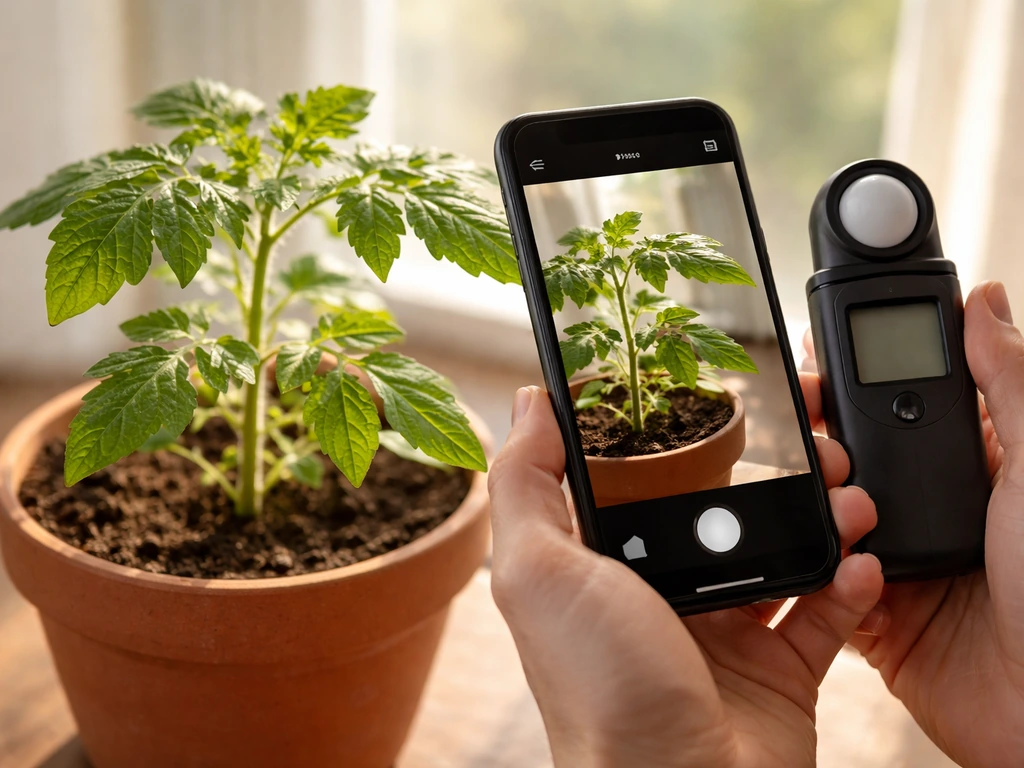
Penn State Extension recommends mapping outdoor garden light by marking which spots are sunny versus shaded at hourly intervals starting around 7 a.m. The same approach works indoors. Every hour from morning to late afternoon, note whether direct sun is hitting your plant spot, whether it's bright indirect light, or whether it's genuinely dim. Count the direct-sun hours and the bright-indirect hours separately. Most vegetable-growing window spots get 2 to 4 hours of direct sun at best, plus some indirect light.
Using a light meter app
Apps like Photone can measure PPFD using your phone's camera and give you a rough DLI reading for your specific spot. Phone sensors aren't lab-grade instruments, but for indoor gardening purposes they're accurate enough to tell you whether you're in the 'leafy green' range, the 'fruiting crop' range, or genuinely too dim to grow vegetables. Take a reading at plant level, not at the window. A few feet back from a window can drop PPFD dramatically.
Using grow lights to replace or supplement direct sunlight
If your window situation isn't cutting it, grow lights are genuinely effective at replacing sunlight for most vegetable crops. The key is choosing the right type and understanding what the specs actually mean.
LED grow lights
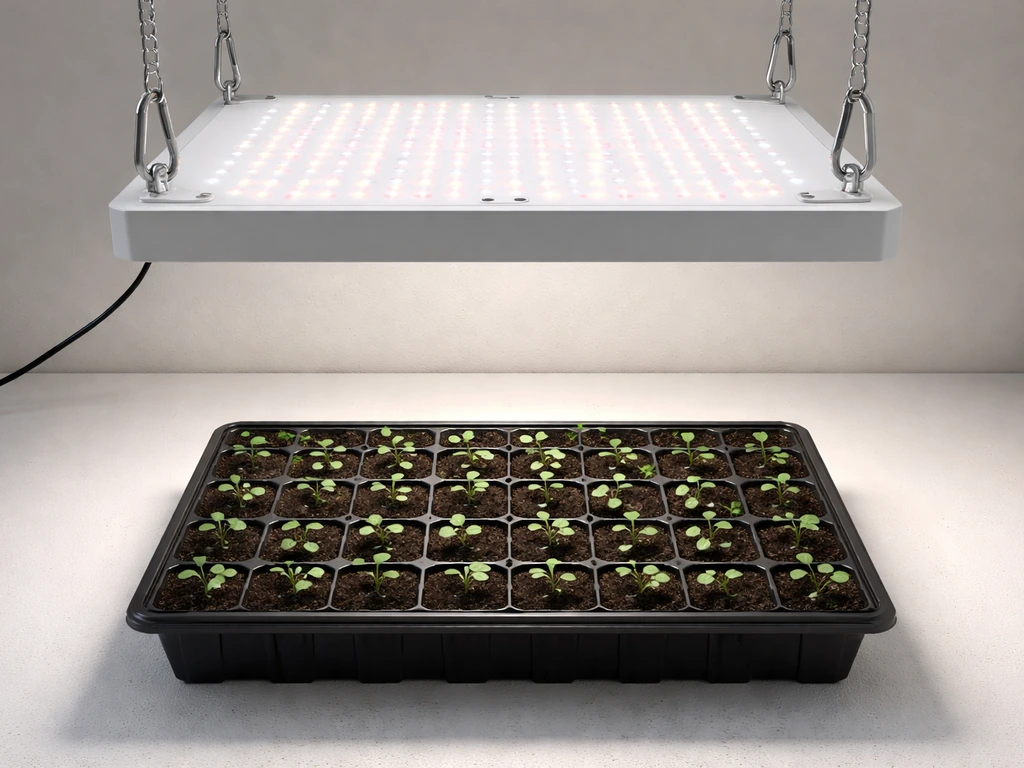
Full-spectrum LED panels are the current standard for indoor vegetable growing. They're energy-efficient, run cool, last a long time, and are available at a wide range of price points. Look for lights marketed with PPFD or PPF specs rather than just wattage. A light listing its PPFD at a given distance (usually 12 or 18 inches) tells you something useful. One listing only watts tells you almost nothing about plant performance. Oklahoma State University Extension reinforces this point: wattage is not a reliable predictor of plant-usable light output.
Fluorescent and T5 lights
T5 fluorescent shop lights have been the go-to for seed starting and leafy green growing for decades, and they still work well. They're inexpensive, easy to find, and straightforward to set up. The downsides are lower intensity compared to modern LEDs and higher energy consumption over time. For leafy greens and seedlings, a T5 or T8 fluorescent fixture hung close to the plants (2 to 4 inches above) is a practical and affordable option. For heavier feeders like peppers, LEDs will serve you better.
Regular incandescent and CFL bulbs
Standard incandescent bulbs are not effective for plant growing. They produce mostly heat and very little of the spectrum plants can use. Compact fluorescent bulbs (CFLs) in the 6500K color temperature range are better and can work for seed starting or very small herb gardens, but they lose intensity quickly with distance. If you're already using CFLs and seeing leggy growth, the fix is usually moving the bulb closer or switching to a dedicated grow light.
Setting up and troubleshooting your indoor lighting
How many hours per day
For leafy greens under artificial light, 12 to 14 hours per day is the standard recommendation. For seedlings, push that to 14 to 16 hours per day. Don't run lights 24 hours a day. Plants need a dark period for cellular repair and hormone regulation, and running lights constantly can actually stress them. Set a timer and leave it alone.
Light placement and distance
Distance is one of the most common mistakes. PPFD follows an inverse-square relationship with distance, meaning doubling the distance from a light source drops intensity to roughly a quarter of what it was. For seedlings and leafy greens under fluorescent tubes, 2 to 4 inches above the canopy is typical. For LED panels, follow the manufacturer's recommended distance (often 12 to 18 inches), but adjust based on what you observe. Raise the light as plants grow so you're always maintaining the right gap.
Troubleshooting common problems
| Symptom | Likely Cause | Fix |
|---|---|---|
| Spindly, stretching stems | Not enough light intensity | Move light closer or add a second fixture |
| Pale green or yellow leaves | Insufficient PPFD or too few daily hours | Increase hours to 14/day or raise light intensity |
| Large gaps between leaf nodes | Low light causing etiolation | Reduce distance between light and plant canopy |
| Brown crispy leaf edges | Light burn or too much intensity | Raise the light or reduce daily hours slightly |
| Slow growth overall | Low DLI (either low PPFD or too few hours) | Check DLI: aim for 12–17 for greens, higher for fruiting crops |
| Leaves bleaching or turning white | Overexposure to intense direct light | Increase distance from light source or add diffusion |
Use a timer, always
Consistent light schedules matter more than most people realize. Irregular on/off cycles confuse photoperiod-sensitive plants and make it hard to diagnose problems. A basic plug-in outlet timer costs a few dollars and removes the guesswork entirely. Set it, check it once a week to make sure it hasn't reset, and you're done.
Combining window light with grow lights
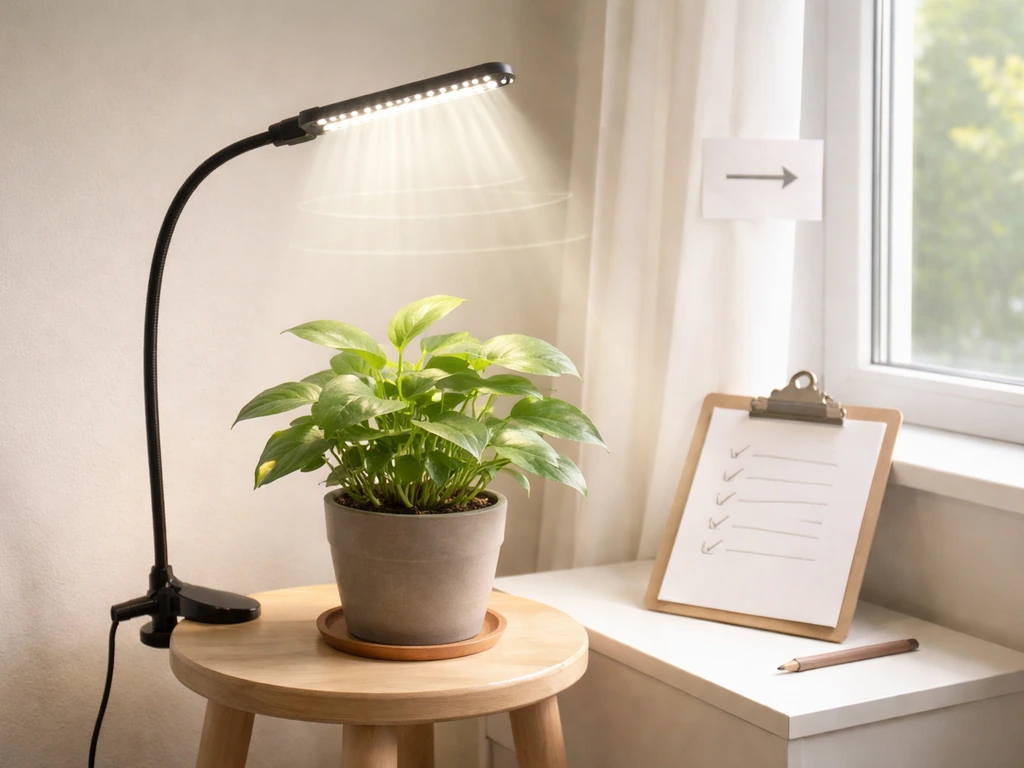
If you have a bright window but it's not quite enough, supplementing with a grow light is often the most efficient approach. Run the grow light during the hours when the window isn't providing direct sun, and let it overlap during dim periods. This hybrid approach works especially well for leafy greens in east- or west-facing windows. You don't need to replace all your natural light, just fill in the gaps.
Your practical starting plan
Here's the simplest way to think about all of this: vegetables need high-quality light for most of the day. Direct sunlight is one way to deliver that, but it's not the only way. This includes answers for the common question, do carrots need sunlight to grow. If you can't provide direct sun, the path forward is to pick vegetables that tolerate lower light (start with lettuce, spinach, kale, or herbs), measure what light you actually have, and supplement with a full-spectrum LED or T5 fluorescent running 12 to 14 hours a day on a timer.
- Identify your window direction and do an hourly light check to count real sun hours at plant level.
- If you're getting fewer than 4 hours of direct or very bright indirect light, plan on using a grow light as your primary source, not a supplement.
- Choose crops matched to your realistic light level: leafy greens first, root vegetables if you can boost intensity, fruiting crops only with a dedicated grow light setup.
- Set your grow light to 12–14 hours per day for mature greens or 14–16 hours for seedlings using a plug-in timer.
- Position the light at the distance specified by the manufacturer, then watch your plants for the first two weeks. Adjust based on what you see: leggy means closer, scorched means farther.
- Check DLI using a free light meter app if you want to dial things in precisely. Aim for 12–17 mol/m²/day for leafy greens.
- Reassess every few weeks as seasons change. A south-facing window that works in July may not work in November.
The honest truth is that some spaces just won't support certain vegetables without dedicated lighting, and that's fine. A small LED panel and a bag of lettuce seeds will get you harvesting within a few weeks in almost any indoor space. That's a genuinely accessible starting point, and once you see it work, scaling up from there becomes a lot less intimidating.
FAQ
If my window never gets direct sun, can I still grow vegetables indoors?
Not always. If your light is strong enough (often via grow lights), vegetables can grow with little or no direct sun. What matters is total daily light (DLI), not whether the light is labeled “direct.” As a rule of thumb, leafy greens and herbs are the most forgiving when you rely on supplemental lighting.
Why do my PPFD or DLI readings look okay at the window but the plants still struggle?
Measure at plant level. A light meter reading at the windowsill can look fine, but moving the plant even a few feet back typically drops PPFD a lot, which then lowers DLI. If you are using a phone app, take readings where the leaves actually sit.
Can I move low-light plants into stronger sun right away, or do I need to acclimate them?
Yes, if you introduce it gradually. Plants grown under low light need an acclimation period, for example increasing light intensity and/or hours over about 7 to 14 days. Sudden jumps often trigger pale leaf tissue or scorch within a day or two.
How do I choose what vegetables to grow based on how much light I have?
Pick a vegetable category based on your DLI target. For leafy greens, you can usually succeed around 12 to 17 mol/m²/day. Fruiting crops often need something like 20 to 30 mol/m²/day, which usually requires a high-output grow light and careful distance control.
Should I run grow lights 24 hours a day to help seedlings grow faster?
For seedlings, “more light” is usually better up to a point, but the correct move is to shorten the time-to-target using PPFD and DLI, not just blasting for 20 hours. Stick close to the article guidance (often 14 to 16 hours), and avoid 24/7 lighting since plants still need a dark period.
What’s the fastest way to fix poor growth under grow lights, distance or schedule?
Distance is critical and it is the most common setup mistake. Because PPFD falls quickly as you move the light away, using the wrong hanging height can cut your DLI even if the bulb or panel is powerful. After adjusting height, re-check plant response (color, stretching, leaf firmness) and consider re-measuring.
How can I tell if my light timer is causing problems?
Yes, especially if your fixtures cycle in ways that don’t match your schedule expectations. If the timer is off by even a couple hours each day or turns lights off unexpectedly, photoperiod-sensitive plants can behave oddly, and troubleshooting becomes unreliable. Use a plug-in timer and verify it weekly.
Does a “full spectrum” grow light always replace sunlight well enough for fruiting vegetables?
“Full spectrum” does not guarantee enough intensity. Some lights are full spectrum but still too weak for fruiting crops because they do not deliver the PPFD you need at the plant canopy. When buying, prioritize PPFD or PPFD-at-distance specs, then confirm whether it can hit your DLI for the crop type.
If I only get a few hours of direct light and lots of shade, will any vegetables still do well?
Dappled light and bright indirect light can help, but vegetables still have a ceiling without enough direct exposure or grow-light intensity. If your counts show only a couple hours of direct sun and mostly dim indirect light, leafy greens may work with supplementation, while roots and fruiting crops usually need grow lights to reach usable DLI.
What plant symptoms point to low light versus too much light?
Yes. If your plants are stretching, turning pale green, or leaning toward the light, you likely have insufficient intensity or duration. If you see scorched or crispy edges after increasing light, you likely overdid intensity too quickly. Use these “shape and damage” signs to decide whether to raise PPFD gradually or reduce it and acclimate.