
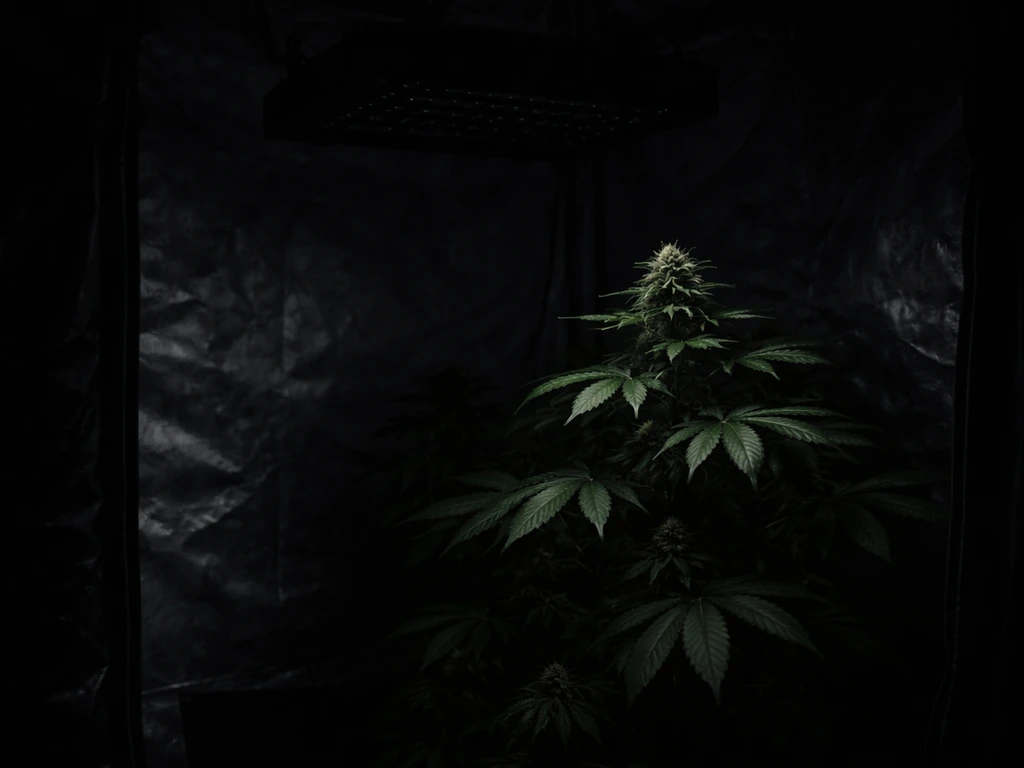
Cannabis plants cannot grow in complete darkness. No light means no photosynthesis, and without photosynthesis, your plant has no way to produce the energy it needs to grow leaves, roots, or buds. A plant kept in true darkness will burn through its stored energy reserves, stop growing, and eventually decline and die. That said, "dark" means different things in different grow rooms, and the nuance matters a lot for what you do next.
Do Weed Plants Grow in the Dark? Indoor Light Fix Guide
Marcus Hartley
7 Jun 2026
What "dark" actually means for your plants
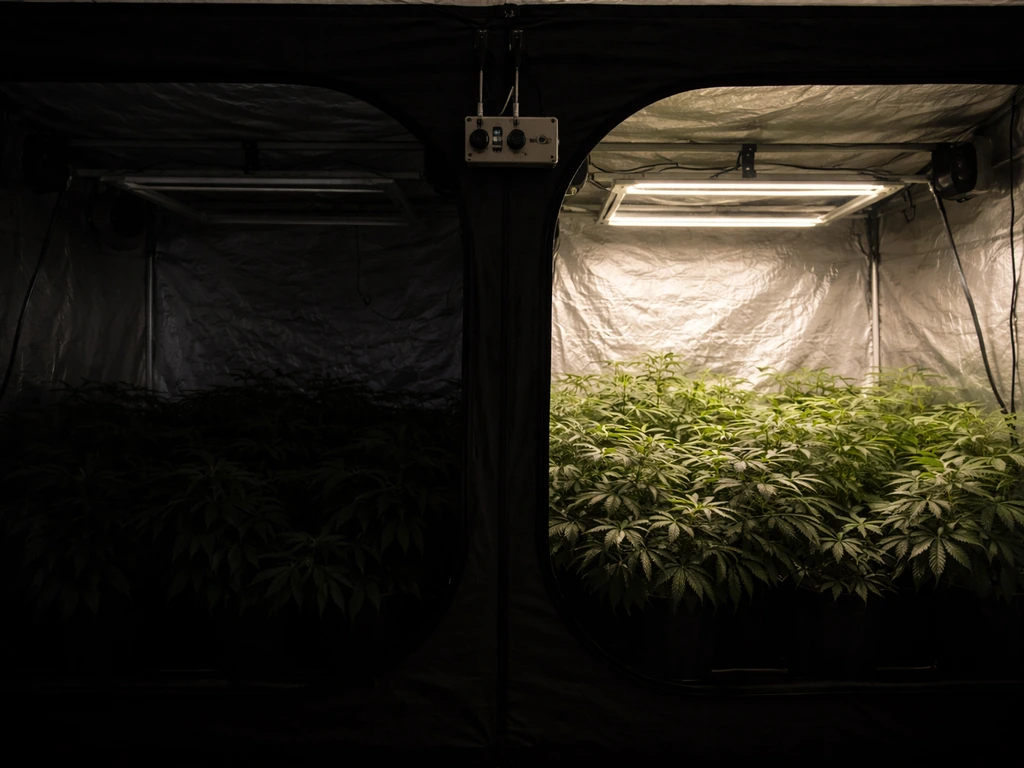
True, complete darkness and "really dim" are not the same thing, and growers mix them up all the time. Complete darkness means zero photons reaching the leaves, like a sealed, lightproof room with no leaks whatsoever. That's actually rare in most home grows. More common is a situation where the main grow light is off but there's ambient light creeping in from a window, a gap under a door, a power strip LED, or a streetlight outside. Plants can still respond to that kind of dim ambient light, even if it's nowhere near enough for real growth.
Why does this distinction matter? Because a plant in truly zero light behaves differently from a plant in very low light. In total darkness, only cellular respiration runs, and the plant slowly consumes its starch and sugar reserves. In very dim light, you might see etiolation: the stems stretch dramatically upward looking for a light source, the tissue goes pale or yellow from lack of chlorophyll production, and growth becomes weak and leggy. Both situations are bad, but they have different fixes.
How light actually drives cannabis growth
Light does two completely separate jobs for cannabis, and you need to understand both to set up your grow correctly.
Photosynthesis: the energy engine
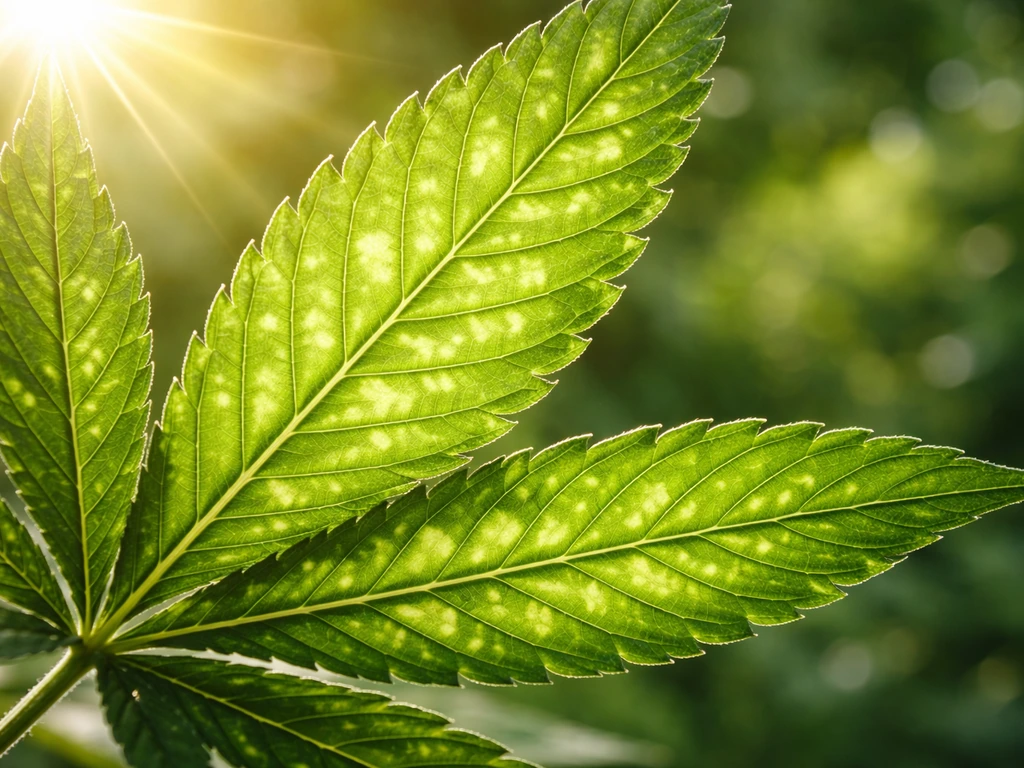
Photosynthesis has two stages: the light-dependent reactions and the Calvin cycle. The light-dependent reactions happen inside the chloroplasts and use light energy to generate ATP and NADPH, the chemical fuel the plant runs on. In oxygenic photosynthesis, the light reactions require light energy to generate ATP and NADPH, so without light these light-dependent reactions cannot run blank" rel="noopener noreferrer">use light energy to generate ATP and NADPH. Without light hitting the chlorophyll, those reactions simply cannot happen. The plant is left running on reserves, like a car coasting after you cut the engine. This is the core reason your cannabis plant cannot grow in the dark: it has no fuel source.
Photoperiod: the flowering trigger
Cannabis is a photoperiod-sensitive plant, meaning the ratio of light hours to dark hours tells it what stage of life to be in. During vegetative growth, cannabis needs long light periods (typically 18 hours on, 6 hours off). When you switch to 12 hours on and 12 hours off, the plant reads that as "summer is ending" and shifts into flowering mode. This is a completely separate mechanism from photosynthesis. It means accidental dark periods or light leaks during the dark phase can confuse the plant's internal clock, stress it out, and in worst cases cause hermaphroditism or reversion back to vegetative growth.
Stretching: the panic response
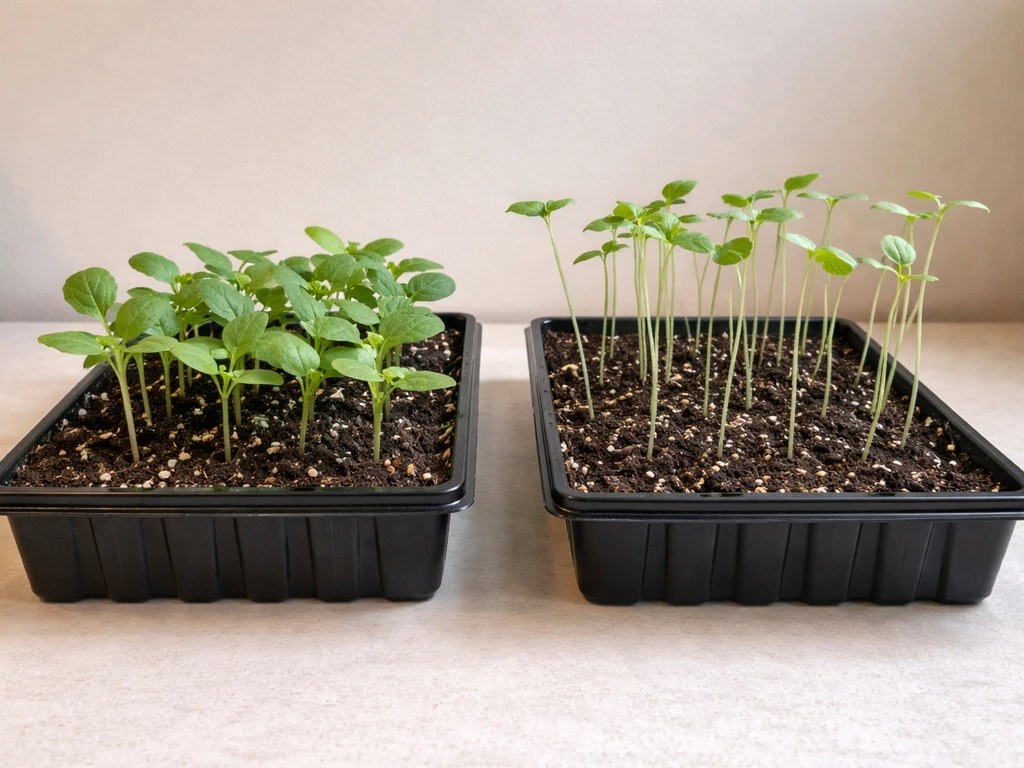
When light drops below usable levels, cannabis instinctively stretches its stem upward to reach more light. This is called etiolation, and it's a hard-wired survival response. You'll see it in seedlings left under a light that's too weak or too far away, or in plants that got accidentally left in near-darkness for a few days. The stems get long, thin, and floppy. The leaves turn pale yellow-green. This is not normal healthy growth; it's the plant burning energy trying to escape a bad situation.
What prolonged darkness does to a cannabis plant
A few hours of accidental darkness, like a timer failure overnight, is usually not a crisis. Cannabis goes through a dark period every single day as part of its normal schedule. The problem starts when darkness extends beyond that normal window. Here's what happens in sequence:
- Hours 1 to 24: The plant is in its normal rest state. No major damage unless it's during the flowering phase and light leaks disrupt the dark period.
- 24 to 48 hours: Photosynthesis has been completely halted. The plant is drawing down stored sugars and starch. Growth stops. You may notice the leaves start to look slightly dull.
- 48 to 72 hours: The plant begins showing stress symptoms. Lower leaves may start to yellow as chlorophyll breaks down without light to sustain it. Stems may begin to stretch if even very faint ambient light is present.
- Beyond 72 hours: Significant decline. The plant has burned through most available energy reserves. Leaves yellow and drop. Immune function drops, making the plant more vulnerable to pests and pathogens. Recovery is possible but takes time and proper lighting.
- One to two weeks of total darkness: Without intervention, the plant will likely not recover. Seedlings and young plants have less stored energy and will die faster than mature plants.
The good news is that most growers catching this early (within 48 hours) can restore proper lighting and see their plants bounce back within a week. The key is acting fast.
How to fix your lighting setup today
If your plants have been in the dark or in very dim conditions, here's the most direct path to getting them back on track. Don't overthink it, just start with step one and work through the list.
Minimum light requirements by growth stage
| Growth Stage | Light Hours Per Day | Minimum Intensity (PPFD) | Notes |
|---|---|---|---|
| Seedling | 18 hours on / 6 off | 100–300 µmol/m²/s | Gentle light; avoid intense direct LEDs close up |
| Vegetative | 18 hours on / 6 off | 400–600 µmol/m²/s | More light = faster, bushier growth |
| Flowering | 12 hours on / 12 off | 600–900 µmol/m²/s | Dark period must be completely uninterrupted |
| Late Flower | 12 hours on / 12 off | 800–1000+ µmol/m²/s | Higher intensity boosts bud density |
Step-by-step fix if your plant has been in the dark
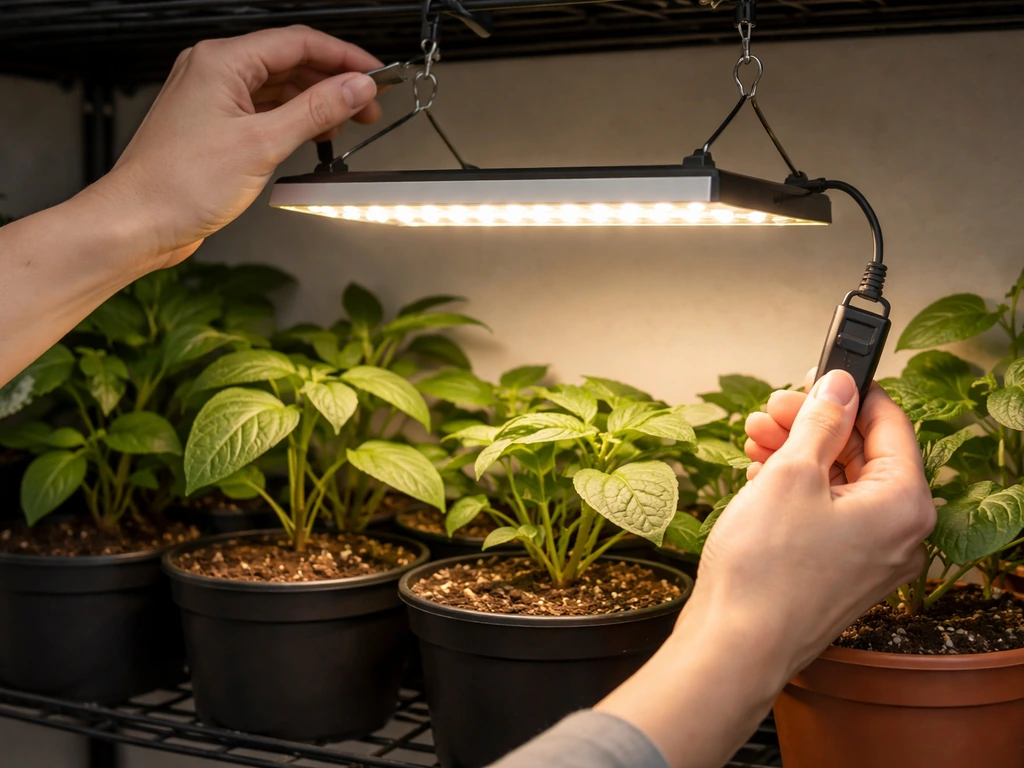
- Restore light immediately using whatever you have available: an LED grow panel, a fluorescent shop light, even a strong daylight bulb in a pinch. Something is always better than nothing.
- Set a timer right now. Do not rely on remembering to flip lights manually. A basic plug-in outlet timer costs under $15 and eliminates the most common cause of accidental dark periods.
- Check your light distance. During the seedling stage, LED panels should typically be 24 to 30 inches above the canopy. During veg, bring LEDs to 18 to 24 inches. During flower, 12 to 18 inches is typical, but always check the manufacturer's recommendation for your specific light.
- Inspect for light leaks if you're in the flowering stage. Cover any gaps under doors with a draft stopper. Check for power indicator LEDs inside the grow tent and cover them with black electrical tape.
- Do not shock a stressed plant with sudden intense light. If your plant has been in darkness for more than 48 hours, ease it back in by starting at a lower intensity or keeping the light farther away for the first day or two.
- Skip adjusting nutrients right away. Wait until the plant is showing healthy green growth again before changing any feeding schedule. Nutrient stress on top of light stress is too much at once.
Choosing and placing grow lights for indoor cannabis
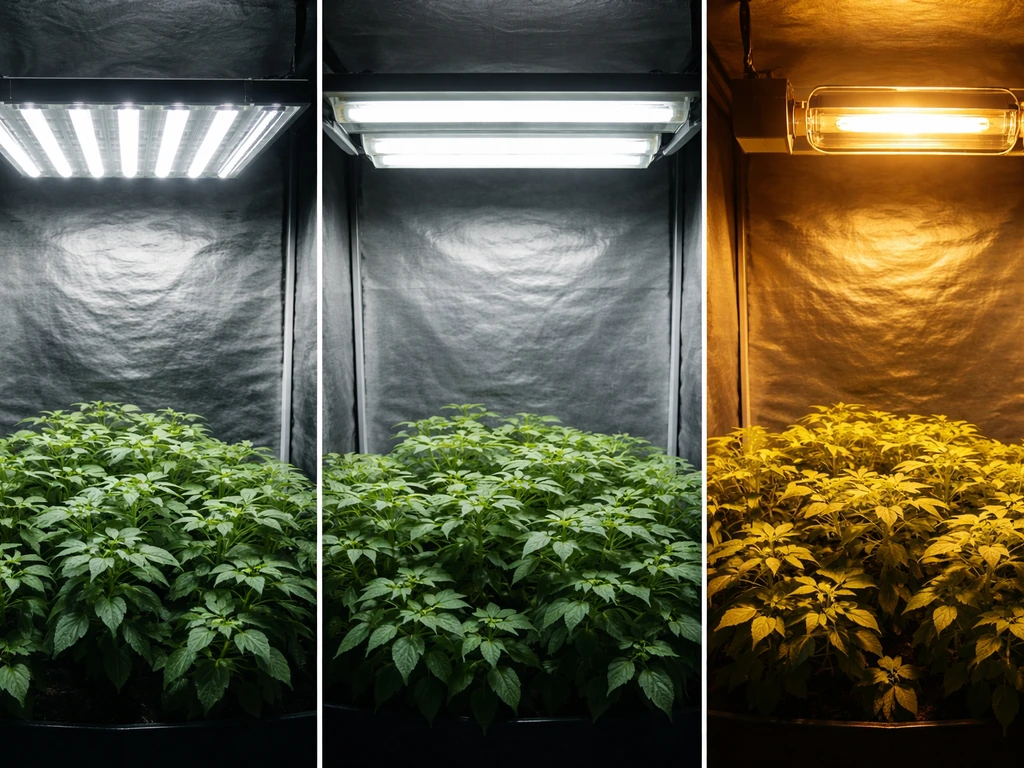
You do not need to spend a fortune to grow cannabis well indoors, but you do need a light that actually delivers enough intensity. Here's a straightforward comparison of the most common options:
| Light Type | Pros | Cons | Best For |
|---|---|---|---|
| LED Grow Light (full spectrum) | Energy efficient, low heat, long lifespan, compact | Higher upfront cost for quality units | All stages; most versatile indoor option |
| Fluorescent / T5 HO | Low heat, good for seedlings, inexpensive to start | Lower intensity, not ideal for flowering stage | Seedlings and clones; tight spaces |
| HID (HPS / MH) | High intensity, proven results | High heat output, higher electricity cost, bulky | Veg and flower in dedicated grow rooms |
| Regular incandescent / household bulb | Available anywhere | Wrong spectrum, too much heat, very inefficient | Not recommended; use only as an emergency stopgap |
For most home indoor growers, a quality LED panel is the best all-around recommendation. Modern full-spectrum LEDs cover both the blue wavelengths cannabis needs in veg and the red wavelengths it needs in flower, run cool enough to keep in a closet or small tent, and use less electricity than HID alternatives. If you're just starting out or dealing with a tight budget, a T5 fluorescent fixture works well for seedlings and early veg, but you'll want to upgrade for flowering.
Light placement basics
- Always hang your light so it covers the entire canopy evenly. A light that's too small or positioned off-center will cause uneven growth.
- Use a par meter or a free par meter app to check actual light levels at canopy height if you want to be precise. Most casual growers skip this and do fine by following manufacturer distance guidelines.
- Reflective walls (white paint, Mylar, or reflective tent material) can increase effective light intensity by up to 30% without adding any extra electricity cost.
- If plants on the edges of your space look pale or stretchy compared to those in the center, your light coverage area is too small or the intensity is too low at the edges. Either move plants closer together or add a second light.
When to worry and when to change your approach
Different growth stages have different tolerances for lighting problems, and what's a minor hiccup in one stage can be a bigger deal in another.
Seedlings (first 1 to 2 weeks)
Seedlings are fragile. They have very little stored energy and will stretch aggressively toward even the faintest light source. If your seedlings are tall and spindly with big gaps between the nodes, they're not getting enough light. Move the light closer or increase intensity. Do not leave seedlings in the dark for more than their scheduled 6-hour rest period.
Vegetative stage (weeks 2 through 8 or so)
Veg plants are the most resilient. A day or two of accidental darkness is annoying but usually not fatal to a healthy vegging plant. Get the lights back on with a proper 18/6 schedule and they'll resume growing within a day or two. Watch for yellowing lower leaves as a sign of stress, and hold off on any nutrient changes until growth looks normal again.
Flowering stage (from flip through harvest)
This is where you need to be most careful. The flowering stage is triggered and maintained by a consistent 12/12 light cycle, and any interruption to the dark period (even a brief light leak or a timer malfunction that turns lights on during the dark hours) can stress the plant. Signs of photoperiod disruption include new single-blade leaves appearing on a flowering plant, calyx development reversing, or in severe cases, male pollen sacs developing on a female plant. If you suspect light leaks during the dark period, seal them immediately. A few nights of light leaks can undo weeks of progress.
When to reconsider your whole setup
If you're consistently struggling with inadequate light, stretched growth, or light-related stress, it's worth stepping back and asking whether your space is actually set up for cannabis. Cannabis is a high-light plant. It genuinely needs intense, consistent light to thrive, more than most houseplants. If your room gets only dim ambient light or you're relying on regular household bulbs, you're working against the plant's basic biology. A decent entry-level LED panel can be found for $50 to $100 and will make a bigger difference than almost any other investment in your grow. The question of whether weed can grow with regular light bulbs or without adequate light at all is worth exploring separately, but the short version is: not really, not well. So, if you’re wondering does weed need light to grow, the answer is yes, it needs usable light for photosynthesis and normal development can grow with regular light bulbs or without adequate light at all. With regular light bulbs, you usually do not get enough intensity or the right light schedule for reliable growth and flowering. Duckweed also needs light to photosynthesize, so it generally cannot grow without any light can duckweed grow without light.
FAQ
If my grow room gets some light at night, will that still “count” as darkness for weed plants?
If any light reaches the leaves during the dark period, it is not true darkness. Even low ambient light can prevent the plant from fully exhausting reserves, but it may still be too weak to support proper photosynthesis and can still interfere with flowering photoperiod timing if light is present during what should be a strict dark window.
How can I tell whether I accidentally gave my plants truly zero light or just dim light?
Use a phone camera app in “pro mode” or an external light meter if you have one, then check for light leaks at leaf height with the main lights off. Also inspect for the common leak sources, door gaps, indicator LEDs on power strips, and reflections from outside streetlights, since small amounts of stray light can still reach the canopy.
Will switching the timer back to the correct schedule “fix” the damage if my plants were in near-darkness for a day?
Often yes, if the issue was brief and you restore the correct light cycle quickly (commonly within about 48 hours). However, do not immediately change nutrients or dramatically alter other variables, instead return to a stable schedule and watch for yellowing, slowed growth, or persistent stretching for several days.
What happens if my flowering lights turn on for a few minutes during the dark period?
Even short interruptions can stress photoperiod plants because the dark phase acts like a cue. If you notice consistent flashes during the dark window, fix the root cause first (timer, wiring, or power-loss behavior), then keep 12/12 stable. Expect possible delayed flowering or abnormal new growth, rather than an instant “recovery.”
Can cannabis recover from light stress without losing yield, or is it always permanent?
It depends on timing and severity. Early veg stress from low light often causes reversible stretching if you correct intensity soon. Flowering photoperiod disruption is more likely to cause persistent reproductive anomalies, like reversed growth patterns, and it may reduce yield or increase the chance of hermaphroditic traits.
How far should I move the light in response to stretching, and how do I avoid making the problem worse?
Instead of guessing, raise or lower the fixture in small increments and aim for “stable, compact growth” rather than trying to correct in one move. If you go too aggressive, you can trigger stress from excess intensity, which can also cause leaf issues. For best results, adjust and observe over 2 to 4 days, not just overnight.
Does the plant need a full 24 hours of darkness to grow poorly, or can weaker light still stunt growth?
Weaker light can stunt growth even without full darkness. The plant may avoid total reserve depletion, but if light intensity is below what it needs, you still get poor photosynthesis, pale leaves, slow biomass accumulation, and leggy growth as it searches for brighter conditions.
My seedlings stretched even though they weren’t fully dark. Is that always a lighting problem?
Not always, but it is a top suspect. Common contributors alongside insufficient intensity include light being too far away, inconsistent schedules, or weak fixtures. If stems are tall with large node spacing and leaves look light green, prioritize fixing light intensity and distance before adjusting nutrients.
Should I change the light schedule, like doing 18/6 even during flowering, to “solve” photoperiod issues?
Changing schedules usually compounds the problem. If you suspect light leaks or timer malfunction during flowering, keep 12/12 consistent and focus on preventing interruptions. Altering the photoperiod can push the plant into reversion behavior or create mixed signals that are harder to stabilize.
If I suspect light leaks, do I need to unplug everything or just cover the source?
Start by removing the leak at the source. Covering can help, but also check electronics that can flicker or illuminate when “off,” like timer displays, strip LEDs, and device charge lights. The most reliable fix is sealing and blocking at leaf height, then confirming with a dark-period test.