Yes, most plants genuinely benefit from a regular dark period. They don't just tolerate darkness, they use it. Plants photosynthesize during the day, but at night they respire, move nutrients, regulate their internal clocks, and in some cases initiate flowering. Running a plant under 24/7 light often causes visible stress: mottled yellowing, stunted growth, and reduced vigor. For a science project, this makes the light/dark question perfect to test, because the effects are real, measurable, and show up within a couple of weeks.
Does a Plant Need Darkness to Grow? Easy Science Project Test
Marcus Hartley
7 May 2026
Do plants actually need dark periods?
Plants need light to photosynthesize, that part is well-known. But the idea that more light always means more growth is a myth. Plants have circadian rhythms, just like animals, and those rhythms are entrained by the alternating pattern of light and dark each day. When that cycle gets disrupted, say, by running grow lights around the clock, many species show measurable physiological stress.
The classic example is tomato seedlings grown under continuous light (24 hours on, zero dark). Studies in controlled plant-factory environments have found that 24/7 lighting can actually suppress biomass and cause mottled chlorosis, a patchy yellowing of the leaves that signals the plant's chlorophyll production is being disrupted. Meanwhile, seedlings given a proper light/dark cycle (like 16 hours on, 8 hours off) tend to grow more robustly. The dark period isn't dead time. It's when the plant consolidates the work of the day.
There's also a distinction worth making for your science project: 'darkness' doesn't mean zero light forever. A seed germinating underground follows a developmental path called skotomorphogenesis, it produces long stems, a protective apical hook, and pale, unexpanded leaves, all designed to push upward through soil before it hits light. A genome-wide analysis of light-controlled seedling morphogenesis describes [skotomorphogenesis](https://pmc. ncbi.
nlm. nih. gov/articles/PMC6016779/) (etiolation) as the developmental program used in subterranean darkness before the shift to photomorphogenesis when light is perceived. Once light appears, the plant switches to photomorphogenesis: green-up, leaf expansion, normal growth.
Once light is perceived after darkness, the skoto- to [photomorphogenesis](https://pmc. ncbi. nlm. nih.
gov/articles/PMC3935338/) transition is initiated, with photoreceptors such as phyA, phyB, and cry1 involved in apical hook development. So complete darkness isn't a growth killer short-term. It's prolonged or permanent darkness that causes etiolation, those long, spindly, pale stems that look like something that grew in a closet. Because they did.
How darkness and light intensity interact with plant growth
Two things control what a plant does with light: intensity (how bright) and duration (how many hours per day). These are separate variables, and your experiment should treat them that way.
Intensity is measured in PPFD (micromoles of light per square meter per second). For reference, outdoor sunlight hits around 10,000 to 12,000 foot-candles at peak, far more than most indoor setups can replicate. For herbs under grow lights, a PPFD of 100 to 500 µmol·m⁻²·s⁻¹ is a reasonable working range. General plant production targets land between 400 and 800 µmol·m⁻²·s⁻¹ for good growth. If you're not measuring PPFD, you can use lamp distance as a proxy, closer means more intense.
Duration (photoperiod) is how many hours of light the plant receives in a 24-hour cycle. Studies comparing 12/12, 16/8, and 20/4 (light/dark hours) consistently show that longer photoperiods promote faster growth up to a point, but that point isn't 24 hours. In many home experiments, the best results come from using a consistent light/dark cycle rather than trying to grow only in darkness. In lettuce research, a 12-hour light period actually increased photosynthetic efficiency compared to shorter on/off cycles. And for foliage houseplants, university extension programs recommend 12 to 14 hours of light per day. Illinois Extension is direct about this: don't expose plants to more than 16 hours of light, because they need a rest period too.
The circadian rhythm piece matters here too. Plants have internal clocks that regulate gene expression, stomatal opening, and growth rate throughout the day. These clocks are set by the light-to-dark transition. When you remove that signal, by running continuous light, you essentially confuse the clock. The plant can't tell when to do what. This is partly why some species show chlorosis under 24/7 lighting even when intensity is adequate. The issue isn't the amount of light; it's the absence of the signal that says 'night is here, act accordingly.'
Designing your science project experiment
The good news: this is an experiment you can run at home with grow lights, a basic timer, and a handful of seedlings. Here's how to build a fair test.
Choose your plant
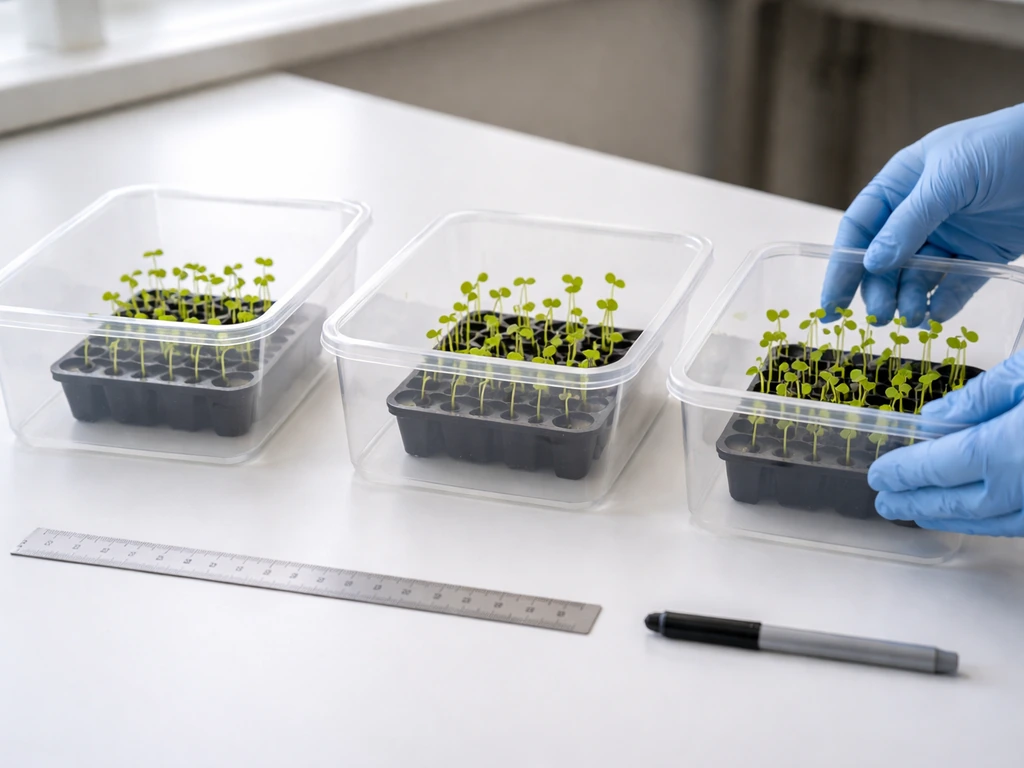
Fast-growing plants with visible, easy-to-measure growth work best. Good options include mung bean sprouts (used in light/dark research for their measurable hypocotyl length and fresh weight), radishes, basil, or fast-growing lettuce varieties. Mung beans are a great example of a plant that can grow better with darker rest periods between light exposure. Mung beans and radishes can show clear differences in as little as 7 to 10 days. Avoid slow-growing species or anything that takes months to establish, you won't see meaningful differences in time.
Set up your treatment groups
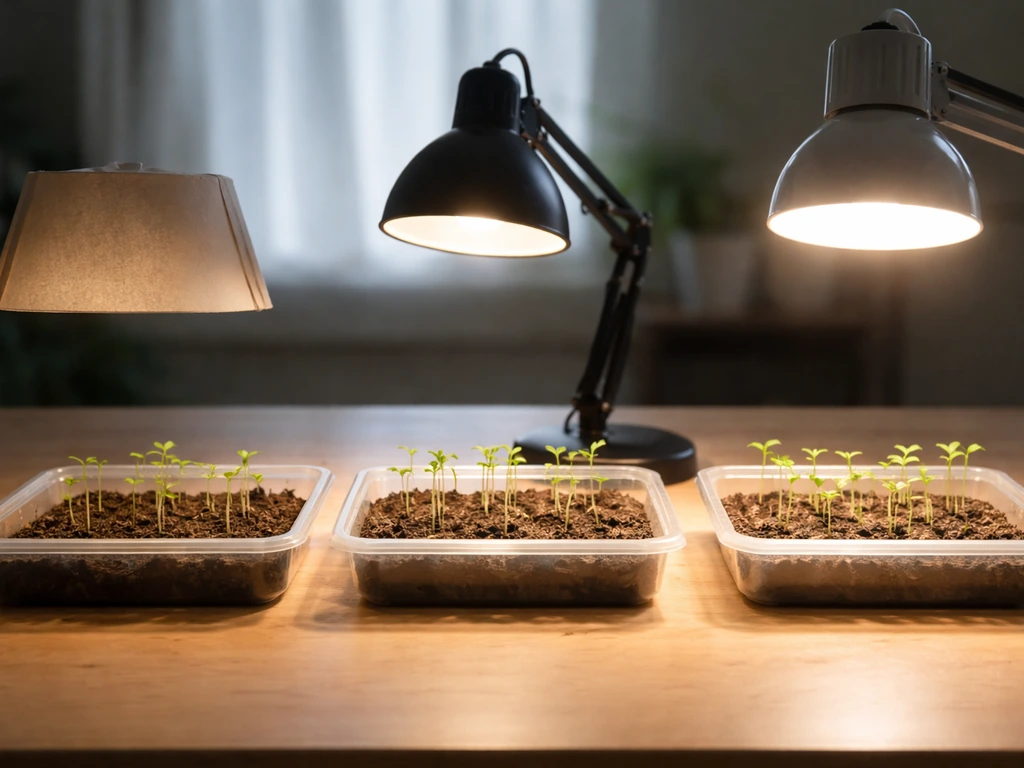
You need at least three groups, each grown in otherwise identical conditions. A solid setup is:
- Group A: 16 hours light / 8 hours dark (your control — a well-documented healthy photoperiod)
- Group B: 24 hours continuous light (no dark period at all)
- Group C: 8 hours light / 16 hours dark (reduced light, extended dark)
If you want a fourth group for contrast, add one with complete darkness (Group D: 0 hours light) to observe classic etiolation. This group will likely grow tall and pale quickly, giving you a dramatic visual comparison point.
Control everything else
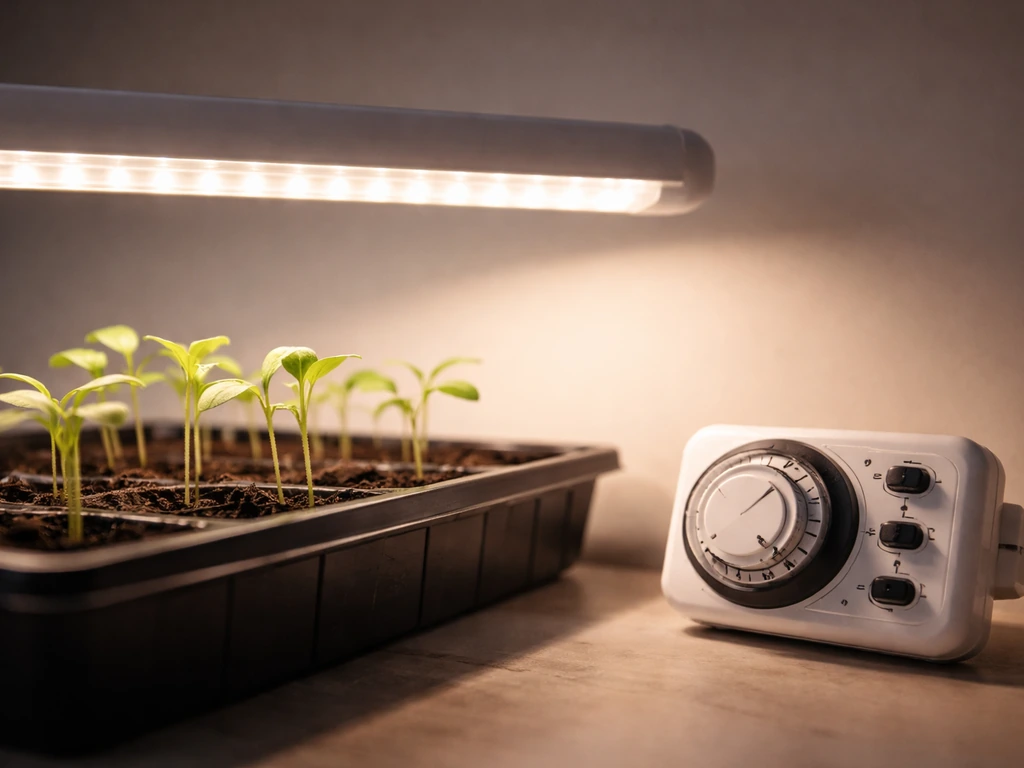
A fair experiment changes only one variable, in this case, the light/dark schedule. Everything else must stay the same across all groups. That means same plant species and seed source, same potting mix, same pot size, same watering schedule (water when soil feels dry at the same depth for all), same room temperature, and the same distance from the light source to the top of each plant. Use a timer for the lights, this is non-negotiable if you want consistent results. Also keep the groups in the same room if possible, because temperature can fluctuate by location and temperature changes (not just darkness) can affect growth rate independently from the light cycle.
Your independent and dependent variables
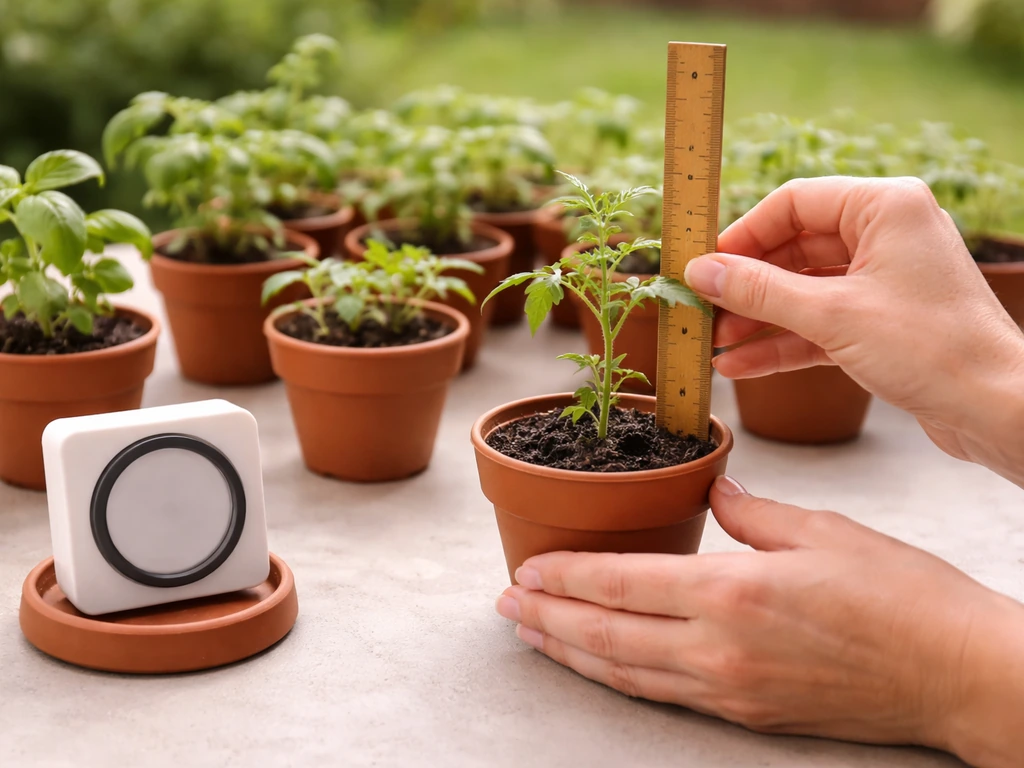
| Variable type | What it is | How to handle it |
|---|---|---|
| Independent | Light/dark schedule (photoperiod) | Change deliberately across groups using a timer |
| Dependent | Plant height, leaf color, stem thickness, new growth | Measure and record every 2 to 3 days |
| Controlled | Soil type, pot size, watering, temperature, light intensity, plant species | Keep identical across all groups |
What to measure and how long to run the test
Plan to run the experiment for at least 14 days, ideally 21. Two weeks gives most fast-growing seedlings enough time to show meaningful differences in height, leaf color, and stem structure. Three weeks makes the results more convincing, especially for any chlorosis or stress responses in the continuous-light group, which may take a week or so to become visible.
Measure every 2 to 3 days, at the same time of day. Here's what to track:
- Plant height: measure from soil surface to the tallest growing tip in centimeters
- Hypocotyl length (for bean/radish seedlings): the stem section between the soil and where the first leaves emerge — this is the most sensitive indicator of light deprivation
- Leaf color: note any yellowing (chlorosis), pale green, or normal deep green — take consistent photos under the same lighting so the comparison is honest
- Leaf size and expansion: are cotyledons or true leaves fully open and flat, or small and curled?
- Stem thickness and vigor: is the stem upright and sturdy, or thin and floppy?
- Number of new leaves or nodes: count every few days to track growth rate
- Overall fresh weight at the end: weigh each plant (roots removed, patted dry) to get a biomass comparison
Use a notebook or spreadsheet and take photos on the same schedule. The visual documentation often makes the results far more convincing than numbers alone, especially for etiolation effects that show up dramatically in the darkness group.
Interpreting your results
Here's what you'll likely see, and what it means:
The complete darkness group (if you included one)
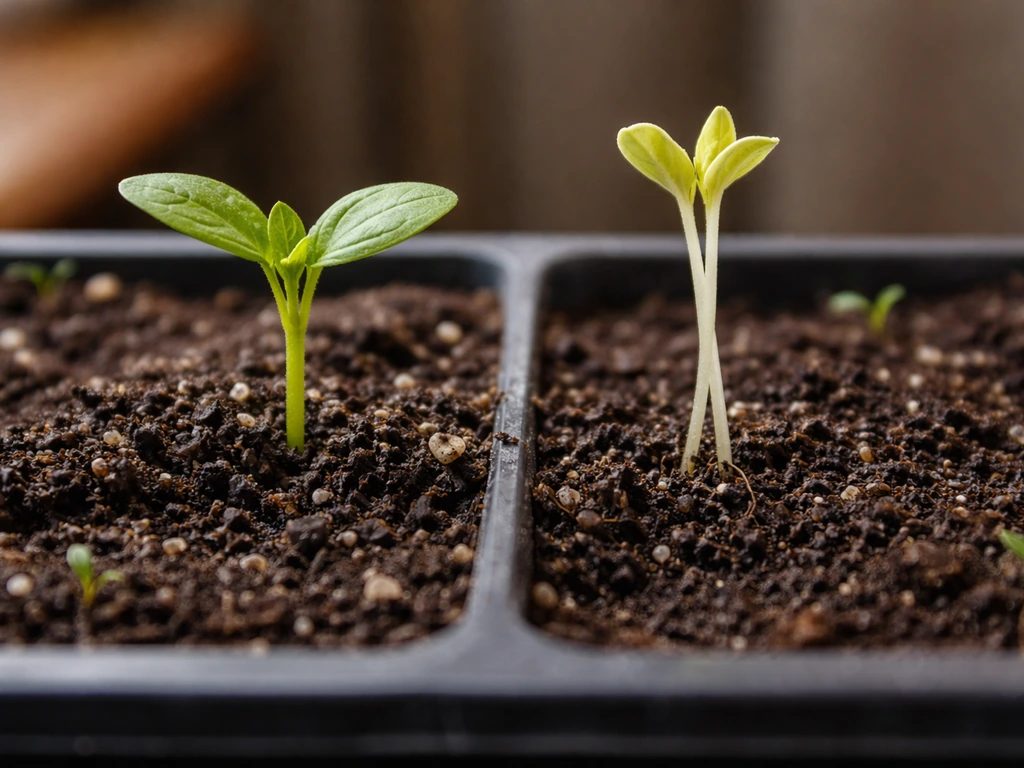
Expect rapid elongation of the stem (etiolation), pale yellow or white tissue, small closed leaves, and weak overall structure. This is skotomorphogenesis doing exactly what it's supposed to, the plant is 'trying' to reach light. It's not dead, but it's not thriving. This group gives you the clearest visual signal of what happens without any photosynthesis.
The continuous light group (24/0)
This is where many people are surprised. The plants may initially look fine or even grow quickly, but watch for mottled yellowing of leaves after 7 to 14 days, a reduction in new growth rate, and leaves that look stressed or slightly puckered. In tomato research, this exact pattern showed up as mottled chlorosis, patches of yellow on otherwise green leaves. If your plants show this, it's not a watering problem or a nutrient problem. It's a circadian disruption response to having no dark signal.
The 16/8 control group
This should be your healthiest group. Leaves should be the deepest green, stem structure sturdy, and growth rate consistent throughout the experiment. If another group matches or beats this, that's genuinely interesting data worth noting in your conclusion.
The 8/16 reduced light group
Expect slower growth and slightly paler leaves compared to the 16/8 group. The plants are getting enough dark, but not enough light for maximum photosynthesis. You may see some mild elongation as the plant searches for more light, but it shouldn't be as extreme as full darkness. This group illustrates that balance matters in both directions.
If the results are subtle
Not every experiment produces dramatic differences, and that's okay. Some species are more tolerant of photoperiod variation than others. If results are subtle, look closely at leaf color and fresh weight rather than height, these tend to be more sensitive indicators of light stress than stem length alone. Also double-check that your light intensity was consistent across groups and that temperature didn't vary between locations.
Using what you learned: real grow-light schedules for indoor plants
Whether your experiment showed a strong effect or a subtle one, the practical takeaway is the same: give your indoor plants a real light/dark cycle. Here's how to put that into practice.
Recommended photoperiods by plant type
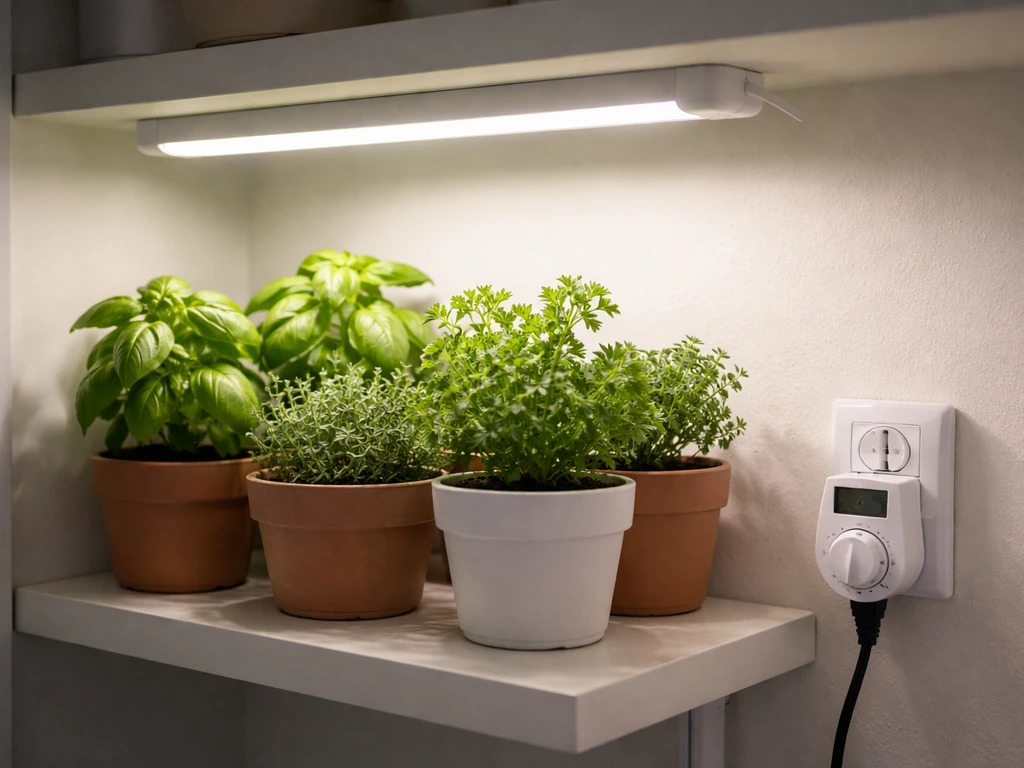
| Plant type | Recommended light hours/day | Dark period |
|---|---|---|
| Foliage houseplants | 12 to 14 hours | 10 to 12 hours |
| Herbs (basil, mint, parsley) | 14 to 16 hours | 8 to 10 hours |
| Vegetable seedlings | 16 hours (max) | 8 hours minimum |
| Lettuce and leafy greens | 12 to 16 hours | 8 to 12 hours |
| Flowering plants | 12 to 14 hours (varies by species) | 10 to 12 hours |
Practical tips for setting up your grow-light schedule
- Use a plug-in outlet timer — they cost a few dollars and are the single most useful thing you can add to an indoor growing setup. Set it and forget it.
- Don't run lights past 16 hours per day for most plants. Even if more light sounds better, the research (and your own experiment) shows there's a point of diminishing returns that becomes harmful.
- Keep light intensity consistent. For herbs and seedlings, a PPFD of around 200 to 500 µmol·m⁻²·s⁻¹ is a solid target. If you're using a non-adjustable bulb, use distance to control intensity — 6 to 12 inches from a standard LED grow light is a common starting range.
- Run your lights during daytime hours if possible. This keeps the plant's cycle aligned with the natural light coming through windows and avoids confusing mixed signals.
- If you're seeing yellowing leaves under grow lights, check photoperiod before you adjust watering or fertilizer. Continuous light chlorosis is often misdiagnosed as a nutrient deficiency.
- For seedlings just germinating, a slightly longer photoperiod (16 hours) helps get them established. Once they're growing well, you can drop to 14 hours for many houseplants.
The core lesson, whether from your experiment or from the plant physiology behind it: darkness isn't the enemy of plant growth. It's part of what makes growth work properly. A healthy indoor plant schedule isn't about maximizing light, it's about getting the light/dark balance right. That's true whether you're running a science project or just trying to keep your basil alive on a windowsill in February.
FAQ
Can I just put my plants in a dark room overnight instead of using an exact light/dark schedule?
You can, but you will likely blur the results. A true experiment needs the same timing every day, because even a 1 to 2 hour shift can change the circadian response. Use a timer for the lights whenever possible, and if you use room darkness, keep the door and window light conditions consistent.
Does “darkness” mean the plant must get zero light the entire dark period?
For testing circadian effects, yes, keep the dark period as close to true dark as practical. However, tiny background light can partially reset the clock, especially with LEDs or lights from nearby rooms. In a home setup, block stray light (for example, by covering trays or using opaque boxes) so your dark period is not accidentally lit.
How close should the grow light be, and how do I prevent intensity from changing between groups?
Keep the lamp distance identical for every group, and confirm that intensity is not drifting as plants grow. If you adjust lamp height mid-experiment, do it for all groups the same day and at the same increments. Also avoid reflective differences (placing one pot on a stand or closer to a reflective surface) because that changes how much light each plant actually receives.
Will a longer dark period always help, or is there a minimum amount of light needed?
There is a minimum photoperiod needed for adequate photosynthesis. If the schedule gives too little light each day, plants may become pale and slow even though they are getting a rest period. In your design, compare schedules like 16/8 versus 12/12 rather than extreme 4/20 schedules unless you are specifically studying starvation and etiolation.
What if my seedlings show little difference between groups, even after two weeks?
That often means one of the variables you expected to differ was actually not different enough. Double-check three things: light intensity (lamp distance and bulb type), temperature (groups kept in the same room, not near a vent or window), and plant stage at the start (use similar-sized seedlings). Measuring fresh weight and leaf color can also reveal subtler effects than height alone.
Is it safe to run 24/7 light on plants if I do it only for a short time?
Short bursts of continuous light are usually less damaging than weeks of it, but stress can still appear depending on species. If you want to test continuous light, consider limiting it to a few days or monitoring daily for early signs like pale or patchy yellowing. For normal care, a daily dark period is the safer default.
Do different plant types need the same dark period?
No. Some species tolerate photoperiod changes better, and some show stronger circadian disruptions. Leafy greens and fast seedling crops often show measurable differences quickly, while some houseplants may require longer to show clear chlorosis. If you switch species, extend the experiment and adjust expectations for how fast effects appear.
How should I measure “growth” so the results are fair and comparable?
Use the same metric across all groups and repeat it on the same schedule. Height alone can mislead when plants elongate differently, so include at least one of these: number of new leaves, average leaf width, leaf color scoring (for example, a simple green-to-yellow scale), and fresh weight at the end. If you photograph, keep the camera angle and distance consistent.
Should I randomize plant positions under the light setup?
Yes. Even subtle differences in airflow, heat from the lamp, or reflective spill can create position bias. Randomize which group goes to each spot, and rotate pots within the same light zone only if you do it equally for all groups. Don’t rotate one group more than others during the experiment.
What control should I include to make sure temperature is not the real cause?
The easiest control is physical uniformity: keep all groups in the same room and as close to each other as practical, and avoid placing one group near a drafty window or heater. If possible, track temperature with a simple thermometer at plant height. If temperature varies, you cannot attribute differences solely to the light/dark schedule.