
Boston ferns can survive in low light, but they won't thrive there. If your room is genuinely dim, expect slow growth, pale or yellowing fronds, and a plant that just barely hangs on rather than one that bushy and lush. That said, "low light" covers a wide range of conditions, and with a few smart placement tweaks, a good humidity routine, and possibly a simple grow light, you can absolutely keep a Boston fern looking decent in a less-than-ideal space.
Can Boston Ferns Grow in Low Light? Indoor Guide
Marcus Hartley
4 Jun 2026
What "low light" actually means for a Boston fern
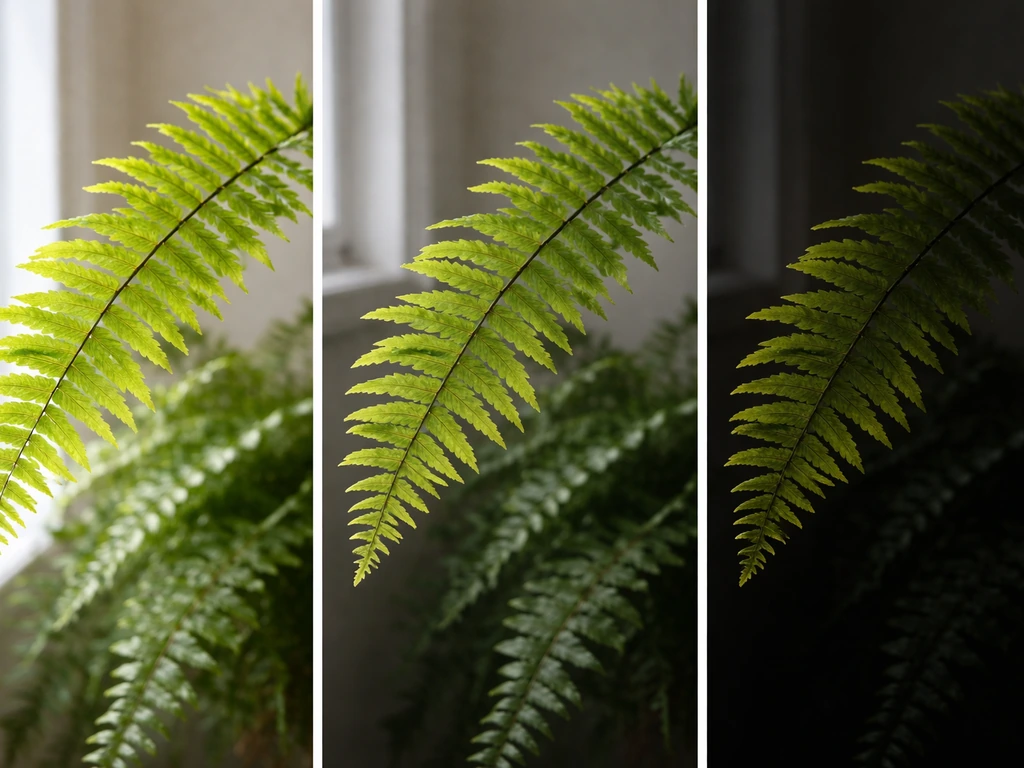
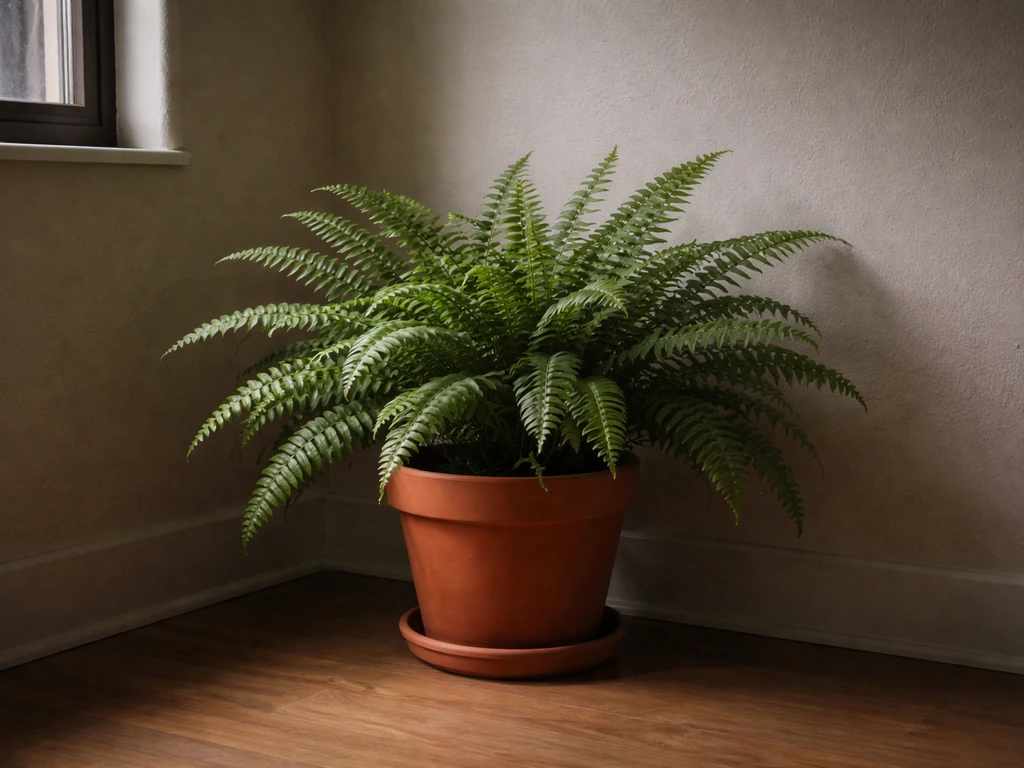
Plant care guides throw around "low light" like everyone has the same apartment. They don't. In real indoor terms, low light means a spot that receives less than about 100 to 200 lux of consistent light, which is roughly what you'd find in the middle of a room with one north-facing window, or anywhere more than 8 to 10 feet from a window on a cloudy day. Bright indirect light, which is what Boston ferns genuinely want, sits between 1,000 and 2,000 lux. That's the sweet spot near an east-facing window or a few feet back from a south or west window with a sheer curtain filtering the direct sun.
You don't need a fancy light meter to get a rough read on your space. Your phone's camera can help: open it in a dim room and notice how grainy or dark the image looks without flash. Better yet, free lux meter apps give you a ballpark number. Hold the phone face-up at plant height and take a reading in the middle of the day. Under 200 lux and you're firmly in low-light territory. Between 200 and 500 lux is marginal for a Boston fern. Above 1,000 lux and you're in reasonable shape. North-facing rooms in winter, interior rooms with no direct window access, and spots more than 10 feet from any window almost always read under 200 lux.
Kansas State University Extension is direct about this: blank" rel="noopener noreferrer">Boston ferns require bright light. The University of Minnesota Extension notes that blank" rel="noopener noreferrer">tropical ferns like Boston ferns grow poorly in low-light locations. This isn't scare-mongering. It's biology. Boston ferns use light to drive photosynthesis, produce chlorophyll, and maintain the moisture balance in their fronds. Less light means slower everything, including the plant's ability to recover from stress.
Survive vs. thrive: what actually happens in low light
Here's the honest breakdown. A Boston fern placed in a genuinely low-light spot will not die overnight. Ferns are tough, and Nephrolepis exaltata in particular is one of the more adaptable ferns you can grow indoors. But "survive" and "thrive" are very different outcomes, and you should know what you're signing up for.
| Condition | Bright Indirect Light (1,000–2,000 lux) | Low Light (under 200 lux) |
|---|---|---|
| Frond growth | Full, arching, dense fronds | Sparse, limp, or leggy fronds |
| Color | Rich, deep green | Pale green to yellowish |
| New growth | Regular, healthy new fronds | Slow or stalled |
| Overall look | Full and bushy | Thin, sad, and sparse |
| Risk of decline | Low with proper care | High without intervention |
| Watering needs | Moderate and consistent | Reduced but still present |
In low light, the fern's photosynthesis slows down dramatically. The plant produces less energy, so it can't support as many fronds. It may shed older fronds faster than it makes new ones. The fronds it does produce tend to be longer and thinner as the plant reaches toward light, a process called etiolation. You'll also notice the fronds lose that rich green color and start looking washed out. None of this is immediate, but over a few weeks in insufficient light, the decline becomes obvious.
Placement and microclimate tips for low-light success
If you're committed to keeping your Boston fern in a lower-light spot, getting the microclimate right is your biggest lever. Light is the primary limiting factor, but humidity, watering consistency, and airflow can either buffer the plant against low-light stress or make it worse.
Pick the best possible spot within your space
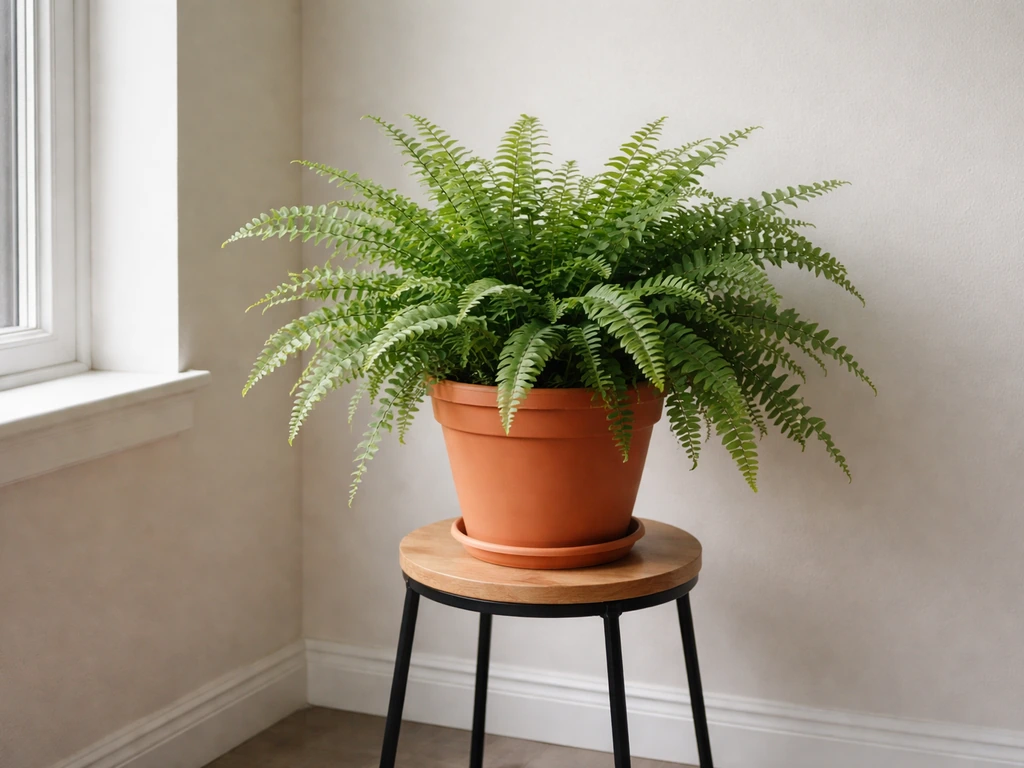
Even a few feet closer to a window makes a real difference. Light intensity drops off fast with distance, following what's called the inverse square law: doubling your distance from the window roughly quarters the light intensity. If your fern is 10 feet from an east window, move it to 4 or 5 feet and your lux reading can jump dramatically. North-facing windows are your lowest-light option. East-facing windows give gentle morning light that Boston ferns tolerate well. South or west windows work if you filter direct afternoon sun with a sheer curtain, since direct strong sun will scorch the fronds.
Humidity is non-negotiable
Boston ferns want humidity above 50%, ideally closer to 60 to 80%. In a low-light spot, the plant is already stressed, and dry air amplifies that stress fast. A small humidifier nearby is the most reliable solution. Pebble trays with water placed under the pot help a little, but not as much as a humidifier. Misting is better than nothing, but it evaporates quickly and doesn't maintain ambient humidity. North Carolina State University Extension recommends keeping Boston ferns in warm, humid conditions, roughly 60 to 70°F. If your low-light spot is also near a cold draft, a vent, or an air conditioner, that's a double hit the plant may not recover from.
Water carefully in lower light
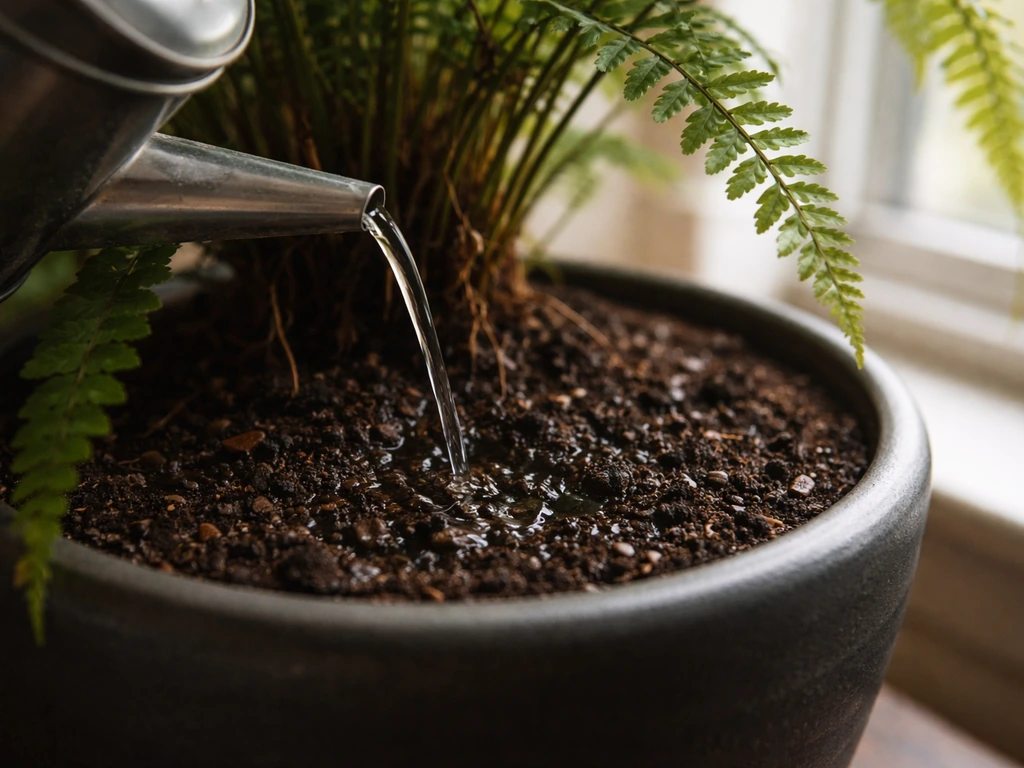
This is where a lot of people accidentally kill their ferns in low-light spots. Because the plant is using less energy and the soil dries more slowly without strong light, it's easy to overwater. Soggy roots in low light are a recipe for root rot. Keep the soil consistently moist, not wet, meaning it should feel like a wrung-out sponge rather than sitting in water. Check the top inch of soil before watering: if it's still damp, wait. The watering frequency you used in a bright spot will almost certainly be too frequent in a low-light location.
Don't let air go stagnant
Good airflow helps prevent fungal issues, which are more common when a stressed plant sits in still, humid air. You don't need a fan blowing directly on the fern, just enough gentle circulation to prevent the air from sitting completely still around the pot. A ceiling fan on low in the same room is plenty.
Symptoms that tell you the light isn't working
Your fern will tell you when it's not getting enough light. The signs are pretty consistent and show up within a few weeks of a poor placement. Here's what to look for and what to do about each one.
- Yellowing fronds across the whole plant: This is the most common low-light symptom. The plant is producing less chlorophyll because it doesn't need as much for reduced photosynthesis. Fix: move the plant closer to a window or add a grow light.
- Leggy, thin, stretched fronds: New fronds growing unusually long and thin, reaching toward the light source, is a clear sign of etiolation. The plant is literally stretching toward more light. Fix: same as above, and trim the leggy growth to encourage denser new fronds once the light improves.
- Frond drop and sparse appearance: If the plant is shedding older fronds faster than it's producing new ones, light is likely the culprit. Boston ferns normally drop some fronds, but heavy shedding in a dim room points to insufficient light. Fix: relocate or supplement with artificial light.
- Brown tips in combination with yellowing: Brown tips alone often mean low humidity or inconsistent watering, but brown tips paired with overall yellowing and slow growth usually indicate a light problem compounded by care stress. Fix: improve both light and humidity together.
- No new growth for weeks: A healthy Boston fern should be producing some new fronds, especially in spring and summer. If you haven't seen a new frond emerge in a month or more during the growing season, the plant doesn't have enough energy to grow. Fix: move to brighter light immediately or set up a grow light.
Using grow lights to make low-light spaces work
If your room genuinely doesn't have enough natural light to support a Boston fern, a grow light is not just a nice-to-have, it's the solution. The good news is you don't need an expensive or elaborate setup. A basic LED grow light or a full-spectrum fluorescent bulb can bring a dim room up to the light levels a fern needs, and it doesn't have to look like a grow tent in your living room.
Which type of grow light works best
For Boston ferns, full-spectrum LED grow lights or full-spectrum fluorescent bulbs are both solid choices. LEDs run cooler, use less electricity, and last longer, which is why most people gravitate toward them now. Look for a light that covers the full spectrum, including both blue wavelengths (which support leafy, vegetative growth) and red wavelengths. A simple full-spectrum LED grow bulb that screws into a regular lamp socket works fine for a single plant. You don't need a big panel light unless you're growing a large collection.
Distance and duration
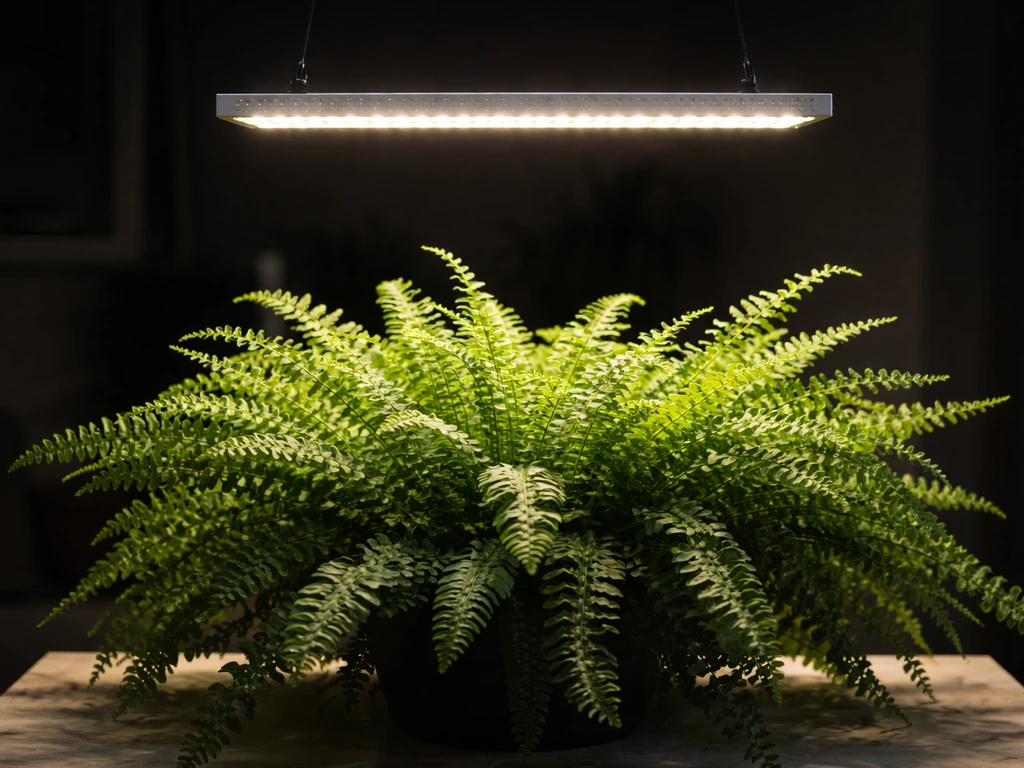
Placement matters as much as the type of light. For LED grow lights, a general starting point is 6 to 12 inches above the canopy of the plant for lower-wattage lights (under 20W), or 12 to 24 inches for more powerful fixtures. Fluorescent bulbs should be 6 to 12 inches above the fronds. Boston ferns don't want intense, direct light even from an artificial source, so if fronds start curling or showing white patches, the light is too close. Move it up a few inches.
For duration, aim for 12 to 14 hours of light per day when the grow light is the primary or only light source. If you're supplementing natural window light, 8 to 10 hours of grow light per day is usually enough. Use a simple outlet timer so you don't have to think about it. Plants benefit from a regular light-dark cycle, so keeping the timer consistent matters more than the exact number of hours.
A quick comparison of grow light options
| Light Type | Best For | Approximate Distance | Notes |
|---|---|---|---|
| Full-spectrum LED bulb (screw-in) | Single plant, low cost | 6–18 inches above fronds | Easiest to set up, low heat |
| LED grow light panel | Multiple plants or large fern | 12–24 inches above canopy | More coverage, slightly pricier |
| Full-spectrum fluorescent (T5/T8) | Budget option, works well for ferns | 6–12 inches above fronds | Runs warm, replace bulbs every 1–2 years |
| Standard incandescent bulb | Not recommended | N/A | Wrong spectrum, too much heat, ineffective |
Your action plan for today
If you've read this far, you probably already have a fern that's struggling or you're trying to decide whether to bring one home for a dim room. Either way, here's what to do right now.
- Measure your light: Use a free lux meter app on your phone and take a reading at plant height in the spot you're considering. Under 200 lux means you'll need a grow light. Between 200 and 500 lux, try moving closer to the window first.
- Relocate before you supplement: Moving the plant 2 to 4 feet closer to a window is free and often makes a bigger difference than you'd expect. Try this first for a week before buying anything.
- Check your humidity: Get a cheap hygrometer (under $10 at most hardware stores) and measure the air near your fern. If it's under 50%, add a small humidifier or set up a pebble tray at minimum.
- Adjust your watering schedule: If you're moving the fern to a lower-light spot, immediately water less frequently. Check the soil before every watering and skip if it's still damp.
- Set up a grow light if needed: If your space reads under 200 lux and you can't move the fern closer to a window, pick up a full-spectrum LED grow bulb, position it 12 to 18 inches above the fronds, and put it on a timer for 12 to 14 hours a day.
- Trim leggy or yellowed fronds: Once you've improved the light, trim back any stretched or yellowed fronds at the base. This redirects the plant's energy to healthy new growth.
- Give it two to four weeks: Ferns don't rebound overnight. After making changes, give the plant a month before deciding if the spot is working. Watch for new frond growth as the clearest sign of recovery.
Boston ferns are worth the extra attention. They're among the most striking houseplants you can grow indoors, and the effort of getting the light and humidity right pays off in that lush, cascading look that makes them so popular. If you're curious about how other ferns handle low light, or whether different plant families like bromeliads or herbs manage better in dim spots, those comparisons are worth exploring, since some species genuinely do perform better with less light than Boston ferns. You may be wondering whether can bromeliads grow in low light, and the answer depends on the type of bromeliad and how much light it can realistically receive. If you are also wondering about other plants for dim rooms, you might be asking whether can hornwort grow in low light. If you’re also looking for herbs that can grow in low light, you’ll want to compare which types tolerate dimmer conditions and still keep steady growth. But for this plant specifically, bright indirect light is the goal, and everything else is a workaround to get as close to that as your space allows.
FAQ
If my “low light” is from a covered window or overcast weather, will my Boston fern still grow okay?
It depends on consistency. If the light level stays under 200 lux most of the day, growth usually slows and fronds can wash out over a few weeks. A practical test is to move the plant closer to the window for 1 to 2 weeks and see if new fronds come in greener and fuller, then keep it at that distance if it improves.
Can I place a Boston fern in a bathroom with low natural light?
Often yes, because bathrooms tend to have higher humidity. Still, confirm the light situation. If there is only dim indirect light, add a humidifier or run the bathroom fan strategically (briefly) to prevent stale air, and consider a small grow light during winter when daylight drops.
How do I tell the difference between low-light problems and watering or nutrient issues?
Low light often shows slow growth, longer thinner fronds, and washed-out green. Overwatering usually comes with persistently damp soil and can lead to browning or collapse that progresses from the base. Nutrient shortage is more gradual and often affects older fronds first. If soil is staying damp between checks, pause watering before adding fertilizer.
Is it better to use a grow light or to just move the fern closer to the window?
If you can safely increase natural light by moving it closer, that is usually the first choice because it is cheaper and reduces setup variables. If distance from any window still leaves you under about 200 lux, a grow light is the more reliable fix. Ideally do both, even slightly, then adjust based on frond color and new growth.
What grow-light height and timing should I use if I’m supplementing window light (not fully replacing it)?
For supplementation, start with 6 to 12 inches above the fern for lower-watt LEDs and keep the light on about 8 to 10 hours per day. Use the fern’s reaction as your guide, if tips curl upward or you see white patches, raise the light a few inches.
Will turning the pot help if my fern is in a dim corner?
Yes, but it will not fully solve insufficient light. Rotating the pot every week can reduce uneven etiolation (one-sided stretching) so the canopy stays more balanced. If the plant is still pale or thin over several weeks, the room simply needs more light than rotation can provide.
Should I fertilize a Boston fern that’s kept in low light?
Usually no, at least not right away. In low light, the plant’s energy production is reduced, so it often cannot use extra nutrients effectively and salt buildup can worsen root stress. If you do fertilize, use a diluted schedule only after you see steady new growth that looks greener.
How often should I water a Boston fern in low light?
Less often than you would in bright light, but the safest rule is the soil-check method. Water only when the top inch feels like a wrung-out sponge rather than wet, and wait longer than your prior routine suggests. If the pot stays wet for many days, increase airflow or reduce watering frequency to prevent root rot.
Can Boston ferns handle cooler temperatures in low light?
Cool drafts plus low light can slow recovery and increase stress. Aim for a warm spot around 60 to 70°F and keep the fern away from vents, exterior doors, or AC blowing directly. If the area gets cold at night, a grow light can partially compensate during those hours.