
Hornwort (Ceratophyllum demersum, the aquatic plant you'll find in most fish stores) can survive in low light, but it won't thrive there without a little help. In truly dim conditions it stays alive and may even look okay for a while, but growth slows, stems get sparse, and the plant starts dropping its needle-like leaves. Get the light right, though, and hornwort is one of the fastest-growing, most forgiving aquatic plants you can keep indoors.
Can Hornwort Grow in Low Light? Indoor Care Tips
Marcus Hartley
14 Jun 2026
What hornwort actually is (and a quick name clarification)
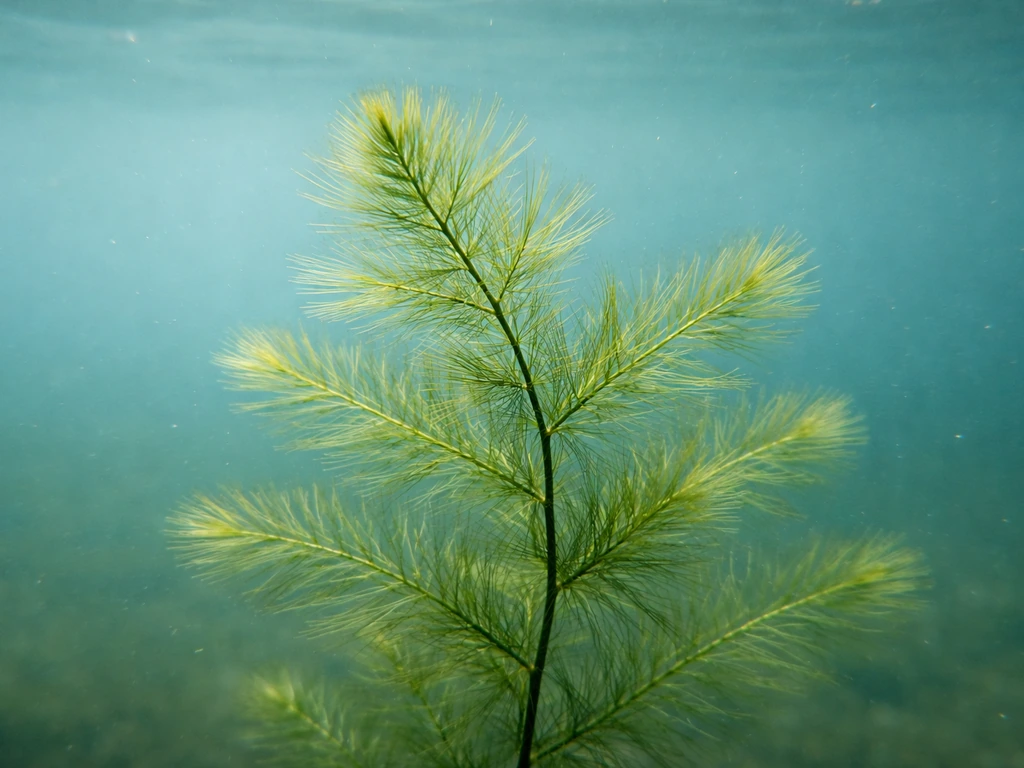
If you searched for 'hornwort' expecting something you grow in soil like a moss or liverwort, you may have hit a name collision. The word 'hornwort' refers to two completely unrelated groups of plants. Anthocerotophyta are the tiny, spore-producing hornworts that look like liverworts and grow on damp soil or rocks. Ceratophyllum demersum is an aquatic flowering plant that grows fully submerged in water, sometimes called coontail. This article is about Ceratophyllum demersum, because that's what almost every aquarist, pond owner, or indoor tank grower means when they look for hornwort care advice.
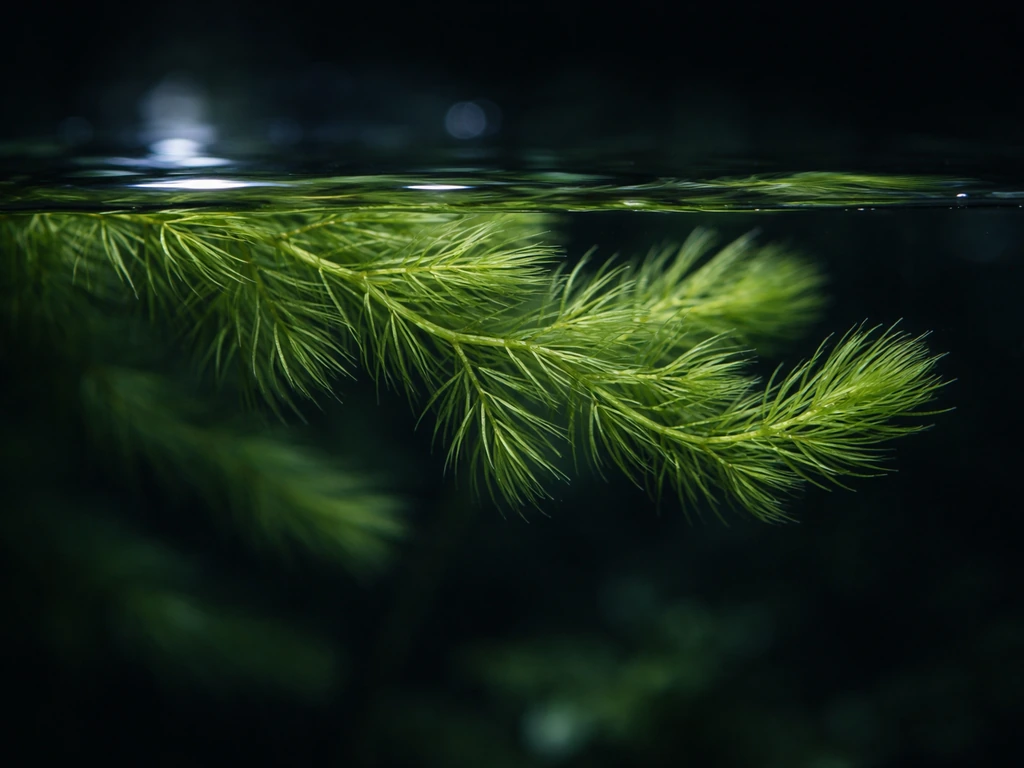
Ceratophyllum demersum is unusual among aquatic plants because it has no true roots. It floats freely or can be loosely anchored, and it pulls nutrients directly from the water column through its feathery, whorled stems. That rootless structure shapes everything about how you grow it, including how you position it for light.
Surviving vs. actually thriving in low light
Hornwort is genuinely more light-tolerant than many aquatic plants. Scientific studies have documented Ceratophyllum demersum growing in shallow, low-light littoral zones in the wild, and aquarium species profiles consistently list it as a low-light-tolerant plant. So yes, it can handle dim conditions better than, say, carpeting plants or stem plants that need high PAR. But 'tolerant' is not the same as 'happy.' Here's the honest breakdown:
| Light Level | What Hornwort Does | What You'll Notice |
|---|---|---|
| Very low (under 15 PAR) | Barely survives, slowly declines | Needle drop, pale color, no new growth |
| Low (15–30 PAR at plant level) | Survives, minimal growth | Slow, sparse stems; some shedding |
| Moderate (30–60 PAR) | Grows steadily, good color | Regular new tips, dense foliage |
| Medium-high (60–100+ PAR) | Rapid, sometimes explosive growth | Fast elongation, thick, bright green stems |
Research using Ceratophyllum demersum in controlled lab settings has run it at around 100 µmol m⁻² s⁻¹ PAR (that's the photosynthetically active radiation unit used for aquatic plants) with a 16-hour light and 8-hour dark cycle to get strong, measurable photosynthesis. That's not a low-light setup. For practical indoor growing, the sweet spot where hornwort genuinely thrives is somewhere in the moderate range, roughly 30–60 PAR at the plant's level. You can keep it alive with less, but you'll always be managing decline rather than growth.
What 'low light' actually means indoors
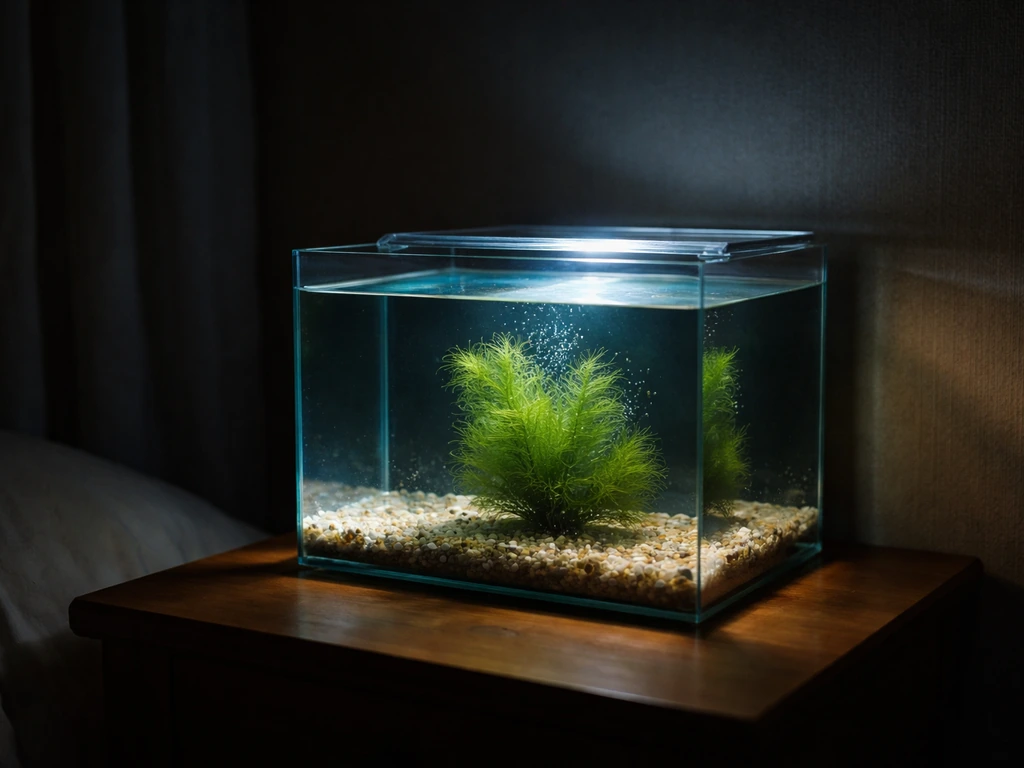
This is where a lot of plant parents get tripped up. 'Low light' means something very specific for aquatic plants, and it's not the same as 'my room feels bright enough.' For aquarium and indoor water garden setups, low light is typically defined as 15–40 µmol m⁻² s⁻¹ PAR measured at the plant's depth, not at the surface of the water. Light attenuates as it travels through water, so a bulb that looks bright above the tank can deliver much less usable light down where the plant actually is.
If you don't have a PAR meter (most people don't), here are some real-world proxies:
- A north-facing window in an apartment: consistently dim, typically not enough on its own for anything beyond survival
- A south- or east-facing window with 4–6 hours of direct or bright indirect light: borderline, better in summer, unreliable in winter
- A basic clip-on LED aquarium light running 8–10 hours a day over a small tank: often enough for moderate-low light if the fixture is quality and the tank isn't too deep
- A dedicated planted-tank LED (like those from Fluval, Finnex, or similar brands) at recommended height: usually delivers moderate light consistently
Seasonal variation matters more than most people realize. A windowsill setup that keeps hornwort lush in June (long days, strong sun angle) can struggle badly by November when daylight hours drop and the sun sits low. If you're relying on natural light and notice your hornwort declining in fall or winter, that's almost certainly the cause. Supplementing with an artificial light source on a timer is the most reliable fix.
The best setups for growing hornwort under low light
Placement: float it first
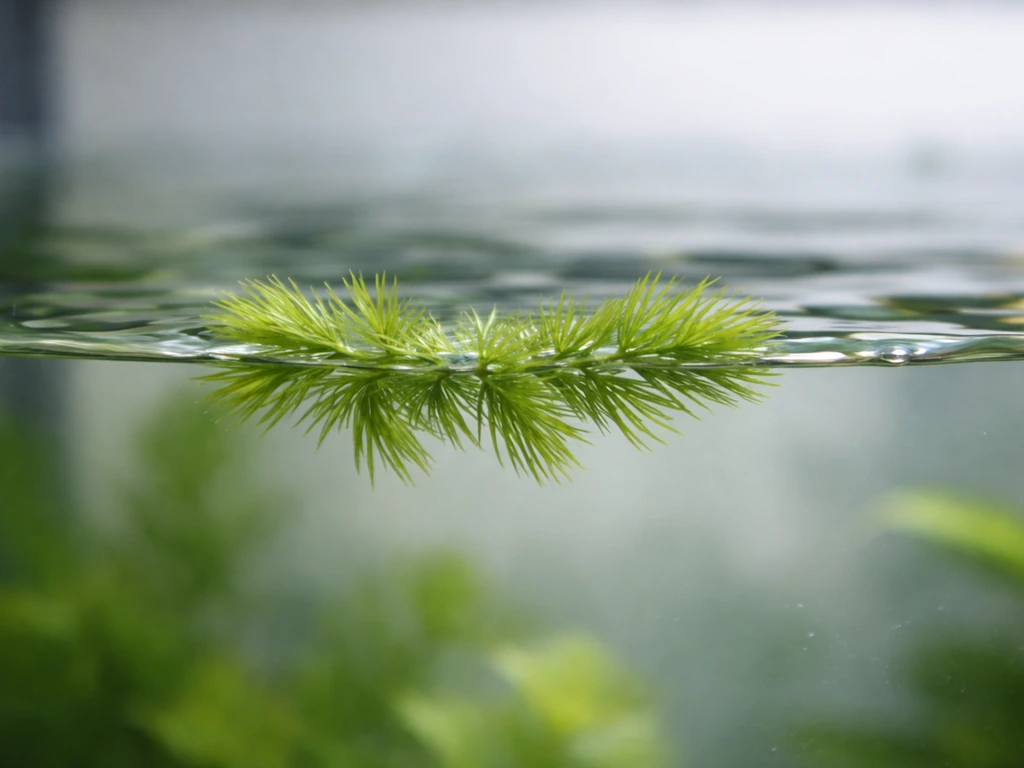
Because hornwort has no roots and floats naturally, the single easiest way to maximize its light intake is to let it float at the surface. A floating hornwort strand is always at the brightest point in the water column. If you anchor it to the substrate in a deep tank, it may be receiving significantly less PAR than it needs, even if the light above looks adequate. In a low-light scenario especially, floating is your best starting position. You can always move it once you know the light is sufficient.
Photoperiod: consistency matters as much as intensity
Light intensity and photoperiod (the number of hours the light is on) work together, not separately. A brighter light for fewer hours and a dimmer light for more hours can deliver similar total daily light energy to the plant. For a low-light indoor setup, aim for 10–12 hours of light per day as a starting point. You don't need to run lights for 16 hours unless you're actively trying to push very fast growth. Research using hornwort in controlled settings has used 12:12 and 16:8 light/dark cycles, and aquarist practice generally lands in the 8–12 hour range for low-to-moderate planted tanks. Use a simple outlet timer. Inconsistent on/off schedules stress aquatic plants and can encourage algae.
LED grow lights and aquarium lights for low-light hornwort
You don't need an expensive high-end planted tank light to grow hornwort. A mid-range LED aquarium light rated for plant growth, or even a decent LED grow light bulb mounted above an open-top tank or tub, is enough to get it thriving. What you're targeting at the plant's level is roughly 30–60 PAR. Canton Aquatics’ hornwort care guide notes that under medium-to-high light, hornwort growth accelerates dramatically, so higher light levels generally lead to denser, faster growth expectations 30–60 PAR. A few practical tips:
- Choose a light with a color temperature in the 6500K range or a full-spectrum LED marketed for planted tanks. Hornwort uses both red and blue wavelengths for photosynthesis, so a warm-only or cool-only bulb will underperform.
- Mount the light closer to the surface for a low-light setup to compensate for any intensity shortfall. Even 2–3 inches closer can meaningfully increase PAR at plant level.
- If you're using a general LED grow light (not aquarium-specific), check that it's appropriate for the setup and that the wattage is reasonable for the tank or container size. A cheap 10W LED clip-on is often enough for a 10-gallon floating hornwort setup.
- Run the light on a timer set to 10–12 hours. Pick consistent on/off times and don't change them frequently.
Signs your hornwort isn't getting enough light
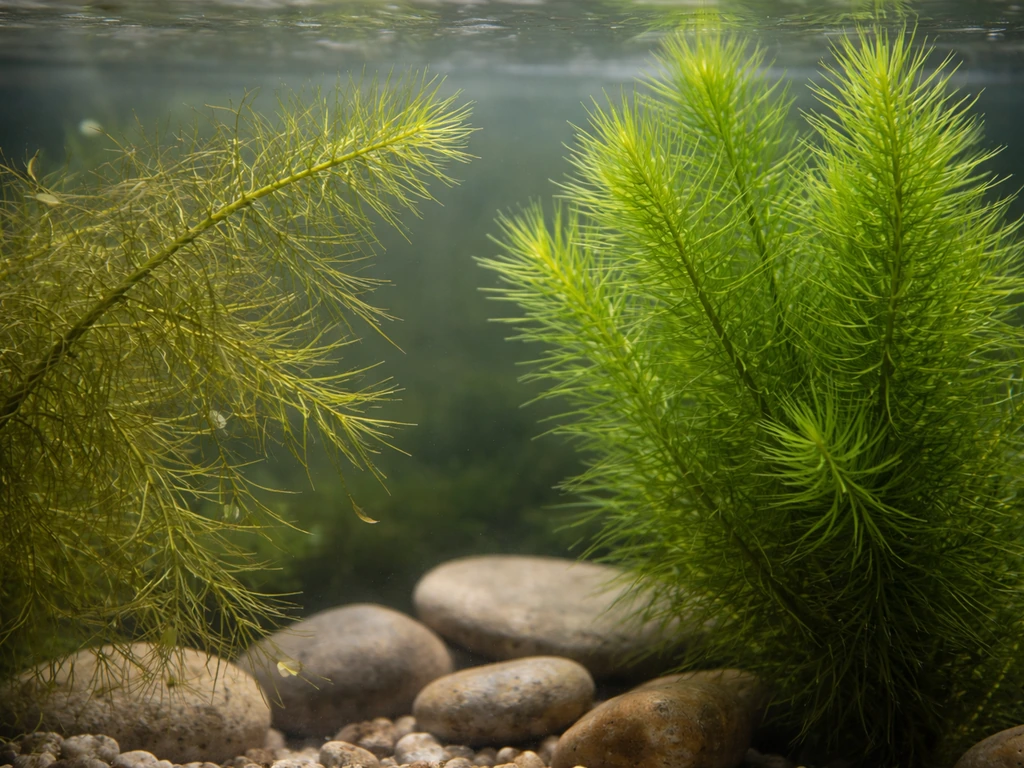
Hornwort will tell you when it's struggling. The tricky part is that some of these symptoms also appear during normal adjustment after you first add it to a tank, so give new plants two to three weeks before assuming there's a light problem.
- Needle drop: The fine, needle-like leaves fall off in large quantities. Some shedding when first introduced is normal (this is called 'melt'), but ongoing heavy needle loss after a few weeks of establishment usually points to a light or water quality issue.
- Pale or yellowish color: Healthy hornwort is a vivid green. Yellowing or fading suggests the plant isn't producing enough chlorophyll, which can happen when light is too low.
- Stretched, sparse stems: Under low light, hornwort elongates rather than producing dense, bushy growth. The stems get leggy and the whorls of leaves are spaced farther apart.
- No new growth: If tips aren't producing any new growth after a couple of weeks, and the plant looks static or declining, light is one of the first things to check.
Quick fixes: what to do today
- Increase photoperiod first. Before buying anything, add 1–2 hours to your current light schedule. This is free and often makes a noticeable difference within a week.
- Float the plant if it's anchored. Move hornwort to the surface so it's as close to the light source as possible.
- Move the light closer to the water surface, or reposition any existing grow light to reduce the distance to the plant.
- Check nutrients. Hornwort feeds from the water column, and a nutrient-poor tank can look exactly like a light-deficiency problem. If you're not already using a balanced liquid aquarium fertilizer, add one and see if growth improves.
- If the setup genuinely can't support more light, consider upgrading to a basic LED planted tank light. You don't need to spend a lot. A reliable mid-range fixture changes the game.
Tank setup, algae, and other things that affect how hornwort performs
Tank vs. soil-free setups
Hornwort is almost always grown in aquariums, ponds, or water tubs, not in soil. It's a fully aquatic plant and won't survive out of water for long. If you were hoping to grow it in a terrarium or as a houseplant, that's where the mix-up with terrestrial hornworts (Anthocerotophyta) comes in. For aquatic Ceratophyllum demersum, you need water. A glass aquarium, a plastic storage tub, or an outdoor pond all work. Indoors, a tank with a lid-mounted light is the most controllable setup.
Algae and how hornwort actually helps
One of the most useful things about hornwort in a low-light aquarium is that it actively works against algae, and not just by competing for nutrients. Research has shown that Ceratophyllum demersum produces allelopathic compounds that inhibit the growth of cyanobacteria (blue-green algae) and some other phytoplankton. Research on Ceratophyllum demersum and Najas marina reports allelopathic activity that can inhibit other primary producers, which is relevant when managing algae dynamics in planted tanks blank" rel="noopener noreferrer">allelopathic compounds that inhibit the growth of cyanobacteria. This is a genuine biochemical suppression, not just shading. In practice, a healthy, growing hornwort plant tends to be one of the better natural tools for managing algae pressure in a low-tech indoor tank.
That said, if your hornwort is struggling under low light and not growing well, it loses this competitive edge. A slow, stressed plant is less effective at nutrient uptake and produces fewer allelopathic compounds. Getting the light right is the foundation for everything else, including algae management.
Nutrients matter too, not just light
Because hornwort has no roots and absorbs everything from the water column, water chemistry plays a big role in whether it thrives. Studies have found that Ceratophyllum demersum significantly influences phosphorus dynamics in the water, and its growth response can be limited by nutrient availability just as much as by light. If you've improved your light situation but the plant still isn't performing, check that your water has adequate nitrogen, phosphorus, and trace minerals. A general liquid planted-tank fertilizer used at low doses is usually sufficient for a hornwort-focused setup without pushing algae blooms.
Don't confuse 'melt' with a light problem
When you first add hornwort to a new tank, it often sheds needles heavily for the first one to three weeks. This is normal adjustment behavior, not a sign that the light is wrong. The plant is adapting to new water parameters, temperature, and flow. Wait out this adjustment period before making big changes to your light setup. If the plant stabilizes and starts producing new growth, you're on the right track regardless of what the initial melt looked like.
If you're exploring other low-light aquatic or semi-aquatic plants for your indoor space, ferns are a popular comparison point since many tolerate similar low-light conditions. Yes, and if you’re wondering specifically about Boston ferns, their low-light tolerance depends on consistent brightness and indoor conditions ferns are a popular comparison point. Ferns can also grow in low light, but the exact conditions and fern type matter a lot ferns are a popular comparison point. The principles around PAR, photoperiod, and light placement apply broadly across low-light aquatic and houseplant setups alike.
FAQ
Can hornwort grow in low light outdoors if I keep it in a pond?
Yes, but only if it stays fully submerged. For Ceratophyllum demersum, even short periods with the needles above water can cause dieback, and the plant may not recover well in low light because it already has limited photosynthesis.
My tank light is dim, will hornwort still grow if the plant is near the bottom?
It can, but water depth and season matter more than the weather. Aim for a spot where the plant is in the upper half of the water column, and expect reduced growth in fall and winter unless you supplement with artificial lighting or the pond stays relatively shallow.
How long should I keep hornwort in low light before deciding it’s not working?
You will likely get slower decline rather than healthy growth, because hornwort without roots relies on usable PAR in the water where the tips sit. A practical fix is to float it at the surface first, then, once it shows new, dense growth, you can lower it gradually to test how much depth it can handle in your setup.
What light schedule is safest for low-light hornwort without encouraging algae?
Wait at least 2 to 3 weeks for normal needle-shedding and adjustment. If you see no new growth after that window, and the strands become noticeably sparse or brittle, treat it as a lighting and PAR issue rather than a temporary acclimation.
Does hornwort need fertilizer in low light, or should light be the only focus?
Use a consistent daily photoperiod (about 10 to 12 hours to start) with a timer so the on and off times never drift. If algae spikes, reduce duration before increasing intensity, then reassess after a week.
Can I use a grow light to increase hornwort’s light in a low-light tank if I don’t know PAR?
Light is the foundation, but low light also increases the plant’s dependence on nutrients because it cannot compensate with extra photosynthesis. If the plant stalls after you correct PAR, use low-dose planted-tank fertilizer and check trace nutrients (especially nitrogen, phosphorus, and potassium) rather than immediately changing the light again.
Will hornwort melt and look worse in low light, even if it will recover?
Yes. A decision aid is to start by positioning the light closer and keeping hornwort floating, then increase either intensity or duration in small steps (for example, add 1 to 2 hours per day or slightly raise the fixture). Stop once you see healthy new growth and no persistent algae creep, since PAR is hard to estimate without a meter.
Is floating hornwort better for low light than anchoring it to rocks or driftwood?
It can. If you recently added hornwort or changed lighting, a temporary melt for 1 to 3 weeks is common. The difference is that recovery should bring fresh, tighter needles and less shedding; continued loss past that adjustment period usually means light is still insufficient.
What’s the biggest mistake people make when they try to grow hornwort in low light?
Usually yes. Floating places the plant at the brightest part of the water column and avoids unnecessary PAR loss from depth and shadowing by hardscape. If you prefer anchoring for aesthetics, anchor lightly near the surface and keep the top growth within the upper third of the tank.