
Yes, a handful of herbs can genuinely grow and produce harvestable leaves in low-light indoor conditions. Mint, chives, parsley, and lemon balm are the most reliable picks. They won't grow as fast or as lush as they would in a sunny south-facing window, but if you manage your expectations, dial in your watering, and optionally add a basic LED grow light, you can absolutely keep these herbs alive and useful in a dim apartment or north-facing room.
Herbs That Can Grow in Low Light: Best Options Indoors
Marcus Hartley
29 May 2026
What 'low light' actually means for herbs indoors
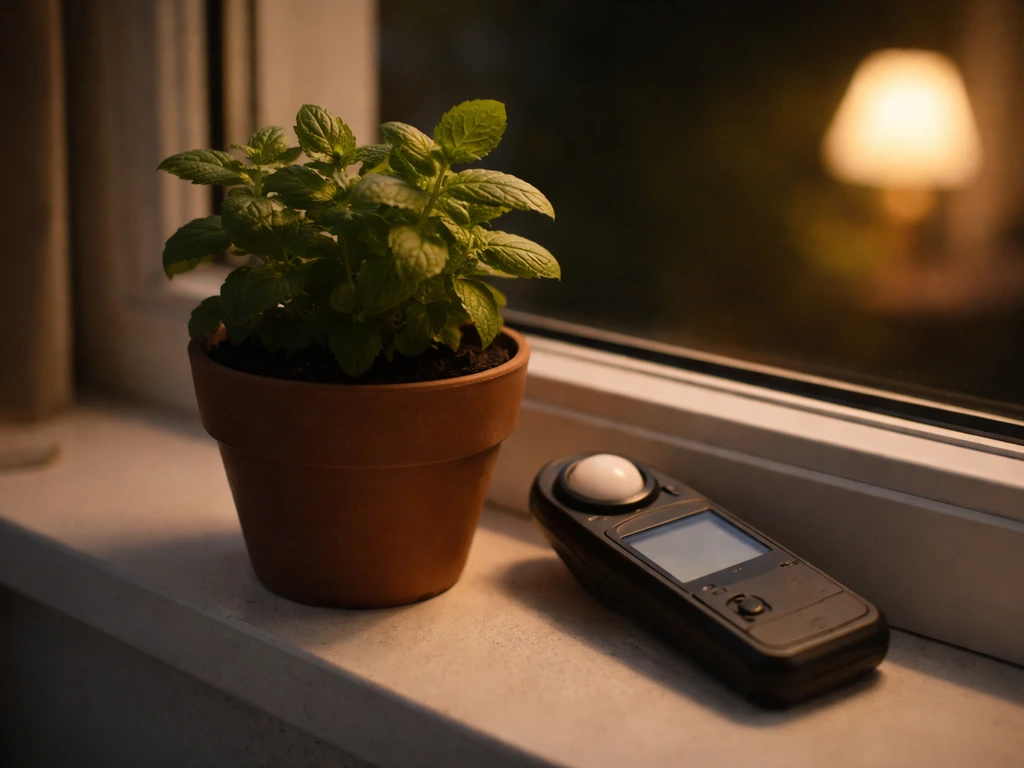
When growers talk about low light, they usually mean somewhere in the range of 50 to 250 foot-candles of light intensity. A foot-candle is roughly the light hitting a one-square-foot surface one foot away from a standard candle, which is a useful way to picture how dim we're really talking about.
In practical home terms, 50 to 250 foot-candles is a north-facing window, a spot several feet back from any window, or a room that gets ambient daylight but no direct sun. It is not a windowless interior room or a dark hallway. If you can read comfortably without turning on a lamp, you're probably in low-light territory rather than truly dark territory.
The University of Minnesota Extension describes low-light conditions as roughly 50 to 250 foot-candles and notes low-light plants can do well with a north window or a fairly dark corner low-light territory rather than truly dark territory.
For herbs specifically, low light is a real challenge because most culinary herbs evolved in open, sunny Mediterranean or tropical environments. They need light for photosynthesis to drive leafy growth, and when that light dips below what they're comfortable with, they respond in predictable ways: slower growth, smaller leaves, thinner stems, and eventually the spindly, reaching habit called etiolation. Setting honest expectations before you plant is the most important thing you can do.
The herbs that actually tolerate low light
Not every herb is a lost cause in a dim spot. These are the ones that give you a realistic shot at harvestable growth even when light is limited.
| Herb | Light Tolerance | What to Expect in Low Light | Best Use Case |
|---|---|---|---|
| Mint | Best low-light performer | Steady growth, may get slightly leggy; still very harvestable | Any dim spot; spreads readily so grows well in containers |
| Chives | Very good | Slower blade growth; thinner shoots but still edible and useful | North windowsill or a few feet from an east window |
| Parsley | Good | Slow germination and growth; flat-leaf varieties handle shade better than curly | Works with supplemental light; manageable on a dim sill |
| Lemon Balm | Good | Grows more open and loose but produces leaves reliably | Great for tea or flavoring; tolerates neglect well |
| Cilantro | Moderate; bolts easily | Slower growth actually delays bolting, which is a plus; still needs some indirect light | Good short-term herb for a brighter low-light spot |
| Oregano | Moderate | Growth slows significantly; harvest lightly to avoid stressing the plant | Better with supplemental light but survives low light |
| Thyme | Moderate; needs some light | Gets leggy quickly; woody stems become more pronounced | Works best with at least a few hours of indirect sun or grow light |
Basil is conspicuously absent from that list, and for good reason. It genuinely needs bright light to stay healthy, and it declines fast in low-light conditions. The same goes for rosemary, bay laurel, and most sun-loving Mediterranean herbs. If your space is dim, those are the herbs most likely to disappoint you. Stick to the list above and you'll have much better results.
Setting up your space to get the most out of limited light
Window direction and placement
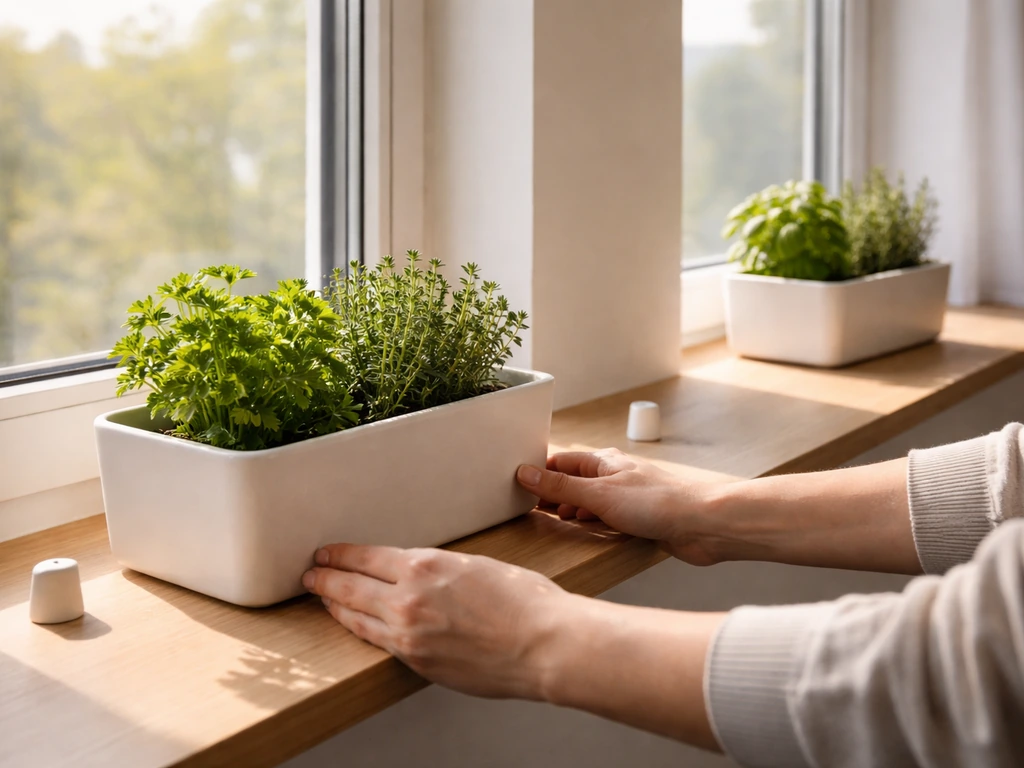
In the Northern Hemisphere, a south or southwest window gives you the most light across the day. An east window gives you gentle morning sun, which is soft but genuinely useful. A north window gives you consistent but dim indirect light, which is about the ceiling for what I'd call low-light herb growing. A west window can work in summer but gets less light in winter when days are short. If your only option is a north window, mint and chives are your most reliable choices. If you have an east window, parsley and lemon balm open up as solid options too.
Distance from the window matters more than most people realize. Light intensity drops off fast as you move away from the glass. Even a foot or two of distance can push you from usable low light into genuinely too-dark territory. Put your herb pots as close to the window as physically possible. On the sill itself is ideal.
Rotation and reflective surfaces
Rotating your pots regularly, every few days or at least once a week, is a simple habit that makes a real difference in low-light situations. Plants always lean toward the light source, and if you don't rotate, one side gets shaded out while the other overextends. A quarter turn every few days keeps growth reasonably even. You can also place a piece of white cardboard, a sheet of aluminum foil, or even a white-painted wall behind your pots to bounce light back onto the shadowed sides. It sounds low-tech because it is, but it genuinely helps.
How to use grow lights when your space is truly low light
If your window situation is genuinely dim and you want decent herb production, a grow light is the most reliable upgrade you can make. The good news is you don't need anything expensive or complicated. A basic LED grow light in the 2,000 to 3,000 lumen range (look for full-spectrum or daylight-balanced LEDs around 4,000 to 6,500 Kelvin) will cover a small herb garden on a countertop or shelf.
For herbs, aim to run the light for about 12 to 14 hours per day. University research backs up that 12 hours of artificial light daily is enough for most indoor-grown herbs, and the Chicago Botanic Garden notes that around 14 hours of supplemental light can substitute for the four to six hours of natural sun that most herbs prefer.
LED vs fluorescent for herb growing
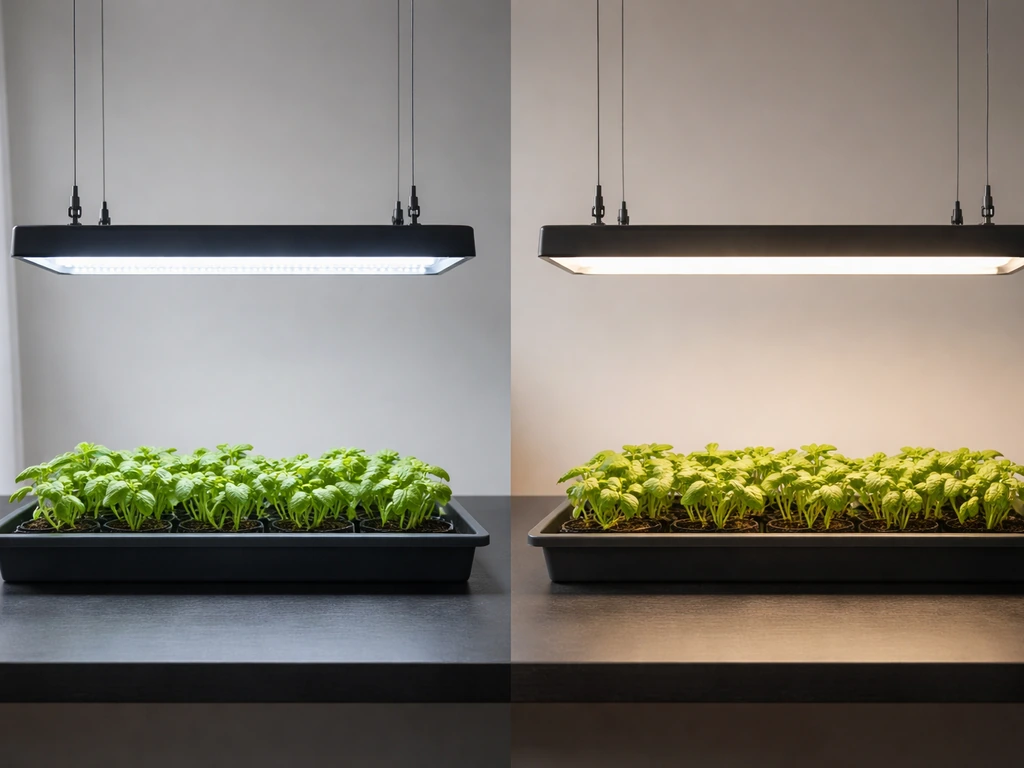
For most home herb setups, LED grow lights are the better choice today. They run cooler, use less electricity, last longer, and the cost gap between LED and fluorescent has closed considerably. Full-spectrum LED panels or simple LED strip lights positioned 6 to 12 inches above your herbs will do the job well. Fluorescent T5 bulbs are still a legitimate option, particularly shop-light style fixtures that are inexpensive and widely available. They work, they're just less energy-efficient over time. What matters more than the specific technology is getting the light close enough to the plants and running it long enough each day.
One practical tip: use a basic outlet timer so you don't have to remember to switch the light on and off. Consistent photoperiods matter for plant health, and a $10 timer takes that variable completely off your plate.
Care tips that make low-light herbs succeed
Water less than you think
Low-light plants grow more slowly, which means they use water more slowly too. Overwatering is the most common way herb gardeners kill plants in dim conditions. When photosynthesis slows down, the plant isn't pulling as much moisture from the soil, so the potting mix stays wet longer. That wet soil is a direct invitation for root rot and fungus gnats. Check the top inch or two of soil before watering and only water when it feels dry. In low light, that might mean watering less than half as often as you would in a bright sunny spot.
Go easy on fertilizer
Feeding your herbs when they're not growing actively is counterproductive. A slow-growing, low-light herb can't process a full dose of fertilizer the same way a vigorous sun-grown plant can. Stick to a diluted liquid fertilizer at half strength, and only fertilize during the warmer months when even low-light plants show some active growth. In winter, skip fertilizing almost entirely unless you have a strong grow light keeping the plants actively producing.
Preventing legginess
Legginess (the technical term is etiolation) happens when a plant stretches toward the light, producing long gaps between leaf nodes and thin, weak stems. You can slow it down but not always fully prevent it in genuinely low light. The best tools are: keeping the light source as close as possible, rotating regularly, pinching back the growing tips to encourage bushier branching rather than vertical stretching, and harvesting frequently so the plant puts energy into producing new leaves rather than extending existing stems. Crowded pots also make legginess worse, so don't overcrowd multiple herbs in one container.
When your herbs are struggling: signs, fixes, and knowing when to switch
Signs your herb isn't getting enough light
- Long, spindly stems with wide gaps between leaves (etiolation)
- Pale or yellowing leaves, especially on new growth
- The plant leaning hard toward the window and not recovering when rotated
- Older leaves dropping off while new growth looks weak and thin
- Little to no new leaf production over several weeks
Quick fixes to try first
- Move the pot as close to the window as possible, ideally directly on the sill.
- Add a grow light and run it 12 to 14 hours daily if you haven't already.
- Check whether overwatering is compounding the problem: soggy soil plus low light is a fast path to root rot and fungus gnats.
- Pinch back leggy stems to encourage the plant to redirect energy into bushier, compact growth.
- If you're in winter, know that even your best low-light herbs will struggle more. A grow light becomes more important, not less, from November through February.
When to accept that the herb just won't work in your space
If you've tried rotating, moved the pot to the best window you have, and added a grow light, and the plant is still declining after four to six weeks, it's fair to cut your losses. In particular, ferns have their own low-light requirements, so they may not be the best fit without the right conditions low light. Not every herb works in every space, and that's genuinely okay. Swap it out for a more shade-tolerant option from the list above, or consider whether a brighter spot elsewhere in your home might be worth trying.
It's also worth knowing that other plants in the same low-light family, like ferns and some tropical foliage plants, can actually thrive in conditions where herbs struggle. Boston ferns are one common option people ask about too, so you can check whether they can grow in low light before you commit to them can Boston ferns grow in low light. That same idea applies to bromeliads, so you may also be wondering can bromeliads grow in low light.
Other plants in that same low-light family, like ferns, can actually thrive in dim conditions too, so they can be a good alternative when herbs struggle. Hornwort, for example, tends to handle lower-light conditions better than many herbs, but it still needs stable moisture and airflow. Hornwort can grow in low light, but it needs consistent moisture and airflow to stay healthy. If you just want something green and living in a dim corner, those might be a better fit than trying to force cilantro to survive in near-darkness.
The honest takeaway is this: low-light herb growing is doable but it requires matching the right herbs to your conditions, keeping expectations realistic, and getting a few fundamentals right around watering and light duration. Mint, chives, parsley, and lemon balm give you the best shot. A basic LED grow light on a timer removes most of the uncertainty. And checking your soil before you water removes the single most common way indoor herb gardens fail. Start there and you'll be in good shape.
FAQ
If my window is very dim, can I use a grow light and still skip watering changes?
Yes, but treat it as a backup, not the main plan. Place the LED close enough that the plant responds (often 6 to 12 inches), and keep the light schedule consistent (12 to 14 hours). If you also rely on a dim north window, you can shorten the grow-light time a bit, but avoid using natural light inconsistently from week to week.
How do I tell whether I’m overwatering low-light herbs?
In low light, wait longer. Water only after the top inch or two of potting mix dries, and make sure the pot has drainage. A helpful edge case: if you see standing water in the saucer after watering, empty it promptly, because soggy soil can trigger root rot even when your schedule is “correct.”
Does using foil or cardboard behind my herbs really help, or is it mostly pointless?
A reflective barrier behind the plants often helps, but it works best when you also keep the pots close to the window or light. White cardboard or foil can bounce stray light back onto shaded sides, reducing uneven leaning. Don’t block airflow with large reflective sheets that crowd the plants.
What should I do if my herbs start getting leggy in low light?
Some herbs will respond better to earlier intervention. If you start legginess (long gaps between leaves) within the first few weeks, pinch the tips to encourage branching and harvest frequently right away. Waiting until the plant is very stretched makes it harder to “rebuild” compact growth.
Can I plant multiple low-light herbs in one container to save space?
Start with smaller, separate pots or at least keep herbs spaced within a shared shelf. Crowding reduces airflow and can make overwatering symptoms worse, since multiple plants compete for water unevenly in dim conditions. If you must combine herbs, choose ones with similar watering needs.
Will these herbs grow in a windowless room if I keep the curtains closed during the day?
It depends on what you mean by “low light.” If you can read without a lamp, the low-light herbs listed are reasonable, but windowless rooms are different. With near-zero light, you will likely need a grow light and still may see slow growth, especially for parsley and chives.
How often should I harvest mint, chives, parsley, or lemon balm in low light?
Harvest frequency helps, and the timing matters. For best regrowth, take small-to-moderate cuttings rather than stripping large portions at once. In low light, avoid heavy harvests because the plant is already slow to replace new foliage.
My herb looks worse after a month. At what point should I replace it, and what do I check first?
If the plant is declining after 4 to 6 weeks despite correct light and watering, troubleshoot first before abandoning it. Check for root rot (sour smell, blackened roots), fungus gnats (wet soil and larvae), and whether the potting mix drains quickly. If the roots are healthy but growth is just slow, it may be stabilizing rather than failing.
Should I fertilize low-light herbs on the same schedule as herbs in sunny windows?
For low-light herb growing, “half strength” fertilizer is a reasonable rule, but you also need active growth to justify feeding. If new leaves are not appearing and stems look thin, pause feeding and focus on light and watering. Switch to fertilizing again only when you see steady new growth.
How can I fine-tune my grow light height and timer for best results?
A good practical approach is to use a timer plus a simple height check. If leaves start to reach or yellow near the lower parts, raise or lower the fixture (and ensure plants are not shadowing each other). Also keep the light running the same daily window, because erratic schedules can worsen legginess and stress.