
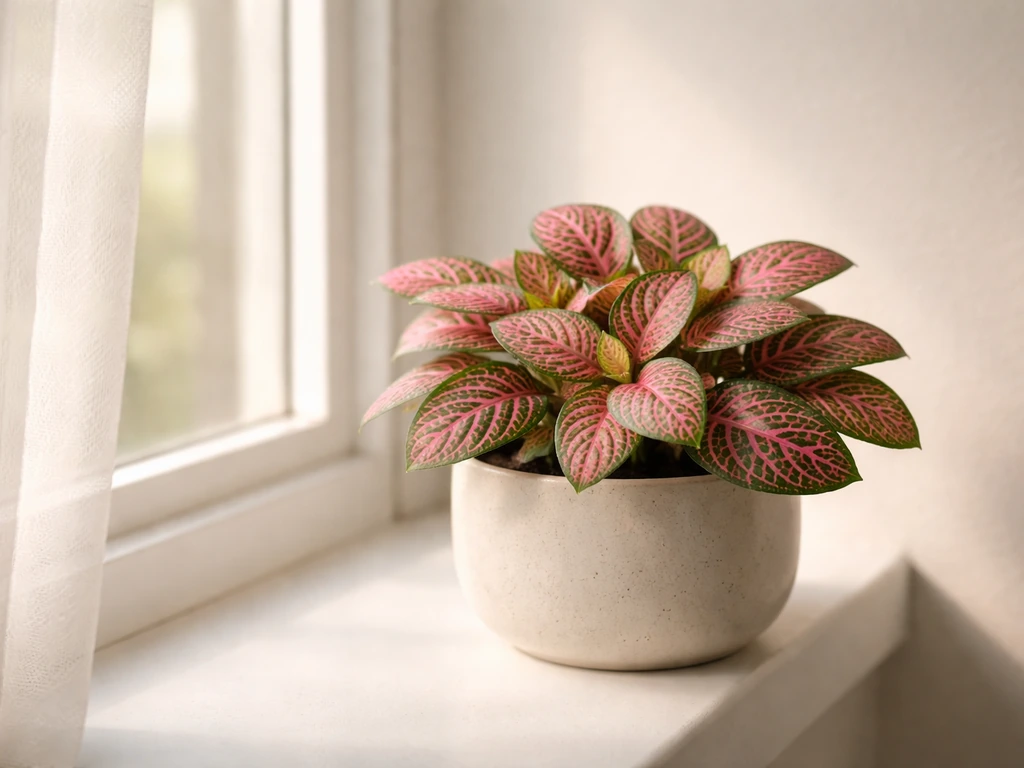
Fittonia can survive in low light, but it won't look its best. The vivid pink, red, or white veining that makes this plant worth having will fade, growth will slow down, and stems will start reaching and stretching toward whatever light they can find. So the honest answer is: low light is tolerable for fittonia, but not ideal, and there's a meaningful difference between a plant that's alive and one that's actually thriving and showing off those incredible leaf patterns.
Can Fittonia Grow in Low Light? Care Tips and Fixes
Marcus Hartley
30 May 2026
What 'Low Light' Actually Means for Fittonia
When people say 'low light,' they usually mean a spot that feels dim to them, but indoor light levels vary a lot more than our eyes register. Our pupils adjust so well that a genuinely dark corner can feel acceptable to us while a plant is quietly starving for photons. It helps to use actual numbers.
blank" rel="noopener noreferrer">Low light indoors is roughly 50 to 150 foot-candles (about 500 to 1,500 lux). That's the kind of reading you'd get several feet back from a north-facing window, or in a room where natural light comes in indirectly from a hallway. Medium indirect light sits around 150 to 500 foot-candles. Bright indirect light, the kind you get 1 to 2 feet from a well-lit east or west window, is blank" rel="noopener noreferrer">closer to 500 to 2,000 foot-candles (5,000 to 21,500 lux). Fittonia's sweet spot for healthy, colorful growth is in that bright indirect range, ideally around 10,000 to 15,000 lux for 10 to 12 hours per day. Low light will keep it alive, but you can expect noticeably less vibrant results.
The reason this matters is that fittonia uses light to drive photosynthesis, and the intensity of that light directly affects how much pigment it produces. Those bold veins you love? They're partly a product of the plant being well-lit enough to invest energy into color. Drop the light too far and the plant redirects what little energy it has toward basic survival, not showmanship.
Surviving vs. Thriving: Where Fittonia Lands in Low Light
Fittonia is genuinely more tolerant of dim conditions than a lot of houseplants. The RHS describes it as needing a bright position out of direct sunlight, and multiple reliable sources confirm it can handle quite low light levels. Cornell extension listings include it as a low-light foliage option, and Proven Winners lists it as low-light tolerant. So it's not going to collapse the moment you move it away from a window.
But tolerate and thrive are two different things. In genuinely low light (that 50 to 150 foot-candle range), fittonia will deal, but its leaf markings will fade and become less defined, growth slows considerably, stems get leggy, and the overall plant looks less full and less colorful. The vein patterns that make fittonia such a popular choice are the first thing to go when light drops too low. If you're growing fittonia specifically for its looks, low light is going to disappoint you over time.
How to Tell Quickly If Your Fittonia Isn't Getting Enough Light
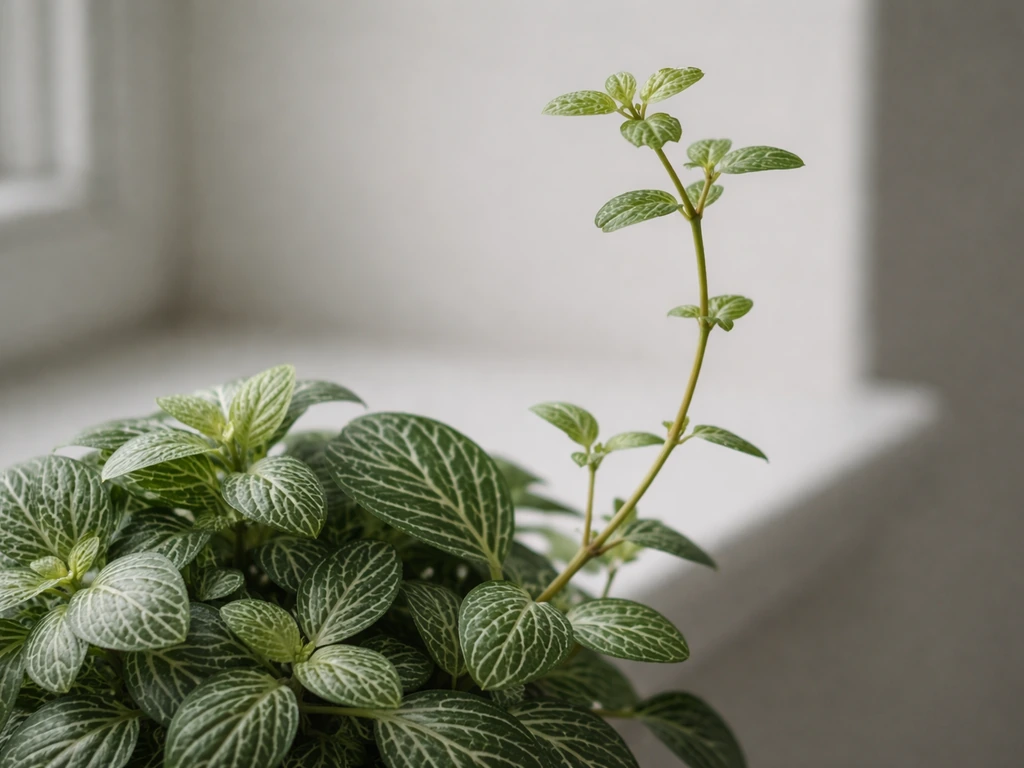
The good news is that fittonia is pretty communicative when something is off. The bad news is that some low-light symptoms overlap with other problems like overwatering, so you need to look at the full picture to diagnose correctly.
Here are the clearest signs that light is the problem:
- Leggy, stretched stems with long gaps between leaf nodes: the plant is literally reaching for more light
- Smaller new leaves compared to older growth on the same plant
- Fading or dulling of the leaf vein markings, especially the vivid pink, red, or white patterns
- Overall paler leaf color, with the green areas losing their depth
- Very slow growth or almost no new growth over weeks
- Leaf drop, especially of older lower leaves, when combined with dim conditions
To rule out other causes: if the soil is consistently wet and the plant is drooping, that points to overwatering rather than low light. If the edges are crispy and dry, low humidity might be the culprit. If the symptoms are specifically about color loss and stretchy stems, light is almost certainly the issue. A free lux meter app on your phone won't be lab-accurate but will give you a ballpark reading. If you're seeing numbers below 200 lux at leaf level, that's your answer.
Practical Ways to Improve Light Without Moving House
Before you give up on a spot or go spend money on grow lights, try these placement strategies first. They make a bigger difference than most people expect.
- Move closer to the window: a plant 1 to 2 feet from a bright east or west window is in a very different world than one sitting 5 or 6 feet back. Light intensity drops dramatically with distance, so even a foot or two can matter
- Try an east or north-facing window: fittonia does not want direct sun, so east-facing light (gentle morning sun) and north-facing light (cool, diffused) are often better fits than a hot south or west window where you'd need to filter anyway
- Remove obstructions: sheer curtains, dusty windows, or objects on the sill can cut available light significantly; clean the glass and clear the sill
- Rotate 90 degrees every week or two: if your light source is only on one side, rotating the pot ensures the whole plant gets reasonably even exposure and prevents lopsided, one-sided growth
- Use light-colored walls and surfaces nearby: pale walls reflect ambient light back onto the plant and can meaningfully increase the effective light level in a room
Window direction matters more than people realize. A north-facing window in the northern hemisphere gives low, consistent indirect light year-round. That can work for fittonia in summer but may not cut it in winter when days are short and skies are often overcast. South-facing windows are bright but potentially too intense without a sheer curtain to diffuse direct rays. East and west-facing windows often hit fittonia's preferred sweet spot.
Using Grow Lights to Supplement in Dim Spaces
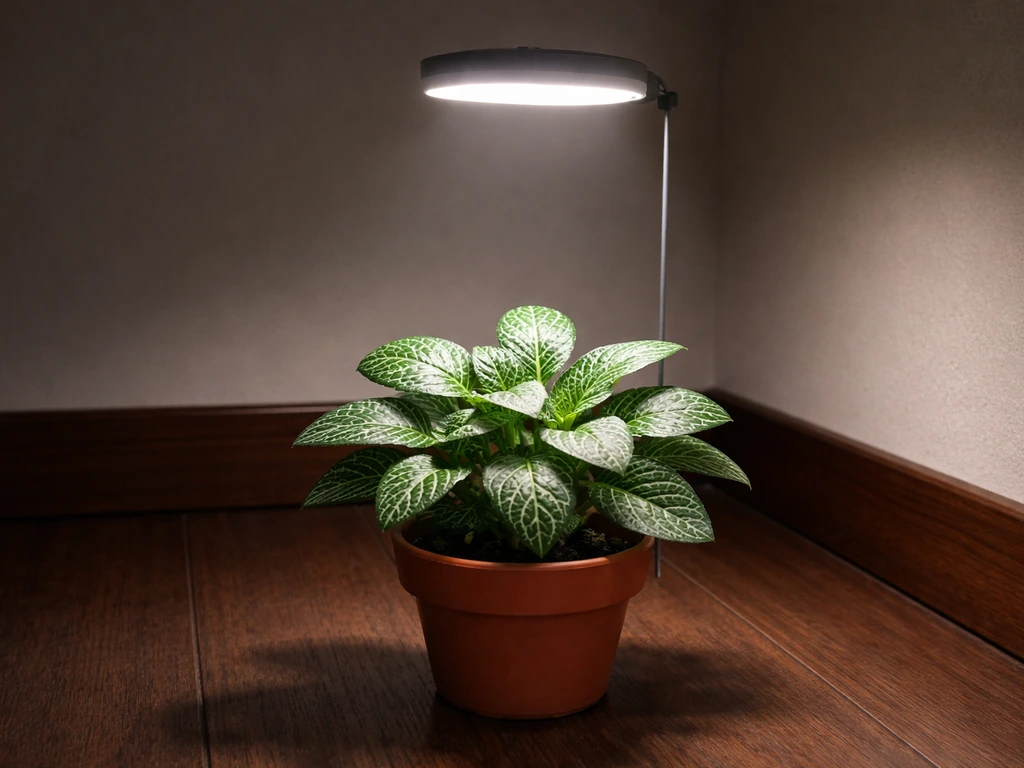
If your space is genuinely dark and natural light isn't a realistic option, a grow light is the most effective fix. The good news is that fittonia doesn't need anything expensive or elaborate to respond well to artificial lighting.
LED vs. Fluorescent: Which to Choose
| Type | Energy Use | Heat Output | Typical Cost | Best For Fittonia |
|---|---|---|---|---|
| LED grow lights | Low | Very low | Moderate upfront, low running cost | Best overall: full spectrum, cool running, long lifespan |
| Fluorescent (T5/T8) | Moderate | Low | Low upfront, moderate running cost | Good budget option, works well for low-light plants on shelves |
| Incandescent | High | High | Low upfront, high running cost | Not recommended: wrong spectrum, too much heat |
For fittonia specifically, a full-spectrum LED panel or a compact LED grow bulb screwed into a standard lamp fixture will do the job without fuss. You don't need anything marketed as a 'high-output' light for a plant that thrives in indirect conditions. A modest LED positioned 6 to 12 inches above the plant for 10 to 12 hours per day will deliver enough light to keep growth healthy and leaf color vibrant. If you're using fluorescent tubes, a T5 fixture 4 to 6 inches above the plant works well and is a cost-effective option for plant shelves or terrariums where fittonia is commonly kept.
Timers make artificial lighting effortless. Set it to 10 to 12 hours on, then off for the night. Fittonia, like most plants, benefits from a consistent light-dark cycle, and a timer means you don't have to think about it. If you're already using grow lights for other plants, fittonia is easy to slot in underneath or beside them as a low-demand companion.
How Watering, Soil, and Humidity Interact with Low Light
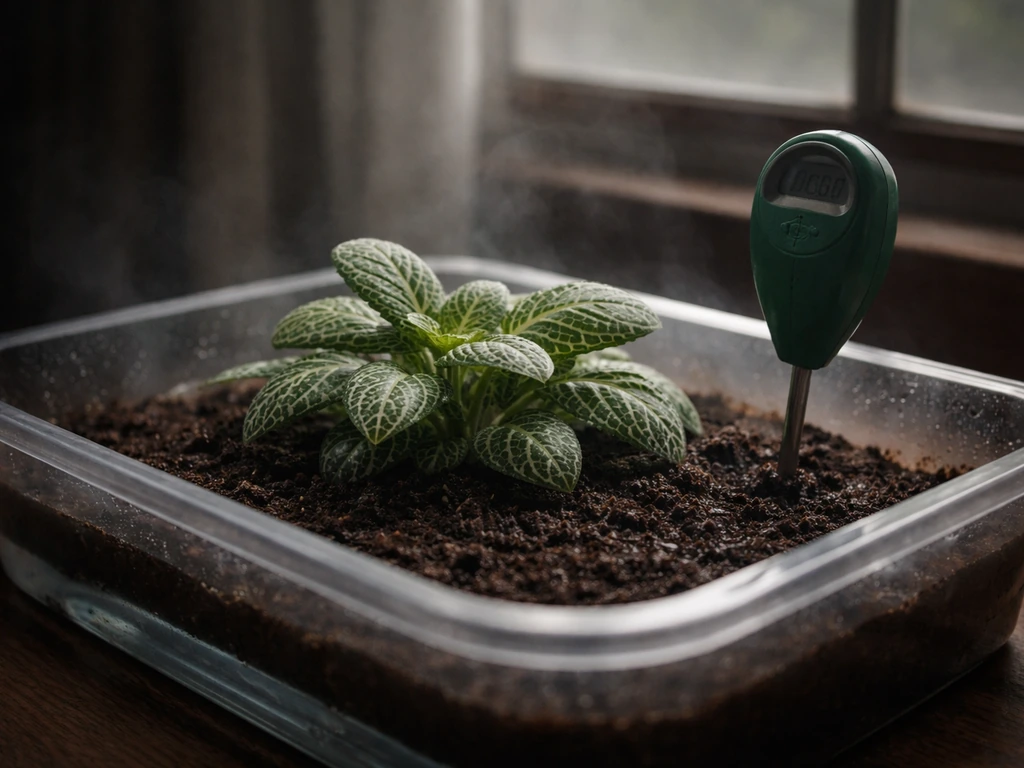
This is where a lot of people run into trouble. They move fittonia to a darker spot to address one problem and then water it the same way they always did, which leads to overwatering. In lower light, the plant uses water more slowly because photosynthesis and transpiration both slow down. The soil stays wet longer, and that's when root rot becomes a real risk.
Fittonia likes consistently moist soil but not soggy soil. That distinction is important. In a low-light spot, let the top inch of soil dry slightly before watering again, and always make sure the pot has drainage so excess water can escape. If you see drooping with wet soil, that's a red flag for overwatering or root rot, not a sign to water more. Check the roots if you're uncertain.
Humidity is fittonia's other big requirement. It's a tropical plant that naturally lives in humid forest understories, and in low-humidity indoor air it will wilt even when watering is correct. The RHS notes that low air humidity causes rapid moisture loss through the leaves faster than roots can compensate. Aim for 50 to 70% relative humidity around the plant. A pebble tray with water, grouping plants together, or placing fittonia in a bathroom or kitchen where humidity is naturally higher are all practical options. If you're growing it in a terrarium (which many people do), the enclosed environment handles humidity naturally, though you'll want to leave a small gap for airflow to prevent fungal issues.
Soil choice matters too. Fittonia does best in a well-draining but moisture-retentive mix, something like a quality houseplant compost rather than a heavy, peat-based mix that holds too much water without much air. Good drainage is especially important in low light where the soil won't dry out quickly. Fungus gnats are a common complaint with fittonia because of its consistently moist soil requirements, and they tend to get worse in low light where soil stays damp longer.
Setting Realistic Expectations and Knowing When to Change the Plan
Here's the honest version: if you have a truly dark space, like a windowless room or a spot more than 6 feet from any natural light source, fittonia is going to struggle no matter how carefully you water and mist. It's more shade-tolerant than many plants, but it's not a plant you can park in a dim corner indefinitely and expect those gorgeous leaf patterns to stay vivid.
Think about your situation in practical tiers:
- If you're 1 to 3 feet from a north or east-facing window: try fittonia here, rotate it weekly, and monitor for leggy growth or fading veins. This can work, especially in summer.
- If you're further back from a window or in a dim room: add a modest LED grow light on a timer. This is the most reliable fix and doesn't require moving the plant.
- If you have no realistic natural light and don't want to use a grow light: consider a more shade-tolerant alternative. Snake plants, pothos, and ZZ plants genuinely thrive with very little light and require far less fuss. Even among foliage plants, there's a wide range of shade tolerance.
It's also worth knowing that some fittonia varieties handle lower light better than others. Solid green or darker-leafed varieties tend to hold up better in dim conditions than the bright pink or white-veined cultivars, which need more light to maintain their coloration. If you're set on growing fittonia but your light is limited, choosing a green-dominant variety is a small but useful hedge.
For context, other popular foliage plants people often consider for dim spaces, like dieffenbachia or ficus, have their own light tolerance quirks and trade-offs worth knowing about before you decide which direction to go. If you're comparing other low-light foliage options, ficus can also be considered for dim rooms, though light tolerance varies by type. Dieffenbachia can handle dimmer conditions than many foliage plants, but it still needs enough light to keep its growth and leaf color looking healthy can dieffenbachia grow in low light. The core principle is the same though: every plant has a threshold below which it stops performing and starts just surviving, and knowing that threshold before you buy saves a lot of frustration.
Fittonia is genuinely one of the more forgiving options for lower light, and with a small grow light or a well-chosen window spot it can look spectacular indoors. Can fiddle leaf figs grow in low light? Learn how their needs compare so you can choose the best plant for a dim room. But if the light situation is truly dire, there's no shame in choosing a different plant for that space and keeping your fittonia somewhere it can actually show you what it's capable of.
FAQ
If I put my fittonia in low light, how long will it take before I notice faded leaf veins and leggy growth?
Expect early signs within 3 to 6 weeks, slower than in very bright stress, but you should still see less contrast in the veins and longer spaces between nodes. If it keeps getting dimmer, noticeable legginess can show up by about 2 to 3 months.
Can I rely on window light alone in winter, especially with a north window?
Often not. North-facing light can be too consistent but too weak in winter, especially during short overcast days. If your plant is near a north window, plan to supplement with a grow light starting in late fall to keep color and growth steady.
How do I place a grow light if I do not have a lux meter?
Use distance and a timer as your control knobs. Start with the light 6 to 12 inches above the plant and run it 10 to 12 hours daily, then adjust based on behavior: if it stretches or vein color fades, raise the duration slightly (not suddenly) or move the light closer.
Will a grow light on a timer also help fix issues that look like overwatering?
It can help, because higher light increases water use and reduces how long soil stays wet. However, if the soil is already staying soggy between waterings, you still need to correct watering and drainage, since root rot can start before light levels are the only issue.
What’s the safest watering schedule for fittonia in low light?
Do not follow a calendar. Let the top inch dry slightly before watering again, then water thoroughly until it drains out. In dim rooms, the interval can stretch much longer, and the “top inch rule” is the best guardrail.
How can I tell the difference between low light symptoms and low humidity symptoms?
Low humidity usually shows faster leaf moisture loss, with wilting plus a dry, crispy edge, even if the soil is not wet. Low light more often shows stretchy stems, reduced leaf fullness, and fading vein pattern, even when humidity and watering are reasonable.
Is misting enough to prevent fittonia wilting in dry air when it is in low light?
Misting is usually short-lived and often does not raise humidity enough around the whole plant. Better options are a pebble tray, grouping plants, or putting it in a naturally humid room (bathroom or kitchen). If you mist, do it to support humidity, not to replace it.
Do terrariums make low-light fittonia easier to manage?
They can help with humidity, but they can also trap excess moisture and reduce airflow. If you use a terrarium in low light, keep a small airflow gap and watch for fungus or soft, wet soil, because limited light slows drying and increases fungal risk.
What soil problems are most likely in low light?
The biggest risk is heavy mix that stays wet too long and starves roots of oxygen. Choose a well-draining, moisture-retentive mix and make sure the pot has drainage holes. In low light, even one slow-draining step can worsen root issues.
How do I reduce fungus gnats if my fittonia stays moist longer in low light?
Let the top layer dry slightly before watering again, avoid keeping the soil constantly wet, and consider an inert top-dressing like sand or fine grit to interrupt egg laying. Also check that the pot drains well, since stagnant, damp soil is what the adults breed in.
Are green-dominant fittonia varieties always better for dim rooms?
They tend to tolerate lower light better, because there is less reliance on high pigment investment for their look. Still, they can lose vibrancy over time in truly dark spots, so even green types usually need either brighter indirect light or a modest grow light.
My fittonia is stretching toward the light. Should I prune it back immediately?
You can prune, but do it after you improve the lighting plan. Cutting leggy stems before the new light routine is in place often delays recovery. Once lighting improves, new growth is more compact, and you can trim to tidy up without repeatedly stressing the plant.