
Yes, pothos can absolutely grow under artificial light alone, and they do it better than almost any other houseplant. A basic fluorescent shop light or a modest LED grow light gives pothos enough energy to push out new leaves, maintain healthy green color, and trail nicely without ever seeing a window. The catch is that results vary a lot depending on which light you use, how close it is, and how many hours a day it runs. Get those three things reasonably right and your pothos will thrive. Get them wrong and you end up with a plant that survives but looks like it's reaching desperately for something it can't find.
Can Pothos Grow in Artificial Light? LED and Fluorescent Tips

Marcus Hartley
1 May 2026
Why pothos handles artificial light so well
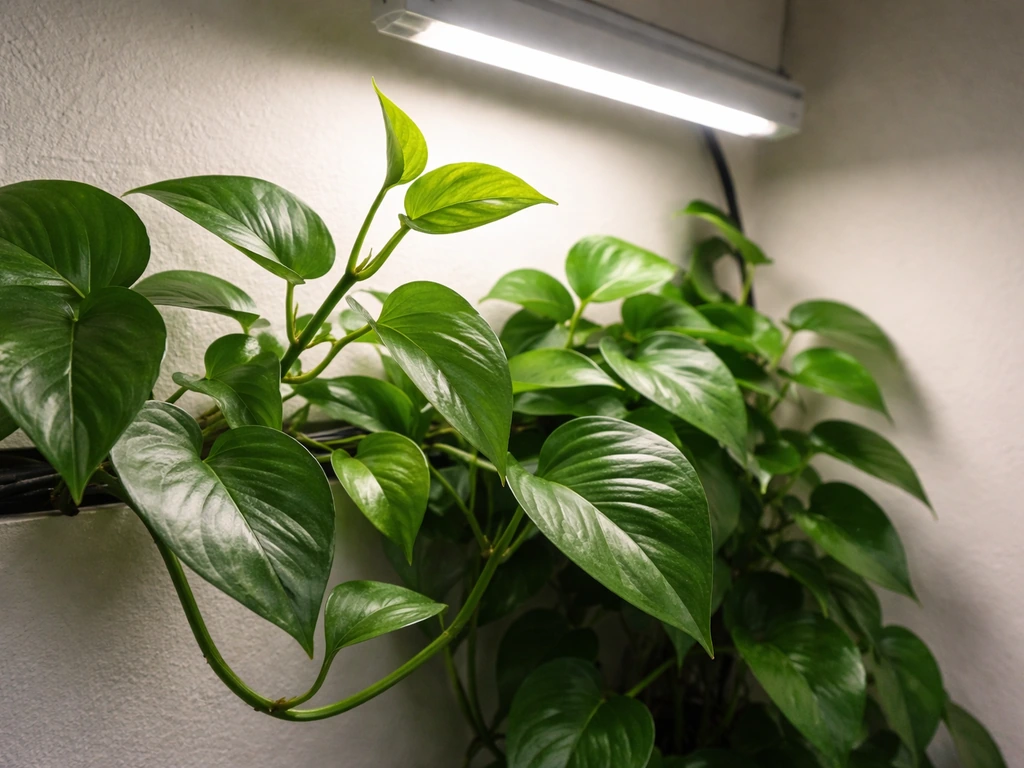
Pothos (Epipremnum aureum) evolved as a forest understory plant, which means it developed chlorophyll that captures light efficiently even in low-intensity conditions. It doesn't need the intense photon bombardment that fruiting plants like tomatoes or peppers require. According to University of Illinois Extension guidance on indoor houseplant lighting, pothos falls into the blank" rel="noopener noreferrer">medium-light category, which corresponds to roughly 75 to 150 foot-candles. For comparison, a bright south-facing window on a clear day delivers around 300 foot-candles, and a typical office with overhead fluorescent tubes sits right in that 75 to 150 range. That's not a coincidence. Pothos has been a staple of offices and windowless break rooms for decades because artificial light genuinely works for it.
In terms of PPFD (photosynthetic photon flux density, the measurement grow-light makers use), University of Maine Extension places vegetative houseplant growth in the 100 to 500 PPFD range. Pothos sits comfortably at the lower end of that band. You don't need to chase high numbers. A light that delivers a steady 150 to 250 PPFD at leaf level will produce consistent, healthy new growth.
Fluorescent light vs LED grow lights: what matters for pothos
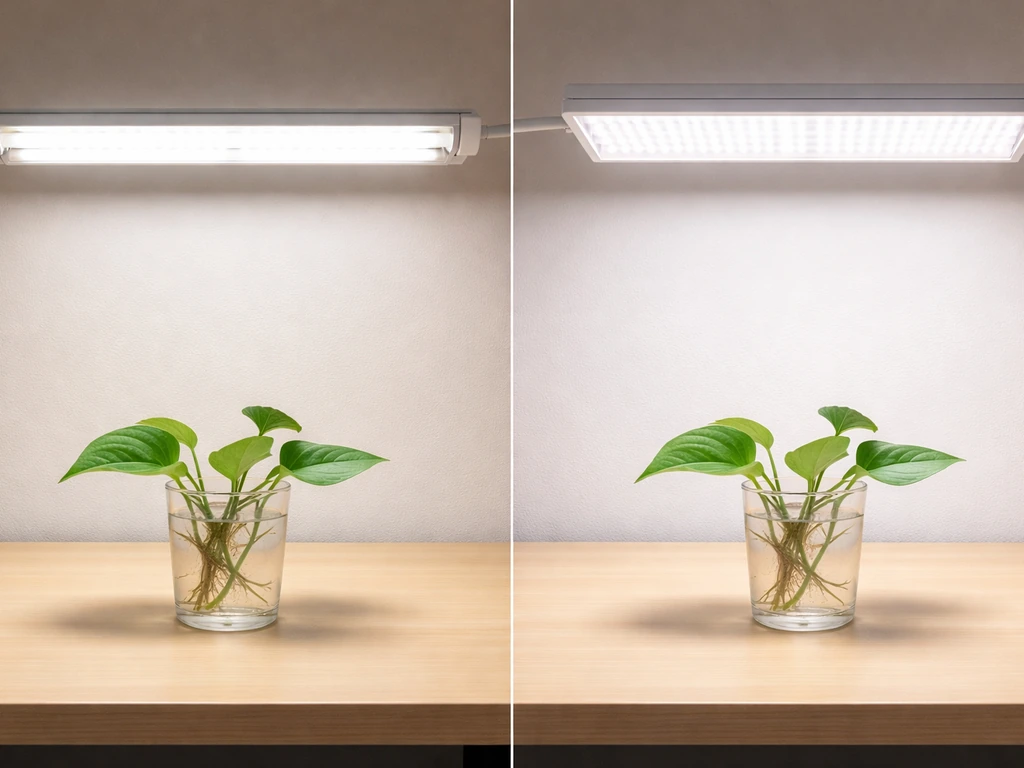
Both work, but they work differently and the tradeoffs are real. Here's how they compare on the factors that actually matter for growing pothos indoors.
| Factor | Fluorescent (T5/T8) | LED Grow Light |
|---|---|---|
| Light spectrum | Full-spectrum cool white (6500K) covers the basics; not optimized for plants | Full-spectrum options include red/blue peaks better matched to chlorophyll absorption |
| Energy efficiency | Decent but LEDs use 30-50% less electricity for similar output | More output per watt; runs cooler |
| Upfront cost | Very low; shop lights from $15-$30 | Budget LEDs from $20; quality panels from $60-$150+ |
| Lifespan | ~10,000-15,000 hours | ~25,000-50,000 hours |
| Heat output | Low to moderate; can warm leaves if too close | Very low; less risk of heat stress at close range |
| Availability | Hardware stores everywhere | Online or garden centers; more variation in quality |
| Best for pothos? | Yes, perfectly fine for basic growth | Better for faster growth, larger setups, or multiple plants |
The honest recommendation: if you already have fluorescent shop lights or a fluorescent desk lamp with a cool-white or daylight bulb (5000K to 6500K), use it. If you want the best chance of deep green leaves, choose a cool-white to daylight LED grow light (around 5000K to 6500K) cool-white or daylight bulb (5000K to 6500K). Pothos will grow. If you're buying something new, a budget LED grow light panel will give you more flexibility, better efficiency, and faster growth for about the same price. You don't need an expensive grow light for pothos. A $25 to $40 LED panel is genuinely sufficient for one to three plants.
How much light and how many hours: practical targets and timing
Aim for 150 to 250 PPFD at leaf level and 12 to 16 hours of light per day. That range covers the vegetative growth sweet spot that University of Maine Extension outlines for houseplants, and it matches well with what pothos expects in its natural habitat: moderate light with a clear day/night cycle. If you're using a basic fluorescent or a lower-output LED and your pothos is growing but a little slowly, nudge the hours up toward 16 before you buy a brighter light. Photoperiod (how many hours the light runs) is one of the key levers, right alongside intensity.
A plug-in timer is worth every penny here. Set it and forget it. Plants respond better to consistent light schedules than to erratic on-and-off patterns, and you won't have to remember to flip a switch. Running lights 14 hours on and 10 hours off is a solid default for pothos.
- Minimum intensity: ~75 to 150 foot-candles (roughly 100 PPFD) for slow but steady growth
- Better intensity: ~150 to 250 PPFD for reliable new leaf production
- Daily hours: 12 hours minimum, 14 to 16 hours for faster growth
- Use a timer to keep the schedule consistent
- Give at least 8 hours of darkness so the plant can complete its natural rest cycle
Placement tips: distance, angles, and how to avoid leggy growth
Distance from the light source is the variable most people get wrong. Light intensity drops off fast as you move away from the source, following the inverse square law. In plain terms: doubling the distance cuts the light intensity to about a quarter. For fluorescent tubes, position your pothos so the leaves sit 6 to 12 inches below the bulbs. For LED grow light panels, check the manufacturer's recommended distance, but most budget panels work well at 10 to 18 inches above the canopy for low-light plants like pothos.
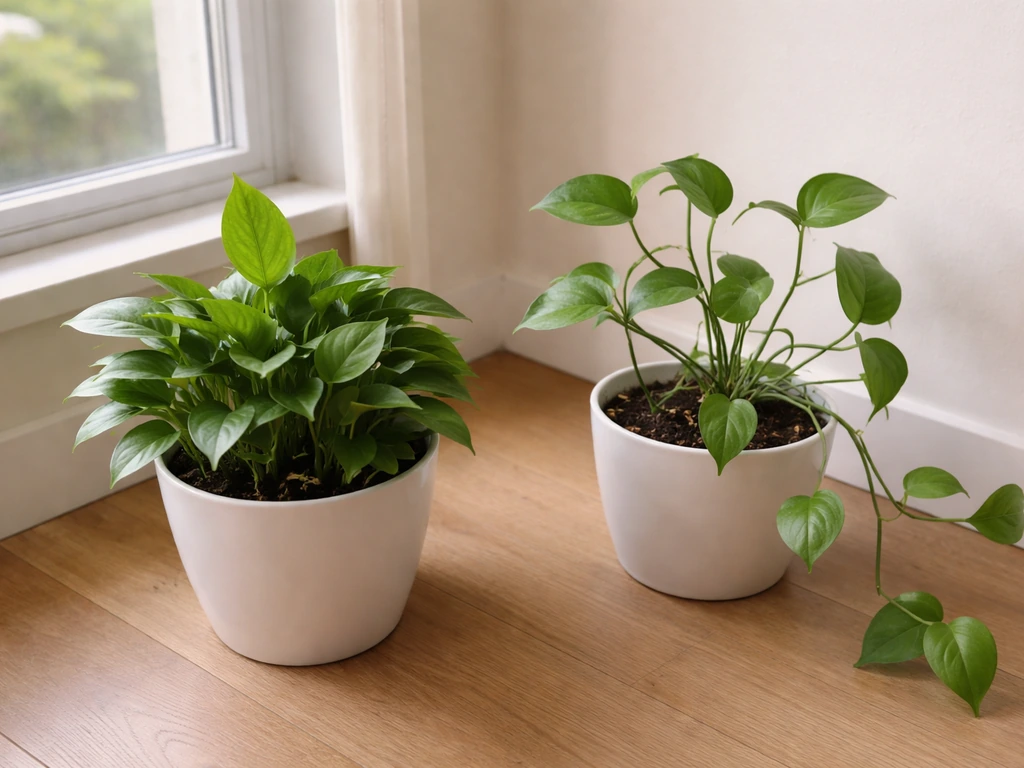
Leggy, stretched growth (long bare vines between leaves) is the classic sign that your pothos isn't getting enough light. The plant is physically reaching toward the light source. If you see this happening, close the gap between the light and the plant before anything else. Drop the light a few inches or raise the pot on a shelf or stand.
- Fluorescent tubes: keep leaves 6 to 12 inches below the light
- LED grow panels: aim for 10 to 18 inches above the canopy to start
- Hang or position lights directly overhead when possible for even coverage
- Rotate the pot a quarter turn each week so all sides get equal exposure
- If vines are trailing downward, consider hanging the pot or using a shelf so more leaves stay close to the light source
- Avoid placing the light at a sharp angle to one side, which causes uneven growth and leaning
What to watch for: signs your pothos is thriving or struggling
A thriving pothos under artificial light pushes out a new leaf every one to two weeks during the growing season, maintains deep green or variegated color depending on the variety, and has firm, slightly waxy leaves with short internode spacing (the gaps between leaves along the vine). The vines grow outward and downward, not upward in a reaching pattern.
A struggling pothos looks different. Leaves lose color saturation, internodes stretch long, and new growth either stalls completely or comes in small and pale. These are light problems, not water problems, so don't start watering more when you see these signs. Check your light setup first.
| What you see | What it likely means |
|---|---|
| New leaf every 1-2 weeks, normal size | Light is sufficient, keep doing what you're doing |
| Deep, rich green color | Chlorophyll is working well |
| Pale or washed-out green | Possibly too much light, or a nutrient issue |
| Long bare stretches between leaves (leggy) | Not enough light intensity |
| Leaves reaching or vining upward toward the light | Light is too far away |
| No new growth for 4+ weeks (in growing season) | Light too dim or hours too short |
| Yellow leaves from the bottom up | Could be overwatering, but check if lower leaves are too far from the light |
| Small, cupped, or distorted new leaves | Could be heat stress from light too close, or inconsistent watering |
Troubleshooting by problem and quick fixes
Stretching and leggy vines
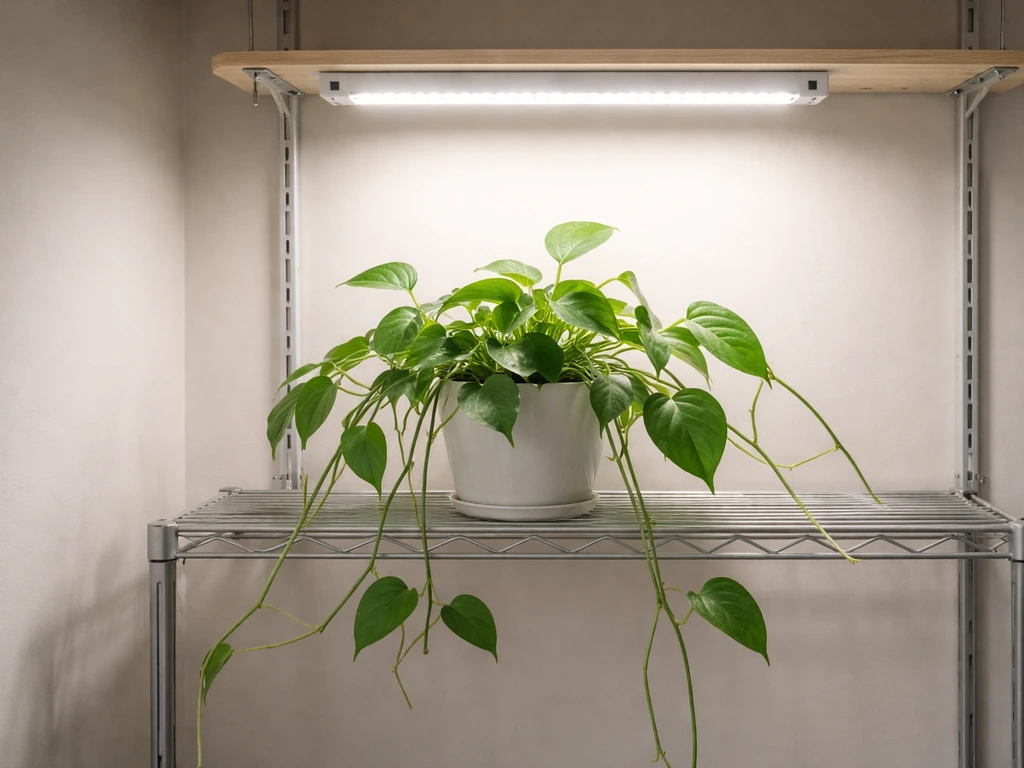
This is almost always a light intensity problem. The plant is phototropically reaching for more light than it's getting. Fix: move the light 3 to 4 inches closer to the canopy, or add another hour or two to your photoperiod. If neither helps within two weeks, you may need a brighter bulb or panel.
Yellowing leaves
Yellowing can come from several directions, but under an artificial light setup, the most common causes are overwatering (pothos under lower-light conditions needs less water than you might expect) and light that's too dim for the lower leaves. Check your soil moisture first: stick a finger 2 inches in, and if it's wet, hold off watering. If the soil is fine, raise your light output or shift the plant closer. Pothos also occasionally yellows from nutrient deficiency, especially nitrogen, so a diluted balanced liquid fertilizer every four to six weeks during the growing season can help if the light is already adequate.
No new growth for weeks
If it's winter and your pothos is in a cooler room, some slowdown is normal even under good light. But if room temps are above 65 degrees Fahrenheit and growth has stalled for more than four weeks during spring or summer, light is the first thing to check. Increase your daily light hours to 16, move the light closer, and give it another two weeks. Stalled growth paired with leggy vines is a clear signal the plant needs more photons, not more water or fertilizer.
Drooping or wilting despite normal watering
Under artificial light, drooping is usually a watering issue, not a light issue. Plants in lower-light environments use water more slowly, so overwatering is common. Make sure your pot has drainage holes and that you're letting the top inch or two of soil dry out between waterings. If the soil is dry and the plant is still drooping, the roots may be root-bound or the light may be too intense and creating mild heat stress.
Pests showing up
Stressed plants attract pests. If you're suddenly dealing with fungus gnats, spider mites, or scale on a pothos that seemed fine before, the plant's overall stress level is likely up. Poor light is a contributor because it weakens the plant's natural defenses. Improving the light setup won't immediately kill a pest infestation, but it will help the plant recover and resist future ones. Deal with pests directly (neem oil, insecticidal soap, sticky traps for fungus gnats) and then optimize the light to prevent recurrence.
Next-step setup: a simple plan for fluorescent or LED lighting today
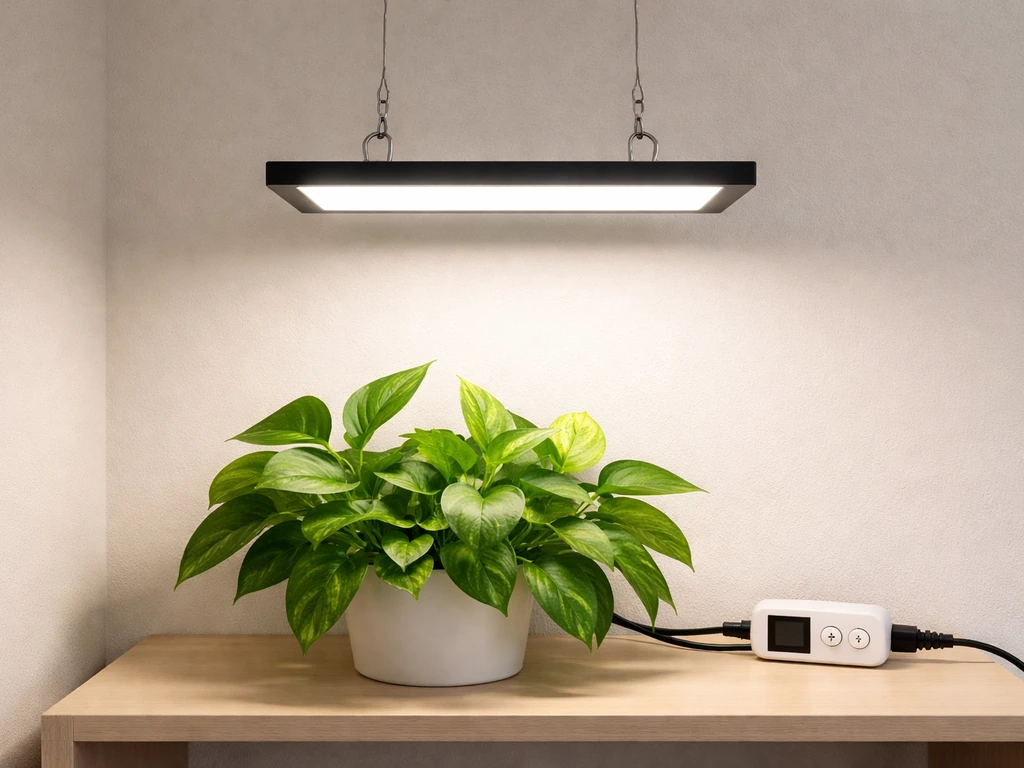
Here's a simple, no-overthinking setup you can put together today using either a fluorescent or LED option. Pick the one that matches what you have or can get quickly.
Option 1: Fluorescent shop light or desk lamp
- Use a T8 or T5 fluorescent tube rated 5000K to 6500K (cool white or daylight). A standard 4-foot shop light with two T8 tubes works well for one to two pothos plants.
- Position the light so your pothos leaves sit 6 to 10 inches below the tubes.
- Plug into a mechanical or smart outlet timer set for 14 hours on, 10 hours off.
- Check for stretching after two weeks. If vines are reaching upward, lower the light by 2 to 3 inches.
- Water only when the top 1 to 2 inches of soil feel dry, since lower light means slower water use.
Option 2: LED grow light panel
- Choose a full-spectrum LED panel with output specs in the range of 1000 to 3000 lumens for a single plant or small grouping. Budget options in the $25 to $50 range are genuinely adequate for pothos.
- Start with the light 12 to 16 inches above the top of the plant canopy.
- Set a timer for 14 hours on, 10 hours off.
- After one week, check for any signs of bleaching or curling (light too close) or stretching (light too far). Adjust by 2-inch increments.
- For variegated pothos varieties like Golden or Marble Queen, consistent 14 to 16 hour light schedules help maintain good variegation patterns.
One last thing worth knowing: pothos is genuinely one of the most forgiving plants to experiment with under artificial light. If you're also curious about how other low-light plants respond, the same general principles here apply to snake plants and African violets, though each has its own intensity and spectrum preferences. African violets often benefit from grow lights as well, but they may need a different intensity than pothos. Snake plants can also do well under grow lights, but they still need the right intensity and day length to avoid slow, weak growth. For pothos specifically, you have a lot of margin for error. Start with the basics above, observe your plant for two to three weeks, and adjust from there. You'll know pretty quickly if something needs to change.
FAQ
Will pothos grow in artificial light year-round, or does it need a seasonal rest period?
Yes, but expect slower growth than in summer and give extra daily hours first (up to about 16). If your plant is also putting out shorter internodes and staying green, you likely have enough light even if growth rate drops.
Do I need full-spectrum LED for pothos, or will cool-white LEDs be enough?
Choose the spectrum based on goal, not color temperature alone. For pothos, cool-white or daylight (around 5000K to 6500K) works well for vegetative growth, and you typically do not need a separate red bulb. If your LEDs look very “dim blue” and growth is leggy, that usually means intensity or photoperiod, not spectrum.
How important is using a timer, and what on/off schedule should I start with?
If you want consistent growth, use a timer and avoid irregular schedules. Once per day is fine, but try not to run lights late and then forget, because pothos responds to a stable day and night. A common setup is 14 hours on, 10 hours off as a starting point.
If my pothos is yellowing, can I fix it by watering less or more under artificial light?
Yes, but too much water under low-light setups is the fastest path to yellow leaves and soft, declining vines. Let the top inch or two dry, confirm drainage holes, and only increase watering after light improves and the soil dries more quickly.
How can I tell whether my pothos problem is low light, overwatering, or root-bound when it’s under artificial light?
Watch for stretching plus fading color. That combo usually means too little light. If leaves are firm but droopy and the soil is wet, it is often overwatering. If leaves are pale and growth is stalled with dry soil, it may be light that is too dim, or roots being stressed from being root-bound.
Can pothos get sunburn or heat stress from LED grow lights, and what should I look for?
That can happen if the light is high and close enough to heat the canopy or if the plant is suddenly exposed to a brighter setup. Raise the light distance gradually over several days and make sure the plant is not sitting right under a hot fluorescent fixture.
If my LED says it’s low power, should I compensate with more hours or a closer distance?
There is no single universal “hours” that works for every bulb. Start with 12 to 16 hours, then adjust based on the plant response: leggy and slow means add time or intensity, while very dark leaves and reduced growth can mean too much light for the current distance.
Should I rotate my pothos when it’s under a grow light or desk lamp?
Rotate the pot. Under artificial lighting, one side can receive more photons than the other, leading to uneven variegation intensity and lopsided trailing. A quick rotation every week or two keeps growth more uniform.
What happens if my pothos only gets light from one direction under a desk lamp?
Yes. If you only run artificial light on one side (like a windowless desk setup), the plant can develop longer internodes toward the unlit side. Use a panel placed above the canopy or add another light to balance the light field for better vine structure.
My pothos is alive but growing slowly under artificial light, what’s the fastest troubleshooting step?
If new leaves are small and pale with stretched vines, it is usually not getting enough photons to maintain steady growth. First move the light 3 to 4 inches closer or increase photoperiod by 1 to 2 hours. If there’s no improvement within about two weeks, upgrade to a higher output bulb or panel.
Should I fertilize pothos under artificial light, and how often compared with window growth?
Generally yes, but keep fertilization modest. Under lower light, pothos uses nutrients slowly, so a diluted balanced liquid feed every four to six weeks during active growth is enough. Skip fertilizer if the soil is staying consistently wet or if the plant is clearly light-stressed.
My pothos has stalled for weeks under lights, what other checks should I do besides moving the light closer?
If the pothos is getting enough light, leaves and vines can look “stopped” when water and temperature are not ideal. Check that room temperature is not consistently below cool room levels, confirm drainage, and only change one variable at a time. Then increase light hours or raise intensity if growth still does not resume.
Can low light under artificial light cause pests like spider mites or fungus gnats, and how should I respond?
Yes, pests often show up when the plant is stressed from incorrect light or watering. Improving the light helps long-term recovery, but you should treat the pests directly (like insecticidal soap for mites or neem for certain infestations) because light changes alone usually do not eliminate active bugs.