
Yes, a ZZ plant can survive in low light, and it will even grow a little, but "growing" in dim conditions means something more modest than you might expect. You're looking at maybe one or two new stems a season, and the plant will essentially coast rather than thrive. That said, the ZZ plant (Zamioculcas zamiifolia) is genuinely one of the best choices for a dim room.
Can ZZ Plant Grow in Low Light? Tips for Success
Marcus Hartley
26 Apr 2026
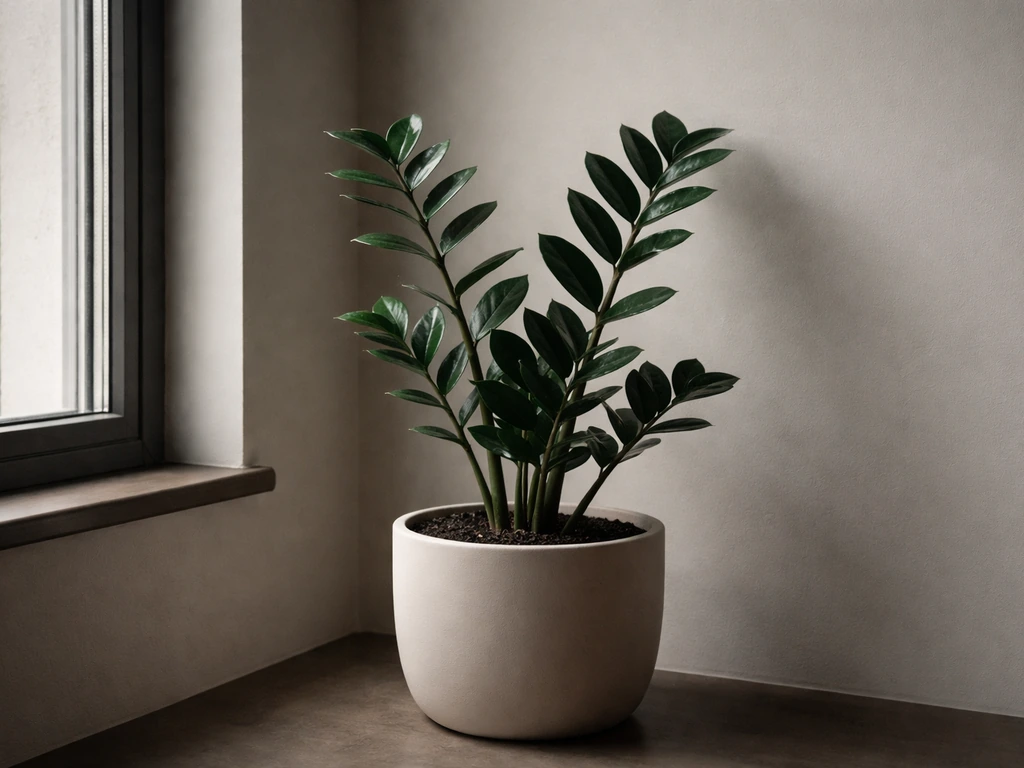
It stores water and energy in thick underground rhizomes, which gives it a real buffer when conditions are tough. So the honest answer is: low light is survivable, but if you want any noticeable progress, you'll need to be strategic about placement or add a small grow light. Can aloe grow in low light and what should you expect? In most cases it can survive, but growth is much slower without brighter light.
ZZ plant in low light: can it survive and will it grow?
The ZZ plant has a reputation for being nearly indestructible, and that reputation is mostly earned. Its rhizomes act like a battery, storing water and nutrients so the plant can keep its leaves looking decent even when photosynthesis is barely ticking along. In very dim spots, it will stay alive and hold its glossy dark-green look for months. What it won't do is push out many new stems. Growth in truly low light is slow by any measure, and in fall and winter, when natural light drops even further, most ZZ plants basically stop producing new shoots altogether.
The distinction worth making is between survival and growth. If you’re also wondering about another popular low-light option, can spider plants grow in low light, knowing the survival vs growth difference helps you set expectations for that plant too survival and growth. Survival means the plant stays green, doesn't drop leaves, and keeps its existing stems. Growth means new stems emerging, leaves unfurling, and the plant getting bigger.
In a dim office hallway or a north-facing room with no supplemental light, you can expect survival. In a brighter spot, or with a basic grow light, you can actually expect slow but real growth. Knowing which one you're after helps you set realistic expectations and make the right call about your setup.
What "low light" actually means (how to measure your room)
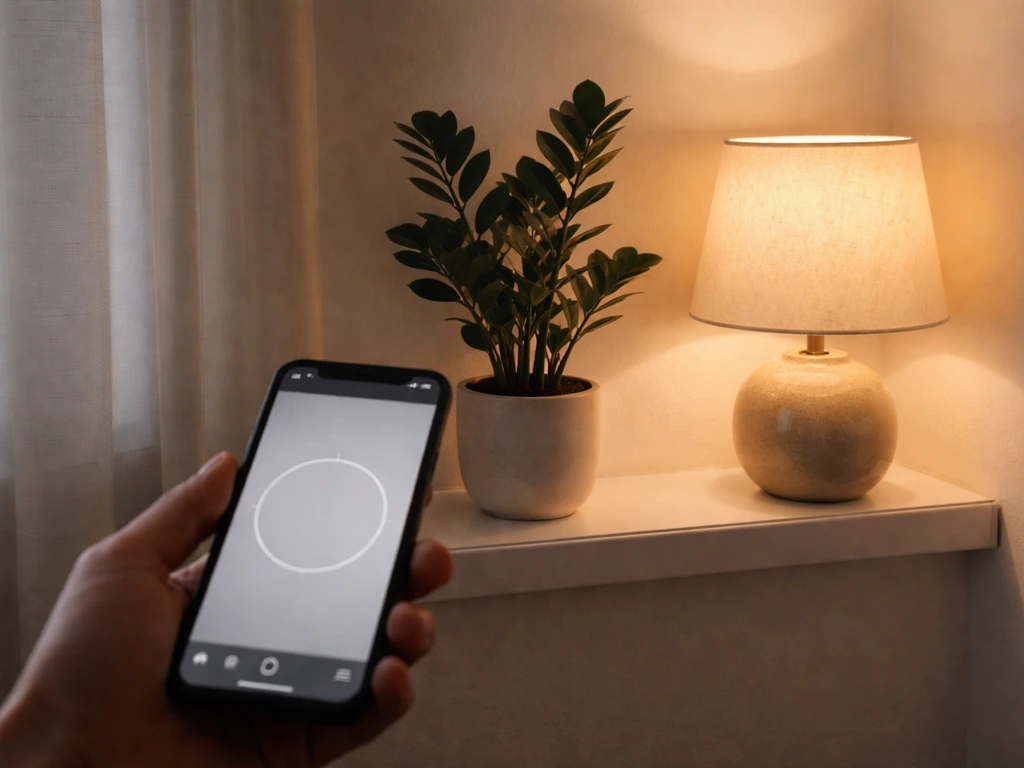
"Low light" is one of those phrases that gets thrown around constantly but almost never defined. In practical terms, low light for houseplants means roughly 50 to 250 foot-candles of illumination, which is what the University of Missouri Extension uses as the threshold for low-light intensity plants. ZZ plants fall squarely in this category. For context, 50 foot-candles is about what you'd have in a room that's lit by a window across the hall from you, not directly in front of one. It's enough light to read by, but not bright enough to cast a clear shadow.
The most reliable way to know what you're actually working with is to use a light meter app on your phone, such as Photone or a dedicated lux meter. These are genuinely useful tools. Measure in foot-candles or lux at the spot where your plant will sit, at the time of day when light is at its peak. If you're getting below 50 foot-candles, even a ZZ plant is going to struggle long-term. Between 50 and 250, it will survive. Push toward the 250 to 500 range, the upper edge of low and the start of medium light, and you'll see noticeably better growth.
| Light Level | Foot-Candles | What it looks like in a room | ZZ plant outcome |
|---|---|---|---|
| Very low | Under 50 fc | Interior room, no window nearby | Decline over time |
| Low | 50–250 fc | North-facing window, shaded corner | Survival, minimal growth |
| Low-medium | 250–500 fc | East window, 3–5 ft from a south window | Slow but real growth |
| Medium-bright indirect | 500–1000+ fc | Bright east or filtered south window | Best indoor growth |
How much light ZZ plants need for best growth vs survival
For survival, ZZ plants can get by on as little as 50 foot-candles. For actual growth, you want to push toward 250 to 500 foot-candles or more. Research on ZZ propagation has used daily light integrals (DLI) as low as 0.6 mol per square meter per day, which is extremely modest, to keep cuttings alive and developing. That gives you a sense of just how little light these plants can technically function on, but functioning and growing well are different things.
In terms of photoperiod, the hours of light matter too. ZZ plants have been propagated successfully under 16-hour light periods, and giving your plant consistent light exposure of 12 to 16 hours per day, whether from a window or a grow light, will do more for growth than intensity alone can compensate for. If your plant is near a dim window for only a few winter hours, extending that with artificial light in the evening is one of the most effective tweaks you can make. For the plant to photosynthesize meaningfully, it needs both enough intensity and enough time.
Best placement strategies for low-light homes
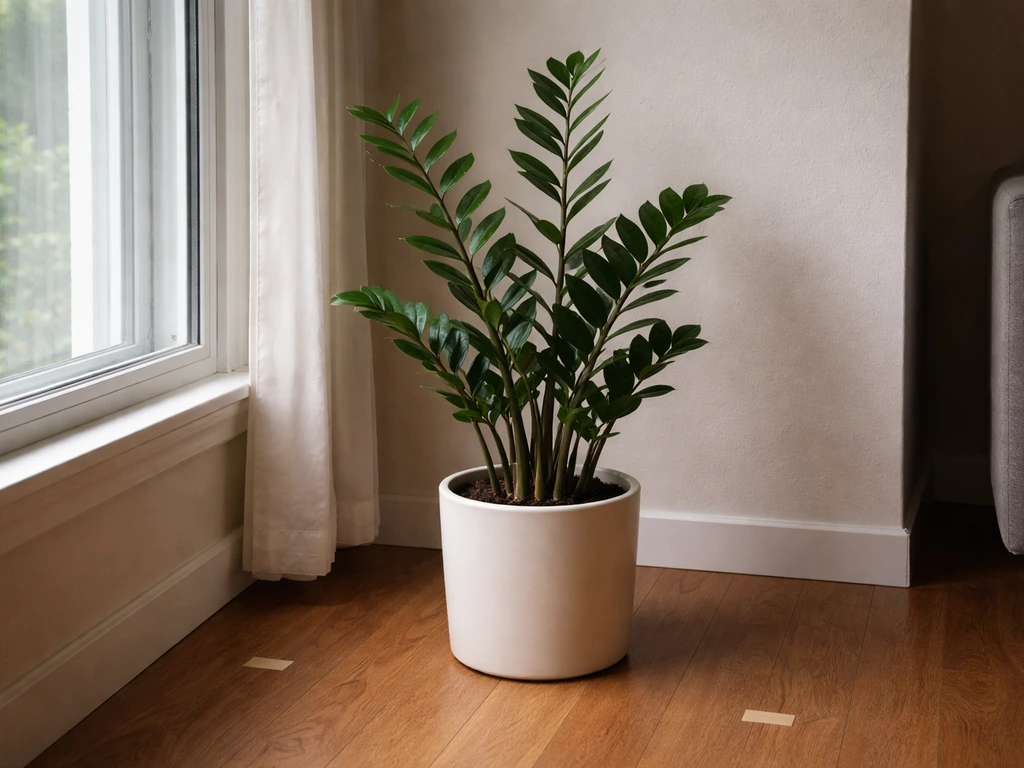
If you're working with natural light only, placement is everything. The goal is to get your ZZ plant as close to a light source as possible without putting it in direct harsh sun, which can scorch its leaves. Here's how to think about it by window type:
- North-facing window: Place the plant within 3 feet of the glass. This is as dim as it gets indoors, so proximity matters a lot.
- East-facing window: A great option. Position 2 to 4 feet away and the plant gets gentle morning light without risk of burning.
- South- or west-facing window: Keep the ZZ 4 to 8 feet back, or use a sheer curtain to filter the stronger afternoon light.
- Interior rooms with no windows: This is where natural light alone won't cut it. You'll need a grow light if you want the plant to do anything other than just hold on.
One simple habit that pays off: rotate your ZZ plant a quarter turn every two to four weeks. Because ZZ plants are slow growers, you might not notice uneven leaning for a while, but stems will reach toward the light source over time and the plant will look lopsided. Rotating keeps growth even and ensures all sides get some exposure. If you have a brighter window in another room, moving the plant there for a week every month or two also works well, particularly in winter when light drops.
Supplementing with grow lights: LEDs, fluorescents, and how to set them up
A basic grow light setup for a ZZ plant doesn't need to be expensive or complicated. This plant's light requirements are low enough that a modest fixture will genuinely move the needle. The University of Missouri Extension notes that a single 4-foot 40-watt fluorescent tube can provide enough light for low-light category plants on its own. LED grow lights in the same general output range work even better because they're more energy-efficient and last longer.
For LEDs, look for a fixture that can deliver a PPFD (photosynthetic photon flux density) of roughly 100 to 200 micromoles per square meter per second at the plant's leaf level. That lands comfortably in the low-to-medium range ZZ plants respond well to. Distance matters more than wattage claims on the box. Start with the light about 12 to 18 inches above the canopy and adjust from there based on how the plant responds. Full-spectrum LED panels or simple LED grow strips from any hardware store both work. You don't need a high-output horticultural fixture for a ZZ plant.
- Run the grow light for 12 to 16 hours per day using a timer. Consistency matters more than intensity for slow-growing foliage plants.
- Position LEDs 12 to 18 inches above the leaves as a starting point; fluorescent tubes can go a bit closer, around 6 to 12 inches.
- If new growth looks pale or stretched toward the light, raise the light and check that the photoperiod isn't too short.
- You don't need a specialized grow light if you already have bright fluorescent overhead lighting. Many ZZ plants do perfectly well in offices because of this.
- Plug your light into a timer so you're not relying on remembering to turn it off. Consistency helps the plant, and it saves energy.
A quick note on fluorescent vs LED: both work for ZZ plants. Older T8 or T12 fluorescent shop lights are inexpensive and perfectly functional. LEDs use less power and produce less heat, which matters if the light is close to the plant. Either way, the key is a full-spectrum bulb (labeled 5000K to 6500K for vegetative growth) rather than a warm yellow household bulb, which doesn't deliver the right wavelengths for photosynthesis.
Common low-light problems and how to fix them
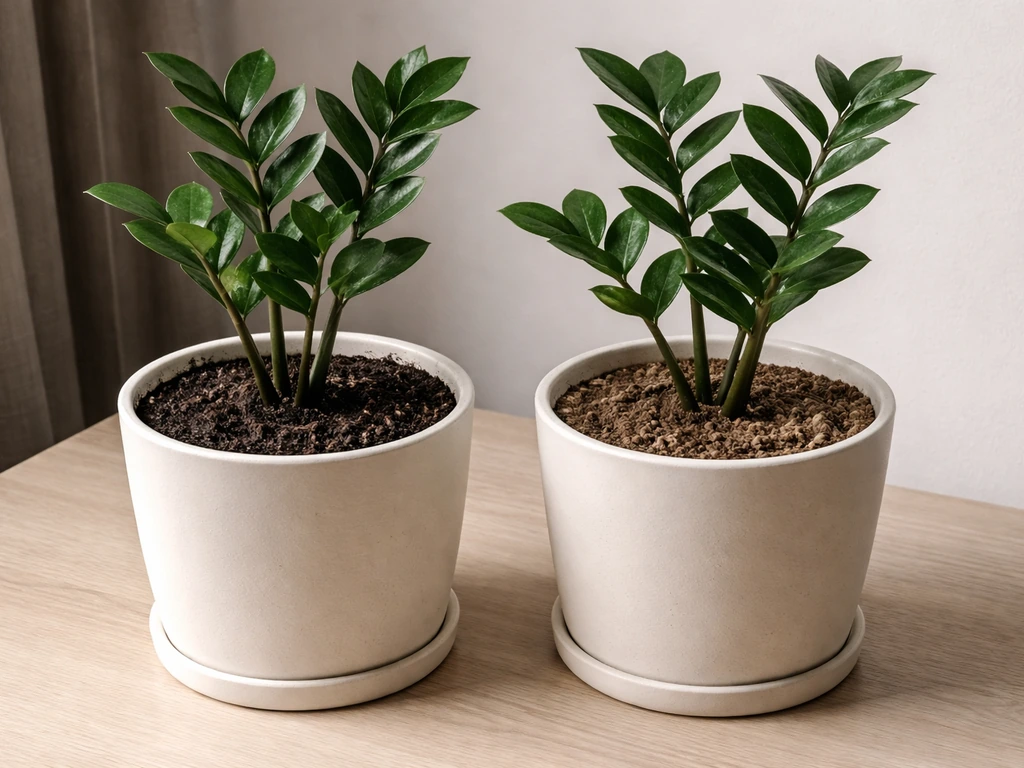
The most common reason ZZ plants die in low-light settings is not the light itself. It's overwatering. When light is low, the plant's metabolism slows down significantly. It uses water much more slowly, and soil stays wet far longer than it would in a bright spot. If you're watering on the same schedule you'd use for a brighter environment, you're almost certainly overwatering in a dim room. Root rot sets in quietly and by the time you notice yellow leaves, the rhizomes may already be damaged.
In low-light conditions, water your ZZ plant only when the soil is almost completely dry throughout the pot, not just dry at the surface. Stick your finger 2 to 3 inches into the soil. If it's still damp, wait. Depending on pot size and room temperature, this might mean watering once every three to four weeks in winter. That sounds like neglect, but it's actually the right call. The rhizomes hold moisture, so the plant isn't suffering even when the soil is bone dry.
Leggy or etiolated growth is the other tell-tale low-light sign. If new stems are coming in with long stretches of bare stem between leaves, and the leaves themselves are smaller than usual, the plant is stretching toward light it can't find. This is called etiolation and it's the plant essentially making a desperate reach. The fix is more light, either by moving the plant closer to a window or adding a grow light. You can trim leggy stems to encourage bushier growth once the light situation is corrected.
Yellow leaves on a ZZ in low light usually point to one of two things: overwatering or, less commonly, the low light itself stressing older leaves into early drop. Check the roots before assuming it's a light problem. If the roots look brown and mushy rather than white and firm, root rot from overwatering is the culprit. Let the soil dry completely, improve drainage, and reduce watering frequency. If the roots look healthy and you're just seeing occasional older leaves yellow at the base of stems, that's normal houseplant leaf cycling and not a crisis.
Fertilizer in low-light conditions should also be scaled way back. A plant that's barely photosynthesizing has no use for a full feeding schedule. Fertilize at half strength, maybe once every six to eight weeks during spring and summer, and skip it entirely in fall and winter. Over-fertilizing a low-light plant can cause salt buildup in the soil, which stresses roots and compounds any existing light-related issues.
Troubleshooting checklist: signs your ZZ needs more light
If you're not sure whether your ZZ plant is getting enough light, run through this checklist. Most of these signs appear gradually, so it helps to check in on the plant every few weeks rather than waiting for something dramatic to happen.
- No new growth for more than two to three months during spring or summer (not in winter, when dormancy is normal).
- New stems are long and spindly with small leaves spaced widely apart, which is etiolation or legginess.
- Leaves look dull, pale, or have lost their characteristic deep glossy green.
- Older leaves are yellowing frequently, not just an occasional bottom leaf.
- Soil is staying wet for three or more weeks between waterings, which suggests metabolism has slowed due to low light.
- The plant is leaning heavily toward one side, reaching for a light source.
- No increase in pot weight or visible rhizome growth when you check the roots at repotting time.
If you're checking two or more of these boxes, start by measuring the light level at your plant's location with a meter app. If you're under 100 foot-candles, move the plant or add a grow light. If you're in the 100 to 250 range and still seeing problems, extend the light duration with a grow light on a timer rather than moving the plant to harsher direct light. The ZZ plant doesn't need much, but it does need something consistent to work with.
For comparison, other popular low-light houseplants like pothos, snake plants, and philodendrons have similar low-light tolerances, though snake plants and pothos tend to show stress signs more slowly than ZZ plants do. snake plants. If you're wondering about a different plant, can philodendron grow in low light, and how much growth to expect philodendrons. If you want another option, you can also ask can spider plants grow in low light and what kind of growth to expect.
Can pothos grow in low light too, and what kind of growth should you expect there? If you're building out a dim room with multiple plants, ZZ plants are arguably the most forgiving of the group, but they share the same core rule: "low light" doesn't mean "no light," and a small adjustment in placement or a basic grow light can be the difference between a plant that coasts and one that actually grows.
FAQ
Can a ZZ plant live in a room with almost no direct sunlight, like a bathroom with only ambient light?
It can survive, but bathrooms usually have two risks, low light and inconsistent humidity. Keep it out of damp corners, use a pot with good drainage, and water only after the soil is almost completely dry, because bathrooms can stay wet longer than expected.
If my ZZ plant is not growing, should I move it closer to the window immediately or use a grow light first?
Start with a gradual change. Jumping to brighter direct sun can scorch leaves, especially if the plant has been coasting for months. A practical approach is to add a small grow light on a timer first, or move it closer only a step at a time over 2 to 4 weeks.
How do I tell whether low light is causing etiolation or whether it is a watering issue?
Etiolation shows up as long gaps between leaves and smaller, paler new leaves. Overwatering is more likely to cause yellowing, soft or mushy roots, and soil that stays damp for long stretches. If stems stretch but the soil is staying dry properly, light is the likely driver.
Does a ZZ plant need different care in winter low light versus summer low light?
Yes. Even in the same spot, winter light is weaker and days are shorter, so growth slows further and drying takes longer. Water less frequently, consider extending light to 12 to 16 hours if you use a grow light, and skip fertilizer during fall and winter.
How close should a grow light be if I am getting slow growth in low light?
Distance matters more than watt claims. Start with the light about 12 to 18 inches above the canopy, then adjust based on response. If leaves bleach or get scorched, raise the light. If nothing changes after several weeks, bring it slightly closer or increase daily hours.
Can I run the grow light 24 hours a day for faster growth?
Usually no. ZZ plants benefit from a light-dark cycle, typically 12 to 16 hours of light. Keeping lights on continuously can stress the plant and can also make the soil stay wetter if you end up watering more often.
What potting and drainage setup helps a ZZ plant in low light avoid root rot?
Use a pot with drainage holes and a gritty, fast-draining mix, such as soil amended with perlite or pumice. In low light, soil dries slowly, so the faster the excess water drains, the safer the rhizomes are. Avoid decorative cachepots that trap water.
Should I fertilize a ZZ plant in low light to compensate for slow growth?
Do not increase fertilizer. In dim conditions, the plant uses less energy, so it needs less feeding. Stick with half strength at most if you fertilize during spring and summer, and avoid fertilizer entirely in fall and winter to reduce salt buildup.
My ZZ plant has yellow leaves at the base, but the roots are firm. Is that still a low-light problem?
Often it is normal leaf cycling. Yellowing limited to older leaves at the base can happen even when roots are healthy. If multiple leaves drop quickly or leaves are yellowing while the soil stays wet, recheck watering and drainage before blaming light.
Is a ZZ plant safe to place in a low-light office desk area that also gets AC or heating vents?
It can be, but airflow affects drying speed. Warm, forced air can dry the soil faster even in low light, which changes your watering timing. Monitor soil dryness instead of relying on a fixed schedule.