
A money plant (Pilea peperomioides) can survive in a room with very low light, but it won't thrive there. It will stretch, go leggy, slow its growth, and stop producing the little coin-shaped offsets that make it so satisfying to own. A truly dark room, with no natural light and no artificial grow light, will eventually push it toward decline. The good news: if your room has even a small window, or you're willing to plug in a basic LED grow light, you can give a Pilea exactly what it needs to stay compact and healthy.
Can Money Plant Grow in a Dark Room? Low Light Guide
Marcus Hartley
31 May 2026
Dark room vs low light vs artificial light: what actually matters
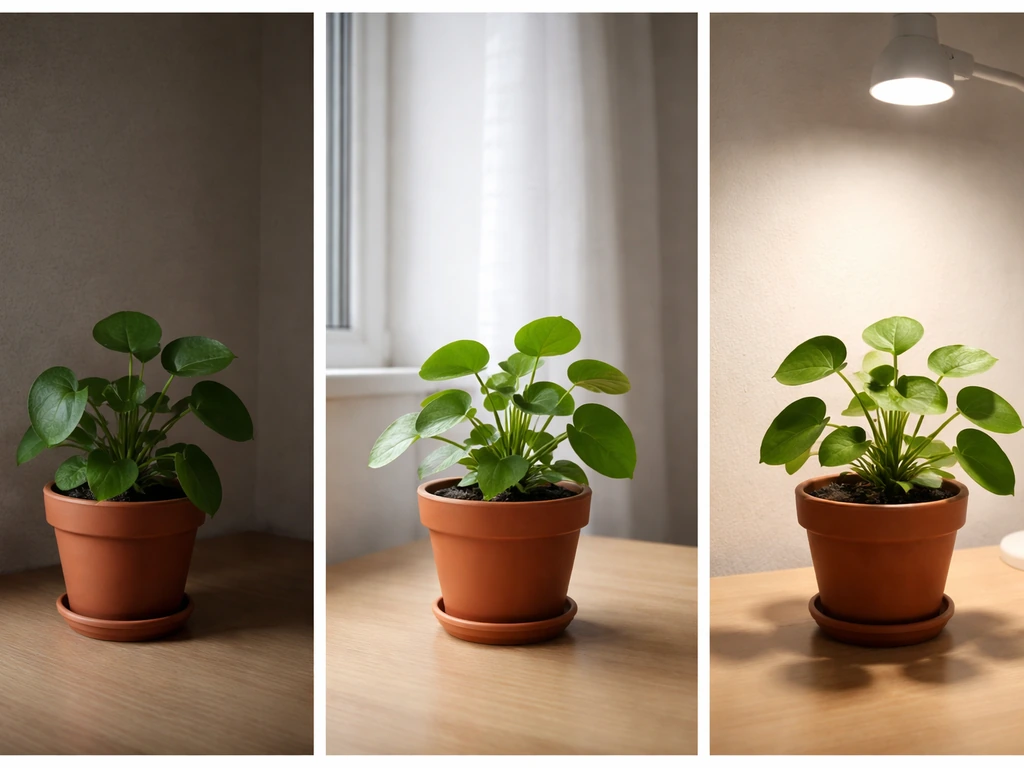
These three situations are genuinely different for a Pilea, so it's worth separating them clearly before you do anything else.
- A truly dark room (no windows, no natural light, no grow light): A Pilea will struggle here. Photosynthesis needs light energy, and without any meaningful source, the plant can't produce enough food to sustain healthy growth. It may limp along for a few weeks, but you'll see rapid deterioration.
- A low-light room (a north-facing window, a distant window, or a room where bright light never directly enters): A Pilea can survive here, but it will grow slowly, become leggy, and produce fewer offshoots. Low light and no light are not the same thing, and this distinction matters.
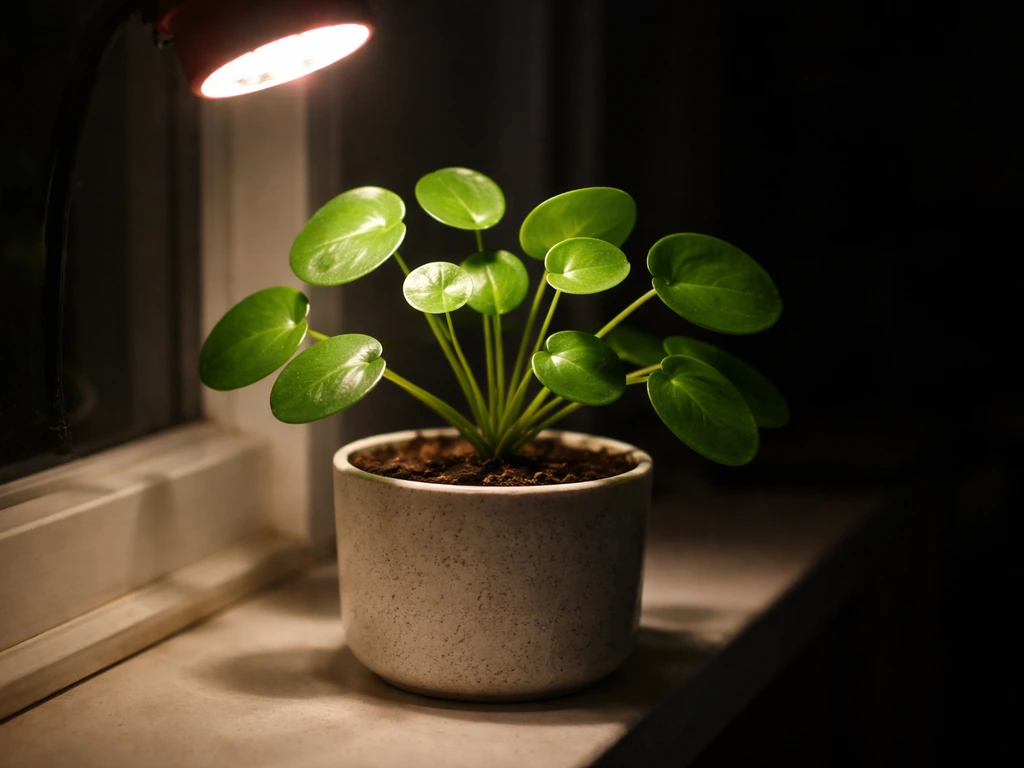
- A dark room with artificial grow lighting: This is where things get genuinely interesting. If you supplement with the right artificial light, a dark room stops being a limiting factor. A Pilea doesn't care whether the photons come from the sun or an LED panel, as long as there are enough of them.
The key insight is that artificial light can fully replace sunlight for a Pilea, provided you get the intensity and duration right. That's the core of making this work in a windowless or near-windowless space.
What light does a money plant actually need?
In the wild, Pilea peperomioides grows under the forest canopy in Yunnan, China. That means it gets bright but filtered light, not direct harsh sun. Indoors, that translates to bright indirect light, the kind you'd get a few feet back from a well-lit east, north, or west-facing window. Direct afternoon sun will scorch the leaves; deep shade will starve the plant. The sweet spot is somewhere in between.
In terms of measurable light, the useful unit for plants is PPFD (photosynthetic photon flux density), measured in micromoles per square meter per second (μmol·m⁻²·s⁻¹). For a Pilea in active vegetative growth, you're aiming for roughly 100 to 300 μmol·m⁻²·s⁻¹ at the leaf surface. You can also think in terms of DLI (daily light integral), which is the total amount of light the plant receives over a full day. A DLI in the 8 to 12 mol·m⁻²·d⁻¹ range is a reasonable target for healthy Pilea growth. These numbers sound technical, but they become very practical once you're sizing up a grow light, which I'll cover below.
One practical note: "low light" as a care label can be misleading. It often means "tolerates lower light than many plants" rather than "does well in dim conditions." A Pilea can tolerate medium to low light, but its growth form and output will change noticeably. The Growers Outlet care sheet for Pilea peperomioides recommends blank" rel="noopener noreferrer">medium, indirect light for indoor care. Fewer offshoots, longer internodes (the stretches of stem between leaves), and smaller leaves are all signs the plant is compensating, not thriving. One Pilea light-care guide notes it does best in bright, indirect light, and that in low light it becomes leggy with stretched growth blank" rel="noopener noreferrer">bright, indirect light and becomes leggy with stretched growth in low light.
Signs your Pilea isn't getting enough light
Your plant will tell you before the situation becomes critical. These are the most reliable signals to watch for:
- Leggy stems: Long, drooping stems with wide gaps between leaf attachment points (petioles) are the clearest sign of low-light stretching. The plant is reaching toward any available light source.
- Increased internode spacing: If you compare newer growth to older growth and the stem sections between leaves are noticeably longer, the plant is etiolating (stretching due to insufficient light).
- Smaller new leaves: Healthy Pilea leaves get to a satisfying size. In low light, new leaves come in smaller and flatter.
- Leaning or lopsided shape: If your plant leans heavily toward one side, it's chasing a light source. RHS specifically recommends rotating the pot a quarter turn each time you water to prevent this uneven lean.
- Fewer or no offshoots: One of the joys of Pilea is the constant production of baby plants. In low light, this slows dramatically or stops entirely.
- Pale or washed-out color: Deep, saturated green leaves need light to maintain chlorophyll density. In dim conditions, leaves can look lighter or yellowish.
- Very slow or stalled growth: If weeks pass with no new leaves and no new offshoots, low light is often the culprit (though overwatering is the other common cause in dark rooms).
One thing worth flagging: if the plant isn't getting enough light, it's also not using water efficiently. In lower light, growth slows and the soil stays wet longer, which increases the risk of root rot. You'll need to water less frequently in darker conditions, so keep an eye on soil moisture rather than following a fixed watering schedule.
How to test your room's light right now
Before you buy a grow light or rearrange your space, it helps to get a realistic read on what you're actually working with. Here are a few ways to do that today.
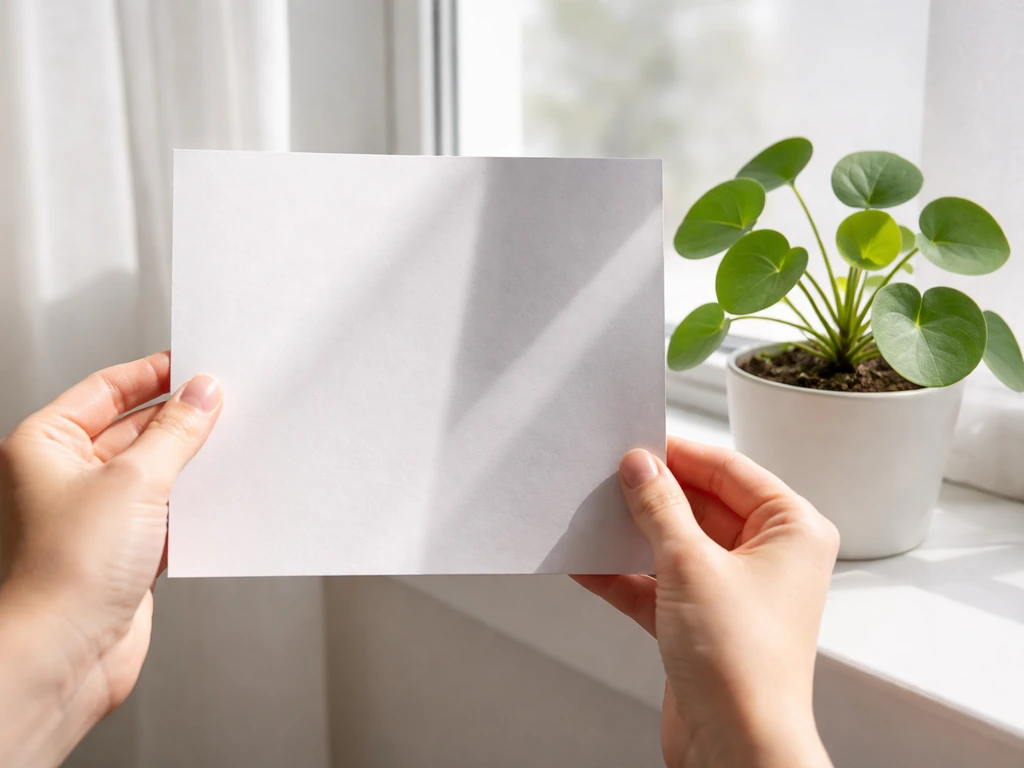
The shadow test
Hold your hand about a foot above a white piece of paper in the spot where you'd place the plant. A sharp, clear shadow means bright light. A soft, faint shadow means medium to low light. No visible shadow at all means the light level is genuinely very low, likely below what a Pilea needs for good growth without supplemental lighting.
Use a lux meter app
Free lux meter apps on your phone (using the front-facing camera) can give you a rough estimate of light intensity in the room. Hold the phone at the level where the plant's leaves would sit, face the sensor toward the light source, and take a reading. As a rough guide, readings below 500 lux in the plant's spot signal very low light. Above 1,000 to 2,000 lux suggests low to medium indirect light. These are estimates, and lux isn't a perfect plant metric (PPFD is more accurate), but lux apps are useful for quick comparisons between spots in your home without any equipment investment.
Check your window orientation and time of day
A south-facing window (in the Northern Hemisphere) provides the highest and most consistent natural light indoors. East-facing windows give good morning light, west-facing windows give afternoon light, and north-facing windows give the softest, most indirect light year-round. If your room has no window, or only a small north-facing window several feet from where you'd place the plant, you're in low-light territory and should plan for supplemental lighting.
Your lighting options: windows, LED grow lights, and fluorescent bulbs
Window placement first
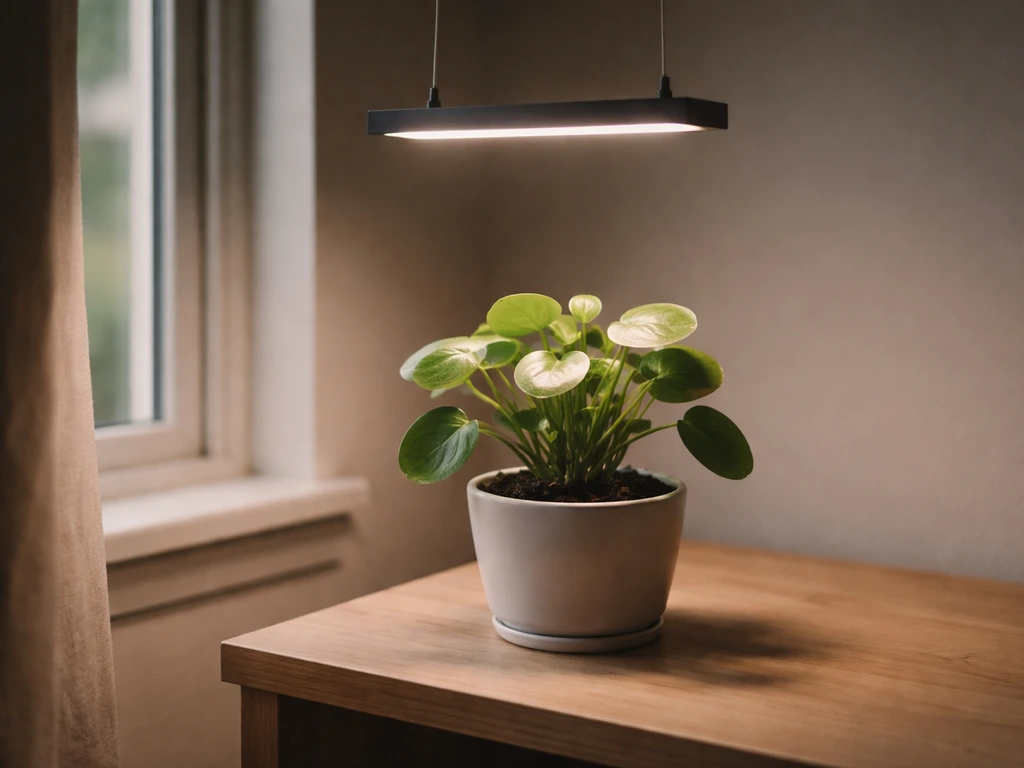
If you have any window at all, maximize it before spending money on equipment. Place the Pilea as close to the window as possible without exposing it to direct afternoon sun (which can bleach or scorch the leaves). East or west-facing windows a foot or two back from the glass are ideal. North-facing windows in good condition can work if the plant is right on the sill. The further from the window you move, the faster light intensity drops, so placement matters a lot.
LED grow lights
For a dark room or any spot that can't get enough natural light, a full-spectrum LED grow light is the best modern solution. LEDs are energy-efficient, run cool (so they won't stress the plant with heat), and last a long time. For a single Pilea, a compact LED panel or clip-on LED grow light with a PPFD output of 100 to 300 μmol·m⁻²·s⁻¹ at the leaf surface is your target. Most good-quality consumer grow lights will spec their PPFD at a given distance, so you can match the light to the placement. A white or full-spectrum LED works well at any vegetative growth stage, and you don't need to chase expensive specialist gear for a single houseplant.
Fluorescent bulbs
Standard fluorescent tubes (T5 or T8) and compact fluorescent bulbs (CFLs) have been used successfully for indoor plants for decades. They're often cheaper upfront than LED panels. A 6500K daylight fluorescent placed close to the plant (within 6 to 12 inches) can provide adequate light for a Pilea. The main downside is that fluorescents are less energy-efficient than LEDs over time, and the intensity drops off quickly with distance, so placement is critical. If you already have fluorescent shop lights, they're a perfectly workable starting point.
| Light source | Best for | Typical cost | Key consideration |
|---|---|---|---|
| Window (indirect) | Rooms with decent natural light | Free | Placement close to glass; rotate plant regularly |
| Full-spectrum LED panel | Dark rooms or supplementing low-light spots | Moderate | Check PPFD spec at intended distance; runs cool |
| Clip-on LED grow light | Single plants, small spaces | Low to moderate | Convenient, adjustable; verify output is sufficient |
| T5/T8 fluorescent tube | Shelving setups, multiple plants | Low | Must be placed 6–12 inches from leaves; less efficient than LED |
| CFL (compact fluorescent) | Budget option for single plants | Very low | Adequate if placed close; replace bulbs every 12–18 months |
If you're buying something new, go with a full-spectrum LED. The energy savings over even a few months offset the slightly higher upfront cost, and the consistency of output is easier to work with. If you're using what you already have, fluorescent options work fine as long as you get the placement right.
Getting the setup right: duration, distance, rotation, and adjustments
How many hours per day?
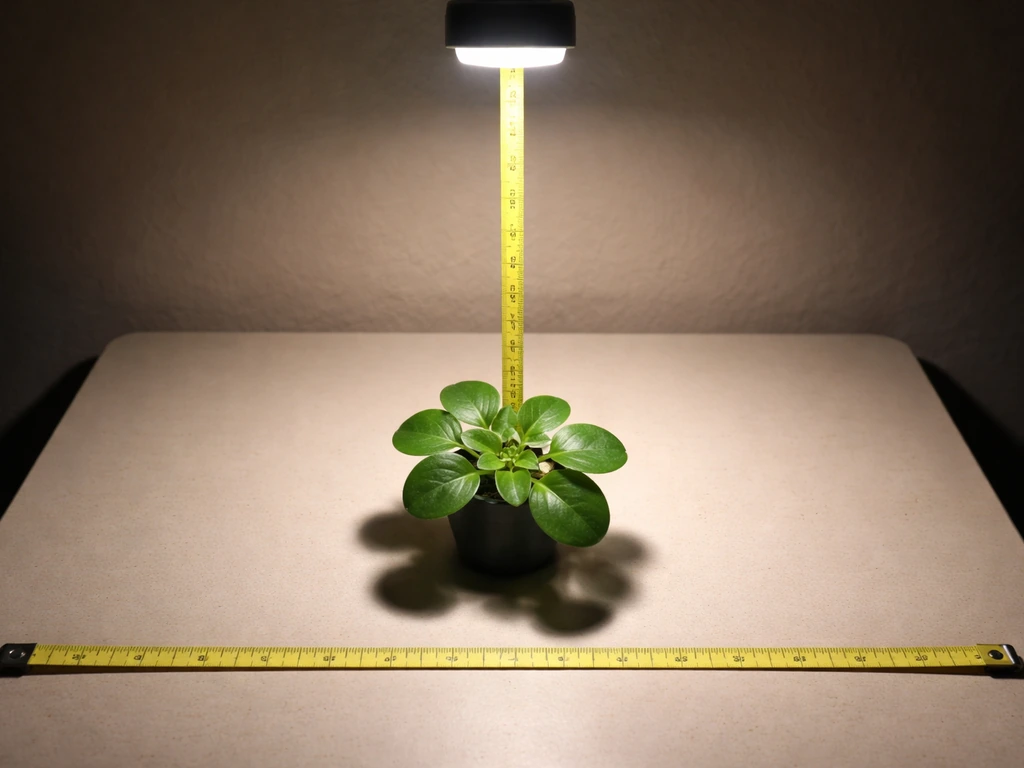
For a Pilea under artificial light, aim for 14 to 16 hours of light per day. This sounds like a lot, but remember: the plant has no other light source in a dark room. You're making up for the absence of ambient daylight throughout the day. At a PPFD of around 125 to 175 μmol·m⁻²·s⁻¹ with a 16-hour photoperiod, you're hitting a DLI in the 8 to 10 mol·m⁻²·d⁻¹ range, which is right in the healthy target zone. A basic outlet timer (a few dollars) makes this completely hands-off once you set it.
How far should the light be from the plant?
Light intensity drops off quickly with distance. A grow light that delivers adequate PPFD at 12 inches may deliver far less at 24 inches. The manufacturer's specs should give you PPFD at a recommended distance. If they don't, start at about 12 to 18 inches above the plant canopy for a mid-power LED and watch for signs of stress in either direction: bleaching or upward-curling leaves suggest too close, while stretching and lean suggest too far. Measure at the leaf level, not at the fixture, since that's where it actually counts.
Rotate the plant regularly
Even with an overhead grow light, Pilea plants tend to lean and grow unevenly toward the strongest light source. Rotating the pot a quarter turn every time you water keeps growth symmetrical and prevents that characteristic Pilea lean. This is just a good habit to build in regardless of your light setup.
When to adjust your setup
Check the plant every two to three weeks when you first set up a new lighting arrangement. If you see the leggy-growth signs described earlier (stretched internodes, drooping stems, leaning), move the light closer or increase the daily duration by an hour or two. If leaves look pale, washed out, or start curling upward, the light may be too intense or too close. Growth should be compact and the plant should produce new leaves fairly regularly if the light is adequate. Once you find the sweet spot, the setup becomes very low maintenance.
One last thing: a Pilea in a dark room with a grow light also needs its watering adjusted. With no ambient natural light warming the soil or driving transpiration, the soil will dry out more slowly than it would near a bright window. Always check the top inch or two of soil before watering rather than watering on a schedule. This single adjustment prevents the most common problem people run into when moving houseplants into lower-light or artificial-light setups.
If you find the Pilea is a bit much to manage in a truly dark room and you want easier options, it's worth knowing that some other common houseplants are genuinely better adapted to very low light conditions. But for most people with a modest grow light and a timer, a money plant in a dark room is a completely achievable setup, and it's one of the more rewarding plants to figure out once you get the light dialed in.
FAQ
Can a money plant survive in a dark room without any grow light?
If the room truly has zero natural light and you do not use an LED grow light, the plant can survive for a while, but it will eventually weaken, stretch, and stop producing offsets. If you want to use a dark room setup, plan on adding supplemental light (even a compact LED placed near the leaves) and use a timer for consistent daily exposure.
What counts as “dark room” for a money plant, is hallway light enough?
A “dark” room can still work if you have a small amount of ambient light coming from elsewhere (hallway lights, street glow through a window, TV light reflecting). The key is whether the plant is getting enough brightness during the day, not the label people give the room. Test the spot at leaf level, and look for the early signs of stretching to confirm you need more light.
How close should a grow light be to keep a money plant compact?
Yes, but distance matters. A light that’s adequate at 12 inches may become too weak at 24 inches because PPFD drops quickly. Measure or follow the fixture’s stated PPFD at distance, and fine-tune by watching for bleaching or upward-curling (too close or too strong) versus leaning and smaller leaves (too far or too weak).
Do I need to run the grow light every day, or can I vary the schedule?
Use a fixed daily schedule rather than turning the light on and off randomly. For a dark-room setup, 14 to 16 hours per day is the practical target, because the plant needs the full day’s light amount to support steady growth. If you change the schedule, do it gradually and reassess leaf color and stretching after 1 to 3 weeks.
Why does my money plant rot or stay soggy when it’s in a dark room?
Don’t rely on a strict watering calendar. In low light, the soil stays wet longer because growth slows and transpiration drops, which raises root-rot risk. Check the top inch or two of soil for dryness before watering, and in darker setups consider letting the pot dry more than you would near a window.
Can I use CFL or fluorescent shop lights instead of an LED grow light?
Fluorescent bulbs like T5/T8 or CFLs can work, but keep them close and choose a daylight color temperature around 6500K for vegetative growth. Even then, you may need more frequent fixture repositioning to avoid weak intensity at the leaf surface, compared with LEDs whose output is typically easier to match to distance.
Should I rotate the pot when using a grow light in a dark room?
Yes, rotating helps, because the plant will lean toward the strongest light source. Make it a simple habit, rotate the pot about a quarter turn each time you water, and do it consistently so the plant grows evenly instead of becoming lopsided.
How can I tell if my money plant needs more or less light?
Signs you need more light include longer internodes (stretched stems between leaves), smaller leaves, drooping or leaning toward the light, and fewer new offsets. Signs the light is too intense or too close include pale or washed-out leaves, bleaching, or upward-curling. Correct the setup by adjusting distance first, then photoperiod.
Are lux meter apps accurate enough to set up lighting in a dark room?
Lux is useful for quick comparisons between spots, but it’s not the same as plant-usable light (PPFD). Use your measurements only as a rough guide, then validate with plant response after a couple of weeks. The best “adjustment tool” is observing leaf color and growth compactness at the leaf level.
What’s the easiest way to set up lighting so I can stop constantly troubleshooting?
If you want to make a dark-room setup easier, choose a higher-output LED that can deliver the target PPFD at your intended distance, then keep that distance constant. Frequent moving creates inconsistent light exposure, which makes it harder to diagnose problems. Set it up, use a timer, and adjust only one variable at a time (usually distance, then hours).