
Rubber trees (Ficus elastica) can survive in low light, but they won't thrive there. Dracaena can also struggle in dim conditions, so it helps to understand how low light affects it can Dracaena grow in low light. If you place one in a genuinely dim corner, it'll hang on for months, maybe longer, but you'll start noticing the signs: slower growth, longer and weaker stems, smaller leaves, and eventually some leaf drop. The honest answer is that rubber trees are adaptable, not low-light plants. Knowing what that distinction means in your actual apartment or house is what determines whether yours does well or just limps along.
Can Rubber Trees Grow in Low Light? Indoor Guide
Marcus Hartley
28 May 2026
What 'low light' actually means for a rubber tree indoors
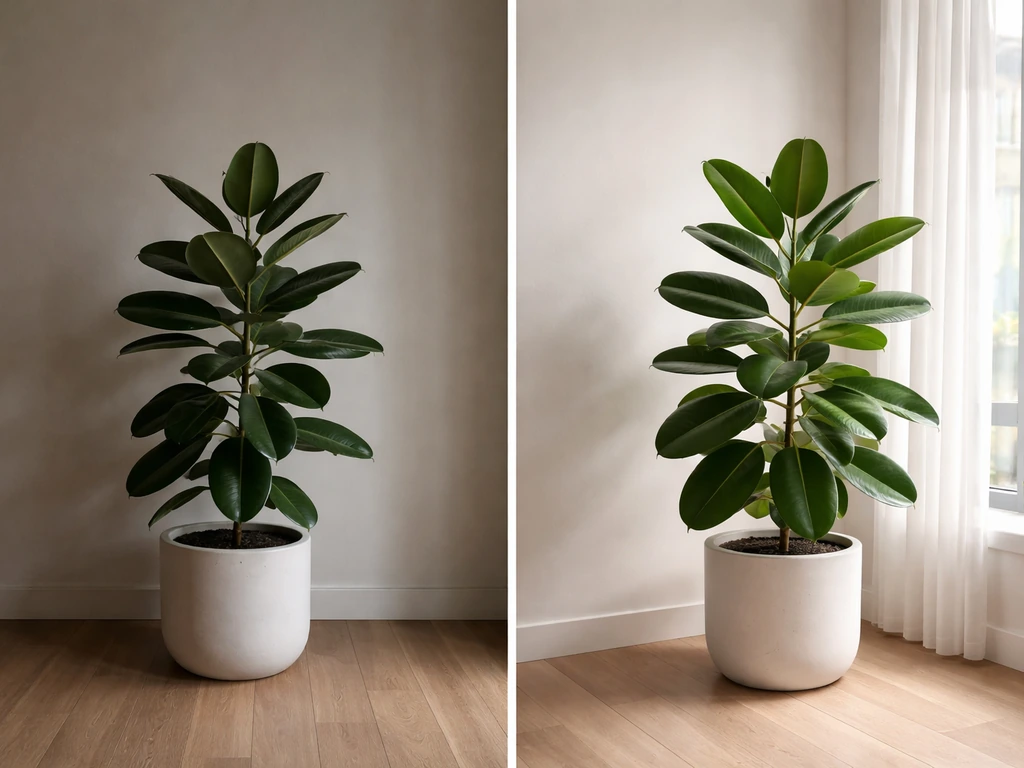
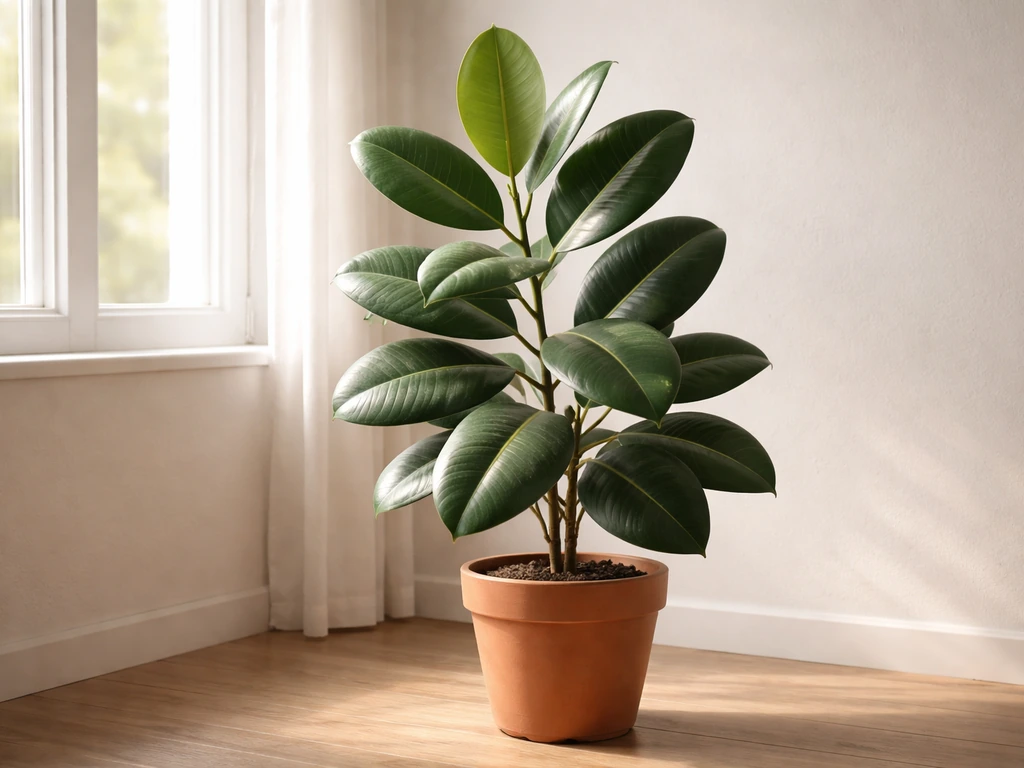
"Low light" gets thrown around a lot in plant care, but it covers a huge range of real-world conditions. True low light indoors means a spot that receives no direct sun at any point in the day, is more than 6 to 8 feet from a window, or sits near a window that faces north (in the northern hemisphere). In measurable terms, that's roughly under 50 to 100 foot-candles of light for most of the day. A windowless hallway, a bathroom with a frosted north-facing window, a corner of a living room that doesn't get any reflected outdoor light, those are genuinely low-light spaces.
What most people mean when they say 'low light' is actually moderate indirect light: a few feet back from an east or west-facing window, or near a south-facing window with a sheer curtain. Ficus, including weeping fig, grows best indoors in bright, indirect light, essentially aiming for diffused sun. Rubber trees can do reasonably well in that kind of space. It's the truly dim spots, the ones where you'd squint to read a book without turning on a lamp, where things start to fall apart for Ficus elastica.
Clemson Extension puts it clearly: rubber plants prefer bright light but are adaptable to low light. UF/IFAS characterizes their indoor light need as 'full sun to partial shade,' not shade-tolerant in the way, say, a pothos or ZZ plant is. That partial-shade tolerance is their saving grace in interior spaces, but it has limits.
Rubber tree light needs: survive vs. thrive
Here's the practical split you need to understand. A rubber tree can survive in low light for an extended period because it's a tough, adaptable plant. It will slow its metabolism, stop pushing new leaves, and essentially go into a holding pattern. It won't necessarily die right away, but it won't grow either, and over time the stress accumulates.
| Light condition | What happens to your rubber tree | Verdict |
|---|---|---|
| Bright indirect light (3-5 ft from south/east window) | Active growth, large glossy leaves, good color | Thrives |
| Moderate indirect light (5-8 ft from window, or sheer-curtained south window) | Slower but steady growth, may stretch slightly | Does okay |
| Low light (north window or 8+ ft from any window) | Growth stalls, stems get leggy, some leaf drop | Survives short-term |
| Very low light (dim interior room, no window nearby) | Significant stress, leaf drop, decline over weeks to months | Struggles to survive |
The UF/IFAS production guide is instructive here: commercial growers acclimate rubber trees to shade levels of 70% or more (around 3,000 foot-candles or less) for two to six months before moving them to interior conditions. That's a managed process with a specific endpoint. When non-acclimated plants are moved straight to low-light interiors, they defoliate heavily. Your rubber tree from the garden center has likely already been through some version of this, but it doesn't mean it can stay in a dim corner indefinitely.
Thriving looks like a rubber tree pushing new leaves every few weeks during spring and summer, with large, waxy, deep green or burgundy leaves depending on the variety. Surviving looks like a plant that's been in the same spot for months with no new growth and a few yellowed or dropped leaves at the bottom.
Signs your rubber tree isn't getting enough light
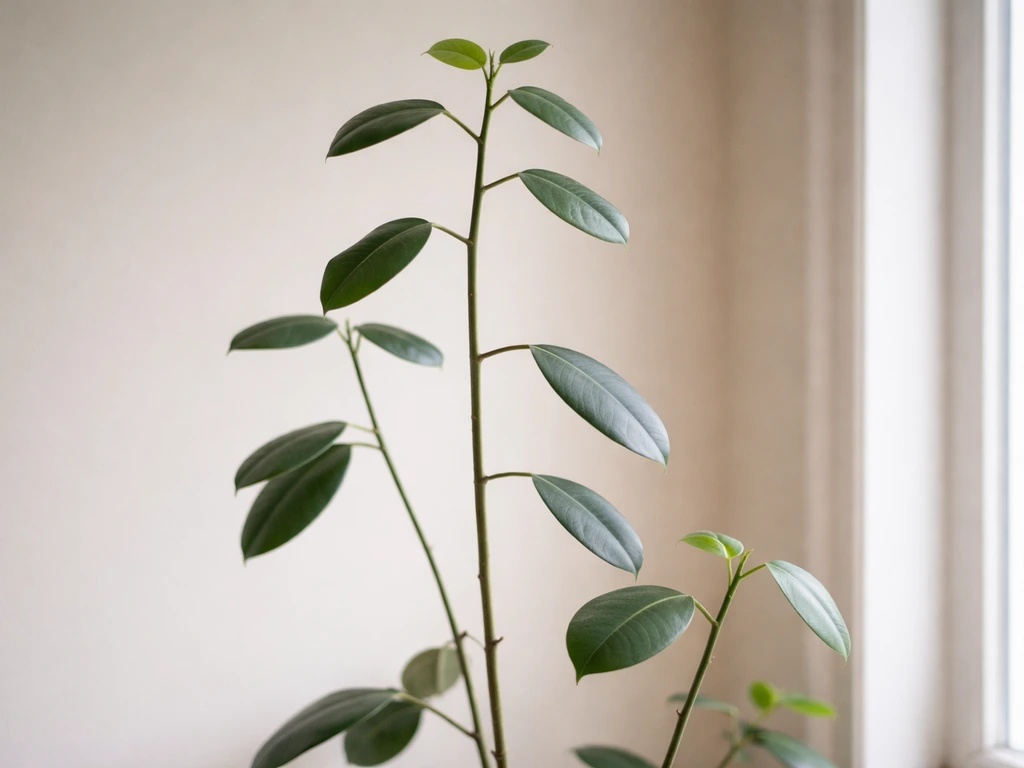
Your plant will tell you before things get critical. Watch for these specific signals, because they're easy to confuse with overwatering or other problems if you're not thinking about light first.
- Leggy, stretched stems: The plant is reaching toward whatever light it can find. New growth comes in with long gaps between leaves instead of compact, full growth.
- Smaller leaves than usual: New leaves come in noticeably smaller than the ones that grew when the plant was in better light. This is a reliable early sign.
- Green leaf drop: This is a key one. UF/IFAS extension specifically lists 'green leaf drop' as a symptom of low-light stress, distinct from yellowing due to overwatering. If leaves that look otherwise healthy are just falling off, suspect light first.
- Loss of color on variegated varieties: If you have a Ficus elastica 'Tineke' or 'Ruby,' the cream and pink variegation will fade or disappear entirely as the plant tries to produce more chlorophyll to compensate for low light.
- No new growth for months: During the growing season (spring through early fall), a healthy rubber tree in adequate light should be producing new leaves regularly. If yours has stalled completely, light is the most likely culprit.
- Soil staying wet too long: Indirectly, less light means the plant is photosynthesizing less, using less water, and the soil dries out more slowly. This can then lead to root issues if you're watering on a regular schedule without checking the soil.
Quick adjustments using windows and plant placement
Before spending any money on grow lights, try these placement fixes first. They cost nothing and can make a surprisingly big difference.
- Move it closer to your brightest window. Even a few feet can double or triple the light intensity reaching your plant. South-facing windows are best in the northern hemisphere, followed by east and west. North-facing windows provide the least light.
- Get within 3 to 5 feet of the window. This is the sweet spot for bright indirect light. If direct afternoon sun hits, a sheer curtain will diffuse it without blocking too much overall brightness. North Carolina State Extension specifically recommends protecting rubber trees from harsh afternoon sun, so a sheer curtain on a south or west window is a great compromise.
- Rotate the plant every week or two. Rubber trees will lean heavily toward the light source. Regular rotation keeps growth more even and ensures all sides of the canopy get exposure.
- Remove obstacles. Furniture, shelving, or even another large plant between your rubber tree and the window can cut light dramatically. Sometimes just rearranging what's in front of the window solves the problem.
- Use light-colored walls and surfaces. If you can't move the plant closer, placing it near a white or light-colored wall helps bounce ambient light back onto the foliage. It's a small effect, but every bit helps in a genuinely dim room.
If your space genuinely cannot provide a window spot with decent indirect light, that's when artificial lighting becomes necessary rather than optional. If you're wondering the same thing for anthurium, it also generally needs brighter, more consistent light than true low-light corners can provide can anthurium grow in low light.
Using LED and fluorescent grow lights for rubber trees
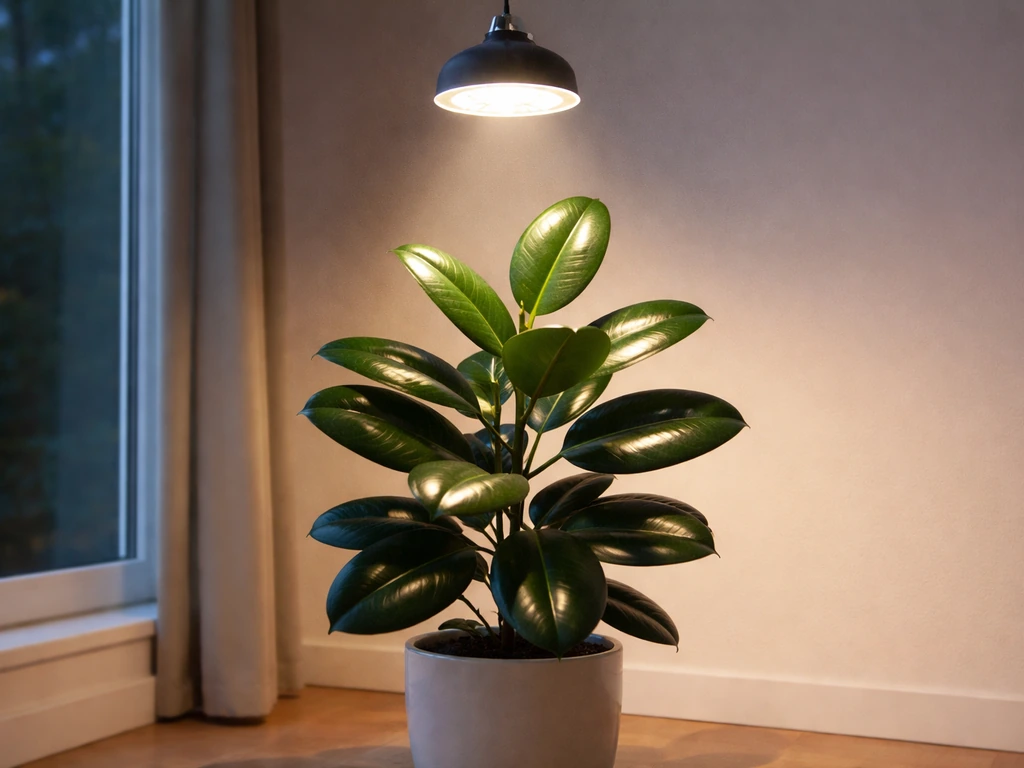
Grow lights are not just for serious plant people or those running full indoor gardens. A single LED panel or even a good fluorescent bulb can completely change what's possible for a rubber tree in a low-light room. The key is knowing what to buy and how to set it up correctly.
What to buy
For a single rubber tree, you don't need anything elaborate. Here's what actually matters when choosing a grow light:
- Full-spectrum LED panels or bulbs: Look for lights labeled 'full spectrum' that cover both the blue (around 450nm) and red (around 650nm) wavelengths. These support both vegetative growth and overall plant health. You don't need a specialized horticultural LED for a rubber tree — a good full-spectrum grow bulb in a standard clamp lamp works fine.
- Fluorescent T5 or T8 bulbs: These are a budget-friendly option and work well for medium-light plants like rubber trees. They run cooler than older HID lights and can be positioned closer to the plant. A 4-foot T5 fixture with a 6500K bulb (cool white/daylight) placed 12 to 18 inches above the canopy works well.
- Output: Aim for a light that delivers at least 200 to 400 foot-candles at the leaf level for maintaining a rubber tree, and 400 to 800 foot-candles if you want it to actually grow. Many grow light listings now include PPFD (photosynthetic photon flux density) values — for a rubber tree in supplemental lighting, target around 100 to 200 µmol/m²/s at the leaf surface.
- Wattage as a rough guide: A 10 to 20 watt LED grow bulb or a 24-watt T5 fluorescent is usually enough for a single medium-sized rubber tree. You're supplementing, not replacing the sun.
How to position the light
- LED panels: Position 12 to 24 inches above the top of the plant. Start farther away and move closer if the plant isn't responding after a few weeks. If leaves start to look washed out or curl slightly, back the light off.
- Fluorescent T5/T8: These can go 6 to 18 inches above the canopy because they produce less heat. Closer placement works fine as long as you don't see heat stress.
- Runtime: Run the grow light for 12 to 16 hours per day. Rubber trees don't have strict day-length requirements, but 14 hours of light is a solid middle ground. Use a cheap plug-in timer so you're not manually switching it on and off — consistency matters more than the exact number of hours.
- Don't leave lights on 24 hours: Plants need a dark period for certain metabolic processes. Even in a low-light situation, giving your rubber tree 8 to 10 hours of darkness is important.
- Combine with ambient light: If your room gets any natural light at all, position the grow light to supplement it rather than replace it entirely. Even dim natural light provides a useful spectrum that grow lights can't fully replicate.
Affordable setup ideas
You don't need a grow tent or a rack system. A clamp lamp with a full-spectrum LED bulb (around $15 to $30) attached to a nearby shelf, bookcase, or the pot's own stand is genuinely enough for a single rubber tree. Plug it into a $10 outlet timer, set it for 14 hours on, and you're done. That's the whole setup. If you want to cover a larger plant or multiple plants, a 2-foot or 4-foot LED shop light with a full-spectrum rating can be hung above them with a couple of hooks and cable ties for well under $50.
Troubleshooting low-light problems
Some common rubber tree complaints look like light problems but might be something else, and vice versa. Here's how to tell them apart and what to do.
Leggy growth and stretched stems
If your rubber tree is producing new growth but the stems are long and thin with leaves spaced far apart, that's etiolation, the plant stretching toward light. This is almost always a pure light problem. Plantshed’s Rubber Tree care guide explicitly notes “Will become leggy in low light,” tying insufficient light to observable leggy growth leggy growth habit. The fix is more light, either by moving the plant or adding a grow light. You can also prune back the leggy stem to a node to encourage fuller, bushier growth once you've improved the light. Don't prune and leave it in the same dim spot, though, because the new growth will just stretch again.
Leaf drop (especially green leaves)
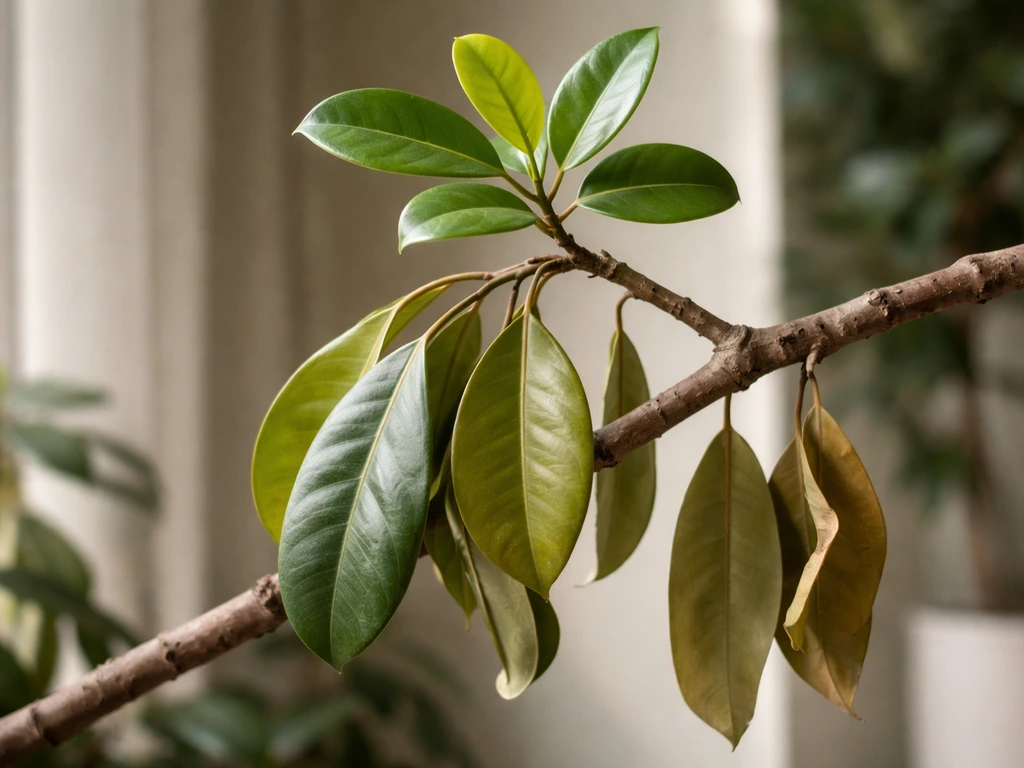
Green leaf drop is the clearest signal of low-light stress in Ficus. If the leaves look healthy right up until they fall, and you haven't recently moved the plant or changed your watering routine, increase the light first before investigating other causes. Yellow leaf drop from the lower stems is more often a watering issue. If you see both happening at once, check soil moisture and light simultaneously.
Brown edges or crispy leaf tips
This one is usually not a light problem. Brown edges and crispy tips in rubber trees are more commonly caused by low humidity, inconsistent watering, or fluoride/salt buildup in the soil from tap water. Don't mistake this for low-light stress. If you've just moved your rubber tree closer to a window or added a grow light and suddenly see brown edges, you might have too much direct sun or heat from the light source rather than too little light.
No growth despite decent light
If you've moved the plant to a brighter spot and still see no new growth after six to eight weeks during the growing season, check whether it's rootbound (roots circling the pot or coming out the drainage holes), whether it's been recently repotted and needs time to settle, or whether it's in the dormancy-adjacent slowdown that happens in winter. Rubber trees naturally grow much slower from November through February regardless of light.
How to track progress and when to expect new growth
Once you've improved the light situation, whether through better placement or a grow light setup, give the plant time to respond. Rubber trees are not fast movers even in ideal conditions. Here's a realistic timeline:
- Weeks 1 to 2: No visible change yet. The plant is adjusting internally. Don't panic and don't move it again.
- Weeks 3 to 4: You might notice the existing leaves looking slightly more upright or glossy. The plant is stabilizing.
- Weeks 4 to 8: If conditions are right, a new leaf sheath (the reddish-pink protective covering around new growth) should appear at the top of a stem. This is your signal that it's working.
- Month 2 onwards: Regular new leaf production every 3 to 6 weeks during spring and summer is a healthy rhythm for a rubber tree in good light.
To track progress without guessing, use your phone's light meter app (they're free and reasonably accurate) to take a reading at the leaf level at the same time of day each week. You're aiming to consistently hit at least 200 foot-candles for maintenance and ideally 400 or more for growth. If the number stays low, you know to adjust before the plant tells you with dropped leaves.
Also take a photo of the plant when you make any change. It sounds basic, but it's genuinely hard to notice slow changes day to day. A photo from two months ago will show you clearly whether things are improving.
Your quick light assessment checklist
Use this to evaluate your rubber tree's current situation and decide on your next step:
- What direction does the nearest window face? South or east is best. North is the most challenging.
- How far is the plant from that window right now? If it's more than 6 feet, move it closer first.
- Is anything blocking the window (furniture, other plants, heavy curtains)? Clear the path.
- Is the plant in a spot where you'd need to turn on a lamp to read comfortably during the day? If yes, it needs a grow light.
- Has the plant produced any new leaves in the last 8 weeks during spring or summer? No new growth is your action signal.
- Do you see leggy stems, green leaf drop, or fading color? All three point to insufficient light.
- If natural light can't be improved, pick up a full-spectrum LED grow bulb, a clamp lamp, and a plug-in timer. Set it for 14 hours on, 10 hours off, positioned 12 to 18 inches above the canopy.
- Reassess in 6 to 8 weeks. Look for new leaf sheaths and improved stem thickness as your markers of success.
Rubber trees are genuinely one of the more forgiving large-leafed houseplants, which is why they're so popular. They're not as shade-tolerant as a dracaena or a pothos, but with a little attention to placement or a basic grow light setup, they can do well even in apartments that don't get much natural light. The goal is just to be honest about what 'low light' means in your specific space, and set up accordingly.
FAQ
If my room is “bright” but still feels dim to me, how can I tell whether it’s low light or moderate indirect light for a rubber tree?
Use a light reading at leaf height (not the window) at the same time each day. If you’re consistently under about 100 foot-candles for most of the day, plan for survival mode. If you can hold roughly 200 foot-candles or more, it’s more likely to grow, especially during spring and summer.
Can a rubber tree recover after spending months in a dim corner, or will it stay stunted?
It can rebound, but the earlier dim-stress growth usually will not “fill back in.” Expect new leaves once light improves, but the older, leggy or sparsely leafed stems typically only get fuller if you prune to a node and then provide stronger light.
Should I put a rubber tree under a grow light all day in low light, or only part of the day?
Aim for consistent daily exposure, commonly around 14 hours on for an LED setup. Avoid running it 24/7, because you want a dark rest period and you may increase heat and drying near the light.
How close should a clamp lamp or shop light be to a rubber tree?
Rather than relying on distance alone, monitor the light at leaf level and adjust. If your readings stay low, raise or reposition the light. If leaves show signs of stress that coincide with moving the light closer, back off to reduce heat and direct-sun effect from the bulb.
My rubber tree is dropping leaves, but I’m also watering differently. How do I avoid mixing up light stress with watering problems?
Do a quick two-part check. First, confirm soil moisture (dry down time and whether the pot drains well). Second, change only one variable at a time, preferably light first. If leaf drop happens without soggy soil or recent watering changes, increase light before you overhaul your watering routine.
Is leaf drop in low light reversible, and should I remove fallen leaves or prune?
Fallen leaves won’t regrow, but removing them helps you monitor new growth. For pruning, wait until you’ve increased light, then prune leggy stems to nodes to encourage branching, not before improving light.
Why does my rubber tree stretch with long bare sections if I moved it to “brighter” light?
Stretching usually means the plant still isn’t getting enough intensity, not that it dislikes the new spot. Move closer to the window, use brighter indirect light, or add a grow light, then wait weeks. If you prune immediately without fixing light, it will stretch again.
If the leaves look green but growth stops, is the rubber tree dying or just resting?
During winter, rubber trees naturally slow down even with adequate light. If there are no new leaves for 6 to 8 weeks during the growing season, check rootbound status and whether recent repotting caused a settling period before assuming the light is the only issue.
Can low humidity make a rubber tree look like it’s struggling in low light?
Yes. Brown edges and crispy tips can come from dry air, inconsistent watering, or mineral buildup, not just light. If the plant is otherwise producing leaves and the damage is mainly at the tips or margins, humidity and water quality are more likely culprits than brightness.
Do I need to change anything about fertilizing when I use grow lights in a low-light home?
Yes, in low light the plant uses less energy, so over-fertilizing can cause salt/mineral buildup. Fertilize based on active growth periods (typically spring through summer) and consider flushing the pot occasionally if you use tap water, especially if you see crusty soil or tip browning.
What should I do about tap-water residue if my rubber tree is in a low light setup and I rely on it for months?
Mineral and fluoride buildup can show up as browning even when light is adequate. Use filtered or distilled water when possible, ensure thorough drainage, and consider a periodic soil flush if you notice white crust on the pot or soil surface.