
Yes, reflected sunlight can grow plants, but how well it works depends almost entirely on what surface you're bouncing light off, how strong the original sunlight is, and which plants you're trying to grow. For shade-tolerant houseplants like pothos, snake plants, or ZZ plants, a well-set-up reflection off a white wall or a strategically placed mirror can provide enough usable light to keep them healthy and growing. For sun-hungry herbs, succulents, or fruiting plants, reflected light alone usually falls short, and you'll likely need to supplement with a proper grow light.
Can Reflected Sunlight Grow Plants? Indoor Guide and Setup
Marcus Hartley
30 May 2026
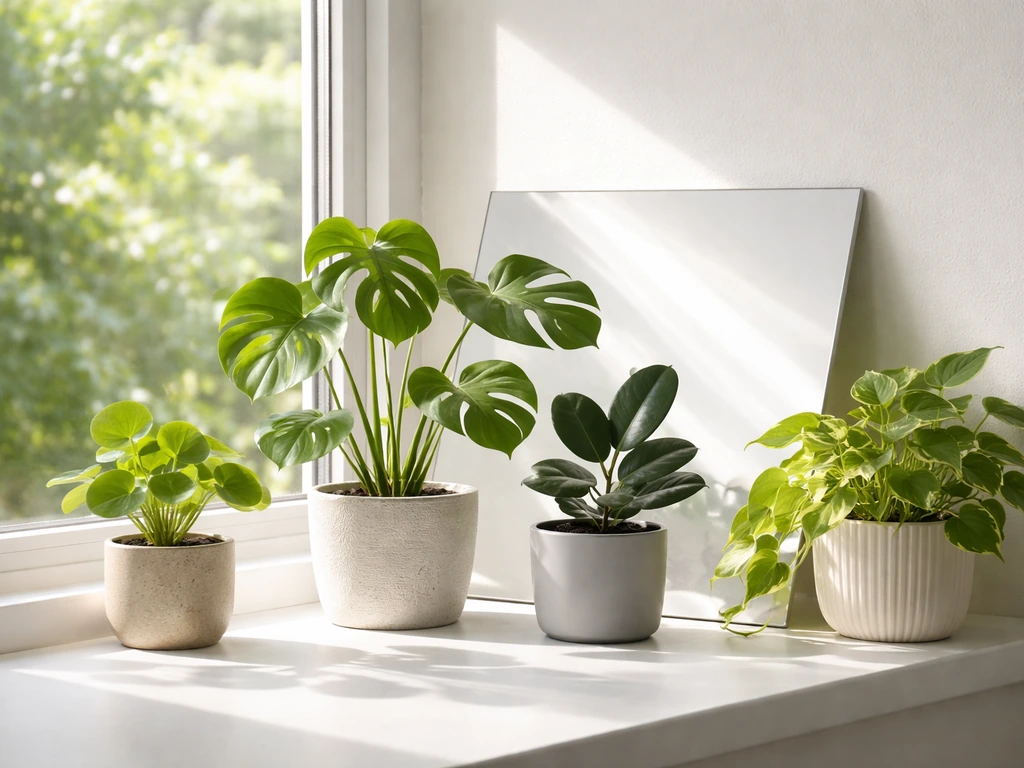
How reflected sunlight actually works for plants
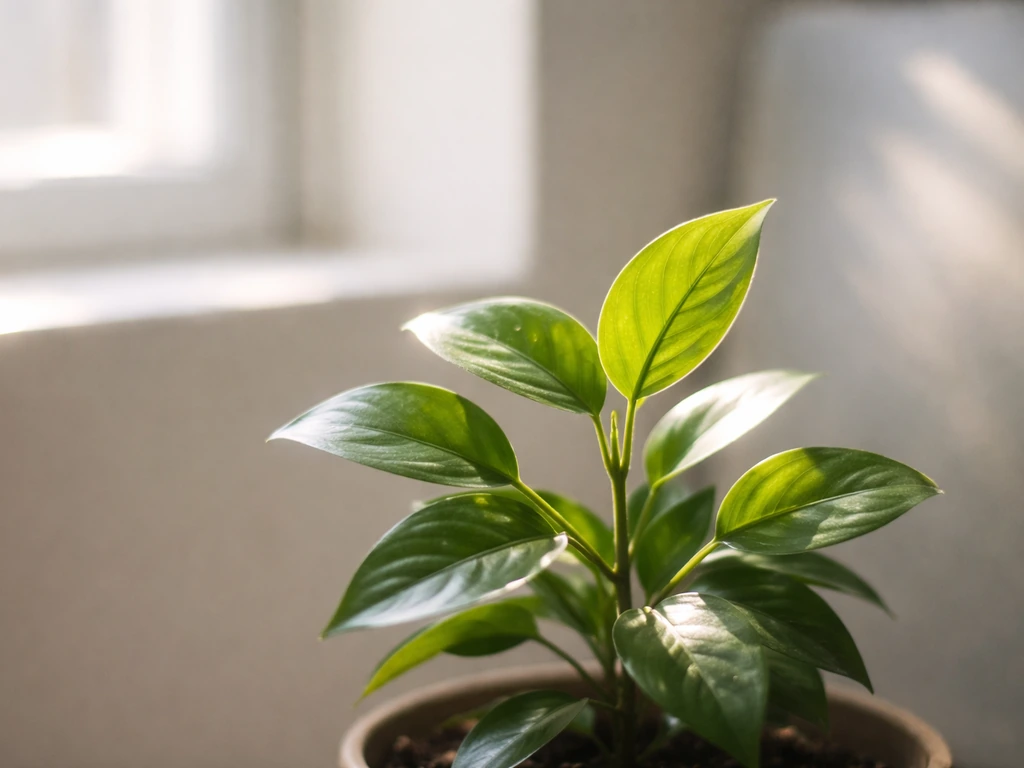
Plants don't care whether photons came directly from the sun or bounced off a wall first. What matters is how many usable photons hit the leaf. The relevant metric is PPFD, which stands for photosynthetic photon flux density, measured in micromoles of photons per square meter per second (µmol/m²/s). This covers the 400 to 700 nanometer range, which is the light plants can actually use for photosynthesis. Lux readings (the kind your phone app gives you) are weighted for human vision and can mislead you, so PPFD is the number that actually matters.
When sunlight hits a surface, some of it is absorbed and some bounces back. How much bounces back, and at what angles, depends on the surface. A bright white wall reflects light diffusely, meaning it scatters photons in many directions. A mirror or reflective Mylar film reflects light more directly (specularly), concentrating it toward a specific point. You can sometimes use window film to achieve a similar effect, but make sure it is designed for plant growth and provides enough light reflective Mylar film. Research on reflective materials in horticultural settings has shown that highly reflective tape or Mylar can return up to 94% of incident PPFD back into the growing area. A standard white wall is much less efficient, typically returning 70 to 85% depending on the paint. A light-colored ceiling or floor might return 40 to 60%. Every bounce loses some intensity, so the fewer surfaces light has to travel through, the better.
Reflected light also tends to be more diffuse than direct sun, meaning it spreads more evenly across a plant's canopy instead of hitting it from one harsh angle. That's actually a benefit in many cases, since even coverage means more leaves are photosynthesizing at once. It also means lower risk of hot spots that can burn foliage, with one important exception I'll get to in the mirror section.
Will reflected sunlight actually be enough?
This is the honest part. Reflected sunlight is almost always dimmer than direct sun, often significantly so. Direct outdoor sunlight can hit 1,000 to 2,000 µmol/m²/s on a clear day. By the time it bounces off a white wall and reaches your plant a few feet away, you're probably looking at 50 to 200 µmol/m²/s at best. That range is enough for many low-light and medium-light houseplants, but it's not enough for anything that genuinely wants full sun.
Duration matters just as much as intensity. Horticulturalists use a concept called DLI (Daily Light Integral) to measure total daily light exposure. The formula is: DLI (mol/m²/day) = 0.0036 × PPFD × hours per day. So if your reflected light delivers 100 µmol/m²/s for 8 hours, your DLI is about 2.9 mol/m²/day. Low-light foliage houseplants generally need a DLI of 3 to 6 mol/m²/day to stay healthy. That 100 µmol setup is right on the edge, which is why the quality of your reflective setup and the brightness of your source sunlight matter so much.
Distance is the third variable. Light intensity drops off quickly with distance, so a plant sitting 6 inches from a reflective surface gets dramatically more light than one sitting 3 feet away. This is the same reason grow light guides recommend keeping fluorescent tubes 6 to 12 inches from plant canopies. The closer your plant is to the reflective surface and the original light source, the more PPFD it actually receives. Try to keep plants within 1 to 2 feet of a reflective surface for meaningful results.
Which plants will actually thrive vs. struggle in reflected light
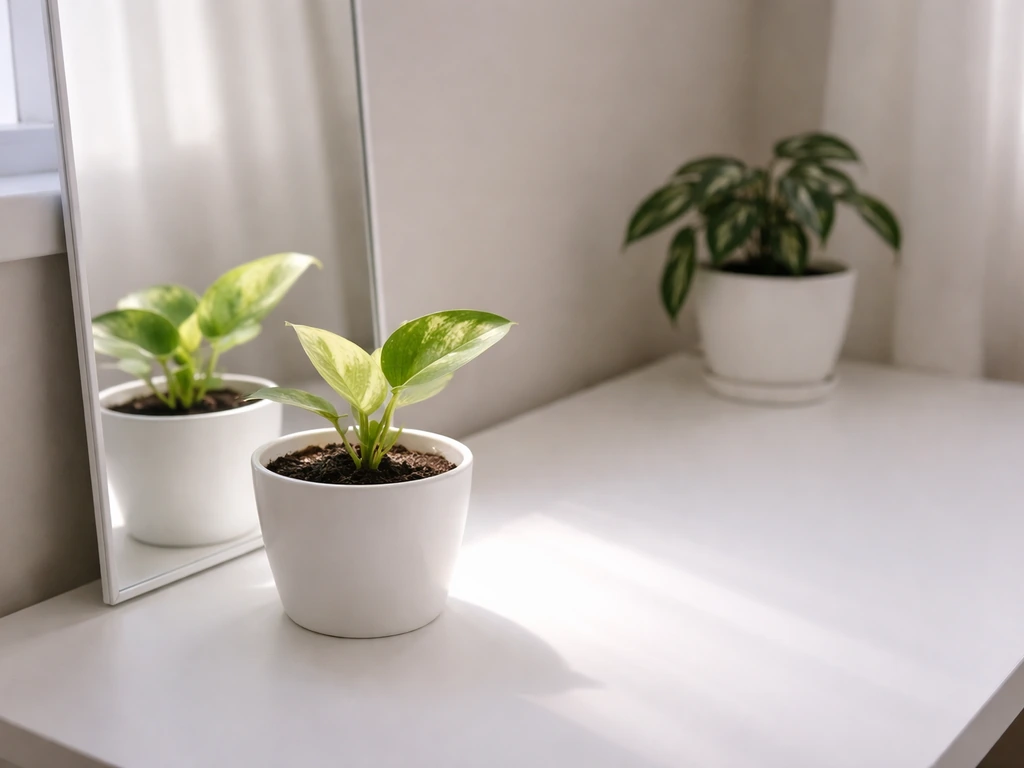
I've found that being honest about plant selection saves a lot of frustration. Here's a practical breakdown of which types are realistic candidates for a reflected-light setup.
| Plant Type | PPFD Range Needed | Reflected Light Realistic? | Notes |
|---|---|---|---|
| Pothos, Philodendron, ZZ Plant | 50–250 µmol/m²/s | Yes, often enough | Excellent for reflected or indirect setups |
| Snake Plant, Peace Lily | 50–150 µmol/m²/s | Yes | Very tolerant; good for dim corners with reflectors |
| Ferns, Calathea, Dracaena | 50–200 µmol/m²/s | Usually yes | Do well with consistent diffuse reflected light |
| African Violets, Gloxinias | 100–200 µmol/m²/s | Marginal | May bloom with strong reflected light from a south window |
| Herbs (Basil, Mint, Parsley) | 100–500 µmol/m²/s | Marginal to unlikely | Need robust setup; supplement with grow light if possible |
| Succulents and Cacti | 100–200+ µmol/m²/s | Marginal | Often etiolate (stretch) without stronger direct light |
| Tomatoes, Peppers, Fruiting plants | 400–1000+ µmol/m²/s | No, not alone | Reflected light won't come close; use grow lights |
The general rule: if a plant is labeled 'low light' or 'indirect light' in any reputable guide, it's a candidate for a well-designed reflected light setup. Anything described as 'full sun' or 'bright direct light' is going to struggle, and reflected sunlight will likely cause it to stretch, pale, and eventually decline.
How to set up reflected sunlight that actually works
The goal is to get as many usable photons onto your plant canopy as possible without burning anything or creating glare problems. Here's how to do it practically.
Choose the right reflective surface
- Flat white paint or white foam board: A great default. Cheap, safe, and reflects diffuse light evenly. Use this behind or beside plants near a window.
- White or silver Mylar film: More reflective than white paint (up to 90%+), lightweight, and easy to position. Available at any garden supply store or online.
- Mirrors: Highly effective but require careful placement (more on this below). Use small mirrors or mirror tiles to redirect light from a window to a darker corner.
- Light-colored walls and ceilings: Already doing passive work in many rooms. Painting a north-facing wall white is one of the easiest free upgrades.
- Avoid: dark walls, wood paneling, brown floors, or any surface that absorbs rather than reflects. These actively steal light your plants could use.
Position plants and reflectors for maximum effect
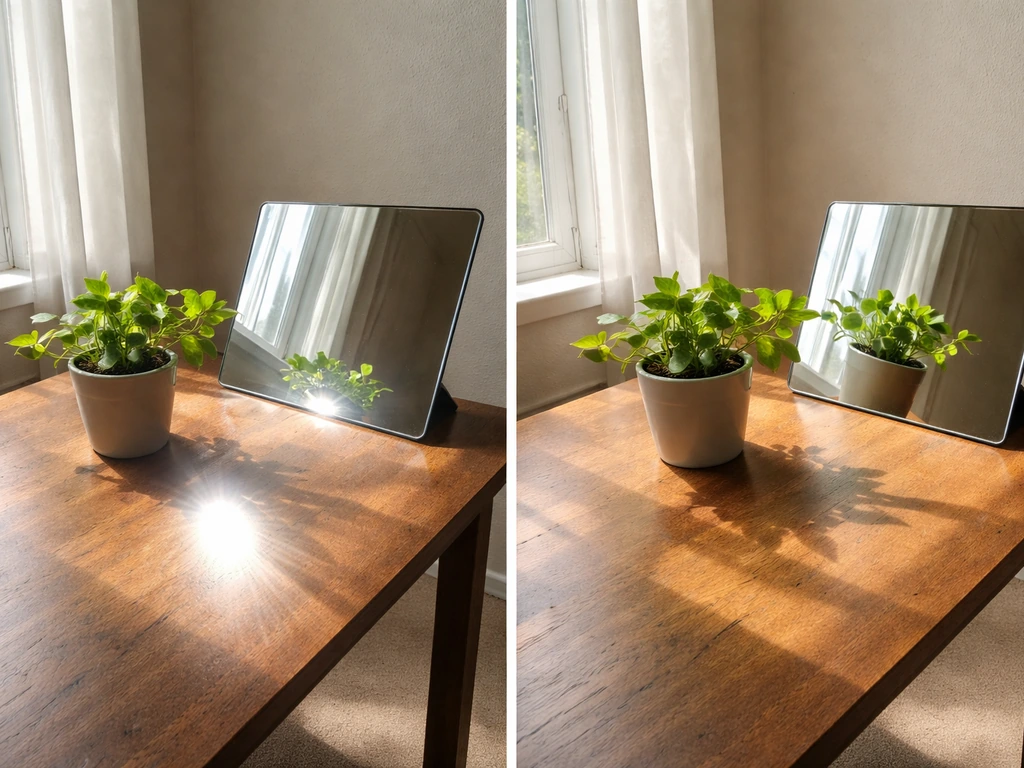
- Start with the strongest available sunlight source, usually a south- or west-facing window. The brighter the original light, the more useful your reflection will be.
- Place a reflective board or Mylar panel on the opposite side of the plant from the window, so light coming through the window hits the plant, then bounces off the reflector back through the lower canopy.
- For darker corners, angle a mirror on a windowsill or shelf to bounce direct sunlight toward the plant. Even a small 8x10 inch mirror can redirect a surprisingly useful beam.
- Keep plants within 1 to 2 feet of the reflective surface whenever possible. Beyond that, intensity drops fast.
- Rotate plants every week or two so all sides get exposure, especially in setups where the reflected light comes from one direction.
Using mirrors safely
Mirrors are powerful but they concentrate light, which can create localized hot spots on leaves if positioned too precisely. A direct specular reflection from a mirror on a sunny afternoon can actually scorch foliage, especially succulents and plants with thinner leaves. The safe approach: angle mirrors so the reflected beam hits a white wall or ceiling first, then diffuses toward the plant. This softens the reflection and eliminates burn risk while still dramatically increasing overall room brightness. If you do direct a mirror straight at a plant, keep an eye on leaves closest to the beam during the first week and watch for bleaching or crispy edges.
How to measure whether your setup is actually working
You don't need expensive equipment to get a sense of your light levels, though a dedicated tool makes it much easier. Here are your options from simplest to most precise.
Option 1: Watch the plant
This is the free option and it works if you're patient. Signs of adequate light include new growth that matches the size and color of existing leaves, upright stems, and stable leaf color. Signs of too little light (more below in troubleshooting) include stretching toward the window, smaller new leaves, and pale or yellowing foliage. Give any new setup 3 to 4 weeks before drawing conclusions, since plants are slow to show responses.
Option 2: A PAR meter or quantum sensor
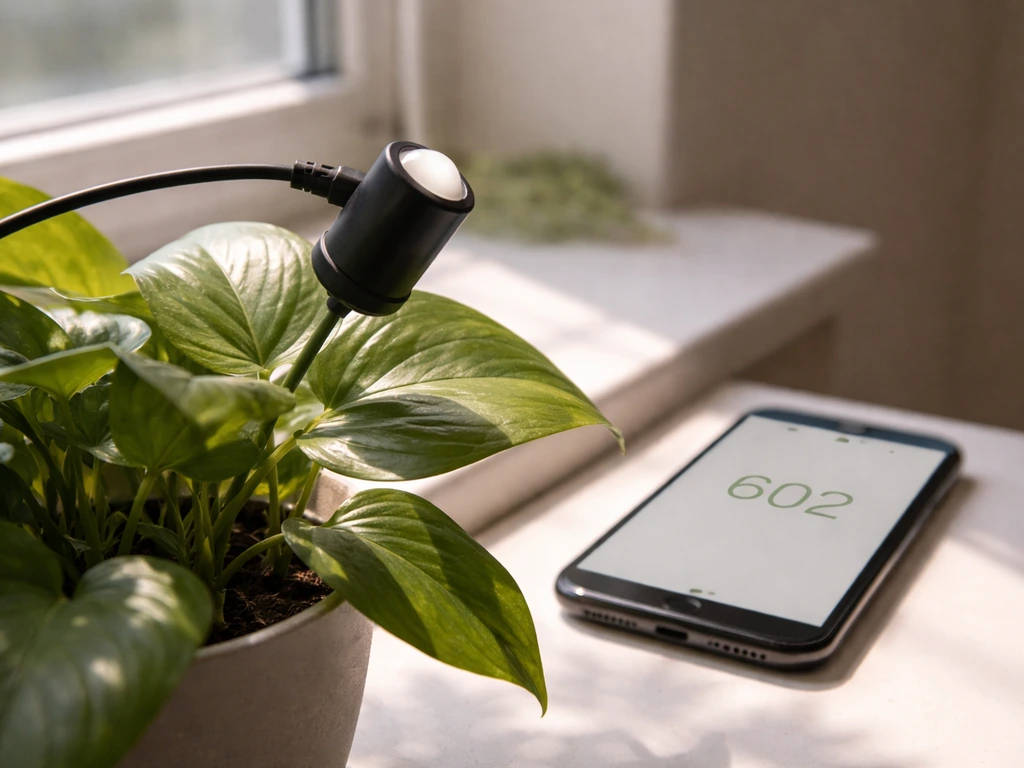
A quantum sensor measures PPFD directly in the 400 to 700 nm range, which is exactly what plants use. Professional sensors like those from LI-COR use filters to ensure accurate readings across the full PAR band. For home gardeners, affordable PAR meters in the $30 to $80 range are available online and are accurate enough to give you useful readings. Hold the sensor at canopy level and check readings at different times of day. Aim for at least 50 µmol/m²/s sustained for low-light plants, and 100 to 200 µmol/m²/s for medium-light or herbs.
Option 3: Calculate your DLI
Once you have a PPFD reading, use this formula to estimate daily light dose: DLI = 0.0036 × PPFD × hours of light per day. If your reflected setup gives 80 µmol/m²/s for 10 hours, your DLI is about 2.9 mol/m²/day. That's just at the low end for foliage plants (target: 3 to 6 mol/m²/day). You can compensate by extending the light period if natural light allows, or by adding supplemental lighting for a few hours in the morning or evening.
Common problems and how to fix them
Leggy, stretching growth
If your plant is reaching aggressively toward the window or developing long gaps between leaves (long internodes), it's not getting enough light. The plant is stretching to find more photons. Fix: move the plant closer to the light source, add a more reflective surface, or supplement with a grow light. Rotating the plant more frequently can also reduce one-sided stretching, but it won't fix a fundamental light deficit.
Yellowing leaves
Yellowing can mean under-light (especially if lower, older leaves yellow and drop) or overwatering, which is more likely to happen when a plant gets too little light and isn't using water efficiently. Check your light levels first, then reassess your watering schedule if adding light doesn't help. Pale, washed-out new growth across the whole plant usually points to insufficient light rather than a nutrient problem.
Burnt or bleached leaf tips
This is the mirror problem. If a mirror is sending a concentrated beam directly onto foliage, you'll see crispy or bleached patches on leaves closest to the reflection. Angle the mirror to bounce light off a wall or ceiling instead, or move the plant a foot further away. A little burn on the outer leaves isn't catastrophic, but sustained intense reflected light in a focused beam can damage a plant quickly.
Overheating near reflective surfaces
Reflected sunlight carries heat as well as light. On hot summer days, a plant positioned right next to a large mirror or Mylar panel in a south-facing window can experience elevated leaf temperatures. Check by holding your hand near the plant canopy: if it feels noticeably warm, the plant is likely stressed. Solution: move the plant slightly further from the reflector, or use a diffuse reflector (white board instead of mirror) that spreads light without concentrating heat.
Slow growth despite setup
If your plant looks healthy but barely grows, you're likely just below the light threshold it needs. Check your DLI estimate: if it's under 3 mol/m²/day, you need more light, more hours, or both. This is also the signal to consider a grow light supplement.
When it's time to add real grow lights
Reflected sunlight is a legitimate and genuinely useful tool, but there are clear situations where it won't be enough and pushing through with reflectors alone just means watching your plants slowly decline. Yes, can plants grow in a room without windows? They can, but you will usually need enough reflected light from a bright exterior source or an added grow light to meet their light needs. If any of the following apply, adding an LED or fluorescent grow light is the right next step.
- Your window faces north or is heavily shaded by a building or tree, so the base sunlight entering the room is already weak.
- You're trying to grow herbs, succulents, or any plant that needs more than 200 µmol/m²/s consistently.
- Your DLI calculation (or PAR meter reading) shows you're consistently below 3 mol/m²/day even after optimizing your reflective setup.
- You're growing in winter in a northern climate, where daily sunlight hours drop to 8 or fewer and intensity is low even on clear days.
- The plant has shown leggy growth, yellowing, or stalled development for more than 4 to 6 weeks despite adjustments.
For a grow light supplement in this context, a full-spectrum LED panel or a T5 fluorescent fixture is the most practical choice. LEDs are more energy efficient and run cooler, making them easier to position close to plants without heat stress. Fluorescent T5 fixtures are cheaper upfront and still effective for low to medium light plants. Either way, the same placement principle applies: keep the light source 6 to 12 inches above the canopy for fluorescents, or follow the manufacturer's guidance for LED panels, which varies by wattage and lens design.
You can also combine approaches. A reflective Mylar panel behind your plants plus a small LED grow light on a timer can push a medium-light plant well into its optimal DLI range, even in a north-facing apartment. Think of reflected sunlight as a free boost that reduces how much you need from your grow light, not necessarily an either-or choice. Readers exploring other ways to work with limited light, such as growing through window glass, using window film, or setting up fully artificial systems for windowless rooms, will find similar principles apply about managing intensity, duration, and spectrum.
The bottom line: reflected sunlight works, and for the right plants in a reasonably bright room, it can be your entire strategy. But measure your results, watch your plants honestly, and don't be afraid to call in a grow light when the reflection isn't cutting it. Your plants will tell you what they need, usually within a few weeks of any setup change.
FAQ
Can I use an ordinary phone lux meter to tell if reflected sunlight is enough for my plants?
Lux readings are mainly designed for human eyesight and can overestimate or underestimate what plants get. If you only have lux, use it as a rough consistency check, but base decisions on PPFD or DLI by using a PAR meter or a trusted PPFD conversion method (phone-only conversions are often unreliable).
What’s the safest way to position a mirror if I want stronger light without leaf burn?
Avoid aiming a specular beam directly at foliage. Angle the mirror so the reflection first hits a diffuse white surface (wall or ceiling), then reaches the plants. If you must do a direct reflection, start with the plant farther away and monitor for bleaching within the first week.
Does reflected sunlight work better with plants closer to the window or closer to the reflector?
Closer to the reflector usually matters more because intensity drops quickly with distance. Treat it like a grow light placement rule: keep the canopy within about 1 to 2 feet of the reflective surface when possible, and re-check with PPFD at canopy height.
How long should I wait before deciding reflected sunlight isn’t working?
Give the setup at least 3 to 4 weeks. Plants can look unchanged early on, then produce new growth once light and DLI are sufficient. If you see stretching or pale new growth immediately, adjust sooner rather than waiting.
If my plant is yellowing, how can I tell whether it’s under-light or watering problems?
First check light indicators: pale, washed-out new growth across the plant usually points to low light. If older leaves yellow and drop alongside poor growth, that can also be low light. If light seems adequate, reassess watering because low light reduces water use, making overwatering more likely even with the same watering habits.
Are reflective foils like Mylar always better than a white wall?
They can be, because they often return more usable PPFD. The tradeoff is greater risk of hot spots and glare since reflections can be more directional. Use foils with careful angling, and consider diffuse options (white board) if you see crisp or bleached patches.
Can reflected sunlight help fruiting plants like peppers or tomatoes?
Usually not as a standalone strategy. Fruit and heavy flowering typically need higher PPFD and DLI than most reflected setups provide, so expect you will need supplemental grow light. Use reflective surfaces as a boost, then target at least the light range your plant needs with LEDs or T5.
What DLI or PPFD targets should I use if my plant label doesn’t mention “low light” or “medium light”?
Use behavior and measurement together. If you cannot rely on labels, measure PPFD at canopy level and aim for sustained levels roughly matching low to medium houseplant needs (about 50 for low-light, 100 to 200 for medium-light). Then verify with growth rate and leaf color over time.
Will reflected sunlight increase heat stress for plants near a south-facing window?
Yes, heat can build along with light, especially when a mirror or concentrated Mylar is close. Use a simple check by feeling leaf-zone warmth, and if it feels noticeably hot, increase distance from the reflector or switch to a more diffuse white surface.
How do I avoid one-sided stretching if my plant is in front of a reflective surface?
Rotate the plant regularly to prevent one side from consistently receiving more reflected photons. Rotation reduces directional bias, but it will not fix a fundamental shortage of total DLI, so still measure or observe whether growth remains slow and pale.
Can I combine reflected sunlight with a grow light without overdoing the light?
Yes, and it’s often the best approach. Start by measuring your reflected PPFD (or estimating DLI), then add only enough grow light hours to reach your target daily light dose. Use a timer so total exposure stays consistent rather than peaking during a few hours.