
Spider plants can grow without direct sunlight, but they cannot grow without light entirely. What most people mean when they ask this question is whether a spider plant can survive and keep growing in a dim apartment, an office with no windows, or a basement room. The honest answer: spider plants are genuinely one of the most forgiving plants around, and they will tolerate low light better than most.
Can Spider Plants Grow Without Sunlight? Low Light Tips
Marcus Hartley
1 Jun 2026
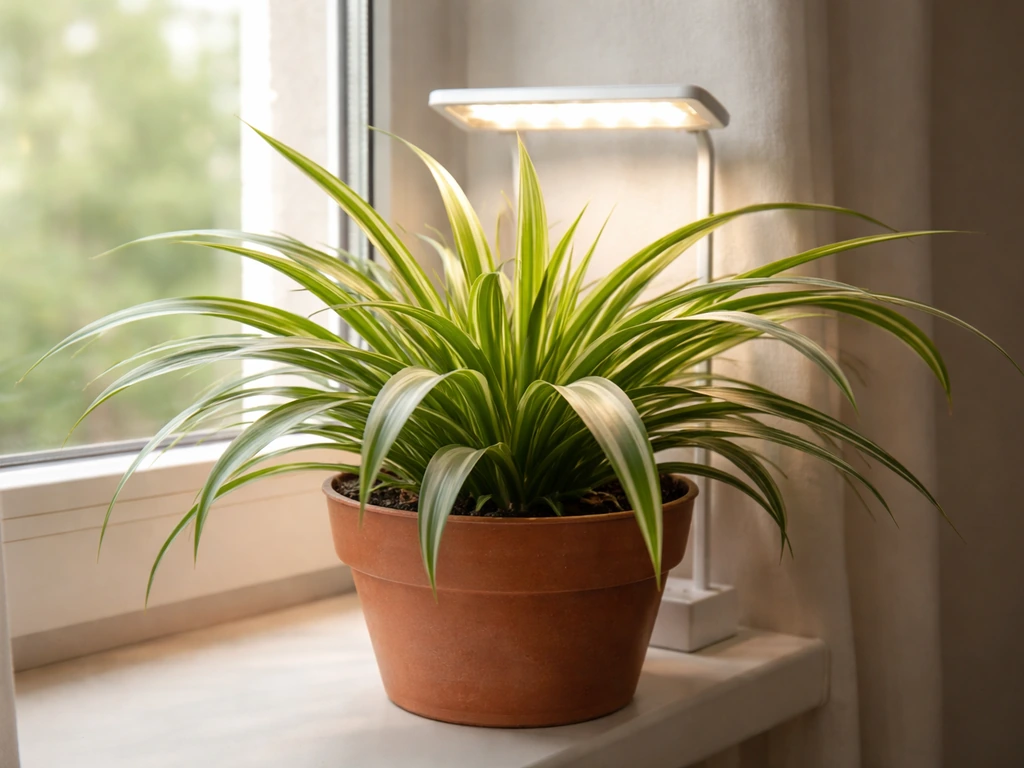
But there is a real difference between a plant that is merely surviving and one that is actively putting out new leaves and producing those iconic little 'spiderettes. ' To get real growth rather than just keeping the plant alive, you need to hit a minimum light threshold, and if natural light is not available, artificial light can absolutely fill that gap.
What 'no sunlight' actually means for a spider plant
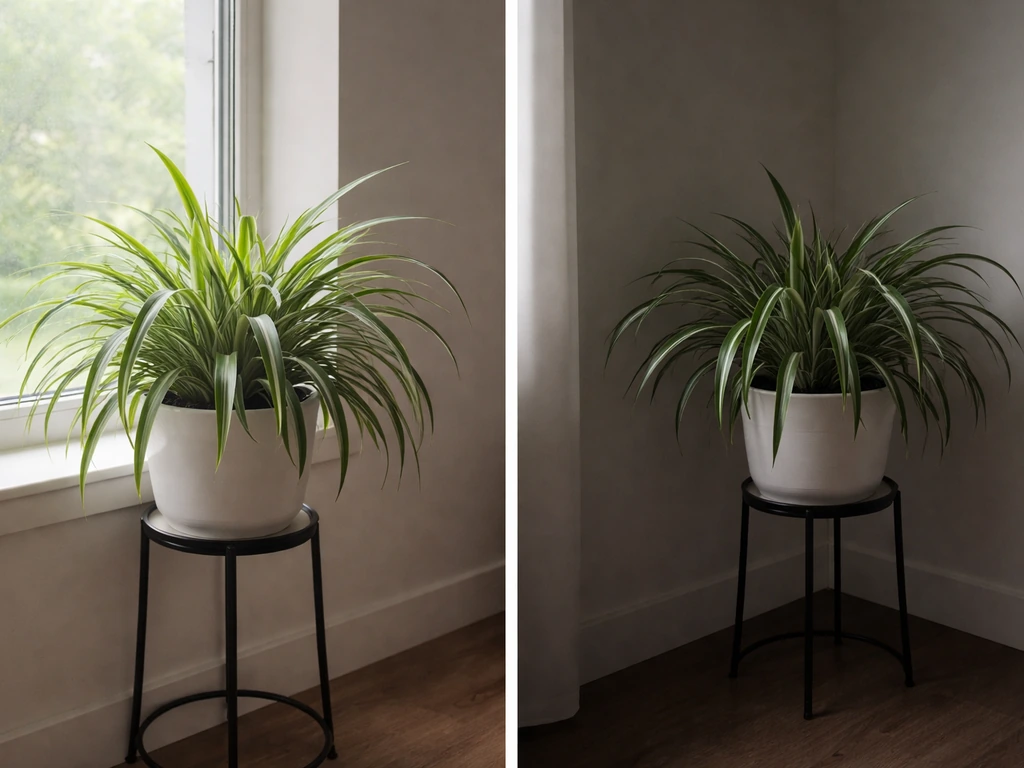
It helps to separate two very different scenarios. The first is no direct sunlight, meaning the plant never sits in a sunbeam but still receives ambient daylight from a window nearby. The second is no light at all, meaning a room with no windows, artificial light only, or genuinely dark conditions. This same idea applies to ZZ plants too, so you may also be wondering can ZZ plant grow without sunlight in the conditions you have.
Spider plants can handle the first scenario well. The second scenario is where things get difficult, because every living plant needs some form of light to photosynthesize. If you are wondering will a plant grow without sunlight at all, the key is providing enough light with a lamp to support photosynthesis and ongoing growth. Without photosynthesis, there is no energy, and without energy, there is no growth.
A rose plant may also struggle to grow without sunlight, so it is important to provide enough light or use a grow light Without photosynthesis, there is no energy, and without energy, there is no growth.. The plant might hang on for a few weeks, but it will gradually decline.
North Carolina State Extension describes spider plant as tolerating 'deep shade,' which sounds promising, but deep shade is not the same as total darkness. It simply means lower light than most flowering plants prefer. University of Maryland Extension notes that spider plants grown in lower light become spindly, which is the plant stretching toward whatever light source it can find. That is a survival behavior, not healthy growth. So the honest framing here is: no direct sunlight is fine, no light at all is not.
How much light a spider plant actually needs
Clemson University and South Dakota State University Extension both describe spider plant as preferring bright, indirect light while tolerating more moderate levels. In practical terms, that means a spot near a window that gets good ambient light, but not one where the midday sun bakes the leaves. For active, healthy growth, you are looking at somewhere in the medium light range, roughly 75 to 150 foot-candles of continuous light based on interior plant categories from University of Arizona Cooperative Extension. At the low end, between 25 and 75 foot-candles, the plant will survive but grow slowly and drink less water.
If you want a more concrete sense of what foot-candles feel like in a real room: a spot a few feet back from a north-facing window on a bright day might land around 50 to 100 foot-candles. A spot right next to an east-facing window in morning light might reach 200 foot-candles or more. Deep in a room away from any window can drop below 25 foot-candles, which is where spider plants start to struggle.
Illinois Extension and Penn State Extension both recommend a light meter that reads foot-candles or lux as the most practical way to check what you are actually working with, and these are inexpensive tools worth having if you grow a lot of plants indoors.
UMN Extension also distinguishes usable light metrics like PPF in umol m-2 s-1 and defines foot-candles, noting that bulbs should report intensity measures such as watts and lumens or foot-candles a light meter that reads foot-candles or lux.
Using artificial light to replace sunlight
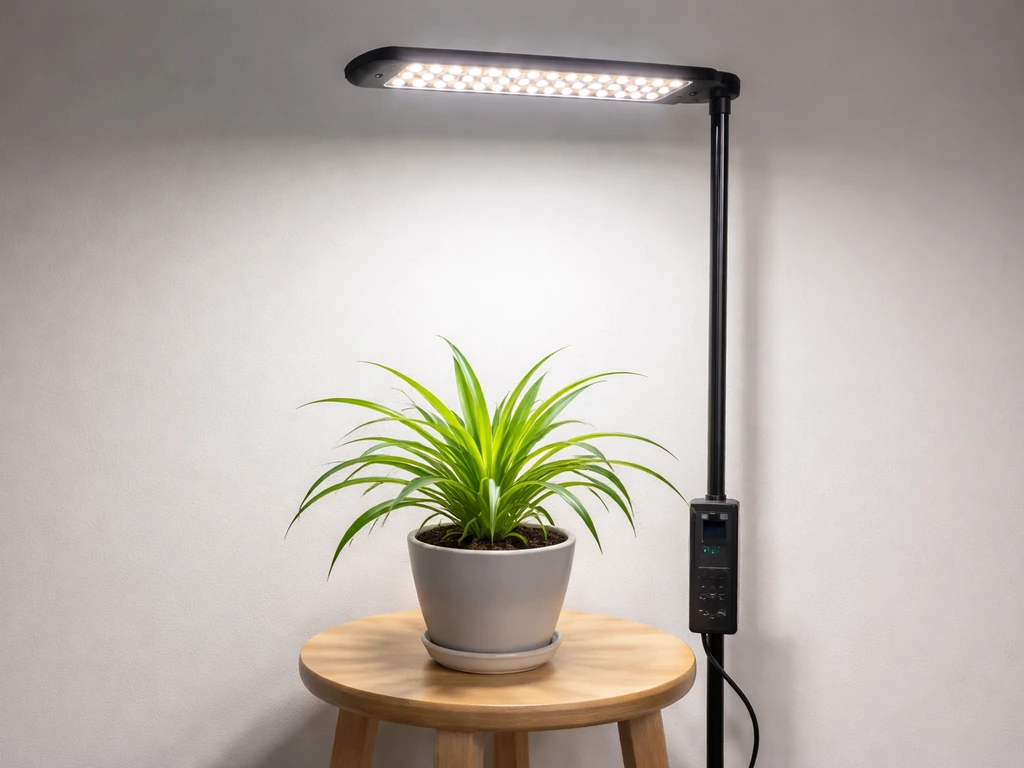
If your space does not have a window with decent light, artificial light is a completely viable solution for spider plants. I have kept spider plants under fluorescent tube lights in a windowless room and had them push out new growth reliably. The key is choosing a light source that delivers enough intensity and the right spectrum, then running it long enough each day to compensate for what the sun would normally provide.
LED grow lights
Full-spectrum LED grow lights are the best all-around option right now. They cover the blue and red wavelengths that drive photosynthesis most efficiently, they run cool (which matters for a desk or shelf setup), and modern panels deliver solid output without a huge electricity cost. For a spider plant, you do not need a high-powered grow light designed for fruiting vegetables. A small to mid-range panel or a clip-on LED grow bulb rated around 1000 to 2000 lumens is more than enough for one or two plants.
Fluorescent and other bulbs
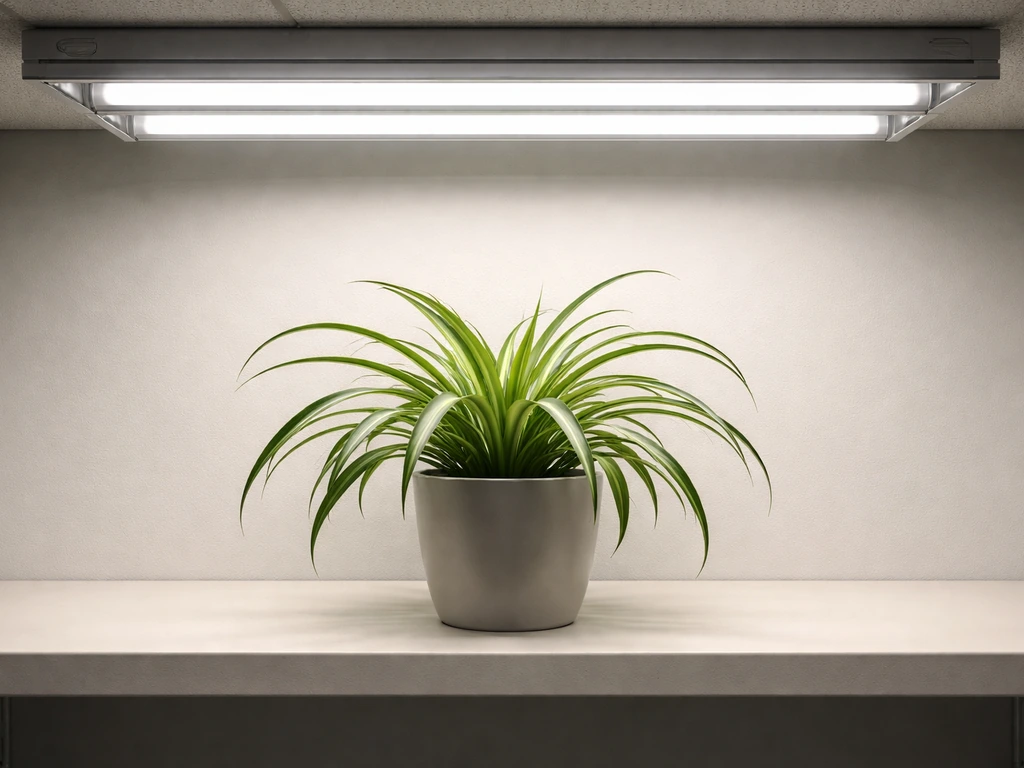
Standard cool-white or daylight fluorescent tubes (T5 or T8) work well for spider plants and are often already installed in offices or basements. If you are using regular household LED bulbs rather than grow-specific ones, look for daylight-spectrum bulbs (around 5000 to 6500K color temperature) and position them close to the plant. The key limitation with standard bulbs is intensity: they fall off quickly with distance, so placement matters a lot more than with dedicated grow lights.
| Light Source | Best For | Typical Cost | Main Limitation |
|---|---|---|---|
| Full-spectrum LED grow light | Long-term artificial light setups, no window rooms | Moderate ($20–$80 for small panels) | Upfront cost, may look purple/pink |
| Daylight fluorescent tubes (T5/T8) | Shelves, offices, basements with fixtures already installed | Low ($10–$30 for bulbs) | Bulky fixtures, less energy efficient than LED |
| Daylight LED household bulbs | Simple desk or shelf setups near existing lamps | Very low ($5–$15 per bulb) | Lower intensity, needs close placement |
| Natural window light (indirect) | Rooms with decent ambient daylight | Free | Inconsistent in winter or north-facing rooms |
For most people in a low-light apartment or office, a clip-on LED grow light or a small panel mounted on a shelf is the most practical and affordable upgrade. It does not have to be expensive to work.
Placement and timing: getting the light where it needs to go
Distance is the part people most often get wrong. Light intensity drops off fast as you move away from any bulb. As a general rule for indoor grow lights, keep the light source 6 to 18 inches above a spider plant for most LED grow lights, or closer (around 4 to 8 inches) for lower-output bulbs. If the light is too far away, the plant will stretch toward it and become leggy. Too close, and the leaves can bleach or scorch, though spider plants are pretty forgiving on the upper end.
For timing, spider plants do well with 12 to 16 hours of artificial light per day when grown without any natural light. This mimics a normal day length and keeps photosynthesis running long enough to support active growth. A simple outlet timer costs a few dollars and removes any guesswork. Running lights overnight and keeping them off during the day is not ideal because plants do benefit from a dark period, so try to keep the light schedule consistent and aligned with normal daytime hours if possible.
- Position LED grow lights 6 to 18 inches above the plant canopy
- Run artificial lights for 12 to 16 hours per day on a consistent schedule
- Use a timer so you do not have to remember to turn lights on and off
- If using regular household bulbs, keep them as close as 4 to 6 inches from the leaves
- Rotate the pot every week or two so all sides of the plant receive even exposure
Troubleshooting slow growth and sad-looking leaves
Even with a grow light in place, things can go wrong. Here are the most common symptoms and what they usually mean for a spider plant in a low-light or artificial-light setup.
- Leggy, stretched stems with wide spacing between leaves: the plant is not getting enough light intensity. Move the light closer or increase the daily duration.
- Pale or washed-out leaf color: either too much direct light (rare indoors) or, more often, nutrient deficiency compounded by low light. Check fertilization, but do not over-feed a plant that is not actively growing.
- Brown leaf tips: Oklahoma State University Extension lists low light as one possible cause, alongside low humidity, fluoride in tap water, and over-fertilization. Try filtered or distilled water and check your light levels before assuming it is a watering issue.
- No new growth for more than 4 to 6 weeks: confirm the light duration and intensity, then check the temperature. University of Florida IFAS notes spider plants will not grow much below 65°F even if light is adequate, so a cold basement or drafty corner can stall the plant completely.
- Wilting despite moist soil: in low light, spider plants use less water. If you are still watering on your usual schedule, the roots may be sitting wet. Back off on watering and only water when the top inch of soil is dry.
- Yellowing lower leaves: normal to some degree as the plant redirects limited energy, but if widespread, it usually means the light is too low for the plant to maintain all its foliage.
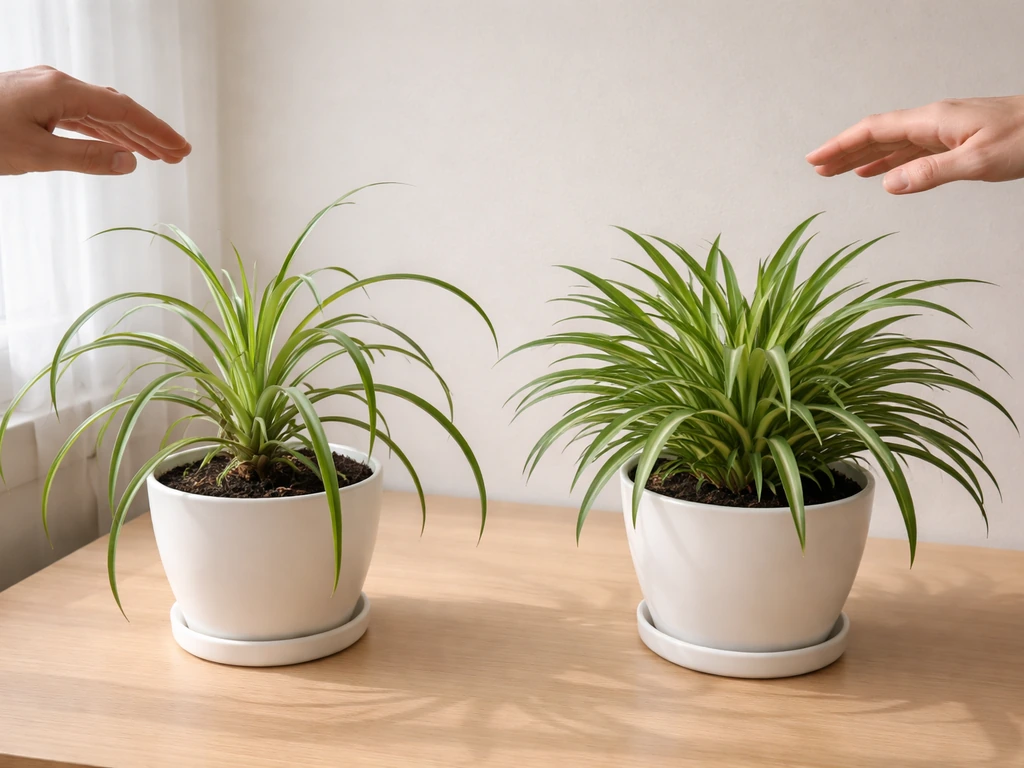
One thing worth checking if you suspect light is the culprit: hold your hand about a foot above the plant in its current spot on a bright day and look at the shadow it casts on the soil. A sharp, clear shadow means decent light. A blurry, faint shadow means low light. A barely-visible shadow means it is too dim for active growth. This is a rough test, but it gives you an honest gut-check before you invest in a meter or a new light.
What you can do right now
If you are reading this and trying to figure out your next move today, here is a simple action plan. Start by assessing where your spider plant currently lives. Is it within 3 to 5 feet of a window? Does that window get a few hours of decent daylight? If yes, it is probably getting enough light to survive, and possibly enough to grow slowly. If it is in a dim hallway or a windowless room with only overhead fluorescent lights that are often off, it is time to make a change.
- Do the shadow test: hold your hand a foot above the plant and check the shadow quality on the soil or pot surface.
- If you want a more precise reading, pick up an inexpensive light meter (under $20 online) that reads foot-candles or lux. Aim for at least 75 to 100 foot-candles at the plant's level for steady growth.
- If light is insufficient, move the plant to the brightest spot in your space first. Even a few feet closer to a window can make a meaningful difference.
- If natural light is not an option, order or set up a simple LED grow light and plug it into a timer set for 14 hours per day.
- Adjust your watering: in lower light, the plant needs less water. Check the soil before watering rather than going by a fixed schedule.
- Check the room temperature: if it is below 65°F, warming the spot up a bit will help the plant respond to the improved light more quickly.
- Give the new setup two to four weeks before evaluating. Spider plants respond to changes gradually, not overnight.
Spider plants are genuinely one of the easier plants to keep happy under artificial light, which is part of why they show up in offices and windowless break rooms all over the place. Jade plants generally need much more light than spider plants, so keeping them without sunlight can make growth very difficult can jade plant grow without sunlight.
Compared to, say, a jade plant or a rubber plant, both of which tend to want more light intensity, spider plants have a wider tolerance band. If you are wondering whether a rubber plant can grow without sunlight, it has similar light needs for healthy growth, so providing bright indirect light or an artificial setup makes a big difference.
That said, 'tolerant' does not mean 'indestructible,' and the plants that really thrive are the ones getting enough light to actually grow, not just survive. Get the light right, keep it warm enough, and this plant will reward you with a cascade of babies in no time.
FAQ
How long can a spider plant last if there is no light at all (no windows and lights off)?
Yes, but only if it still receives some light. A spider plant can’t photosynthesize in total darkness, so it may limp along briefly, then slowly decline. If your room has no windows, plan on using a lamp or grow light at the distances and schedules described in the article.
Can spider plants grow under regular indoor overhead lights in a room with no sun?
If you only have overhead lighting, it usually is not bright enough for steady growth because light intensity drops quickly with distance and angle. For best results, place a dedicated grow light much closer to the leaves, or move the plant nearer to a bright light source so it gets enough intensity for active leaf production.
What are the first signs my spider plant is not getting enough light?
Leggy growth is the most common sign of insufficient light. Leaves may become smaller, and growth tends to lean toward the light. Start by moving the plant closer to the window or light source, then adjust height or distance rather than changing other conditions first.
If I change the light, how long should I wait before deciding it worked?
You don’t want it to be a constantly changing experiment. After adjusting your light level (for example, moving the lamp closer), give the plant about 2 to 4 weeks to respond with sturdier new growth before making another change.
Is it okay to run a grow light 24/7 for spider plants?
Using a timer helps, but the key is consistency. Aim for roughly 12 to 16 hours of light when there is no natural daylight, and keep the dark period truly dark by turning the light off overnight. If you leave it on 24 hours, growth can become weak and the plant may struggle.
How do I set up one light for multiple spider plants?
For spider plants, the best setup is usually a single plant directly under the light, not spread far out in a wide circle. If multiple plants are under one lamp, place them within the brightest central area, otherwise the outer plants can become spindly even when the center looks fine.
Will a spider plant bounce back if it has already gotten leggy from low light?
Most of the time, yes, they can become leggy in low light, but the “fix” is not to suddenly blast them with intense light. Increase light gradually, especially if you’re switching from dim indoor lighting to a stronger LED grow light, to reduce the chance of bleaching.
Where should I measure with a light meter, and what should I actually compare?
A light meter or lux reading is most useful for comparing locations or lamp setups, not for judging one random snapshot. Measure at the leaf height in the spot you plan to use, then adjust distance until the readings match your goal range for medium light rather than deep shade.
If I use a normal daylight LED bulb instead of a grow light, how can I make it work better?
Daylight-spectrum bulbs can work, but distance matters more than people expect because standard bulbs lose intensity quickly as you move away. If the plant stretches, shorten the distance to the bulb, use multiple bulbs, or switch to a dedicated LED grow panel/clip-on model with more output.
Should I put a spider plant in direct sun to make it grow faster?
No, spider plants do not need direct sun, but they do need adequate light intensity. Direct sun can scorch, especially near warm window glass, so prioritize bright indirect light or controlled grow-light illumination rather than trying to recreate midday sun beams.
Is there a quick way to tell if my plant is getting enough light without buying equipment?
A practical method is shadow-checking on a bright day, but you can also use a simple behavioral test: if new leaves keep coming out with normal spacing, lighting is likely adequate. If spacing tightens poorly or growth is slow for multiple cycles, increase light or lamp duration.