
Yes, chia seeds can sprout without any natural sunlight at all. In fact, they germinate fastest in complete darkness, averaging just 3 to 4 days to sprout under dark conditions. The catch is what happens next: seedlings grown in the dark stay pale, weak, and leggy because they never develop chlorophyll. To grow chia into anything actually usable, you need light after germination. The good news is that a basic LED grow light or even a fluorescent shop light does the job completely, and you never need a window.
Can Chia Seeds Grow Without Sunlight? Indoor Guide
Marcus Hartley
27 May 2026
What 'no sunlight' actually means in practice
When people ask whether chia seeds can grow without sunlight, they usually mean one of three different things, and the answer is different for each. Complete darkness means zero light exposure at all. Indirect light means ambient room light bouncing off walls and ceilings, but no direct sun. Artificial light only means grow lights, fluorescent tubes, or desk lamps running on a timer with no window involvement whatsoever.
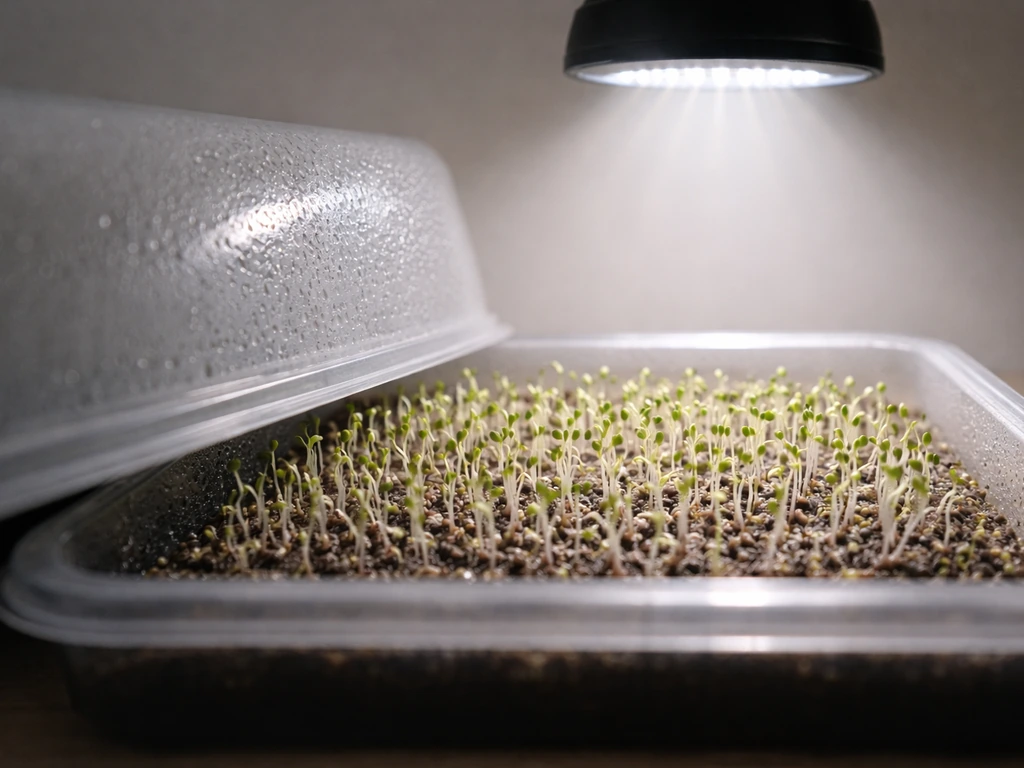
Chia seeds will germinate in complete darkness, and they actually do it faster than under constant light. But once the seed has cracked open and the first tiny shoot appears, darkness starts working against you. A seedling growing in the dark goes into what plant scientists call etiolation: it stretches its stem as tall as possible searching for light, suppresses chlorophyll production entirely, and ends up pale yellow or white instead of green. You can see this shift dramatically with chia microgreens specifically, where etiolated (dark-grown) plants turn visibly green within 24 hours of light exposure. So darkness is fine for the first few days, but you need light switched on once sprouts appear.
Indirect room light, the kind a north-facing room gets, falls short for chia seedlings past the germination stage. It is usually too dim and uneven to prevent leggy growth. Artificial light with a proper photoperiod is the real solution for a windowless setup, and it works reliably.
How much light chia seedlings actually need
Once your chia sprouts are visible, they need 8 to 12 hours of light per day. After germination, microgreens should be exposed to about 8 to 12 hours of light per day using fluorescent lights, LEDs, or similar. University extension guidance for microgreens consistently recommends this window as the sweet spot, and it matches what controlled photoperiod studies on chia show. You do not need 18 or 24 hours of light. Research comparing photoperiods of 24:0, 18:6, and 12:12 (light to dark, in hours) found that a 12-hour light period is entirely sufficient for healthy chia microgreen development. Running your light around the clock is unnecessary and wastes energy.
Intensity matters more than most beginners realize. Studies on chia sprouts used treatment levels of 50, 100, and 150 micromoles per square meter per second (μmol/m²/s) after an initial dark germination phase. For practical home growing, you do not need to measure micromoles, but you do need your light close enough to matter. Dim light is the number one cause of leggy chia seedlings. If your seedlings are reaching and flopping over within a few days, the light is too far away or too weak.
How to grow chia indoors without sunlight: step-by-step
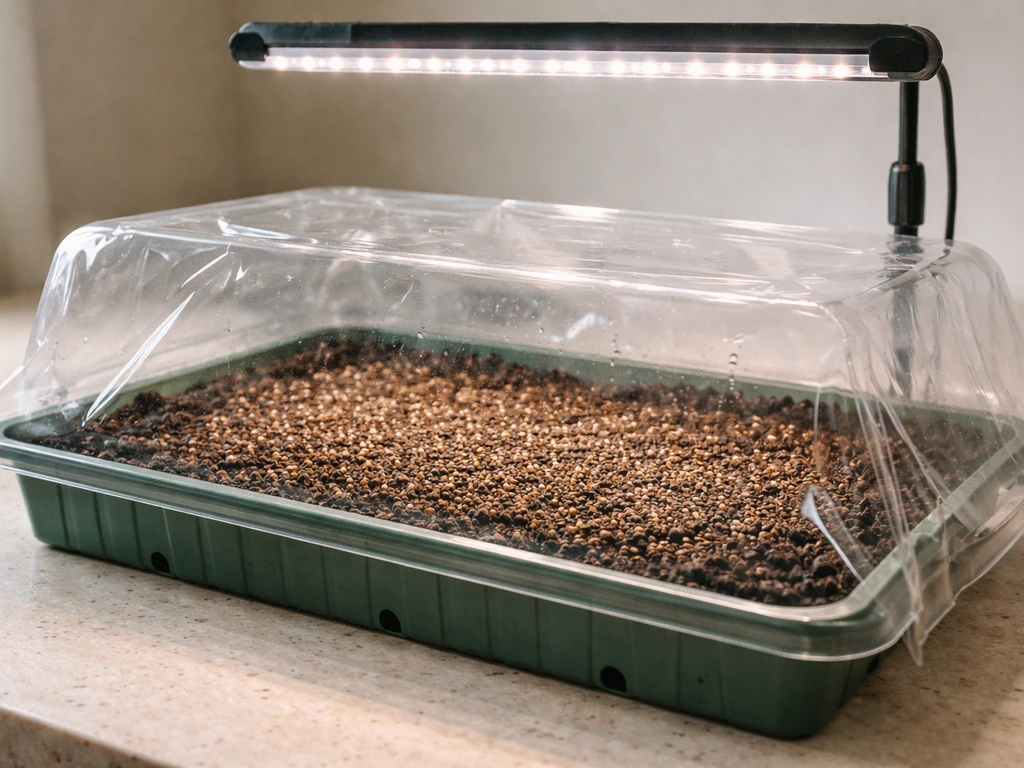
This setup works in a basement, a closet shelf, a kitchen counter with no window nearby, or any other spot where natural light is not an option. Here is how I would set it up today.
- Choose a shallow tray or container with drainage holes. A standard 10x20 inch nursery tray works great, but a reused takeout container with holes punched in the bottom is fine too.
- Fill it with coconut coir as your growing medium. It holds moisture well without staying soggy, which matters a lot for mold prevention. Moisten it before you add seeds so it is damp but not dripping.
- Scatter chia seeds across the surface. Do not bury them. Chia is a surface-sow seed. You want a moderate density, not a packed mat, so aim for seeds spaced a few millimeters apart.
- Mist the seeds lightly and cover the tray. Use a humidity dome, a second tray placed upside down on top, or even plastic wrap with a few air holes. This traps moisture and creates the dark, humid environment that triggers fast germination.
- Leave the covered tray in a dark spot at room temperature. Chia germinates well between about 20 and 28°C (68 to 82°F). Expect visible sprouts in 3 to 4 days.
- Once you see most seeds have sprouted (tiny white or pale shoots), remove the cover and switch on your grow light. Set a timer for 10 to 12 hours of light per day from this point on.
- Mist at least once a day to keep the growing medium moist but not waterlogged. As the roots establish into the coir, you can bottom-water instead by pouring a small amount into the tray and letting it wick up.
- Harvest when seedlings reach 1 to 3 inches tall with two small green leaves visible, typically 8 to 14 days after seeding. Cut just above the medium with scissors.
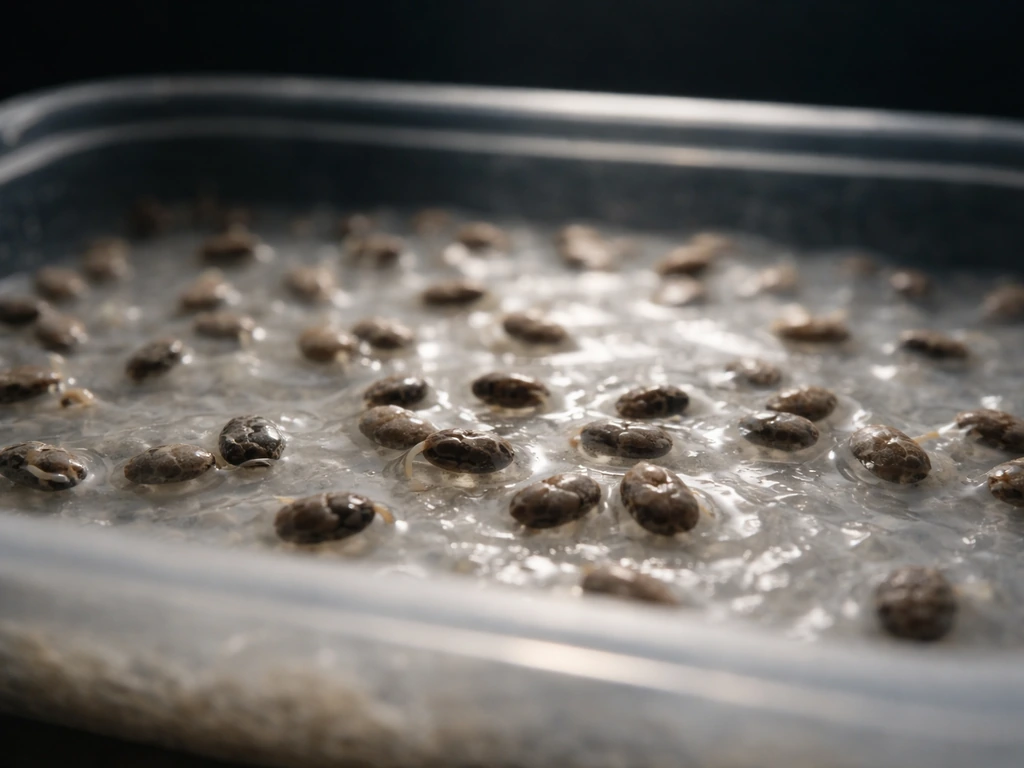
One quick note on soaking: unlike beans or sunflower seeds, chia seeds do not need to be soaked before planting. They form a gel coating when wet, which actually helps them cling to the growing medium surface and retain moisture around themselves. Just mist them in place and let nature handle the rest.
The best artificial light options for chia
You have three realistic options: LED grow lights, fluorescent shop lights, or desk lamps with daylight bulbs. Each works, but they are not equal. Here is a straightforward comparison.
| Light Type | Distance from Seedlings | Daily Hours | Cost | Best For |
|---|---|---|---|---|
| LED grow light (full-spectrum panel) | 4 to 6 inches | 10 to 12 hours | Moderate upfront, low running cost | Ongoing growing, multiple trays |
| Fluorescent shop light (T5 or T8) | 2 to 4 inches | 10 to 12 hours | Low upfront, moderate running cost | Beginners, budget setups |
| Desk lamp with 5000K daylight LED bulb | 3 to 5 inches | 10 to 12 hours | Very low upfront | One tray, casual growing |
LED grow lights are the best all-around choice if you plan to grow chia or other microgreens regularly. A simple clip-on or panel LED with a full-spectrum output works well and costs less to run over time. Keep it 4 to 6 inches above the seedling tops. Fluorescent shop lights (T5 or T8 tubes) are a budget-friendly workhorse that many microgreens growers have used for years. Hang them 2 to 4 inches above the tray. A basic desk lamp with a daylight-temperature LED bulb (look for 5000K to 6500K on the package) can work for a single tray, though it covers less area and delivers less intensity than a dedicated grow light. Whatever you use, put it on a timer so you are not manually flipping switches every day.
Blue spectrum light specifically is well-studied for chia microgreens and seedling development. Several research setups used blue LED photoperiod treatments and found good results for morphology and yield. Most full-spectrum grow lights include enough blue wavelengths to cover this without buying a specialist blue-only light.
Troubleshooting the common problems
Seeds are not germinating
First check moisture. Chia needs consistent dampness during germination, not just an initial misting. If the medium dried out in the first 24 to 48 hours, seeds may stall. Re-mist, re-cover, and check again in a day. Also check temperature: chia germinates across a wide range, with even 10°C (50°F) eventually producing very high germination rates (above 95%), but it will take much longer at lower temperatures. Room temperature of 20 to 25°C is the sweet spot for speed.
Mold appearing on the medium or seeds
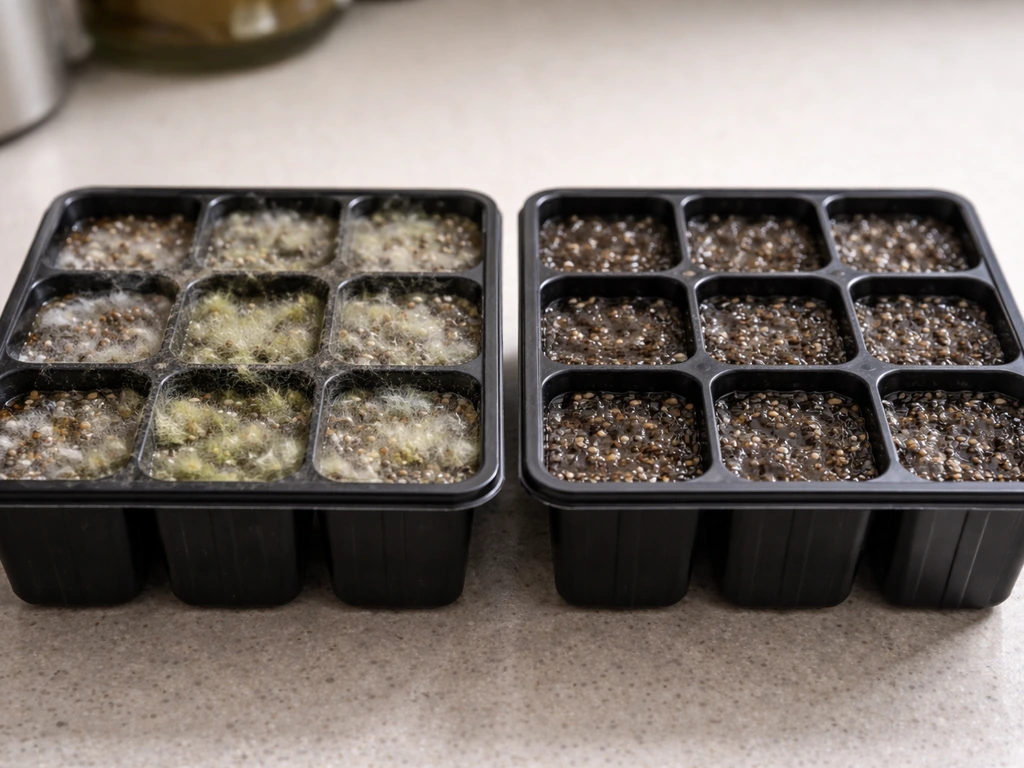
Mold is almost always a ventilation and overwatering problem. The gel coating on chia seeds can look a little fuzzy and mold-like when humid, so first confirm it is actually mold (greenish, greyish, or black fuzzy growth, not the clear gel). If it is mold, reduce watering, remove the humidity dome as soon as sprouts appear, and make sure there is some airflow around your tray. Soggy medium plus cold temperatures is the classic combination for rot, as extension guidance on microgreens specifically calls out.
Seedlings are leggy, pale, or flopping over
This is a light problem, almost every time. Either your light is too far away, too dim, or not running long enough. Move the light closer (within 4 to 6 inches for most LEDs, 2 to 4 inches for fluorescents) and bump your timer up to 12 hours. Chia seedlings that are etiolating will not recover their compact form, but if you catch it early and increase light intensity, new growth from that point will be shorter and greener.
Seedlings drying out quickly
Under grow lights, especially LEDs close to the tray, the medium can dry faster than you expect. Switch to bottom-watering once roots are established: pour a small amount of water into the tray base and let the coir wick it up from below. This keeps moisture more consistent without washing seeds around or encouraging surface mold.
When to harvest and what to expect
With an artificial light setup running 10 to 12 hours a day and consistent moisture, here is the realistic timeline from day one:
- Days 1 to 3: Seeds germinate under the covered, dark tray. Pale white sprouts appear.
- Day 3 to 4: Remove the cover and switch on the light. Seedlings start greening up within 24 hours of light exposure.
- Days 5 to 7: Seedlings are standing upright, visibly green, and developing their first tiny leaves.
- Days 8 to 14: Seedlings reach 1 to 3 inches tall with two small, bright green leaves (the cotyledons). This is the harvest window for chia microgreens.
Harvest by snipping just above the medium surface with clean scissors. You will not get a second flush from chia the way you do from some herbs, so each tray is a one-time harvest. The finished crop is tender, mild, and packed with nutrients. If you want a continuous supply, just stagger new trays every five to seven days.
If you are curious how other seeds compare in low-light or artificial-light setups, the experience with chia is actually one of the more forgiving ones. Plants like beans or coriander have their own specific light sensitivities at different growth stages, and even the familiar chia pet version of growing chia has some interesting quirks around light exposure that differ from the microgreens approach. Chia's fast germination in darkness and quick greening response to light make it one of the better starter crops for anyone setting up an indoor artificial-light growing station for the first time.
The bottom line: you absolutely do not need a window to grow chia. By using an LED grow light, you can get chia to grow without sunlight past the germination stage. Germinate in darkness for 3 to 4 days, flip on a grow light or fluorescent tube at 4 to 6 inches for 10 to 12 hours a day, keep the medium moist but not soaked, and you will have harvestable greens in under two weeks. That is a complete, working plan you can start today.
FAQ
How long can chia stay in complete darkness before lighting is required?
Chia typically germinates in 3 to 4 days in total darkness. Once you see the first sprouts or the seed coats cracking, switch on light promptly, because darkness after that point causes etiolation, pale color, and leggy growth that does not fully “snap back” even if you add light later.
Can I use only indirect room light instead of a grow light?
Indirect light usually works only through the earliest germination stage. Past that, it is often too dim and uneven, so seedlings stretch and flop. If you do try it, rotate the tray daily and keep it close to the brightest window area, but for consistent results use a timer-based LED or fluorescent setup.
What photoperiod should I choose if I do not want to run lights for 12 hours every day?
A 12-hour light period is generally sufficient for healthy chia microgreens. If you shorten it, expect slower, weaker growth and a higher chance of legginess. If you lengthen it beyond 12 to 18 hours, it usually does not improve results much, and it mainly increases electricity use and drying.
How do I know if my light is too weak or too far away?
Watch for vertical stretching and bending within a few days. If the seedlings look pale, spindly, or start to tip over, the light is likely too weak or too far. Move the light closer to your stated range (LEDs roughly 4 to 6 inches, fluorescents 2 to 4 inches) before you increase watering.
Do chia seeds need soaking to sprout indoors without sunlight?
No. Unlike many seeds, chia does not need pre-soaking because it forms a gel coating when wet. For best consistency, mist the medium so seeds stay evenly damp, then re-mist if the top begins to dry within the first day or two.
Why does my tray look fuzzy or moldy even though the seeds are gel-coated?
Clear, glossy gel is normal, but fuzzy greenish, grayish, or black growth is more likely true mold. If it looks like mold, reduce moisture, remove the humidity cover as soon as sprouts appear, and increase airflow around the tray, especially if temperatures are cool.
What temperature is best for dark germination and fast greening after lights turn on?
Room temperature is a practical target. Chia can germinate in a wide range, with much faster results around 20 to 25°C (about 68 to 77°F). If you are running cooler (near 10°C), germination can still be high, but it will take longer.
Should I water from the top or the bottom under grow lights?
Top misting is fine for early stages, but once roots establish, bottom-watering helps keep moisture consistent without washing seeds around. Add a small amount into the tray base and let the medium wick it upward, then drain any excess so the surface does not stay soggy.
If my seedlings turn pale and leggy from too much darkness, can I save the batch?
If you catch it early, you can improve new growth by adding sufficient light right away. However, the already-etiolated stems will not regain compact, green form. Expect the next flush of leaves from that point to be shorter and greener, but treat very stretched seedlings as likely lower quality.
How far above the tray should I place the light for a typical home setup?
A good rule of thumb is LEDs about 4 to 6 inches above the seedling tops, and fluorescent tubes about 2 to 4 inches above. Start within that range, use a timer for 10 to 12 hours, and adjust based on stretching (move closer if they are reaching).
Will chia regrow after harvesting, or do I need to plant new trays?
Chia microgreens are generally a one-time harvest. After snipping just above the medium surface, you should not expect a reliable second flush. For continuous supply, stagger new trays every 5 to 7 days.
What is the easiest way to prevent drying out under lights?
Use a consistent schedule for dampness checks, not just one initial mist. Under close LEDs, the medium can dry faster than expected, so mist lightly when the top layer starts to dry. When roots form, switch to bottom-watering for more stable moisture.