
Plants cannot grow using only candlelight. A single candle produces roughly 1 candela of light, which translates to about 1 lux at one meter away. Even the most shade-tolerant houseplants need somewhere between 50 and 150 lux just to survive, and actual steady growth requires much more than that. Candlelight also burns at around 1,800–1,900 K, a warm orange color temperature that is heavily skewed toward red wavelengths and puts out very little of the blue light plants rely on. The honest answer is: candles can't replace any real light source for plants, but understanding why helps you figure out what will actually work in your space.
Can Plants Grow by Candlelight? What to Expect and Next Steps
Marcus Hartley
2 Jun 2026
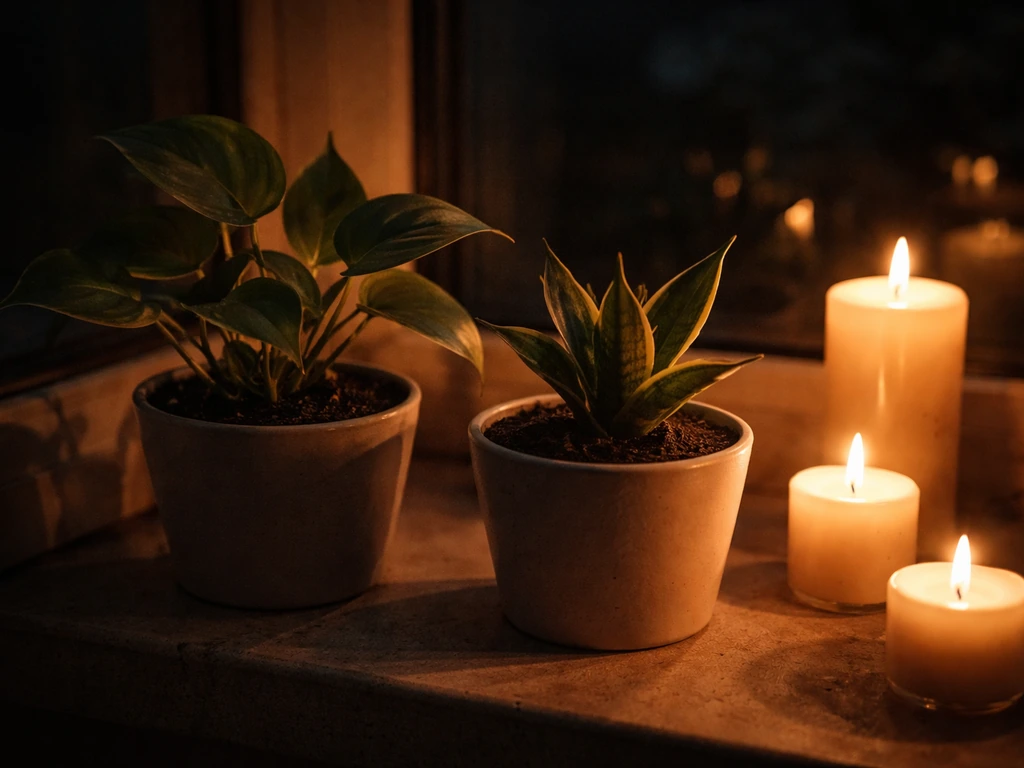
What candlelight actually gives a plant
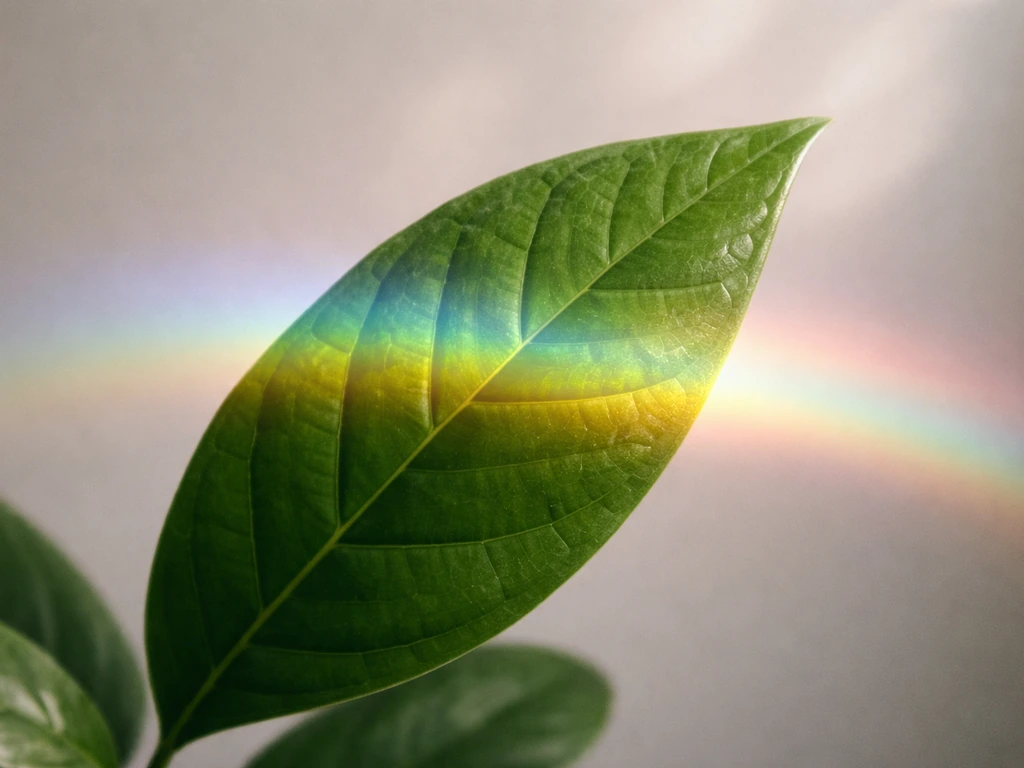
Plants don't care about light the way our eyes do. They care about PAR, which stands for photosynthetically active radiation, the wavelengths between roughly 400 and 700 nanometers that chlorophyll can absorb and convert into energy. We measure usable plant light in PPFD (micromoles of photons per square meter per second). A candle's flame burns at around 1,800–1,900 K, which produces a warm, orange-heavy spectrum. That spectrum does overlap somewhat with the red end of the PAR range, but the total photon output is extremely low. At one meter from a candle, you're getting about 1 lux of illuminance, and lux itself is a human-vision-weighted measurement, not a plant-usable-light measurement. The actual PPFD a candle delivers to a plant sitting nearby is effectively near zero, likely well under 1 µmol·m⁻²·s⁻¹.
To put that in perspective: leafy greens and herbs need around 150–400 PPFD for reliable vegetative growth. Flowering and fruiting plants need 400–1,000 PPFD or more. Even the lowest-light-tolerant houseplants, like pothos or peace lilies, need enough light to maintain a positive photosynthetic balance, which means they're producing more energy than they're burning. A candle can't get them there.
Surviving vs. actually growing: an important distinction
There's a real difference between a plant that is still technically alive and a plant that is growing. A very hardy, low-light plant sitting near a candle every evening might not die immediately, especially if it's also getting some ambient daylight during the day. But the candle itself isn't contributing meaningful photosynthesis. What you're likely seeing in that case is the plant coasting on stored energy and whatever ambient light it gets from windows, reflected surfaces, or overhead room lighting. That's survival, not growth.
True growth means new leaves unfurling at a normal size, stems staying compact and upright, and the plant looking healthy and vigorous over weeks and months. Flowering and fruiting requires even more energy. Candlelight alone simply cannot supply any of those outcomes. If you're experimenting with plants in spaces that get almost no natural light, it's worth also thinking about what happens at night in general, since plants don't photosynthesize in the dark regardless of the light source.
Signs your plant isn't getting enough light
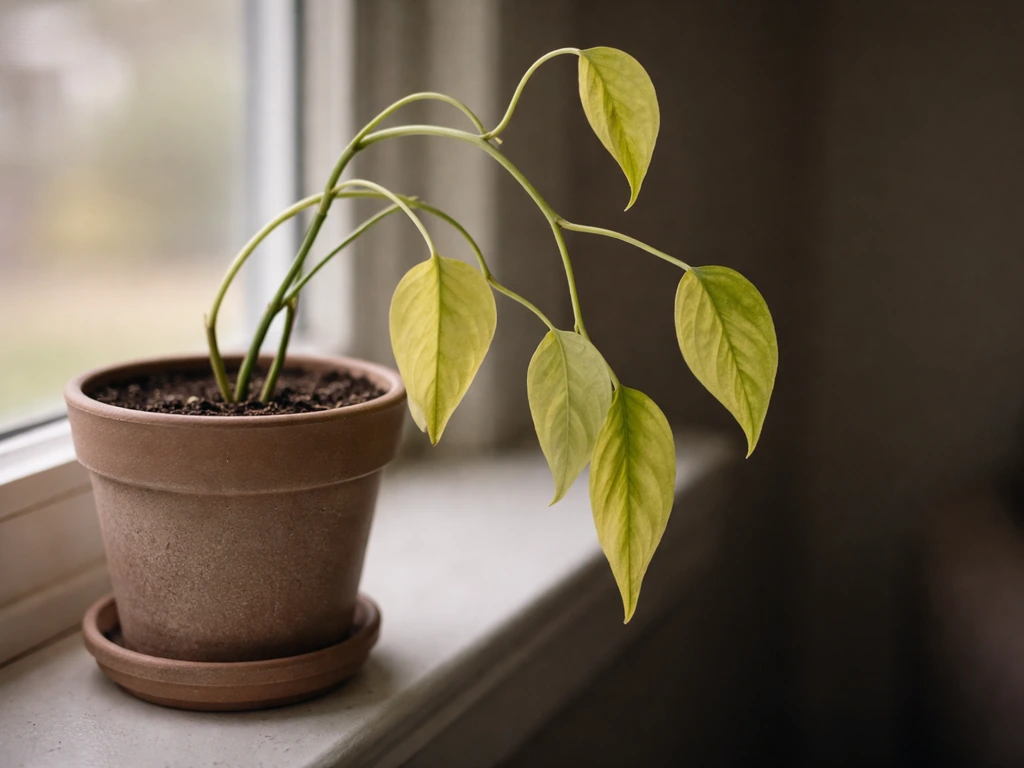
Plants are pretty honest communicators once you know what to look for. If a plant is running a chronic light deficit, here's what you'll typically notice over days to weeks:
- Etiolation: stems become long, thin, and weak as the plant stretches toward any available light. New growth looks spindly instead of compact.
- Pale or yellowing leaves (chlorosis): without enough light to drive photosynthesis, chlorophyll production slows and leaves lose their deep green color.
- Smaller new leaves: leaves that unfurl under low light are often noticeably smaller than older leaves on the same plant.
- Leaf drop: older leaves, especially lower ones, may drop prematurely as the plant sheds what it can't sustain.
- No new growth at all: the plant just sits there. No new leaves, no stem extension, no signs of life for weeks at a stretch.
- Leaning heavily toward a window or any other light source, even if that source is very dim.
If you're seeing more than one of these at the same time, the plant is telling you it needs more light, not more water, more fertilizer, or a new pot. Light is the limiting factor.
How to check the actual light levels in your room
You don't need expensive equipment to get a reasonable sense of how much light a spot in your home receives. Start with the shadow test: on a sunny day, hold your hand about a foot above a white sheet of paper placed where the plant sits. A sharp, well-defined shadow means bright light. A soft but visible shadow means moderate light. A barely-there shadow or none at all means low light, and you're likely below what most plants need for growth.
If you want a number, a basic lux meter or a smartphone app (like Photone or Lux Light Meter Free) can give you a rough reading. Keep in mind that lux measures light weighted for human vision, not plant-usable PAR. As a rough working guide, readings below about 500 lux are genuinely low light, 500–2,000 lux is moderate, and above 2,000 lux starts to get into the range where most plants can grow steadily. These are approximations because the conversion from lux to PPFD depends on the spectrum of the light source, but for ballpark planning they're useful. If you have a PAR meter or a meter with a PAR mode, target at least 100–150 µmol·m⁻²·s⁻¹ for low-light tolerant plants and 200–400+ for herbs and leafy greens.
Also track duration. A dim spot that gets 12–14 hours of ambient light may accumulate a useful daily light integral even if the intensity is low. A dark corner that only sees light for a few hours is a tougher situation regardless of peak intensity.
What actually works instead: LEDs and fluorescents
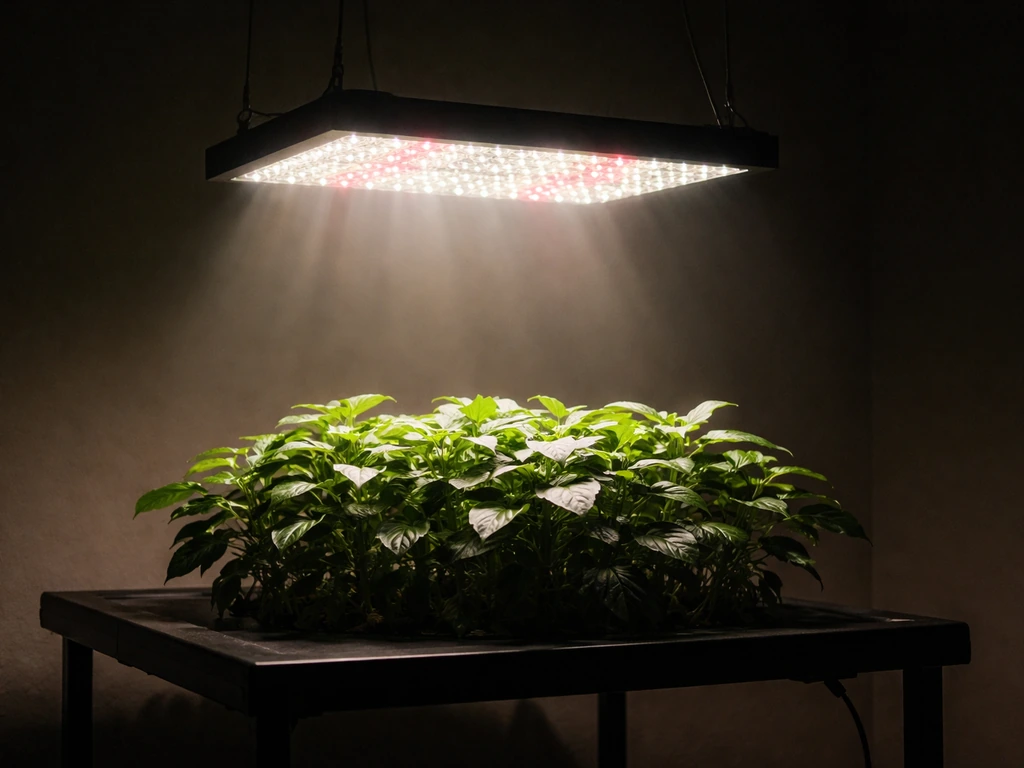
If your space doesn't have enough natural light, a dedicated grow light is the most straightforward fix, and it doesn't have to be expensive. Modern LED grow lights are efficient, long-lasting, and widely available. For most indoor houseplants, herbs, and leafy greens, a modest full-spectrum LED panel in the 20–40 watt range is enough for a small shelf or table setup. Fluorescent shop lights (T5 or T8) also work well and are very affordable, though they use more electricity than LEDs for the same output.
Setting up a grow light the right way
- Distance matters enormously: PPFD drops sharply as you move the light further from the plant. Most LED grow lights work best at 12–24 inches above the canopy for low-to-medium-light plants. Check the manufacturer's PPFD chart if one is available.
- Run the light for 12–16 hours per day for most foliage plants and herbs. A simple outlet timer costs a few dollars and takes the guesswork out of it.
- Full-spectrum LEDs (covering the 400–700 nm PAR range with both blue and red peaks) are your best all-around choice. They support healthy compact growth and won't distort coloring the way pure red/blue 'blurple' lights do.
- White walls and reflective surfaces nearby help bounce light back onto the plant and improve efficiency without any extra cost.
- If you're using a T5 or T8 fluorescent fixture, 2–6 inches above the canopy is a common starting distance for seedlings, stepping back to 6–12 inches for established plants.
- Watch the plant for the first two weeks after setting up a grow light: if new growth is compact and the same color as mature leaves, you've got the distance and duration roughly right.
LED vs. fluorescent: a quick comparison
| Feature | LED Grow Light | Fluorescent (T5/T8) |
|---|---|---|
| Energy efficiency | High (more PAR per watt) | Moderate |
| Upfront cost | Moderate to higher | Low to moderate |
| Lifespan | 30,000–50,000+ hours | 10,000–20,000 hours |
| Heat output | Low | Low to moderate |
| Spectrum control | Broad, full-spectrum options widely available | Full-spectrum bulbs available but less targeted |
| Best for | Long-term setups, energy savings, most plant types | Budget setups, seedlings, herbs in small spaces |
For most people starting out, a basic full-spectrum LED panel is the better investment. If budget is tight right now, a T8 shop light with full-spectrum bulbs is a perfectly respectable starting point and will absolutely outperform any candle-based setup by orders of magnitude.
Matching plants to your actual light level
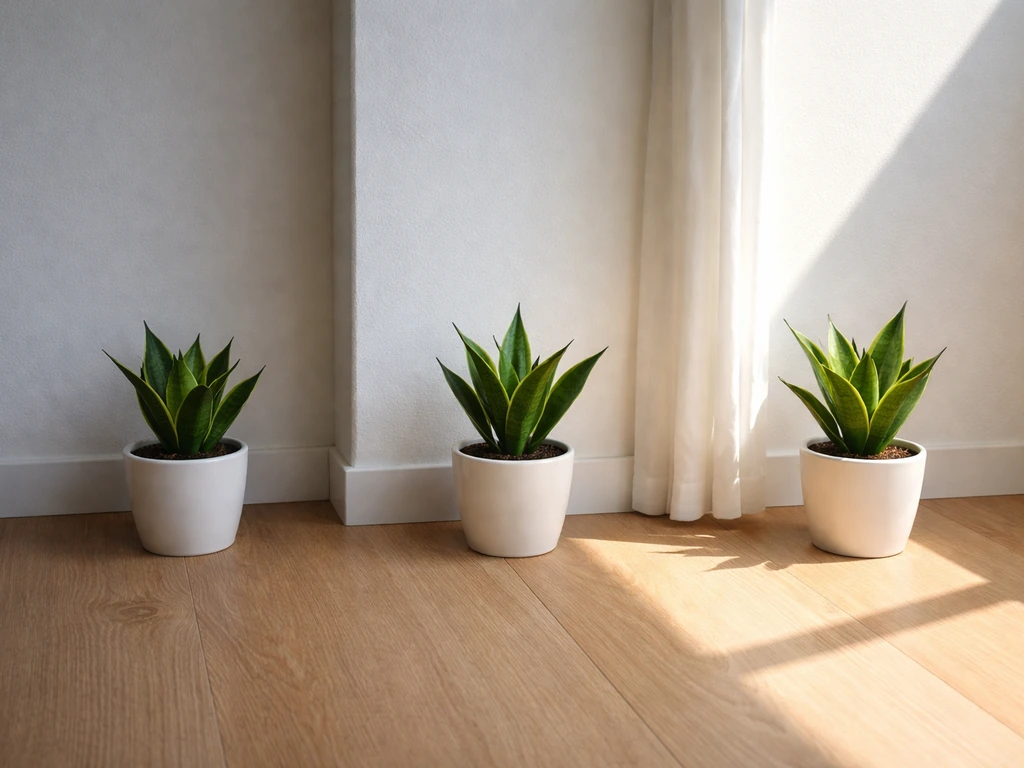
Not every plant needs blazing light. If you have a genuinely dim space, picking the right plant is just as important as fixing the light. Here's a practical breakdown:
| Light Level | Approximate PPFD | Good Plant Choices |
|---|---|---|
| Very low (dark corner, no window) | Under 25 µmol·m⁻²·s⁻¹ | No plant will grow here sustainably without a grow light |
| Low (north window or dim ambient) | 25–100 µmol·m⁻²·s⁻¹ | Pothos, ZZ plant, cast iron plant, peace lily, Chinese evergreen |
| Medium-low (east window or indirect bright) | 100–250 µmol·m⁻²·s⁻¹ | Philodendrons, dracaena, snake plant, ferns, most aroids |
| Medium (south/west indirect or grow light) | 250–500 µmol·m⁻²·s⁻¹ | Most herbs, pothos in active growth, calathea, spider plant |
| Medium-high (bright indirect or grow light) | 500–1,000 µmol·m⁻²·s⁻¹ | Basil, tomatoes, peppers, succulents, most flowering houseplants |
A common mistake is buying a beautiful plant without matching it to the available light. A monstera or fiddle-leaf fig in a north-facing room with no grow light will slowly decline no matter how well you water it. Meanwhile, a pothos or ZZ plant in the same spot can genuinely hold its own. Know your space, then choose your plant.
If you really want to use candles anyway
Here's the honest situation: candles as a supplemental light source for plants are not a meaningful contribution. Plants also need dark periods, but the bigger issue is that candles do not provide enough usable light for growth whether used day or night candles as a supplemental light source. The math just doesn't work out. But if you're in a scenario where you have decent ambient light during the day and you're simply wondering if the candlelight in the evenings is doing anything useful, the answer is: not really for photosynthesis, but it's not actively harming the plant either, provided you keep a few safety points in mind. The U.S. EPA also lists indoor combustion product sources, including candles and fireplaces, noting that burning candles can change indoor air quality even if you are not using them as a fire hazard risk blank" rel="noopener noreferrer">not really for photosynthesis, but it's not actively harming the plant either.
- Never place a candle close enough to leaves or stems to risk heat damage or fire. Even a gentle breeze can cause a flame to flare unpredictably.
- Burning candles indoors produces particulate matter and soot. The EPA notes that candles are a real source of indoor air pollution, and soot can settle on plant leaves, blocking light absorption and clogging stomata. Keep candles well away from plants if you burn them regularly.
- Trim wicks to about 1/4 inch before each burn to minimize soot output. Longer wicks and air currents are the main drivers of heavy soot production.
- If you genuinely want plants in a candlelit room for ambiance, pick the hardiest low-light species you can find (ZZ plant, cast iron plant, pothos) and make sure they get real light somewhere else during the day.
- Do not count candle hours toward a plant's photoperiod. The light output is too low to register as meaningful light for photomorphogenic or photosynthetic purposes.
The realistic limit here is this: candles can coexist with plants in the same room without causing immediate harm, but they contribute nothing measurable to plant growth. If you're wondering do vegetable plants grow at night, the key takeaway is that without a real growth light, candlelight and darkness both won't provide enough photosynthesis for steady growth. If you're hoping to grow herbs on a candlelit kitchen shelf, you'll need a real light source. A small clip-on LED grow light running 14 hours a day will do more for those herbs in a single week than a year of candlelight.
Your practical next steps
If you've been relying on candles or wondering why your plants look sad in a dim room, here's what to do today: Nightshades follow the same basic plant-light rules as other plants, so candlelight or darkness at night still affects their ability to grow do nightshades grow at night.
- Do the shadow test or use a free lux app to measure the actual light level where your plant sits right now.
- If you're below 500 lux for most of the day, either move the plant to a brighter spot near a window or plan to add a grow light.
- Pick a full-spectrum LED grow light sized for your setup. A small shelf needs something in the 15–30 watt range. A larger table or bench needs 40–60 watts or more.
- Set up a timer for 12–16 hours of light per day, keeping the light 12–24 inches above the canopy (adjust based on how the plant responds in the first two weeks).
- Choose plants that fit your real light conditions. If you can't or don't want a grow light, stick to genuinely low-light-tolerant species.
- If candles are part of your space for ambiance, keep them away from plant foliage, trim wicks to reduce soot, and make sure the room is ventilated.
The good news is that fixing a low-light situation indoors is very doable and doesn't require a huge setup. Can plants grow under black light? The short answer is that black lights still won't provide enough usable spectrum for steady growth candlelight. A single decent grow light transforms what's possible in a dark apartment. And once you match the right plants to the right light, you stop losing them to slow decline and start actually watching them grow.
FAQ
Can plants survive for a while if I keep them under candlelight every night?
They might not die immediately if there is strong daytime window light or stored energy, but you should expect little to no new growth. To check whether candles are doing anything, look for new leaf size and spacing over 2 to 4 weeks, candles typically show up as no meaningful change compared with the same plant moved to a darker spot with only daytime light.
What about multiple candles, would that make enough light for growth?
Even several candles still deliver very low photon flux compared with grow lights, because candle output falls off quickly with distance and the spectrum is heavily warm, red-skewed. If you want to test, measure PPFD or compare growth outcomes with a small LED panel, intensity and duration matter far more than adding more candles.
Does candlelight help plants at all if the plant is already getting good sunlight during the day?
It can add a small amount of extra light exposure, but it usually is not enough to change plant growth trends. If your plant is thriving already, candles may only maintain stability, if it is declining, candles will not correct the limiting factor.
How far away from a candle would a plant need to be for any benefit?
There is no practical distance where candlelight becomes plant-usable for steady growth, because usable light drops sharply with distance. If you are trying to decide on placement, the better rule is to ignore the candle distance entirely and instead place the plant under the brightest available daylight or a dedicated grow light.
If candles do not provide enough PAR, why do some plants look okay near them?
That appearance is usually due to ambient light you are not accounting for, like overhead lighting, reflected light from walls, or direct daylight during the day. To isolate the effect, compare the same plant in the same room with candles on and off, while keeping the daytime light identical, you should see no measurable improvement from candles.
Will candlelight cause problems like leggy growth or leaf yellowing?
Candlelight alone usually does not directly damage leaves, because the issue is insufficient energy, not burning. However, if candles replace real light and the plant gets dim at night, you can get stress signs like slower growth, stretching toward the brightest window, and older leaves dropping due to chronic light deficit.
Do plants still need dark at night, and does candlelight change that?
Plants do need dark periods, metabolism and growth cycles still rely on night. Candlelight does not meaningfully alter the dark requirement in most homes, because it does not supply enough usable light to act like a true night extension grow light.
Can I use candles as a safety “marker” instead of a light source for low-light plants?
Yes. If you are using candles only for ambiance, keep the plant location unchanged and rely on true light sources for growth. For practical care, focus on daytime light access, consistent watering, and using a grow light when the daylight period drops too low.
How can I tell whether my plant needs more light versus more water or fertilizer?
Use symptom patterns plus timing. Chronic low light often shows slow growth, small new leaves, and drooping or yellowing that does not improve with watering changes. If you raise light intensity for 2 to 3 weeks and growth speed improves, light was the limiting factor, fertilizer rarely fixes a light deficit.
What is the quickest upgrade if I do not have much natural light?
A small full-spectrum LED placed close enough to deliver adequate PPFD is usually the fastest fix. Start by choosing a light rated for indoor plant growth, set it on a consistent schedule like 12 to 14 hours per day, and adjust height to avoid leaf bleaching while still reaching target intensity.
Is a smartphone lux app enough to decide if my spot is bright enough?
It is useful for rough decisions, but lux is weighted for human vision, so it can mislead for unusual spectra. Treat app readings as screening only, then validate with outcome-based checks (new growth size and rate) or use a PAR/PPFD meter if you need more accuracy.
Can black lights or UV lights replace grow lights for plants?
No. Black light sources typically do not provide enough photosynthetically active radiation, and UV without PAR is not a substitute. If the goal is growth, you still need a spectrum that delivers adequate 400 to 700 nm energy, plus sufficient intensity and duration.
Do flowering and fruiting plants have the same lighting needs as leafy greens?
No, flowering and fruiting generally require more usable light intensity. If you try to grow herbs, peppers, or flowering plants under candles, the most common result is delayed or absent blooms, switching to a grow light with higher PPFD targets will be necessary for reliable reproduction.