Plants can technically survive under black light for a short time, but they won't actually grow in any meaningful way. Standard black lights emit UV-A radiation, which sits mostly outside the wavelength range plants use to photosynthesize. Without the right light, chlorophyll can't do its job, and your plant will slowly decline rather than thrive. That said, UV-A light isn't completely useless in a plant setup.
Can Plants Grow Under Black Light? What to Expect
Marcus Hartley
28 May 2026
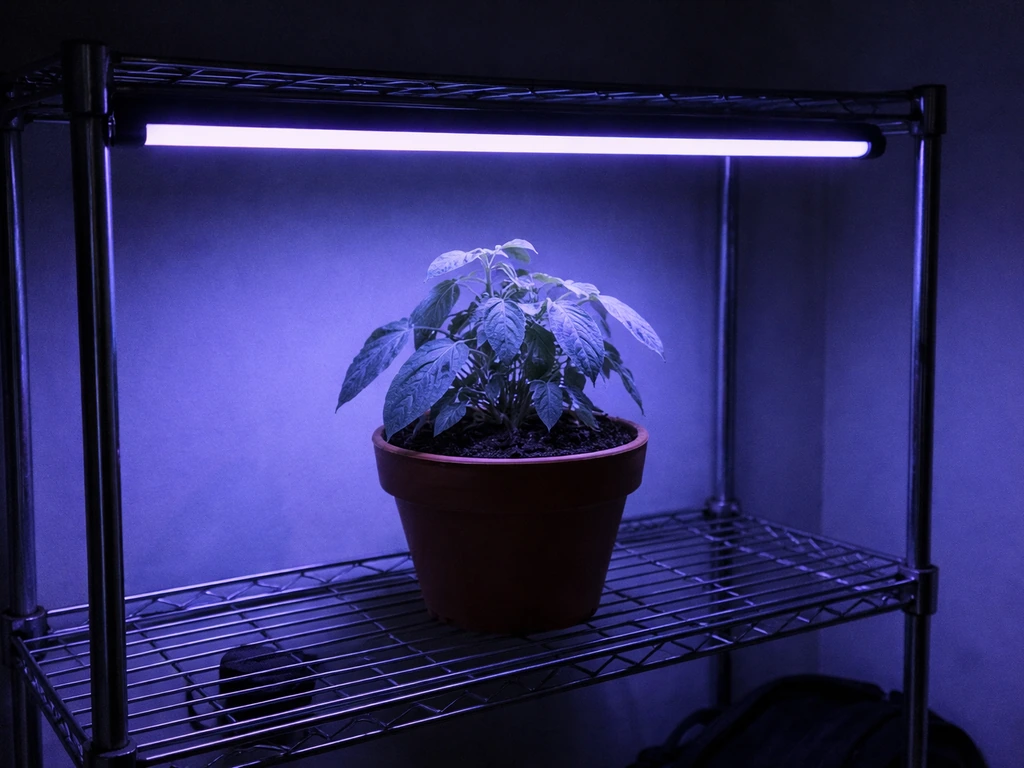
Used as a supplement alongside a proper grow light, it can offer some real secondary benefits. The key is understanding what you're actually dealing with before you plug anything in. Even if you use a bright candle, it does not provide the wavelengths plants need to photosynthesize and will not allow meaningful growth can plants grow by candlelight.
What 'Black Light' Actually Is
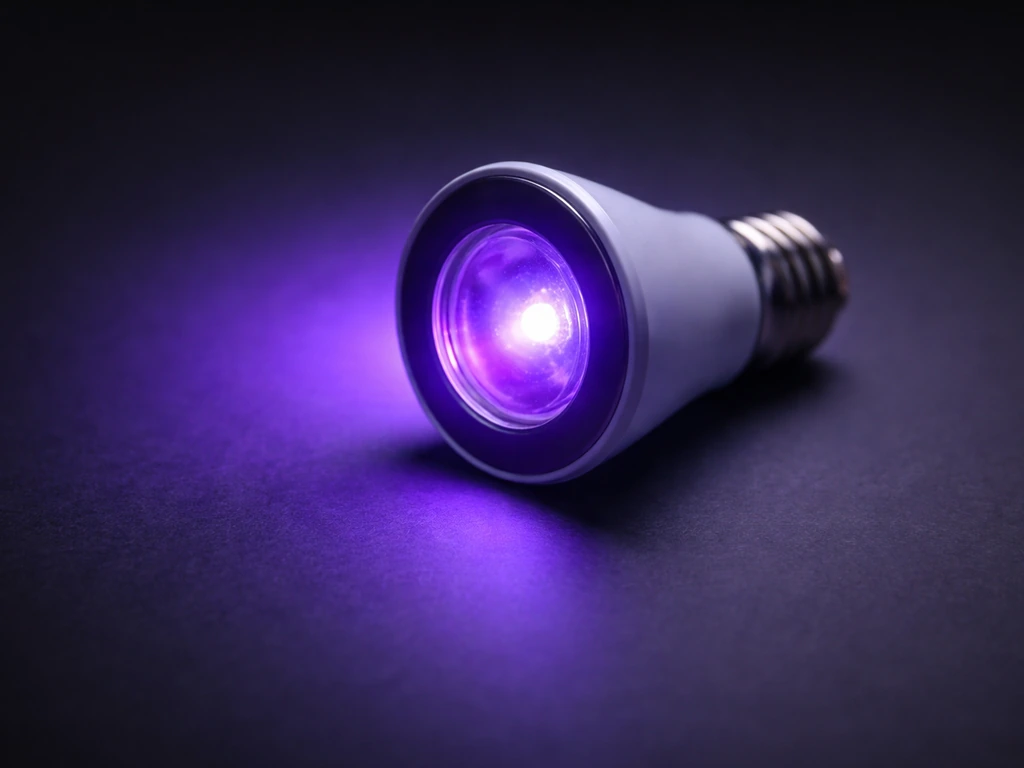
The term 'black light' almost always refers to a UV-A light source, typically a bulb or LED that peaks somewhere between 365 nm and 405 nm. At that wavelength, the light is mostly invisible to the human eye, though some cheaper versions that peak around 395 nm emit a visible violet-purple glow (which is why they look cool at parties). True 365 nm black lights appear nearly completely dark to us.
UV-A sits in the ultraviolet portion of the spectrum, just below visible light. It's divided into rough bands: UV-C (100–280 nm, extremely damaging), UV-B (280–315 nm, still harmful), and UV-A (315–400 nm, the mildest of the three and the range black lights operate in). Consumer black light LEDs and fluorescent black light bulbs both fall into the UV-A category. Major LED component suppliers like Luminus and Fulham specifically produce UV-A LED modules peaking around 365 nm and 395 nm for industrial applications. Those same wavelengths show up in consumer products at garden centers and online.
This matters because UV-A is a completely different animal than the red and blue visible light wavelengths that plants actually use to photosynthesize. A grow light is designed to emit wavelengths in what plant scientists call PAR, or Photosynthetically Active Radiation, which runs from about 400–700 nm. Red (around 630–660 nm) and blue (around 430–470 nm) are the heavy hitters. Black lights mostly miss this window entirely.
Can UV Light Actually Power Photosynthesis?
Short version: no, not really. Chlorophyll, the molecule that captures light energy and converts it into sugars the plant can use, has peak absorption in the red and blue ranges of visible light. UV-A at 365–405 nm barely registers on the chlorophyll absorption curve. That means even if you blast your plant with a powerful UV-A source, most of that energy is simply not getting captured for photosynthesis. Your plant won't be able to build sugars, won't be able to grow new tissue, and over time will start to weaken.
The survive vs. thrive distinction is real here. A hardy, low-light plant like a pothos placed under only a black light might hang on for a few weeks. It's drawing down its reserves, not building new ones. It's the botanical equivalent of running on an empty stomach. Eventually it runs out of road. A seedling or young plant has even less margin, so it'll show decline faster.
Where UV-A does have legitimate plant science behind it is in secondary effects, things that aren't photosynthesis. UV-A exposure can stimulate production of anthocyanins (pigments that give plants purple or red coloring) and other secondary metabolites. Some research suggests moderate UV-A can strengthen plants' natural defenses and may even enhance flavor compounds in herbs. Certain flowering plants also use UV patterns on their petals (visible to pollinators but not us) that UV light can affect. So UV-A isn't worthless for plants, it's just not a light source for growth on its own.
What to Expect When Plants Are Under Black Light
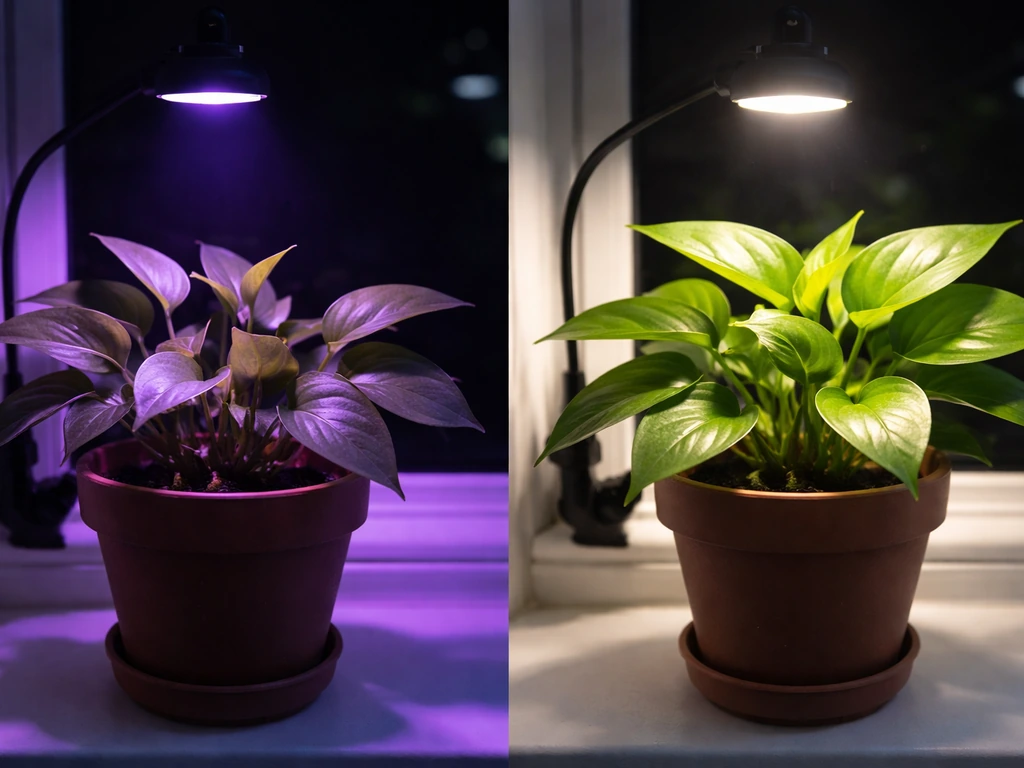
If you've already been running plants under a black light as their primary light source, here's what you're likely seeing or will see soon:
- Slow or zero new growth: No PAR means photosynthesis has effectively stalled. New leaves may not appear, or they come in tiny and pale.
- Etiolation: Plants start stretching desperately toward any available visible light. Stems get long and weak, leaves get small. This is a classic stress sign.
- Leaf yellowing (chlorosis): Without enough light energy to maintain chlorophyll, leaves start losing their green color, going pale yellow or washed out.
- Wilting despite watering: The plant can't produce enough energy to maintain normal turgor pressure and cellular function.
- Root stagnation: Growth slows below the soil too. You may not see this directly, but the plant isn't investing energy in root expansion.
- Some plants may briefly fluoresce under UV, making leaves and flowers appear to glow. This is an optical effect, not a sign the plant is doing well.
If your plant has been under black light for just a few days (maybe you were testing the setup), you might not see obvious damage yet. Get it under proper light quickly and it'll likely recover. A few weeks of black-light-only exposure can cause real setbacks, especially for fruiting plants, herbs, or anything actively growing.
How to Tell What Bulb You Actually Have
Before you decide what to do with your current setup, figure out exactly what you're working with. The product label or spec sheet is your starting point.
Look for the peak wavelength listed in nanometers (nm). A true UV-A black light will show a peak somewhere between 365 nm and 405 nm. Common consumer labels say things like blank" rel="noopener noreferrer">'365 nm UV LED' or '395 nm blacklight.' If you see a peak around 395–405 nm, you're in that borderline UV-A/visible violet zone. Some of those emit a small sliver of blue-violet visible light, which has marginal PAR value but not enough to sustain a plant.
Here's what to check on the packaging or product listing:
- Peak wavelength (nm): This is the most important number. If it's under 400 nm, it's UV-A and won't drive photosynthesis.
- Light spectrum or spectrum chart: Proper grow lights will show visible red and blue peaks clearly on a spectrum graph.
- PAR or PPFD rating: Grow lights list PAR (Photosynthetically Active Radiation) output or PPFD (Photosynthetic Photon Flux Density, measured in micromoles per square meter per second). Black lights will not have this rating, because they produce essentially no PAR.
- CRI (Color Rendering Index): A high CRI rating (above 80) suggests visible, broad-spectrum light. Black lights have no meaningful CRI.
- Labeled use: Industrial UV-A modules from manufacturers like Luminus or Fulham are sold for curing, inspection, or sterilization, not horticulture. If the bulb is marketed for bug zappers, party lighting, currency verification, or resin curing, it's a black light, not a grow light.
If your bulb shows a visible purple or blue-white glow, it's likely peaking closer to 395–405 nm, which puts it right on the edge of UV-A and visible violet. This is still primarily UV-A, but it's closer to the PAR window than a true 365 nm source. Neither will sustain your plants, but a 395 nm source is marginally less useless on its own.
Using Black Light Safely as a Supplement
This is where black lights can actually have a place in your indoor garden, not as the main act, but as a supporting player. If you already have a quality grow light running, adding a UV-A source on a controlled schedule can provide some genuine benefits, especially for herbs and flowering plants.
Pairing UV with a proper grow light
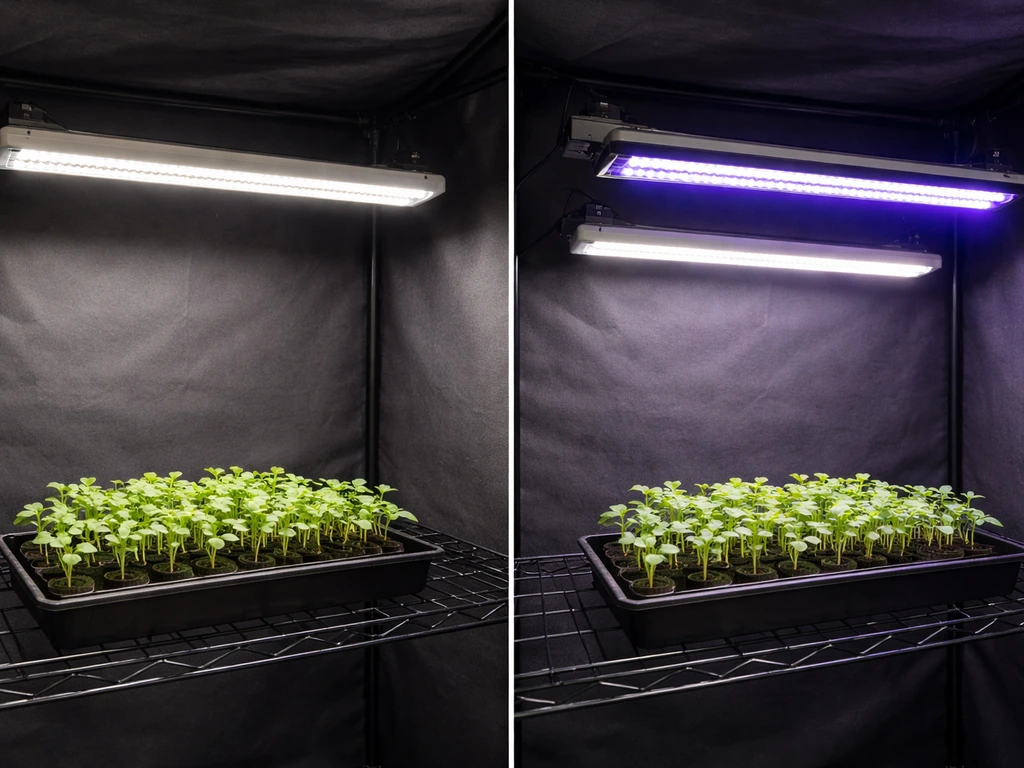
Your primary light source needs to cover PAR, which means a full-spectrum LED grow light, a T5 fluorescent, or a similar horticulture-rated fixture. Once that's in place, a UV-A source can be added as a supplement. Keep the UV running for only 2–4 hours per day, timed to overlap with your main light period. Don't run UV-A as a standalone nighttime light for plants.
If you're wondering do nightshades grow at night, keep in mind that UV-A isn't a nighttime growth solution either. Do plants grow at night? Do buds grow at night or day? It mostly comes down to the light cycle your plants get, since growth needs photosynthesis Do plants grow at night.
If that “night” light is just UV-A from a black light, it will not trigger meaningful growth Don't run UV-A as a standalone nighttime light for plants.. That same idea applies to day and night growth, since buds still need the right light cycle to develop properly do buds grow at night or day. It won't help growth and adds unnecessary stress.
Distance and placement
More UV intensity isn't better. Position a UV-A supplement light so it's at least 12–24 inches from the plant canopy. Closer than that and you risk UV stress, which shows up as bleaching, leaf curl, or surface damage on sensitive plants. Start at the farther end and observe your plants for a week before moving the light closer.
Safety for you, not just your plants
UV-A is the same radiation that causes tanning and, over time, skin and eye damage. Don't stare at a running black light and avoid prolonged skin exposure. If you're working around active UV-A sources regularly, UV-blocking glasses are worth having. This isn't an alarmist warning, just common sense. Industrial UV modules like those from Phoseon or Excelitas are rated at intensities far beyond consumer bulbs, but even lower-power consumer UV-A LEDs deserve respect.
Better Options When Black Light Isn't Enough
If your goal is growing actual plants in a low-light space, you have two practical paths: choose plants that thrive in genuinely low-light conditions, or invest in a proper grow light setup. Ideally, you do both.
Plants that work in genuinely low-light spaces
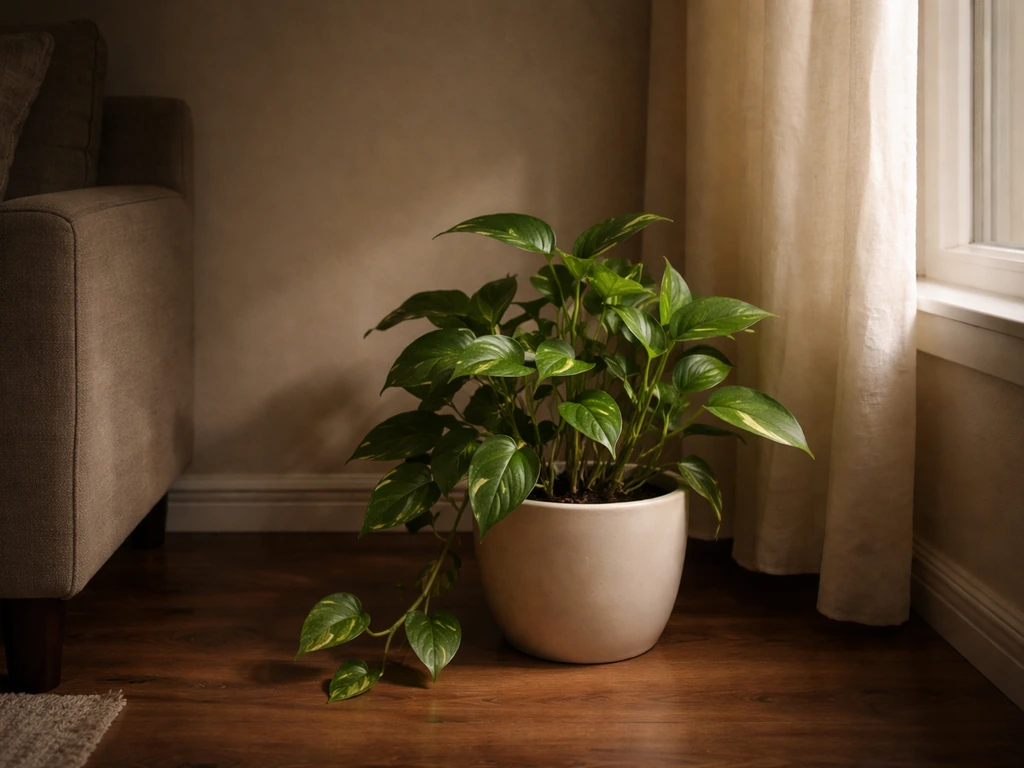
Some species are adapted to forest floors and dim indoor environments. These won't need a powerful grow light to survive and can even do reasonably well under a basic LED or T5 fluorescent setup without high intensity:
- Pothos (Epipremnum aureum): Extremely forgiving, survives in low PAR environments
- ZZ plant (Zamioculcas zamiifolia): Tolerates neglect and low light well
- Snake plant (Sansevieria/Dracaena trifasciata): One of the lowest-light tolerant houseplants
- Peace lily (Spathiphyllum): Handles shade and still flowers occasionally
- Cast iron plant (Aspidistra elatior): Named for a reason, almost indestructible in low light
- Chinese evergreen (Aglaonema): Tolerates low to medium indirect light
- Heartleaf philodendron: Another trailing plant that stays happy in dimmer spots
These plants won't produce the growth rate you'd see in bright indirect light or under a good grow light, but they'll genuinely sustain themselves without stress. That's a very different outcome than a tomato or basil plant struggling under a black light.
Setting up a proper grow light
For anything beyond low-light survivors, a dedicated grow light is the right move. You don't need to spend a lot. A quality full-spectrum LED grow bar or T5 fluorescent strip in the 3000K–6500K range with actual PAR output makes a massive difference. Look for lights that list PPFD values. In LEDCure L365 and L395, documentation reports band spectral response ranges and output in irradiance and energy-density terms, illustrating how UV measurements are typically specified PPFD values. For herbs and leafy greens, you're targeting roughly 200–400 PPFD at the canopy. For fruiting plants, 400–600+ PPFD. Position the light 6–18 inches above the canopy depending on intensity, and run it 12–16 hours per day for most edibles, 10–12 hours for most houseplants.
Once you have that baseline covered, adding a UV-A supplement becomes a genuine enhancement rather than a substitute. Think of it as adding a seasoning, not the main ingredient.
Troubleshooting Checklist for Plants Struggling Under UV or Black Light
If your plants aren't doing well and you suspect the light setup is the problem, work through this list before doing anything else:
- Check the peak wavelength on your bulb. If it's under 400 nm, it's UV-A and cannot sustain plant growth on its own. Replace or supplement it immediately.
- Look for a PAR or PPFD rating on your light. If there isn't one, the product is not a grow light. No PAR rating means it wasn't designed for photosynthesis.
- Examine your plants for etiolation (leggy, stretched growth toward any available light). This is the clearest sign of insufficient PAR, not overwatering or a pest issue.
- Check leaf color. Yellowing under the light rather than at the bottom of the plant (where old leaves naturally yellow) suggests light starvation.
- Review your light schedule. Even a good grow light run for only 4–6 hours may not be enough. Aim for at least 10–14 hours for most indoor plants.
- Measure your light distance. If a UV supplement is the only thing close to the plant and your grow light is across the room, your plant is essentially in the dark for photosynthesis purposes.
- Consider whether you're in the right plant-light match. Some plants just need more light than a dark apartment corner can provide, no matter what bulb you add. Swap for a low-light species, or commit to a real grow light setup.
Growing plants indoors under artificial light is a bit of trial and error for everyone. If you've already lost a plant to a black-light-only setup, you're in good company. The good news is that once you understand what wavelengths plants actually need, solving the problem is pretty straightforward. Get the right light, match it to the right plant, and you'll see the difference within a few weeks.
FAQ
If my black light is very strong, can my plants still grow at least a little?
For most people, a black light alone will not. Even if the bulb feels “bright,” UV-A (around 365 to 405 nm) largely misses the red and blue band plants use for photosynthesis (about 400 to 700 nm PAR). At best, some plants may look alive for a short time by drawing down stored energy, then they decline.
How do I tell whether my “black light” is 365 nm or 395 nm, and does that change the outcome?
Use the wavelength peak (nm) rather than the marketing name. A “395 nm” unit is often near the edge of UV-A and may emit a little visible violet, which still won’t provide meaningful PAR. The closer the peak is to 365 nm, the more it stays in UV-A, but neither version replaces a real grow light.
What does UV-A stress look like, and what should I do if I see it?
UV-A can stress plants when the intensity or distance is too high. Signs include leaf bleaching (washed-out patches), leaf curl, crispy edges, and a shiny, damaged-looking surface. If you see this, lengthen the distance, reduce daily run time, or pause the UV-A supplement entirely.
Can I use a black light to extend my photoperiod at night?
UV-A should be treated as a supplement, not a night replacement. Keep your normal light-on window for PAR, then add UV-A only for a short overlap period during the day phase your plants already use. Running UV-A alone at night does not meaningfully drive carbon fixation and can add unnecessary stress.
Are some plants more tolerant of black-light-only conditions than others?
Yes, you can harm plants by using the wrong pairing. Fast-growing or high-light crops like basil, tomatoes, seedlings, and most flowering ornamentals will not tolerate UV-A-only conditions, and they also have less reserve energy to “hold out.” Choose UV-A supplements only after a proper PAR light is already meeting the plant’s needs.
What’s a safe way to start using UV-A as an accessory light?
You can introduce UV-A without guessing by starting conservatively: 2 to 4 hours per day, position it 12 to 24 inches from the canopy, and observe for a week. If plants look fine, you can slightly adjust, but avoid moving it closer quickly because UV intensity rises fast with distance.
Do I need to measure anything besides “having a black light”?
Measure your main grow light by PAR-related output when possible (PPFD if the product lists it). UV-A only adds a secondary effect, so the real performance bottleneck is usually whether your PAR light delivers enough energy at the canopy, not whether the UV-A is “working.”
If plants are struggling indoors, should I adjust UV-A or address other environmental factors first?
Do not remove “fresh air” expectations. UV-A light does not substitute for normal temperature, humidity, and airflow. If plants are already struggling, fixing ventilation and maintaining stable conditions often improves outcomes more than adding or changing UV-A intensity.
Is it safe for humans or pets if I run a UV-A black light near my plants?
For pets and especially for sensitive eyes, treat UV-A as real radiation exposure. Avoid looking directly at a running UV-A lamp, and if you use UV-A regularly, consider UV-blocking eye protection and shielding to reduce stray exposure.
How long will it take to notice problems if I’ve been using black light as the only light?
Watch how plants respond over 2 to 4 weeks after you switch to correct PAR lighting. Short testing periods (days) may look okay because decline is slow, but prolonged black-light-only setups often show stunting, pale growth, and weak leaf development once stores are depleted.