Plants do not need direct sunlight specifically, but they absolutely need light energy to grow. What matters for photosynthesis is the right wavelength and intensity of light, not whether that light comes from the sun or a bulb. For a science fair project, this is actually great news: you can design a controlled experiment comparing sunlight, LED grow lights, fluorescent bulbs, and low-light conditions, and the results will tell a clear, real story about plant biology.
Do Plants Need Sunlight to Grow Science Fair Project
Marcus Hartley
30 May 2026
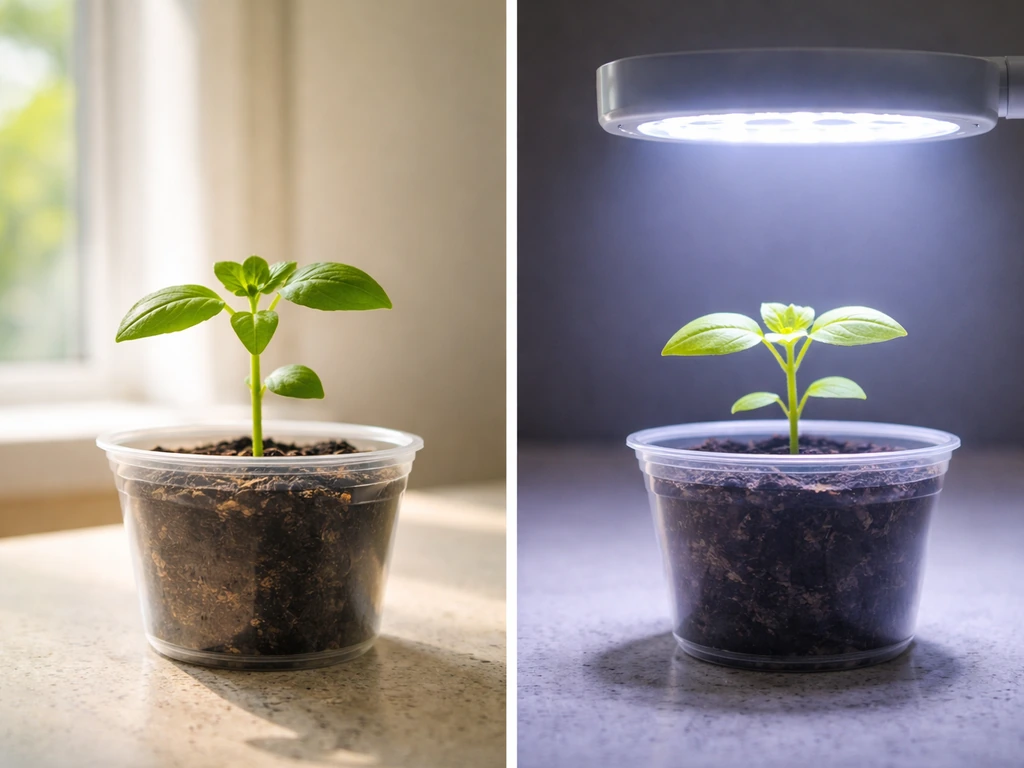
Sunlight vs. light: what plants actually need
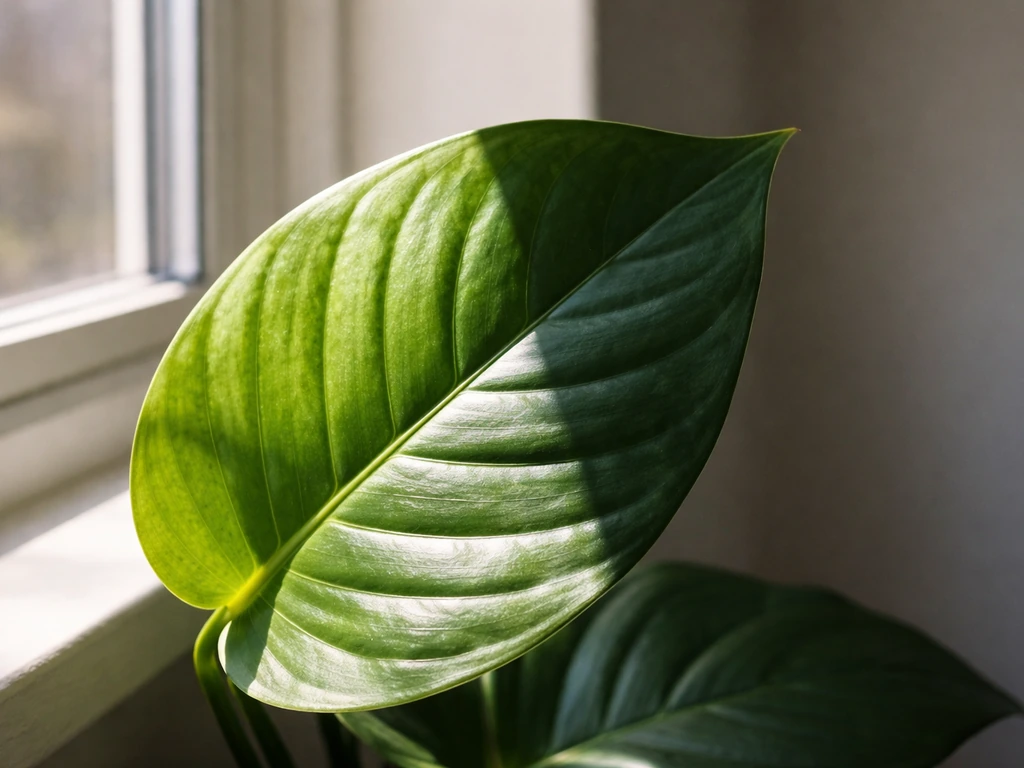
Here is the core science. Plants use chlorophyll to capture light energy and convert carbon dioxide and water into sugar through photosynthesis. That sugar is the fuel and building material for every new leaf, root, and stem. The light that drives this process is called photosynthetically active radiation, or PAR, and it spans wavelengths from 400 to 700 nanometers. Sunlight contains plenty of PAR, but so do quality LED grow lights and fluorescent bulbs. What the plant cares about is how many usable photons it receives per second, measured in units called PPFD (micromoles per square meter per second), not whether those photons traveled 93 million miles from the sun.
The practical takeaway: a plant sitting in a dark closet will not grow because there is no energy input to drive photosynthesis. A plant under a decent LED grow light can grow just as vigorously as one on a sunny windowsill, sometimes more so because you control the intensity and duration precisely. In Purdue’s protocol summary for growing Arabidopsis, example photoperiods and light intensity ranges are laid out to show how labs treat light duration and intensity as tunable variables control the intensity and duration precisely. Light intensity, light duration (photoperiod), and light quality (spectrum) are all variables you can manipulate in an experiment, which is exactly what makes this a strong science fair topic.
One thing to keep in mind: light is not the only limiting factor. Temperature and carbon dioxide concentration also affect how fast photosynthesis runs. If you give a plant more light but the room is very cold, growth will still slow down. For your experiment, keeping those other factors consistent is essential.
What to test: building a solid experiment
A good science fair experiment isolates one variable at a time. The cleanest version of this project tests light source or light intensity as the independent variable, with plant growth as the dependent variable, and keeps everything else identical across groups.
Possible independent variables (pick one)
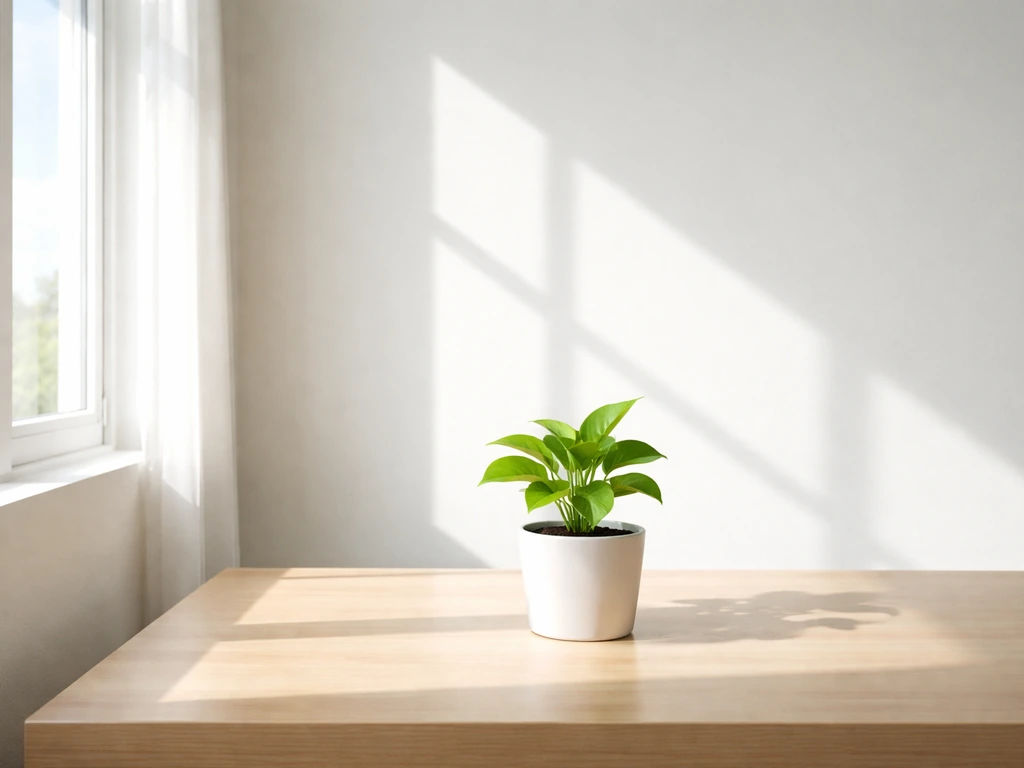
- Light source: sunlight (south-facing window) vs. LED grow light vs. standard fluorescent bulb vs. near-darkness (a few feet from a north window or a closet)
- Light duration: same light source for 8 hours vs. 12 hours vs. 16 hours per day
- Light intensity: one LED grow light close to the plant vs. farther away (distance reduces intensity)
Variables to keep constant (your controls)
- Same plant species, ideally from the same seed packet or the same parent plant
- Same pot size (go with something modest like a 4-inch pot to avoid water retention issues that come with oversized containers)
- Same soil mix, same volume of soil per pot
- Same watering schedule and same amount of water each time
- Same room temperature
- Same fertilizer, or no fertilizer at all (nutrient deficiency causes yellowing that could be confused with low-light symptoms, so keep nutrients identical across all groups)
How many plants do you need?
Use at least three plants per treatment group, ideally more. Replication is what separates a reliable experiment from a lucky guess. If one plant in your sunny-window group happens to be a weak seedling, having two others in that group keeps your average honest. Randomize pot placement within each group when possible, rotating positions every few days so no single pot always sits in the exact same spot.
Materials and light setups you can run today
You do not need expensive equipment. Here is a practical setup that works for most budgets and most apartments or houses.
Plant choice
Fast-growing plants give you visible results within a typical 3-to-4-week science fair timeline. Radishes germinate in a few days and grow quickly. Bean seedlings (like bush beans) show leaf development within a week. Lettuce is another solid option. Avoid slow-growing tropicals or succulents for this experiment because the timeline is too short to see meaningful differences.
Light setup options
| Light source | Approximate setup | Practical notes |
|---|---|---|
| South-facing window (sunlight) | Place plants within 12 inches of the glass | Intensity varies with weather and season; good as a natural baseline |
| LED grow light | Position 6–12 inches above the canopy; run 12–16 hours per day on a timer | Most consistent and controllable; inexpensive panel lights work fine for a project |
| Standard fluorescent shop light (T8 or T5) | Position 2–4 inches above seedlings; run 14–16 hours per day | Good PAR output, cheap, easy to find; slightly less efficient than LED but very usable |
| Low-light / near-dark control | North-facing window or a spot several feet from any window | Expect very slow or no visible growth; this is your baseline for 'insufficient light' |
If you are comparing artificial light to sunlight, a plug-in timer for your grow light is worth the few dollars it costs. Running the light for exactly 12 hours every day removes a huge source of variation that would otherwise mess with your results.
How to measure plant growth and what to record
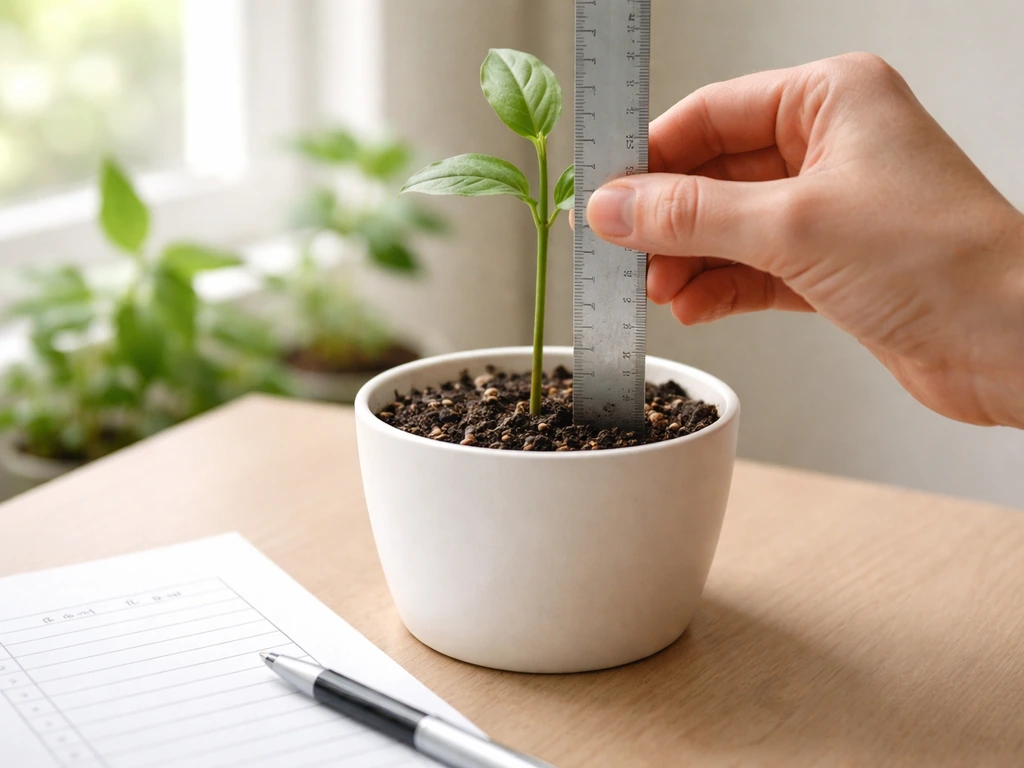
Measuring carefully is what turns an observation into data. Record measurements every 3 to 4 days throughout the experiment. Consistency matters: measure at the same time of day, using the same ruler or calipers, and note observations in a dedicated notebook or spreadsheet.
Measurements to take
- Stem height: measure from the soil surface to the tallest growing point, in centimeters
- Number of true leaves: count only fully open leaves, not still-folded ones
- Leaf color: note on a simple scale (dark green, medium green, pale green/yellow) or use a color chart
- Internode length: the distance between leaf attachment points on the stem (long internodes are a sign of light-starved, leggy growth)
- Leaf area: at the end of the experiment, trace individual leaves on graph paper and count the squares to estimate area in square centimeters
- Dry weight (optional but impressive): at the end of the experiment, carefully remove plants from soil, rinse roots, let them dry in a low oven (around 60°C or 140°F) for 24 hours, then weigh them; dry weight is more reliable than fresh weight because it removes the water variable
Photograph everything
Take a photo of every treatment group on the same day, from the same angle, at the same distance. Do this at least every 3 to 4 days. Photos are powerful for your display board and help you catch things you might not notice in the numbers alone, like a plant starting to lean toward a light source or leaves beginning to yellow.
What results to expect and how to interpret them
Your results will depend on your specific setup, but here is what the plant physiology says you should generally see.
Strong light (sunny window or LED grow light)
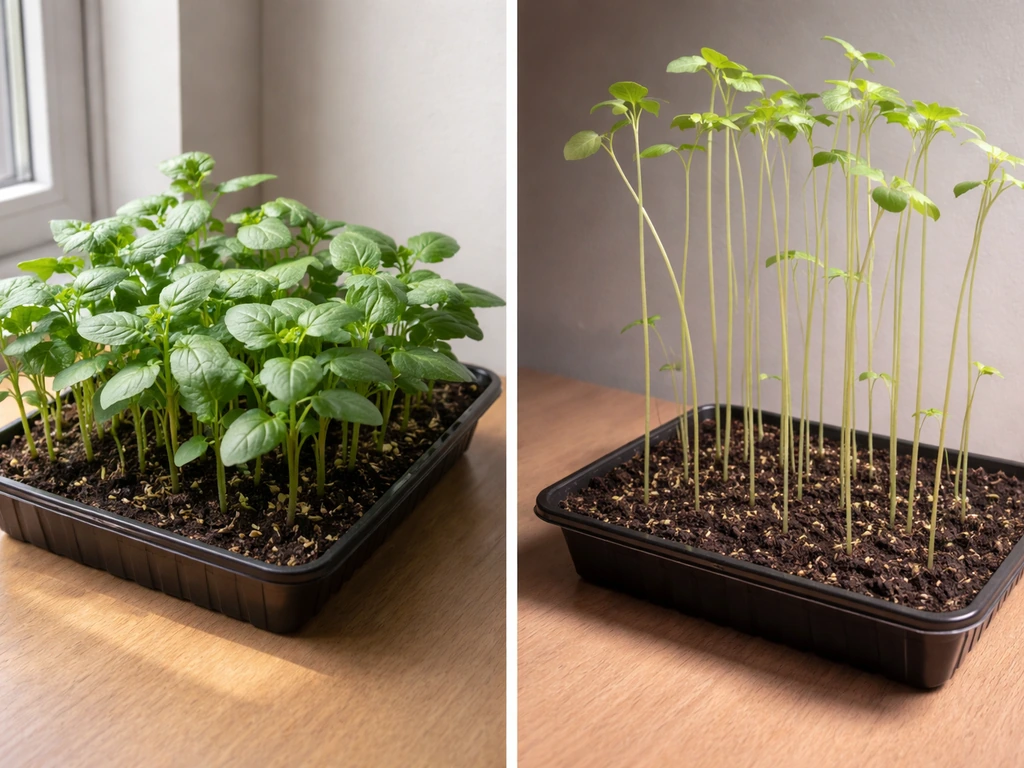
Plants in adequate light will show steady height increases, dark green leaves, short internodes, and increasing leaf counts over the experiment period. The LED group and the sunny-window group often perform comparably, which is actually a great result to discuss: it shows that the light source matters less than the intensity and duration of usable light.
Low-light or near-dark conditions
This is where etiolation shows up. Plants with insufficient light will grow tall and spindly with long internodes as they stretch toward any available light source. Leaves will be pale green or yellowish because chlorophyll production is suppressed without adequate light input. This is sometimes called etiolation, and it is a textbook example of what happens when light becomes a limiting factor for photosynthesis. If light is truly minimal, you may see almost no growth at all after the first week or two, once the seed's stored energy is used up.
What if your results are unexpected?
If your sunny-window plants perform poorly compared to your LED group, that is not a failure. It might mean your window was not as bright as assumed (clouds, shade, season) or your grow light provided more consistent hours. If all groups perform similarly, check whether your low-light control was actually getting more light than intended. Unexpected results are data too, and explaining them using plant physiology is exactly what judges want to see.
Finishing strong: repeating, staying safe, and presenting your findings
Safety first
- Keep electrical cords and plugs away from water; never water plants with electrical equipment directly underneath
- LED grow lights and fluorescent bulbs get warm; keep them away from flammable materials and follow manufacturer placement guidelines
- If you use a scale or dry-weight oven method, ask an adult to help with the oven step
- Wash hands after handling soil
Repeating the experiment
If you have time, running the experiment twice is a significant credibility boost. Your second run confirms whether your first results were consistent or a one-time fluke. Even if you can only repeat one treatment group (say, your no-light control and your best-performing light condition), that adds weight to your conclusion.
Presenting your data
Create a line graph showing average plant height over time for each treatment group. Use different colored lines for each light condition. A bar graph comparing final dry weight or leaf count across groups also works well and is easy to read at a glance. Label axes clearly with units (centimeters, number of leaves, grams). For your conclusion, connect your data back to the science: explain what photosynthesis is doing at each light level, reference the concept of limiting factors, and use the word etiolation if your low-light plants showed those symptoms.
Your conclusion should answer the core question directly: plants do not need sunlight specifically, but they do need sufficient light energy in the right wavelengths for photosynthesis to sustain growth. Artificial lighting, when properly set up, can fully replace sunlight. In fact, this same idea applies when thinking about whether there is enough sunlight on Mars to grow plants, since light can come from sources other than the sun Artificial lighting, when properly set up, can fully replace sunlight.. How much light is enough? That depends on the species, which connects naturally to broader questions about how much sunlight different plants need, or whether low-light adapted species behave differently than fast-growing seedlings under the same conditions. For a money plant (pothos), you still need bright, indirect light, and too little light will slow growth how much sunlight different plants need. In general, the amount of sunlight plants need depends on their species and the intensity and duration of light they receive how much sunlight do plants need to grow. Do plants need UV light to grow, or is the right amount of visible light enough how much sunlight different plants need.
Display board tips
- Print your time-lapse photos side by side so viewers can see the visual difference between light treatments immediately
- Include a short explanation of photosynthesis and PAR in plain language on the board
- Show your data table alongside your graphs so judges can see the raw numbers, not just the averages
- Write a clear hypothesis at the top: something like 'If plants receive adequate artificial light, then their growth will be similar to plants grown in direct sunlight, because photosynthesis depends on light energy rather than the source of that light'
- Note any sources of error honestly: weather variation affecting window light, any plants that died or showed unusual symptoms, any days you missed watering
FAQ
If I use different light bulbs, how do I know I’m comparing the light source fairly?
Yes, as long as the total usable light energy is adequate. To make it a fair test, keep the same light distance, use the same exposure schedule, and measure or standardize intensity as best you can (even a phone light meter app is better than guessing). If your setup differs in intensity more than light type, the “sun vs LED” comparison becomes meaningless.
How can I prevent my “no light” or “low light” control from getting stray light?
For dark and low-light treatments, avoid accidentally providing stray light from windows, hallways, or device LEDs. Use a box or black backdrop for the low-light group, seal gaps that let in light, and keep the location of each group identical so temperature and airflow are also comparable.
Is it possible to give plants too much light for a science fair experiment?
You can, but you need to control it. A grow light that’s too strong can burn or stress seedlings, even though it increases photosynthesis potential. Watch for very pale or scorched leaf edges and keep intensity consistent across runs, then compare growth rate rather than assuming “brighter is always better.”
Why might my low-light plants still change a little at first?
No light does not mean “no growth forever.” Seedlings can use stored energy for a short time, so early height changes might happen in all groups. That is why you should start measuring after germination and continue through multiple weeks to see which treatment truly supports ongoing photosynthesis-driven growth.
What is the best way to measure growth so my results are not biased by etiolation?
It depends on the species and how you define “growth.” In general, height changes can be misleading if etiolation occurs, so add at least one additional metric like leaf count, leaf color rating, or dry weight at the end. Dry weight is more reliable than fresh weight because it avoids differences in water content.
How do I handle the variable intensity of sunlight from a windowsill?
If your window is the treatment, sunlight intensity can swing with clouds and sun angle. Use a sensor if possible, or reduce variability by choosing similar times of day each measurement, and consider rotating pots daily and documenting weather. Without that, your “sunlight” group might not actually be receiving a consistent light dose.
Can I just leave the grow light on all the time, or does the schedule matter?
A photoperiod timer is ideal, especially for artificial lighting. For sunlight-based groups, you cannot perfectly control day length, but you can still log the start and end times of your “light exposure” window and explain that photoperiod variability is a limitation. If you do use a timer, keep it identical every day.
What non-light factors most often mess up a light-only experiment (CO2, airflow, temperature)?
Keep CO2 conditions as consistent as possible by avoiding frequent “air exchange” like opening windows near only some groups. Also avoid placing plants right next to fans or HVAC vents, since airflow changes transpiration and temperature, which can affect growth independently of light.
How can I tell whether yellow leaves are from low light or from poor nutrition?
Not necessarily. Leaves can yellow either from insufficient light or from nutrient issues. To avoid mix-ups, use the same potting mix and a consistent watering routine, and consider using a simple, balanced fertilizer (or no fertilizer at all) for every group so nutrient availability does not become the hidden limiting factor.
Is it worth repeating the experiment, and do I need to repeat every treatment group?
Yes. Running the same set of treatments more than once helps you confirm consistency, especially when plants vary genetically and seeds can differ. Even repeating just two key groups, like the best-performing light and the no-light control, strengthens confidence and gives you a clearer average trend.