
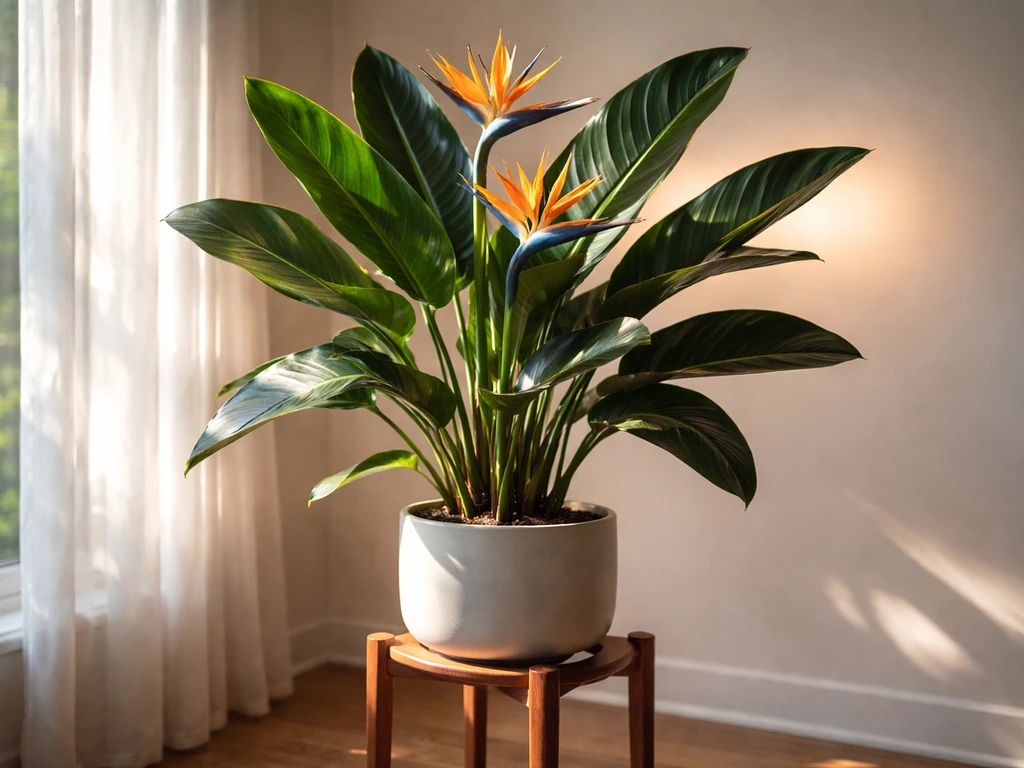
Bird of paradise (Strelitzia reginae) cannot truly thrive in low light. If you want to try it anyway, you can use grow lights to boost a low-light spot enough for can mint grow in low light. It will survive for a while, but it won't grow well, and it almost certainly won't flower. This is a sun-hungry plant that wants six or more hours of direct sunlight a day outdoors, and indoors it needs the brightest spot you can give it. That said, there are real ways to make a lower-light situation more workable, and knowing what to expect will save you a lot of frustration.
Can Bird of Paradise Grow in Low Light? Yes, Here’s How
Marcus Hartley
15 Jun 2026
What 'low light' actually means for bird of paradise
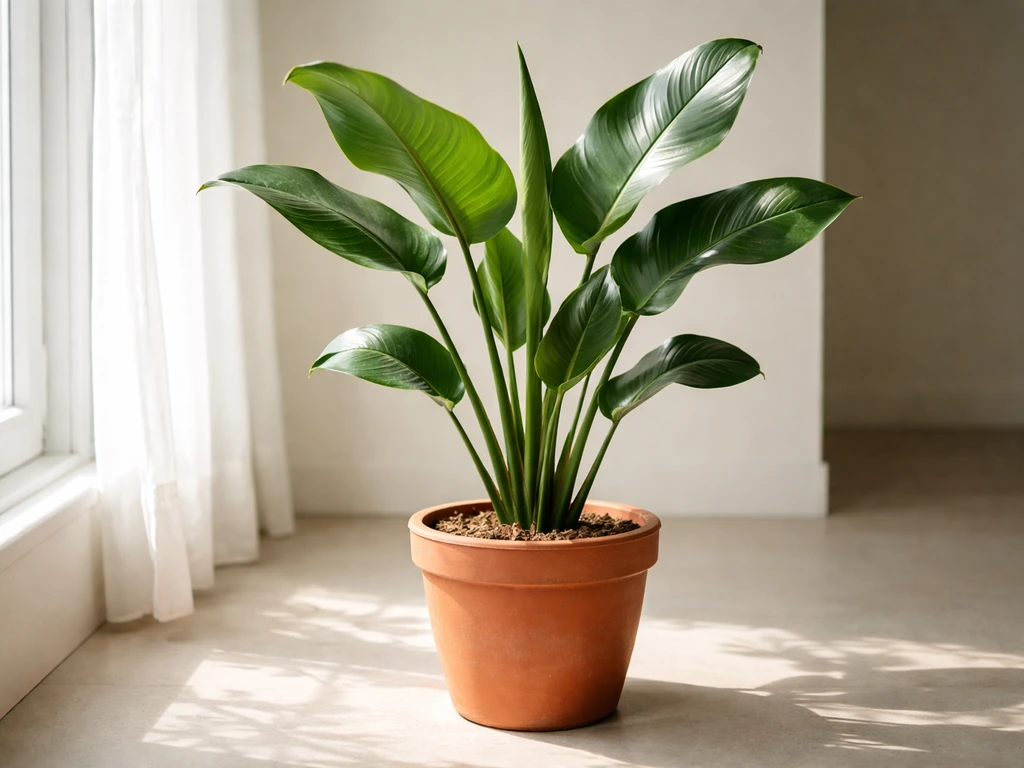
When plant people say 'low light,' they usually mean a spot that gets no direct sun and sits more than a few feet from a window. In foot-candle terms (a common way to measure how much light actually hits a leaf surface), low light is roughly 25 to 100 foot-candles. One foot-candle equals about 10.76 lux, so if you've got a light meter app on your phone, you can get a rough reading. A north-facing room, a corner across from a window, or a spot blocked by curtains or buildings outside all qualify as low light.
Bird of paradise wants to sit solidly in the high-light category: 500 foot-candles and above for healthy indoor growth, and ideally direct sun through a south or west-facing window for at least part of the day. The NC State Extension lists it as a full-sun plant needing six or more hours of direct sun daily. So when someone asks whether it can handle low light, the honest baseline is: what this plant wants is basically the opposite of low light.
Survive vs. actually grow (and forget about flowers)
Here's the honest breakdown. In genuinely low light, a bird of paradise will limp along. Can string of hearts still grow in low light, and what light level do you actually need to keep it healthy can string of hearts grow in low light. In contrast, some other plants, like pilea, can tolerate and even do well in lower light levels than bird of paradise can pilea grow in low light.
It won't die immediately, especially if it's a mature, healthy plant with some stored energy. But it will stop producing new leaves at any reasonable pace, existing leaves may start to look dull or yellowed, and the plant will gradually lose vigor. You are essentially putting it in slow-motion stasis.
Growth and flowering are a different story. Strelitzia reginae flowers from early fall through late winter under good conditions, but 'good conditions' means bright light, and usually a mature plant of several years. In low light, you can essentially rule out flowers. The plant simply doesn't have enough energy to put into bloom production when it's already struggling to photosynthesize enough to maintain basic leaf function. Even in bright indirect light (one step up from low light), flowering is a long shot indoors. If blooms are your goal, low light is a firm no.
Compare this to something like a parlour palm or certain hoyas, which are genuinely adapted to lower-light environments and can look good and grow steadily in those conditions. Bird of paradise is not in that category.
Signs your bird of paradise isn't getting enough light
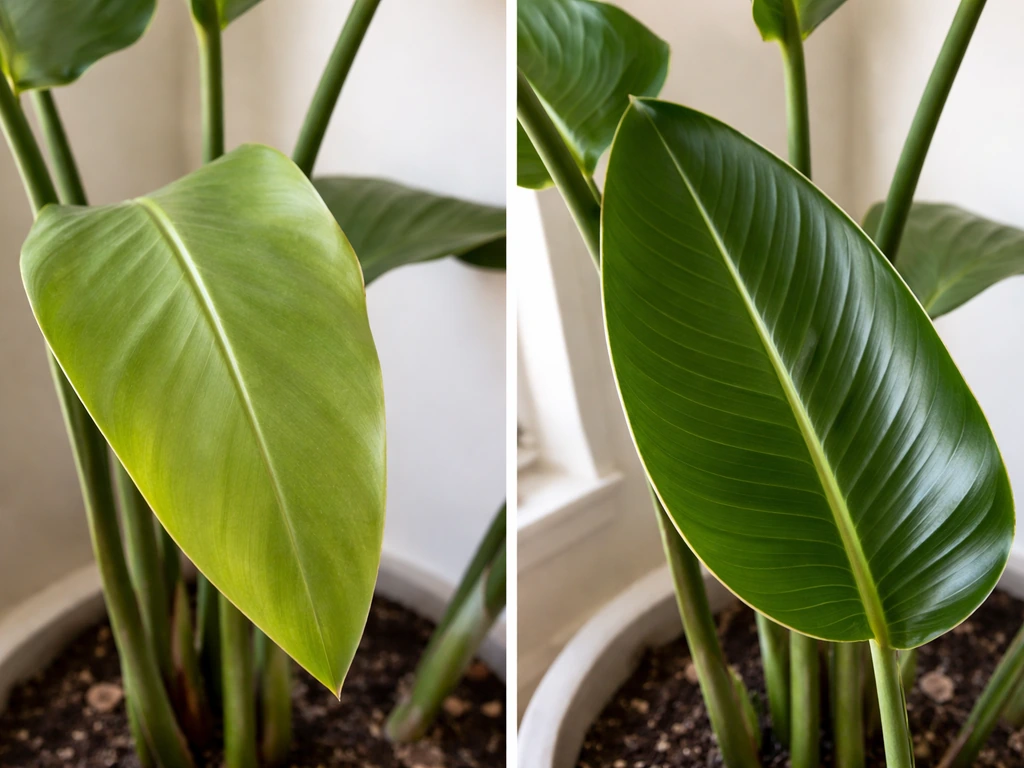
The plant will usually tell you before it's in serious trouble. The tricky part is that some of these signs overlap with other problems like overwatering or nutrient deficiency, so you need to look at the full picture. UMaine Extension also warns that insufficient light can lead to etiolated growth, with thin shoots and longer internodes, plus pale or light-green new growth.
- New leaves are smaller than the older ones and come in a lighter, washed-out green rather than the deep, rich green you'd expect.
- The stem between leaves (the internode) looks stretched out and longer than normal. This is etiolation: the plant is literally reaching for light it can't find.
- The plant leans noticeably toward the nearest light source, sometimes dramatically.
- Older leaves turn yellow-green and may eventually drop. This can also be caused by overwatering or poor drainage, so check the soil too.
- Growth has basically stopped for months, even during spring and summer when the plant should be pushing new leaves.
- The overall plant looks thin and leggy rather than full and upright.
To confirm it's a light issue and not something else, do a quick check: push your finger two inches into the soil. If it's still damp after a week or more, overwatering may be compounding the problem. Then look at the light meter on your phone (free apps like Lux Light Meter work fine for a rough reading). If you're getting under 200 lux in that spot during the middle of the day, low light is almost certainly a big part of the problem.
How to place it near windows for the best results
Window placement is your first and most important lever. The goal is to get as close to a south- or west-facing window as possible, and as close to the glass as practical. Light intensity drops off quickly with distance: a plant three feet from a window can receive a fraction of the light a plant right at the sill gets. Here's how to make the most of what you have.
- Put it in the sunniest window you own. South-facing windows in the northern hemisphere give the most consistent direct light. West-facing is second best, east-facing is decent for morning sun, and north-facing is the hardest to work with for this plant.
- Keep it within two feet of the glass. Even better: right at the sill if the window is unobstructed.
- Clean the window. This sounds obvious but dirty glass can cut light transmission noticeably.
- Pull back or remove sheer curtains during daylight hours. Sheers can cut available light by 30 to 50 percent.
- Rotate the pot a quarter turn every week or two so all sides get exposure and the plant grows more evenly.
- Place a large mirror or white-painted surface on the opposite wall to bounce light back toward the plant. It's a low-effort, zero-cost way to increase effective light in a room.
- In winter, move the plant even closer to the window because day length shortens and sun angle drops, meaning less light reaches indoor plants naturally.
Using grow lights to make a low-light spot actually work
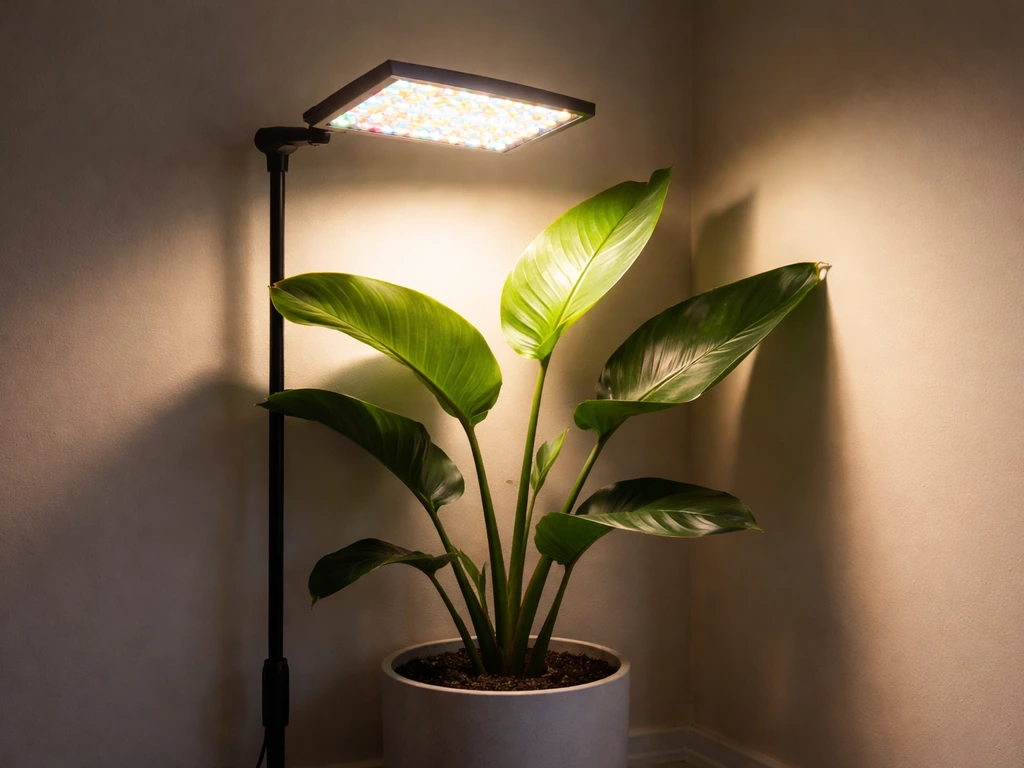
If your best window genuinely isn't enough, a grow light is the most reliable fix. This isn't about buying expensive gear. A decent full-spectrum LED panel or even a quality LED bulb in a clip-on fixture can make a real difference. Here's what actually matters.
LED vs. fluorescent: which to choose
| Feature | Full-spectrum LED | Fluorescent (T5/T8) |
|---|---|---|
| Energy efficiency | Very high | Moderate |
| Heat output | Low | Moderate (can stress plants if too close) |
| Light quality for plants | Excellent (full spectrum available) | Good (T5 high-output is effective) |
| Lifespan | 50,000+ hours | 10,000–20,000 hours |
| Cost upfront | Higher | Lower |
| Best for bird of paradise | Yes, especially for larger plants | Acceptable for supplemental boost |
For bird of paradise, which is a big plant with high light needs, a full-spectrum LED panel gives you the most usable light per watt and the flexibility to position it at the right distance. Look for a fixture rated for medium to high light plants, not a seedling tray light.
Distance and timing
Distance matters enormously. Light intensity follows an inverse square relationship with distance, meaning doubling the distance roughly quarters the intensity. For a bird of paradise, you want the light source 12 to 24 inches above the top of the plant's foliage as a starting point. Check for stress: if leaves bleach or curl within a week, move the light farther away. If the plant continues to stretch, bring the light closer.
Run the grow light for 14 to 16 hours a day if it's your primary light source in a windowless or very dim spot. If you're supplementing a weak window, 8 to 10 hours of grow light time added to whatever natural light the plant gets is a good starting target. Use a cheap outlet timer so you don't have to think about it.
Care adjustments your plant needs in low light
Low light changes how the plant functions, and if you don't adjust your care routine, you're likely to cause more problems on top of the light issue. The biggest one is watering.
Watering
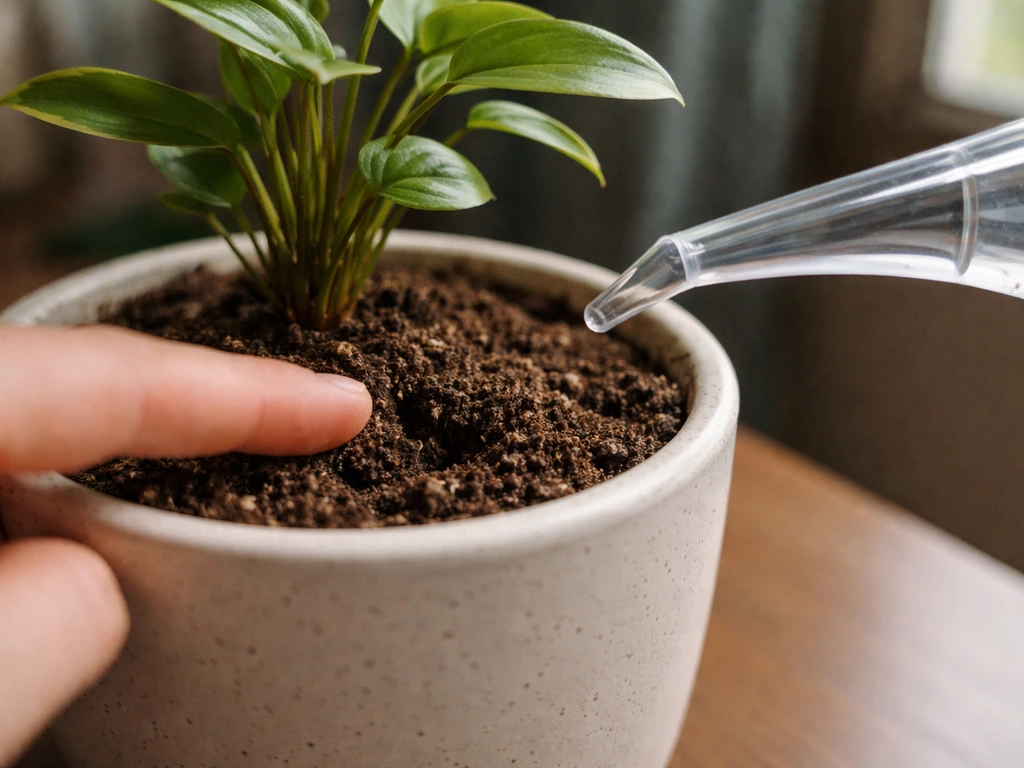
In low light, the plant grows more slowly and uses water much more slowly. Soil stays wet longer, and wet soil in a slow-growing plant is a direct path to root rot. Let the top two to three inches of soil dry out completely between waterings. In a truly low-light winter setup, you might only be watering every two to three weeks. Always check the soil with your finger before watering, and never water on a schedule alone.
Soil and drainage
Make sure your pot has drainage holes, full stop. In low light, a soggy pot without drainage will kill this plant faster than the lack of light will. If you're in a decorative cachepot, check that water isn't pooling at the bottom. A well-draining mix with some perlite added is ideal.
Feeding
Cut back on fertilizer in low light. A plant that isn't growing isn't using nutrients, and excess fertilizer in a low-light, slow-growing plant builds up as salts in the soil, which can burn roots. During active growing months (spring and summer) you might feed lightly once a month with a balanced liquid fertilizer, diluted to half strength. In fall and winter, or if the plant has essentially stopped growing, skip fertilizer entirely until you see new growth resuming.
Temperature and humidity
Keep the plant away from cold drafts and heating vents. Bird of paradise prefers temperatures between 60 and 85 degrees Fahrenheit. Average indoor humidity is usually fine, though it appreciates a bit of extra moisture in the air during dry winters. A pebble tray with water under the pot, or occasional misting, helps without being complicated.
When to give up on this spot and pick a different plant
Here's the honest decision point. If your only option is a north-facing room, a basement, or a corner with no real window access and you don't want to run grow lights for 14-plus hours a day, bird of paradise is the wrong plant for that spot. It's not a failure to admit that. Choosing the right plant for your actual conditions is just good gardening.
If your goal is a dramatic, architectural indoor plant with large leaves, there are genuinely better options for lower-light spaces. Parlour palms give you a tropical feel and handle lower light gracefully. Certain hoyas offer beautiful foliage and can manage in dimmer spots. Pilea peperomioides tolerates moderate indirect light well. Even a string of hearts or wandering jew handles lower light far better than bird of paradise will. In contrast, string of pearls (Senecio rowleyanus) is far more tolerant of lower light than bird of paradise string of hearts or wandering jew. None of these will give you the exact same look, but they'll actually thrive in the space you have.
The decision framework is simple: if you can offer a south- or west-facing window with no obstructions, or you're willing to run a decent grow light, give bird of paradise a try. If you're hoping it'll just be okay in a dim corner with minimal intervention, save yourself the frustration and pick something better suited to your space. Your plant will be happier, and honestly, so will you.
If you do decide to go for it with a grow light setup, give the plant at least three to four months to adjust and show new growth before drawing conclusions. Progress is slow even in better conditions. New leaf production a few times a year indoors is a realistic expectation. Flowers indoors without a genuinely bright, sun-drenched spot are a long shot no matter how good your grow light is, so set that expectation accordingly and enjoy the plant for its bold foliage instead.
FAQ
If my room is bright but my bird of paradise is far from the window, will it still count as “high light”?
Not reliably. If the plant is more than a few feet from the window, it typically slips into a slow-growth, non-flowering pattern even if the room feels bright to you. Use a lux reading around midday to confirm, and if you are consistently below about 200 lux, plan on a grow light or switch plants.
Can I use a small clip-on LED bulb instead of a full grow light to help in low light?
Yes, but only as a supplement, not a replacement in most homes. A single bulb near eye level usually does not deliver enough intensity to trigger healthy growth, especially for a big plant like bird of paradise. For low-light interiors, the fixture matters (full-spectrum, meant for medium to high light plants) and placement distance (12 to 24 inches above foliage) matters as much as the wattage.
How do I tell if the problem is low light or overwatering?
Watch for two patterns. In true low light you will see stretching and smaller, duller leaves over time, while overwatering shows up as persistently wet soil, yellowing with a soft or mushy stem, and a stinky or sour pot smell. If your soil stays damp for a week or longer, treat watering first even if the plant is also receiving dim light.
In low light during winter, should I water less even if the soil still “feels” dry on top?
It can, especially in winter. Because the plant uses water more slowly when growth slows, the same watering frequency you used in summer can become too much. Instead of a calendar schedule, wait until the top 2 to 3 inches are fully dry, then water thoroughly and let excess drain.
If I correct the light, will my bird of paradise be okay immediately, or can it get light burn?
Often, yes. If you move the plant from low light to a brighter window or closer grow light, give it time to adjust. A sudden increase can cause leaf bleaching or curling, so either increase light gradually (for example, shortening the distance every week) or start with fewer hours per day and build up.
Should I keep fertilizing on the same schedule if my bird of paradise is in low light?
Feed only when it is actually growing. In low light or during winter, fertilizer can build up salts in soil that stress roots, and you may not see symptoms until weeks later. A practical rule is to fertilize only after new leaf growth is clearly underway, and use half-strength even then.
Would repotting help if my bird of paradise is struggling in low light?
You can, but it has to be done carefully because low light usually comes with stable, moist soil conditions that rot roots quickly. Make sure the pot has drainage holes, use a mix that drains well (often with added perlite), and avoid disturbing the roots repeatedly. After repotting, keep light the limiting factor you are addressing (brighter or with grow light), not the repot itself.
How long should I wait before deciding the light fix is not working?
It will usually take longer, and “longer” is measurable. Even with supplemental light, the plant may pause leaf production for a few weeks to a couple months, especially if temperatures are cool or the light is still underpowered. Build expectations around new leaf timing rather than quick changes.
Can a bird of paradise flower indoors if it started in low light?
Generally no. Flowering indoors depends on strong light and a mature plant. Even with a good grow light, a plant that has been in low light for a while may prioritize leaf recovery first. If blooms are the goal, treat low light as a hard limitation and focus on getting to consistently high light first.