
String of hearts (Ceropegia woodii) can survive in low light, but it will not thrive there. You will get a living plant, but expect slower growth, longer gaps between leaf pairs, smaller and paler leaves, and almost certainly no flowers. If your room is genuinely dim, you can keep the plant alive with some adjustments, but if you want those full, dark-patterned trailing vines, you need to either find a brighter spot or add a grow light. That is the honest answer, and everything below is about how to make the best of whatever light you actually have.
Can String of Hearts Grow in Low Light? How to Succeed
Marcus Hartley
2 Jun 2026
Surviving vs. thriving: what low light actually does to your plant
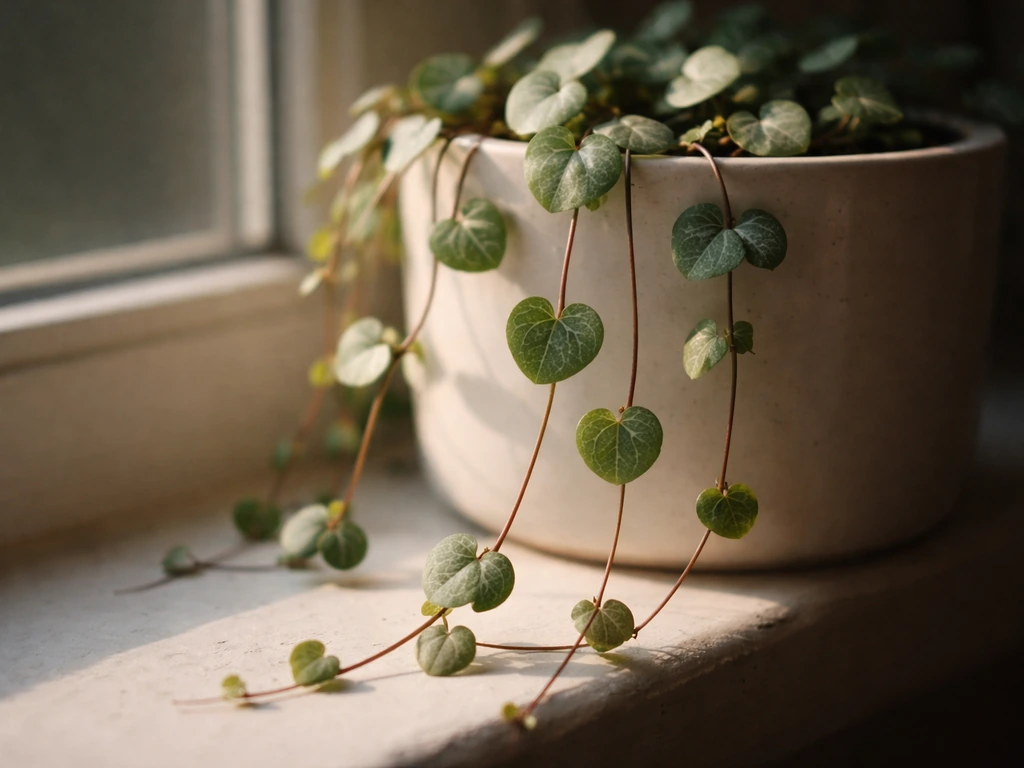
There is a real difference between a plant that is holding on and one that is growing well, and string of hearts makes that gap very visible. In bright, indirect light with a couple of hours of gentle direct sun, the leaves are deep green with silver marbling on top and a rich purple underneath, new growth appears regularly, and a mature plant will produce small lantern-shaped flowers.
Drop it into a dark corner and the picture changes fast. The stems stretch out looking for light (a process called etiolation), the gaps between leaf pairs widen noticeably, the leaves shrink and lose their patterning, and the whole plant goes pale. Even if it is not dying, a can string of pearls will typically stretch and slow down in low light, so brighter conditions or a grow light help it stay compact. It is not dying, but it is not doing well either.
Some sources say string of hearts can tolerate low light, and technically that is true. Others are blunter and say it blank" rel="noopener noreferrer">will wither and die in low light long-term. Both are right depending on what 'low light' means in your specific space. A north-facing window that still gets a few hundred foot-candles during the day is very different from a hallway with no windows at all. The plant can handle the former with some care; the latter will slowly drain it.
For reference, string of hearts does best with bright indirect light and can handle up to about four hours of direct sun daily. Whether it can mint grow in low light depends heavily on how bright your light actually is and how long it stays there can handle up to about four hours of direct sun daily. Wikipedia's basic care notes describe around 3 to 4 hours of indirect sunlight as a baseline. Anything below that and you are asking the plant to run on a deficit. It will burn through stored energy in its tubers, slow its metabolism, and eventually stop putting out new growth.
What 'low light' actually means indoors
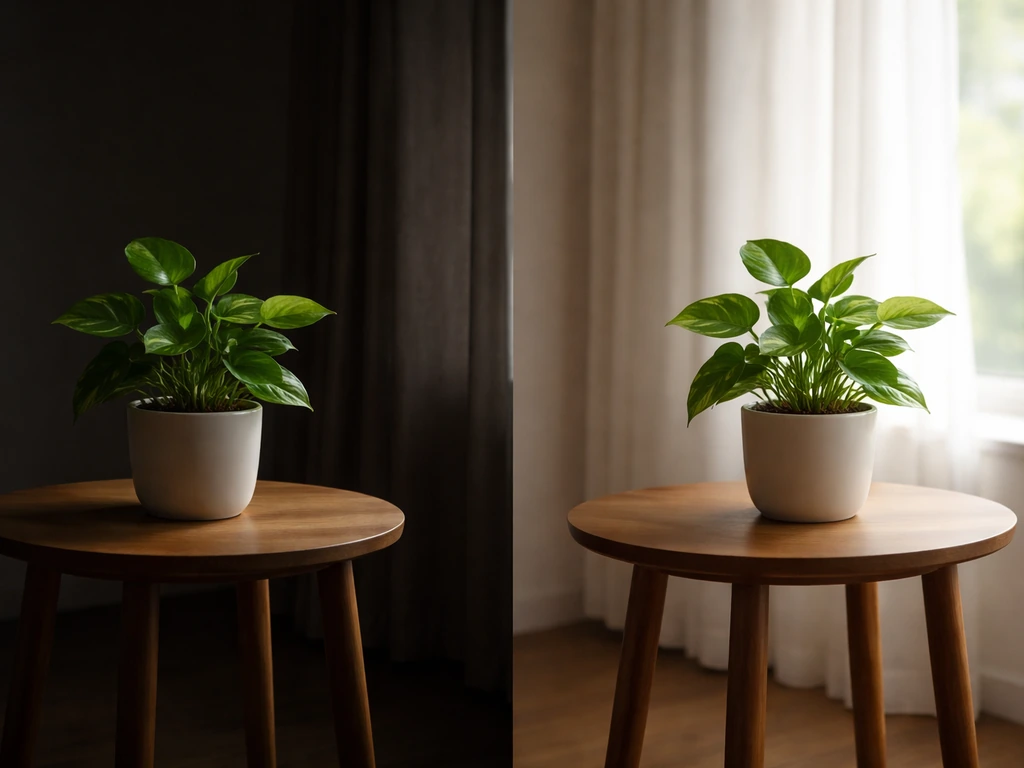
Plant people throw around 'low light' a lot but it covers a surprisingly wide range. The unit you want to know is foot-candles (fc), which measure how much light reaches a surface. One foot-candle is roughly the brightness of a single candle at one foot away, and it equals about 10.76 lux if your light meter app reads in lux. Different extension services define indoor light categories slightly differently, but here is a practical breakdown:
| Light Category | Foot-Candles (approx.) | Typical Indoor Placement |
|---|---|---|
| Very low / dark | 25–74 fc | Hallways, far interior corners, rooms with small north windows |
| Low | 100–300 fc | Directly in front of an unobstructed north window, or 8–10+ feet from any other window |
| Medium | 300–500 fc | A few feet from an east window, or a few feet back from a bright south/west window |
| Bright indirect | 500–1000+ fc | Within 1–3 feet of a south or west window, out of direct rays |
String of hearts is comfortable in the medium to bright indirect range. It can tolerate the low range (roughly 100–300 fc) but growth will be noticeably slower. In the very low range, below about 75 fc, it will struggle consistently and you will need artificial light to keep it going.
Window direction matters a lot in practice. A north-facing window in the northern hemisphere gives the softest, most consistent indirect light but rarely gets above the low range without a grow light supplement. An east window gives gentle morning sun and is actually quite good for string of hearts since it delivers bright light without the afternoon heat. South and west windows are the best natural light sources and can easily push into the bright indirect and even direct sun range, which is exactly what this plant wants.
How to test your light right now
You do not need fancy equipment to get a reasonable light reading. Your phone will do. Download a free lux meter app (search 'lux meter' on iOS or Android, there are several free ones), hold your phone face-up where the plant sits, and take a midday reading on a clear day. Convert lux to foot-candles by dividing by 10.
76. A reading of 1,000 lux works out to about 93 fc, which is right at the low edge. A reading of 5,000 lux is about 465 fc, which is a solid medium-light situation. Phone apps are not lab-accurate, but they are good enough to tell you whether you are dealing with 50 fc or 500 fc, and that is the information you actually need.
If you prefer not to use an app, just read the plant. String of hearts is quite honest about its light situation. Here is what to look for:
- Long gaps between leaf pairs on new growth: the plant is stretching toward light (etiolation)
- Leaves are pale, yellowish-green, or the silver patterning has faded: not enough light for pigment production
- No new growth for weeks or months during the growing season: the plant is in survival mode, not growth mode
- Leaves are small and staying small on new stems: insufficient energy from photosynthesis
- Flowers: if you are seeing flowers, light is probably adequate
A healthy string of hearts in good light should be putting out new growth consistently from spring through fall. If yours has been sitting still for months and you are in the growing season, low light is almost certainly part of the problem.
Where to put it to get the most out of your natural light
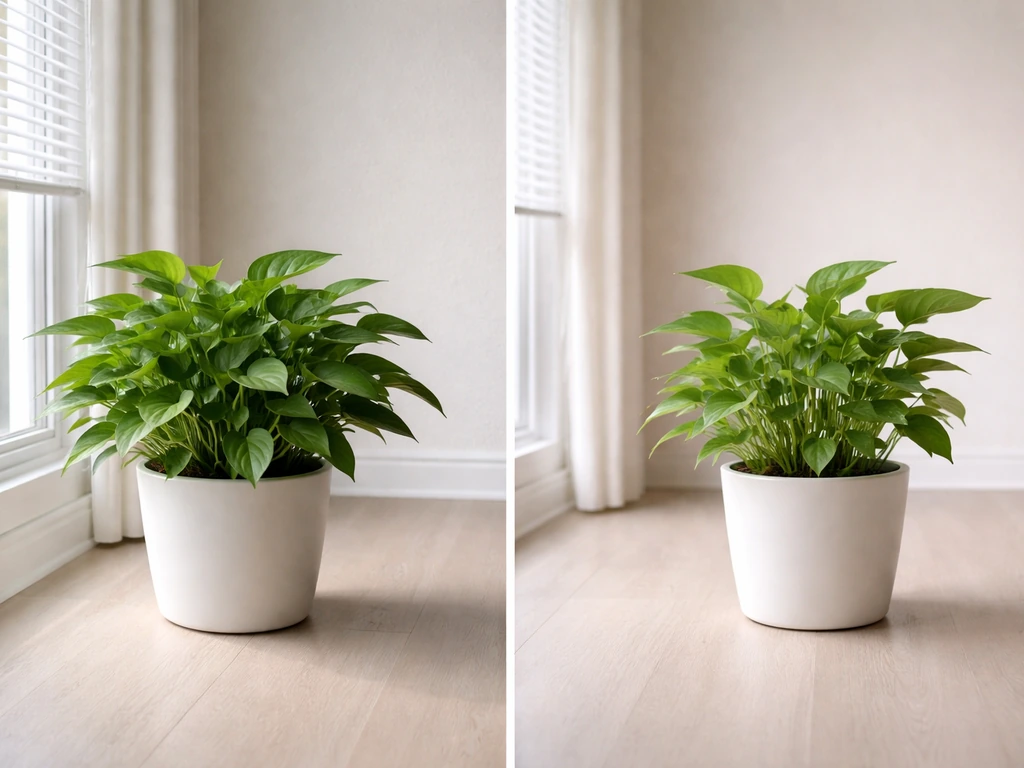
Placement is the first and cheapest fix before you buy anything. A few small moves can double or triple the light your plant receives. The key principle is this: light drops off fast as you move away from a window. blank" rel="noopener noreferrer">A plant sitting one foot from a clear window might get around 100 fc. Move it three feet back and that number can fall by half or more. So get it as close to the brightest window you have as practically possible.
- South or west window: place the pot within about 3 feet, either on a shelf, windowsill, or hanging just inside the window frame. This gives bright indirect light and a bit of direct sun, which string of hearts handles well.
- East window: a great option if you have it. Morning sun is gentle enough that you can put the plant right in the window without burning it.
- North window: sit the plant directly on the sill, as close to the glass as possible, and make sure nothing is blocking outside light like trees, an overhang, or a neighboring building.
- No window in the room: you will need a grow light, full stop. See the next section.
- Use a light-colored wall behind or beside the plant to bounce ambient light back toward it. It is a small gain but it adds up.
- Avoid placing it deep in a room behind furniture or in a corner that faces away from any window, even if the room feels bright to you. Human eyes adapt to low light; plants cannot.
String of hearts does especially well in hanging planters near windows because the trailing vines can angle toward the light source naturally. If you have a hanging hook near a south or west window, that is probably the single best placement in most homes.
Using a grow light when natural light is not enough
If your space genuinely does not have a bright window, a grow light is not a luxury. It is the difference between a plant that slowly declines and one that grows well. The good news is that string of hearts does not need an expensive or powerful setup. A basic LED grow light in the 20 to 45 watt range is enough for a single plant or a small collection.
What kind of grow light to use
Full-spectrum LED panels are the most practical choice right now. They run cool, use less electricity than fluorescent tubes, and last a long time. You do not need a specialty horticulture light with purple blaster LEDs (though those work fine). A white full-spectrum LED marketed for houseplants or seedlings will do the job. Clip-on or gooseneck LED grow lights in the 15 to 30 watt range are inexpensive and easy to position over a hanging plant.
Distance and timing
Start with the light positioned about 12 to 18 inches (30 to 45 cm) above the plant canopy for a moderate-wattage LED. If new growth looks healthy and compact after a few weeks, you are in the right zone. If growth is still leggy, move the light a few inches closer. If leaf edges start to look bleached or crispy, pull it back slightly. String of hearts is not as sensitive to light intensity as some succulents, so getting the distance roughly right is more forgiving than you might expect.
For timing, run the grow light for 12 to 16 hours per day during the growing season (spring through early fall) and drop to around 10 to 12 hours in winter. Using a cheap plug-in timer takes the guesswork out of this completely. Plants benefit from a consistent photoperiod, and you will not have to remember to switch the light on and off every day.
| Situation | Recommended Setup | Hours Per Day |
|---|---|---|
| Near a north window, needs a boost | Small clip-on LED, 10–20W, placed 12–18 inches above plant | 10–12 hours |
| Room with no window | Full-spectrum LED panel, 20–45W, placed 12–18 inches above plant | 14–16 hours |
| Supplementing a dim east/west window in winter | Any full-spectrum LED, 10–20W | 8–10 hours to top up natural light |
What to do about leggy, stretched growth
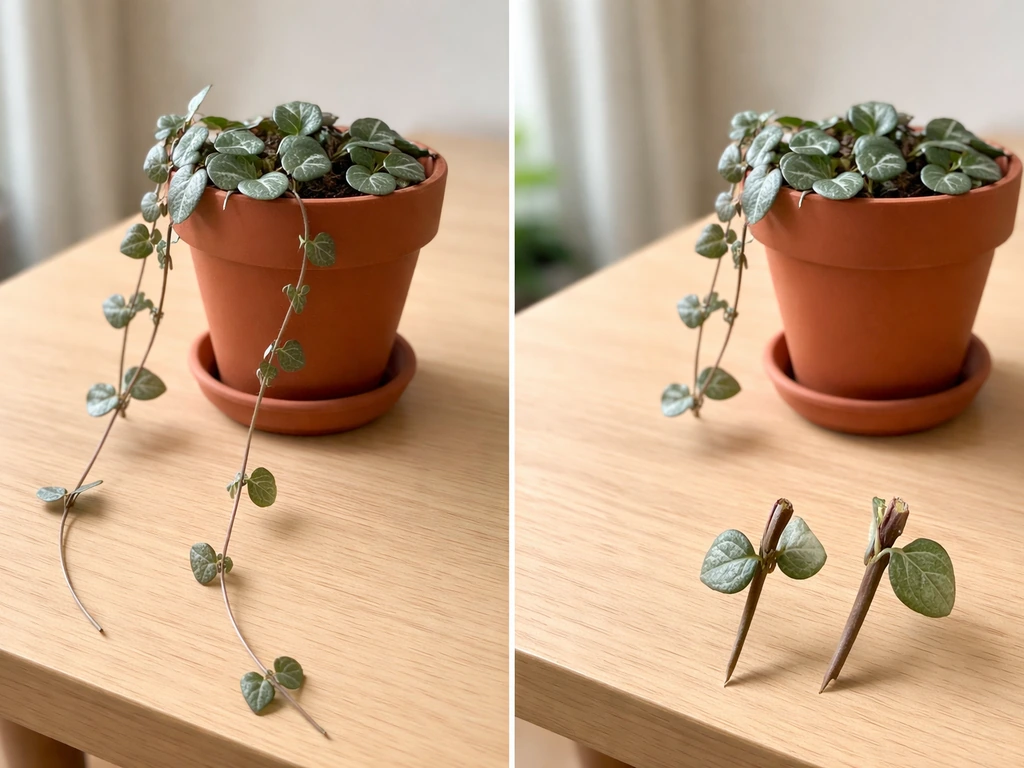
If your string of hearts has already gone leggy, do not expect it to fix itself. Once a stem has stretched with wide gaps between leaves, those gaps do not shrink. What you can do is improve the light going forward so new growth comes in compact, and then prune back the worst of the etiolated stems to encourage the plant to branch and produce fresh, healthier vines.
Pruning is actually quite safe with this plant. Cut leggy stems back to a node (the point where leaves attach) and the plant will usually branch from there. Even better, the cuttings you remove can be propagated. Lay a few nodes along the soil surface, pin them down lightly, and keep them in good light. They will root and start producing new leaves within a few weeks. This is a great way to fill out a sparse plant while also fixing the light problem.
As for recovery time: once you move the plant to better light or set up a grow light, expect to see compact new growth appearing within two to four weeks during the active growing season. The existing leggy stems will not change, but the new growth will tell you immediately whether the light improvement is working. Give it at least four to six weeks before deciding the new setup is not working.
Low-light care that keeps the plant healthy
Low light changes how you need to care for the plant beyond just light placement. The most important adjustment is watering. In dim conditions, the soil dries out much more slowly than it would on a bright windowsill. String of hearts is a semi-succulent and stores water in its tubers, which means it can handle drought but is very vulnerable to sitting in wet soil. Root rot is a real risk, and it becomes much more likely when you combine low light with frequent watering.
The rule of thumb is to let the soil dry out more completely between waterings than you might in brighter conditions. In a low-light setup, watering once every 10 to 14 days during the growing season is often plenty, and even less in winter. Stick your finger an inch or two into the soil and only water if it feels dry. When you do water, water thoroughly until it drains from the bottom, then let it drain completely before putting the pot back in its saucer.
Soil mix matters too. String of hearts should always be in a free-draining mix, ideally a cactus or succulent blend, or a regular potting mix cut with perlite at roughly a 50/50 ratio. In low light, good drainage is not just helpful, it is essential because the slow drying means even a slightly heavy mix becomes a root rot setup. Make sure the pot has drainage holes and that you are not leaving it sitting in a water-filled saucer.
Temperature consistency also helps. String of hearts likes warmth (around 60 to 80°F / 15 to 27°C) and does not appreciate cold drafts near windows in winter, which can compound low-light stress. If your best window spot gets cold at night, consider moving the plant slightly away from the glass after dark or using a grow light in a warmer interior spot instead.
Regular light pruning also keeps the plant from wasting energy on long, unproductive stems. Trim back any vines that have gone very sparse, use the cuttings for propagation, and you will help the plant direct its limited energy budget toward healthier new growth rather than trying to maintain meters of weak stems.
When is a room just too dark? Honest guidance
If your lux meter app reads below about 500 to 1,000 lux (roughly 50 to 93 fc) at the plant's location at midday on a clear day, you are in territory where string of hearts will genuinely struggle without a grow light. Below 25 fc, it is hard to keep almost any flowering or trailing plant alive long-term without supplemental light. If your room has no window at all, or if the window is small and heavily shaded, please do not feel bad about adding a grow light. It is not cheating. It is just giving the plant what it needs.
If you are committed to a truly dark spot and really do not want a grow light, it is worth knowing that string of hearts is honestly one of the more light-hungry plants in the trailing succulent category. Bird of paradise is also known for needing enough light to stay vigorous, so low-light setups can be challenging without the right conditions can bird of paradise grow in low light.
If you have had luck with pothos or certain hoyas in low light, those tend to be more adaptable. Some hoyas, for example, are notably more tolerant of low light conditions than Ceropegia woodii. Some hoyas are notably more tolerant of low light conditions than Ceropegia woodii. Similarly, while string of pearls shares some care similarities, it is also light-hungry and tends to behave comparably to string of hearts in dim conditions.
If your heart is set on a trailing plant and you have a genuinely dark room, a grow light is your most reliable path to success.
To summarize what you actually need to do: measure your light, move the plant as close to your best window as possible, prune back any leggy growth, adjust your watering down to account for slower drying, use a free-draining soil mix, and add a basic LED grow light if your natural light falls below the low threshold. Do those things and string of hearts will reward you with healthy new growth even in a less-than-ideal apartment. Can parlour palms grow in low light too, or do they need brighter conditions to stay healthy? Skip them and it will quietly decline until you wonder what went wrong.
FAQ
If my string of hearts survives in low light, how can I tell the difference between “surviving” and “thriving” without guessing?
Check for new growth rhythm. Thriving plants put out compact, regularly spaced leaves during spring through fall, while low-light plants tend to pause for weeks or grow leggy stems with wider gaps. Also compare leaf color over time, paler leaves usually mean the light level is still too low.
Does low light affect flowering, even if the plant looks healthy?
Yes, flowering is much less likely in dim conditions. Even if the plant stays alive, lack of light typically prevents the energy build-up needed for lantern-shaped blooms, so you may see leaves and vines grow slowly but no flowers.
What is the safest way to increase light if I only have a dim window, so I don’t shock the plant?
Increase gradually. Move the plant closer to the brightest window in small steps over 1 to 2 weeks, then reassess growth and leaf color. A sudden jump to intense direct sun can bleach leaves or scorch edges.
Can I use a grow light all year, or should I reduce it in winter?
You can run it year-round, but most people do better by reducing hours in winter. The article’s baseline timing (longer during spring to early fall, shorter in winter) helps match lower natural light levels and reduces the risk of overwatering from slower drying.
If I place the grow light too far away, how will I recognize it before the plant gets leggy?
Watch for early signs of light deficit: slower leaf emergence, slightly larger spacing between new pairs, and overall stretching before dramatic etiolation. Adjust the light a few inches closer, then wait a few weeks to confirm improvement with new compact growth.
How should I change watering specifically if I move my plant from bright light to low light?
Water less often and only after the soil dries more thoroughly. Low light reduces drying speed and the plant still stores water in tubers, so frequent watering is the fastest path to root rot. Always water thoroughly, then ensure the pot drains completely before returning it to a saucer.
Is it better to use a different potting mix if I’m keeping the plant in low light?
Use a consistently free-draining mix and avoid anything that stays wet for days. In low light, even a slightly heavy mix can stay damp too long, so adding perlite or using a cactus or succulent blend helps protect roots. Also confirm the pot has drainage holes.
My string of hearts is already leggy. Will low light ever “fix” the spacing on old stems?
No. Existing gaps won’t shrink. What you can do is improve the light for new growth, then prune back the worst stems to a node so the plant branches and produces healthier, more compact vines.
Can I propagate the leggy parts to get a fuller plant in a low-light home?
Yes, but plan to propagate in better light than the parent plant. Rooting works best when the cut nodes receive adequate brightness so they produce new leaves and roots before they sit in dim conditions. Keep the new cuttings in free-draining soil and water sparingly.
What should I do if my lux meter app reads low, but the plant still looks okay?
Re-check placement and timing. Lux varies a lot by distance from the window and by time of day, so test at midday at the exact plant position. If the reading is truly low, expect slower growth and no flowers, even if the plant appears stable right now.
If I have almost no window light at all, is it still worth trying without a grow light?
Usually not. String of hearts can be kept alive in borderline conditions, but in very dark rooms (no window or heavily shaded corners) it will commonly stagnate and become progressively weaker. A basic LED setup is the most reliable way to keep long trailing growth going.