
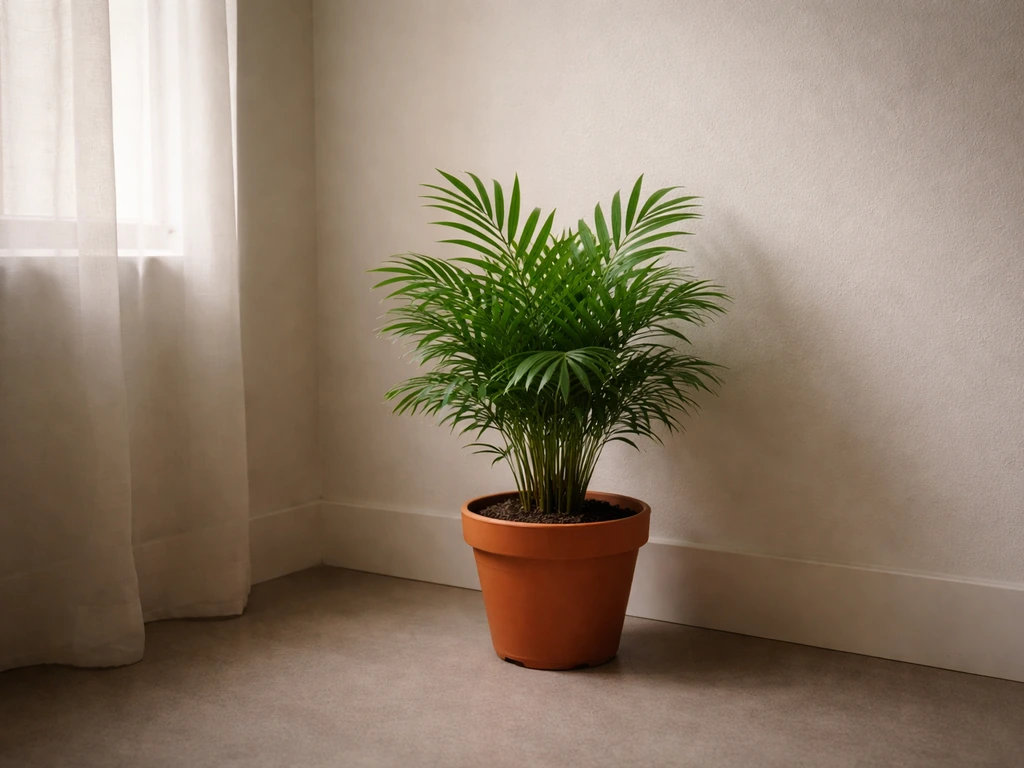
Yes, parlour palms (Chamaedorea elegans) can grow in low light, and they're genuinely one of the better houseplants for dim spaces. They won't thrive the way they would near a bright east-facing window, but they'll survive and stay presentable in rooms that would kill most other plants. The honest tradeoff is slower growth, slightly smaller and paler fronds, and a need to be more careful with watering. As long as you understand what to expect and make a few small care adjustments, a parlour palm is a reasonable choice for a north-facing room, an office with fluorescent overheads, or a spot a few metres back from your only window.
Can Parlour Palms Grow in Low Light? Simple Guide
Marcus Hartley
11 Jun 2026
What 'low light' actually means (and where parlour palms sit)
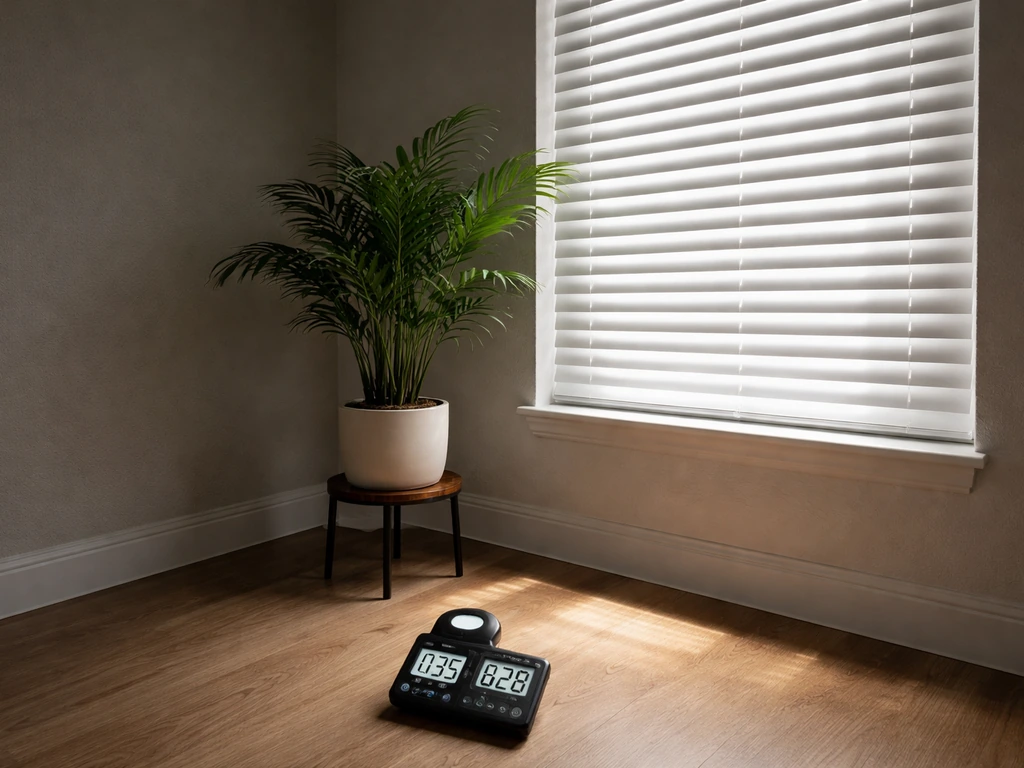
Low light is one of those terms that gets thrown around loosely, but it has a measurable meaning. Light intensity indoors is measured in foot-candles (FC) or lux. Low light is generally defined as 25 to 100 foot-candles, which is roughly what you'd find in a north-facing room, a spot several metres from any window, or a space lit primarily by artificial overhead lighting. To put that in context, a bright spot just inside a south-facing window on a sunny day can hit 1,000 FC or more. Low light is genuinely dim.
Parlour palms are listed under the 'low light (25 to 75 foot-candles)' category by horticultural extension services, which is unusually good tolerance for a palm. Their natural habitat on the forest floors of Mexico and Guatemala means they evolved under a dense canopy with filtered, broken light. That history is why they cope where other tropical plants give up. That said, their preference is still bright indirect light. Low light is where they survive, not where they shine.
What actually happens when a parlour palm grows in low light
Don't expect the same plant you'd get near a well-lit window. In lower light, photosynthesis slows down because there's less energy coming in. The palm responds by rationing resources, and you'll see that in a few predictable ways.
- Growth slows considerably. A palm that might push out a new frond every few weeks in bright indirect light might only manage one or two a season in low light.
- Fronds stay smaller and may appear lighter or slightly washed out as the plant produces less chlorophyll per leaf.
- Stems can become leggy or stretched as the plant reaches toward any available light source.
- The root system grows more slowly too, which means the palm stays in its pot longer without getting rootbound.
- Because growth is slower, the plant uses less water and fewer nutrients, so your whole care routine needs to shift.
None of this means the plant is failing. A slow-growing, stable parlour palm in a dim corner is doing exactly what it should be doing. The problems start when people don't adjust their care habits to match and end up overwatering or overfertilising a plant that has essentially gone into a low-energy mode.
How to figure out how much light your room actually has
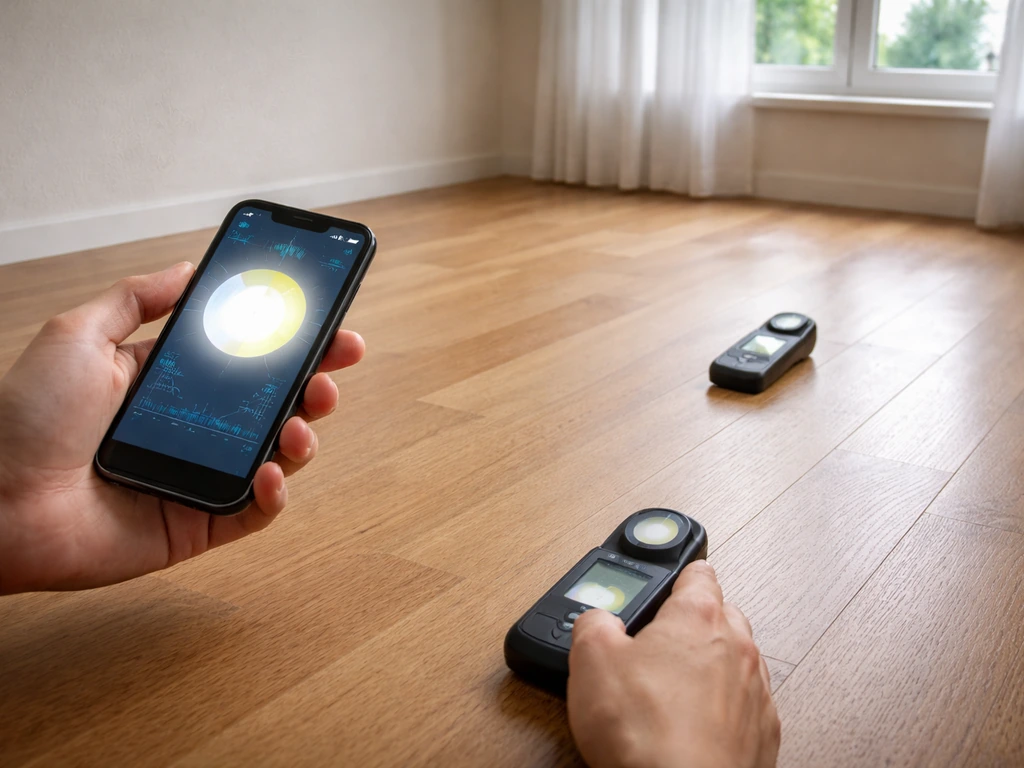
You can guess, or you can measure. A basic light meter app on your phone or an inexpensive physical lux meter will give you actual foot-candle or lux readings. Penn State Extension describes exactly this approach: take a reading in mid-morning at the spot where you plan to put the plant. If you're getting 25 to 75 foot-candles, you're in low light territory and your parlour palm will cope. Below 25 FC and you're in the range where almost nothing grows well without supplemental lighting.
If you don't have a meter, use these practical clues. A north-facing window with no obstructions outside gives low to medium-low light right at the glass and drops off quickly as you move into the room. An east or west window gives brighter indirect light for part of the day. A spot more than 2 to 3 metres from any window in a typical apartment is almost certainly under 50 FC. Rooms with no windows at all but with standard office fluorescent overheads typically sit around 25 to 50 FC at desk height.
The plant itself will also tell you over time. Stretched, thin stems reaching toward the light, sparse fronds, and a general leggy look are the classic signals that a parlour palm isn't getting enough. Yellowing lower leaves, especially combined with slow growth, can point the same direction. Brown crispy tips alone are more often a humidity or watering issue than a light one, so don't automatically assume low light when you see those.
Getting the most out of your spot without moving the plant
If you can't move the palm to a brighter location, there are a few habits that help it make the most of what light it has.
- Rotate the pot a quarter turn every one to two weeks so all sides of the plant get even exposure and you avoid one-sided leaning.
- Keep the leaves clean. Dust buildup on fronds blocks light absorption. Wipe them down gently with a damp cloth every few weeks.
- Position the palm as close to the window as practical. Even moving from 2 metres back to 1 metre from a north window can meaningfully increase foot-candles because light intensity follows an inverse square relationship with distance.
- Pull back sheer curtains or blinds during daylight hours if privacy allows. Anything between the glass and the plant reduces available light.
- Avoid placing the palm behind furniture that blocks the window line, even partially.
- If the room has multiple light sources (a window plus a skylight, for example), position the plant where it can benefit from both.
Window direction matters more than most people realise. North-facing windows give consistent but low indirect light all day. East-facing windows give gentler morning sun, which parlour palms handle well. West windows give stronger afternoon light that can be fine if the palm isn't right up against the glass. South-facing windows are often too bright right at the sill but create good bright indirect light a metre or two back into the room.
When to bring in a grow light (and how to set one up)
If your space genuinely sits under 25 foot-candles, or you want the palm to actually grow rather than just survive, a grow light is the practical solution. You don't need anything complicated or expensive.
LED vs fluorescent: which to choose
| Feature | LED Grow Light | Fluorescent (T5/T8) |
|---|---|---|
| Energy use | Low running costs | Moderate running costs |
| Heat output | Very low | Low to moderate |
| Light spectrum | Full spectrum or targeted red/blue bands | Broad spectrum, less targeted |
| Lifespan | 50,000+ hours typical | 10,000–20,000 hours typical |
| Cost upfront | Higher initial cost | Lower initial cost |
| Best for | Long-term setups, limited budget over time | Budget-friendly starting point |
For a parlour palm, either type works. A full-spectrum LED panel or a simple T5 fluorescent strip positioned above the plant is enough. The key variables are distance and duration, not the brand or wattage.
Distance and duration basics
Most houseplant grow lights perform well at 30 to 60 cm above the canopy for a low-light palm. Too close (under 20 cm for most LEDs) and you risk bleaching, yellowing at the top of the plant, or crispy leaf edges from light stress, even though it looks counterintuitive. Too far and you're back in the low-light problem. Start at around 45 cm and watch the plant for two weeks before adjusting.
Duration matters as much as intensity. Plants respond to photoperiod, which is simply the number of hours of light they receive in a 24-hour cycle. For a parlour palm under grow lights, 12 to 14 hours per day is a good starting point. Use a plug-in timer so you don't have to think about it. Don't run lights 24 hours continuously because plants need a dark period as part of normal metabolism.
Modern LED grow lights are designed around blue wavelengths (roughly 400 to 500 nm) for leaf and stem growth and red wavelengths (600 to 700 nm) for overall plant energy. A full-spectrum LED covers both and is the most straightforward choice for a foliage plant like this one.
Care adjustments that make a real difference in low light
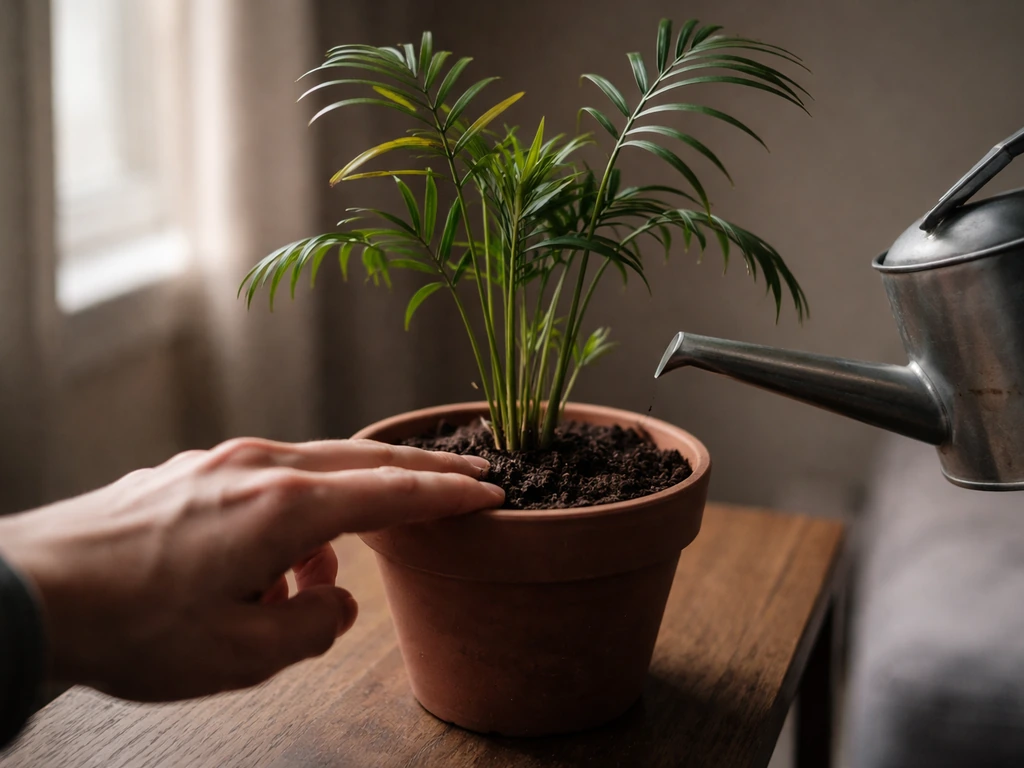
This is where a lot of well-meaning plant owners go wrong. They put the plant in a dim spot, keep watering on the same schedule they used in brighter conditions, and then wonder why the roots rot or the fronds turn yellow. Low light changes how the plant uses water and nutrients, so the care has to follow.
Watering
In lower light, a parlour palm grows more slowly and uses less water. The soil dries out more slowly too because there's less photosynthetic activity driving water uptake. Let the top 2 to 3 cm of soil dry out before watering again. In winter especially, when light levels drop further and temperatures may cool, you might find yourself watering only every 10 to 14 days rather than weekly. Always check the soil before watering rather than following a fixed schedule.
Soil and drainage
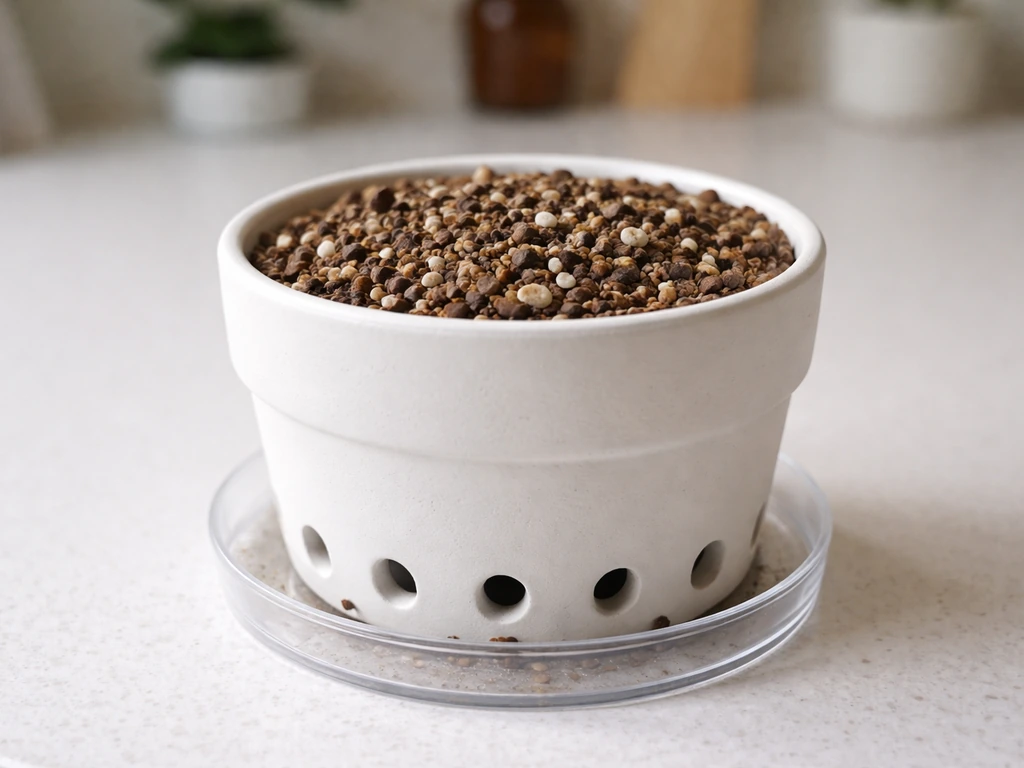
A well-draining mix is non-negotiable for a low-light parlour palm because the risk of overwatering and root rot goes up when drying time slows down. Use a peat-free, well-draining compost with added perlite or horticultural sand mixed in at roughly 20 to 30 percent by volume. Make sure the pot has drainage holes. Repot every 2 to 3 years or when the plant becomes visibly rootbound, going up only one pot size at a time.
Fertiliser
Feed lightly and infrequently in low light. A slow-growing palm in a dim spot simply doesn't need much nutrition, and fertilising heavily when growth is minimal leads to salt buildup in the soil, which causes brown leaf tips. A half-strength balanced liquid fertiliser once a month during spring and summer is plenty. Don't fertilise at all in autumn and winter when growth effectively stalls.
Troubleshooting low-light problems and knowing when to act
Yellowing leaves
Yellow leaves in low light usually point to overwatering rather than light deficiency on its own. Check the soil moisture and the roots. If the soil is staying wet for more than 10 days and the roots look brown and mushy rather than white and firm, ease off on watering and consider repotting into fresh, well-draining mix. If the soil is fine and the yellowing is widespread and accompanied by stretchy, thin growth, low light is likely the combined culprit.
Brown crispy tips

Crispy brown tips are almost always a humidity or watering issue, not a light problem. Indoor air, especially in winter with central heating running, gets very dry. Parlour palms prefer moderate to high humidity. Misting occasionally, grouping plants together, or placing the pot on a tray of pebbles with water in it all help. Inconsistent watering (going from bone dry to soaking wet) is the other common cause.
Leggy, stretched growth
Long, thin stems with sparse fronds that reach visibly toward the light source are a clear signal your palm wants more. This is the most direct low-light symptom. Move it closer to a window, add a grow light, or accept that the current spot isn't workable for this plant. You can trim leggy stems, but they won't thicken up if the light problem isn't addressed.
Pests
Stressed plants in low light are more vulnerable to pests. Spider mites in particular love dry, warm indoor air and often target palms. Mealybugs and scale are also common. If you spot fine webbing, sticky residue, or small cottony masses, act quickly: isolate the plant, wipe affected areas with an alcohol swab, then treat with insecticidal soap spray repeated every 5 to 7 days for a few weeks. Catching infestations early is much easier than dealing with a severe one.
When to accept the spot isn't working
If the palm is steadily declining over several months despite your best care adjustments, dropping fronds, producing no new growth at all, and looking generally worse each week, the location is likely the root cause. Some spaces are genuinely below the threshold where any plant does well without artificial light. At that point, either commit to a proper grow light setup or consider moving the palm to a better spot and replacing it in the dark corner with something even more shade-tolerant, like a cast-iron plant or a ZZ plant. Parlour palms are forgiving, but they're not magic.
If you're comparing your options for other plants in similarly dim spots, it's worth knowing that some popular choices handle low light differently. Hoyas, for example, will tolerate shade but really sulk without brighter indirect light, similar to parlour palms. Pileas and wandering inch plants tend to be a bit more flexible and faster-growing even in modest light.
Pileas in particular can still manage in low light, but they grow more slowly and may stretch if the light is very dim can pilea grow in low light. String of pearls and string of hearts both need considerably more light than a parlour palm to stay healthy, so they're poor substitutes for a truly dark corner. Parlour palms sit toward the more tolerant end of the spectrum for foliage plants you'd actually want to look at.
Bird of paradise is much less likely to thrive in low light, so it usually needs brighter conditions or a grow light to stay healthy Parlour palms.
FAQ
How do I tell the difference between low light stress and overwatering on a parlour palm?
Low light usually causes new growth to slow, fronds to look sparser, and growth to become leggy over time. Overwatering more often shows persistent yellowing combined with soil that stays damp, or roots that feel mushy and look brown when you check. If the soil is wet for many days, treat it as watering first, not light.
Can I use a phone light meter app instead of a lux or foot-candle meter?
Often you can, but phone apps can be inconsistent because they measure light in a way that depends on the phone sensor and camera settings. Use a “relative” approach, compare spots in the same room, and treat any numbers as approximate. If you can, confirm with a basic lux or foot-candle meter once so you know your app’s bias.
Should I rotate my parlour palm in low light?
Yes, rotate it every 2 to 4 weeks so all sides get similar light exposure. In dim corners, one side can starve and the plant may lean, leading to more leggy growth. Rotation does not replace brighter light, but it improves shape.
Will a grow light make the palm grow faster in low light, or only keep it alive?
It can do both, but only if you provide enough distance and daily duration. The biggest upgrades are getting the light close enough to raise intensity and running it long enough (commonly 12 to 14 hours daily). If growth still stalls after a couple of weeks, increase light time first, then adjust distance slightly.
What grow-light distance should I start with to avoid leaf bleaching?
Start around 45 cm above the canopy, then adjust based on the plant response. If the top fronds yellow or edges crisp, move the light farther or reduce duration. If the plant looks unchanged after about two weeks, move slightly closer in small steps.
Can I run the grow light at the same time as my room lights, or does it need a separate schedule?
A separate timer is helpful because you want a consistent light-dark cycle. Even if the room is lit during part of the day, use a timer so the palm gets its intended photoperiod and an actual dark period for metabolism and rest.
How do I water a parlour palm in low light if I don’t know how quickly it dries?
Use the soil check method: water only when the top 2 to 3 cm are dry. In winter or very dim rooms, that can mean longer gaps, sometimes 10 to 14 days. Never rely on a calendar schedule, because drying speed changes with temperature, pot size, and airflow.
Does pot size matter more in low light?
Yes. A pot that is too large holds water longer and increases root-rot risk when the palm uses less water. If repotting, choose only one pot size up and ensure excellent drainage, so the soil dries at a pace the roots can handle.
Why are my leaf tips browning and do I need more light?
Browning tips are usually from low humidity or watering irregularity, not from low light alone. First check whether watering was inconsistent (dry then soaked) and whether indoor air is dry, especially in winter. Correct humidity and watering rhythm before increasing light intensity.
Is it normal for a low-light parlour palm to drop older leaves?
Occasional shedding of older fronds can happen, especially if the plant is acclimating to a new dim location. What is not normal is continuous decline over months with no new fronds and a general worsening look. If it keeps dropping, reassess light and root health.
When should I repot a parlour palm in a dim room?
Repot when it becomes visibly rootbound, typically every 2 to 3 years, or sooner if you find persistently wet soil or signs of root rot. In low light, don’t “wait it out” if roots are failing, because the plant cannot dry the medium quickly.
Can pests get worse in low light, and what’s the best first step?
Yes. Spider mites, mealybugs, and scale can spread more easily on stressed palms. The fastest first step is isolation and a physical wipe of affected areas, then treatment repeated on a schedule (often every 5 to 7 days for several weeks) so you catch newly hatched pests.
What if my room is below 25 foot-candles, will a grow light always solve it?
A grow light can solve it, but only if it truly increases intensity at the leaf level. If the light is too far or used too few hours, the palm may still only survive. After two weeks, look for changes in new frond production and reduced legginess, then fine-tune distance or duration.
Are parlour palms a good choice for an office with fluorescent lights?
They can be, especially when the desk is not extremely far from windows and the fluorescent lighting runs for a predictable part of the day. Still, fluorescence can be weak compared with daylight, so monitor the palm’s growth and adjust with rotation or a small grow-light boost if it becomes leggy or stalls.