
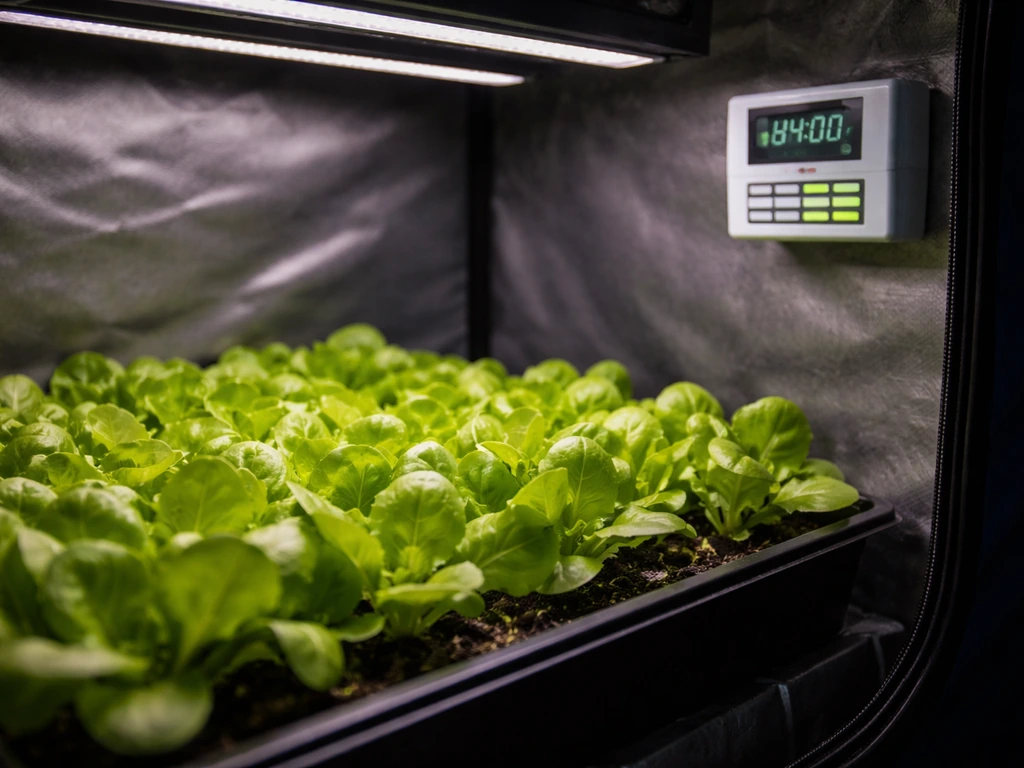
Yes, lettuce can grow under 24-hour light, and in controlled studies it has actually produced 30 to 50 percent more weight than plants on a 16-hour schedule. But "can it" and "should you" are two different questions. Running your grow light around the clock works best at moderate intensity, and without a few guardrails you risk bolting, tipburn, and stressed-out plants that taste bitter and look rough. The short version: start with an 18/6 schedule (18 hours on, 6 hours off), and only push toward 24/0 if you're keeping PPFD in the 170 to 200 range and managing heat carefully.
Can Lettuce Grow Under 24 Hour Light? Real Indoor Setup Guide
Marcus Hartley
2 Jun 2026
Why photoperiod matters for lettuce
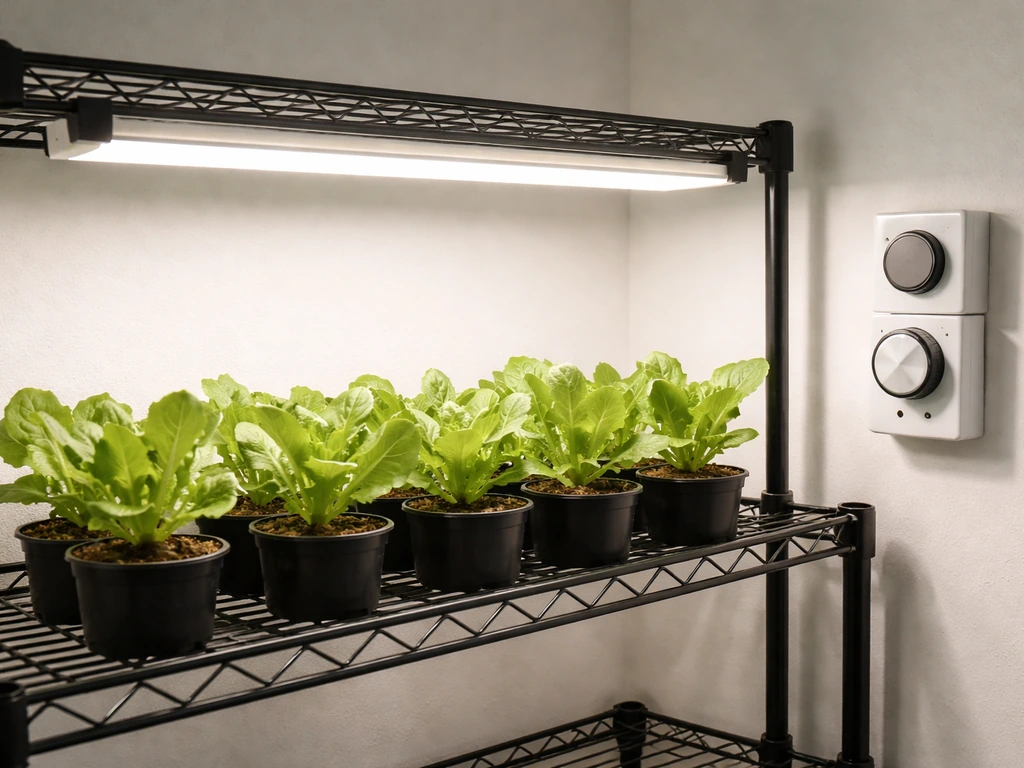
Lettuce is technically a long-day plant, meaning it reads increasing day length as a signal to shift from making leaves to making flowers (bolting). That's the thing you absolutely want to avoid if you're growing for a salad. Under normal outdoor conditions, bolting is triggered by a combination of long days, warm temperatures, and prolonged heat. Indoors under artificial light, you control all of those variables, which is why 24-hour lighting is even a viable conversation.
What makes this more nuanced is that lettuce has an internal clock, a circadian rhythm that runs on roughly a 27-hour cycle in many cultivated varieties. Under constant light, that clock doesn't just stop; research tracking the lettuce transcriptome under continuous light shows the circadian oscillation keeps running even without a light/dark cue. That matters because your plant is still trying to gate certain biological processes (like starch breakdown and cell expansion) to specific times of day. When the light never goes off, those processes can get out of sync, which can blunt some of the growth benefits you'd expect from more total light. If you are wondering whether the same approach works for flowering plants, the question becomes can flowers grow with artificial light.
The practical takeaway: lettuce tolerates continuous light better than most plants, but it's not indifferent to it. Varieties bred for indoor growing often have circadian periods closer to 24 hours, and research shows that matching your light cycle to the plant's internal clock can increase yield by nearly 30 percent compared to a mismatched cycle. So variety choice genuinely matters here.
What to expect when you run lettuce under constant light
The growth upside
The research on this is actually encouraging. In one NASA-era experiment on loose-leaf cultivars, extending the photoperiod from 16 to 24 hours doubled total yield. A more recent plant-factory study found that continuous light at a daily light integral (DLI) of about 17 mol per square meter per day produced heavier lettuce than an 18-hour schedule at roughly the same DLI. The mechanism isn't just "more hours equals more photosynthesis." It's partly that continuous light allows the canopy to intercept light more efficiently across the whole day, especially in vertical farm-style setups where light distribution matters.
The risks: bolting, tipburn, and stress
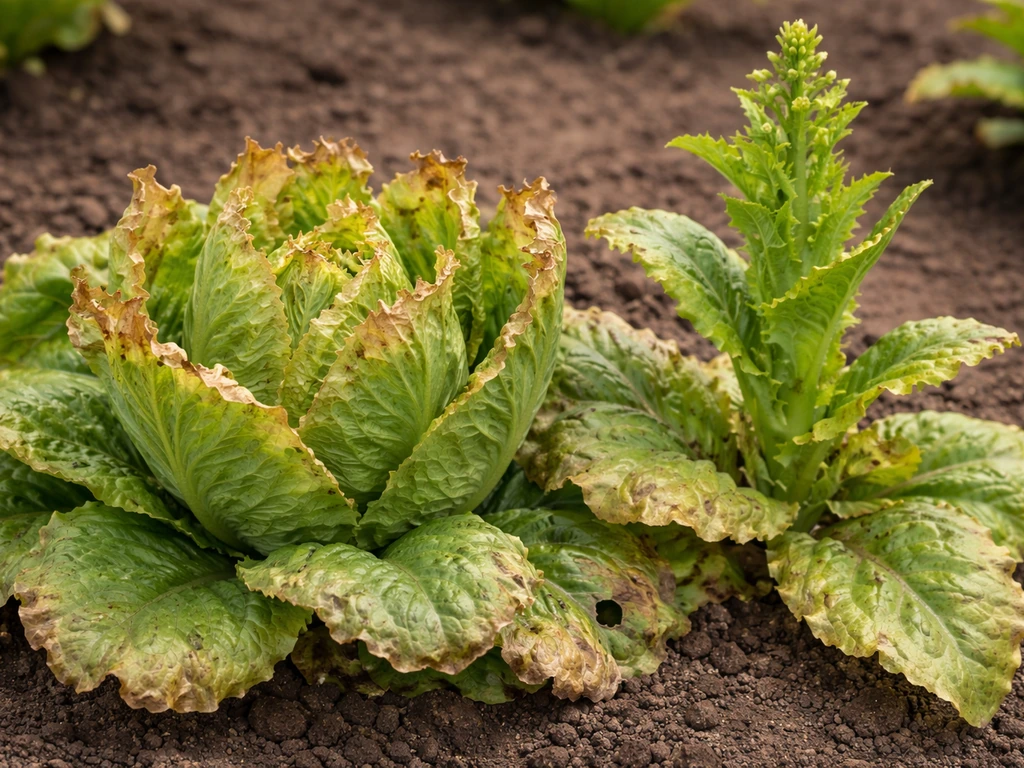
Here's where it gets honest. Running at 24/0 with high-intensity light significantly increases bolting risk for varieties that are already sensitive to long photoperiods. Once bolting starts, it cannot be reversed; the plant has committed to flowering and leaf quality drops fast. You'll see the central stem elongate, leaves get bitter, and eventually flowers form. At that point, pull the plant and start over. The key distinction is that bolting under indoor continuous light is more often triggered by heat and total light stress than by the photoperiod signal alone, which is why temperature management matters as much as the lighting schedule.
Tipburn is the other risk to watch for. It shows up as brown, papery edges on inner leaves and is caused by calcium not reaching fast-growing tissue quickly enough, usually because transpiration slows down in rapidly expanding cells. Under continuous high-intensity light, growth can accelerate fast enough to outpace calcium delivery, especially in crisphead varieties. Keeping airflow up and avoiding extreme temperature swings reduces tipburn risk considerably.
The setup variables that actually determine your results
The difference between 24-hour light working well and wrecking your lettuce mostly comes down to four things: intensity (PPFD), daily light integral (DLI), spectrum, and heat. A lettuce study on red and blue LED light dynamics over extended photoperiods reports measurable differences in fresh weight and leaf area under specific 16-hour combinations versus control conditions, underscoring that spectrum balance matters under prolonged or continuous regimes. Getting these right matters far more than whether you choose 24/0 versus 18/6.
| Variable | Recommended Range for 24/0 | Why It Matters |
|---|---|---|
| PPFD | 150–200 µmol·m⁻²·s⁻¹ | High PPFD (above 250) with no dark period increases heat stress and bolting risk |
| Daily Light Integral (DLI) | 14–17 mol·m⁻²·d⁻¹ | Keeping DLI in this range preserves quality even under continuous light |
| Spectrum | Red + blue with optional far-red supplement | Far-red improves canopy light interception; blue reduces leggy growth |
| Light distance | 12–18 inches for most LED panels | Too close increases heat and light intensity beyond safe range |
| Temperature | 65–72°F (18–22°C) | Heat accelerates bolting; critical under continuous light |
| Airflow | Consistent gentle air movement | Reduces tipburn by supporting transpiration and calcium delivery |
Notice that the PPFD recommendation for 24-hour operation is lower than what you'd use for a 16-hour schedule. In the low-PPFD continuous light study, 170 µmol·m⁻²·s⁻¹ over 24 hours matched the growth outcomes of 250 µmol·m⁻²·s⁻¹ over 16 hours, because the total DLI was equivalent (about 14.4 mol·m⁻²·d⁻¹ in both cases). If you run your light at full blast for 24 hours, you're not just adding stress; you're also wasting electricity.
On spectrum: a red-and-blue LED is the practical baseline for most home setups. Adding supplemental far-red light has been shown to increase canopy height and improve light interception, but the effect is cultivar-specific. In a controlled study using “Green Salad Bowl” lettuce, supplemental far-red light promoted lettuce growth and morphology and improved light interception supplemental far-red light has been shown to increase canopy height and improve light interception. If you're running a basic grow light without far-red, don't stress about it. It's a refinement, not a requirement.
Troubleshooting signs your lettuce is struggling under continuous light
Lettuce will tell you when something is off. Here's what to look for and what it usually means:
- Central stem elongating rapidly, leaves spacing out along it: bolting in progress. Check temperature first (above 75°F is a major trigger), then consider shortening the photoperiod immediately.
- Inner leaves developing brown, papery edges: tipburn from calcium deficiency caused by low transpiration. Increase airflow with a small fan and check that roots aren't waterlogged.
- Pale, washed-out leaf color with stunted growth: light intensity may be too low for the DLI you need, or the light is too far away. Move it closer in 2-inch increments and reassess.
- Bleached or white patches on leaves closest to the light: light intensity too high or distance too close. Raise the light or dim it if your fixture allows.
- Leggy, stretched seedlings reaching toward the light: not enough intensity, or spectrum is missing sufficient blue light. Check PPFD at plant level and verify your light has adequate blue output.
- Bitter taste even before visible bolting: often an early stress sign. Check temperature, reduce photoperiod to 18/6, and ensure DLI isn't above 17–18 mol·m⁻²·d⁻¹.
- Leaves curling upward at edges: heat stress, often from the light being too close. Check canopy temperature with a thermometer and raise the light if it's above 75°F at leaf level.
The lighting schedule that actually works, and how to dial it in
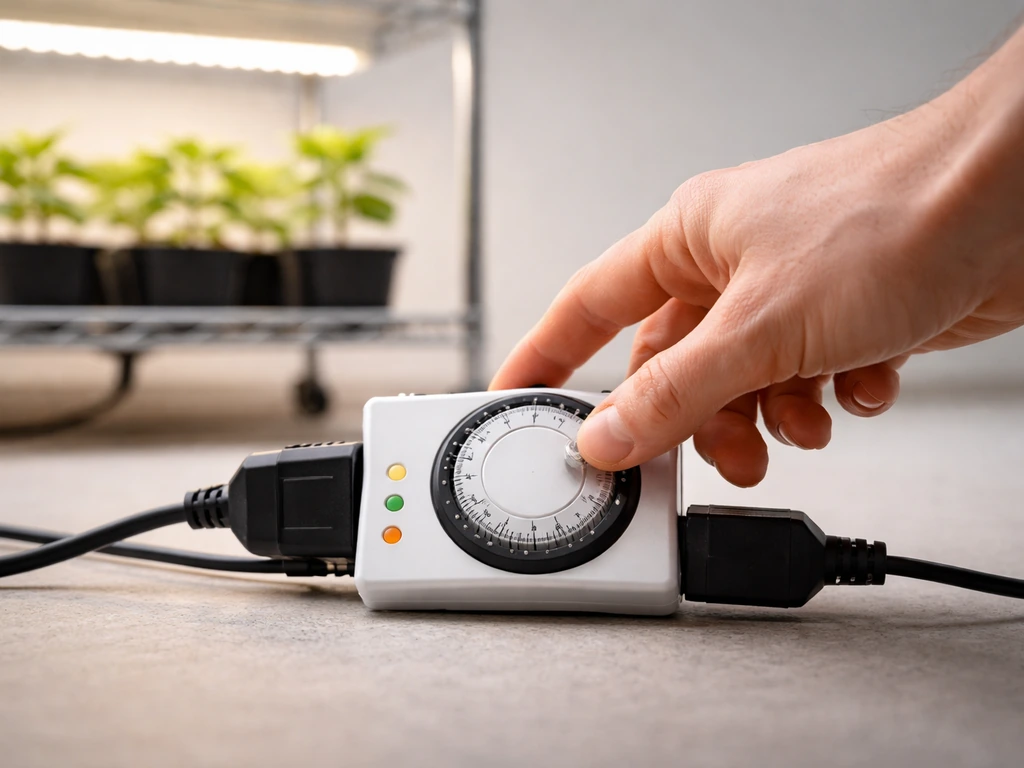
My honest recommendation for most home indoor growers: start at 18 hours on, 6 hours off. It's not a compromise; it's well within the range where lettuce grows vigorously, and the 6-hour dark period gives your plant's circadian processes enough of a cue to stay organized. If you want to push toward 24/0, do it gradually and reduce intensity first.
Suggested schedule progression
- Start with 18 hours on / 6 hours off at 200–220 µmol·m⁻²·s⁻¹ PPFD. This hits a DLI of about 13–14 mol·m⁻²·d⁻¹, which is solidly in the productive range.
- After one to two weeks, if plants look healthy (no tipburn, no bolting, good leaf color), you can extend to 20/4 while keeping PPFD the same or slightly lower.
- If you want to test 24/0, reduce PPFD to 160–180 µmol·m⁻²·s⁻¹ so DLI stays around 14–15 mol·m⁻²·d⁻¹. Monitor daily for bolting and tipburn.
- If stress signs appear within a week at 24/0, drop back to 18/6 immediately. Don't try to nurse bolting plants back; harvest what you can and replant.
Transitioning back from 24/0
If you've been running 24/0 and notice early stress signs, the best move is a step-down rather than an abrupt change. Go from 24/0 to 20/4 for three to five days, then to 18/6. Abrupt changes in photoperiod can cause their own stress response, especially in plants that are already struggling. Think of it like gradually adjusting a sleep schedule rather than flipping a switch.
A note on variety selection
Loose-leaf varieties like Black Seeded Simpson, Oak Leaf, and Salanova types tend to handle continuous light better than crisphead or romaine types. Breeding for indoor and vertical farm production has also produced varieties with circadian periods closer to 24 hours, which perform measurably better under continuous or near-continuous light than older outdoor-adapted cultivars. If you're running 20 to 24 hours consistently, it's worth seeking out varieties specifically labeled for indoor or year-round growing.
Your action plan for growing healthy lettuce indoors right now
Here's exactly what to do today if you're setting up or adjusting a lettuce grow light:
- Set your timer to 18 hours on / 6 hours off. This is your baseline. Don't start at 24/0 unless you already have a calibrated setup with consistent results.
- Position your LED grow light 12 to 18 inches above the canopy. If you have a PPFD meter or app, aim for 180 to 220 µmol·m⁻²·s⁻¹ at leaf level. If you don't have a meter, 14 to 16 inches from a standard mid-range LED panel is a reasonable starting point.
- Check canopy temperature with a basic thermometer. If it reads above 75°F at leaf level, raise the light or improve room ventilation before adjusting the schedule.
- Add a small fan pointed near (not directly at) the plants to keep air circulating. This alone can significantly reduce tipburn.
- Observe daily for the first two weeks. Look for the stress signs listed above. Take photos every few days so changes are easier to spot.
- If everything looks good after two weeks, you can test extending to 20/4 while dropping PPFD slightly. Give it another week before considering 24/0.
- Choose a loose-leaf variety for your first run if you haven't planted yet. It will forgive more mistakes than a crisphead or romaine variety under extended photoperiod conditions.
One more thing worth knowing: the gains from 24-hour light in research studies often happen because total daily light delivery (DLI) is higher, not just because the light never turns off. If you're trying to grow faster, sometimes the smarter move is increasing intensity slightly during an 18-hour window rather than stretching to 24 hours. It's less stressful for the plant and easier to manage. Continuous light is a real tool for indoor lettuce, but it works best as a deliberate, calibrated choice rather than just leaving the light on and hoping for the best. The same logic applies any time you're experimenting with constant light for plants in general, and it's worth keeping in mind if you ever branch out to other leafy greens or herbs in your setup. If you are wondering whether plants can grow in tube light, the key idea is similar: you still need enough intensity and daily light, not just a longer photoperiod. If you're using fluorescent bulbs, check which plants that can grow in fluorescent light so you can match light type to the species you're growing. If you're wondering whether can plants grow in constant light, lettuce is a good example, but other plants may need a light-dark cycle to avoid stress and poor growth.
FAQ
If I run 24 hours of light, do I still need a thermostat and separate heat management?
Yes. Continuous light often raises leaf temperature even if the room thermostat is stable. Use a small fan and consider measuring leaf or canopy temperature, not just ambient air, because bolting and tipburn risks rise quickly when the canopy gets warm for long stretches.
How do I know whether my 24-hour setup is too intense if I do not know PPFD or DLI?
Use a simple proxy first: compare growth rate and leaf edge quality to your usual 16 to 18 hour setup, then dial down intensity if you see faster wilting, papery brown edges, or bitter-tasting leaves. For a real decision, borrow or rent a PPFD meter, because “more hours” can be harmless only if daily light delivery stays in range.
Will lettuce actually need the dark period for better flavor, even if it grows fine under 24/0?
Often yes. Some growers report better texture and less bitterness when a dark window is included, even if yield is similar, because gating of starch breakdown and other circadian processes can get out of sync under constant light. If you care about taste, treat 18/6 as the default and only test 24/0 on small batches.
What should I do if my lettuce starts bolting while on 24/0, can I reverse it?
Usually no. Once the stem elongation and flowering signals start, leaf quality declines fast and the commitment cannot be undone by changing the schedule. Remove and replant, then adjust your next cycle by reducing intensity first, then moving toward a shorter photoperiod.
Does continuous light affect all lettuce types the same way?
No. Loose-leaf types generally tolerate constant light better than crisphead or romaine, which are more prone to tipburn when growth accelerates faster than calcium delivery. If you must run near 24 hours, start with loose-leaf cultivars and keep airflow strong.
How does airflow change tipburn risk under 24-hour light?
Airflow reduces the chance that transpiration stalls in rapidly expanding tissue. Aim for consistent gentle movement across the canopy and avoid hot, stagnant pockets, because tipburn is tied to calcium transport limitations that worsen when leaves are too humid or too warm.
Can I just turn my light on 24/0 and lower the schedule later if problems show up?
Avoid abrupt changes. If you need to correct course, step down gradually (for example, 24/0 to 20/4 for several days, then to 18/6), because sudden photoperiod shifts can trigger their own stress response, especially in plants already struggling.
Do I need to change spectrum if I go from 18/6 to 24/0?
Not necessarily. A red-and-blue LED baseline is usually sufficient. Far-red can affect canopy architecture and is cultivar dependent, so if you are troubleshooting continuous light issues, stabilize intensity, DLI, and heat first before adding spectrum changes.
Is increasing intensity during an 18-hour window a safer way to boost growth than going to 24/0?
Often yes. If your goal is faster harvest, raising intensity slightly in an 18-hour photoperiod can improve daily light delivery with less continuous heat and less circadian disruption. Use 24/0 mainly as a deliberate, calibrated choice, not the default.