
Yes, sansevieria can survive in low light, and it will even grow in those conditions, just very slowly. Can syngonium grow in low light? Yes, can air plants grow in low light, but they still need bright indirect light to stay healthy. It can tolerate lower light than many plants, but it grows much more slowly and usually needs brighter indirect light to stay healthy snake plant.
Can Sansevieria Grow in Low Light? Care Guide for Success
Marcus Hartley
27 May 2026
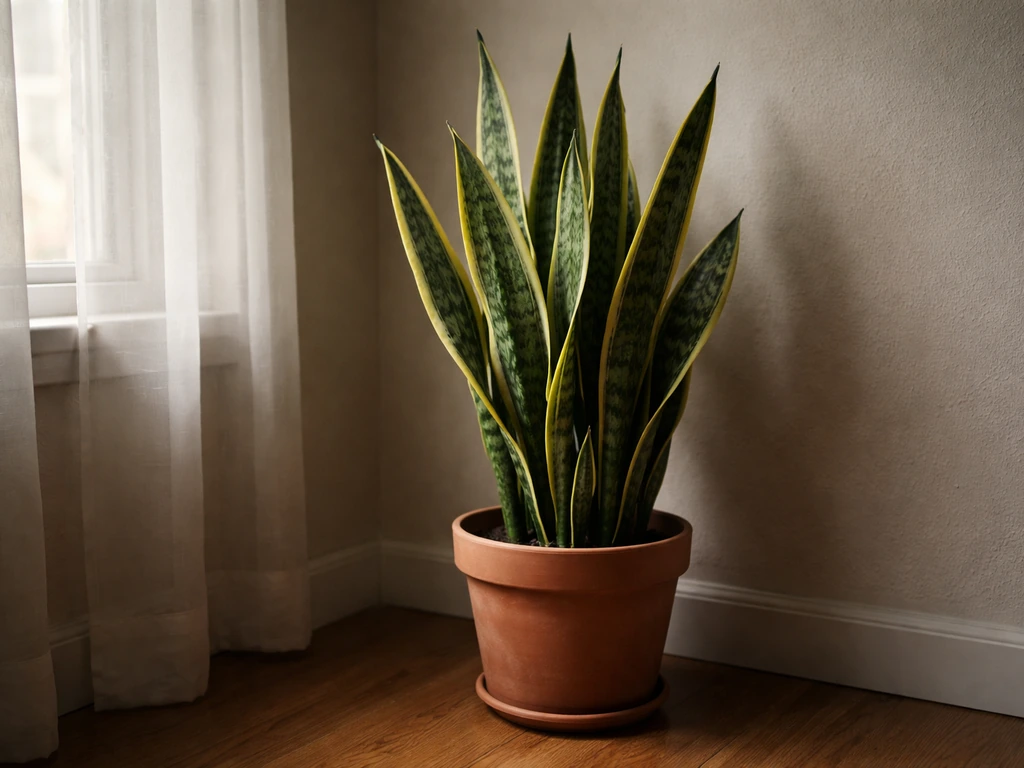
If you're putting one in a dim corner, a north-facing room, or a windowless office, it won't die on you the way most plants would. But there's a real difference between a snake plant that's growing and one that's just hanging on, and understanding that gap will help you set realistic expectations and make smarter choices about placement, watering, and whether to add a grow light.
A related question is whether a can swiss cheese plant grow in low light, and the answer depends heavily on its variety and your watering habits.
Quick answer: sansevieria in low light
Snake plants are one of the most low-light-tolerant houseplants you can own. University of Maryland Extension and Penn State Extension both list sansevieria as able to tolerate as little as 25 foot-candles, which is roughly the light level in a dim hallway or the far corner of a room with one small window. At that level, the plant won't push out new leaves quickly, but it won't collapse either.
For comparison, a spot 3 to 10 feet from a south-facing window gives you somewhere between moderate and low light depending on obstructions, which is actually a sweet spot for steady (if slow) snake plant growth. So the short version: yes, it works in low light, but tweak your care routine or you'll run into rot problems.
How sansevieria uses light (growth vs survival)
Plants use light in the 400–700 nm wavelength range (called PAR, or photosynthetically active radiation) to drive photosynthesis. That's how they convert light energy into sugars that fuel growth. Sansevieria is a CAM plant, meaning it opens its stomata at night to reduce water loss, which is part of why it can handle low-light and dry conditions better than most. But even CAM plants still need light to photosynthesize, they're just more efficient about it.
At 25–100 foot-candles (the low-light range), your snake plant has just enough light to stay alive and occasionally push a new leaf. It's not thriving; it's maintaining. Think of it like eating just enough calories to function but not enough to build muscle. The plant will look fine for months, maybe longer, but new growth will be rare, and leaves may grow slightly thinner or reach toward whatever light source is closest. That stretching, sometimes called getting leggy, is the plant's phototropic response to inadequate light. If you want active growth with new pups and upright, thick leaves, you need to move it closer to a window or supplement with artificial light.
Best low-light conditions (distance, window direction, lighting duration)
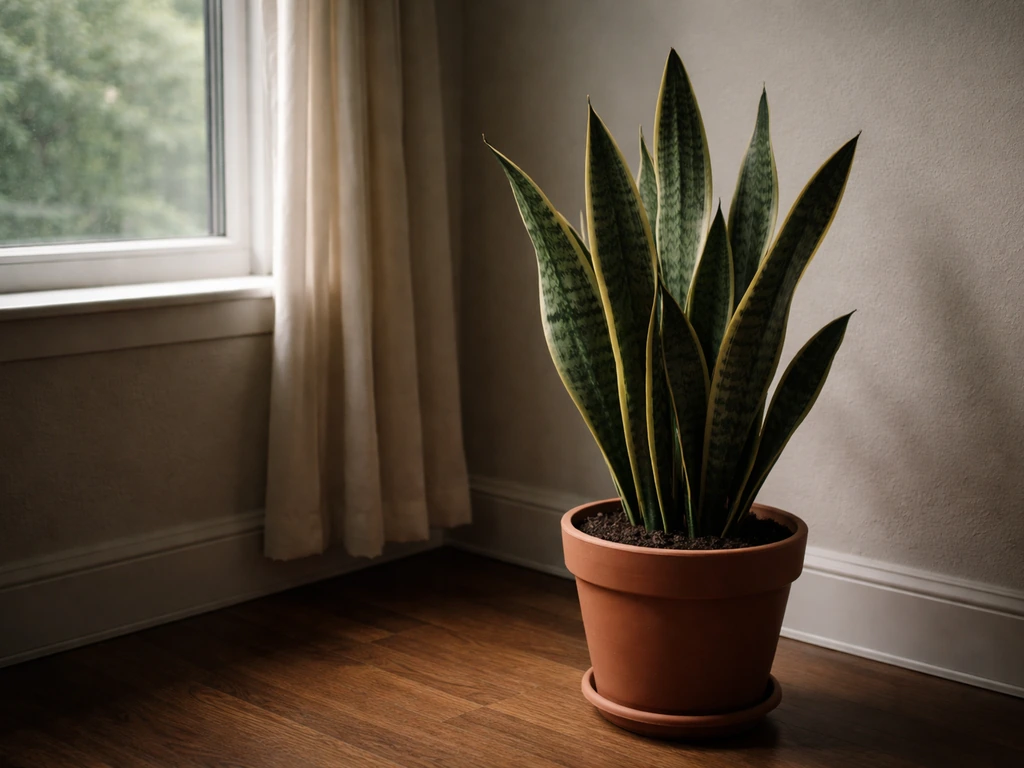
Not all "low light" spots are equal. Here's what actually matters when placing a snake plant in a dim room:
- North-facing windows: These give consistent but gentle indirect light all day. A snake plant within 3–5 feet of a north window is in a decent low-light range and will do better than in a fully interior spot with no window at all.
- East-facing windows: Morning sun is soft and indirect, which snake plants handle well. Placing one directly at or within a couple of feet of an east window can actually push it into moderate light territory, which means faster growth.
- South or west windows (set back): Full sun right at a south or west window can scorch the leaves. Keep the plant 4–6 feet back, or use a sheer curtain, and you'll be in a comfortable bright-indirect to moderate-light range. Avoid moving a snake plant from very dim conditions directly to bright sun; give it a few weeks to adjust or you risk leaf damage.
- Foot-candle targets: For survival, 25–50 fc is enough. For slow but real growth, aim for 50–100 fc. If you don't have a light meter, an easy workaround is to hold your hand about a foot above a white piece of paper in the middle of the day. A faint shadow means you're probably around 25–50 fc. A clear shadow means you're likely above 100 fc.
- Duration: Light duration matters almost as much as intensity. Aim for at least 8–12 hours of ambient light exposure daily. In a room that gets natural light for only 4–5 hours, growth will be minimal even if that light is decent quality.
Common low-light problems and how to fix them
Most snake plant failures in low-light rooms come down to a small set of predictable problems. Knowing what to look for means you can fix things before they get serious.
| Problem | What it looks like | Fix |
|---|---|---|
| Root rot from overwatering | Mushy base, yellowing leaves that feel soft, soggy soil that never dries out | Cut watering frequency significantly (see section below), check drainage, repot into fresh gritty mix if roots are already rotting |
| Leggy or stretching growth | New leaves growing taller and thinner than older ones, plant leaning toward light source | Move closer to a window or add a grow light; this won't reverse existing leaves but stops further stretch |
| Browning leaf tips | Dry, crispy brown tips on otherwise healthy-looking leaves | Usually caused by inconsistent watering or low humidity, not low light itself; water more evenly and consider misting occasionally |
| No new growth for months | Plant looks alive but completely static, no pups or new leaves emerging | Normal in very low light, but if it goes past 6 months with zero change, move it to better light or add supplemental lighting |
| Pale or washed-out color | Leaves losing contrast, dark green bands fading | Often a sign of insufficient light; more light will restore color over several months |
Watering and soil adjustments for dim light
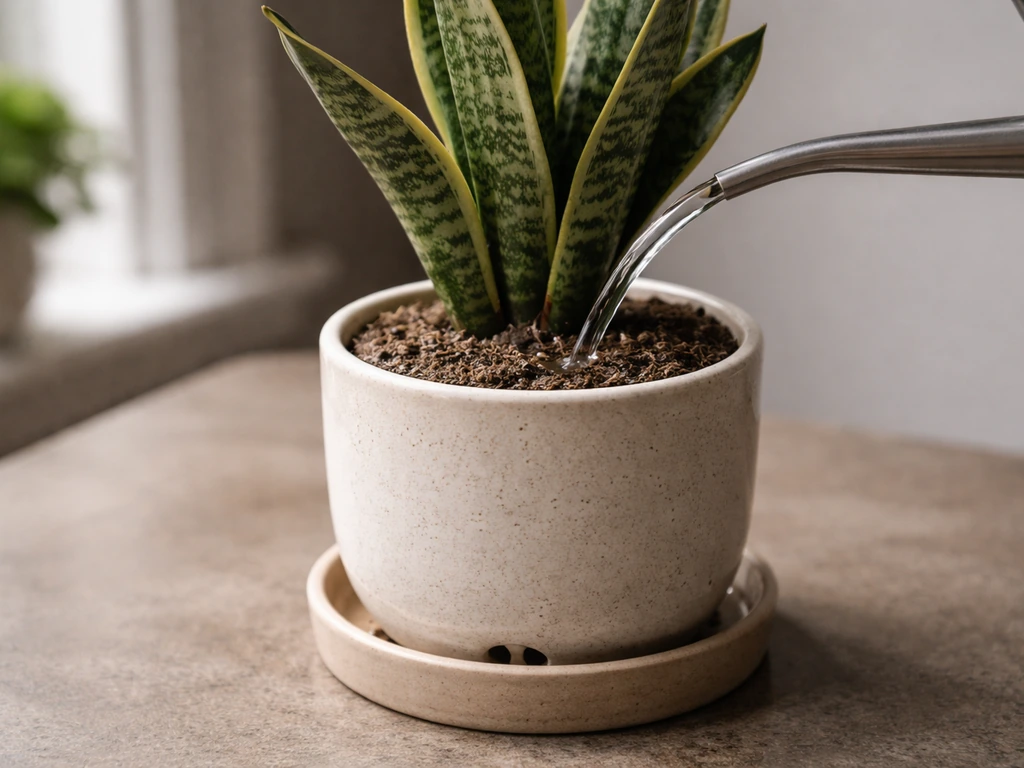
This is the part most people get wrong, and it's where snake plants die. In low light, the plant's metabolic rate drops. It photosynthesizes less, transpires less, and uses far less water than it would in a bright spot. That means the soil stays wet longer, and wet soil around sansevieria roots is the fastest route to rot. Clemson Extension is blunt about this: overwatering is the primary cause of death for potted plants, and snake plant is specifically prone to rotting when kept too wet.
In a bright spot you might water a snake plant every 10–14 days in summer. In a low-light room, that same plant might only need water every 3–4 weeks, or even less in winter. The rule I use: stick your finger 2 inches into the soil. If there's any moisture at all, wait. The soil should feel completely dry, not just surface-dry, before you water again. In very dim conditions, that might mean you're only watering once a month.
For soil, a fast-draining mix matters more in low light than it does in bright conditions. A cactus or succulent mix, or a standard potting mix cut with perlite (roughly 50/50), will drain much faster and forgive a slightly heavier watering hand. Make sure the pot has drainage holes. Nursery plastic pots with holes are actually better than decorative ceramic pots without them. And when you water, water thoroughly until it runs out the bottom, then let it drain completely before returning the pot to its saucer.
When to use grow lights and how to set them up
If you're in a truly windowless room, a basement apartment, or a north-facing space that gets almost no natural light in winter, a grow light changes everything. You don't need anything expensive or complicated. A simple LED grow light placed a foot or two above the plant for 12–14 hours a day will give a snake plant more light than most dim windows deliver. A monstera can also survive and grow under artificial light, especially with the right intensity and schedule can monstera grow in artificial light.
When choosing a grow light, look for a full-spectrum LED that covers the 400–700 nm PAR range. Many budget grow lights emit red and blue wavelengths specifically (which is why they glow pink or purple), and those work fine for sansevieria. Just keep in mind that lumens, the brightness measurement on regular light bulbs, aren't a reliable guide to plant-usable light output. Focus on PPF (photosynthetic photon flux) ratings if the packaging lists them, or just go with a reputable LED grow light designed for houseplants rather than repurposing standard white LED bulbs.
For sizing, Oklahoma State University Extension suggests roughly 16 watts of LED power per square foot for low-light plants. A snake plant in a 6-inch pot takes up less than a square foot, so a 15–25 watt LED grow bulb in a clip-on or gooseneck fixture placed 6–12 inches above the foliage is more than enough. If you're lighting a larger display or a shelf with several plants, scale up accordingly.
- Choose a full-spectrum LED grow light (400–700 nm PAR range) rated for houseplants.
- Position the light 6–12 inches above the top of the plant for low-light-tolerant species like sansevieria.
- Run it for 12–14 hours per day, ideally on a timer so you don't have to think about it.
- Give the plant a week or two to adjust if it's been in very dim conditions before increasing light exposure.
- Reassess watering once you add the grow light; more light means faster drying soil, so you may need to water a bit more often than in a naturally dim spot.
It's worth mentioning that sansevieria is far more forgiving about low light than many popular tropical houseplants. If you're also considering plants like monsteras or syngoniums for a dim space, know that those species generally need more light to stay healthy than a snake plant does. For a purely low-light setup, sansevieria is one of your best bets, and adding even a modest grow light on a timer can push it from survival mode into genuinely thriving. Yes, can monstera grow in artificial light, and the same grow-light basics like consistent timing and enough brightness can help it perform well indoors.
FAQ
How do I tell if my sansevieria is surviving versus actually growing in low light?
In true low light, you usually see little or no leaf production for weeks or months, but the plant stays firm and upright. If you regularly get new, thick leaves that emerge from the center and the plant keeps its shape without leaning, it is transitioning from “survival” to “growth.”
Will sansevieria grow in low light during winter, or will it stop completely?
It often slows dramatically in winter because both light levels and indoor temperatures drop, and CAM metabolism still needs enough usable light. In very dim winter conditions, expect long gaps between new leaves, and focus on avoiding overwatering rather than forcing growth.
Is “low light” near a north-facing window truly safe for watering habits?
Yes, but you still need to water based on soil dryness, not the calendar. A north-facing spot can be bright enough to keep the plant from rotting quickly, yet still low enough that the soil dries much slower than in summer.
What is the biggest mistake people make with sansevieria in low light?
Overwatering is the main one. Low light reduces water use, so moisture lingers around the roots longer, increasing rot risk. If you are unsure, wait longer than you think and recheck moisture deeper in the pot before watering.
Can I rotate my sansevieria to keep it from leaning or getting leggy?
Yes. Rotating it every couple of weeks helps it stay more symmetrical because it reduces the constant one-sided pull toward the light source. Rotation improves appearance, but it will not replace the need for adequate light if the plant has stopped producing new growth.
Does sansevieria need fertilizer in low light?
Usually no. With minimal growth, fertilizer can build up salts in the soil without being used, which can stress roots. If you want to feed, do it sparingly and only during periods of active growth, and never while the soil stays wet for long periods.
If my room is too dim for a grow light, can I move the plant temporarily to a brighter window?
Yes, and it can help the plant bounce back. Move it gradually over several days to avoid abrupt light stress, then return it to the low-light spot once you see new growth or improved leaf thickness.
What grow light schedule works best for low-light sansevieria?
A common starting point is 12 to 14 hours per day, then adjust based on how quickly new leaves appear and how often the soil dries. If you see rapid growth, you may need to water slightly more often, but only when the soil is fully dry.
Will a regular desk lamp or bright white LED work, or does it need an actual grow light?
Sometimes, but it is inconsistent. Many standard LEDs do not provide plant-usable output across the PAR range, even if they look bright to your eyes. If you use a non-grow light, place it closer and monitor results, the most reliable approach is choosing an LED designed for plants.
Should I use a larger pot to help it handle low light?
Generally no. A pot that holds extra wet soil increases rot risk in low light because the roots sit in moisture longer. If you need repotting, size up only slightly, ensure drainage holes, and use a fast-draining mix.