
Aloe vera can survive in low light, but it won't thrive there. It's a sun-lover at heart, and true low-light conditions will eventually cause it to stretch, pale, and stall. That said, if you combine a decent window spot with a basic LED grow light, you can absolutely keep aloe healthy indoors even when your natural light isn't great. The key is understanding the difference between 'surviving' and 'actually doing well,' and then deciding which light setup gets you closer to the second option.
Can Aloe Grow in Low Light? Indoor and Artificial Tips
Marcus Hartley
29 Apr 2026
What 'low light' actually means for aloe vera indoors
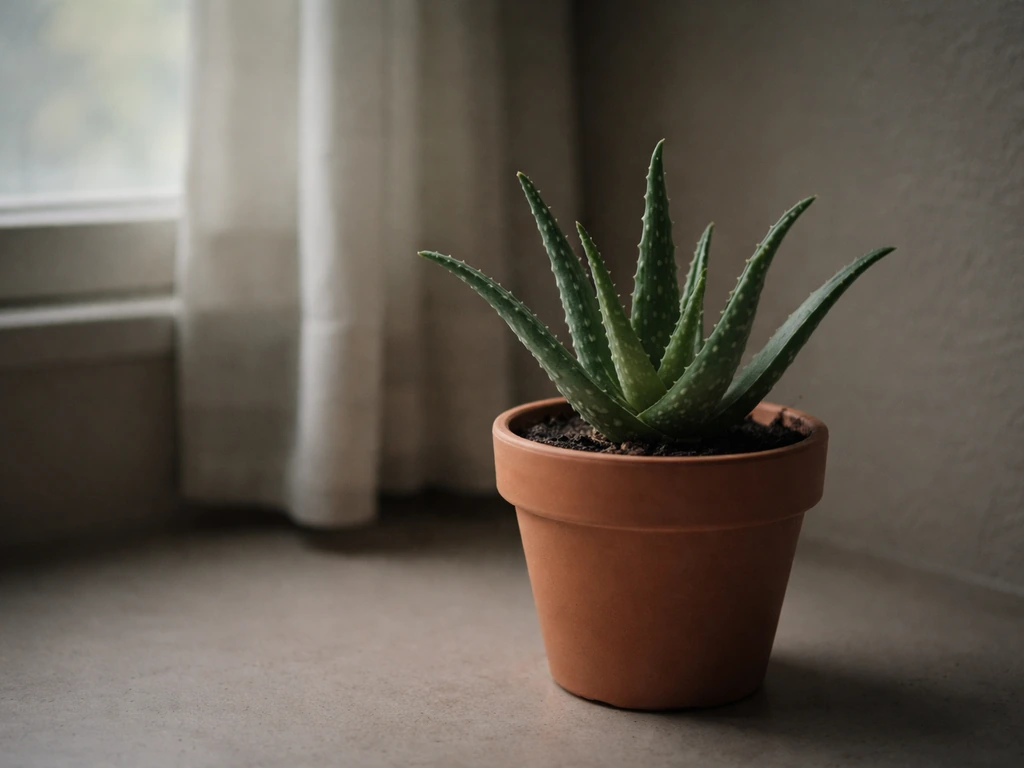
When plant people say 'low light,' they usually mean a spot that gets indirect ambient light but no direct sun, like a corner away from windows, a north-facing room, or a spot set back several feet from any window. In measurable terms, low light typically falls below 100 PPFD (micromoles of photons per square meter per second), which is the unit scientists use to describe light intensity for plants. University of Maine Extension research places succulents as a category at roughly 100 to 200 PPFD for decent growth. Anything consistently under 100 PPFD is genuinely dim for aloe.
For context: a bright south-facing windowsill in direct sun can hit 1,000 PPFD or more. A north-facing window a few feet back might deliver 20 to 50 PPFD. A spot in the middle of a room with no windows nearby can drop below 10 PPFD. UF/IFAS extension research classifies aloe's light requirement as 'full sun to part sun,' and Gardening Know How recommends at least 6 hours of direct light per day. UF/IFAS lists aloe vera (Aloe barbadensis) as needing “full sun to partial shade.” blank" rel="noopener noreferrer">UF/IFAS extension research classifies aloe's light requirement as 'full sun to part sun'. So when you hear that aloe is a 'low-light plant,' that's simply not accurate. It tolerates some shade temporarily, but it's not built for dim rooms the way pothos or snake plants are.
Surviving vs. actually thriving: what low light does to aloe
Here's the honest version: aloe in true low light will stay alive for a while, sometimes months, because it stores water and energy in its thick leaves. But it won't be a healthy, growing plant. It will slow down, lose its compact rosette shape, and eventually start reaching upward and outward in search of more light. That process is called etiolation, and once it starts, you can't really reverse it on the affected leaves.
Thriving aloe looks plump, upright, and deep green with firm, fleshy leaves. Surviving-in-low-light aloe looks pale, floppy, and stretched, with new leaves coming in thin and spaced far apart. The difference usually becomes obvious within 4 to 8 weeks of being moved to a genuinely dim spot. If you're comparing this to true low-light tolerators like snake plants or ZZ plants, aloe just doesn't have the same adaptation. Yes, snake plants can grow in low light, and they generally tolerate dimmer conditions better than aloe. Those plants evolved for forest floors and shaded environments. Aloe evolved in open, arid landscapes with strong sun.
How artificial light changes everything
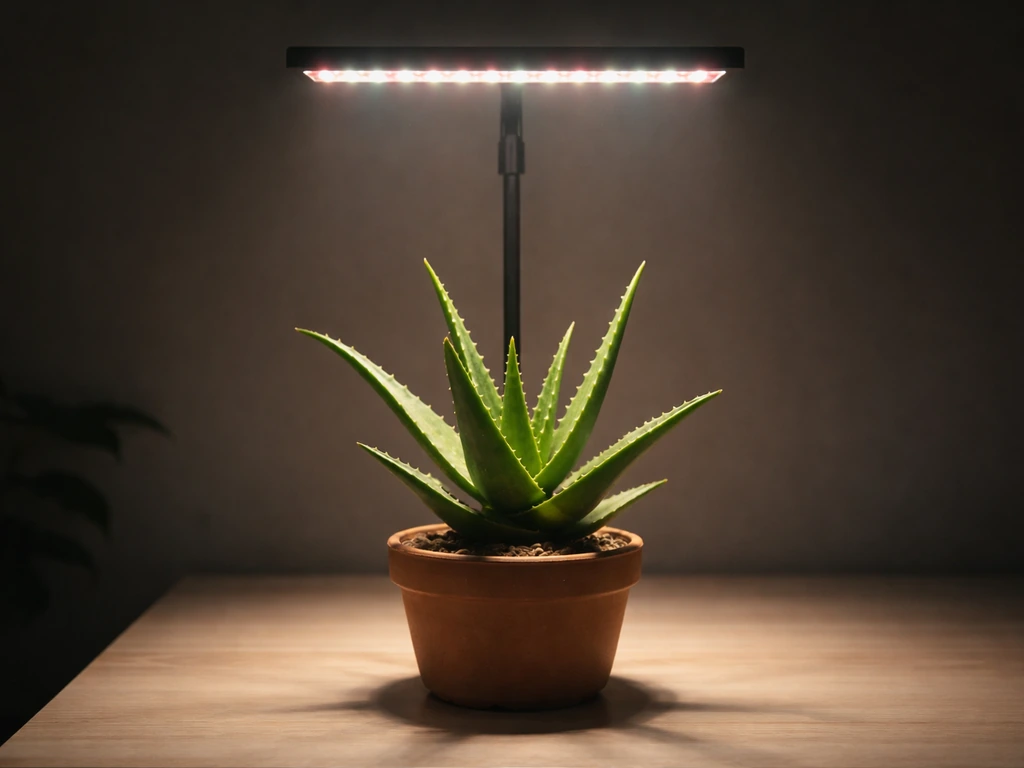
This is where things get genuinely useful for indoor growers. Artificial light, specifically a quality LED grow light, lets you give aloe what it needs regardless of your window situation. A full-spectrum LED set up at the right distance and run for the right number of hours can fully substitute for a bright window. This is not a workaround or a compromise: plenty of people successfully grow aloe under LED grow lights with zero natural sunlight and get healthy, compact, actively growing plants.
LED grow lights: the best option for aloe indoors
Full-spectrum LEDs are the go-to choice for supplementing or replacing natural light for aloe. They cover the full range of wavelengths plants use for photosynthesis (primarily the red and blue spectrums), they run cool enough to place relatively close to the plant without burning it, and they're energy-efficient enough to run 12 to 16 hours a day without a painful electricity bill. For aloe, you want an LED that can deliver around 100 to 200 PPFD at the canopy. Many mid-range panel LEDs or bar-style grow lights achieve this easily at a distance of 12 to 24 inches above the plant.
Fluorescent bulbs: a decent backup option
Fluorescent tubes, particularly T5 high-output bulbs, can work for aloe but are less efficient and less intense than LEDs at the same distance. If you already have a fluorescent shop light setup, it can support aloe as a supplement to some natural light, but you'd want to run it longer (closer to 16 hours) and keep the bulbs within 6 to 12 inches of the plant. Standard household compact fluorescent bulbs sitting across the room from your plant won't cut it for aloe. Save those for truly low-light tolerators.
| Light Source | Good For Aloe? | Ideal Distance | Daily Duration | Notes |
|---|---|---|---|---|
| Full-spectrum LED grow light | Yes, best option | 12 to 24 inches | 12 to 16 hours | Covers all photosynthetic wavelengths, runs cool, energy-efficient |
| T5 fluorescent (high-output) | Yes, decent option | 6 to 12 inches | 14 to 16 hours | Works better as supplement to some natural light |
| Standard CFL or incandescent | No | N/A | N/A | Too weak and wrong spectrum for aloe's needs |
| Bright south/west window (direct sun) | Yes, ideal natural option | Windowsill | 6+ hours direct | Best natural option; may need shade in peak summer heat |
Signs your aloe isn't getting enough light
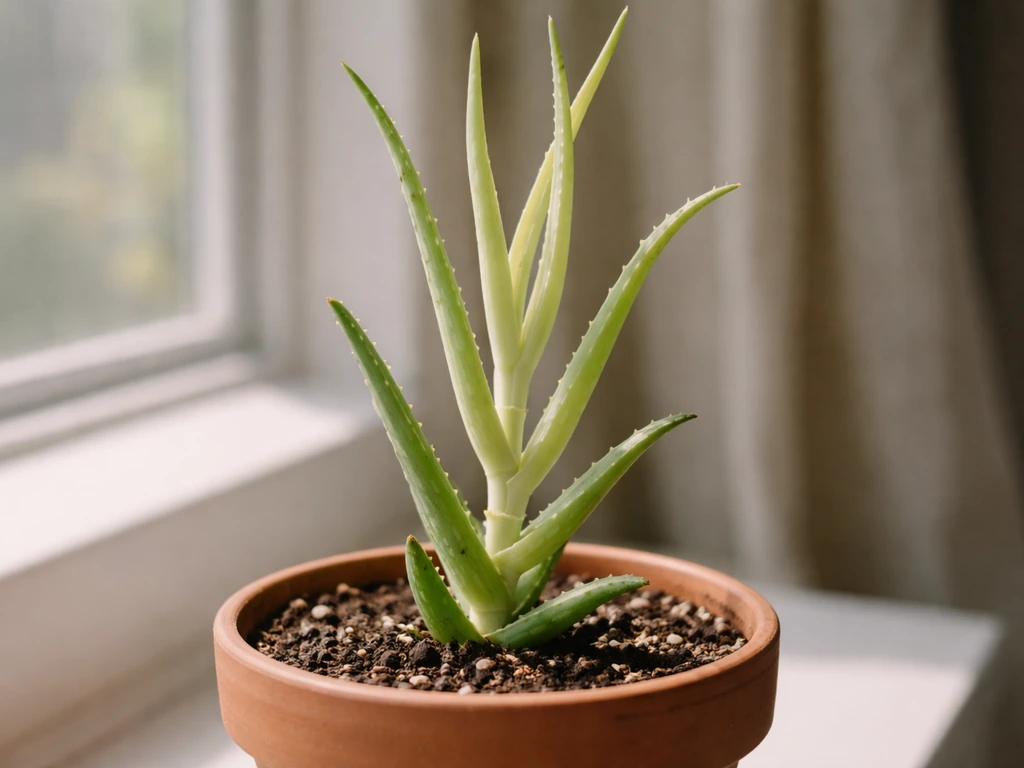
Aloe is pretty expressive when it's unhappy with its light situation. University of Maine Extension research notes that insufficient light causes 'spindly new growth' and 'light-colored foliage' in houseplants generally, and aloe shows both of those symptoms clearly. Here's what to watch for:
- Etiolation: new leaves grow long, thin, and widely spaced instead of compact and plump
- Color fading: leaves shift from deep green to pale green or even slightly yellowish
- Leaning or reaching: the whole rosette tilts or stretches toward the nearest light source
- Soft or mushy leaves that aren't related to overwatering (light stress weakens cell structure)
- No new growth for months, especially during spring and summer when aloe should be actively growing
If you see any of these, the fix is almost always more light, not more water. In fact, low-light aloe is often overwatered too, because people assume a droopy plant needs water. Aloe in dim conditions uses water much more slowly, so its soil stays wet longer, which leads to root rot. If your aloe looks sad and the soil is consistently damp, move it to more light before adjusting your watering schedule.
Setting up your aloe for success: windows, duration, and distance
Window placement
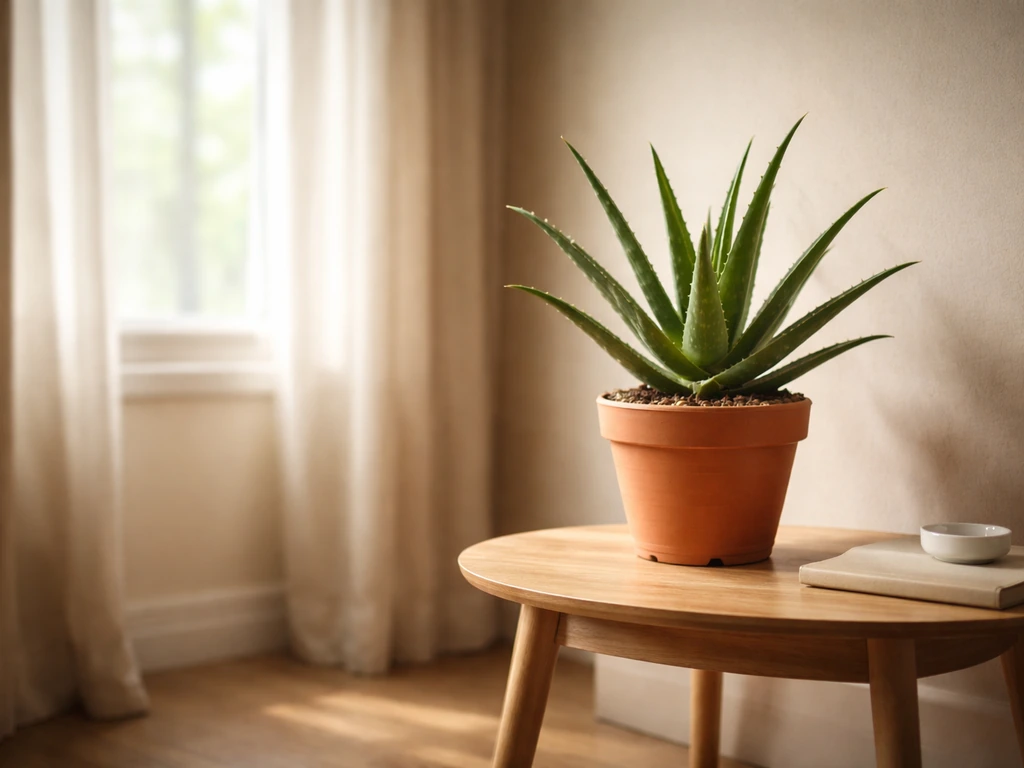
For natural light, a south-facing window is your best bet in the Northern Hemisphere, followed by a west-facing window. Aim to get your aloe as close to the glass as possible, ideally right on the sill. East-facing windows can work if the plant gets 3 to 4 hours of direct morning sun plus bright ambient light the rest of the day, but it's borderline. North-facing windows rarely deliver enough light for aloe to do more than limp along. Can spider plants grow in low light too, or do they need brighter conditions to stay healthy? If that's all you have, a grow light becomes a necessity rather than a nice-to-have.
Light duration
Aloe needs the equivalent of 6 or more hours of good light per day. Under natural light alone, that means 6 hours of direct sun. Under artificial light, you compensate for lower intensity with longer duration: 12 to 16 hours per day is the standard recommendation for LED grow lights supplementing or replacing sunlight. A simple outlet timer takes all the guesswork out of this. Set it and forget it.
Distance from grow lights
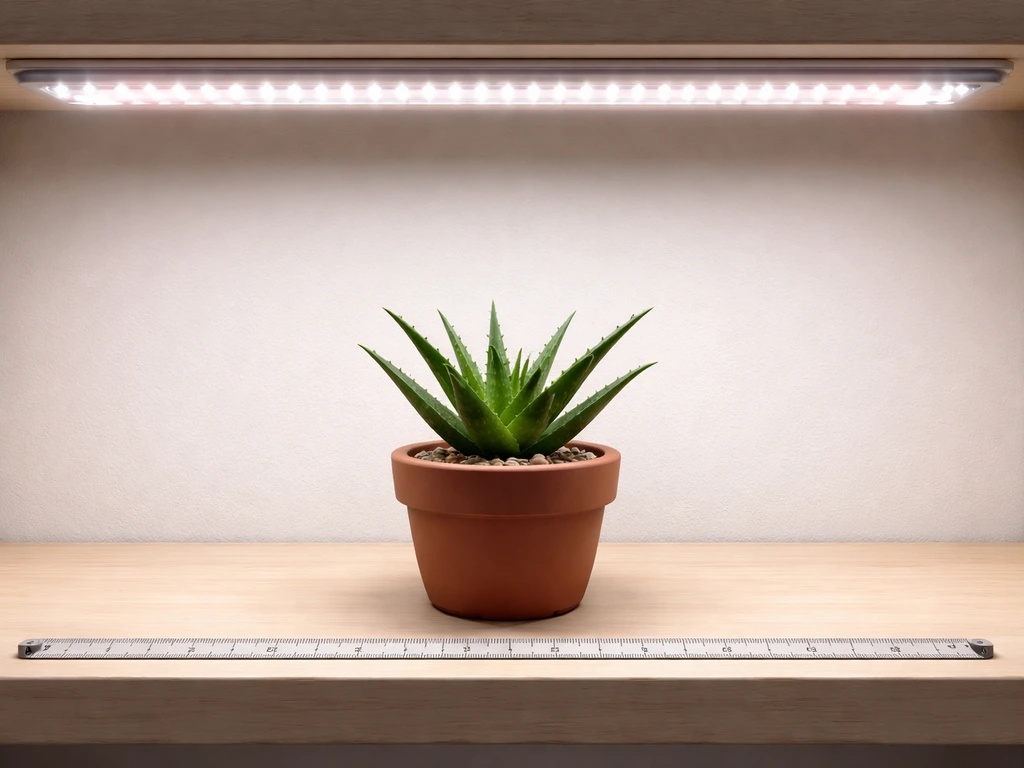
Distance matters a lot with grow lights because light intensity drops off quickly as you move further away. For most mid-range LED grow lights, 12 to 18 inches above the top of the plant is a good starting point for aloe. If your light has a higher output, 18 to 24 inches gives you a wider spread without burning the tips. Start at the higher end of the range and watch the plant for a week or two before moving it closer. Signs you're too close include brown or bleached leaf tips. Signs you're too far include the same etiolation symptoms you'd see with too little light overall.
Quick troubleshooting: light, watering, and preventing etiolation
- Aloe is stretching or leaning: Move it closer to the light source or increase grow light hours to 14 to 16 per day. Rotate the pot a quarter turn every week so it grows evenly.
- Leaves are pale or yellow-green: This is almost always a light issue. Move to a brighter spot or add a grow light before assuming it's a nutrient problem.
- Soil stays wet for more than 10 to 14 days: Low light slows water usage dramatically. Cut back watering frequency and make sure your pot has drainage. Aloe in low light can go 3 to 4 weeks between waterings easily.
- Leaves have brown, bleached tips under grow lights: Your light is either too close or too intense. Raise it by 4 to 6 inches and check again in a week.
- Plant looks fine but isn't growing: Check how many hours of light it's actually getting. Use a simple lux meter app on your phone (they're not perfectly accurate but give a useful ballpark). Anything under about 1,000 lux is too dim for active aloe growth. Bump up duration or intensity.
- New leaves are already etiolated: You can't fix those leaves, but you can stop the damage. Correct the light immediately and watch for new compact growth at the center of the rosette.
Aloe is a forgiving plant in most ways, but light is genuinely non-negotiable for it. If your space is similar to what works well for pothos or philodendrons, it's probably not bright enough for aloe without some artificial help. If you are deciding between options for dim rooms, philodendron can often tolerate low light more easily than aloe, though it still benefits from brighter indirect light. The good news is that a basic LED grow light costs less than most houseplants, lasts for years, and completely solves the problem. Give your aloe a decent light source, back off on watering, and it'll reward you with a compact, healthy plant that actually looks good in your space.
FAQ
How can I tell if my “bright indirect light” spot is actually enough for aloe?
Use a PPFD app or light meter if possible, because “bright” can still be under 100 PPFD. If you cannot measure, use behavior as a proxy, new leaves that are spaced far apart, pale color, and a stretched stem usually mean the light level is too low even if the room looks bright.
Will aloe recover if it already stretched (etiolated) from low light?
Etiolated growth usually does not turn back into compact growth. You can stop the problem by moving it to stronger light or adding a grow light, but expect the older stretched leaves to remain the same, the improvement shows mainly in new growth.
Can I keep aloe on a shelf that does not sit directly under the grow light?
Yes, as long as the canopy receives enough intensity, for most LEDs that means keeping the distance in the right range and ensuring the light covers the plant, not just the fixture area. If the shelf is far from the light or the plant sits off-center, PPFD drops quickly and aloe will start stretching again.
How many hours per day should my LED run if I only have weak window light?
For replacing sunlight, plan roughly 12 to 16 hours per day with an LED that reaches about 100 to 200 PPFD at the canopy. If your window is already providing some direct sun, you can shorten the LED schedule slightly, but it is best to increase gradually if you see any tip browning.
What LED distance is safest to start with if I am unsure about my light’s strength?
Start on the higher-distance end, then adjust after 1 to 2 weeks. Too close often shows as brown or bleached leaf tips, while too far shows as renewed stretching and spaced-out new growth.
Do I need to water less when aloe is under grow lights?
Often yes, because stable dim conditions lead people to overcorrect with extra water. Even with a grow light, monitor soil moisture, aloe should dry faster under stronger light and slower under weaker light, so watering intervals should follow dryness, not the calendar.
What happens if I leave the grow light on continuously (24/7)?
Aloe generally does better with a daily dark period, continuous light can disrupt normal growth patterns and can contribute to stress. A simple timer set for 12 to 16 hours of light is the safer default.
Can I use a regular plant grow bulb or does it need to be full spectrum?
Full-spectrum LEDs are the usual best choice for aloe because they cover the wavelengths plants use for photosynthesis. A bulb that is sold as a grow light can work, but weaker or poorly designed fixtures may not deliver the needed intensity at your plant’s distance, which is what ultimately determines results.
Is it okay if my aloe gets bright morning sun but dim afternoons?
It can work, especially with an east-facing setup that receives several hours of direct morning sun plus bright ambient light the rest of the day. If afternoon light is truly dim, the plant may still etiolate, in that case a grow light can bridge the missing intensity.
What should I do if I see pale leaves but the soil is dry?
Pale, light-colored foliage is usually a light problem, even if the plant is not sitting in wet soil. Increase light exposure first, then reassess watering, because fixing low light without changing water can be safer than adding water to a plant that is not photosynthesizing well.