
Yes, snake plants respond well to grow lights, and if your room is dim or windowless, a simple LED grow light running 12–14 hours a day can genuinely improve your plant's growth rate, color, and overall vigor. That said, snake plants are famously forgiving in low light, so grow lights aren't always necessary. Whether you need one depends on what you're actually working with.
Do Snake Plants Like Grow Lights? How to Use Them
Marcus Hartley
2 May 2026
What snake plants actually want from light
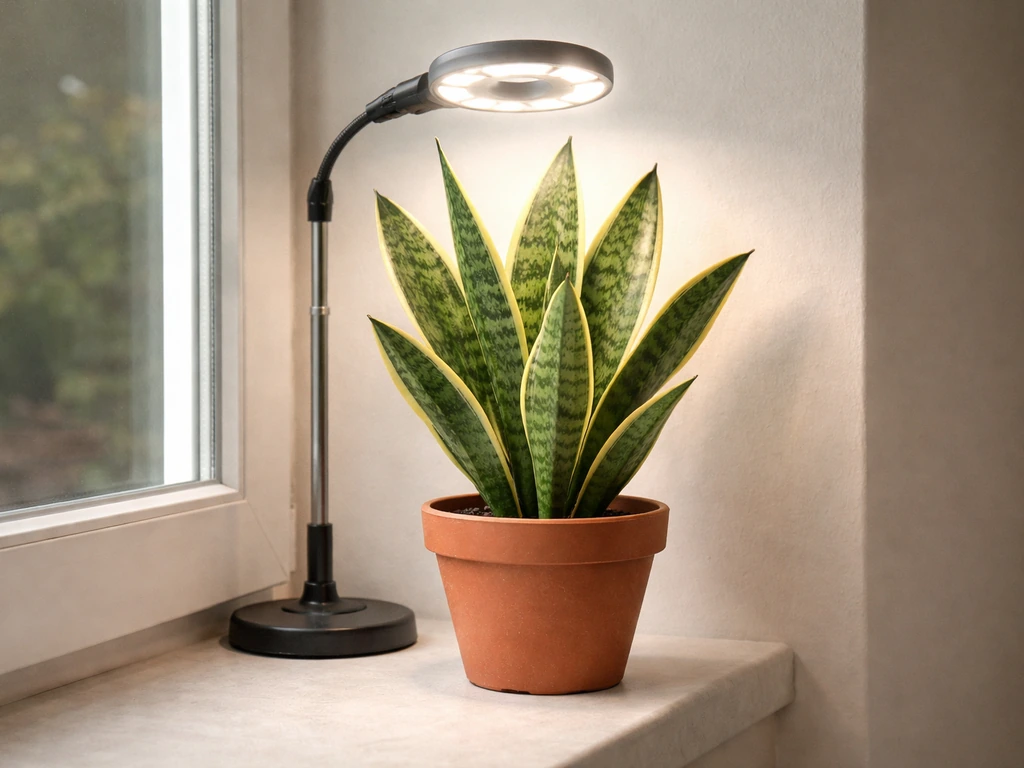
Snake plants (Dracaena trifasciata, formerly Sansevieria) evolved as understory plants in West Africa, growing beneath a canopy where light is filtered and inconsistent. That origin story explains why they handle low light better than most houseplants. But "tolerates low light" doesn't mean "prefers it." A snake plant sitting in a dark corner is surviving, not thriving.
What they actually prefer is bright, indirect light, meaning light strong enough to cast a soft shadow but not harsh direct sun hitting the leaves. Iowa State Extension describes this well: if your hand held over a piece of paper casts a clear but soft shadow, that's the ballpark. Aim for 10 or more hours of that quality of light per day, and your snake plant will put out new leaves at a decent pace and hold its color well.
At the other end, snake plants can manage with as little as 2 to 6 hours of indirect light and will tolerate north-facing windows with no direct sun at all. They won't look as sharp, but they'll stay alive and hold their shape. The tradeoff is slowed growth, which for some people is actually fine.
Variegated cultivars like Laurentii (the yellow-edged one most people picture) are worth noting here. They tolerate low light, but their variegation, that crisp yellow border, looks best with a bit more light. If you have a variegated snake plant and the yellow edges are fading or narrowing, more light is usually the fix.
When a grow light actually helps vs when your window is enough
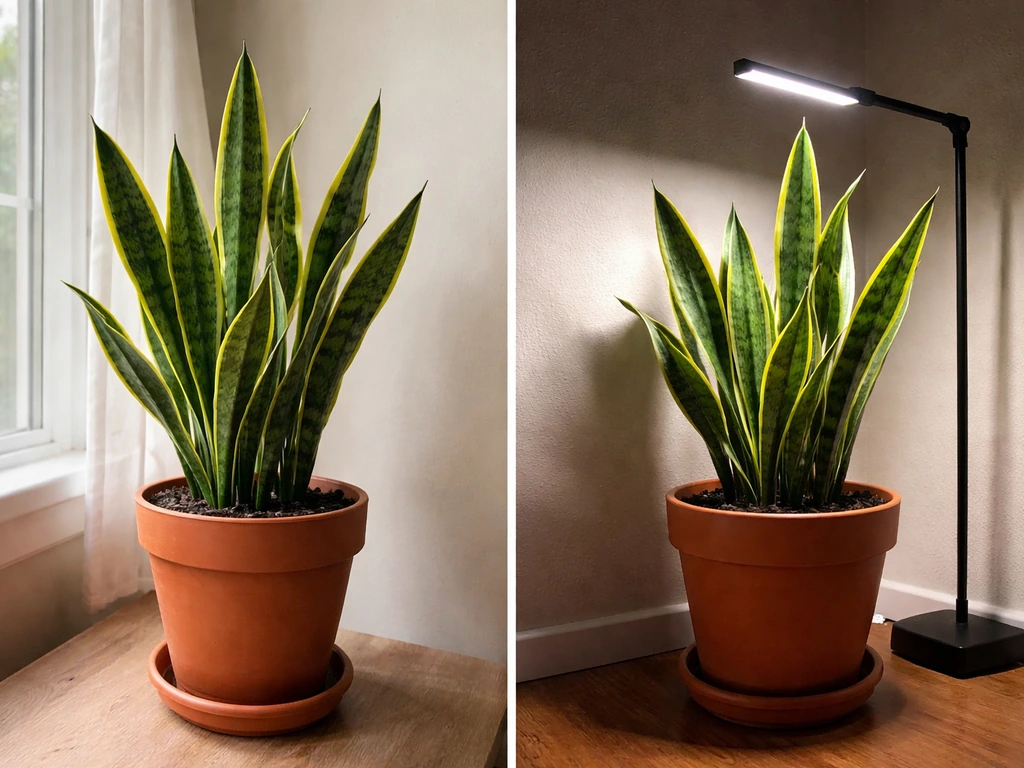
This is where I see a lot of people overthink it. Not every snake plant needs a grow light. Here's a simple way to figure out which camp you're in.
A window is probably enough if your snake plant sits within a few feet of a south or east-facing window and gets several hours of good indirect light daily. Even a north-facing window will keep a standard green snake plant healthy as long as it isn't blocked by buildings or heavy curtains. Diffused sunlight through a lightweight curtain counts, and in those conditions a grow light adds minimal benefit.
A grow light makes a real difference if your plant is in one of these situations: more than 8 to 10 feet from any window, in a room with only a small or north-facing window during winter months when day length drops, in an interior room with no windows at all, or if you're growing a variegated cultivar that's losing its color contrast. I've also found grow lights genuinely useful in apartments where windows face a light-blocking wall or covered walkway, where the "window" is technically there but the useful light is basically nothing.
Choosing the right grow light: LED vs fluorescent
You don't need anything fancy. For pothos, choose a grow light color temperature around 6500K (daylight) to support steady growth and healthier leaf color. For a snake plant specifically, the bar is low because they have modest light demands. That said, the type of bulb you choose does matter in practical terms.
| Light Type | Spectrum | Heat Output | Energy Use | Best For Snake Plants |
|---|---|---|---|---|
| Full-spectrum LED grow light | Broad, includes red and blue peaks plants use most | Very low | Low | Best overall choice, especially for small spaces |
| Standard LED bulb (white/cool white) | Limited plant-usable wavelengths | Very low | Low | Works in a pinch but less efficient for growth |
| Fluorescent (T5 or T8) | Skews blue, decent for foliage plants | Moderate | Moderate | Works well if positioned 6–12 inches from foliage |
| Incandescent bulb | Mostly red/heat, poor blue spectrum | High | High | Not recommended; too much heat, too little usable light |
My recommendation for most people: a simple full-spectrum LED grow light, either a clip-on bulb or a small panel, is the easiest and most effective option. They run cool, use minimal electricity, and give plants the wavelengths they actually use for photosynthesis. One thing to keep in mind is that regular lumens ratings (the number on the box measuring brightness to human eyes) don't tell the whole story for plants. Iowa State Extension also notes that grow-light output should be evaluated in plant-usable terms such as PAR and PPFD, not just lumens regular lumens ratings don't tell the whole story for plants. What you want is a light marketed as "full-spectrum" or "grow light," not just a bright white LED.
Fluorescent fixtures do work, and they're a budget-friendly option if you already have one around. Iowa State Extension describes a standard shop fluorescent fixture with two 40-watt tubes positioned 6 to 12 inches above foliage as sufficient supplemental light for medium-to-high light plants. For a snake plant with lower demands, that setup is more than adequate. The main downside is they're bulkier, produce slightly more heat, and the tubes need replacement more often than LEDs.
Setting up your grow light: distance, hours, and placement
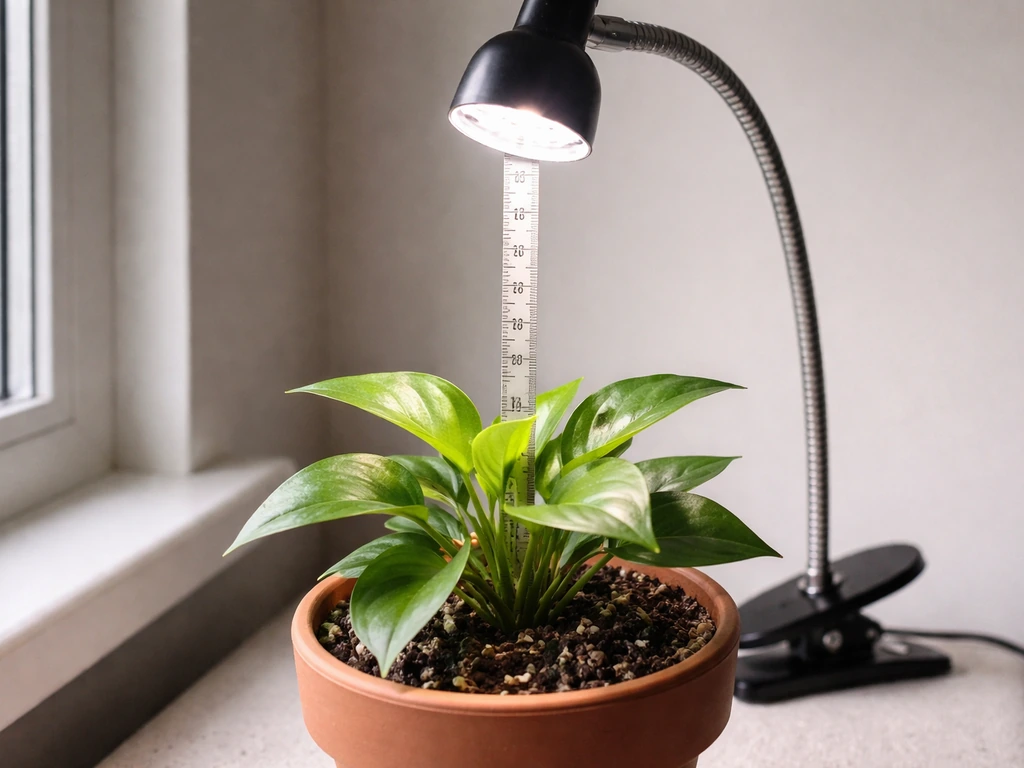
Getting the setup right is where most people either under-deliver or accidentally stress their plant. Here's what actually works.
Distance from the light to the leaves
For a moderate-output LED grow light (a typical 10–20W clip-on or small panel), 12 to 24 inches above the top of the plant is a good starting range. Fluorescent tubes work best at 6 to 12 inches. The key is consistency: keep the distance fairly constant as the plant grows, adjusting the fixture upward if needed. Snake plants are not sun-hungry, so erring on the slightly farther end (closer to 18–24 inches for LED) reduces any risk of leaf bleaching while still delivering useful light.
How many hours per day
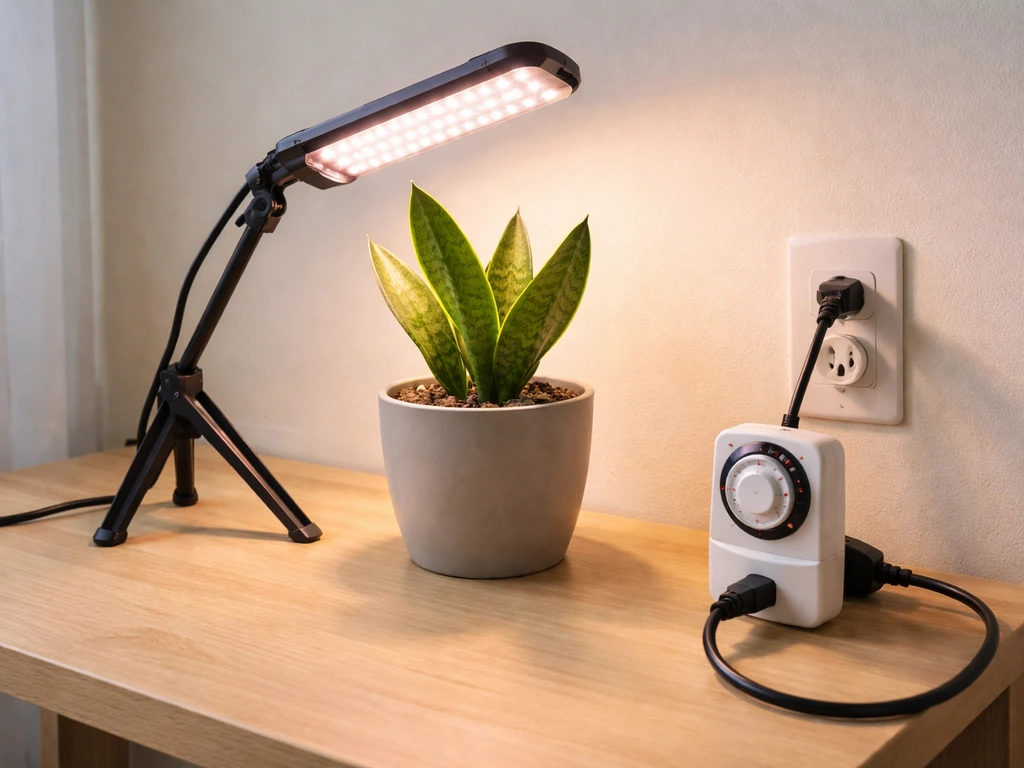
For foliage houseplants like snake plants, 12 to 14 hours of combined natural plus artificial light per day is the practical target. If your room gets essentially no natural light, run the grow light for 12 to 14 hours. If your plant gets a few hours of window light, supplement to bring the total up to that range. A plug-in timer makes this completely hands-off. UMN Extension suggests turning supplemental lights on in the late afternoon (around 5 to 8 p.m.) to extend the day length, which works well if your plant gets some morning window light.
Placement tips
- Position the light directly overhead or slightly angled toward the plant, not off to the side where only some leaves benefit
- If you have multiple snake plants, cluster them under one fixture rather than spreading them out and leaving some under-lit
- Use an adjustable arm or clip so you can raise the light as leaves grow taller
- Avoid placing the light where it shines into your eyes in common seating areas; a small repositioning can help with this without reducing light to the plant
- If the room gets any natural light, place the grow light on the same side as the window so light comes from a consistent direction
Reading your snake plant: signs of too little or too much light
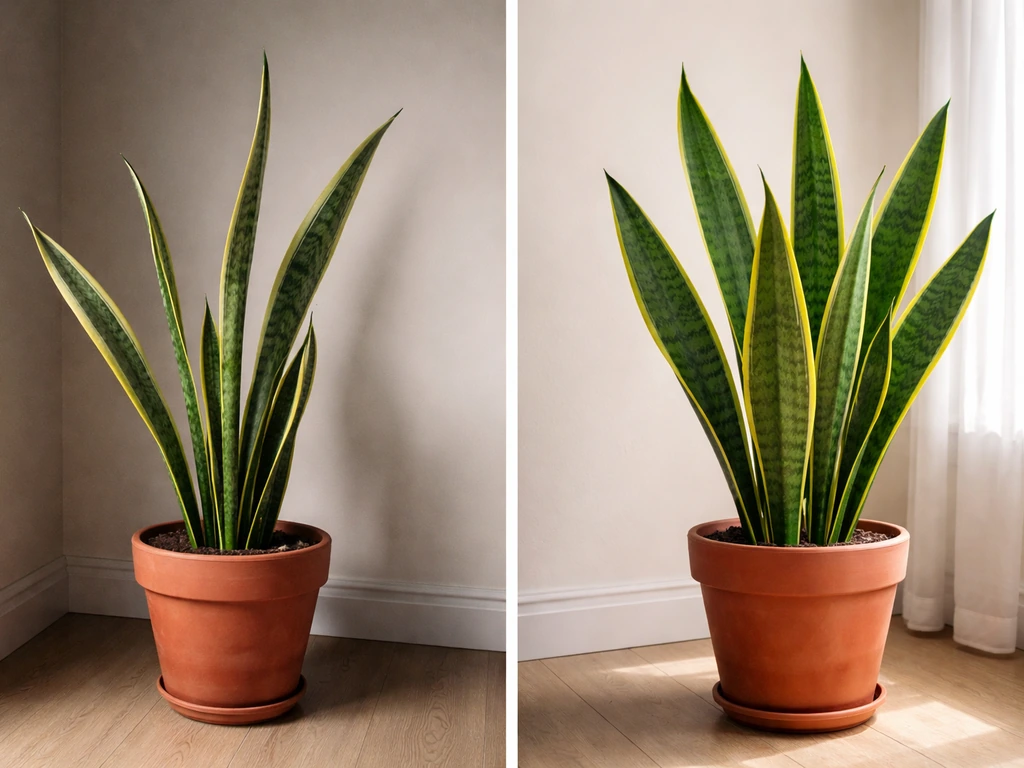
Snake plants give you clear signals when the light balance is off. Learning to read them saves a lot of guessing.
Signs of not enough light
- Etiolation: new leaves come in thinner, paler, and reaching toward the light source instead of growing upright and firm
- Very slow or stopped growth over many months (though snake plants are naturally slow, so give it at least 2–3 months before concluding it's a light problem)
- Variegated leaves losing their yellow or white markings, reverting to plain green
- Leaves that feel slightly soft or limp rather than firm and stiff
- Darker-than-normal foliage color (the plant is maximizing chlorophyll to capture what little light is available)
Signs of too much light or incorrect grow light placement
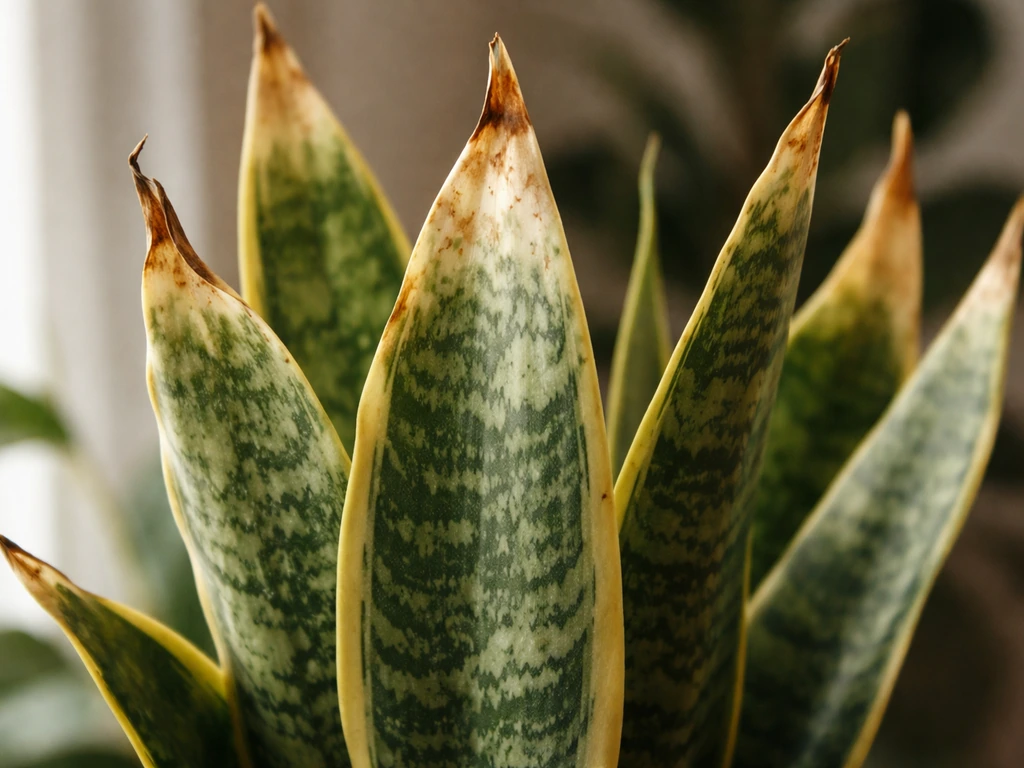
- Bleached or washed-out pale patches on leaves, especially near the top of the plant closest to the light
- Crispy brown or tan tips and edges that feel dry, not mushy
- Yellowing that starts at the top leaves rather than the base
- Leaves leaning or curling away from the light source
One important thing: many of these symptoms overlap with overwatering or underwatering. Before concluding light is the issue, check the soil. A snake plant with soggy roots will show mushy yellowing and collapse at the base regardless of light conditions. If the soil is consistently damp and the leaves look bad, sort out the watering before adjusting the light setup.
Common mistakes and how to avoid them
I've made most of these myself at some point, so consider this a learned list.
- Placing the grow light too close and causing heat stress: even LEDs can stress leaves if they're only a few inches away. If leaves near the light feel warm to the touch, move the fixture higher.
- Jumping straight from dim conditions to full grow light intensity: just like moving a plant from low light to a sunny window, a sudden dramatic increase can bleach leaves. Start with the light further away and gradually move it closer over one to two weeks.
- Running grow lights 24 hours: plants need a dark period. Running lights all day and night disrupts the plant's natural cycle. Stick to 12–14 hours on, 10–12 hours off.
- Blaming light for problems caused by watering: snake plants are drought-tolerant and rot quickly if overwatered. If you added a grow light and the plant got worse, check whether the extra warmth from the light is causing the soil to stay moist longer than you expect.
- Using a standard decorative LED bulb and expecting grow-light results: regular white bulbs lack the specific wavelengths plants use most. They contribute some light, but a purpose-made grow light is measurably more effective.
- Forgetting to adjust fixture height as the plant grows: as new leaves emerge and the plant gets taller, the distance from the light shrinks. Check the placement every few weeks.
Quick setup checklist for low-light rooms and windowless spaces
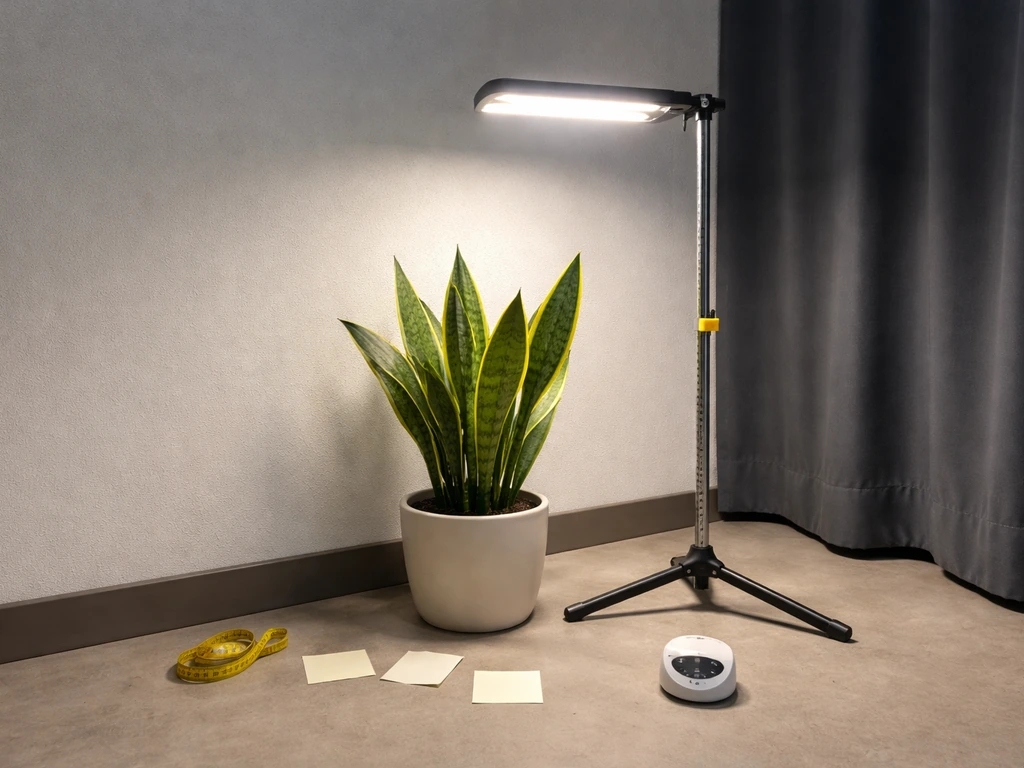
Use this as a starting point whether you're setting up a grow light for the first time or troubleshooting one that doesn't seem to be helping.
For rooms with some natural light but far from the window
- Choose a full-spectrum LED grow light (clip-on bulb or small panel, 10–20W is plenty for one to two snake plants)
- Position it 18–24 inches above the top of the plant
- Run it for enough hours to bring total daily light to 12–14 hours (e.g., if the plant gets 4 hours of window light, run the grow light for 8–10 hours)
- Use a timer set to turn on in late afternoon or whenever natural light drops off
- Check placement every 3–4 weeks and adjust height as the plant grows
For completely windowless rooms or interior offices
- Use a full-spectrum LED grow light as the sole light source
- Run it 12–14 hours per day on a timer
- Position it 12–18 inches above the plant for a moderate-output LED
- Expect slower growth than a window setup, but the plant will stay healthy
- Choose a standard green cultivar over heavily variegated types for best results in truly artificial-only setups
- Check the plant monthly: firm, upright new growth means the setup is working; thin or pale new leaves mean you need more intensity or hours
Ongoing maintenance routine
- Every 3–4 weeks: check light-to-plant distance and adjust if new growth has raised the canopy
- Every 1–2 months: look at new leaf thickness, color, and direction of growth to confirm the light level is right
- Seasonally: if your plant gets some window light, reassess how many hours of supplemental light you need as day length changes through winter and summer
- If you see bleaching or browning on upper leaves: raise the light or reduce daily hours by 1–2 hours
- If you see etiolation or very slow growth: lower the light slightly or add 1–2 hours to the daily schedule
Snake plants are genuinely one of the easiest plants to grow under artificial light, which makes them a great starting point if you're new to grow lights. Pothos can also grow under artificial light, but it usually needs a brighter setup than a snake plant to keep its leaves looking full. Pothos can also grow without sunlight by using steady artificial light, especially in low- or indirect-light setups. The same basic principles apply to other low-to-medium light houseplants too, so once you've dialed in the setup for your snake plant, you'll have a solid foundation for expanding your indoor garden into spaces where natural light just isn't an option.
FAQ
Will a grow light speed up a snake plant’s growth, or does it just keep it alive?
It can do both. Snake plants usually grow slowly under low light, so a properly positioned LED often improves color and vigor, with noticeable new growth over weeks rather than days. If there is already adequate window light, adding a grow light may only fine-tune leaf quality, not dramatically increase leaf count.
How can I tell if the grow light is too strong or too close?
Watch for bleaching or a washed-out, pale look on the most sun-facing leaves. Mild stretching can mean too little light, but crisp leaf tips that fade quickly or show scorch-like patches usually means the fixture is too close or the intensity is higher than you need. Back the light off by a few inches and reassess over 2 to 3 weeks.
Do I need to change the light schedule in winter?
Usually yes. In winter, day length drops and many rooms get less usable indirect light, especially near north-facing windows. A practical approach is keeping the same total daily window-plus-grow-light duration (around 12 to 14 hours) and adjusting the grow light longer when natural light falls off.
Is it better to run the grow light for longer hours or to use a stronger light?
Start with longer hours within the 12 to 14 hour window, then only increase intensity if your plant shows signs of low light (slower growth, duller green, more spacing between leaves). Overdoing brightness can cause stress, while modest increases are safer. If you do upgrade, raise the starting time slightly lower and then dial up after you see results.
What height should I set if my snake plant is taller or in a different pot size?
Use the top of the foliage as your reference point, not the pot. Keep the fixture distance consistent as the plant grows, adjusting upward periodically. If you move the light because the plant is taller, recheck leaf color after a couple of weeks to confirm you did not accidentally increase or decrease intensity too much.
Do I need a timer, or can I turn the grow light on and off manually?
A timer is strongly recommended for consistency. Snake plants do fine with a stable photoperiod, and manual schedules often drift, especially during evenings or weekends. A plug-in timer also reduces the chance you forget and accidentally run the light far longer than intended.
Should I use warm white or cool white for a snake plant?
For houseplants grown under LEDs, look for a true full-spectrum or grow-light designation rather than relying on generic “daylight” marketing. If you are choosing among color temperatures, 6500K daylight is a reasonable default for steady growth, but the key is plant-focused spectrum and appropriate intensity.
Can I use a grow light for just one side of the snake plant?
Yes, but rotate the pot regularly so the plant does not become lopsided. Aim for a simple rotation schedule (for example, every 1 to 2 weeks) to keep leaf orientation even. If the light is always from one direction, the plant will naturally lean toward it.
What if my variegated snake plant is getting greener, is that always a light problem?
More light often helps, but it is not the only cause. Check watering first, since chronic soggy conditions can damage leaf tissue and reduce visual contrast. Also make sure the plant is not being stressed by low nutrition, because weak growth can make variegation look less crisp even if light is improved.
My snake plant looks unhealthy, but I can’t tell if it’s light, watering, or something else. What’s the fastest way to narrow it down?
Start with soil moisture and base health. If the soil stays damp and leaves at the base are mushy or collapsing, watering is the likely culprit. If the soil is properly dry between waterings and you see gradual changes like dullness or stretching, then adjust the light distance and schedule. Always correct watering before increasing light, because stressed roots cannot use light well.
Is a grow light safe if it gets warm, or could heat damage leaves?
Heat is usually not an issue with modern LED setups, but older fluorescent fixtures can run warmer and sit closer to foliage. Keep the light at the recommended distance, and if the fixture feels hot during operation, give it extra spacing or improve airflow. Also avoid placing the plant so close that the leaves touch the fixture.
If I put my snake plant under a grow light, do I still need to worry about dormancy or rest?
Not in the same way as outdoor or seasonal plants. Snake plants do not require a strict “rest” period, but they do benefit from consistent, moderate light and correct watering. If you reduce light in very dark seasons, keep watering conservative to avoid the common low-light root problems.