
Areca palm can survive in low light for a while, but it won't thrive there. It's a bright-indirect-light plant at heart, happiest with 1,000 foot-candles or more, and it will slowly decline in the dim corners most people try to put it. That said, if you understand what 'low light' actually means in a real home, position the palm as strategically as possible, and supplement with a grow light when needed, you can absolutely keep one alive and reasonably healthy indoors without a sun-drenched south window.
Can Areca Palm Grow in Low Light? Care Guide
Marcus Hartley
3 Jun 2026
What 'low light' actually means (and where areca palm fits)
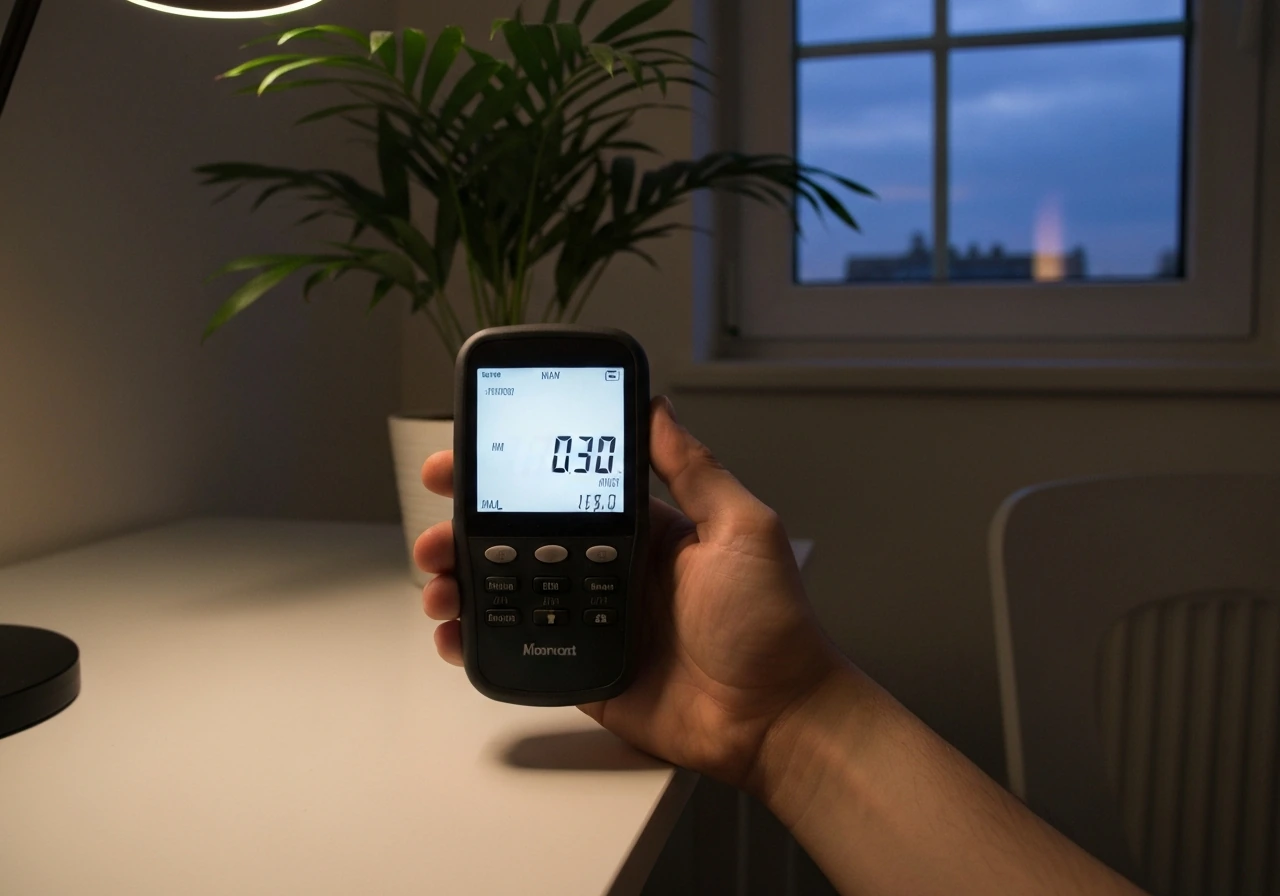
The term 'low light' gets thrown around loosely, so let's pin it down. In practical houseplant terms, low light means roughly 25 to 100 foot-candles (fc), which is what you'd measure near a north-facing window or in a room lit mostly by overhead bulbs. Medium light runs from about 75 to 500 fc, and high light starts around 1,000 fc and up.
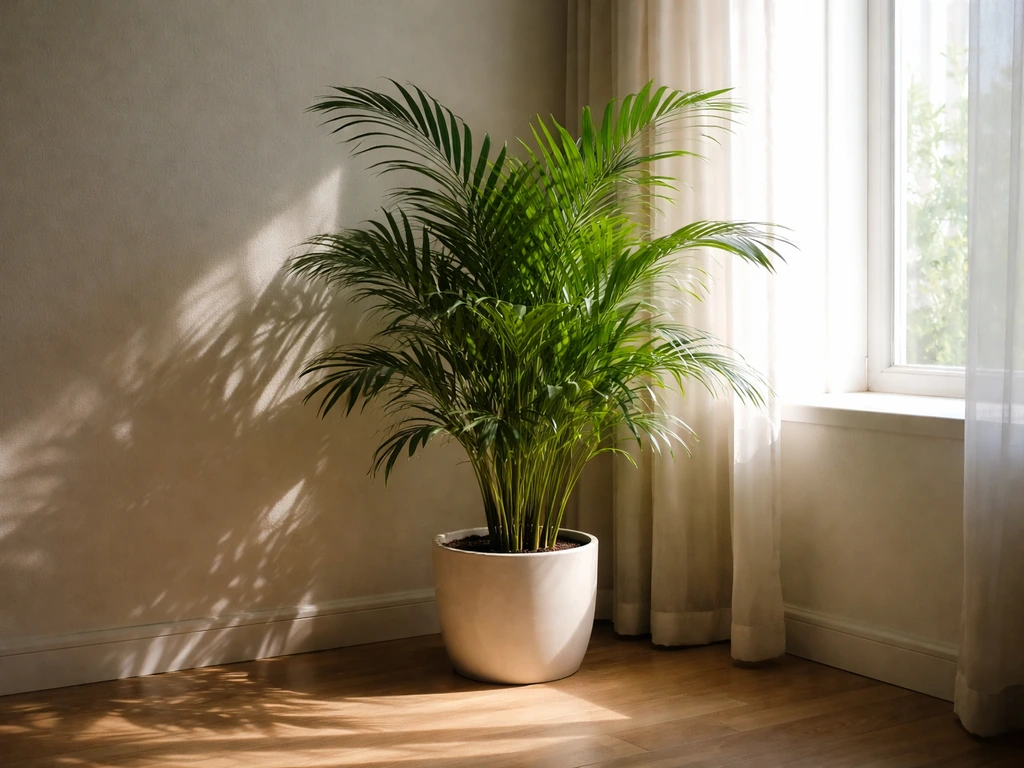
Areca palm (Dypsis lutescens) is grown commercially at 3,000 to 4,500 fc, and it genuinely wants bright, indirect light to do well indoors. That puts it firmly in the medium-to-high category. Parlor palms, by comparison, are the low-light champions in the palm family. Areca is not that.
So when someone says 'it tolerates low light,' what they usually mean is it won't die immediately in a dim spot, not that it will grow well there.
The honest answer is this: areca palm can tolerate light shade, but it struggles in true low light. Botanapp notes that in very low light, Dypsis lutescens fronds stretch, thin out, and lose color, showing an etiolation under-lighting pattern areca palm can tolerate light shade, but it struggles in true low light. .
Below 50 fc, most plants can't sustain themselves for long at all. At the low end of medium light (around 75 to 150 fc), an areca will survive but grow slowly and look less lush over time. It needs at least 150 to 200 fc as a realistic bare minimum to hold its own indoors, and more like 400 to 600 fc to actually put out new growth and stay full and green.
Best- and worst-case light conditions in a real home
Where you put your areca palm relative to a window makes an enormous difference, and the drop-off happens faster than most people expect. Light intensity can fall from around 1,000 fc right at a window to roughly 100 fc just a few feet back into the room. Once you're 8 to 10 feet from any window, you're in genuinely dim territory for most plants.
| Location | Approximate Light Level | Areca Palm Outcome |
|---|---|---|
| South window, within 2 feet (indirect) | ~800–1,500 fc | Best indoor option — good growth |
| West or east window, within 3 feet | ~400–800 fc | Very good — steady growth, stays full |
| West or east window, 3–10 feet back | ~75–400 fc | Marginal — survives, slow growth |
| North window, up close | ~50–100 fc | Struggle zone — deteriorates slowly |
| More than 10 feet from any window | <50 fc | Too dark — grow light required |
Seasons change the math significantly. In winter, even a south-facing window delivers far less light than in June, and the sun angle is lower, so a spot that worked fine in summer may be too dim from November through February. If your areca looked great last spring and is now looking tired by January, reduced winter light is likely a big part of the reason.
How to tell if your palm isn't getting enough light
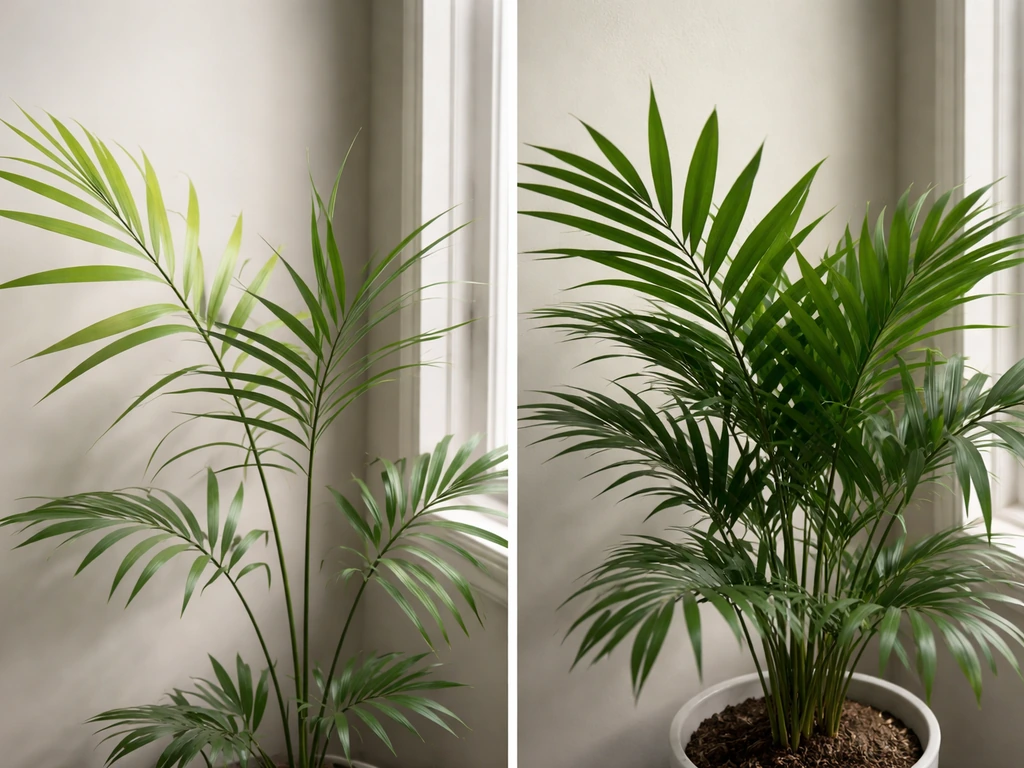
Your palm will tell you when it's unhappy with light levels, but the signals come slowly, over weeks and months. Here's what to watch for:
- Leggy, stretched-out growth: new fronds grow longer than usual but with fewer leaflets and pale color. This is etiolation, the plant reaching desperately toward any light source.
- Leaning toward the light source: if the whole plant is tilting noticeably toward a window, it's telling you it needs more of what's over there.
- Yellowing fronds: yellowing that starts with older fronds can signal insufficient light, though it can also mean overwatering or nutrient issues, so check all three.
- Very slow or no new growth: areca palm grows slowly anyway, but if it hasn't pushed out a single new frond in 4 to 6 months, light is a likely culprit.
- Loss of that dense, full shape: the palm starts to look sparse and open rather than lush and arching.
If you want to take the guesswork out, grab a light meter or use a lux meter app on your phone (not perfect, but useful for ballpark readings). Measure the spot where the palm sits at midday. If you're getting under 1,000 lux (roughly 100 fc) consistently, your palm is in the struggle zone. One foot-candle equals about 10.76 lux, so 2,000 lux works out to around 185 fc, which is closer to the acceptable minimum for areca.
Practical placement tips to make the most of what you have
Before buying a grow light, squeeze every bit of light out of your existing space. A few simple moves can meaningfully improve conditions:
- Move it closer to your brightest window. Even sliding the palm from 6 feet away to 3 feet from an east or west window can double or triple the light it receives.
- Prioritize south- or west-facing windows. A spot 2 to 3 feet back from a south window in indirect light is the sweet spot for most homes. Growers consistently recommend south and west exposures for areca.
- Use a sheer curtain, not a blackout curtain. If you need privacy, sheer fabric cuts some light but still lets in enough for the palm. Heavy drapes can reduce light by 80 percent or more.
- Rotate the plant every 2 to 3 weeks. Quarter-turns keep growth even and prevent permanent leaning. It also makes sure different sections of the canopy get their share of the best light.
- Keep the leaves clean. Dusty fronds absorb less light. Wipe them down with a damp cloth every few weeks or give the whole plant a shower.
If your only available spot is a north-facing window or an interior room, be realistic. You can keep the palm alive, but it won't grow much, and you'll likely need artificial light to prevent slow decline.
Using grow lights to fill the gap
A grow light can absolutely make an areca palm viable in a room that wouldn't otherwise support it. The key is choosing the right type, placing it correctly, and running it on a schedule the plant can actually use.
LED vs fluorescent: which is better for areca palm?
For most indoor gardeners, a full-spectrum LED grow light is the better choice. LEDs run cooler, use less electricity, and last significantly longer than fluorescent bulbs. Modern full-spectrum LEDs also deliver a broader range of wavelengths that plants use for photosynthesis, measured as PPFD (micromoles of light per square meter per second). Fluorescent shop lights, especially T5 bulbs, can work and are often cheaper upfront, but they don't deliver as much useful light per watt and need to be replaced more often. If you already have a fluorescent fixture, use it, but if you're buying new, go LED.
| Feature | Full-Spectrum LED | Fluorescent (T5/T8) |
|---|---|---|
| Energy efficiency | High — lower running costs | Moderate |
| Heat output | Low | Moderate — can stress nearby leaves |
| Lifespan | 25,000–50,000 hours typical | 10,000–20,000 hours |
| Upfront cost | Higher | Lower |
| Light quality for plants | Excellent (full spectrum, high PPFD) | Good, but less output per watt |
| Best use case | Dedicated plant setup, long-term use | Budget option, shorter term |
Placement and schedule
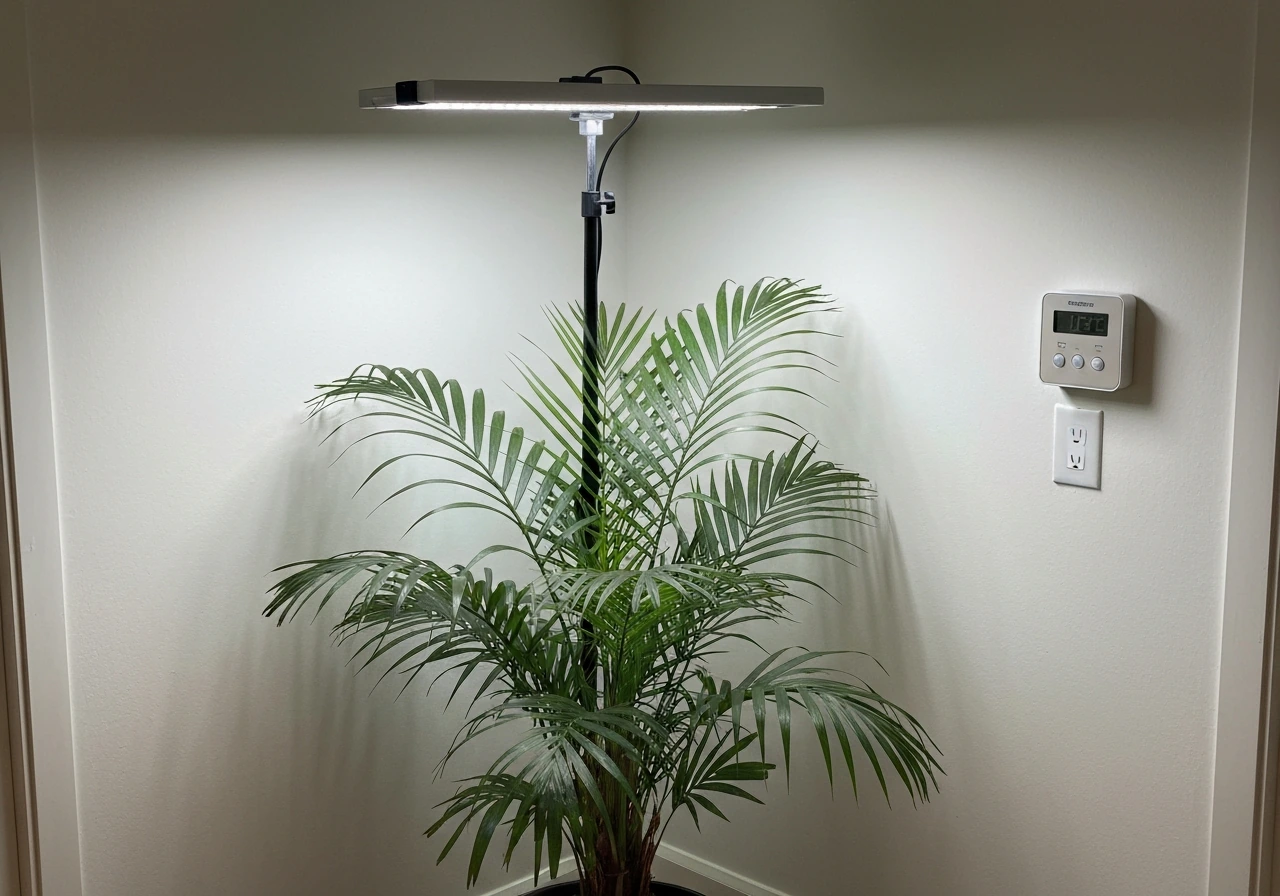
Position your grow light 12 to 24 inches above the top of the palm's canopy. Closer gives more intensity but can stress the plant if it's too near; further away reduces the benefit. Since areca palms can get tall indoors, you may need an adjustable hanging system or a floor lamp-style grow light to keep the distance right as the plant grows. Run the light for 12 to 14 hours a day.
Areca palm isn't particularly sensitive to photoperiod the way flowering plants can be, so a consistent 12-to-14-hour schedule mimics a good tropical day length and gives the plant enough photosynthesis time to compensate for the lower intensity. Use a simple outlet timer so you don't have to remember to switch it on and off.
One note on measuring grow-light output: foot-candles and lux are based on human vision, not plant-usable light. For grow lights, PPFD values (usually listed in the product specs) are more meaningful. A reading of around 100 to 200 µmol/m²/s at the leaf surface is a reasonable target for keeping an areca palm healthy under supplemental light. If the manufacturer doesn't list PPFD, that's a sign the light may not be designed for serious plant growing.
Care adjustments that matter in low light
When light drops, your areca palm's whole metabolism slows down, and that changes what it needs from you on the care side. Getting these details right can be the difference between a plant that slowly declines and one that holds its own.
Watering
This is the big one. In low light, the plant uses water more slowly and the soil dries out less quickly. If you keep watering on the same schedule you'd use for a bright-light situation, you'll waterlog the roots, which leads to rot and a cascading set of problems. Let the top inch or two of soil dry out between waterings in the growing season. In winter, dial it back further, letting the soil get close to dry before watering again. Never let the palm sit in standing water in the saucer. Areca roots are sensitive to soggy conditions even when the plant is well-lit, and in low light the risk is much higher.
Fertilizing
In low light, growth slows dramatically, so the plant needs far less fertilizer than it would in bright conditions. Overfertilizing a slow-growing, dim-light palm is a common mistake that causes salt buildup in the soil and can burn roots. Cut your fertilizing to once every 6 to 8 weeks during the growing season, and skip it entirely in winter. Use a balanced liquid fertilizer at half strength. If you notice uniform light-green coloring across fronds (rather than yellowing that starts at the tips or patches), that can point to nitrogen deficiency rather than a light problem, so it's worth keeping an eye on.
Humidity and airflow
Areca palm loves humidity, ideally 40 to 60 percent, and this matters more in low-light situations because a stressed plant is more vulnerable to dry air. Dry air is directly linked to spider mite infestations, which are one of the most common pests on areca palms. A small humidifier nearby, a pebble tray with water under the pot, or regular misting (focused on the undersides of fronds where mites congregate) all help. Make sure there's also decent airflow around the plant, since stagnant air in dim indoor corners can encourage fungal issues.
Pest pressure
Low-light, stressed areca palms attract spider mites and scale insects more readily than healthy, well-lit ones. Check the undersides of fronds every couple of weeks. Spider mites look like tiny moving dots and often produce fine webbing. Scale shows up as small brown bumps along stems. Treat early with insecticidal soap or neem oil, and improving the plant's light situation is genuinely one of the best long-term pest-prevention strategies you have.
Troubleshooting common low-light problems
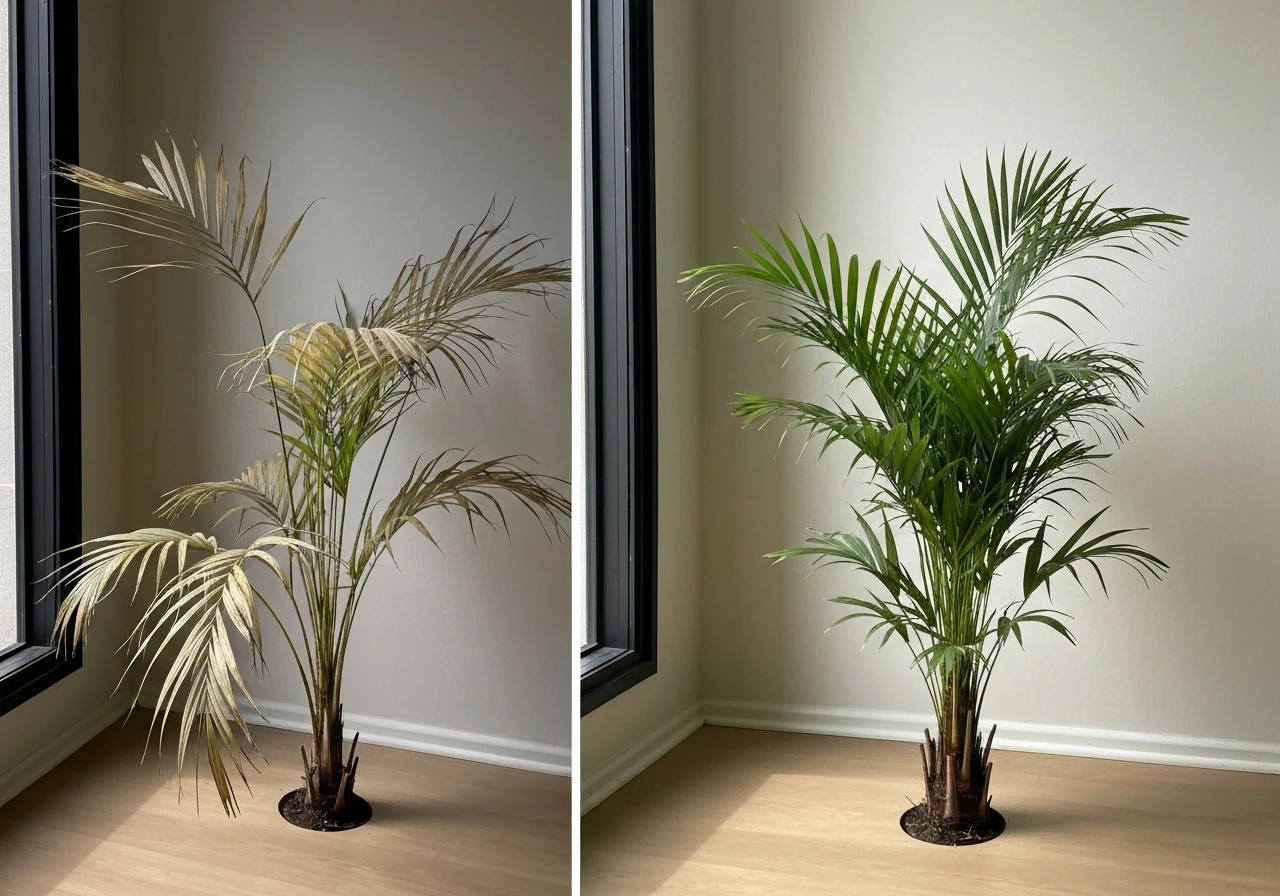
Here's a quick rundown of the issues you're most likely to see and what to actually do about them:
- Etiolation (leggy, pale, stretched growth): This is the clearest sign of insufficient light. The fix is more light, not more fertilizer. Move the palm closer to a window or add a grow light. Trim the overly stretched fronds once the plant is getting better light, and new growth should come in healthier. Don't expect the existing stretched fronds to shorten or green up — they won't.
- Yellowing fronds: Check three things before concluding it's a light issue: Is the soil staying wet too long (overwatering)? Is it getting enough nutrients? Is it getting enough light? In a low-light setup, all three are possible. Yellow fronds on the lower part of the plant that dry up and fall off are often just normal aging. Widespread yellowing across the whole plant points to overwatering or light deficiency.
- No new growth for many months: Areca palm grows slowly, but complete stasis usually means the light is too low. Add supplemental light and keep temperatures consistently warm (above 60°F). Don't fertilize more to push growth — it won't help if the light isn't there to power photosynthesis.
- Brown leaf tips: Often linked to dry air, fluoride in tap water, or salt buildup from over-fertilizing, not just low light. Try using filtered or rainwater, increase humidity, and flush the soil occasionally. But also check whether improving light reduces overall stress.
- Root rot (mushy base, smell from soil): Almost always caused by overwatering, which is far more likely when light is low and the soil dries slowly. Trim rotted roots, repot into fresh well-draining mix, and drastically reduce watering frequency.
If you're comparing how areca palm handles dim conditions versus other houseplants, it sits in a middle tier. It's not as shade-tolerant as calathea or money tree, which genuinely do reasonably well in lower light. Plants like yucca actually prefer bright conditions even more than areca does, so if areca is struggling in your space, yucca would likely struggle even more.
That means can yucca grow in low light is unlikely, since yucca generally needs brighter light than most rooms provide Yucca actually prefer bright conditions even more than areca does. Peperomia, on the other hand, handles low light better and might be a good companion plant or alternative if your space is genuinely dim.
Areca palm is worth the effort if your room gets at least some good indirect light, but be honest with yourself about what you're working with before committing to the palm. If you are wondering whether can peperomia grow in low light, the answer depends on how dim your room really is.
The bottom line: areca palm is not a low-light plant, but it's not impossible to keep in a less-than-ideal spot if you work with it. Can calathea grow in low light? It depends on how low you mean, but many varieties do better with bright, indirect light than true dim conditions. Give it the best window you have, supplement with an LED grow light on a 12-to-14-hour timer if your room is genuinely dim, water less than you think you need to, and watch the fronds closely so you can catch problems early. Do that consistently and your areca has a real shot at staying healthy even without ideal natural light.
FAQ
How low can I place my areca palm and still keep it alive?
Yes, but only if “low light” is actually the higher end of dim, typically 100 to 200 foot-candles (about 1,000 to 2,000 lux) near the leaf area. If your spot is below roughly 100 fc, the palm may survive for a while but usually becomes thin, slows to a crawl, and gradually declines. A grow light is the reliable way to close the gap.
Should I rotate my areca palm in low light?
Turn it into a rotation plan. Every 2 to 4 weeks, rotate the pot 180 degrees so new fronds get even light exposure. In low light, areca will “reach” over time and can start leaning toward the brightest side if you never rotate.
What light schedule should I use if I’m supplementing areca in low light?
If it’s on a timer, aim for 12 to 14 hours a day, and keep the schedule consistent. Unlike flowering plants, areca is not strongly dependent on photoperiod, but irregular on-off timing can make it harder to correct the light deficiency. Also keep the light distance steady (about 12 to 24 inches above the canopy) as the plant grows.
Why is my areca turning mushy or developing root rot in a dim room?
A common mistake is using the same watering rhythm you would in brighter rooms. In dim conditions, let the top 1 to 2 inches of soil dry before watering, and in winter allow it to get close to dry before adding more. Never rely on calendar-based watering, because low-light airflow and temperatures change drying time.
Can I use the same fertilizer routine for areca in low light?
Not necessarily. Areca’s slow growth in low light means salt and fertilizer buildup accumulate more easily. If you see burn or browning plus crusty soil, flush the pot with plain water periodically, then reduce fertilizer to about once every 6 to 8 weeks in the growing season (half strength) and skip in winter.
How do I tell if my problem is low light or fertilizer/watering?
Look for the pattern on the fronds. Light-related decline often starts with slower overall growth and fronds that gradually lose vibrancy. Nutrient issues can look different: uniform pale green across fronds can point to nitrogen deficiency, while tip browning is more often linked to salt buildup, dry air, or irregular watering. If you are unsure, adjust one variable at a time (usually light first) for a couple of weeks.
Why does my grow light look bright but my areca still isn’t improving?
Yes, if you measure at the leaf level. A phone lux meter can help for ballpark positioning, but grow lights are better judged by PPFD at the canopy. If the product does not list PPFD (or usable intensity info), it may not deliver enough plant-ready light even if it looks bright.
What’s the best way to improve light if I can’t change my room layout?
Move it closer to the light source even if that means less “comfortable” placement. Light falls quickly with distance, so placing the palm a few feet closer to the window often matters more than small tweaks elsewhere. If you cannot move it, use a taller adjustable grow light setup so the distance stays within the target range as the plant grows.
Can I move my areca from low light to brighter light suddenly, or should I transition it?
Yes, but do it carefully. Sudden large jumps in light can cause stress, especially after months in dim conditions. Increase exposure gradually (for example, shift closer or increase grow-light intensity duration in increments over a few weeks), then reassess frond color and growth.
Are low-light areca palms more likely to get spider mites?
Low light increases the risk of spider mites and scale because stressed plants are more vulnerable. Check the undersides of fronds every couple of weeks, and act early with insecticidal soap or neem oil. Improving light is a long-term prevention step, but you still need to treat pests promptly once you detect them.