
Ferns can grow without direct sunlight, but they cannot grow in total darkness. What most people mean when they ask this question is whether ferns can survive in a dim room with no window sun hitting the plant directly, and the honest answer is: yes, many ferns handle that well. But if your space is genuinely dark, as in artificially lit at best, you will need to supplement with a grow light or your fern will slowly decline rather than grow. There is a big difference between shade-tolerant and light-independent, and ferns fall firmly in the first camp.
Can Ferns Grow Without Sunlight? Light Needs and Setup
Marcus Hartley
3 Jun 2026
Surviving vs. actually thriving: what the research says
This is where a lot of people get tripped up. Ferns have a reputation as low-light plants, and that reputation is mostly earned. Boston fern (Nephrolepis exaltata), one of the most common indoor ferns, is officially categorized as a "low light" houseplant by University of Illinois Extension, which places it alongside snake plants and ZZ plants in that tier. That sounds reassuring.
But the University of Minnesota Extension is blunt about what "low light" actually delivers: tropical ferns used as houseplants "grow poorly in low-light locations. " Survival is not the same as growth. A fern sitting in a dark corner might hold on for weeks or even months, but it will not put out new fronds, it will not stay full and lush, and eventually it will decline.
If you want a fern that looks good and keeps growing, you need to be honest about how much light it is actually getting.
What "no sunlight" actually means: window shade vs. real darkness
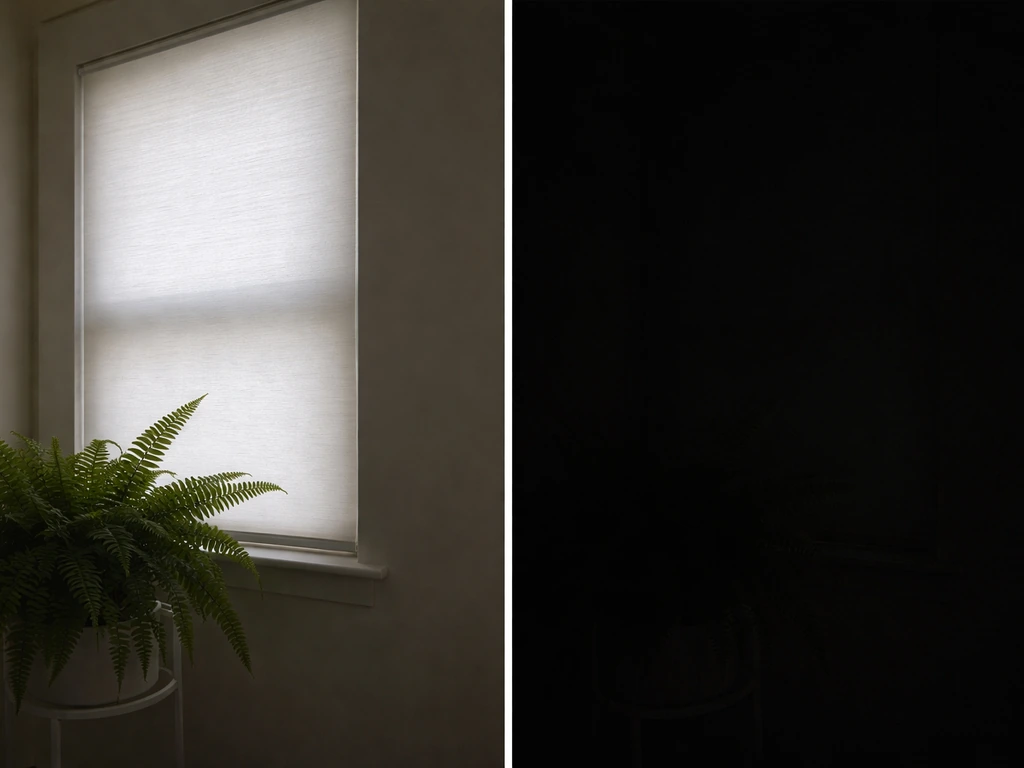
When people say they have no sunlight, they usually mean one of two very different things. The first is a room with a north-facing window, or a window blocked by an overhang, tree, or building, where the sun never hits the plant directly but the room still receives ambient daylight. The second is a truly dark interior room, a windowless bathroom, a basement, a hallway, where the only light comes from overhead bulbs switched on for a few hours a day. These are not the same situation at all.
University of Maryland Extension defines "low light" for houseplants as roughly 25 to 100 foot-candles, and describes north-facing windows and artificially lit rooms as typical low-light environments. Missouri Botanical Garden puts that same 25 to 100 foot-candle range under "low light conditions" that never receive any direct sun. A typical north-facing window on a bright day can deliver 50 to 100 foot-candles at the plant.
UMN Extension also notes that light intensity is commonly measured in foot-candles, and that “low-light” home placements often resemble north windows or dark corners low-light home placements often resemble north windows or dark corners.
A standard overhead room light in an interior room often delivers 10 to 25 foot-candles at plant level, which is below the threshold where meaningful photosynthesis happens for most houseplants. So if you have a dim but windowed room, you are in a very different position than someone with a truly windowless space.
How ferns respond to artificial light: LEDs, fluorescents, and regular bulbs
Here is the good news: ferns do not care whether light comes from the sun or a bulb, as long as the light delivers enough intensity and the right spectrum. Photosynthesis runs on light energy, not sunlight specifically. A controlled grow-chamber study published in Frontiers in Plant Science confirmed that ferns can be grown successfully under specific LED wavelengths in completely windowless, light-proof environments, as long as the photoperiod and intensity are properly programmed. That means a totally artificial setup is genuinely viable, not just theoretically but practically.
That said, not all artificial light is equal for plant growth. Here is how the main options stack up for ferns:
| Light Source | Plant-Useful Output | Best For | Drawbacks |
|---|---|---|---|
| Full-spectrum LED grow lights | High, tunable spectrum including red/blue wavelengths | Primary light source in windowless setups, supplemental lighting | Upfront cost; need correct distance to avoid bleaching or under-lighting |
| T5/T8 Fluorescent grow tubes | Moderate, decent full-spectrum output | Seed starting, shelf setups, supplemental lighting | Generates some heat; less efficient than modern LEDs; bulbs degrade over time |
| Standard LED household bulbs | Low to moderate; limited in red/blue plant-growth spectrum | Supplement in already-dim rooms with some natural light | Usually not enough as sole light source for active fern growth |
| Incandescent bulbs | Very low useful output, high heat | Not recommended for plants | Generates excessive heat, poor spectrum for photosynthesis, energy inefficient |
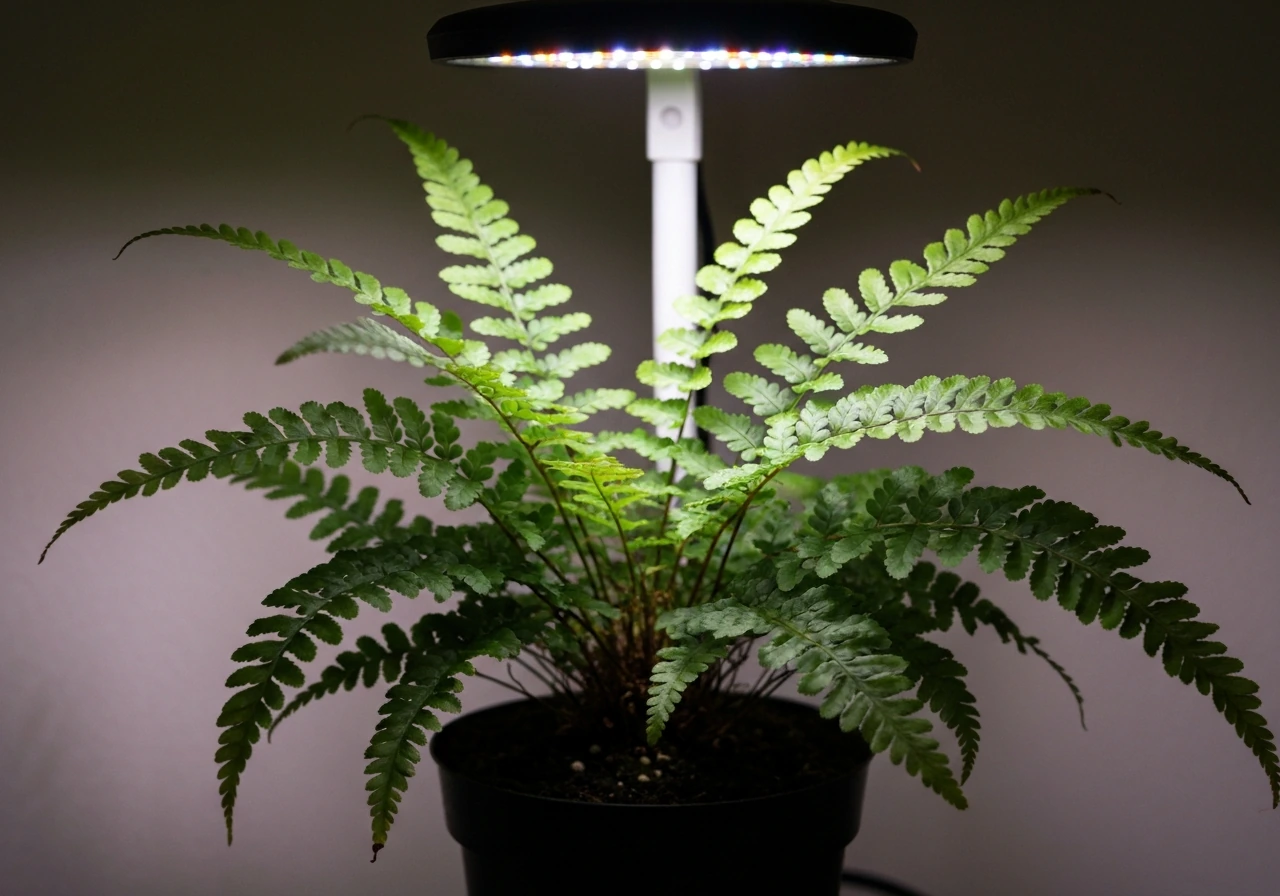
For a fern with no natural light at all, a full-spectrum LED grow light is your most practical and energy-efficient option. Fluorescent T5 or T8 tubes work well too, especially on wire shelving setups, and are often cheaper upfront. Standard household LEDs can help in a room that already gets a little ambient daylight, but they are rarely enough on their own.
How much light and for how long: practical targets
Ferns sit on the lower end of the light-intensity spectrum compared to most flowering houseplants, but they are not zero-light plants. Research on fern photosynthesis shows a measurable light-response curve up to about 200 to 400 micromoles per square meter per second (µmol m⁻² s⁻¹ PPFD), which is the scientific unit for photosynthetically active light. For practical indoor purposes, you are aiming for the lower part of that range.
- Minimum for survival: 25 to 50 foot-candles (roughly 5 to 10 µmol m⁻² s⁻¹ PPFD). A fern may hold on at this level but will not grow actively.
- Threshold for active growth: 75 to 150 foot-candles (roughly 15 to 30 µmol m⁻² s⁻¹ PPFD). This is a realistic target for a healthy indoor fern without direct sun.
- Ideal range: 150 to 250 foot-candles (roughly 30 to 50 µmol m⁻² s⁻¹ PPFD). New fronds will emerge regularly at this level.
- Too much light warning: Light-green or washed-out fronds signal excessive intensity, a symptom documented by UF/IFAS in Boston fern production studies.
For photoperiod (how many hours per day), aim for 12 to 16 hours of light when using artificial sources as the primary supply. Ferns are not strict photoperiod plants the way some flowering species are, but they need enough daily light hours to compensate for the lower intensity of most indoor grow setups. A simple plug-in outlet timer set to 14 hours on and 10 hours off is a reliable starting point and eliminates the guesswork of remembering to switch lights on and off.
Setting up a no-sunlight fern setup: placement and grow-light choice
You do not need an elaborate or expensive system to grow ferns without sunlight. Here is how to put together a simple, effective setup:
- Choose a full-spectrum LED grow light rated for at least a 2x2 foot coverage area. Look for panels or bar lights labeled "full spectrum" or specifying red and blue wavelengths. Brands like Spider Farmer, Mars Hydro, or even affordable Amazon options in the 20 to 45 watt range work for a small shelf or single plant grouping.
- Position the light 12 to 18 inches above the top of the fern's fronds. At that distance, a good full-spectrum LED will deliver roughly 100 to 200 foot-candles at plant level, which sits in the active-growth range for most indoor ferns. If you only have fluorescent T5 tubes, hang them 6 to 10 inches above the plant for similar output.
- Use a plug-in outlet timer and set it for 14 hours of light per day. This mimics a generous natural-light day and compensates for the lower intensity of artificial sources.
- If you have a small shelf or wire rack, mount the light underneath the shelf above and line up your ferns on the shelf below. This is one of the most space-efficient setups for a windowless area like a basement or interior room.
- If you are supplementing (meaning the room gets some ambient daylight but not enough direct or bright indirect sun), position a desk-style grow light 12 inches above the fern and run it for 8 to 10 hours per day to top up whatever natural light the room provides.
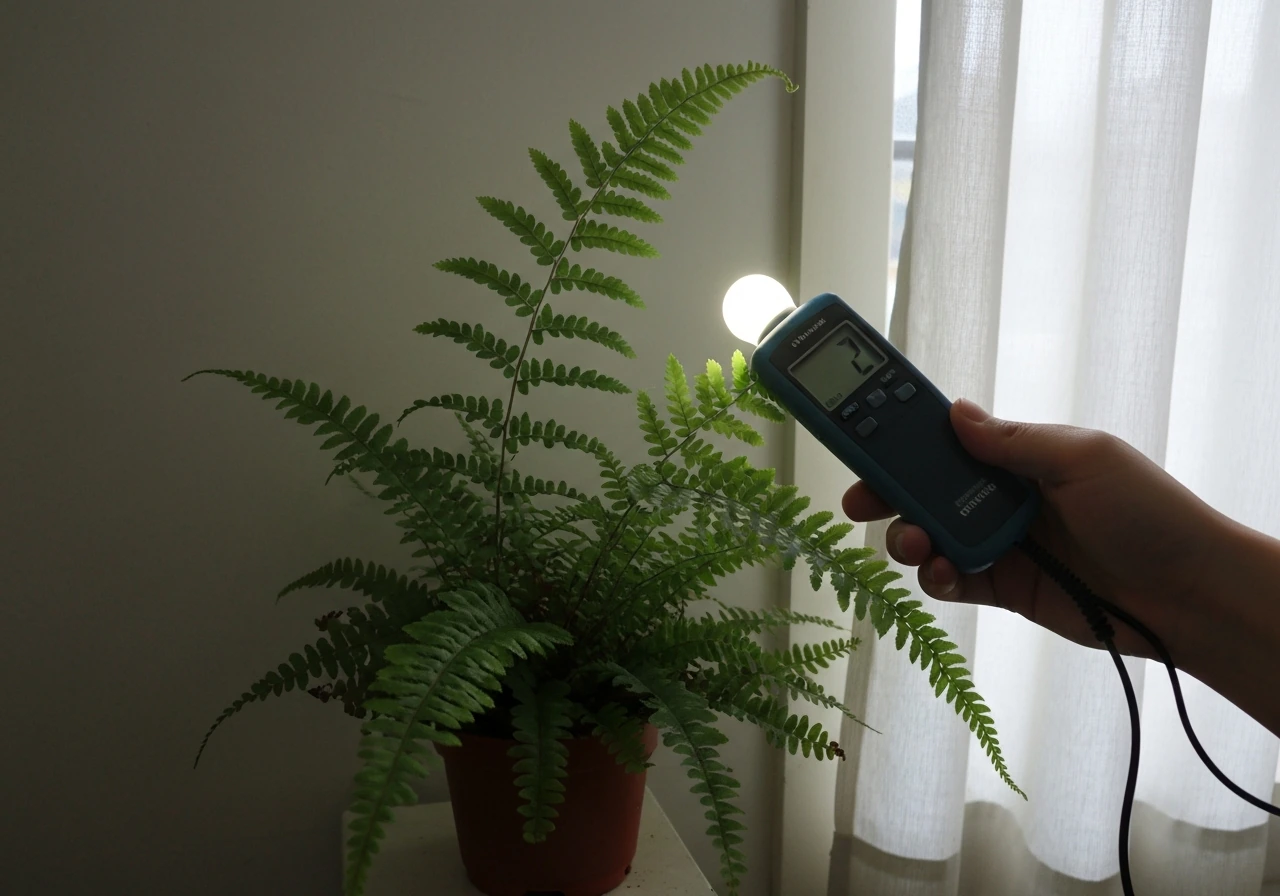
- Check light intensity at the plant level rather than guessing by bulb wattage. A cheap foot-candle meter or a free smartphone lux meter app can confirm you are in the right range. Divide lux by about 10 to get a rough foot-candle equivalent.
Signs your fern needs more (or less) light, and how to fix it
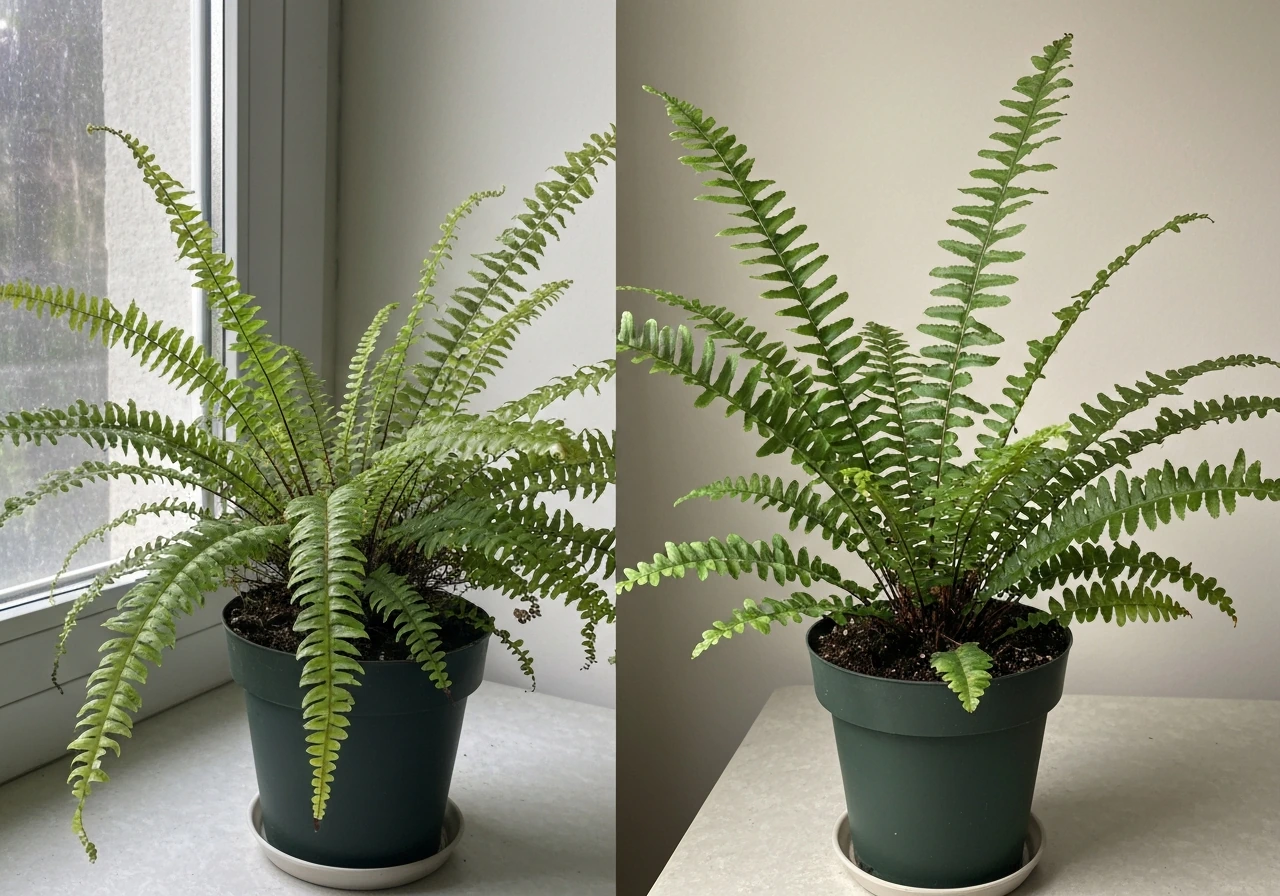
Ferns are actually pretty communicative once you know what to look for. Here are the key symptoms and what they mean:
| Symptom | Likely Cause | What To Do |
|---|---|---|
| Long, stringy, weak fronds reaching toward the light | Too little light (etiolation/stretching) | Move light closer or increase hours; Purdue Extension identifies this stretching as a primary low-light diagnostic |
| Very slow or no new growth over several weeks | Light below active-growth threshold | Increase intensity or duration; check light is actually reaching the plant center |
| Fronds turning pale green or yellowish-green overall | Too much light intensity | Raise the grow light 4 to 6 inches; UF/IFAS documents this as a classic over-light symptom in Boston ferns |
| Gray cast to fronds, reduced frond count, drooping | Chronic low light combined with possible root stress | Improve light first; then check soil moisture and root health |
| Brown, crispy frond tips | Usually low humidity or salt buildup, not a light problem | Increase humidity; check if you are over-fertilizing or using hard tap water |
| Yellowing fronds that drop off | Could be low light, overwatering, or root rot | Diagnose by checking soil moisture first; if soggy, ease off watering and improve light |
The most reliable adjustment method is to change one variable at a time. If fronds are stretching, move the light closer before extending the timer hours. Give the plant two to three weeks to respond before making another change, because ferns are slow to show improvement even after conditions improve.
The other stuff light cannot fix: humidity, water, and soil
Even with a perfect lighting setup, a fern will struggle if the other conditions are off. This matters especially in artificial setups because without natural airflow and light-driven transpiration patterns, the dynamics of moisture and humidity shift. Here are the non-light factors that most directly affect fern health indoors:
- Humidity: UMN Extension calls this out specifically for tropical ferns, noting that improving indoor humidity is one of the harder challenges. Ferns generally want 50 to 70 percent relative humidity. In dry climates or during winter heating season, this often requires a humidifier nearby, a pebble tray with water beneath the pot, or grouping plants together to raise local humidity.
- Watering: Maidenhair ferns should only dry out slightly between waterings according to K-State Extension, and this guidance broadly applies to most indoor ferns. In a low-light setup, the soil dries more slowly because the plant is transpiring less. This means your usual watering schedule may be too frequent, and soggy soil in a dim room is a fast path to root rot. Always check soil moisture before watering rather than following a fixed schedule.
- Root rot risk: UMN Extension specifically warns that soggy soil encourages root rot in ferns, and this risk is amplified in low-light environments where the plant processes water more slowly. Use a well-draining potting mix with perlite added, and make sure your pot has drainage holes.
- Soil and pot: Ferns like a lightweight, moisture-retentive but well-draining mix. A standard peat or coco-coir based mix with 20 to 30 percent perlite works well. Avoid heavy garden soil in pots.
- Temperature and airflow: Most indoor ferns do best between 60 and 75 degrees Fahrenheit. Keep them away from heating vents and cold drafts. Moderate airflow (from a fan on low, not directly blowing on the plant) can help prevent fungal issues that arise in humid, low-light conditions.
- Fertilizing: In low-light setups, growth slows considerably, and ferns need far less fertilizer than they would in bright conditions. Over-fertilizing a low-light fern causes salt buildup and tip burn. A diluted balanced liquid fertilizer at half strength once a month during spring and summer is more than enough.
What to do if your space is genuinely too dark: realistic options
If you are being honest with yourself and your space delivers fewer than 25 foot-candles consistently, even with lights on, here is the realistic situation: most ferns will not make it long-term without supplemental lighting. That is not a failure on your part; it is just physics. Photosynthesis stops below a minimum light threshold, and no amount of humidity, perfect soil, or careful watering can substitute for light energy.
Here are your actual options, in order of practicality:
- Add a dedicated grow light. This is the most reliable fix and does not have to be expensive. A 20 to 30 watt full-spectrum LED panel or bar light in the $25 to $60 range is enough to support one or two ferns in a windowless spot. Pair it with a timer and you have a nearly hands-off lighting solution.
- Move the plant closer to any available window, even a small one. Even a north-facing window that delivers 50 to 75 foot-candles is dramatically better than a dark interior. Ferns are one of the better candidates for north windows precisely because they do not need intense light, just consistent indirect brightness.
- Rotate the plant periodically into a brighter room. Some people keep a fern in a dim bathroom for aesthetic purposes and move it to a brighter room for a few days each week. It is not ideal, but it can extend the plant's life compared to permanent darkness.
- Choose a more darkness-tolerant plant for the truly dim spot. If supplemental lighting is not an option and your space delivers very little natural light, a fern is probably not your best choice. Plants like pothos, ZZ plants, or cast iron plants tolerate much lower light thresholds. The broader question of what can grow without sunlight is worth exploring before committing to a fern in a very dark space.
- Consider that some ivy varieties also handle low light reasonably well, though like ferns they still need some measurable light to survive long-term, not true darkness.
The bottom line is that "growing ferns without sunlight" is absolutely achievable with the right artificial light setup, and plenty of people do it successfully in basements, offices, and windowless bathrooms. But "without any light at all" is not possible for any plant, ferns included. No plant can grow in total darkness, so any cave-like setup needs an external light source or energy input for photosynthesis to occur. Get the light piece right first, keep the humidity up, water carefully, and a fern will reward you with lush, trailing fronds even in a room that never sees the sun.
FAQ
How do I tell if my fern is getting enough light when there is no direct sun?
Watch for new fiddleheads and steady production of fronds. If you see only existing fronds slowly yellowing or crisping without fresh growth, your light is likely below the level needed for photosynthesis, even if the fern looks alive.
If my room is windowless but not fully dark (there is some light spill), will a grow light still be necessary?
It depends on consistency, not brightness at one moment. If the area still drops close to darkness when lights are off, your fern will often stall, so plan to measure or test by adding a grow light for 2 to 3 weeks and observing whether new fronds appear.
Can I use a regular LED bulb (like in a ceiling fixture) instead of a grow light?
Sometimes, but household bulbs are usually too weak for sustained fern growth. If the plant is more than a couple feet from the bulb or the room light is mostly decorative, expect slow decline. A grow light becomes the safer choice when you cannot guarantee sufficient intensity.
What distance should I place an LED grow light from a fern?
Start conservatively and adjust. If the fern is stretching, move the light closer, if it looks bleached or edge-burned, move it farther or shorten the daily photoperiod. Change one variable at a time and reassess after 2 to 3 weeks.
How many hours per day should I run the lights for a fern in an artificial setup?
A common starting point is 12 to 16 hours daily. Avoid running 18 to 24 hours as a default, because prolonged light can dry the fronds and stress the plant, especially if humidity and watering are not carefully managed.
Do ferns need complete darkness at night to do well?
Yes, they benefit from a real dark period. Use a timer so there is a nightly off cycle, because continuous light can disrupt normal plant rhythms and increase stress in enclosed indoor spaces.
Will increasing humidity compensate for insufficient light?
Not enough to replace light. Higher humidity can reduce browning and help fronds look better, but if photosynthesis is too low, the fern will stop producing new growth and will gradually weaken.
Why does my fern look worse after I add a grow light?
Most often it is either too much intensity too quickly, or a mismatch with watering. When light increases, the pot may dry faster, so the soil can become too dry or uneven. Adjust the light gradually and monitor soil moisture daily at first.
Should I rotate my fern under artificial light?
Yes, if the light comes from one direction. Rotating every 1 to 2 weeks helps keep fronds fuller and reduces leaning, which is common when the plant tries to “reach” the brightest side.
My fern survives in the dark corner but never grows, what should I change first?
Change the light setup first. If you have no direct sun and no grow light, the lowest-impact fix is adding supplemental lighting for a defined schedule, then wait 2 to 3 weeks to confirm whether new fronds begin.
Is “low light” the same as “no sunlight” for ferns?
No. “No direct sun” can still mean meaningful ambient light from windows or reflections. True no-sun, windowless interiors can fall below the threshold needed for long-term growth, even if the room seems bright to you.
Can I grow multiple ferns under the same light fixture without extra changes?
Only if the coverage and intensity are adequate. More plants can absorb more light and create uneven results, so you may need to raise the light level, increase wattage, or ensure each plant sits within the brightest area of the setup.
What is a practical way to test whether my fern needs a stronger light?
Run a controlled 2-week trial: provide consistent light daily using a timer, keep watering and humidity steady, and record whether new fronds appear and whether fronds stay greener. If there is no new growth after the trial, increase intensity or extend the light schedule within the recommended range.