Plants don't grow deep in the ocean without light, they grow with very faint, filtered light that most people would never recognize as usable. The organisms doing photosynthesis down there (mostly algae, phytoplankton, and seagrasses, not land plants) have evolved pigments and metabolic tricks to squeeze energy out of the tiny sliver of blue-green light that actually reaches them. And here's why that matters to you as an indoor gardener: those same principles explain exactly which houseplants can survive in a dim corner, why spectrum matters more than raw brightness, and how a well-placed grow light can make all the difference.
How Plants Grow Deep in the Ocean Without Sunlight
Marcus Hartley
24 May 2026
What light is actually available underwater
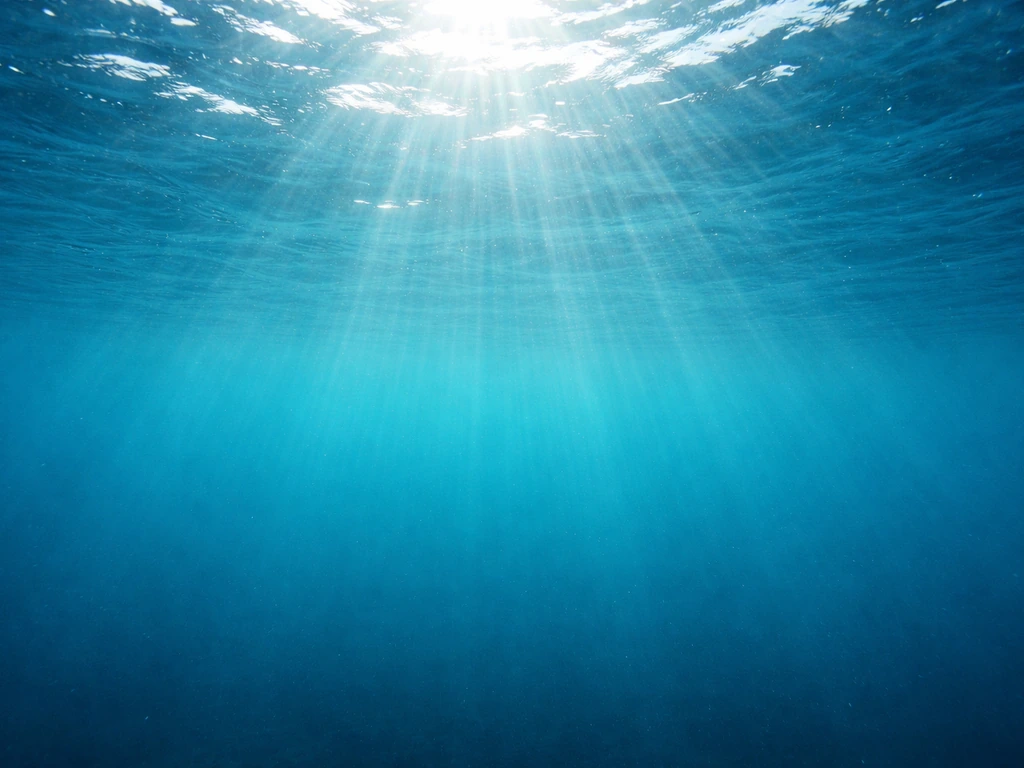
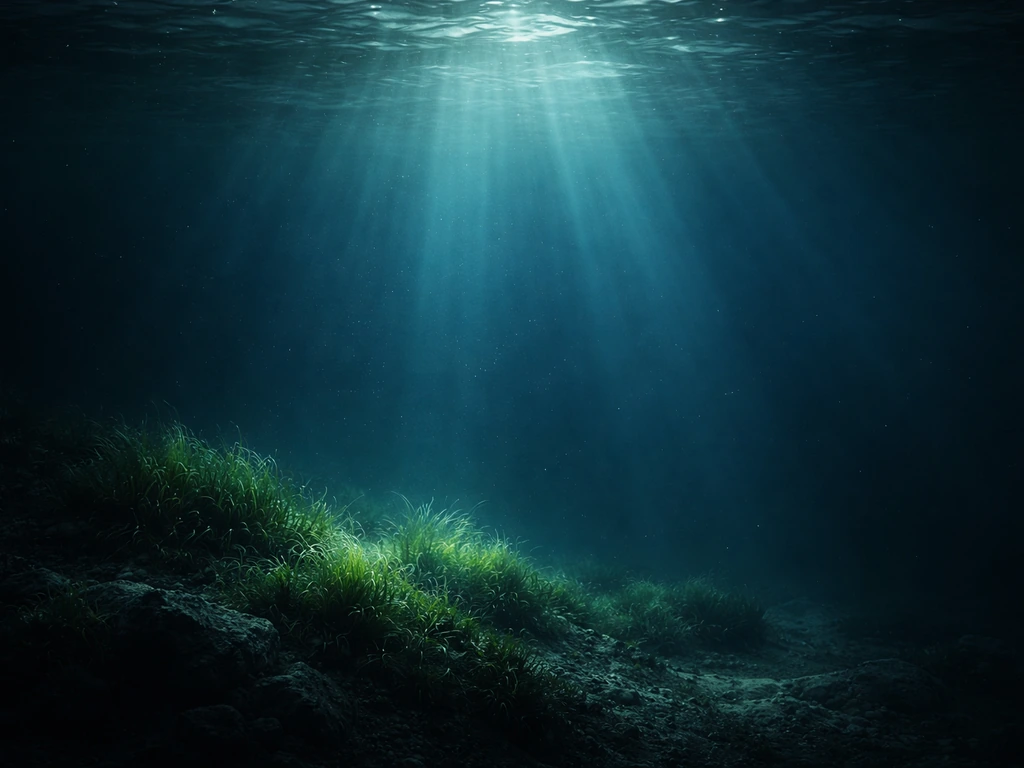
First, let's clear up the biggest misconception: "deep in the ocean" does not mean total darkness, at least not where photosynthesis happens. Water doesn't block all light equally. Red wavelengths get absorbed within the first few meters, but blue and blue-green wavelengths travel much farther down. That's literally why the ocean looks blue, it's the color that survives the journey. So at depth, there's still light, it's just heavily skewed toward the 400–500 nm range of the spectrum.
Scientists define the "euphotic zone" (also called the photic zone) as the layer of water where photosynthetically available radiation, or blank" rel="noopener noreferrer">PAR, is at least 1% of its surface value. That 1% threshold sounds tiny, but it's enough to sustain photosynthesis for organisms adapted to it. How deep that zone extends depends enormously on water clarity. Because estimating light attenuation with the diffuse attenuation coefficient Kd can be done using Secchi depth, this approach helps translate water clarity into usable light-availability estimates Kd can be estimated from Secchi depth. In clean, open ocean water it can reach down to around 80 meters. In murky, turbid coastal water loaded with sediment and chlorophyll, it might only extend 4 or 5 meters. Turbidity is the ocean's version of a dark room: the cloudier the water, the less usable light gets through.
This is why you can't just say "ocean plants grow without sunlight." They grow with attenuated, spectrally filtered sunlight. The mechanisms are different from a sunny windowsill, but photosynthesis is still happening. What's remarkable is how efficiently these organisms use what little they get.
Where deep-ocean photosynthetic life actually lives
The photosynthetic organisms you'll find at depth aren't random, they're clustered in specific microhabitats where light, nutrients, and temperature work together. Here's a quick breakdown of who lives where and how.
| Organism type | Typical depth range | Light conditions | Key location notes |
|---|---|---|---|
| Phytoplankton | Surface to ~200 m | High to 1% PAR | Free-floating; adjust vertical position seasonally |
| Kelp and large macroalgae | Intertidal to ~30 m | Moderate to low | Attached to hard substrates; forms canopy layers |
| Coralline algae (crustose) | Down to ~200 m in clear water | Extremely low PAR | Encrust rock surfaces; extremely efficient pigments |
| Seagrasses | Typically 0–10 m, occasionally deeper | Low but steady | Require sediment rooting and at least trace PAR |
| Deep microalgae / biofilms | Below euphotic zone edge | Near-zero PAR | Some survive on bioluminescence or chemical energy |
Coralline algae are the real overachievers here. Some crustose coralline species have been found growing in waters where PAR is close to the absolute minimum for photosynthesis, partly because they position themselves on well-exposed rock faces that catch whatever faint light filters through. Seagrasses, on the other hand, need a bit more: they typically require sediment, warmer water, and at least enough light to sustain their root system. They're more like houseplants in that regard, flexible, but not unlimited.
How they actually survive: pigments, efficiency, and smart positioning
This is the biology part, and I promise it's worth understanding because it maps directly onto what works for indoor plants in low-light rooms.
Specialized pigments
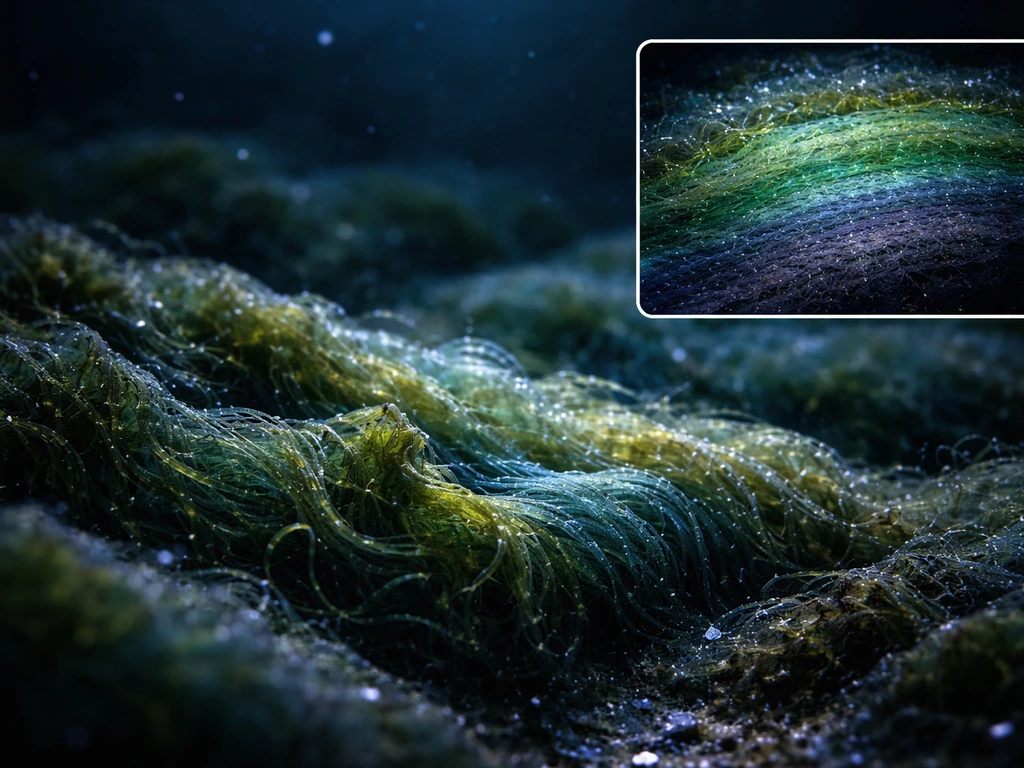
Deep-water algae don't rely on standard green chlorophyll alone. Many produce accessory pigments, phycoerythrin in red algae, fucoxanthin in brown algae, phycocyanin in cyanobacteria, that absorb the blue and green wavelengths that actually reach them at depth. Think of it as swapping out a solar panel optimized for direct sun for one optimized for overcast days. These pigments pass captured energy along to chlorophyll, which then runs the actual photosynthesis reaction. The result: these organisms extract usable energy from light wavelengths that land plants mostly ignore.
Photoadaptation and acclimation
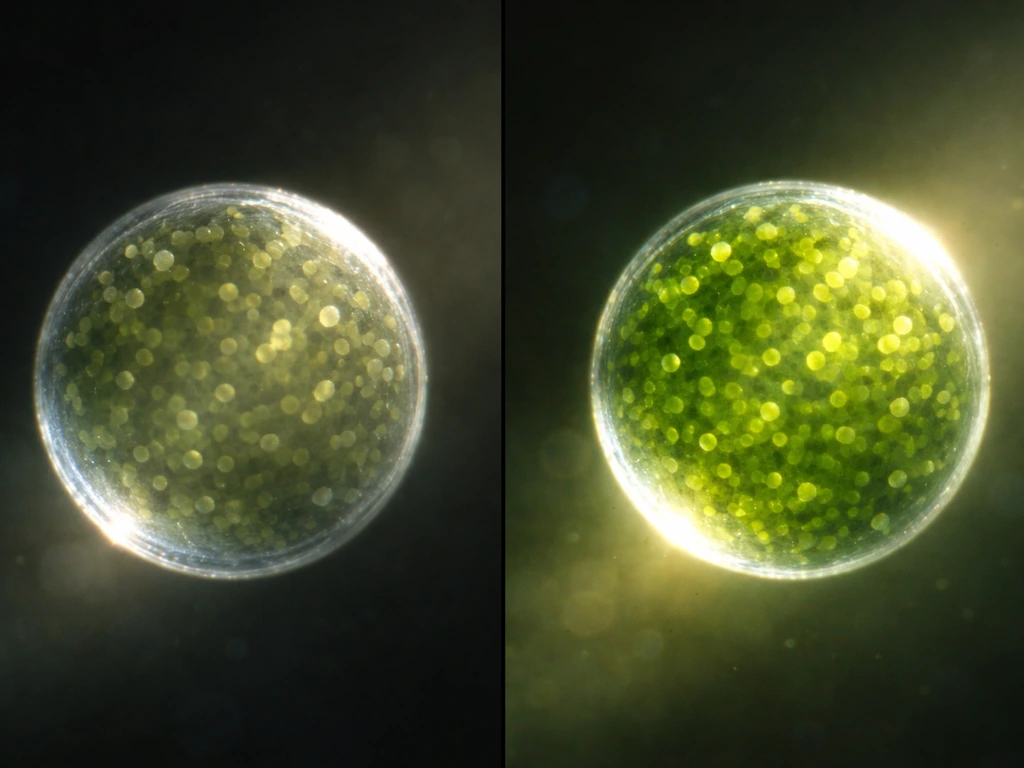
Many algae and phytoplankton adjust how much chlorophyll and accessory pigment they produce depending on the light available, a process called photoacclimation. In low light, they ramp up pigment production to capture more of what's there. Some also physically change their chloroplast arrangement to maximize light absorption. This is the cellular equivalent of your eyes adjusting when you walk into a dark room, except it happens over days and is semi-permanent. Land plants do something similar, which is why a pothos can eventually settle into a dim corner after a few weeks of looking a little sad. Plants in caves do something similar by using alternative low-energy sources and specialized adaptations to capture and use available light Land plants do something similar.
Thin structures and large surface area
Deep-water algae tend to be thin, flat, and maximally spread out. Large surface area relative to volume means more cells exposed to light. Some species grow in ways that minimize self-shading. The parallel in houseplants: low-light tolerant species like peace lilies and cast iron plants often have large, broad, dark green leaves. That dark green? It's extra chlorophyll, packed in to catch every photon available.
Metabolic efficiency and seasonal tradeoffs
Some deep-zone species slow their metabolism during periods of very low light and rely on stored carbohydrates to survive. Others are opportunistic, they photosynthesize intensely during brief periods of higher light and coast on reserves the rest of the time. This is a useful reminder that "surviving in low light" isn't always the same as "thriving." Some ocean algae are just barely making it, and some of your low-light houseplants are doing the same thing. They're alive, but don't expect explosive growth.
Bringing this home: what it means for low-light indoor gardening
The ocean light story is useful precisely because it reframes what "low light" means. Some plants can grow without direct sunlight by using very low, filtered light what can grow without sunlight. It's not zero light, it's filtered, dim, spectrally limited light that the right organisms can use. Your north-facing apartment isn't the deep ocean, but the logic is the same: some plants have the pigment chemistry and metabolic flexibility to work with what you've got, and some just don't. For a similar reason, not every fruit plant can grow without sufficient light, but some can handle dim indoor conditions if their needs are matched.
If you're dealing with a genuinely dim space, think more than 6 feet from a window, or a room that only gets indirect light for a few hours, here are the plants that consistently handle it without drama:
- Pothos (Epipremnum aureum): arguably the most forgiving, adapts quickly to low light though it grows slower
- ZZ plant (Zamioculcas zamiifolia): stores water and energy in thick rhizomes, handles neglect and dim conditions well
- Cast iron plant (Aspidistra elatior): lives up to its name, survives in genuinely low-light spaces
- Peace lily (Spathiphyllum): broad dark leaves, handles shade, though it may not flower much without more light
- Snake plant (Sansevieria / Dracaena trifasciata): very efficient with light, tolerates low lux levels for extended periods
- Chinese evergreen (Aglaonema): darker-leaved varieties do better in low light than the variegated ones
- Dracaena varieties: many tolerate indirect, filtered light similar to forest understories
Notice a pattern? Most low-light winners have dark green, large, or waxy leaves. They're packing in extra chlorophyll the same way deep-water algae pack in accessory pigments. If you're also curious about specific plant types like ferns or ivy in low light, those have their own nuances worth exploring separately since some fern species are genuine shade specialists while others struggle. Some fern species can handle dim, indirect light, but they generally still need some light energy to grow. But if you are wondering can ivy grow without sunlight, the answer depends on whether it is truly getting zero light or just dim, indirect light.
Grow lights for low-light spaces: what actually matters
If your space is too dim even for the tolerant species above, a grow light is the practical solution. The ocean analogy holds here too: what plants need isn't just brightness, it's the right part of the spectrum. Remember, deep-water algae survive on blue and blue-green wavelengths. Chlorophyll in all plants (land or sea) absorbs most strongly in the red (around 630–660 nm) and blue (around 430–450 nm) ranges. A grow light that covers both is doing the heavy lifting.
Spectrum: full-spectrum LEDs vs fluorescents
Full-spectrum LED grow lights are the current best choice for most indoor gardeners. They're energy-efficient, run cool, last a long time, and deliver the blue and red wavelengths plants actually use. Fluorescent tubes (especially T5 HO fixtures) are a solid budget option and have been used successfully for decades, they produce a decent spread of usable light, though they're less efficient than LEDs and generate more heat. Avoid standard incandescent bulbs; they run hot and deliver too much infrared with not enough PAR to be useful.
| Light type | Spectrum coverage | Energy efficiency | Best for | Rough cost to start |
|---|---|---|---|---|
| Full-spectrum LED panel | Full PAR range (400–700 nm) | High | Low-light to medium-light plants, most houseplants | $30–$100+ |
| T5 fluorescent | Decent PAR, slightly cool-biased | Moderate | Seedlings, herbs, low-light houseplants | $20–$60 |
| Red/blue "blurple" LED | Peaks at red and blue only | High | Growth-focused setups, less pleasant visually | $15–$50 |
| Incandescent / halogen | Heavy infrared, little usable PAR | Low | Not recommended for plant growth | Cheap but ineffective |
Distance and placement
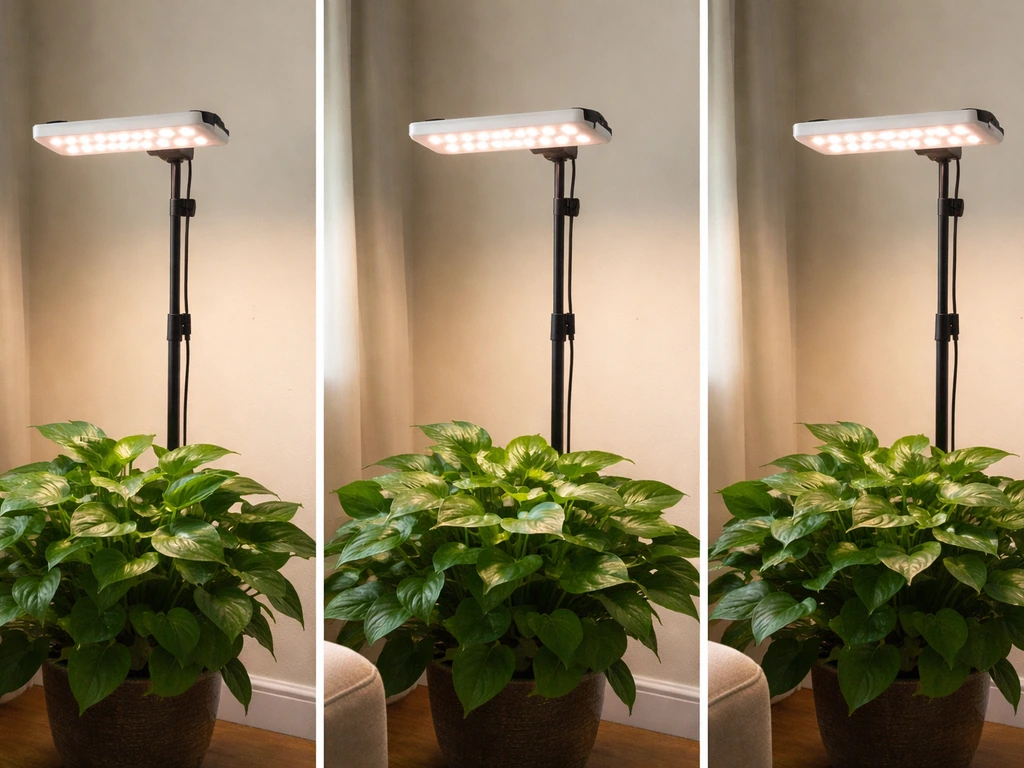
Light intensity drops off fast with distance, roughly following the inverse square law, which means doubling the distance cuts intensity to about a quarter. For low-light tolerant houseplants under an LED panel, 12 to 24 inches above the canopy is a good starting range. Seedlings and light-hungry plants want to be closer; shade-tolerant plants can sit a bit farther away. If you notice bleaching or brown tips, the light is too close. If growth stalls and leaves reach toward the light source, move it closer.
Runtime: how many hours per day
Most low-light houseplants do well with 10 to 14 hours of grow light per day. Using a simple outlet timer removes all the guesswork and keeps the schedule consistent, which plants prefer. Going beyond 16 hours isn't usually beneficial and can actually stress some plants that need a dark period. I run my setup on a 12-hour timer and it handles everything from pothos to peace lilies without issues.
Troubleshooting slow or struggling plants
Even with the right plant and a grow light, things can go sideways. Here's how to read what your plant is telling you and fix it quickly.
Signs your plant isn't getting enough light
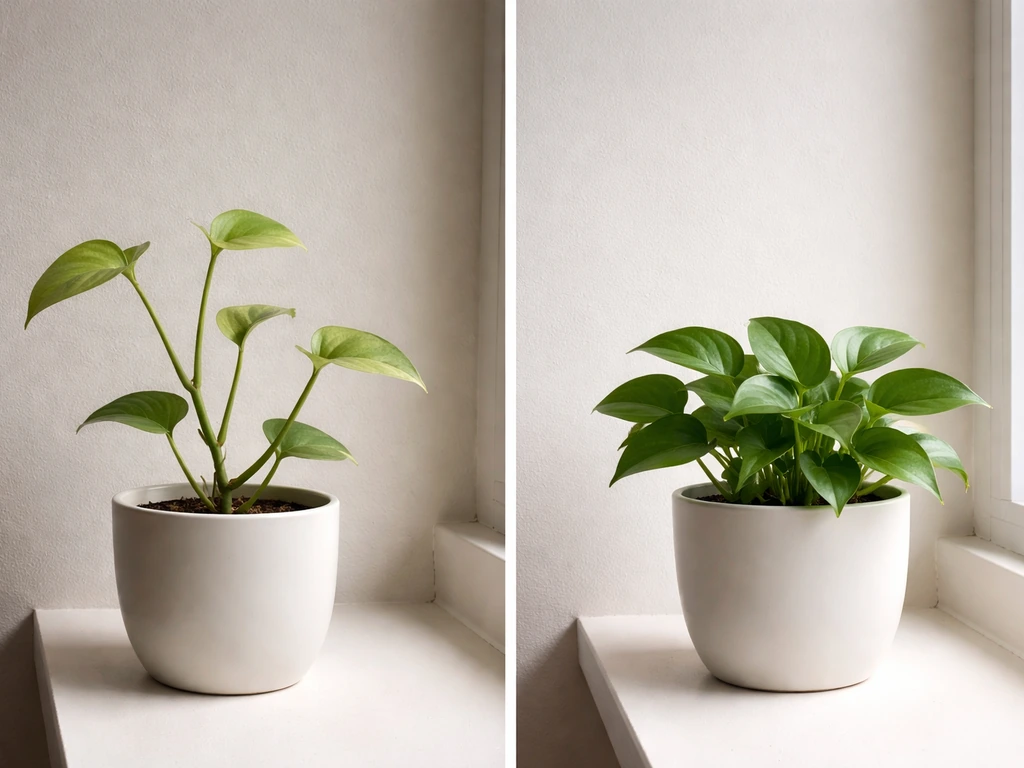
- Leggy, stretched stems with wide gaps between leaves (etiolation): the plant is literally reaching for more light
- Pale green or yellowing leaves, especially on new growth: chlorophyll production is limited by insufficient light
- Very slow or no growth over several months: the plant is surviving on reserves, not actively photosynthesizing
- Leaves turning toward or leaning toward the nearest light source: a clear directional signal
- Variegated plants losing their pattern and reverting to solid green: the plant is maximizing chlorophyll as a survival response
Simple fixes to try first
- Move the plant closer to your existing window or light source — even a foot can make a real difference
- Clean dusty leaves with a damp cloth; dust blocks light absorption more than most people realize
- Add a basic LED grow light on a timer if no window is available or if the window light is consistently poor
- Rotate the plant every week or two so all sides get equal light exposure
- Check that you're not overwatering — light-deficient plants photosynthesize less and use water more slowly, so soggy soil becomes a secondary problem
- If you're supplementing with a grow light, make sure it's actually in the right spectrum (look for "full-spectrum" or check that it covers both blue and red)
One thing I've learned the hard way: if a plant has been struggling in low light for months, don't expect a grow light to instantly fix it. Give it four to six weeks after improving light conditions before judging whether it's recovering. New growth will be the signal, when you start seeing healthy new leaves, you're on the right track. Just like those deep-ocean algae that slowly ramp up pigment production when conditions improve, your houseplant needs time to acclimate.
FAQ
If the ocean is dark at depth, is photosynthesis actually happening, or is it just surviving on stored energy?
Total darkness is the limiting factor, but “low light” can still be enough if it is consistent. If you are using a window, watch the leaves for a few days, then measure with a phone light meter if possible, target a stable dim-indirect level rather than moving the plant around throughout the day.
Does water clarity, like murky coastal water, change what kinds of ocean plants can survive, and is there an indoor equivalent?
Depth limits how much PAR reaches organisms, so turbidity matters. Indoors, the equivalent is dust, distance, and fixture placement, even a small change like a dirty LED cover or moving the light farther away can cut effective usable light enough to stall growth.
What are the most common mistakes when using a grow light for a dim room?
Yes. A grow light can be too weak, too far, or the spectrum can be mismatched. If you see pale or bleaching leaves, move the light slightly closer and confirm it includes both red and blue, if growth stalls, increase duration before increasing intensity, but don’t run light 24/7.
Is it better to leave a grow light on longer, or keep it within a set daily schedule?
For many shade-tolerant plants, more hours is not always better because they still need a dark period for normal metabolism. If you regularly exceed about 16 hours, try reducing to 10 to 14 hours first, and only adjust one variable at a time so you know what helped.
How do I choose the right distance between an LED grow light and my low-light plant?
Distance rules are unforgiving. If you are not sure where to place the fixture, start within 12 to 24 inches, then look for stress signs within 1 to 2 weeks, bleaching or browning tips suggest too much or too close, while stretched growth suggests too little.
How long should I wait to tell whether my plant is actually improving after moving it to brighter low-light or adding a grow light?
Low-light plants can acclimate, but they do not bounce back immediately. Give the plant 4 to 6 weeks after improving light, then evaluate by new growth and leaf color, not by whether older leaves recover.
How can I tell if my plant is surviving in low light versus truly thriving?
Many plants can survive in dim conditions but still grow slowly, the difference is “staying alive” versus “thriving.” A practical test is to track growth rate and new leaf formation, if new leaves stop or get smaller for a month, you likely need either more PAR or more consistent photoperiod.
Do low-light tolerant plants behave the same for seedlings and variegated varieties?
Seedlings and trailing climbers tend to be less forgiving than mature shade-tolerant plants. If you keep a low-light winner, expect slower growth, but for faster growers or variegated plants, you typically need stronger light to maintain color and prevent thin, weak growth.
Can I use regular bright indoor bulbs instead of a plant grow light, and how does spectrum affect results?
Yes, spectrum can matter even if the brightness looks similar. Chlorophyll responds strongly in red and blue, so a “bright white” bulb without the right mix can underperform. When in doubt, use a full-spectrum LED grow light designed for plants rather than general lighting.
Should I change my plant’s light level all at once, or gradually?
Avoid rushing a plant between extremes. If you are moving from a very dim corner to stronger light, increase intensity gradually over 1 to 2 weeks to reduce stress, similar to how organisms adjust pigments over time when conditions improve.