
English ivy can survive in low light, but it won't truly grow without some light source, whether that's a dim window or a basic grow light. The good news: ivy is one of the most shade-tolerant plants you can keep indoors. The USDA Forest Service and University of Illinois Extension both confirm it grows across the full range from deep shade to full sun. In a windowless room with zero light? It'll slowly decline. But in a genuinely low-light space, or with a simple artificial lighting setup, ivy can stay healthy and put out new growth. Here's exactly what that looks like in practice.
Can Ivy Grow Without Sunlight? Indoor Low-Light Guide
Marcus Hartley
5 Jun 2026
Does ivy actually need sunlight to live?
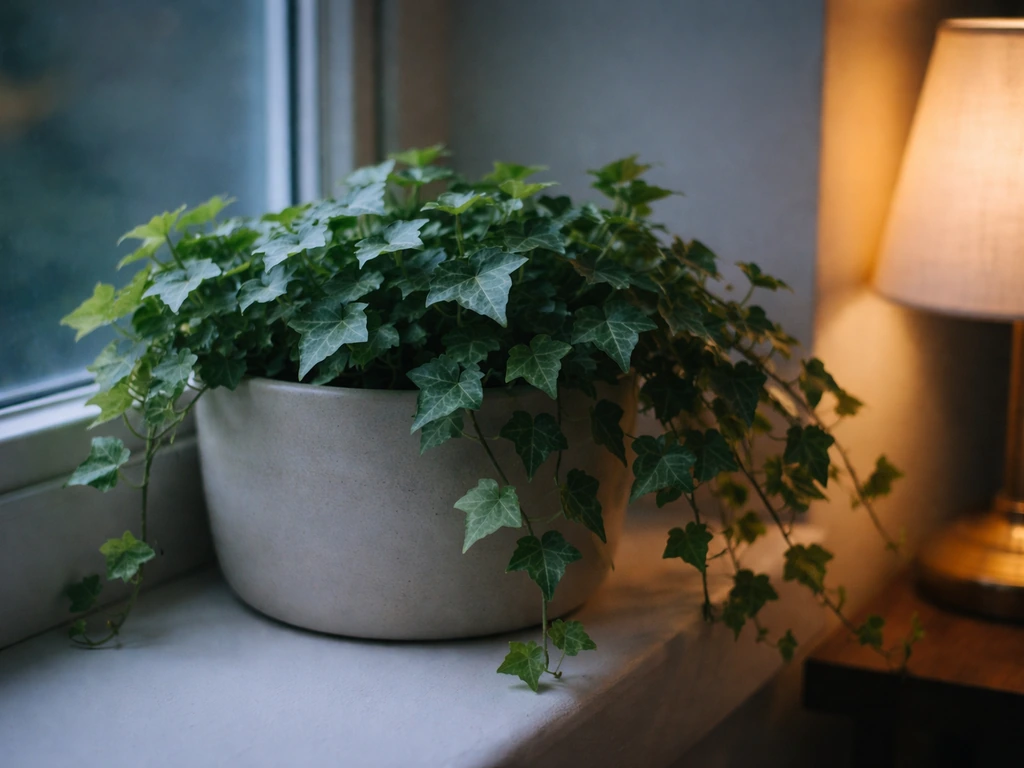
Technically, English ivy (Hedera helix) needs light, not sunlight specifically. That distinction matters a lot for indoor gardeners. Direct sunlight is just one source of the photosynthetically active radiation (PAR) that plants use to make food. Ivy is particularly good at working with low amounts of that energy because it's naturally adapted to growing under forest canopies and climbing up shaded walls. Research published in HortScience shows that ivy actually restructures its chloroplasts and increases chlorophyll B content in low-light conditions, which is basically the plant squeezing more efficiency out of every photon it gets.
That said, there's a real difference between surviving and growing. In very dim conditions, ivy will hold on, maybe for months, but you'll see the vines slow down dramatically, and new leaves will come in smaller and paler. If you want your ivy to actually trail, climb, and fill out, it needs enough light to run its full photosynthesis process. Think of it like this: surviving mode keeps it alive, growth mode keeps it thriving. The rest of this guide is about getting ivy into growth mode, even without a single sunny window.
Keeping ivy alive and growing with low or no direct light
If you have any natural light at all, even an east-facing window with a couple hours of soft morning sun, ivy will likely do fine on its own. UGA Cooperative Extension specifically calls out east-facing windows as a good spot for indoor plants, and in my experience, ivy in that kind of light stays lush and keeps putting out new growth through most of the year. North-facing windows are workable too, especially in summer when ambient outdoor light is stronger.
The real challenge is spaces with no useful natural light at all: interior rooms, basement apartments, offices with no windows near the plant. In those spots, ivy will eventually start to struggle. The vines stretch toward whatever faint light exists, the leaves space out, and the plant basically goes into low-power mode. If that sounds like your situation, artificial lighting is the straightforward fix, and it doesn't have to be complicated or expensive.
Positioning matters even with natural light
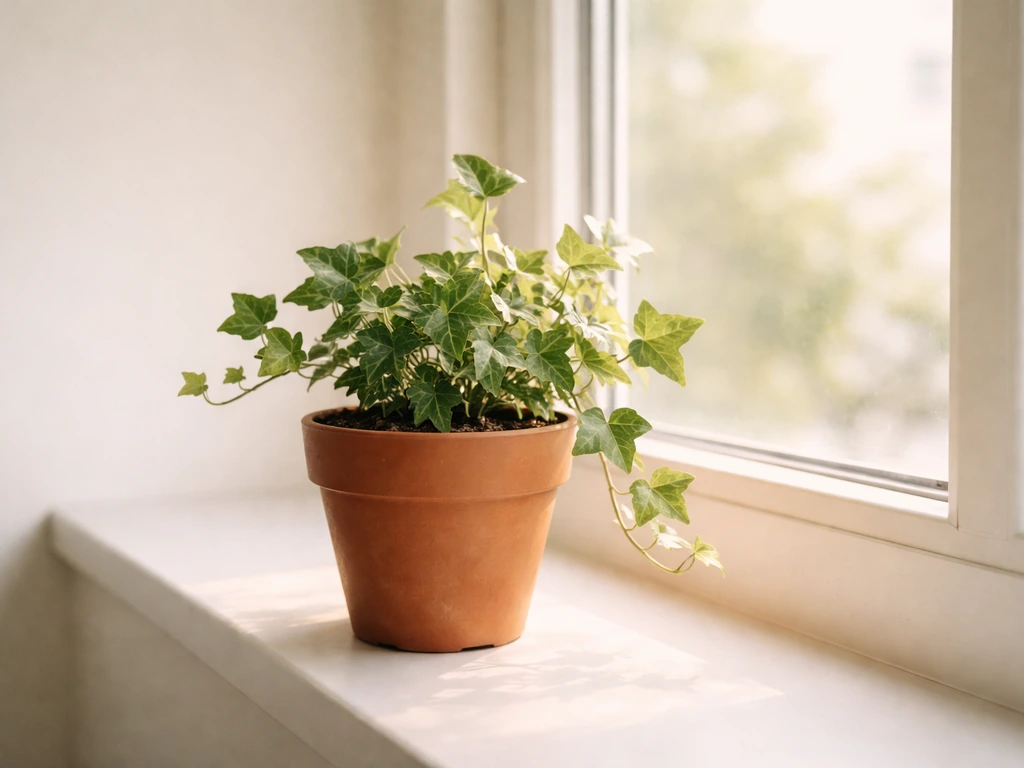
Before jumping to grow lights, try moving your ivy closer to whatever light source you have. Outdoor sunlight can reach 10,000 to 12,000 foot-candles according to Illinois Extension, but even a few feet from a window the intensity drops significantly. Getting ivy within two to three feet of a window, rather than across the room from it, can make a surprising difference in how actively it grows.
The best artificial lighting options for ivy
There are three main artificial lighting options worth considering: LED grow lights, fluorescent (including CFL) bulbs, and standard incandescent bulbs. Here's the honest breakdown.
| Light Type | Effectiveness for Ivy | Energy Use | Best Use Case |
|---|---|---|---|
| Full-spectrum LED grow light | Excellent — delivers full PAR spectrum efficiently | Low | Best all-around choice for any low-light indoor setup |
| Fluorescent / T5 / T8 tubes | Good — works well for shade-tolerant plants like ivy | Moderate | Good for shelves or setups with multiple plants |
| CFL (compact fluorescent) | Decent — loses intensity faster over time | Moderate | Affordable starter option; replace bulbs every 12 months |
| Standard incandescent bulb | Poor — produces mostly heat, little usable PAR | High | Not recommended for plant growth |
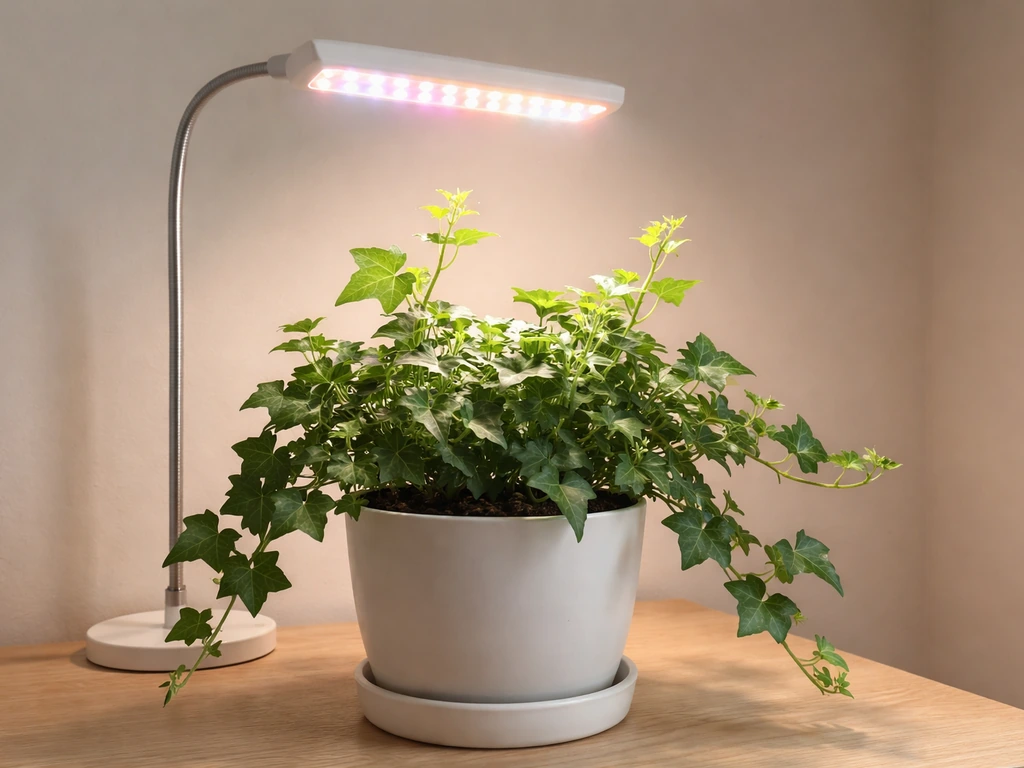
LED grow lights are the clear recommendation here. Gardening Know How points out that the metric to shop by is PPFD (photosynthetic photon flux density), not just wattage, because wattage tells you how much electricity the bulb uses, not how much usable plant light it actually outputs. A full-spectrum LED panel rated for a small grow area (even a budget one in the $20 to $40 range) will outperform a bright incandescent every time. Fluorescent tubes, especially T5 grow lights, are also a solid and affordable option if you're setting up a shelf or have multiple plants to light.
One thing to watch with CFLs specifically: fluorescent bulbs lose their intensity over time even when they still look like they're on. Gardening Know How flags this as a common issue. If you've been running the same CFL over your ivy for a year and growth has stalled, the bulb may simply not be delivering enough PAR anymore even though it looks lit.
How to set up your grow light for ivy: distance and hours
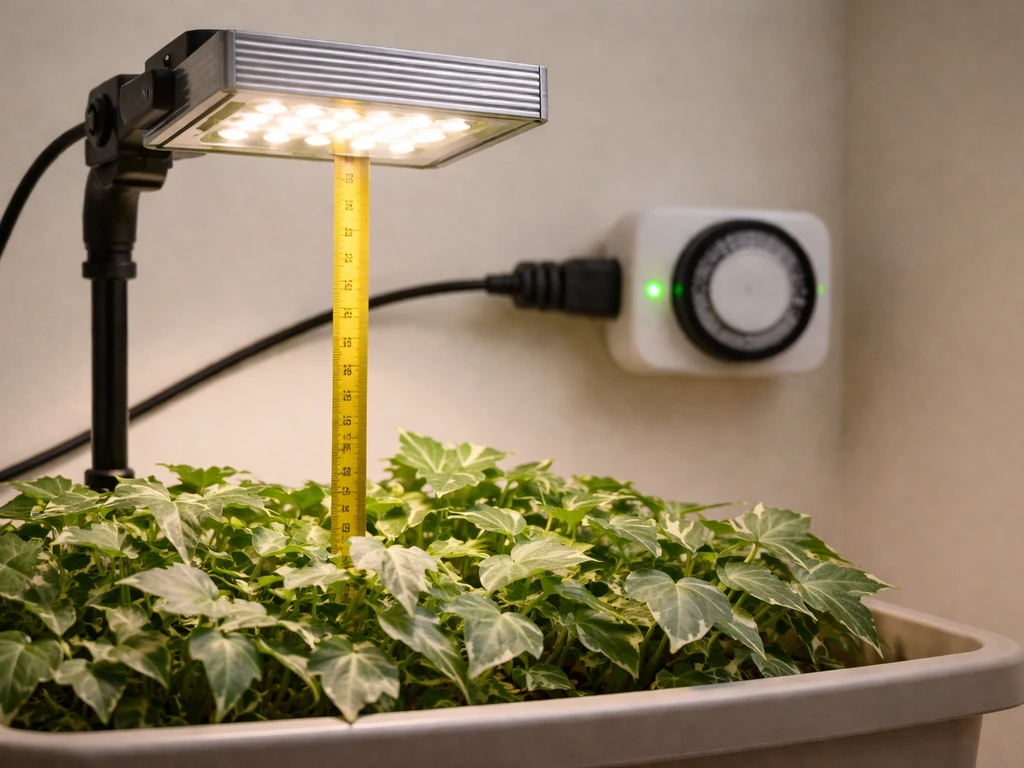
Getting the light placement right matters as much as choosing the right bulb. Light intensity follows an inverse-square relationship with distance, meaning that moving a light twice as far away doesn't just halve the intensity, it drops it to about a quarter. For practical purposes, this means keeping your grow light reasonably close to the plant makes a real difference.
University of Missouri Extension recommends placing artificial lights about 1 foot above the top of the plant as a starting point. University of Maine Cooperative Extension research supports this directionally: grow lights mounted 8 inches above plants needed only about 8 hours per day to hit target light levels, while the same lights at 20 inches required closer to 16 hours per day. So if you can't get the light close, compensate with more hours.
For the photoperiod, aim for 12 to 16 hours of light per day. University of Missouri Extension recommends about 16 hours daily when relying entirely on artificial light. Both University of Maryland Extension and Illinois Extension are clear that you shouldn't go beyond 16 hours total because plants need a dark period to rest and complete normal metabolic cycles. Running lights 24 hours a day won't speed things up and may actually stress the plant. A simple outlet timer set to 14 hours on and 10 hours off is a perfectly solid default for ivy.
- Mount LED or fluorescent grow light 8 to 12 inches above the top of your ivy for full intensity
- If mounting higher (16 to 20 inches), run the light for the full 16 hours to compensate
- Use an outlet timer to keep the schedule consistent — ivy benefits from a predictable light/dark cycle
- Keep total daily light (natural plus artificial combined) at or under 16 hours
- Replace CFL bulbs every 12 months even if they still appear to work
Signs your ivy isn't getting enough light
Ivy is pretty communicative when it's unhappy about light. The signs aren't subtle once you know what to look for, and catching them early means you can fix things before the plant goes into a real decline.
- Leggy, stretched vines with long gaps between leaves: the plant is reaching toward any available light source
- New leaves that are noticeably smaller and paler than older leaves: insufficient light means less chlorophyll production
- No new growth at all over two to three months (outside of winter dormancy): the plant is in survival mode, not growth mode
- Yellowing leaves that eventually drop: combined with slow growth, this often points to light deficiency rather than overwatering (though check soil moisture too)
- Loss of leaf variegation in variegated cultivars: research on English ivy confirms that low light reduces the contrast in variegated leaves
If you're seeing any of these, the fix is straightforward: move the plant closer to a light source, add a grow light, or increase the hours your existing light runs. Results won't be instant, but within three to four weeks of improved lighting you should see new growth points activating and existing leaves looking more saturated in color. Trim back the leggy stretched sections once the plant picks back up, which brings us to pruning.
Care beyond light: the other things that determine success
Light is the foundation, but a few other care factors interact directly with how well ivy performs in a low-light indoor setup. When light is limited, the plant's metabolic rate slows, which affects how much water and nutrients it actually needs.
Watering and soil
Low-light ivy needs less water than ivy in a bright window, and overwatering is one of the most common ways people accidentally kill it indoors. In dim conditions, the plant processes water more slowly, so the soil stays wet longer. Let the top inch of soil dry out before watering again, and make sure your pot has drainage holes. A well-draining potting mix (regular indoor potting soil mixed with a little perlite works well) keeps roots from sitting in moisture.
Temperature and humidity
English ivy prefers cooler indoor temperatures, roughly 50 to 70 degrees Fahrenheit, and handles average indoor humidity reasonably well. It doesn't love being near heating vents or radiators, which dry the air and stress the foliage. If your home is particularly dry in winter, a small humidifier nearby or occasional misting helps keep leaves from going crispy at the edges. Keeping ivy away from cold drafts near windows in winter is also worth doing, especially since research notes that low temperatures can make ivy more vulnerable to photoinhibition under low light.
Pruning and training
Regular pruning is genuinely important for indoor ivy, not just cosmetic. Gardening Know How recommends pinching or snapping vines just above a leaf node to prevent the plant from becoming long and leggy, and this applies doubly when light is limited. Pruning encourages the plant to push out new, bushier growth rather than spending energy on long thin vines. When you trim back a stretched, low-light vine, you're redirecting the plant's resources toward denser growth. Do this every month or two and you'll have a much fuller looking plant.
Fertilizing
When ivy is growing in low light, fertilize lightly and infrequently. University of Nevada, Reno Extension notes that indoor plants are typically fertilized to maintain growth rather than push rapid development, which is exactly the right mindset for low-light ivy. A diluted balanced liquid fertilizer once a month during spring and summer is plenty. In fall and winter, you can skip fertilizing entirely since growth naturally slows regardless of light levels.
Ivy in low light: what's realistic to expect
With a decent grow light setup running 14 to 16 hours a day, placed within a foot of the plant, English ivy will genuinely grow indoors with no natural sunlight. Plants in the deep ocean can also grow without sunlight by relying on alternative energy sources like chemosynthesis and scarce light from the surface how can plants grow deep in the ocean without sunlight. It won't grow as fast as it would in a bright south-facing window, but you'll see consistent new leaves, healthy color, and active trailing or climbing over time. If your only option is a truly dark interior room with no supplemental light, ivy will hang on for a while but will slowly decline. If you're trying to grow something else in the dark, you may be wondering which fruit plant can grow without sunlight and what lighting (if any) it needs fruit plant that can grow without sunlight. While English ivy does need light to grow, there are still other plants that can survive and even grow in very low light without direct sunlight grow without sunlight. In caves, plants typically rely on stored moisture and other organisms to supply some of the energy and nutrients, since sunlight is absent no natural sunlight. In that case, adding even a basic LED grow light changes the equation completely.
Ivy is forgiving and adaptable, which is part of why it's such a popular indoor plant. It's worth noting that other shade-tolerant plants like ferns face similar trade-offs in low-light environments, and the same artificial lighting principles apply across the board. The same question comes up for ferns too, so if you're curious whether they can grow without sunlight, check the specific low-light guidance before you buy can ferns grow without sunlight. If you've been struggling with ivy in a dim spot, the fix is usually simpler than you'd expect: better light placement, consistent timing, and a little pruning to redirect the plant's energy. Start there and see what happens within a month.
FAQ
If I put ivy in a completely dark closet with no light at all, will it die right away?
It usually will not die immediately, but it will steadily decline because photosynthesis cannot happen. In practice, expect slow leaf loss and paler new growth if you eventually restore light, but a closet with zero light is still a high-risk situation for long-term health.
How can I tell whether my ivy is “surviving” or actually “growing” in low light?
Survival signs are limited new leaves and longer gaps between leaf formation, with older leaves staying the same size or fading. Growth signs include tighter spacing on new vines, deeper green leaf color, and visible new growth points appearing at the nodes within a few weeks after you improve lighting.
Do I need full-spectrum light, or will any grow light work?
Ivy responds to usable photosynthetically active radiation, so a grow light that provides adequate intensity is more important than brand claims. Full-spectrum can help with overall plant appearance, but an overly weak “full spectrum” bulb will still stall growth, so focus on strength and distance first (PPFD, not wattage).
How many hours of light per day is too little if I use artificial lighting?
If you are relying entirely on artificial light, 12 to 16 hours is the usual target, with around 16 hours being the most aggressive end for ivy. Going far below that often leads to pale, slower growth, even if the plant looks “alive,” so increase hours before you assume the lamp is fine.
Can I leave ivy under a grow light 24/7?
No, it is not recommended. Ivy needs a dark period to complete normal metabolic cycles, and running lights continuously can increase stress even if the plant keeps looking somewhat green. Use a timer to guarantee a daily off window.
What height should I mount a grow light if I cannot place it close to the plant?
If you have to mount it higher, you generally need longer daily runtime to compensate for lower intensity. Start with the recommended spacing, and if you move the light farther away, increase hours within the 16-hour cap rather than exceeding it.
My CFL looks bright, but ivy growth stalled. Could that be the bulb aging even if it still shines?
Yes. CFLs and some older fluorescent setups can lose useful intensity over time, so the plant may receive less PAR than it did earlier. If growth has stopped despite correct placement and timing, replace the bulb before changing everything else.
Should I rotate ivy plants toward the light to prevent uneven growth?
Rotation helps if your light source is directional (like a single desk lamp or grow light). Without rotation, one side tends to grow more vigorously, leading to lopsided vines and more frequent leggy stretching toward the strongest side.
How do I adjust watering when ivy is in low light and using a grow light?
Treat low light as slower drying conditions. Let the top inch dry before watering, and do not water on a fixed schedule. If you have a grow light running daily, drying may improve slightly, but you should still check soil moisture rather than guessing.
Will low-light ivy need fertilizer, or can I skip it entirely?
In low light, go lighter. A diluted balanced liquid fertilizer about monthly during spring and summer is typically enough, and in fall and winter you can usually skip because growth slows regardless. Over-fertilizing increases the chance of salty buildup when the plant is not using resources quickly.
Why does my ivy get leggy indoors even when I added a grow light?
Legginess usually points to insufficient intensity at the leaf nodes or light coming from too far away. Another common cause is too-short daily runtime within your setup, since ivy needs enough energy to keep compact growth. Correct placement and timing before you prune heavily.
If I prune my ivy in low light, will it bounce back slower than usual?
It will likely respond more slowly, but pruning still helps redirect energy into new nodes. After you improve lighting, wait a few weeks for new growth points, and then trim back stretched sections once you see active regrowth rather than pruning repeatedly in rapid cycles.