
Yes, plants can grow under a regular light bulb, but most household bulbs won't do a great job on their own. The honest answer is that it depends entirely on which bulb you're using, how close it is to the plant, and how long you run it each day. A standard incandescent bulb sitting across the room from your pothos? That plant is surviving, not growing. A full-spectrum LED bulb positioned 12 inches above a snake plant running 14 hours a day? You might actually see real growth. The difference comes down to the quality and quantity of light your plant can actually use, and most regular household bulbs fall short on at least one of those fronts.
Can Plants Grow From Light Bulbs? What Works and What Fails
Marcus Hartley
24 Mar 2026
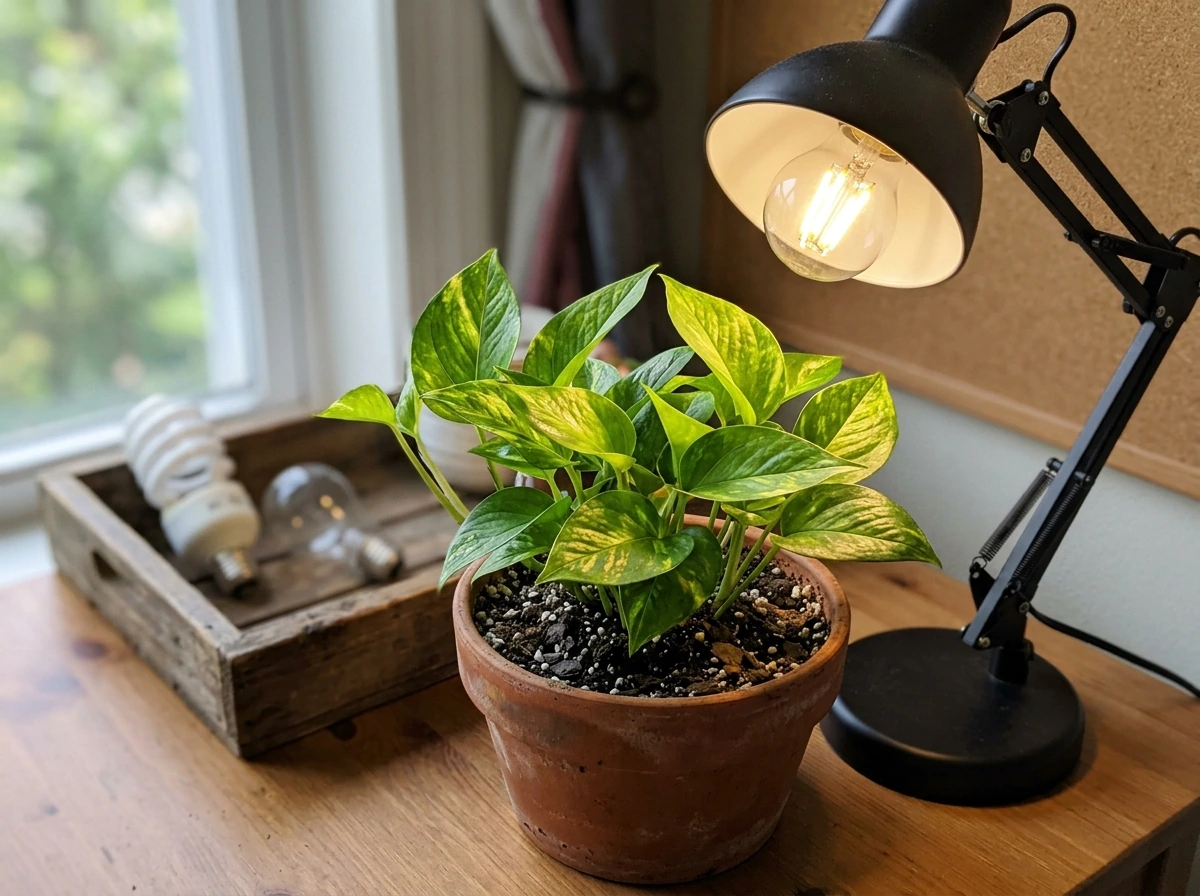
Why your plant doesn't care how bright the room looks to you
Human eyes and plant leaves measure light completely differently. When you flip on a lamp and the room looks bright and comfortable, that's measuring lux, which is calibrated to what human vision perceives. Your plant is working with something else entirely: photosynthetically active radiation, or PAR. PAR refers to the wavelengths of light (roughly 400 to 700 nanometers) that chlorophyll can actually absorb and use to run photosynthesis. The useful measurement is PPFD, photosynthetic photon flux density, measured in micromoles of photons per square meter per second (µmol·m⁻²·s⁻¹). That number tells you how many usable photons are landing on your plant every second. A room that looks well-lit to you might be delivering almost nothing in terms of PPFD, especially in an office setting under office fluorescent light without the right spectrum and enough PPFD for sustained growth.
Spectrum matters just as much as intensity. Plants use red wavelengths (around 620 to 700 nm) for photosynthesis and flowering, and blue wavelengths (around 400 to 500 nm) for compact, bushy growth and strong stems. When a light source is heavy on one and missing the other, you get lopsided results. A bulb that's only red-heavy produces stretchy, leggy plants reaching toward the light. A bulb with too much blue and not enough intensity can stunt growth in a different way. What you actually want is a reasonably balanced spectrum across the red and blue ranges, delivered at enough intensity, for enough hours per day.
That last piece, hours per day, connects to a concept called daily light integral (DLI). DLI is the total dose of usable photons your plant receives over a full day. You can calculate it roughly as: DLI = 0.0036 × PPFD × light hours per day. On r/microgrowery, people commonly use DLI calculations like DLI = PPFD × hours × 0.0036 for estimating dose from lighting apps and meters, with the usual practical caveats blank" rel="noopener noreferrer">DLI = 0.0036 × PPFD × light hours per day.. So a bulb delivering 100 µmol·m⁻²·s⁻¹ run for 12 hours gives a DLI of about 4.3 mol·m⁻²·day⁻¹. A low-light houseplant might need a DLI of 2 to 5 to maintain itself. A sun-loving seedling might need 15 to 20. This is why you can sometimes compensate for a weaker bulb by running it longer, though there are limits to that approach, and plants also need a dark period to rest.
Incandescent, CFL, and LED: which bulb actually works
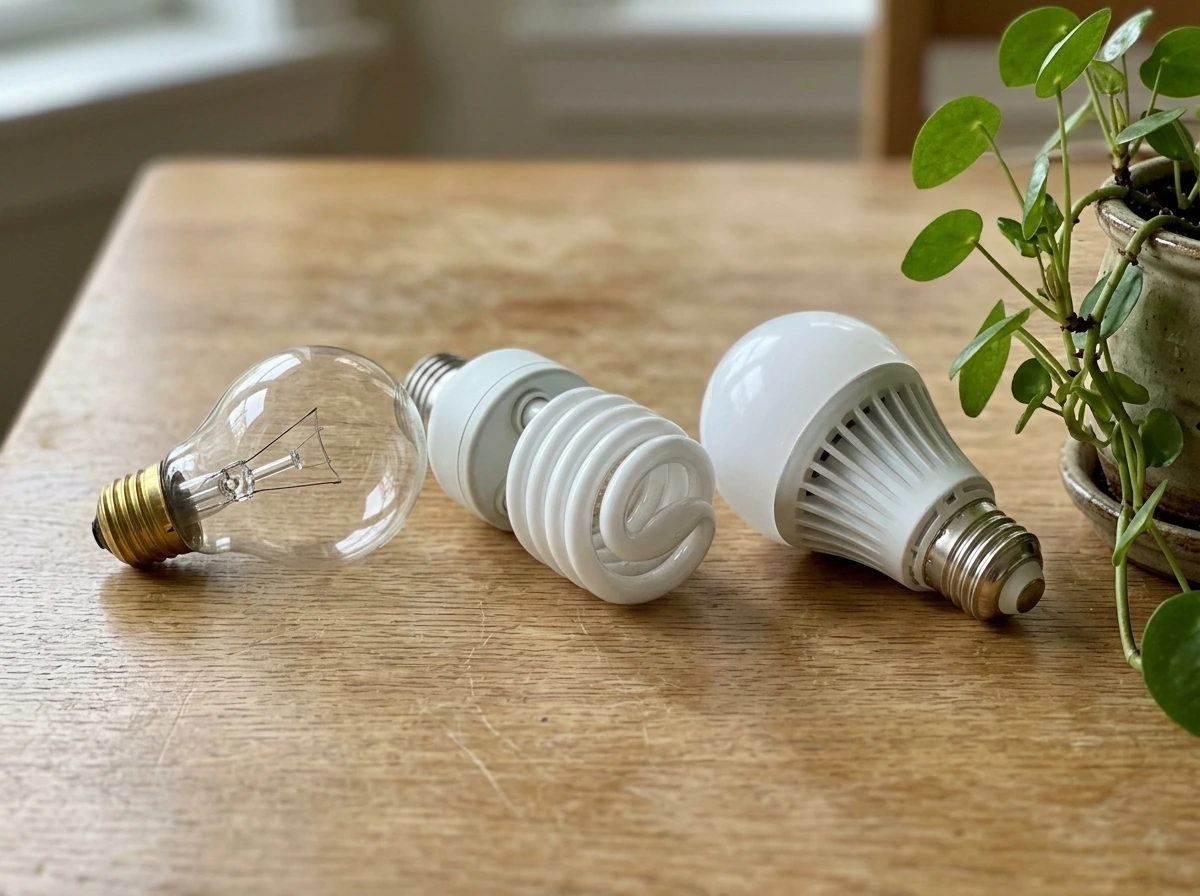
Not all household bulbs are created equal when it comes to plant growth. Here's the practical breakdown of the three main types you're likely to have on hand. Here's the practical breakdown of the three main types you're likely to have on hand.
Incandescent bulbs
Incandescent bulbs are the worst choice for growing plants, and there are two main reasons. Iowa State University Extension similarly notes that incandescent light is typically not an ideal light source for plants Incandescent bulbs are the worst choice for growing plants. First, their spectrum is heavily weighted toward red and far-red wavelengths with very little blue, which means plants grown under them tend to stretch upward, producing weak and spindly stems. Second, they convert most of their energy into heat rather than light. A 60-watt incandescent placed close enough to deliver meaningful PPFD (measured at around 44.5 µmol·m⁻²·s⁻¹ in one controlled study) will also cook your plant. University of Maryland Extension puts it plainly: incandescent bulbs won't produce good transplants by themselves. They're also inefficient and burn out faster (around 1,000 hours of life vs 10,000+ for fluorescents). If that's all you have, use it as a very last resort and keep truly low-light tolerant plants nearby, not directly under it.
CFL (compact fluorescent) bulbs
CFLs are a real step up. They run cooler than incandescents, last longer, and produce a broader, more balanced spectrum that plants can use more effectively. A standard cool-white or daylight CFL (5000K to 6500K) has enough blue content to keep growth more compact. That said, CFLs aren't powerhouses. Even a 20-watt CFL delivers roughly half the PPFD of a 60-watt incandescent at the same distance, which is actually fine because you can get it closer to the plant without burning the leaves. CFLs work well for maintaining low-light houseplants and for extending photoperiod in plants that just need longer days. University of Alaska Fairbanks Extension notes CFLs are commonly used to extend day length in photoperiodic crops, though they fall short of what's needed for flowering and fruiting production at high intensity.
LED bulbs (standard and grow-specific)
A standard LED bulb, especially one rated 'daylight' or 'full spectrum' in the 5000K to 6500K range, is your best household option. LEDs run cool, last tens of thousands of hours, and the better ones cover enough of the PAR spectrum to support real plant growth. For example, UVM Extension notes that LED grow lights tend to be more energy efficient and durable than other lighting technologies blank" rel="noopener noreferrer">LEDs run cool, last tens of thousands of hours. If you buy a full-spectrum LED grow bulb (these screw into standard lamp fixtures and cost $15 to $30), you're getting targeted red and blue wavelengths designed specifically for plant use. That's the closest thing to an actual grow light you can run from a regular lamp socket. For low to medium-light houseplants, a quality LED bulb placed 12 to 18 inches away and run 12 to 16 hours a day can produce genuine, healthy growth. For answers to the question will plants grow in artificial light, the key is using the right spectrum and enough hours per day plant growth.
| Bulb Type | Spectrum | Heat Output | Effective PPFD (close range) | Best Use Case | Verdict |
|---|---|---|---|---|---|
| Incandescent | Heavy red, very low blue | High (burns plants at close range) | ~44.5 µmol·m⁻²·s⁻¹ but heat-limited | None recommended | Avoid for plants |
| CFL (daylight) | Moderate, balanced blue/red | Low to moderate | ~20–30 µmol·m⁻²·s⁻¹ at 6–12 inches | Low-light maintenance, photoperiod extension | Acceptable with caveats |
| Standard LED (daylight) | Broad, reasonable blue/red balance | Very low | Varies; 30–80 µmol·m⁻²·s⁻¹ at 12 inches | Low to medium-light houseplants | Good everyday option |
| Full-spectrum LED grow bulb | Targeted red/blue + white | Very low | 80–200+ µmol·m⁻²·s⁻¹ at 12 inches | Active growth, seedlings, herbs | Best lamp-based option |
How to actually set up a lamp for plant growth
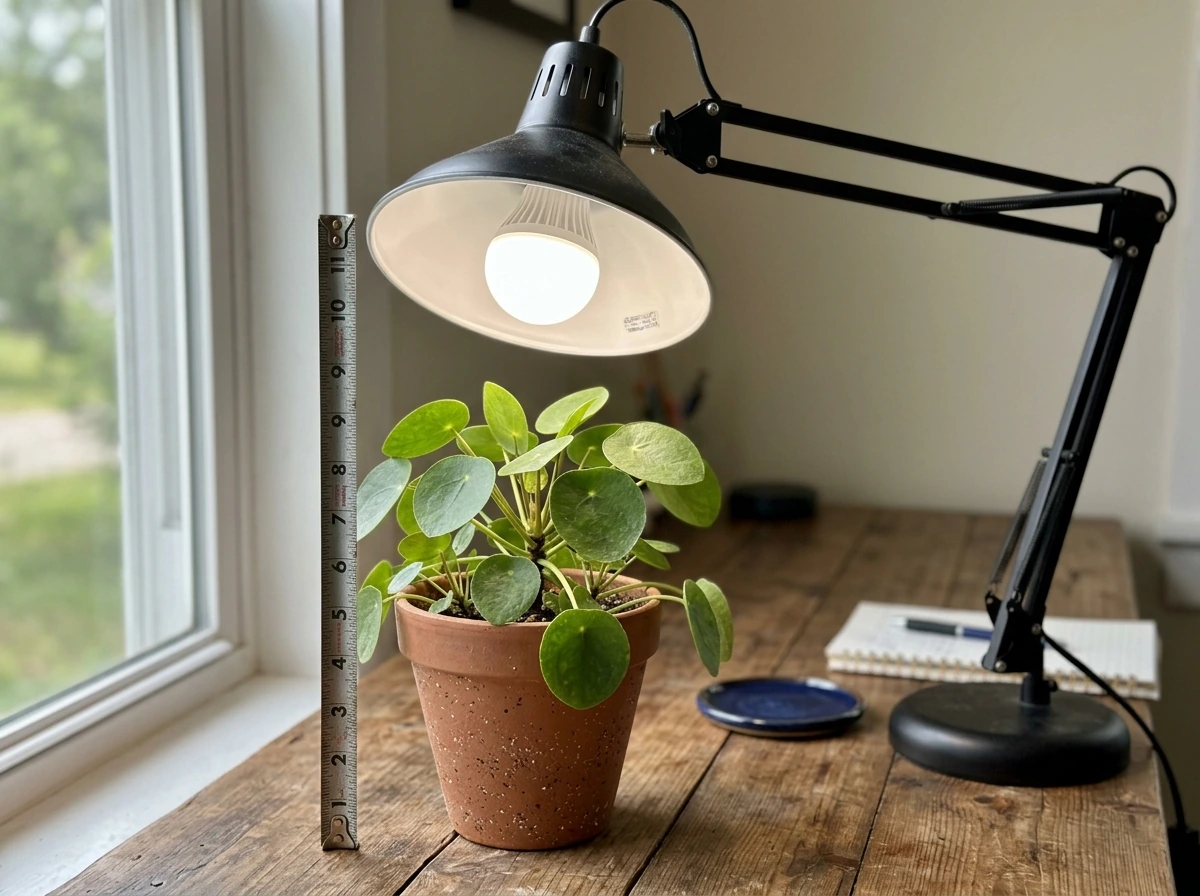
Setting up a lamp-based grow system isn't complicated, but the details matter. Distance, duration, and placement are the three things that determine whether your plant grows or just sits there looking sad.
Distance from bulb to plant
PPFD drops off dramatically as you move the light source away from the plant. This is the single most common mistake I see: people place a lamp across the desk or on a shelf above the plant at 3 feet, and then wonder why nothing happens. For a CFL or standard LED, you want the bulb within 6 to 18 inches of the plant's canopy. For a full-spectrum LED grow bulb, 12 to 18 inches is a good starting point. UNH Extension found that fluorescent shop lights kept within 1 foot of seedlings, run for 22 hours, could reach ideal DLI targets for sun-loving plants. You don't need 22 hours for most houseplants, but the closeness principle holds. If the light feels warm but not hot on the back of your hand when held at plant level, the distance is probably fine.
How long to run the light (photoperiod)
- Low-light houseplants (pothos, ZZ plant, snake plant): 10 to 12 hours per day is enough
- Medium-light plants (herbs, peace lily, Chinese evergreen): 12 to 14 hours per day
- Seedlings and sun-loving plants under weak bulbs: 14 to 16 hours per day to compensate for lower intensity
- Never run lights 24 hours a day — plants need a dark period for metabolic processes; a consistent night cycle matters
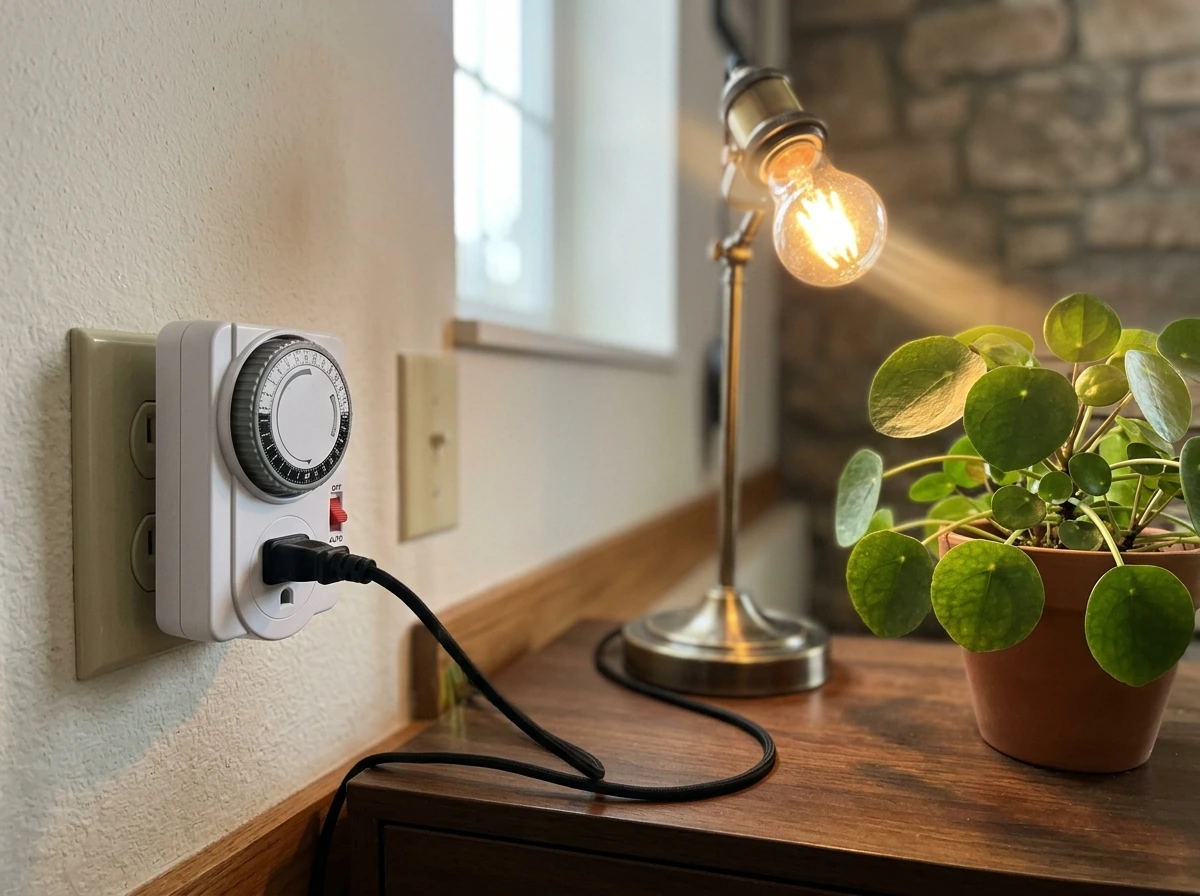
A simple plug-in outlet timer costs about $10 and is one of the most useful things you can buy for any lamp grow setup. Set it and forget it. Inconsistent light schedules stress plants and can interfere with flowering cycles in species that are sensitive to photoperiod. While 24-hour light can keep plants receiving usable photons, most houseplants still need a dark period to rest and to avoid stressing their growth cycles.
Placement tips for lamp setups
- Position the light directly above the plant when possible, not to the side — plants grow toward light and will lean badly if the source is angled
- Use a reflective surface (white wall, aluminum foil backing, or a simple white foam board) to bounce light back onto the plant and reduce waste
- Group plants together under one lamp to share the benefit; a small cluster is more efficient than one isolated plant
- Rotate plants every week or two so all sides get even exposure
- Avoid placing heat-producing bulbs (any remaining incandescents or older halogen lamps) directly above foliage — allow at least 18 to 24 inches of clearance
Plants that actually work under lamp light (and ones that don't)
The key is matching your plant's light needs to what your bulb can realistically deliver. Most household lamps with decent bulbs can provide somewhere between 20 and 150 µmol·m⁻²·s⁻¹ at plant level. That lands you firmly in the low-light to modest-medium territory. Here's a practical way to think about it using PPFD targets as a guide.
Plants that grow well under regular lamps
These are species that thrive or at least grow steadily at PPFD levels of roughly 50 to 150 µmol·m⁻²·s⁻¹, which is achievable with a good LED or CFL bulb positioned close enough.
- Pothos (Epipremnum aureum): extremely forgiving, grows under fluorescent and LED lamps reliably
- ZZ plant (Zamioculcas zamiifolia): documented to do well under fluorescent office lighting; great for lamp setups
- Snake plant (Sansevieria/Dracaena trifasciata): handles low PPFD well and is slow-growing anyway
- Chinese evergreen (Aglaonema): UMN Extension specifically notes these thrive in fluorescent-lit office lobbies
- Peace lily (Spathiphyllum): low-light tolerant; won't flower as readily but grows well under lamp light
- Heartleaf philodendron: another reliable low-light performer under lamps
- African violets: PPFD target of 50 to 150 µmol·m⁻²·s⁻¹ makes them a good fit for lamp setups, especially with a full-spectrum LED bulb
- Cast iron plant (Aspidistra): lives up to its name; handles minimal light
Plants that need more than a lamp can give
Anything that needs PPFD in the 400 to 1,200 µmol·m⁻²·s⁻¹ range (flowering, fruiting, and most edible plants) is going to struggle under a household lamp. You can keep these plants alive, but you won't get the growth you're hoping for.
- Tomatoes, peppers, cucumbers: need high-intensity light to set fruit; household bulbs won't cut it
- Succulents and cacti: need bright light (100 to 200+ µmol·m⁻²·s⁻¹ minimum) and will etiolate badly under weak lamps, stretching toward the source
- Herbs like basil: technically possible under strong LED bulbs very close to the plant, but growth will be sparse; basil really wants high light
- Orchids (most species): need moderate to high light for blooming; a lamp might keep them alive but won't trigger flowers
- Fiddle leaf fig: technically medium-light but doesn't do well under artificial light without a proper grow setup
- Most flowering annuals and vegetable seedlings: will become leggy and weak without real grow-light intensity
When your plant is telling you the setup isn't working
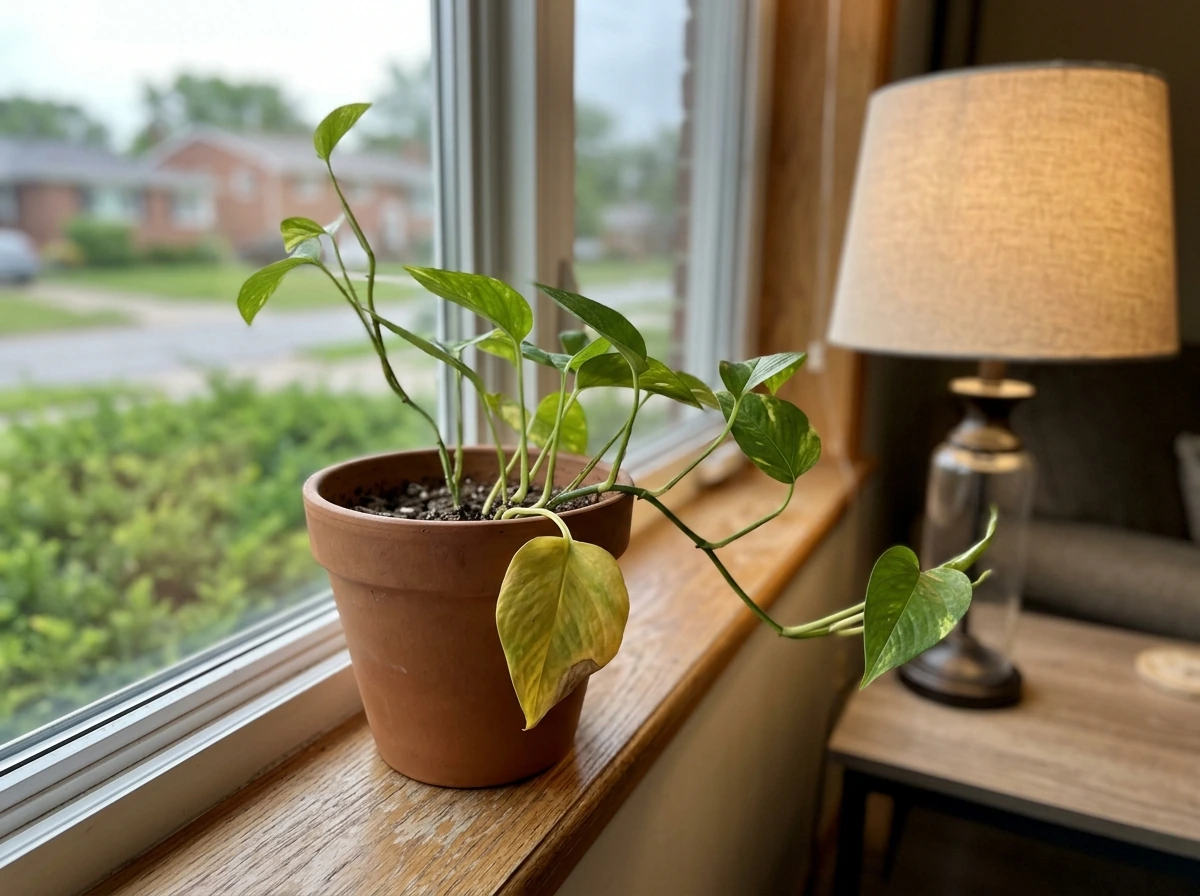
Plants are actually pretty communicative once you know what to look for. These are the main signs that your current lamp or bulb situation isn't delivering enough usable light, and what each symptom usually means.
| Symptom | What It Suggests | Fix |
|---|---|---|
| Leggy, stretched stems reaching toward the light | Insufficient blue spectrum or overall intensity (classic incandescent problem) | Switch to daylight LED or full-spectrum grow bulb; move light closer |
| Pale or yellowing leaves (not due to overwatering) | Too little light overall; plant can't run photosynthesis efficiently | Increase PPFD by moving light closer or upgrading bulb; add hours |
| No new growth for months | Light is keeping the plant alive but not driving growth (DLI too low) | Extend photoperiod, move bulb closer, or upgrade to grow light |
| Leaves turning toward or away from light unusually fast | Plant is compensating for uneven light distribution | Rotate plant weekly; reposition lamp directly above plant |
| Dropping lower leaves, thin new leaves | Chronic low light stress | This plant may need a real grow light or a sunnier window |
When it's time to actually upgrade
If you've tried a full-spectrum LED bulb positioned within 12 inches, running it 14 to 16 hours a day, and your plant is still showing the symptoms above, a lamp setup just isn't going to cut it for that species. That's the honest signal to either switch to a plant that matches your conditions or invest in a dedicated LED grow light panel. These don't have to be expensive: a basic LED grow light bar or panel for a small shelf setup runs $30 to $60 and delivers far more usable PPFD than any screw-in bulb. If you're starting seeds, growing herbs for real harvests, or trying to flower a plant that needs intensity, a proper grow light is the right tool. There's no shame in upgrading. It just means you know what your plants actually need.
For most indoor gardeners trying to green up a space with whatever lamp they have, the practical path is this: grab a daylight or full-spectrum LED bulb (or a dedicated grow bulb that fits your lamp socket), get it within 12 to 15 inches of your plant, set a timer for 12 to 14 hours, and choose species from the low-light-tolerant list above. That combination gives you a genuinely achievable setup that produces real growth, not just survival. If you want to go further with seedlings, edibles, or flowering plants, check out what a proper grow light can do. The difference is significant, but you don't need to start there to have thriving indoor plants today.
FAQ
Can plants grow from a bare bulb, like a lamp without a reflector or shade?
Yes, but only if you match intensity and spectrum. Keep the bulb close to the plant (typically within 6 to 18 inches depending on the bulb type), run it long enough to hit an appropriate DLI for that species, and expect that many screw-in bulbs still will not provide the PPFD needed for fruiting or heavy flowering.
How do I tell if my bulb is close enough, without measuring PPFD?
Warmth is a rough clue, but not a reliable measurement. A bulb can feel not-hot at your hand while still delivering too little PPFD because of low PAR output or being too far away. The better check is to position the bulb close and use an outlet timer for consistent hours.
Can I keep the light on all day, 24/7, so the plant grows faster?
For many indoor plants, you do need a dark period. Running the light 24 hours a day often leads to weak growth, stress, and sometimes delayed or failed flowering in photoperiod-sensitive plants. A common starting point is 12 to 14 hours on, especially for low to medium light houseplants.
If the room looks bright, will the plant automatically get enough usable light from the bulb?
Probably not for most plants, because the achievable PAR intensity is usually too low. If your space is bright to you but your plants stay leggy or slow-growing, try either moving the bulb closer or switching to a higher-output option like a dedicated LED grow panel rather than relying on brightness in lumens.
Will using a lampshade or cover help, or will it make it harder for plants to use the light?
Covering the bulb usually reduces usable light and can change the spectrum and distribution. If you must use a shade or diffuser, prefer one that lets light spread without trapping heat, and compensate by bringing the light closer or using a higher-output bulb.
If my bulb is weak, can I just run it for more hours to make up the difference?
You can extend growth duration with longer photoperiod, but there are limits. Each species has a practical DLI range, and too many hours can waste energy while still failing to reach the required PPFD. If you do not see improvement after adjusting distance and run time, the bottleneck is usually intensity, not hours.
What happens if I use an incandescent bulb, and is it ever a good idea?
It’s best to avoid incandescent bulbs because they create lots of heat and have low blue content, which often produces stretchy, weak stems. If you have no other choice, use low-light-tolerant plants and keep the bulb farther from leaf level to avoid leaf stress, but do not expect strong compact growth.
Can I rotate bulbs, like CFL in the morning and LED at night, to boost results?
Using different bulbs at different times can work, but consistency matters for the plant’s schedule. If you mix bulbs, ensure the total daily photoperiod stays stable and that the stronger light is not placed too far away. A simple timer still helps prevent sudden changes.
If I move the bulb closer or switch to a brighter LED, how should I transition the plant?
Most houseplants respond more reliably to gradual changes. When moving a plant closer to a stronger LED or grow bulb, adjust distance over several days to reduce leaf stress, and watch for bleaching or crispy edges as signs the light is too intense too quickly.
Will one light bulb be enough for multiple plants in the same room?
A single bulb is usually fine for a small area, but a common failure is uneven coverage on multiple plants. If plants are spread out, use a setup where each plant receives similar distance and intensity, or consider a bar or panel light that covers the whole shelf.