Yes, plants can grow under 24-hour light, but for most indoor plants it is not the best plan and can actually cause real problems over time. Yes, plants can grow under 24-hour light, but for most indoor plants it is not the best plan and can actually cause real problems over time. If you are wondering whether this could work with can plants grow with regular light bulbs, the answer depends heavily on whether you can also provide the right schedule and intensity. The short answer is this: a handful of crops, especially leafy greens and lettuce, can handle continuous light and even show faster growth under it. But the majority of houseplants, vegetables, and flowering plants do better with a daily dark period built into their schedule. Running your grow lights around the clock sounds like a shortcut to faster growth, but the biology usually works against you.
Can Plants Grow With 24 Hour Light? What to Expect Indoors
Can plants actually survive and grow under continuous 24-hour light
The straightforward answer is yes, many plants can survive under continuous light, and some will even grow reasonably well. But survival and thriving are different things. Plants have an internal circadian clock, just like we do, and it runs on roughly a 24-hour cycle. Research on bean plants showed that photosynthesis and stomatal opening continued to oscillate close to a 24-hour rhythm even under constant light, meaning the plant's biology is still tracking day and night internally even when you do not give it one externally. That internal rhythm influences gas exchange, how efficiently the plant absorbs CO2, and how it manages water, all of which affect growth quality.
What this means practically is that when you remove the dark period entirely, you are not giving the plant a neutral experience. You are disrupting something it uses. For photoperiod-sensitive plants (more on those below), this disruption can prevent flowering, cause stress, or trigger unexpected developmental responses. For day-neutral plants like lettuce, the disruption is much less dramatic, which is why those crops tend to tolerate or even benefit from longer light exposure.
Do plants grow faster or better under 24/7 light
For certain crops, longer photoperiods do speed up growth, but the relationship is not simply 'more light equals more growth.' What actually drives biomass accumulation is something called Daily Light Integral, or DLI, which is the total amount of photosynthetically active light a plant receives over a full day. You can hit the same DLI with a higher light intensity over fewer hours or a lower intensity over more hours. When researchers compared continuous light to an 18-hour photoperiod at the same DLI in lettuce, the continuous light group actually produced 23% more fresh mass and 14% more dry mass in one cultivar. That is a real, measurable benefit for lettuce specifically.
For tomatoes, continuous light increased total leaf area and dry matter accumulation compared to diurnal conditions, which looks promising on paper. But the same research noted that chlorophyll a/b ratios decreased under continuous lighting, which signals that the plant's photosynthetic machinery was under stress. In cannabis micropropagation experiments, continuous lighting caused carotenoid levels to drop by as much as 68%. So even when growth metrics go up, quality metrics sometimes go down. That tradeoff matters a lot depending on what you are actually trying to grow.
For most common houseplants and fruiting vegetables, the evidence for faster or better growth under 24/7 light is weak, and the risk of stress-related damage is real. You are better off optimizing your light intensity and spectrum during a well-timed schedule than just leaving the lights on indefinitely.
When 24-hour light helps vs when it causes harm
Whether continuous light is a good idea depends almost entirely on what type of plant you are growing and how it responds to photoperiod. Plants fall into a few broad categories.
Plants that generally tolerate near-continuous light
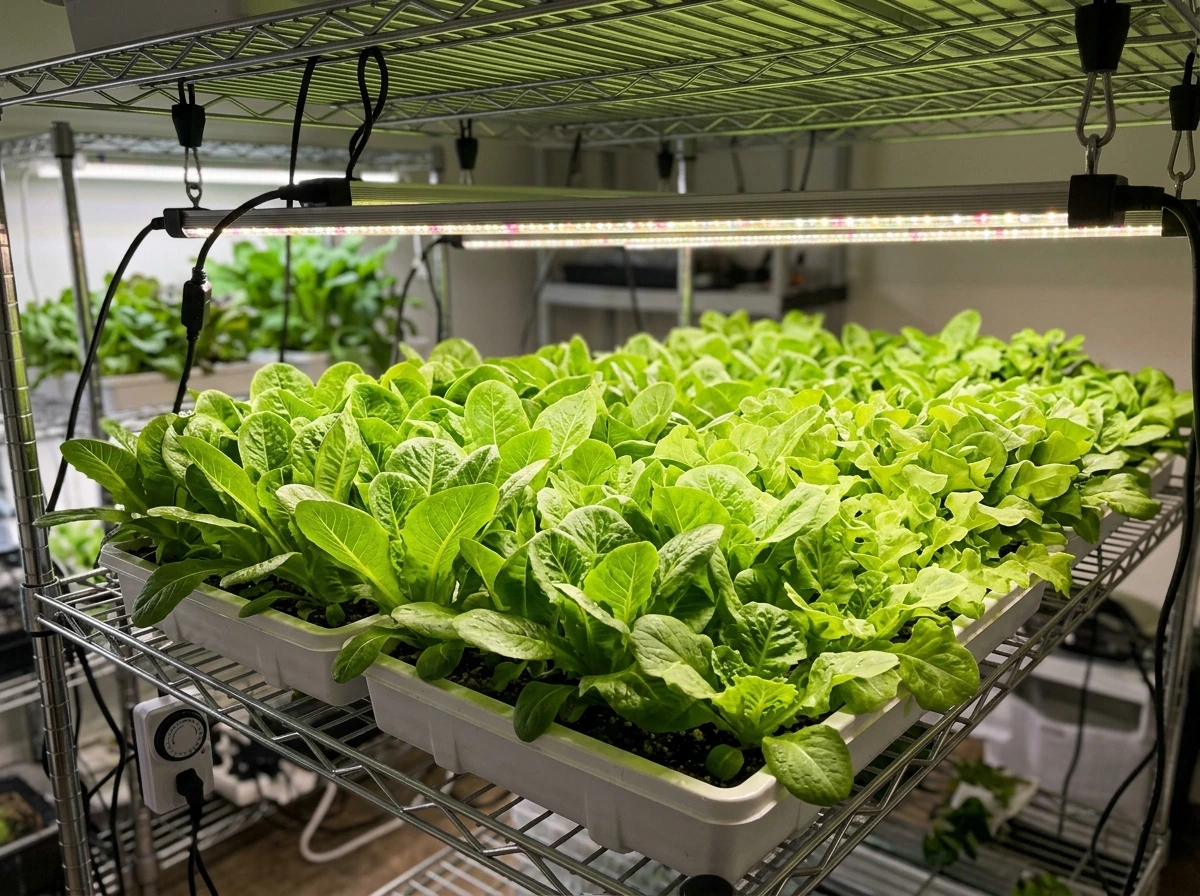
- Lettuce and most leafy greens: Research consistently shows these crops can handle 20 to 24 hours of light and often produce higher yields as a result. Target a DLI of at least 12 mol/m²/day, which you can achieve at lower PPFD values over a longer photoperiod.
- Baby greens and microgreens: Studies show increasing the photoperiod up to 24 hours while adjusting light intensity to hit a higher DLI can boost biomass without the same stress responses seen in fruiting crops.
- Many herbs in the vegetative stage: Basil, cilantro, and parsley are not strictly day-neutral but can tolerate extended photoperiods during active vegetative growth without major problems.
- Some succulents and cacti: These are slow growers and the extra light rarely hurts them in short stretches, though they still appreciate a dark period for metabolic rest.
Plants that need a dark period to thrive
- Short-day plants (chrysanthemums, poinsettias, cannabis in flower stage): These plants flower only when the night is long enough, typically more than 10 to 12 uninterrupted hours of darkness. Running lights 24/7 will keep them stuck in vegetative growth indefinitely.
- Long-day plants (petunias, spinach, some lettuces for bolting): These actually need a night length of less than 10 hours to flower. Continuous light can push them into flowering earlier than you want, especially if you are trying to extend the vegetative harvest window.
- Tomatoes and peppers: While not strictly photoperiod-sensitive, these fruiting crops do better with a dark period. Continuous light over weeks has been associated with leaf curl, interveinal chlorosis, and reduced fruit set in tomatoes.
- Most tropical houseplants (pothos, monsteras, peace lilies): These evolved in environments with consistent day/night cycles and generally show stress signs under prolonged continuous lighting, including yellowing leaves and reduced root activity.
The key concept here is night length as a signal. It is not just the presence of light that matters but the length of the uninterrupted dark period. Photoperiod-sensitive plants measure the dark period, not the light period, to determine where they are in the seasonal calendar. Even a brief light interruption in the middle of the night (called night interruption lighting) can reset that clock. That is how commercial growers manipulate flowering timing with just 3 to 4 hours of light around midnight rather than running lights all day.
The best light schedules for common indoor plants
Rather than guessing, use a target DLI for your crop combined with the appropriate photoperiod to build a schedule that actually makes sense. Here is a practical reference for the most common indoor growing scenarios.
| Plant Type | Recommended Daily Light Hours | Target DLI (mol/m²/day) | Suggested PPFD (µmol/m²/s) | Notes |
|---|---|---|---|---|
| Lettuce / leafy greens | 16–20 hours | 12–17 | 100–250 | Can tolerate up to 24 hours; DLI matters more than exact hours |
| Herbs (basil, parsley, cilantro) | 14–16 hours | 12–16 | 150–250 | Keep vegetative; extended hours fine during growth phase |
| Tomatoes / peppers (vegetative) | 14–18 hours | 20–30 | 200–400 | Avoid continuous light; dark period improves fruit set |
| Tomatoes / peppers (fruiting) | 12–14 hours | 25–35 | 400–600 | Needs consistent dark period for fruit development |
| Cannabis (vegetative) | 18–20 hours | 25–40 | 400–600 | 18/6 schedule is the standard; avoid 24/0 long-term |
| Cannabis (flowering) | 12 hours exactly | 30–45 | 600–900 | Strict 12/12; any light leak interrupts flowering |
| Tropical houseplants | 12–14 hours | 8–15 | 50–200 | Mimic natural day; avoid extended photoperiods |
| Succulents / cacti | 12–16 hours | 8–20 | 100–300 | Prefer defined day/night; tolerant of some variation |
| Mint | 8–12 hours | 10–16 | 150–250 | Lower light needs; longer periods can cause stretching |
A quick note on DLI and PPFD: if you want to calculate how much light intensity you need to hit a target DLI at a given number of hours, the formula is PPFD (µmol/m²/s) = DLI x 1,000,000 / (hours x 3,600). Most grow light manufacturers now include DLI calculators or charts, and using these is a much better approach than just guessing based on lux or lumens, measured for the human eye and not accurately predicting how useful artificial light is for plants.
How to set up your lighting (timers, placement, and intensity)
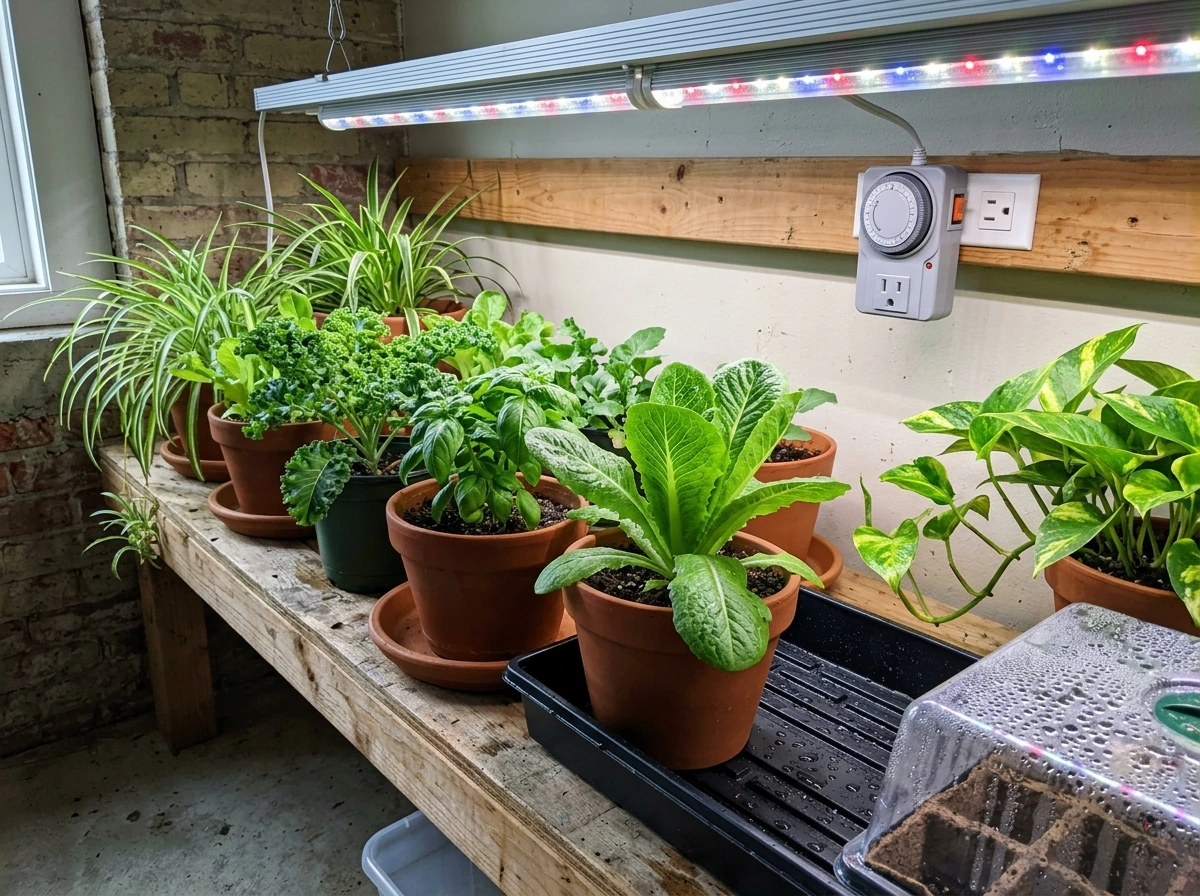
The good news is that setting up a proper light schedule for your indoor garden is genuinely straightforward once you have a timer. You do not need expensive equipment. A basic outlet timer that costs around $10 to $15 is enough to automate your light cycle and is one of the single most useful tools for indoor growing. Here is how to approach the setup.
Choosing and programming a timer
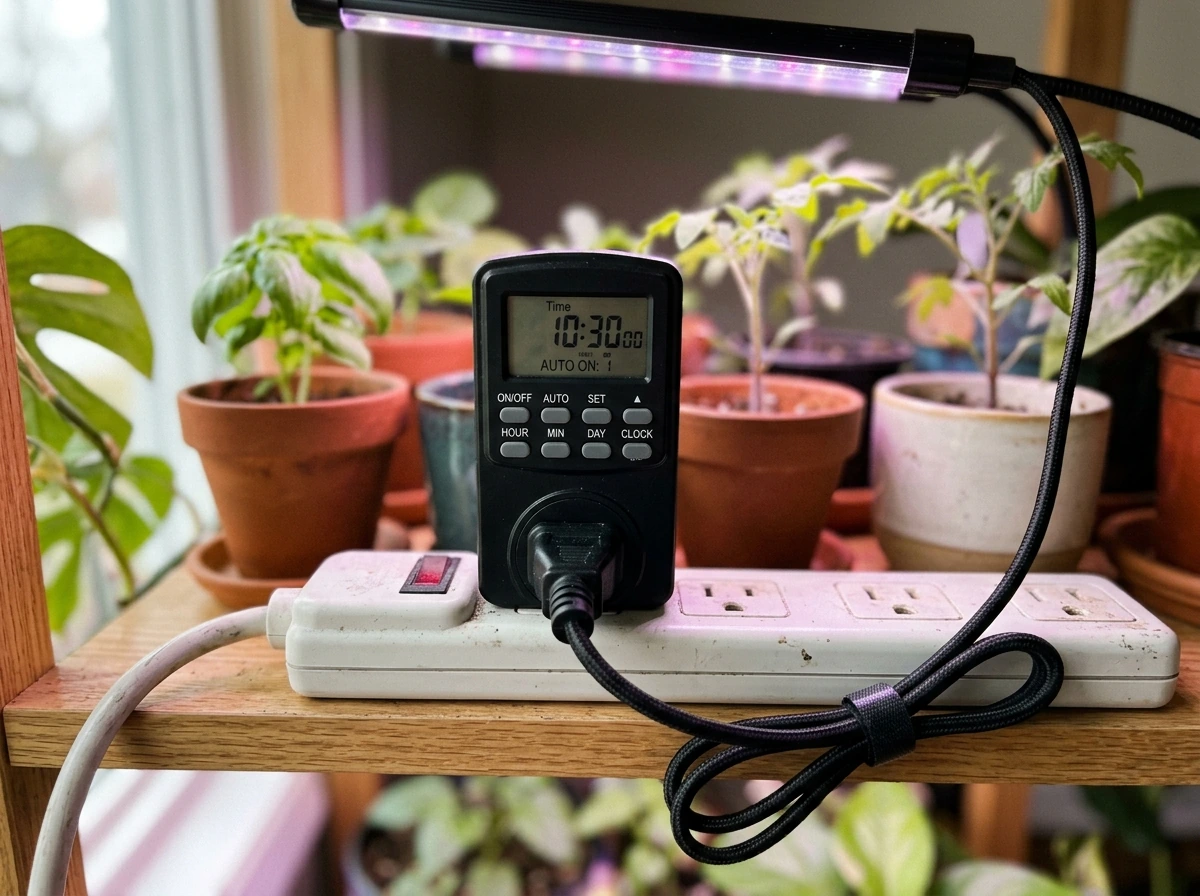
- Pick an analog or digital outlet timer rated for your light's wattage. Digital timers allow more precise scheduling (down to 15-minute intervals) and are worth the small extra cost if you are running a strict photoperiod like 12/12 for flowering plants.
- Set your 'lights on' period to align with your daytime schedule so you can actually observe your plants during the light phase. For a 16-hour schedule, something like 6 AM to 10 PM works well.
- Avoid midnight-straddling schedules unless you are intentionally using night-interruption lighting to trigger or prevent flowering. Most home growers do not need that level of complexity.
- Once the timer is set, do not override it manually. Consistency matters. Random changes to the light schedule are more stressful for plants than a slightly imperfect but consistent cycle.
Light placement and intensity
- Hang LED grow lights at the manufacturer's recommended height for your target PPFD. For leafy greens at 150–250 µmol/m²/s, this is typically 12–24 inches above the canopy depending on the fixture's power.
- Use a PAR meter or a smartphone app with PAR estimation to verify your actual PPFD at canopy level. Even rough measurements are better than nothing when you are trying to hit a DLI target.
- Avoid measuring light in lux or foot-candles for plant decisions. These are human-eye metrics. Look for PPFD values (µmol/m²/s) in your light specs.
- If you are running a longer photoperiod (18 to 20 hours), consider reducing your PPFD slightly rather than just leaving an intense light running for more hours. The goal is hitting the right DLI, not maximum intensity for maximum time.
- For small setups, a 16-hour photoperiod at moderate PPFD covers almost every common indoor crop without any of the risks that come with continuous lighting.
If you are using natural light plus supplemental lighting
Day-extension lighting, where you add a few hours of supplemental light before or after natural daylight, is one of the most efficient ways to hit higher DLI targets without running your lights all day. If you are still weighing sunlight versus artificial light, see how <span>do plants grow better with sunlight or artificial light</span>. Running supplemental LEDs for 4 to 6 hours in the morning or evening on top of whatever natural light your space gets is usually cheaper and more effective than running a full-strength grow light for 16+ hours. If you are curious about how different artificial light sources compare for this kind of setup, the question of whether regular light bulbs or fluorescent lights can fill that supplemental role is worth exploring on its own. can plants grow from light bulbs
Signs your plant needs more dark time (and what to do about it)
If you have been running lights 24/7 or on a very long schedule and something looks off, the plant is usually telling you something. Here are the most common signals and what they mean.
Yellowing leaves, especially between the veins
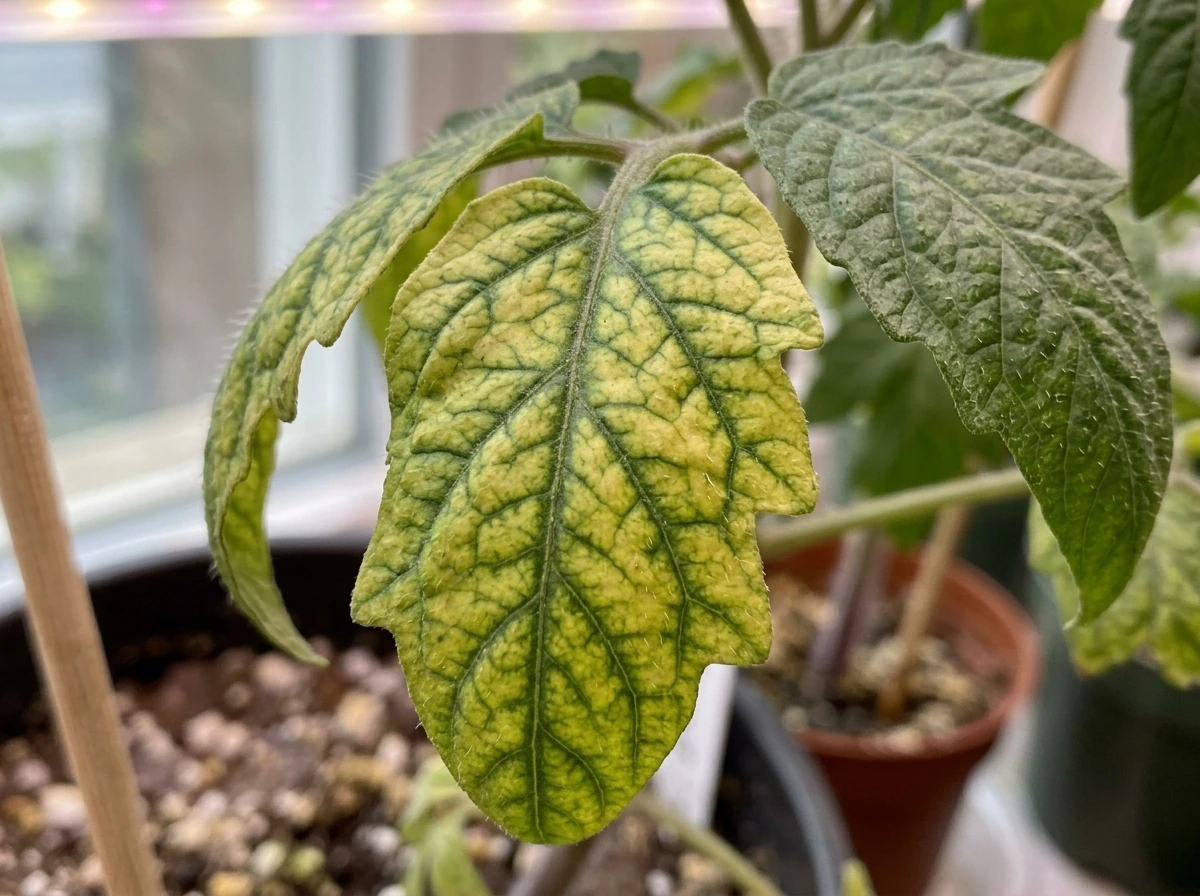
blank" rel="noopener noreferrer">Interveinal chlorosis under continuous lighting is a documented stress response, particularly in tomatoes. The plant cannot process chlorophyll efficiently when it never gets a metabolic rest period. If you see this on a plant that has been under 24-hour light, reduce your photoperiod to 14 to 16 hours and see if new growth comes in greener within two to three weeks.
Etiolation (stretching toward the light) despite having lights on constantly
Counterintuitively, plants under stress from continuous lighting can still stretch or etiolate, especially if your PPFD is too low. If the light is on 24 hours but the intensity is weak, the plant is getting a lot of low-quality light exposure without the photosynthetic benefit it needs. The fix is to shorten the photoperiod slightly and increase the PPFD so you are hitting the same or higher DLI with better quality exposure.
A plant that refuses to flower or fruit
This is the clearest sign of photoperiod disruption. If your tomatoes have lush green foliage but no fruit, or your cannabis plants will not flip into flower, or your strawberries have beautiful leaves but no blossoms, the light schedule is almost certainly the culprit. For short-day plants, you need an uninterrupted dark period of 10 to 12+ hours. For fruiting crops like tomatoes that are not strictly photoperiod-dependent, dropping to a 14-hour or even 12-hour photoperiod and ensuring the dark period is truly dark (no light leaks from windows or other sources) often resolves the issue within a few weeks.
Leaf curl, wilting during the light period, or crispy edges
These can be signs of light stress or disrupted stomatal function. Research on circadian rhythms in stomatal opening shows that stomata can lose their normal rhythmic behavior under constant light conditions, which affects how efficiently a plant manages gas exchange and water loss. If your plant looks stressed but your temperature and watering are fine, try reducing your photoperiod to 16 hours and check whether the symptoms ease over the following week or two.
Pale or washed-out coloring in herbs or ornamentals
Reduced pigmentation, including lighter greens and duller color in ornamental varieties, can reflect carotenoid and chlorophyll degradation under excessive light exposure. This is the same effect seen in cannabis micropropagation under continuous lighting, where carotenoids dropped dramatically. If your plant looks bleached or faded rather than vibrant, reduce both your light intensity and your photoperiod, and give the plant a couple of weeks to recover.
The bottom line on 24-hour light
Running your grow lights 24/7 is not automatically harmful, but it is also not the free growth boost it might seem like. For lettuce and baby greens, continuous light at the right intensity can meaningfully increase yields. For almost everything else you are likely growing indoors, a well-timed 14 to 18 hour schedule with a reliable timer will outperform continuous lighting in both plant health and energy efficiency. Set up your timer, hit your target DLI at a sensible PPFD, and give your plants the dark period their biology is built around. That one change tends to make a bigger difference than almost any other adjustment you can make to your indoor growing setup.
FAQ
If I use a timer and still have some light in the room at night, does that still count as 24/7 light for the plant?
Yes, but only if you stop the “night” from being bright enough to count as day for the plant. In practice, even small light leaks (under doors, dim hallway LEDs, or street light through a window) can shorten the uninterrupted dark period. Use a blackout approach (close blinds, cover LEDs, and keep the grow area dark at night) and verify with a quick test by turning your lights off and checking whether you can comfortably read paper inside the room.
Can I “cheat” continuous lighting by using a short dark break, or does any dark period restore normal behavior?
Not necessarily. For photoperiod-sensitive plants, the key variable is the length of the uninterrupted dark period, not the total weekly hours the lights are on. If you must interrupt the cycle, place any extra light in a controlled way for short windows and avoid any light “in the middle of true night.” A safer approach is to keep lights on within a consistent daytime block and ensure the rest of the 10 to 12+ hour dark period is genuinely dark for the crop.
What’s the biggest mistake people make when they switch from 24/7 light to a timed schedule?
Most indoor setbacks are due to light dose and stress acting together. If you want to run longer hours, re-check your DLI, because the same timer setting can deliver very different PPFD depending on fixture power, distance, and reflector quality. As a rule of thumb from the scheduling logic in the article, keep DLI the same or higher while moving toward a reasonable photoperiod, then watch for recovery signs like greener new leaves rather than expecting immediate improvement overnight.
If I match the same DLI, will plants always do just as well on 24/7 light as on a shorter photoperiod?
Yes, two plants can have the same DLI but different outcomes depending on how the light is distributed across hours and whether the spectrum supports healthy photosynthesis and recovery. Continuous light can change internal physiology even when DLI matches, as shown by stress markers like altered pigment ratios in some crops. The practical decision aid is to aim for your target DLI, then choose a photoperiod that gives the plant a clear dark phase (often 14 to 18 hours for many common indoor crops).
How long should I wait to see improvement after reducing from 24/7 light?
If you recently changed to a 14 to 18 hour schedule, expect visible changes on new growth first, not old leaves. For issues described in the article (like interveinal chlorosis or dull pigmentation), recovery typically takes a few weeks. Don’t “chase” the problem by making repeated large timer adjustments each day, instead keep the schedule stable for at least 2 to 3 weeks while you confirm your light intensity and distance.
My plants aren’t dying, but they’re stretching. Does that mean low PPFD is the only problem?
A dim 24-hour setup is still stressful because plants can get prolonged low-quality energy without the metabolic rest the circadian system expects. If your plant is stretching with weak color, the fix is usually to increase PPFD and shorten the photoperiod together, so you deliver adequate DLI during “on” time rather than trying to compensate with endless hours.
Are all tomatoes, lettuce, or cannabis varieties equally tolerant of 24-hour light?
Yes, but the practical catch is variability. Plants differ in how strongly they respond to photoperiod, and even within a species some cultivars respond differently. Use category guidance (day-neutral vs photoperiod-sensitive) only as a starting point, then confirm with crop-specific signs such as failure to flower for short-day types or stress pigment changes for others.
When would 24-hour light be worth it, versus using a standard 14 to 18 hour schedule?
Quality matters more than “more growth.” If the goal is fruiting, flowering, or maintaining ornamental color, prioritize a stable schedule that includes a dark phase. If your goal is rapid leafy biomass (like lettuce), continuous light can sometimes increase fresh and dry mass, but you still need the right intensity and DLI, and you should monitor pigment and leaf quality rather than only yield.
Can power outages or inconsistent timer settings cause problems that look like “continuous light stress”?
Yes, especially if you’re using a timer plug that’s not synchronized with your actual light intensity or if you frequently swap fixtures. Re-verify the timer and fixture distance after any changes. Also, avoid brownout or power interruptions, which can create irregular cycles and confuse circadian timing, particularly for plants that rely on dark length for flowering cues.