Quick answer: yes, but with real limits
Plants can grow under regular household light bulbs, but whether they thrive or just barely survive depends heavily on the type of bulb, how close it is, how long it runs, and which plant you're working with. The honest short answer: a standard incandescent bulb is nearly useless for plant growth. can plants grow from light bulbs The honest short answer: a standard incandescent bulb is nearly useless for plant growth. A warm-white LED or CFL that you already have at home? Possibly workable for low-light-tolerant houseplants, as long as your expectations are realistic. If you're trying to grow tomatoes or herbs from seed under a bedside lamp, you're going to be disappointed. If you're trying to keep a pothos alive in a dim apartment corner, you might be surprised what a decent bulb on a timer can do.
What counts as a "regular" light bulb anyway
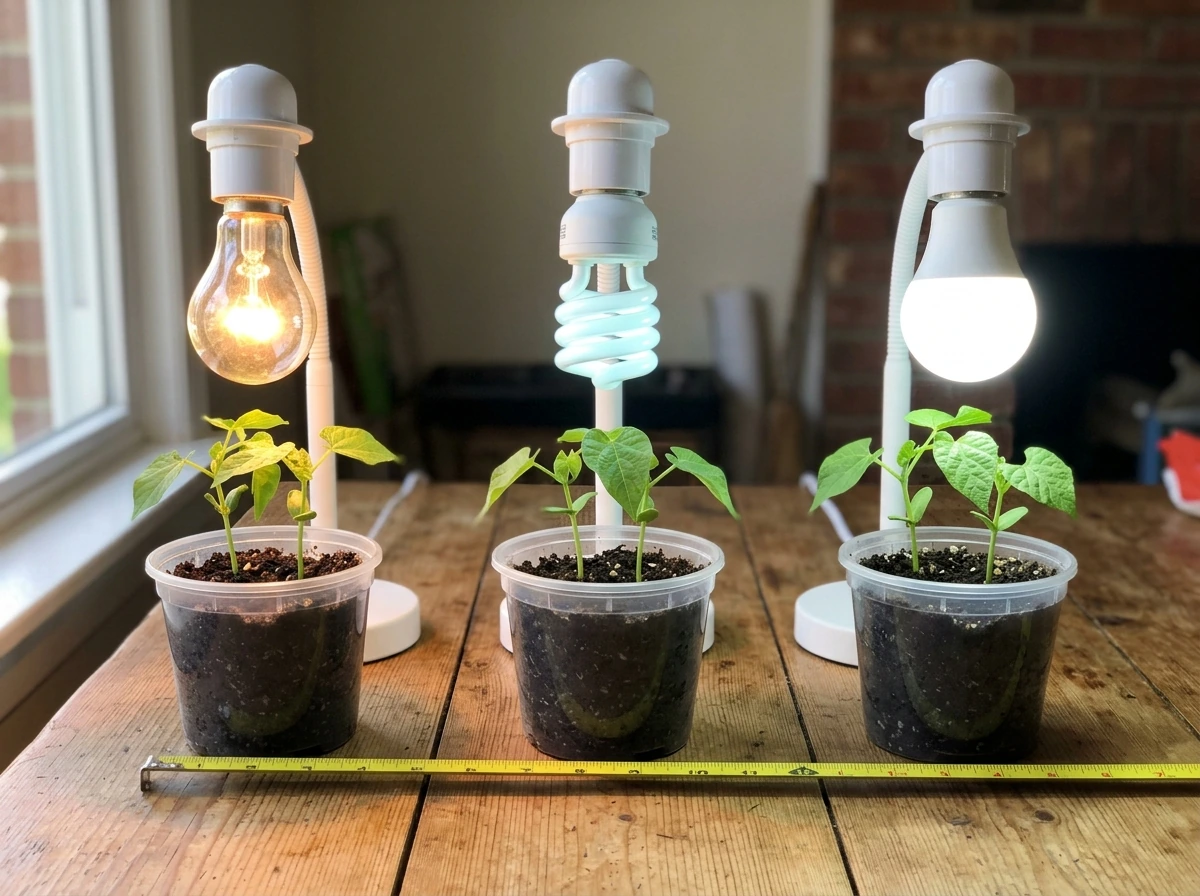
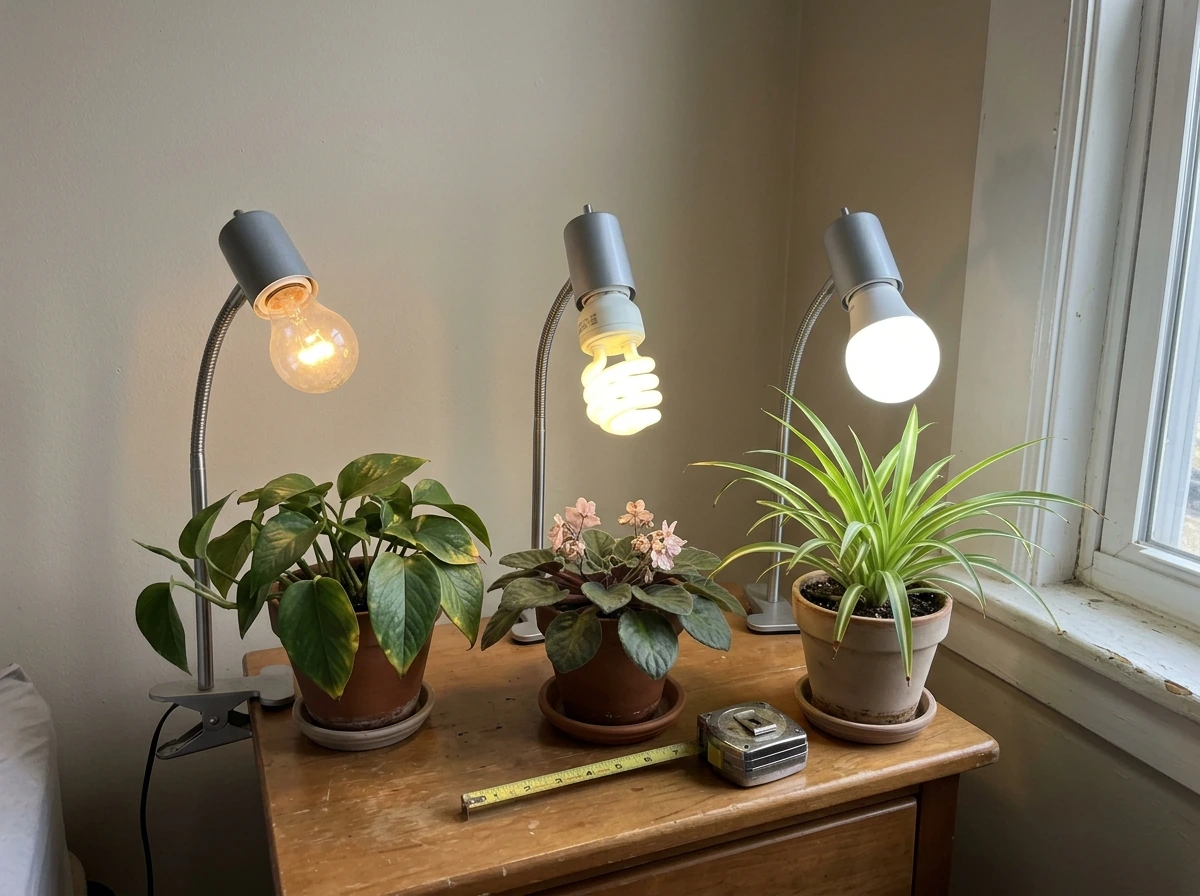
When people ask whether plants can grow under regular light bulbs, they usually mean one of three things: an old-school incandescent, a CFL (compact fluorescent), or a standard LED bulb, the kind sold to light a room, not grow a plant. These are genuinely different technologies, and they perform very differently for plants.
Incandescent bulbs
Incandescent bulbs are the classic warm-glow bulbs that most countries have largely phased out. They do produce some red-spectrum light, which plants can use, but they also generate a lot of heat relative to their light output, which can burn foliage if placed close enough to matter. About 90% of the energy they consume turns into heat, not light. The usable light output for photosynthesis is so low that most plants will stretch toward the bulb without making real growth. I wouldn't bother using these for plants, full stop.
CFL bulbs
CFLs are a step up. They produce more light per watt, run cooler, and emit a broader spectrum that includes some blue wavelengths, which plants use for leafy, compact vegetative growth. A 6500K daylight CFL placed 6 to 12 inches above a plant is genuinely capable of supporting low-light houseplants. They're not ideal, but they're not useless either. If you have a few of these around the house, they're worth trying.
Standard LED bulbs
Standard LEDs (the kind in most home light fixtures today) are your best bet among regular bulbs. They're efficient, run cool, and higher-kelvin versions, around 5000K to 6500K, produce meaningful amounts of blue light that plants can actually use. They still lack the optimized red-to-blue ratio of dedicated grow lights, but a bright, cool-white LED bulb placed close to a plant is a real option for keeping low-light species healthy. Don't confuse these with LED grow lights, which are engineered specifically with plant spectra in mind. A regular LED can help; a grow light is designed to.
| Bulb Type | Spectrum Usefulness for Plants | Heat Output | Best Use Case |
|---|
| Incandescent | Poor (mostly heat, some red) | High | Avoid for plants |
| CFL (6500K daylight) | Moderate (blue + some red) | Low-medium | Low-light houseplants, short term |
| Standard LED (5000-6500K) | Moderate-good (blue heavy) | Low | Low-light houseplants, budget setup |
| LED Grow Light | Excellent (tuned red + blue) | Low | All plants, seedlings, herbs |
How light actually works for plants
Plants use light in four ways that matter here: intensity (how bright), spectrum (which wavelengths), distance (how far the source is), and photoperiod (how many hours per day). Get one of these badly wrong and it doesn't matter if the others are fine.
Intensity
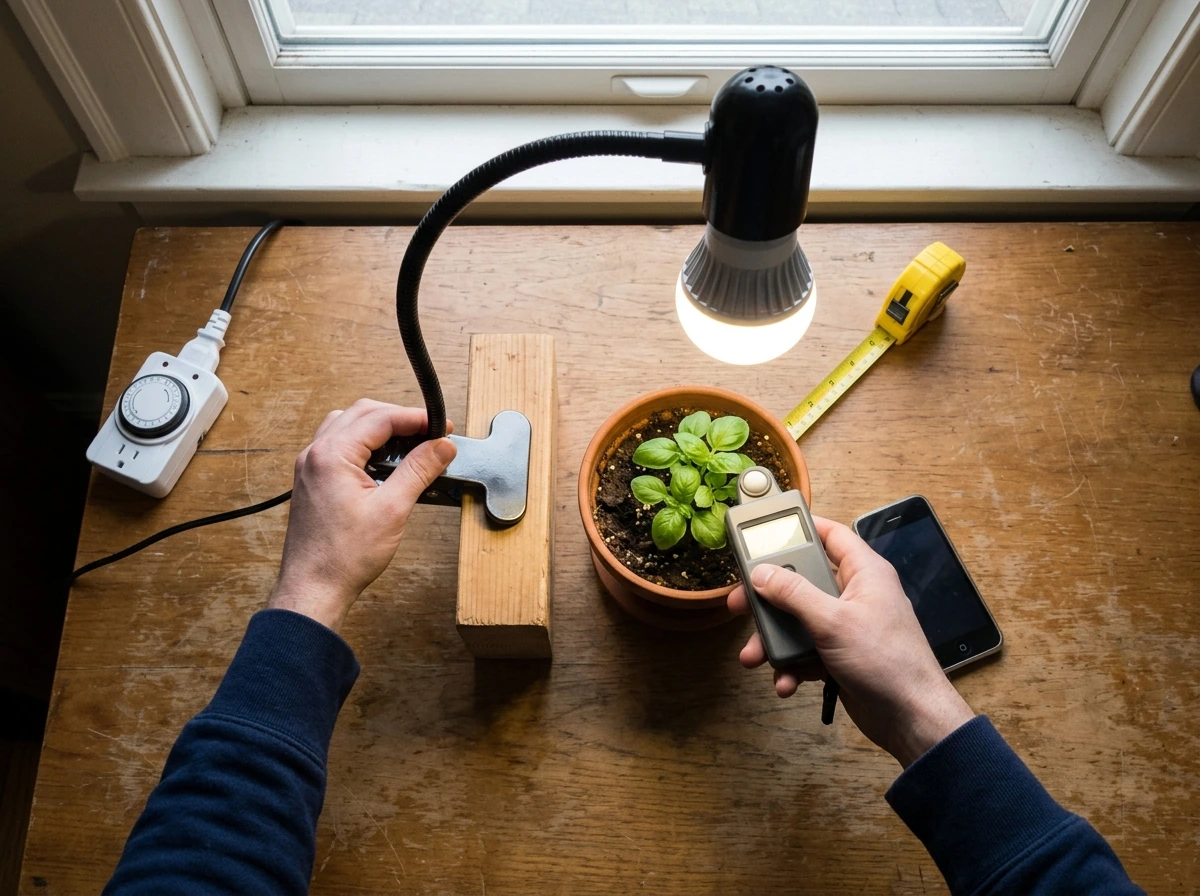
Light intensity indoors is measured in foot-candles. Low-light houseplants need roughly 50 to 250 foot-candles to function. A bright office might give you 50 to 100 foot-candles. A sunny windowsill can hit 1,000 or more. A standard LED lamp a few feet away might produce 30 to 80 foot-candles at plant level, which is borderline. Moving the bulb closer, or using a reflective surface behind it, is how you close that gap without buying new gear.
Spectrum
Plants primarily use blue light (around 400 to 500 nanometers) for compact vegetative growth and red light (around 600 to 700 nanometers) for flowering and fruiting. Chlorophyll absorbs both. Standard LEDs and CFLs lean heavily blue, which is actually fine for foliage plants. Where regular bulbs fall short is in the red range, so plants grown only under them may grow slowly and won't flower well.
Distance
This one matters more than most people expect. Light intensity drops by the square of distance, so doubling the distance from your bulb cuts the usable light to about a quarter of what it was. A bulb that seems bright across the room is doing almost nothing for a plant on the other side of the table. For regular bulbs to help plants, they need to be close: 6 to 18 inches is a reasonable working range depending on bulb wattage.
Photoperiod
Most houseplants need 12 to 16 hours of light per day when grown under artificial light (compared to a natural outdoor day), so running can air plants grow in artificial light all day long usually isn’t necessary and can cause stress, especially under office fluorescent light. A bulb that's only on when you're using the room, maybe 4 to 6 hours, won't cut it. This is why a timer is one of the most important tools in a low-budget indoor light setup. You don't need expensive equipment to run a bulb for 14 hours; you just need a $10 outlet timer.
Plants that actually do okay under regular bulbs
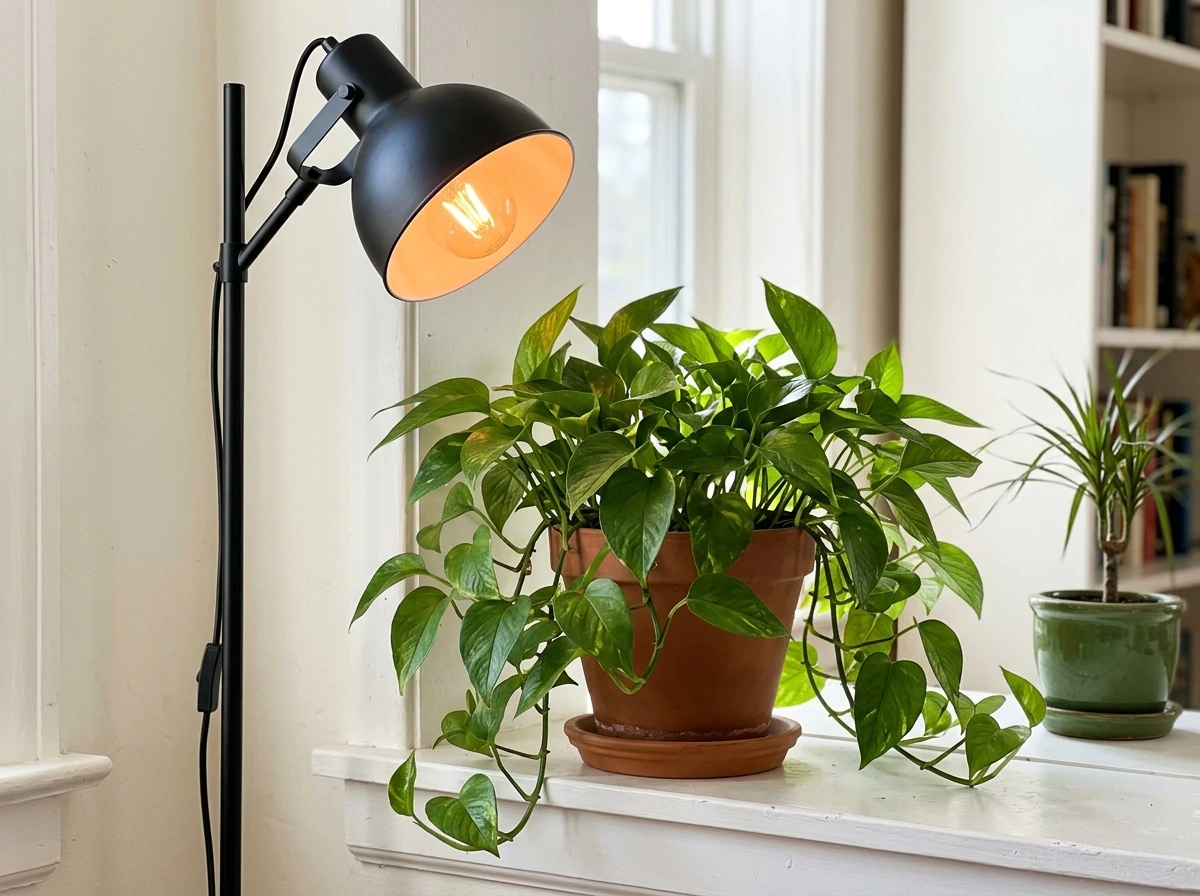
Not every plant needs intense light. These species evolved under forest canopies or in environments with indirect, filtered light, which makes them genuinely tolerant of the weaker output from regular household bulbs. If you're working with what you have, start with plants from this list.
- Pothos (Epipremnum aureum): nearly indestructible, handles low light and irregular schedules well
- Snake plant (Sansevieria/Dracaena trifasciata): survives on very little light, great entry point
- ZZ plant (Zamioculcas zamiifolia): slow-growing but resilient under dim conditions
- Heartleaf philodendron: similar to pothos, tolerates low-light corners
- Peace lily (Spathiphyllum): low-light adapted, though it may not flower without more light
- Cast iron plant (Aspidistra elatior): lives up to its name
- Chinese evergreen (Aglaonema): many varieties handle low to medium indoor light
- Dracaena varieties: especially 'Janet Craig' and 'Warneckii'
What you should not expect to grow well under regular household bulbs: herbs (basil, cilantro, mint need more), most succulents and cacti (they want intense, direct-spectrum light), seedlings for the vegetable garden, and anything that needs to flower or fruit. Those plants will survive for a while but will get leggy, weak, and eventually give up. If you're in that situation, the section on upgrading your setup below is worth reading.
How to set up a working light test today
If you want to test whether your current bulbs can support a plant, here's a simple setup you can put together in about 20 minutes using things you probably already own.
- Pick the right bulb: grab a daylight LED or CFL rated 5000K to 6500K and at least 800 lumens (a standard 60W-equivalent LED works). Avoid anything labeled 'warm white' (2700K) as the first choice, since that skews too red and dim.
- Position it close: place the bulb 6 to 12 inches above the top of your plant. Use a clip-on lamp, a desk lamp, or even a floor lamp pointed downward if that's what you have.
- Add a reflector: line the back and sides with aluminum foil, a white foam board, or even a sheet of white paper. This bounces light back toward the plant instead of wasting it on the wall and can meaningfully increase usable light.
- Set a timer: plug your lamp into a $10 mechanical outlet timer and set it for 14 to 16 hours per day. Consistency matters more than perfection here.
- Observe for two weeks: look at new growth. Is it compact and normally sized? Good sign. Is the plant stretching toward the light with long gaps between leaves? It needs more intensity or hours.
- Adjust distance first: if you see stretching, move the bulb 2 to 3 inches closer before assuming you need to buy anything new.
One thing worth doing before you start: put your plant near whatever natural light you have, even indirect, and supplement with the bulb. Combining a north-facing window with a supplemental lamp is often enough to push a low-light plant from survival mode into actual healthy growth. You don't have to choose one or the other.
Signs your plant isn't getting enough light (and what to try)
Plants are pretty communicative once you know what to look for. The following are the classic signs of insufficient light, all of which I've seen in my own apartment when I pushed plants too far into dim corners.
- Long internodes (stretching): the spaces between leaves on a stem get longer and longer as the plant reaches for light. This is called etiolation and is one of the clearest indicators your light source isn't cutting it.
- Smaller-than-normal leaves: new leaves come in noticeably smaller than mature leaves on the same plant.
- Pale green or yellowing foliage: chlorophyll production drops when light is insufficient. Leaves that should be deep green start looking washed out.
- Lower leaves yellowing and dropping: the plant is redistributing resources away from leaves that aren't contributing to photosynthesis.
- No new growth for months: the plant isn't dying but it isn't growing either. It's just waiting.
Troubleshooting steps
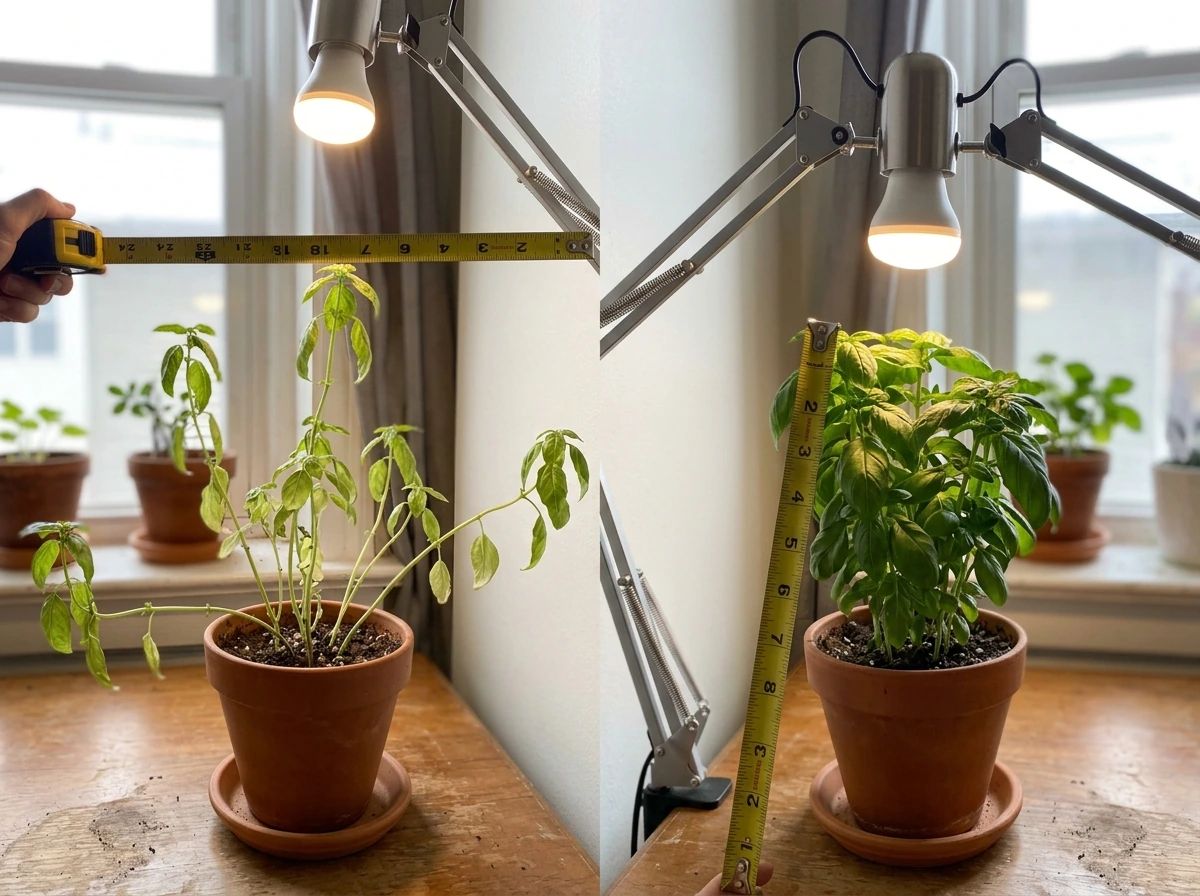
- Move the bulb closer first, before anything else. Most people place lamps too far away.
- Check your timer: is the light actually running 14+ hours? It's easy to forget that the lamp was switched off manually.
- Swap the bulb: if you're using a warm-white (2700K) bulb, try a daylight (5000-6500K) version of the same wattage.
- Add a second lamp: two medium-brightness lamps angled from either side can outperform one brighter lamp from above, especially for bushy plants.
- If none of that works within 3 to 4 weeks, this is when you're looking at a real grow light.
When regular bulbs aren't going to cut it
There's a point where trying to grow certain plants under household bulbs is just setting yourself up for frustration. If you're growing seedlings, herbs, succulents, flowering plants, or anything that needs to actually produce food, a dedicated grow light is worth the investment. The good news is that entry-level grow lights are cheap, effective, and genuinely easy to set up.
What to buy
For most home setups, a full-spectrum LED grow bar or panel in the 20 to 45 watt range is the right starting point. Look for lights labeled 'full spectrum' that include both red and blue wavelengths, ideally with a color temperature listed around 3000K to 6500K or labeled specifically as a grow light. Brands like Barrina, GE Grow, and Spider Farmer make solid entry-level options in the $20 to $80 range that will genuinely outperform any household bulb for plants. Avoid cheap blurple (pink/purple) lights from no-name brands; they often underperform their stated wattage.
How to place a grow light
- Low-light plants: 12 to 24 inches above the canopy, 12 to 14 hours per day
- Medium-light plants and herbs: 6 to 12 inches above the canopy, 14 to 16 hours per day
- Seedlings: 2 to 4 inches above the top of the seedlings, 16 hours per day
- Always use a timer: plants need a consistent dark period too, so don't run lights 24 hours (more on that in the article about whether plants can grow with 24-hour light)
One last thing worth saying: switching to a real grow light doesn't mean you failed or wasted money. It means you figured out what your plants actually need. Most experienced indoor gardeners have been through exactly this progression, starting with whatever was available at home, learning from what the plants were telling them, and then making a targeted upgrade. That's not a mistake; that's just how you learn what works.