Plants do not have to be positioned directly under grow lights to grow well, but they do need to receive enough light intensity at the leaf level, regardless of the angle. Whether your plant sits dead-center below a fixture or slightly to the side, what actually matters is how many photons are hitting the foliage and for how long each day. Direct placement is the easiest way to maximize that, but it's not the only way to do it right.
Do Plants Have to Be Directly Under Grow Lights? Placement Rules
Marcus Hartley
6 Jun 2026
How plants actually use light (it's about intensity and time, not position)
Plants don't care if your grow light is positioned perfectly above them like a tiny sun. What they care about is photosynthetically active radiation (PAR), the band of light wavelengths between 400 and 700 nanometers that drives photosynthesis. The metric that captures this most accurately is PPFD, or photosynthetic photon flux density, measured in micromoles of photons per square meter per second (µmol/m²/s). The higher the PPFD at the leaf surface, the more fuel the plant has for photosynthesis.
But PPFD is just the rate, like miles per hour. What plants really accumulate is DLI, or daily light integral, which is the total dose of light delivered over a full day. What plants really accumulate is DLI, or daily light integral, which is the total dose of light delivered over a full day blank" rel="noopener noreferrer">DLI, the total dose of light delivered over a full day derived from PPFD and photoperiod. You can estimate it with a simple formula: DLI ≈ 0.0036 × PPFD × light hours per day. A low-light houseplant might only need a DLI of 5–10 mol/m²/day, while a tomato or pepper wants 20–30. This is why running a weaker or off-angle light for longer hours can sometimes compensate for a less-than-perfect position, as long as total daily photon delivery is sufficient.
The critical variable that position affects is intensity. PPFD drops significantly as you move a plant farther from the light source, and it also drops when a plant sits at the edge of the beam rather than at the center. Think of it like standing at the edge of a campfire versus sitting directly in front of it. You still feel heat, but noticeably less. The same principle applies to grow light coverage.
When being directly under the light actually matters
There are situations where positioning plants directly under the light is genuinely important, and others where it's mostly a matter of convenience.
When it matters most
- High-light plants like tomatoes, peppers, cannabis, and most fruiting vegetables need maximum PPFD at the canopy. Sitting even 6–8 inches off-center from a focused LED can drop intensity by 30–50%, which is a real problem for these light-hungry plants.
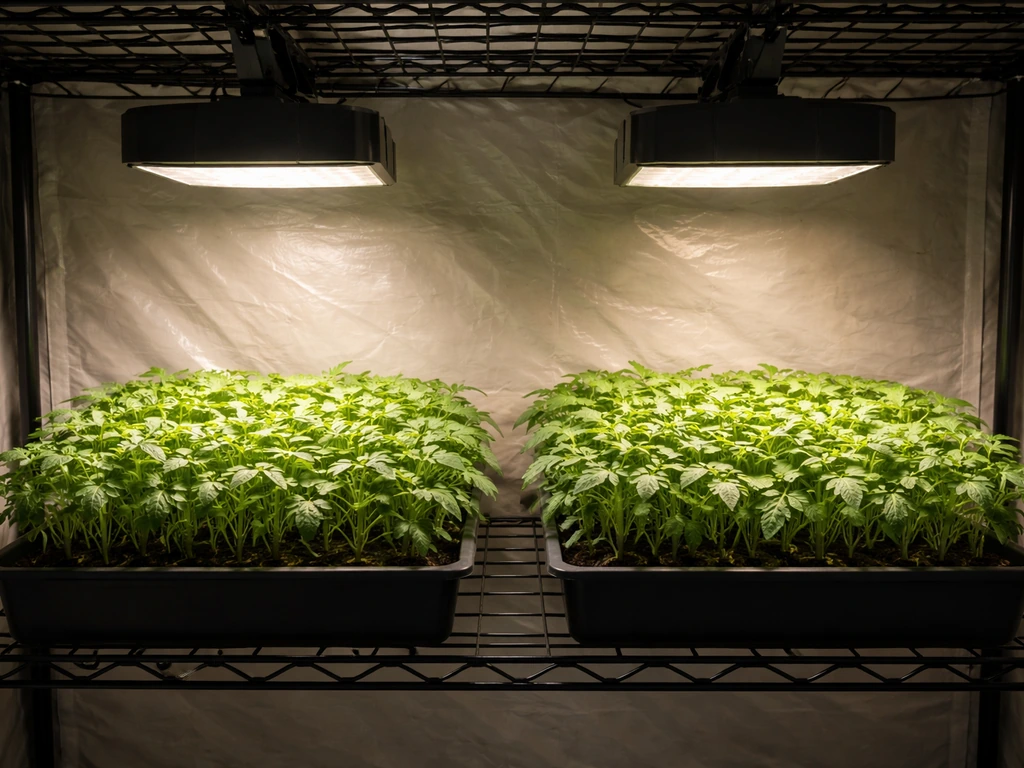
- Seedlings and young starts in trays need even, consistent coverage. A seedling at the edge of the beam will stretch toward the center, leading to leggy, uneven growth across your whole tray.
- Flowering and fruiting stages demand the highest DLI of any growth stage. Off-angle placement during this phase can reduce yields noticeably.
- Focused or narrow-beam fixtures (like single bar lights or spot-style bulbs) have a tight coverage footprint. With these, placement within the beam is much more critical.
When off-center placement works fine
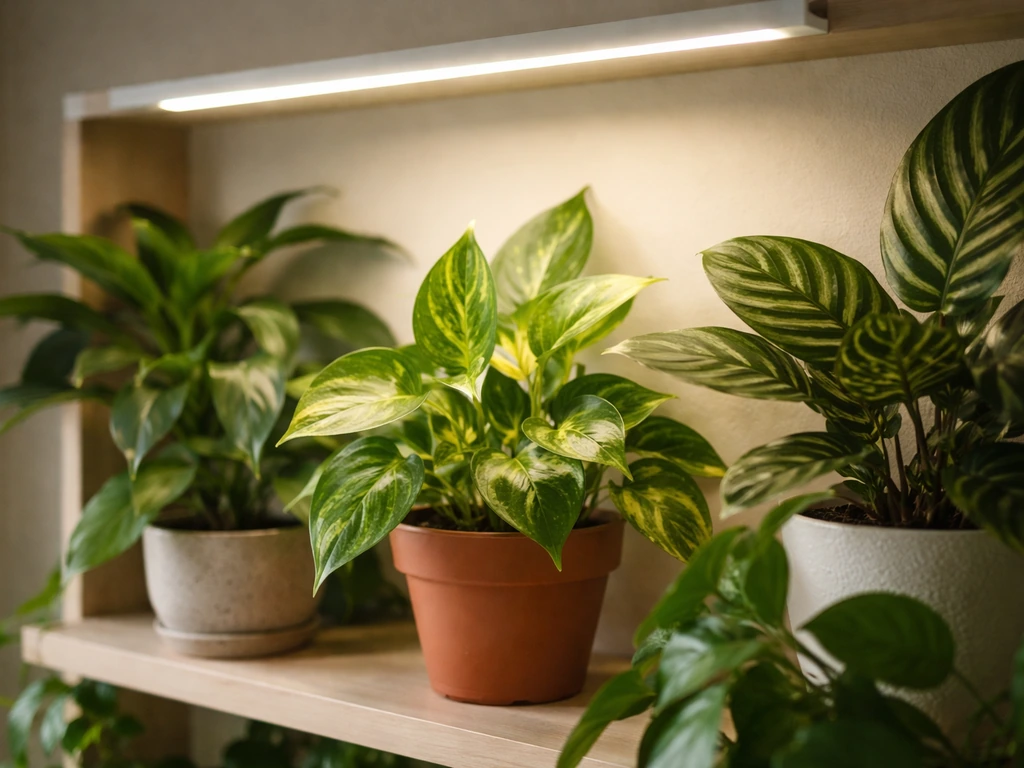
- Low-light houseplants like pothos, snake plants, ZZ plants, and peace lilies only need a DLI of 3–8 mol/m²/day. Even edge-of-beam placement from a modest LED panel delivers enough.
- Broad panel LEDs and multi-tube fluorescent fixtures spread light much more evenly. A plant 6–10 inches to the side of center is still in a usable light zone.
- Vegetative growth stages are more forgiving than flowering stages. Your monstera or herbs in a grow tent don't need to be pinpoint-centered the way a fruiting tomato does.
- When you're using reflective walls (like in a grow tent or a corner with white-painted walls), scattered light fills in the gaps and makes off-center positioning much less of an issue.
How to set the right placement: height, angle, and coverage
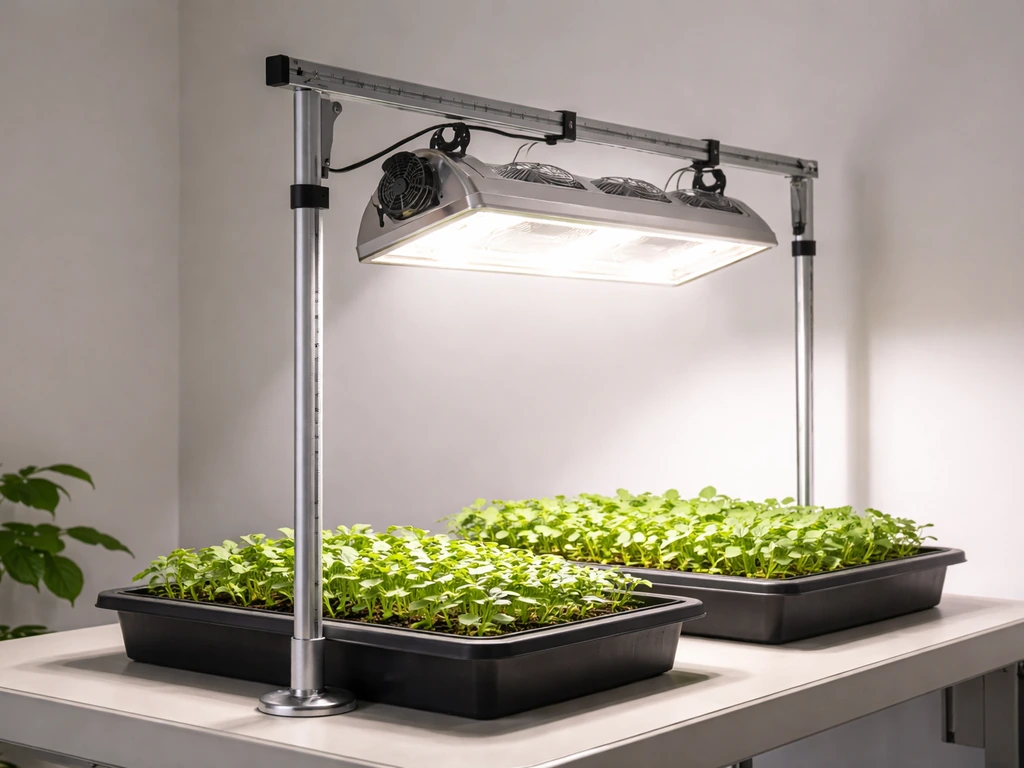
The single most important placement variable is height. Getting the light too far away robs plants of intensity; getting it too close causes heat stress or light burn. Here's how to dial it in.
Starting height guidelines by light type
| Light Type | Low-Light Plants | Medium-Light Plants | High-Light / Fruiting Plants |
|---|---|---|---|
| Full-spectrum LED panel | 24–36 inches above canopy | 18–24 inches | 12–18 inches |
| LED bar or strip light | 12–18 inches | 8–14 inches | 6–10 inches |
| T5 fluorescent (4-tube) | 6–12 inches | 4–8 inches | 2–6 inches |
| CFL bulb (single) | 4–8 inches | 3–6 inches | 2–4 inches |
| HID / HPS / MH | 24–36 inches | 18–24 inches | 12–18 inches |
These are starting points, not final answers. Every fixture has a different output, and manufacturer coverage charts are usually optimistic. Always confirm with plant response or a light meter after a week or two.
Handling angle and beam spread
If you're working with a single fixture over multiple plants, centering it over the group is better than centering it over just one. For bar-style LEDs, positioning them lengthwise down a row of plants gives more even coverage than placing them crosswise. If a plant has to sit at an angle to the light (say, on a shelf that doesn't allow direct overhead placement), you can tilt the fixture slightly to aim the beam at the plant's center of mass, most hanging lights allow a small angle adjustment. Tilting by 15–20 degrees won't cause major hotspot issues and can meaningfully improve coverage for off-center plants.
For multiple plants in a row, overlap your light coverage by at least 20–30%. The edge of one fixture's beam should reach into the start of the next fixture's beam. Gaps create dim zones where plants will visibly underperform compared to their neighbors.
How to tell if your light is close enough (or too close)
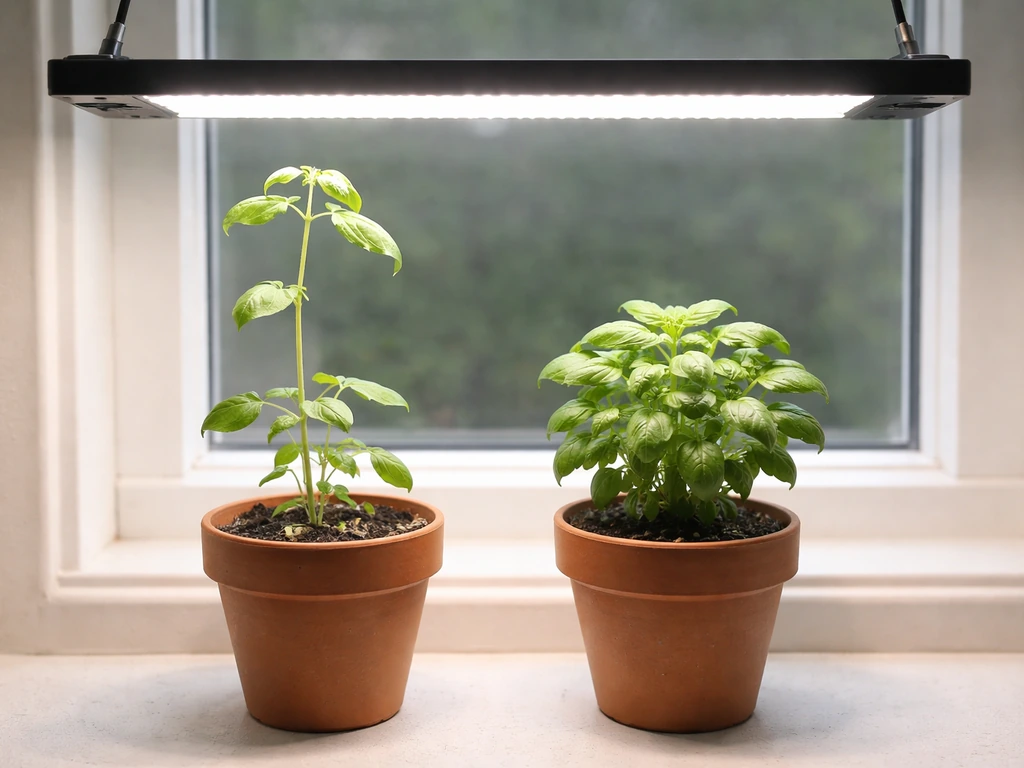
Your plants will tell you when something is off, you just have to know what to look for. I've learned most of this the hard way, watching herbs on my apartment shelf either reach desperately for light or develop suspicious pale patches under an LED that was too close.
Signs your light is too far away or too dim
- Leggy, stretched stems with long internodal gaps — the plant is literally growing toward the light source because it isn't getting enough where it is
- Pale or light-green leaves on new growth, even when the plant is otherwise healthy
- Slow growth that doesn't respond to fertilizing or watering adjustments
- Lower leaves yellowing and dropping without other obvious causes
- Seedlings toppling over because stems are too thin and weak
Signs your light is too close or too intense
- Leaf bleaching or whitening, especially on the uppermost leaves closest to the fixture
- Leaf edges curling upward (sometimes called 'taco-ing') or browning at the tips
- Leaves 'praying' upward at extreme angles — a sign of light stress, not just healthy phototropism
- Crispy, dry patches appearing on leaves that face directly toward the light
- Heat stress symptoms combined with light proximity (wilting even with adequate water)
Measuring light without expensive gear
You don't need a $300 quantum PAR meter to get a reasonable read on your setup. Free phone apps like Photone (iOS and Android) use your phone's camera sensor to estimate PPFD with decent accuracy, especially on newer phones with a diffuser accessory. Hold the phone at the leaf level, not at the fixture, because that's where it matters, a principle that Iowa State Extension specifically recommends for supplemental lighting setups. Even if the app reading is off by 20%, it gives you a directional sense of whether your plants are in the right intensity range. Check your fixture's manufacturer spec sheet for its coverage map, most reputable LED brands publish a PPFD chart at different heights that you can use as a starting guide.
Different grow light types and where to place them
Not all grow lights behave the same way, and understanding your specific fixture type makes placement decisions much easier.
LED panels and quantum boards
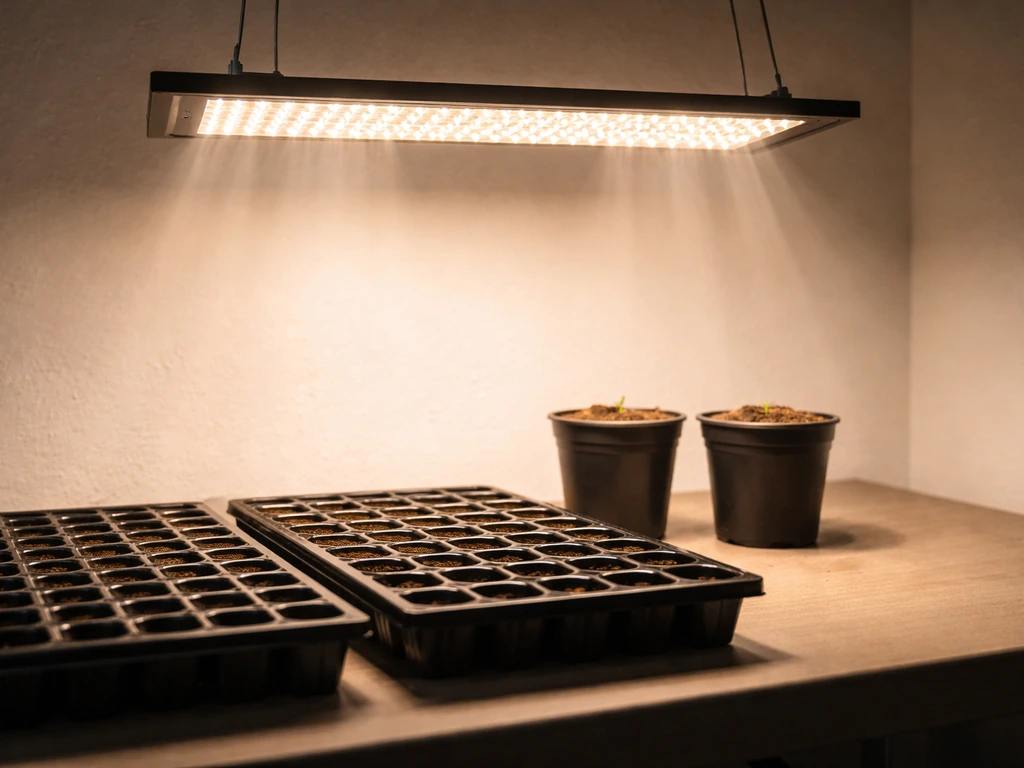
These are the most popular option for home growers right now, and for good reason. A quality full-spectrum LED panel spreads light over a relatively wide footprint, so plants don't have to be dead-center to receive usable intensity. If you are using normal LED shop lights, focus on whether they deliver usable intensity at the leaf level for long enough each day. Yes, can plants grow with indoor lights as long as the light you provide delivers enough intensity and daily light integral for the plant you’re growing. LED light strips and panels can work for aquarium plants, as long as you match the right intensity and daily light schedule. A 2x2 foot panel, for example, typically provides its rated PPFD at the center and 60–80% of that at the corners, still enough for medium-light plants at the edges. Start these at 18–24 inches for most houseplants and herbs, and raise or lower based on plant response. LEDs run cool enough that you generally don't have to worry about heat damage at reasonable distances.
LED bars and strip lights
Bar-style LEDs are more directional and have a narrower coverage footprint than panels. They work great for single rows of plants on shelving units. Because the beam is focused, position matters more here, a plant 8 inches to the side of a bar light might receive only half the intensity of one directly below. If you have multiple bars, space them evenly and stagger plants underneath to keep everyone in the primary beam.
T5 and T8 fluorescent tubes
Fluorescent lights have lower intensity than LEDs at equivalent wattage, which means they need to be much closer to the plant canopy to deliver enough PPFD. The upside is that fluorescents produce very even, diffuse light with no hot spots, ideal for seed starting trays and low-light plants. A 4-tube T5 fixture 2–6 inches above seedlings works extremely well. The tradeoff is that intensity drops off quickly with distance, so fluorescents aren't great for plants that need more than about 200–300 µmol/m²/s. They're rarely worth using for fruiting plants or anything in a flowering stage unless you stack multiple fixtures.
CFL bulbs
Compact fluorescents are inexpensive and accessible, but they have very limited range. Their intensity drops off dramatically after just a few inches. For a CFL to be useful, it needs to be within 2–6 inches of the plant canopy. They're decent for small cuttings, herbs in a single pot, or very low-light plants on a tight budget. Don't try to use one CFL for a shelf of six plants, the outer plants will get almost nothing.
HID lights (HPS and MH)
High-intensity discharge lights are powerful and still used in grow tents and serious indoor setups. They generate significant heat, so they need to be kept farther from the canopy than LEDs, typically 18–36 inches depending on wattage. A 600W HPS should stay at least 18–24 inches above plants during vegetative growth and can be lowered slightly during flowering if heat is managed. Because they're so intense and hot, plants directly below the center can sometimes receive too much light while plants at the edges of the tent don't get enough, a problem that reflectors and rotating plant positions can help solve.
Quick rules by plant type and growth stage
| Plant / Stage | Target PPFD (µmol/m²/s) | Target DLI (mol/m²/day) | Placement Priority |
|---|---|---|---|
| Low-light houseplants (pothos, snake plant, ZZ) | 50–150 | 3–8 | Low — edge-of-beam or side placement is fine |
| Herbs (basil, mint, parsley) | 150–300 | 10–15 | Medium — within primary beam, can be slightly off-center |
| Seedlings / germination | 100–200 | 6–12 | High — even coverage across tray matters a lot |
| Leafy greens (lettuce, spinach) | 150–250 | 10–14 | Medium — consistency more important than dead-center |
| Vegetative fruiting plants (tomato, pepper) | 300–500 | 15–25 | High — center placement important |
| Flowering / fruiting stage | 400–700+ | 20–35 | Very high — direct overhead placement is best |
For most houseplants and herbs, you have real flexibility in placement. For anything fruiting or flowering, being directly under the light's primary beam isn't just nice to have, it will noticeably affect your results if you skip it.
Common setup mistakes and how to fix them today
Wrong timer schedule
This is the most underrated mistake I see. A lot of people set their grow light timer once and never check it again. If your timer is running lights for only 8 hours when your plants need 14–16, you're chronically underdelivering DLI no matter how good your positioning is. Check your timer today. Low-light plants typically do fine with 12–14 hours, medium-light plants want 14–16, and fruiting plants often need 16–18 hours under artificial light to hit their target DLI. Whether grow lights are actually delivering enough for plants in winter is a related issue worth thinking through separately if you're in a low-light season.
Inconsistent or changing distance
As plants grow, the distance between the canopy and the fixture shrinks. A tomato plant that was 24 inches below your LED last month might now be 10 inches below it, and that difference can mean the plant is receiving 3–4 times more light than it was before, possibly crossing into stress territory. Check your heights weekly during active growth phases and adjust the fixture up as plants grow. Most grow tent setups use adjustable rope hangers for exactly this reason.
Hot spots and uneven coverage
If you notice one plant thriving while its neighbor suffers under the same light, you likely have a hot spot or an uneven coverage issue. Fix this by either rotating plants weekly (so each spends time in the prime center position) or adding a second fixture to extend coverage. Reflective surfaces on walls help a lot, even taping white poster board or emergency foil blankets around your grow area can meaningfully improve edge coverage without spending anything.
Placing lights near heat sources
Grow lights already add some warmth to your grow space. Placing them near a heating vent, radiator, or south-facing window that gets direct afternoon sun can push canopy temperatures into stress range even if the light level is perfect. Aim to keep canopy temperature between 65–80°F (18–27°C) for most plants. If a space feels warm to your hand when you hold it at plant level, it's probably too warm, add a small fan or move the setup.
Insufficient overlap for multiple plants
If you're lighting a long shelf with several fixtures end-to-end, the gap between fixtures is a dead zone for light. Plants in that gap will stretch toward whichever light is closest and look noticeably worse than plants directly under each fixture. Overlap your fixture coverage by at least 20%, which usually means spacing two fixtures closer together than it feels like you should. It's better to have a brighter center and dimmer ends than a dark strip in the middle.
Trusting manufacturer coverage claims at face value
Grow light marketing tends to be optimistic. A light rated for a '4x4 coverage area' often means it can light that space at 200 µmol/m²/s, fine for lettuce, not even close to enough for tomatoes. Always cross-reference coverage claims with the PPFD map in the spec sheet. If there's no PPFD map available, that's a red flag about the product's quality. For fruiting plants, you generally want a fixture rated for a smaller footprint than its max coverage claim suggests, a light rated for 4x4 max coverage might only be truly effective for fruiting plants in a 2x2 to 3x3 area.
The bottom line is that grow light placement doesn't have to be perfect, it has to be good enough for your specific plant's needs. Most houseplants and herbs are far more forgiving than the grow-light marketing world would have you believe. Start with the fixture at the manufacturer's recommended height, watch your plants for two weeks, and adjust based on what you see. That feedback loop beats any chart or formula, and it's how experienced growers actually dial in their setups.
FAQ
If my plant is not directly under the grow light, how do I tell whether it is getting enough light?
Check the leaf level, not the fixture. Look for symptoms of low dose (slow growth, long internodes, dark green or dull leaves) and high dose (bleaching, crispy tips, leaf curl). Then verify with a PPFD estimate app or your fixture’s PPFD chart at your exact hanging height.
Does the light angle matter more than distance?
Distance usually dominates. Even if you tilt the fixture, PPFD falls off quickly with height, so an off-angle plant that is still close can do fine, while a plant that is too far away will struggle even when centered.
How close is “too close” for LEDs?
Use plant response as the final safety rule. Start at the manufacturer’s height guidance, then reduce distance gradually while watching for leaf bleaching, heat-stressed droop, or stress patterns on the side facing the lamp.
Can I compensate for not-centering the plant by running the light longer?
Sometimes, yes, because DLI is what accumulates. But there is a ceiling where extra hours do not help and can contribute to fatigue or schedule stress, especially for fruiting plants that also need correct photoperiod timing. Aim for the target DLI range for your plant rather than only extending hours.
What photoperiod should I use if I’m not directly under the light?
Use the same photoperiod targets you would use for centered placement, then adjust height if symptoms show under- or over-lighting. If your plants still miss their growth target, that usually indicates intensity issues, not just insufficient hours.
How often should I adjust light height as plants grow?
At least weekly during fast growth or flowering transitions. Even changes of a foot can dramatically alter PPFD, so a setup that worked last month may now be overpowered or too weak.
I have multiple plants under one fixture, one looks fine and another looks pale. Is it a positioning issue?
Usually it is uneven coverage or a hot spot. Rotate plants weekly so each one spends time closer to the beam center, and if the pale plant stays at the edge, increase coverage with overlap or add a second fixture.
What is the best way to place a single bar LED over a shelf?
Keep the plants within the primary beam width. If plants must be offset, stagger them and consider a slight fixture tilt to aim at the plant centers, while keeping height consistent to avoid making hotspots worse.
How much overlap is enough if I use multiple fixtures end-to-end?
Overlap by at least 20 to 30% so the “dead zones” between fixtures do not create dim strips. If you see a stretched, slower plant line in the gap area, the overlap is likely too small.
Should I rely on the fixture’s advertised “4x4 coverage” number?
Treat it as a marketing max, not a working guarantee. Cross-check the PPFD map or spec sheet, and for demanding plants like tomatoes and peppers assume the effective coverage area is smaller than the claim.
Can reflective surfaces replace perfect placement?
They help, especially for edge plants, by bouncing some light back into the canopy. However, they cannot fix major height problems, so use them as an add-on, not as a substitute for correct intensity.
Do I need a PAR meter to set up lights correctly?
No. A phone-based PPFD estimate at the leaf level can give enough directional feedback to get placement and height into the right range. If available, still compare results to the fixture’s PPFD chart for better confidence.
How do I avoid light burn if I’m tempted to hang lights lower for off-center plants?
Lower gradually and watch the newest growth first. Also confirm canopy temperature stays in a safe range (roughly 65 to 80°F, 18 to 27°C for many houseplants), since heat plus strong light increases stress risk.
Why do my plants stretch toward the nearest light instead of staying uniform?
That usually indicates insufficient overlap or a spacing gap between fixtures, so each plant is effectively competing for light from one side. Reduce gaps by tightening fixture spacing and ensuring the beam edges overlap.
If I’m using fluorescents or CFLs, does “not directly under” still work?
Distance matters even more with these light types because their usable PPFD drops off quickly. For CFLs in particular, keeping them within about 2 to 6 inches of the canopy is typically necessary for any plant beyond a very small area.
Do fruiting plants need to be directly under the lights?
They benefit most from being in the primary beam. If they are off-center, you often need either tighter fixture placement, increased overlap, or a higher effective intensity, so they still receive the DLI they require for consistent flowering and fruit set.