
Seaweed does not need sunlight specifically to grow. For sprouts, the answer is different, and whether they need sunlight depends on how you sprout and what light you provide do sprouts need sunlight to grow. If you are wondering whether does cress need sunlight to grow, it helps to compare cress versus seaweed since cress can behave differently as a fast sprout. It needs light energy, and a good full-spectrum LED can deliver exactly that. If you're setting up an indoor tank or refugium, you can grow seaweed just as well under artificial lighting as you can near a sunny window, sometimes better, because you control the intensity and timing rather than relying on whatever the weather decides to do.
Does Seaweed Need Sunlight to Grow Indoors? Light Guide
Marcus Hartley
23 Apr 2026
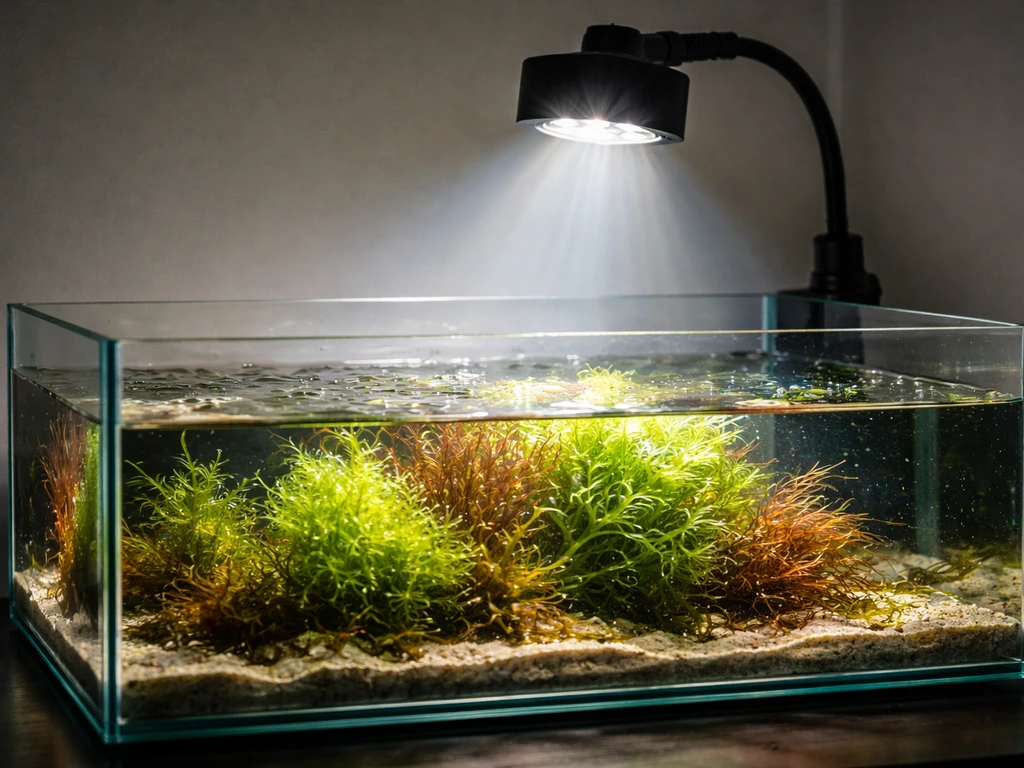
Sunlight vs artificial light: what seaweed actually cares about
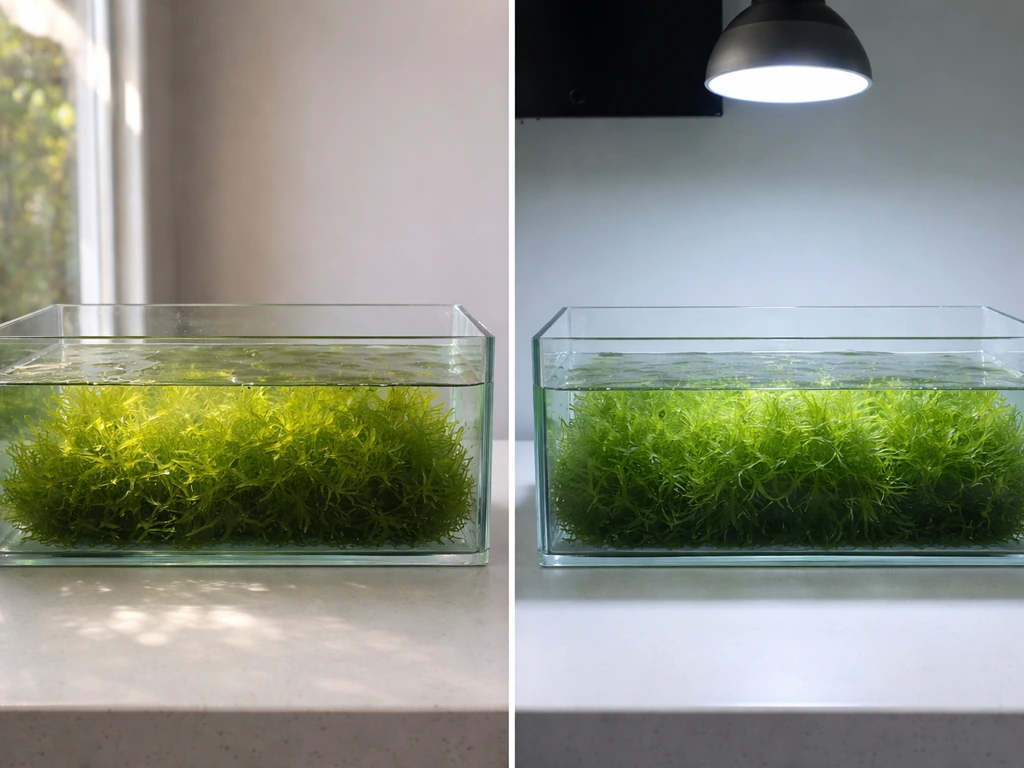
Seaweed is a photosynthetic organism, so it needs light to convert CO2 and water into the sugars that fuel its growth. But it has no preference for whether that light comes from the sun or from an LED strip above your tank. What it actually responds to are three things: light intensity (how bright), light spectrum (which wavelengths), and photoperiod (how many hours per day). Nail those three, and sunlight becomes optional.
Sunlight does have one practical advantage: it's free and broad-spectrum. But it also fluctuates with seasons, cloud cover, and window orientation, which makes it harder to control. Indoors, a grow light that you set and forget is often more reliable for consistent seaweed growth than a windowsill setup where light drops in winter or gets blocked by a building across the street.
How seaweed photosynthesis works and what light it needs
Like all photosynthetic organisms, seaweed uses chlorophyll to capture light and drive energy production. But different seaweeds also carry accessory pigments that absorb wavelengths chlorophyll misses. Green seaweeds like sea lettuce (Ulva species) rely primarily on chlorophyll a and b, which absorb strongly in the red and blue parts of the spectrum. Red seaweeds like Gracilaria carry phycoerythrin, which is especially good at capturing green and blue-green light. Brown seaweeds like kelp (Saccharina latissima) use fucoxanthin, a pigment that absorbs well in the blue-green to yellow-green range, roughly 450 to 540 nm. This matters practically because a light that works great for Ulva might underperform for kelp if it's missing that blue-green coverage.
The unit used to measure photosynthetically useful light is PPFD (Photosynthetic Photon Flux Density), expressed in micromoles of photons per square meter per second (µmol m⁻² s⁻¹). Research on common tank seaweeds gives us some solid ballpark targets. Ulva species grow well in a range of roughly 80 to 280 µmol m⁻² s⁻¹, with studies using 16-hour light and 8-hour dark photoperiods reporting strong growth at around 100 to 140 µmol m⁻² s⁻¹. Kelp cultivation typically targets around 20 to 55 µmol m⁻² s⁻¹ for early developmental stages in screened tank setups, scaling up toward 250 µmol m⁻² s⁻¹ for mature thalli, though high intensities can cause photoinhibition (essentially light stress that shuts down photosynthesis). The takeaway: more light is not always better, and the right target depends on what you're growing.
| Seaweed type | Key pigments | Useful spectrum | Target PPFD range | Photoperiod (L:D) |
|---|---|---|---|---|
| Green seaweed (Ulva, sea lettuce) | Chlorophyll a and b | Red (~660 nm) and blue (~440 nm) | 80–280 µmol m⁻² s⁻¹ | 12:12 to 16:8 |
| Red seaweed (Gracilaria) | Phycoerythrin, chlorophyll | Blue and green (~450–610 nm) | 80–200 µmol m⁻² s⁻¹ | 16:8 commonly used |
| Brown seaweed / kelp (Saccharina) | Fucoxanthin, chlorophyll c | Blue-green (~440–525 nm) | 20–250 µmol m⁻² s⁻¹ (stage-dependent) | 12:12 |
Setting up indoor lighting: LED type, spectrum, and photoperiod
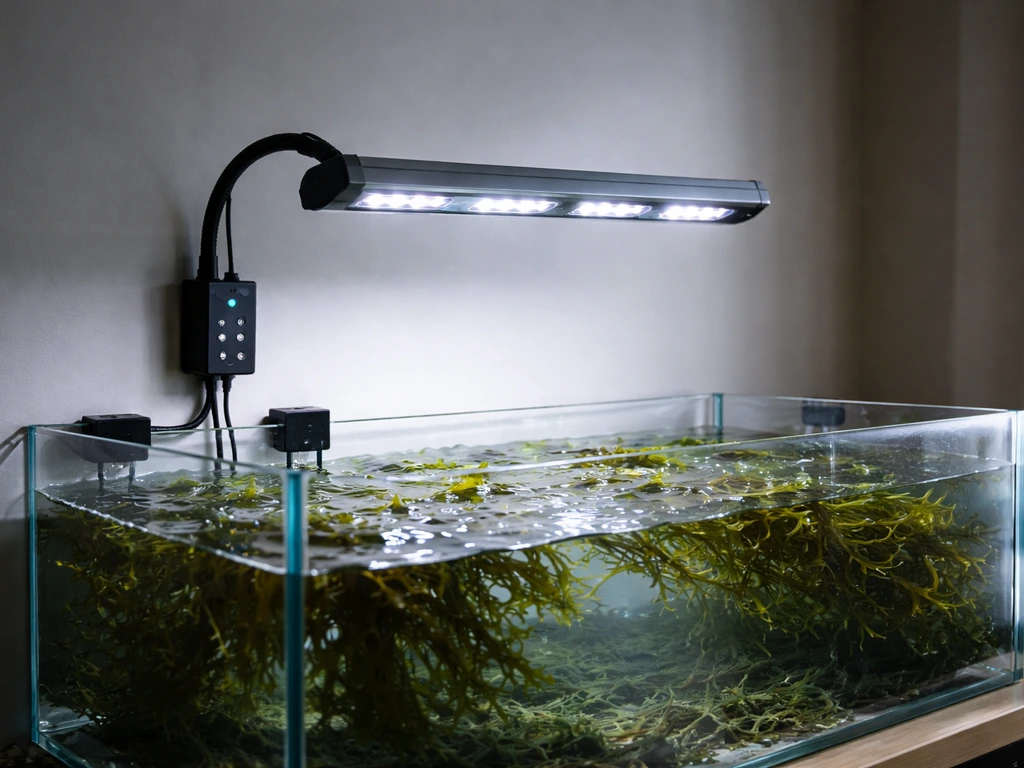
For most indoor seaweed setups, a full-spectrum LED is the safest and most versatile choice. A color temperature around 4000 K to 6500 K covers both the blue and red ends of the spectrum adequately for green seaweeds, and the blue-green component also supports brown and red species. If you're running a dedicated refugium or macroalgae display, a purpose-built refugium LED will typically dial in the spectrum better than a generic plant grow light, but a quality full-spectrum grow light absolutely works in a pinch.
You can also use a red-blue LED (the kind sold as basic plant grow lights), and research confirms that combination drives photosynthesis effectively in Ulva and Gracilaria. The trade-off is that red-blue-only lights tend to leave gaps in the green and blue-green range, which matters more for brown algae. If you're growing kelp or want to support fucoxanthin production, look for a light with meaningful blue-green output around 500 to 525 nm, not just the standard blue spike at 440 to 460 nm.
Photoperiod: how many hours of light per day
Most indoor seaweed cultivation research uses either a 12:12 or 16:8 light-to-dark cycle. Seaweed cultivation SOPs also specify cultivation parameters including photoperiod and light intensity in units such as μmol/m²/s for indoor artificial-light protocols light-to-dark cycle (photoperiod) used in seaweed cultivation SOPs. A 12-hour photoperiod is a good universal starting point and is what most kelp cultivation handbooks recommend. For faster-growing green seaweeds like Ulva, a 16:8 cycle (16 hours on, 8 hours off) can push higher biomass production, and multiple studies have used this successfully in closed tank systems. Use a simple plug-in timer so the cycle is consistent. Irregular or manually switched lighting is one of the most common beginner mistakes, and inconsistency genuinely does affect growth rates.
Placement, coverage, and avoiding common lighting mistakes
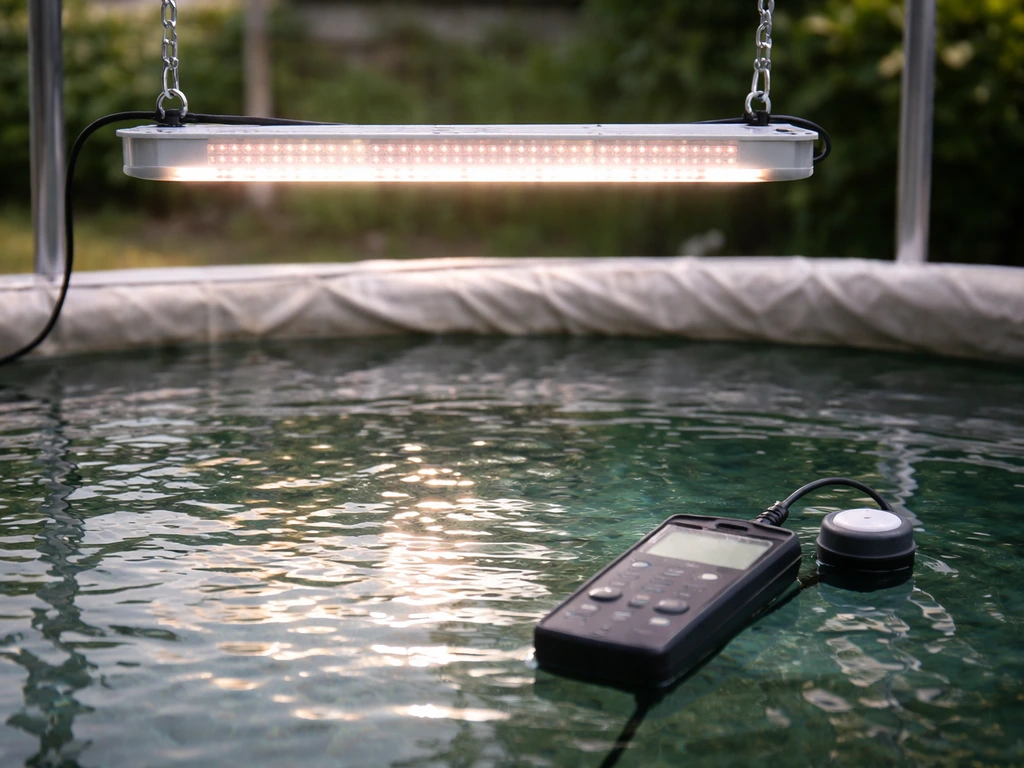
Distance between the light and the water surface is the main variable you'll adjust to dial in the right intensity. LEDs lose intensity quickly as distance increases, so raising the fixture a few inches can drop your PPFD significantly. Start with the manufacturer's recommended hanging height and check coverage by measuring across the tank surface, not just at the center, since edges often receive less light. If you notice uneven growth (thriving in the middle, stalling at the edges), the fixture may not be centered or may be too far away.
Water surface agitation also affects how much light actually penetrates to your seaweed. Rippling water can scatter and diffuse light, reducing the effective PPFD reaching the fronds. This doesn't mean you should eliminate surface movement (flow is important for other reasons covered below), but it's worth knowing that a calm surface delivers more consistent light than a heavily turbulent one.
If you're running a refugium attached to a main display tank, position the light so it doesn't spill into the display section. Light contamination can disrupt the dark cycle for your main tank inhabitants and may encourage unwanted algae growth in areas you don't want it. A simple filtration cover or physical baffle is enough to prevent this.
- Too much distance from the water: PPFD drops fast, seaweed stalls even though the light looks bright to your eye
- No timer: inconsistent photoperiods confuse the seaweed's metabolic rhythm and reduce productivity
- Wrong spectrum for the species: a pure red-blue grow light under kelp may produce weak, poorly pigmented fronds
- Light aimed at the side of the tank rather than overhead: seaweed grows toward the light source; overhead is almost always better
- Leaving room lights on during the tank's dark period: interrupts the photoperiod and reduces effectiveness
Other factors that affect growth (and get blamed on light)
This is the part that trips up a lot of growers. Light gets the attention, but if your seaweed is growing slowly or looking bad, the problem is often not the light at all. Nutrients, water flow, temperature, and salinity all interact with light to determine how well seaweed actually grows.
Nutrients
Seaweed needs nitrogen and phosphorus to build tissue. In reef and macroalgae tank setups, nitrogen is usually available from organic waste, but phosphate can be limiting if you're running aggressive filtration. In a standalone cultivation tank, you'll need to add nutrients directly, either through a prepared seawater enrichment mix or by maintaining a nutrient level that matches the seaweed's uptake rate. Research on Saccharina explicitly shows that nutrient availability and light interact: even with optimal lighting, nitrogen deficiency will cap your growth rate. If growth has stalled and your lighting looks correct, test your water for nitrate and phosphate before adjusting anything else.
Water flow and CO2
Seaweed absorbs CO2 directly from the water. Without flow, a stagnant boundary layer forms around the fronds that limits CO2 uptake and can cause localized pH swings. Gentle but consistent water movement keeps fresh, CO2-rich water in contact with the tissue. Most tank setups already have circulation pumps, but if you're running a very small or closed container, a small powerhead or airstone makes a real difference.
Temperature and salinity
Green seaweeds like Ulva are fairly tolerant of temperature variation, but most temperate and tropical macroalgae do best between roughly 15 and 25 degrees Celsius depending on species. Kelp, being a cold-water organism, wants cooler temperatures, around 10 to 17 degrees Celsius, and will struggle or bleach in a warm tank regardless of how good your lighting is. Salinity should be kept at natural seawater levels, roughly 30 to 35 ppt, unless you're working with a brackish species. Sudden salinity swings stress the tissue and often look like a light problem because the seaweed pales and slows growth.
Troubleshooting: pale fronds, stalled growth, and algae balance
Pale or bleached seaweed
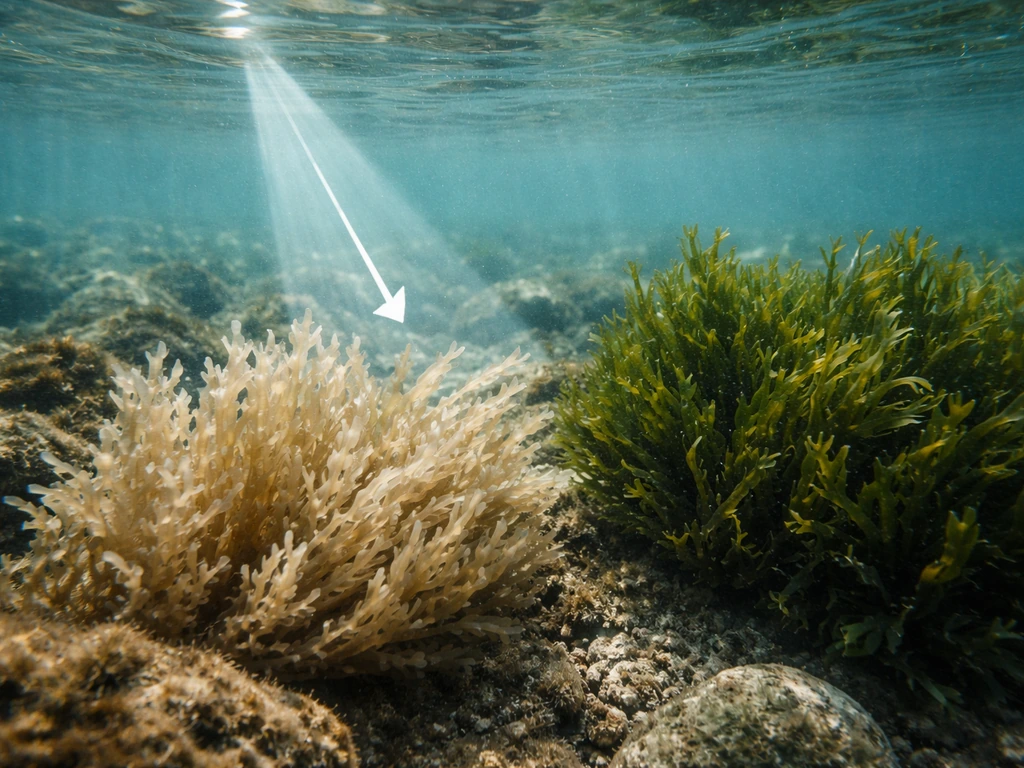
Bleaching or paling usually means one of two things: too much light or the wrong spectrum. When seaweed is hit with more light than it can use, it degrades its own pigments as a protective response, a process called photoacclimation. If you've recently moved your light closer or increased intensity, and your seaweed went from healthy green to yellowish or whitish within a few days, scale back the intensity or raise the fixture. On the other hand, pale color under low light is usually a sign of nutrient deficiency (particularly nitrogen), not a light problem at all. Brown or reddish seaweeds losing their color under a grow light that lacks blue-green wavelengths may simply be getting the wrong spectrum.
Stalled or very slow growth
Work through this checklist in order before changing anything major. First, check your PPFD with a PAR meter if you have one; an inexpensive one is worth it if you're serious about this. Aim for 100 to 200 µmol m⁻² s⁻¹ at the seaweed surface for most green species. Second, verify your timer is working and that the photoperiod is actually 12 to 16 hours. Third, test your water: low nitrate or phosphate is the most common non-light growth limiter. Fourth, check temperature. Fifth, check flow. If all of those look right, then consider whether your seaweed needs an acclimation period. Moving seaweed to a new light environment can temporarily slow growth for a week or two while it adjusts.
Nuisance algae outcompeting your seaweed
If you're running a refugium and seeing unwanted algae take over while your intended macroalgae struggles, the most common cause is insufficient light reaching the macroalgae. Nuisance algae like hair algae and cyanobacteria can outcompete macroalgae when light is too dim for the macroalgae to grow fast enough to dominate its space. Increasing your PAR output or reducing the distance between the light and the water surface usually tips the balance back. This is also a reminder that macroalgae in a refugium works best when it's actually growing vigorously, not just surviving.
Quick start checklist and next steps
If you're setting up an indoor seaweed tank or refugium today, here's a straightforward starting point based on what the research actually supports. You can always tune from here.
- Choose your light: a full-spectrum LED rated at 4000 K to 6500 K is the most versatile option for green and red seaweeds; kelp benefits from a light with stronger blue and blue-green output
- Set your photoperiod: start with 12 hours on, 12 hours off using a plug-in timer; for Ulva specifically, 16:8 can push faster growth
- Aim for 100 to 200 µmol m⁻² s⁻¹ at the water surface for most macroalgae; if you don't have a PAR meter, a light that looks comfortably bright (not blinding, not dim) at 20 to 30 cm from the surface is a reasonable rough starting point
- Center the light over the tank so coverage is even; check that edges aren't significantly darker than the middle
- Test your water before you blame the light: nitrate should be measurable (not zero), phosphate should be present, temperature should match your species' preference, and salinity should be stable at natural seawater levels
- Maintain gentle, consistent water circulation to keep CO2 available at the frond surface
- Give new seaweed one to two weeks to acclimate before adjusting light intensity; photoacclimation takes time
- If fronds pale or bleach within days of a new setup, raise the light fixture a few centimeters at a time until it stabilizes
Growing seaweed indoors is genuinely achievable without any sunlight at all. This is a similar idea to whether does ginger need sunlight to grow, where the key question is how much light your specific plant type actually needs without any sunlight at all. The biggest thing working in your favor is that seaweed responds very predictably to light conditions once you control the key variables. Get the spectrum, intensity, and photoperiod dialed in, make sure nutrients and flow are in order, and most macroalgae will grow reliably and pretty fast. If you're also growing other low-light plants like ferns or shade-tolerant herbs, the same principles around spectrum and photoperiod apply broadly, though seaweed's aquatic environment adds the nutrient and flow dimensions that terrestrial plants don't need. Ferns generally need some light to grow, even if it is only indirect or filtered light ferns or shade-tolerant herbs. Bird nest fern can grow in bright, indirect light, but it generally does not do well without at least some reliable light exposure.
FAQ
If seaweed can grow without sunlight, why does it sometimes fail indoors anyway?
Most failures are caused by one of the non-light bottlenecks discussed in the checklist: insufficient nutrients (nitrate or phosphate), too little flow for CO2 uptake, temperature outside the species range, or salinity stress. Verify PPFD and photoperiod first, then test nutrients before increasing light.
Do I need a full-spectrum LED, or will a basic red-blue grow light work for all seaweeds?
Red-blue lights can work for some green seaweeds like Ulva and red species like Gracilaria, but they often underperform for brown seaweeds (and kelp) if the blue-green range is weak. If you are growing brown algae, look for meaningful output around roughly 500 to 525 nm, not just a 440 to 460 nm blue spike.
How do I know whether my light is bright enough for seaweed (without guessing distance)?
Use a PAR meter if possible and measure across the tank surface, not only at the center. Target PPFD depends on species, and intensity drops fast with distance, so the hanging height that looks fine visually can still leave edges underlit.
Is 12 hours of light enough, or should I run longer photoperiods for faster growth?
A 12-hour cycle is a common universal starting point, and 16 hours on can boost biomass for faster-growing greens. Go longer only if temperature, nutrients, and photoperiod timing remain consistent, because extra hours do not fix nutrient or CO2 limitations and may increase light stress if intensity is too high.
What should I do if my seaweed grows in the middle but stalls near the edges?
That pattern usually points to uneven coverage, fixture centering issues, or distance being too high. Re-center the light and check PPFD across multiple points. Also confirm the water surface and fixture height are consistent, since edge areas often receive less effective light.
Does surface agitation or water movement change the amount of light seaweed actually receives?
Yes. A rippled or turbulent surface can scatter light and reduce the effective PPFD reaching the fronds, leading to more variable growth even with the same fixture. You do not need to eliminate flow, but aim for consistent movement and avoid extreme surface agitation.
If I use a refugium light, can the light leak into the main display without causing problems?
Light spill can interrupt the main tank’s dark cycle and encourage unwanted algae where they get periodic illumination. Use a baffle or cover to keep the refugium light contained, especially if your main display relies on a strict light schedule.
How can I tell whether pale color is from too much light or from nutrient deficiency?
Yellowish or whitish paling shortly after you increase intensity or move the light closer often indicates photoacclimation or light stress. Pale color under steady, low-to-moderate lighting is more often linked to nutrient limitation, particularly nitrogen. Pair a visual check with nitrate and phosphate testing before changing lights again.
My seaweed looks fine, but growth is slow. Should I increase the light immediately?
Usually no. Slow growth often comes from nitrate or phosphate being too low, temperature being off for that species, or CO2 exchange limited by weak flow. Follow the troubleshooting order: PPFD and timer, then nutrients, then temperature, then flow, and only after that adjust light intensity or spectrum.
Does light color temperature matter, or is it only the LED type that matters?
Color temperature is useful as a quick guide for achieving the right mix of wavelengths, but the key is the spectrum output, especially blue-green availability for brown algae. A quality full-spectrum LED around the commonly cited 4000 K to 6500 K range is a practical starting point, but always confirm performance for your specific seaweed.
Can I grow seaweed on a windowsill without any added light?
It can work, but it is harder to keep stable intensity and photoperiod year-round because seasons and window orientation change the delivered spectrum and PPFD. If your goal is consistent results, a timer-controlled LED setup is more reliable than relying on variable sunlight.
When moving seaweed to a new indoor light setup, how long should I expect a slowdown?
Plan for an adjustment period. Even if the new light is correct, growth can temporarily slow for about one to two weeks while the tissue photoacclimates to the new intensity and spectrum. During that time, avoid rapid back-and-forth changes in light height or brightness.