Plants grown in the dark get weak, pale, and stretched out fast. Without enough light, they can't run photosynthesis, so they start burning through stored energy just to stay alive. That means light is the key factor in whether plants grow better in the dark or light photosynthesis.
Plant Growth in Dark vs Light: Symptoms and Fixes Indoors
Marcus Hartley
20 May 2026
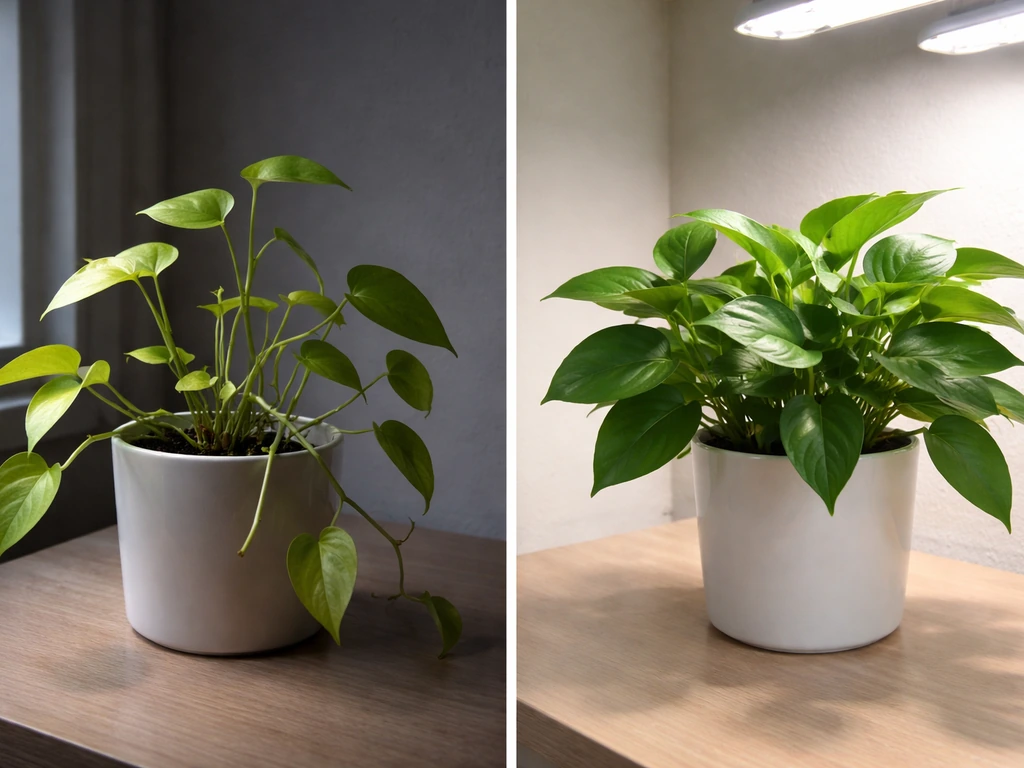
If you're wondering can plants grow in the dark, the short answer is that they can survive briefly using stored energy but they cannot keep growing normally without light for photosynthesis. Within days you'll see stems reaching and lengthening, leaves turning yellow, and growth slowing to almost nothing. Give them enough of the right light and the opposite happens: compact growth, deep green leaves, strong stems, and actual flowering or fruiting.
If you're growing indoors and something looks off, light is almost always the first place to look.
How plants actually use light
Photosynthesis has two connected stages. First, the light reactions: chlorophyll molecules in the leaf absorb photons and use that energy to drive electron transport, producing ATP and NADPH. Second, the Calvin cycle uses that chemical energy to pull carbon dioxide from the air and build sugars the plant uses to grow, reproduce, and repair itself. No light means no energy production, plain and simple.
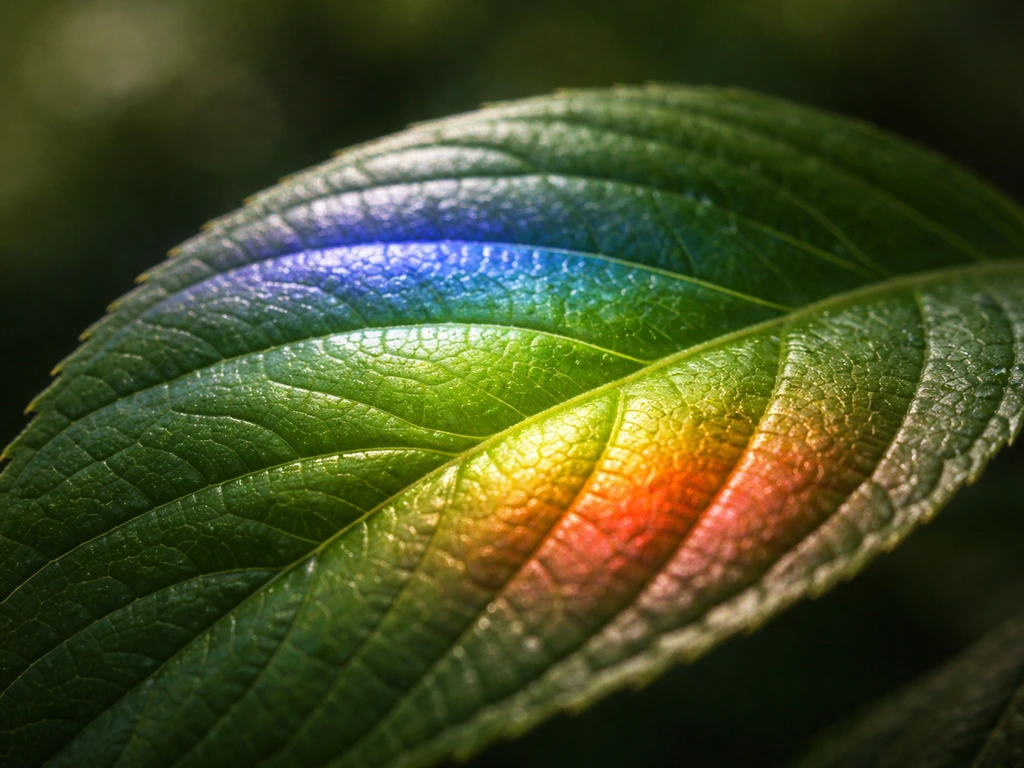
Here's the part that surprises a lot of people: plants don't absorb green light particularly well. Chlorophyll is most efficient at capturing red wavelengths (around 630 to 700 nm) and blue wavelengths. Green light gets mostly reflected back, which is why leaves look green to us. This is also why grow lights that look pink or purple (heavy on red and blue) are actually hitting the wavelengths plants prefer, not just being weird.
Beyond energy production, light also controls how a plant develops, which is a separate process called photomorphogenesis. Phytochrome receptors respond to red and far-red light and control things like when a plant knows it's in shade. Cryptochrome receptors respond to blue light and help regulate stem elongation. When blue light is present, elongation gets suppressed. When blue light is missing or too weak, the plant stretches. This is the biological reason why dim, warm-toned, or inadequate light leads to that classic leggy look.
What happens when a plant grows in the dark
I've accidentally created a few sad, pale, stretched-out plants by moving them to darker corners and assuming they'd be fine. Here's what actually happens when light is too low or completely absent.
The most obvious sign is etiolation: the plant starts elongating its stems rapidly in an attempt to find a light source. Internodes (the spaces between leaves) stretch dramatically. Leaves come in smaller and often pale yellow-green instead of a healthy deep green. The plant looks spindly and weak because it is. This is why mung beans grow better when they get darkness, since light and dark periods shape their growth and energy use. It's burning through stored carbohydrates to keep growing without being able to replenish them.
- Yellowing or pale leaves: chlorophyll breaks down without light to maintain it
- Leggy, stretched stems: the plant is reaching for a light source it can't find
- Small, underdeveloped leaves: not enough energy to build proper leaf tissue
- No flowering or fruiting: reproduction requires energy the plant doesn't have
- Root stagnation: even roots slow down when the whole system is energy-starved
- Eventual collapse: a plant in complete darkness will die within weeks, sometimes sooner
It's worth noting that seeds are a special case. Many seeds germinate fine in darkness because they're powered by stored nutrients in the seed itself, not photosynthesis. But once the seedling emerges and those reserves run out, light becomes essential immediately. This distinction matters a lot if you're starting plants from seed indoors.
What healthy growth actually looks like with the right light
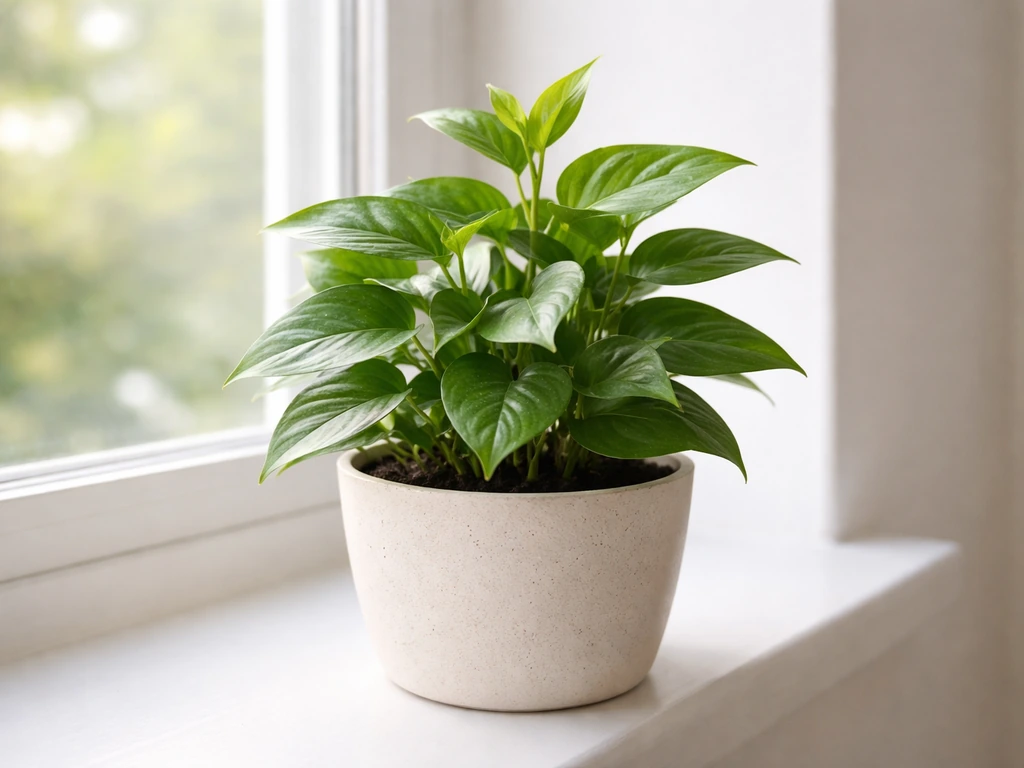
When a plant gets the light it needs, the difference is obvious. Leaves are a full, rich green. Stems are compact and sturdy. New growth comes in regularly. For flowering plants, buds actually form and open. The plant looks like it wants to be alive, because it has the energy to grow properly.
Light quality matters as much as intensity. Blue light (roughly 400 to 500 nm) drives compact, bushy vegetative growth and suppresses that stretching behavior. A Plant Physiology study also reports that [green light can increase growth rate in etiolated seedlings](https://academic. oup.
com/plphys/article/135/3/1407/6112064) and reduce light-mediated growth inhibition, showing that wavelength composition can change plant morphology beyond total intensity. Red light (630 to 700 nm) is critical for flowering and fruiting. A full-spectrum white light covers both ends reasonably well, which is why broad-spectrum LED grow lights or cool-white fluorescent bulbs work for most indoor plants.
Far-red light (700 to 750 nm) also plays a role: too much of it relative to red signals a shaded environment and can trigger shade-avoidance stretching even if total intensity seems fine.
Plants also need some darkness. The dark period isn't wasted time. It's when certain hormonal processes run, respiration occurs without competition from photosynthesis, and photoperiod-sensitive plants register whether it's time to flower. African violets, for example, need around 14 to 16 hours of light and 8 to 10 hours of darkness daily to flower well. Running lights 24/7 sounds like more is better, but for many species it actually disrupts normal development.
How much light your plant actually needs: lux, PPFD, and DLI explained
Lux is the human-eye measure of brightness, and it's a useful rough guide because most of us already have a sense of it. A bright sunny window might reach 10,000 to 50,000 lux. A typical room a few feet from a window drops to 500 to 1,000 lux. A dim corner with no natural light might be 50 to 200 lux. Most plants need more light than your eyes tell you they do, because our vision is optimized for green light, not the red and blue wavelengths plants prioritize.
For more precise planning, especially with grow lights, use PPFD (photosynthetic photon flux density), measured in micromoles per square meter per second (µmol/m²/s). This measures the actual photon flux in the 400 to 700 nm range that drives photosynthesis. Virginia Tech Extension specifically recommends PPFD over lux for plant work because lux is calibrated to human vision, not plant absorption. Some practical PPFD reference points: low-light houseplants like pothos and philodendrons do fine at 50 to 250 µmol/m²/s; herbs want 100 to 500; flowering and fruiting plants typically need 400 to 1,200.
Daily Light Integral (DLI) takes it one step further: it's the total photon dose a plant receives over a full day, calculated as DLI (mol/m²/day) = 0.0036 × PPFD × hours of light per day. A plant getting 200 µmol/m²/s for 12 hours has a DLI of about 8.6 mol/m²/day. Low-light plants generally need a DLI of 5 to 10; medium-light plants 10 to 20; high-light crops like tomatoes or cannabis 20 to 40 or higher. DLI is useful because it makes the relationship between intensity and duration explicit. Running a weaker light longer can hit the same daily dose as a stronger light run for fewer hours.
Distance is one of the most underestimated variables. As you move a light source farther away, intensity drops fast, roughly following the inverse square law: double the distance and you get about one quarter of the intensity. A fixture that delivers 400 µmol/m²/s at 12 inches might only deliver 100 at 24 inches. Always measure PPFD at canopy level, not at the fixture, because that's where it actually matters. Fluence’s PPFD lighting guide is intended to be used with grow-light height or distance, and it provides recommended PPFD ranges by growth stage using canopy distance as the key variable.
Best plants for low-light conditions (and when they still fail)
"Low-light tolerant" doesn't mean "no light needed." It means the plant can survive and look decent at light levels that would stress or kill other species. There's still a floor below which even the hardiest shade plants decline. I keep a few pothos in a windowless bathroom with just a ceiling light on for a few hours a day, and while they survive, they're definitely not thriving. They stay alive, but new growth is sparse and the leaves are noticeably lighter green than the same plants near a bright window.
| Plant | Min. Comfortable PPFD | DLI Target | Low-light reality check |
|---|---|---|---|
| Pothos (Epipremnum aureum) | 50–100 µmol/m²/s | 4–6 mol/m²/day | Survives dim corners; grows slowly, leaves get smaller |
| ZZ plant (Zamioculcas) | 50–150 µmol/m²/s | 4–8 mol/m²/day | Very tolerant; extremely slow growth in low light |
| Snake plant (Sansevieria) | 50–200 µmol/m²/s | 4–8 mol/m²/day | Handles neglect well; won't put out pups without more light |
| Cast iron plant (Aspidistra) | 50–100 µmol/m²/s | 3–6 mol/m²/day | Lives up to its name; nearly bulletproof in shade |
| Philodendron (heartleaf) | 50–250 µmol/m²/s | 5–10 mol/m²/day | Leggy in very low light; still survives |
| African violet | 50–150 µmol/m²/s | 8–12 mol/m²/day | Won't flower in low light; needs 14–16 hr photoperiod to bloom |
| Peace lily (Spathiphyllum) | 50–150 µmol/m²/s | 5–10 mol/m²/day | Tolerates shade but flowers poorly without brighter light |
| Herbs (basil, mint, parsley) | 200–500 µmol/m²/s | 15–25 mol/m²/day | Will not do well in low light; needs grow lights indoors |
The plants that reliably fail in genuinely low light are the ones people often try anyway: succulents, cacti, herbs, tomatoes, and most flowering annuals. They all need medium to high light and will slowly decline no matter how good your care routine is if light is insufficient. This is why many growers find bean seedlings do better with more light than in deep shade They all need medium to high light.
Succulents in dim conditions stretch out, lose their compact rosette shape, and eventually rot. Herbs go pale and stop producing useful leaves. If your space genuinely can't get above 100 lux consistently, stick with cast iron plants, ZZ plants, or pothos and use a grow light for anything more demanding.
Setting up artificial lighting that actually works
You don't need an expensive setup to fix a light problem. For most indoor houseplants, a decent LED grow light or a cool-white fluorescent tube puts out more than enough for low to medium-light species. The key is getting the right intensity at the right distance and running it long enough each day.
LED grow lights
LED grow lights are the best all-around choice right now. They're energy-efficient, run cool (so you can position them closer without burning leaves), last a long time, and come in full-spectrum white, red-and-blue "blurple," or a combination. Full-spectrum white LEDs work well for general houseplant and herb use. Red-and-blue LEDs can work for flowering plants but may not provide enough blue-spectrum light to keep vegetative growth compact. Look for actual PPFD specs from the manufacturer, not just wattage, and check them at your intended hanging distance.
Fluorescent bulbs
T5 or T8 fluorescent tubes (especially 6500K "daylight" color temperature) are a solid budget option for seedlings, clones, and low-light foliage plants. They deliver a reasonable spectrum and spread light evenly across a shelf. The main limitation is intensity: fluorescents drop off quickly with distance, so they need to be within 6 to 12 inches of the plant canopy to deliver useful PPFD. At 18 to 24 inches they often fall below what even low-light plants need.
Positioning and timing
- Hang or position the light so the center of the beam hits the center of your plant canopy, not the edge
- Start LED grow lights at 18 to 24 inches for low-light plants; move to 12 to 18 inches for herbs and medium-light plants; 6 to 12 inches for seedlings under fluorescents
- Use a PAR meter or a phone-based meter app to check actual PPFD at canopy level before committing to a position
- Set a timer: 12 to 14 hours for most foliage plants; 14 to 16 hours for flowering plants like African violets; 16 to 18 hours for seedlings and fast-growing herbs
- Keep the dark period consistent; plants respond to light schedules and irregular timers can stress photoperiod-sensitive species
- If you're stacking shelves, LEDs are safer for tight clearances; fluorescents need to be close, so account for plant height as it grows
Fixing common problems fast
Most light-related problems have a clear cause and a pretty quick fix once you know what you're looking at. Here's how to read the symptoms and respond.
Leggy, stretched stems with wide spacing between leaves
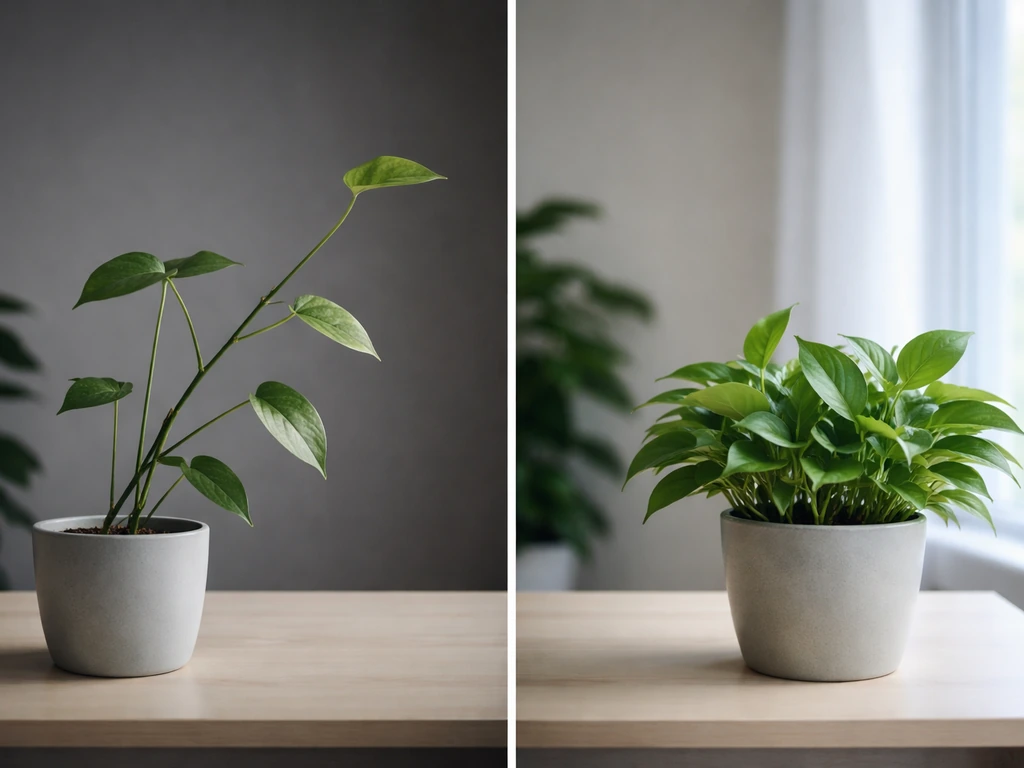
This is the classic too-dark symptom, caused by insufficient blue light triggering that elongation response. The fix: move the plant closer to a light source or upgrade to a full-spectrum LED. If using a grow light, drop it 4 to 6 inches closer and watch for improvement within one to two weeks on new growth. Old stretched stems won't shrink back, but new growth will be compact.
Yellowing leaves (especially lower leaves)
Yellow leaves can mean several things, but when combined with slow growth and a dim location, low light is usually the culprit. Chlorophyll breaks down when it's not being used or maintained, so leaves go pale or yellow. Rule out overwatering first (yellow mushy leaves are often a root issue), then increase light intensity by moving the plant or adjusting your grow light height. New leaves should come in greener within two to three weeks.
Slow or stalled growth
If your plant looks healthy but just isn't doing anything, it's often a DLI problem. The intensity might be okay but the hours are too short, or vice versa. Calculate your DLI using the formula above and compare it to the target range for your specific plant. The most common fix is simply extending your light timer by two to four hours, which can meaningfully boost the daily dose without any other changes.
No flowers on a plant that should be blooming
Flowering failures in low-light conditions are almost always about insufficient intensity or the wrong photoperiod. African violets are a perfect example: they need around 1,000 foot-candles (roughly 200 to 250 µmol/m²/s) for 14 to 16 hours daily to flower reliably. If you're growing them under a dim lamp a few feet away, they'll stay alive but won't bloom. Fix: add a grow light positioned 12 to 18 inches above the plant and set the timer for the correct photoperiod for your species.
Pale new leaves on a grow-light setup
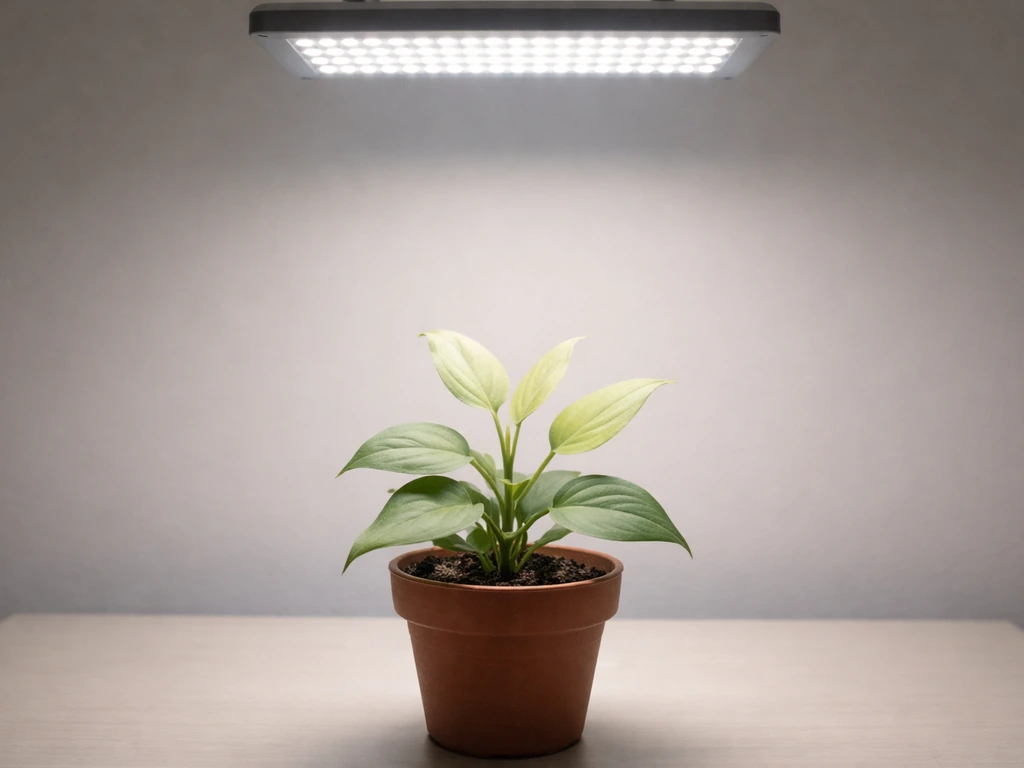
If you have a grow light and new growth is still coming in pale, the most likely issue is that the light is too far away. This is especially common with budget LED panels that look bright to the eye but don't deliver useful PPFD at 24 inches. Drop the light closer, measure PPFD at canopy level if you can, and aim for the minimum PPFD range for your plant type. If you've already done that and the problem persists, consider whether your light fixture is old (LEDs do degrade over several years) or underpowered for the area you're trying to cover.
Light problems are fixable, and most of the time the fix doesn't require spending much money. Understanding what your plant is actually asking for, whether that's more hours, more intensity, closer placement, or a better spectrum, makes troubleshooting much faster than guessing. Start with proximity and duration before buying anything new, and you'll solve the majority of indoor grow problems before you spend a dollar.
FAQ
How long can a houseplant stay in the dark before it starts permanently stunting?
Many plants can survive a short low-light stretch, but noticeable etiolation usually appears within days and repeated darkness can reduce stored reserves. If new growth is not greener and more compact within 1 to 3 weeks after you restore adequate light, expect lasting stunting even if the plant survives.
If my plant is stretching, should I fix it with more hours or more intensity?
Start by increasing intensity or reducing distance first, because stretching is a blue-light and intensity signal, not usually a timer issue. If the plant is already close and still not thriving, then increase the daily light dose (DLI) by adding 1 to 3 hours, avoiding 24/7 lighting for photoperiod-sensitive species.
Can plants use light from a window at night, like streetlights or room lamps?
Small amounts of stray light may not provide enough PPFD, and they can still affect photoperiod triggers for plants that require strict day and night cycles. For flowering plants like African violets, it helps to keep true dark periods, not just “dim” periods.
Do plants need a dark period even if I’m using a grow light?
Yes for many species. Even when the light intensity is sufficient, running lights 24/7 can disrupt normal hormone signaling and delay or prevent flowering in photoperiod-sensitive plants. Use species-specific schedules for light and dark hours rather than leaving lights on continuously.
What’s the difference between low-light survival and real growth?
Low-light tolerance means a plant can stay alive but may not produce enough energy for strong new tissue, leaves may stay lighter, and flowering may stop. Look for compact, dark-green new growth as the practical sign that the plant is actually receiving enough daily photon dose, not just barely surviving.
Is “full-spectrum” grow light always enough for flowering plants?
Not automatically. Full-spectrum can cover red and blue, but intensity and photoperiod still control results. If buds do not form, the most common causes are insufficient PPFD at canopy level or the wrong light schedule for that species.
Why do my leaves turn yellow after increasing light, but the plant seems otherwise fine?
A sudden jump in intensity or closer placement can cause stress, which can look like yellowing before recovery. Increase proximity gradually (for example, change height by small steps over a week) and confirm the new growth is returning greener rather than continuing to decline.
If I rotate the plant and it still looks leggy, what should I check next?
Rotation helps with directionality, but leggy growth is usually an overall light level issue. After rotation, check that the light is delivering enough PPFD at canopy height and that the hours of light are long enough to meet the plant’s DLI needs.
Can I measure lux and skip PPFD and DLI calculations?
Lux is a rough starting point because it’s based on human vision, which doesn’t match what chlorophyll uses best. For better accuracy, use a PPFD meter or a fixture’s PPFD specs at your intended distance, then compute DLI from hours to confirm the plant is getting enough daily dose.
Why do my grow lights look bright, but the plant still stretches?
Brightness to your eyes does not equal usable photons for photosynthesis, especially with certain LED spectra or poor distance placement. Verify PPFD at canopy level, and remember inverse-square falloff can reduce intensity dramatically if the light is too far away.
What should I do if I’m using fluorescent bulbs, and the plants are still too pale?
Fluorescents lose effectiveness quickly with distance. Keep them within about 6 to 12 inches of the canopy for useful PPFD, and if you need more intensity across a larger area, consider increasing the number of tubes or switching to closer-positioned LEDs.
Do seedlings count differently than mature plants when it comes to dark periods?
Yes. Many seeds can germinate using stored nutrients without light, but once seedlings emerge and start producing new leaves, light becomes essential. If you see pale, slow seedlings after they sprout, shorten time in low light immediately and increase PPFD rather than relying on seed reserves.
If a plant is already stretched, will it become compact again after I add light?
New growth can correct, but existing internodes usually do not shorten. After you increase light, focus on monitoring the color and spacing of the newest leaves, which should tighten within about 1 to 3 weeks depending on growth rate.