Most crops need some light to thrive, but 'some light' doesn't have to mean a south-facing window or a sunny backyard. If you're working with a dim apartment, a basement, or a room with no direct sun at all, you can still grow real food: microgreens, sprouts, leafy greens, herbs, and lettuce-style crops are all genuinely productive indoors when you match the crop to the conditions and, if needed, add a modest grow light. The key is understanding what 'without sunlight' actually means and then picking the crops that play to your situation.
What Crops Can Grow Without Sunlight? Indoor Options
Marcus Hartley
14 May 2026
What 'no sunlight' actually means for a plant
Plants run on light energy, full stop. Photosynthesis converts light into the sugars a plant uses to grow, so there's no such thing as a crop that thrives in complete, permanent darkness. What people usually mean when they ask about growing without sunlight falls into one of three situations: a room with no direct sun but some ambient natural light, a space lit only by artificial light (grow lights or fluorescents), or a short-term case where seeds are germinating or sprouts are developing before they need full light. If you're wondering can areca palm grow without sunlight, the answer is that it still needs some light energy or supplemental lighting, similar to how indoor crops only do well under partial or artificial light rather than complete darkness.
Light intensity indoors is measured in lux. A bright south-facing windowsill on a sunny day might hit 10,000–20,000 lux. A well-lit room with no direct sun typically sits somewhere between 500 and 2,000 lux. A dim corner or an interior room with only overhead lighting can drop to 100–300 lux. Most food crops struggle below 1,000 lux for extended periods, but the shade-tolerant greens covered in this guide are the exceptions. They evolved under forest canopies, which means their photosynthetic machinery works efficiently at much lower light levels than sun-hungry crops like tomatoes or peppers.
There's a bit of interesting biology behind this worth knowing. [Plants use photoreceptor proteins called phytochromes to detect red and far-red wavelengths of light. ](https://www. frontiersin.
org/articles/10. 3389/fpls. 2016. 00480/full) These receptors exist in two interconvertible forms: an inactive form (Pr) that absorbs red light around 630–700 nm and flips to an active form, and an active form that absorbs far-red light around 700–750 nm and flips back.
In darkness, the receptors sit in their inactive state, which is part of why seeds in completely dark soil may not germinate well without at least a flash of light near the surface. Lettuce seeds are a classic example of this: red light promotes germination and far-red can reverse it. This phytochrome-mediated photoreversibility has been demonstrated in studies of light-stimulated lettuce seed germination [red light promotes germination and far-red can reverse it](https://www. nature.
com/articles/215648a0). For practical growing, this means artificial lights that include red wavelengths are doing real, measurable work for your plants.
Crops that genuinely work in low light or partial shade indoors
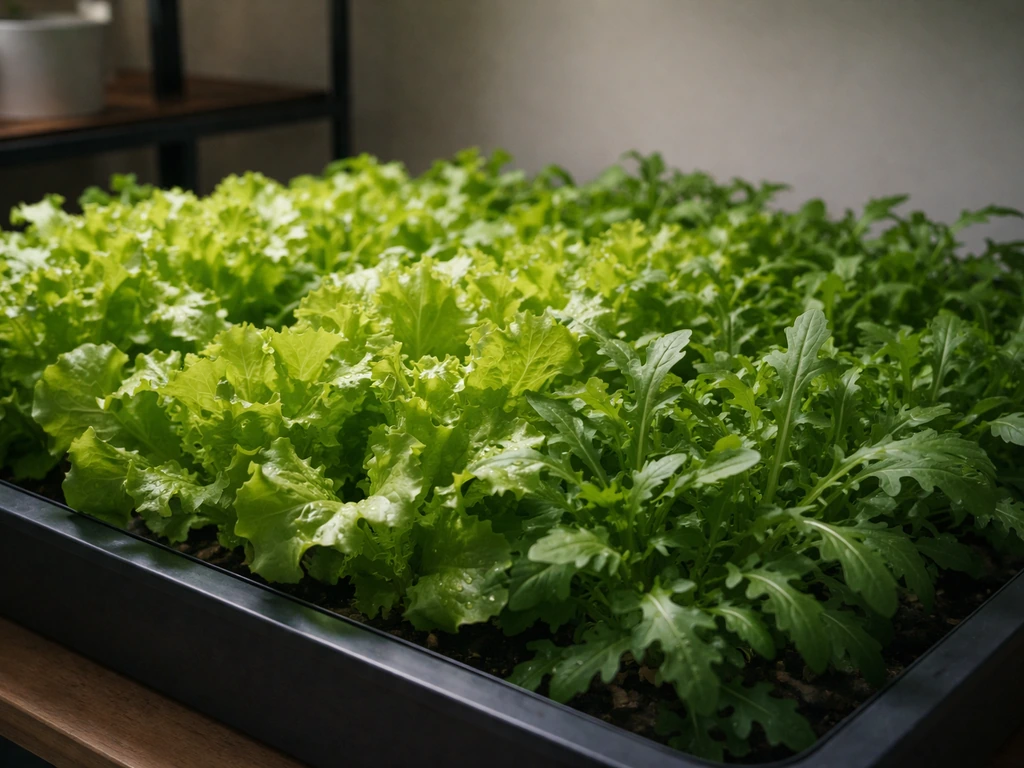
These are crops that can be productive in a room with no direct sunlight, as long as there's some ambient light (natural or artificial) reaching them for several hours a day. These crops include options like lettuce, arugula, microgreens, and sprouts that can succeed when you don't have much light to work with low light or partial shade indoors. None of these are completely light-free growers, but all of them perform surprisingly well compared to most vegetables.
- Loose-leaf lettuce varieties: One of the most forgiving crops for indoor growing. Varieties like 'Black Seeded Simpson,' 'Oak Leaf,' and 'Buttercrunch' tolerate as little as 3–4 hours of indirect light and grow well under modest artificial lighting. Harvest outer leaves continuously and they'll keep producing.
- Spinach: Handles low-light conditions better than most greens. It prefers cooler temperatures (60–70°F) and actually goes to seed faster in heat and bright light, so a dim, cool room often suits it well. Harvest baby leaves in 25–35 days.
- Kale and chard: Slower to harvest than lettuce but genuinely shade-tolerant, especially in the seedling and juvenile stages. Baby kale is harvestable in about 25–30 days indoors. Swiss chard adds color and does well under grow lights.
- Arugula: Fast-growing (ready in 21–30 days from seed), peppery, and tolerant of lower light. Gets a bit milder in flavor without intense sun, which some people actually prefer.
- Watercress: Grows well in shallow water or very moist soil and doesn't need high light intensity. A shallow tray kept consistently moist works well.
- Chives: Regrow reliably after cutting and tolerate indirect light reasonably well. Don't expect the fastest growth without supplemental light, but a bright artificial setup keeps them productive year-round.
- Mint: Spreads aggressively, tolerates lower light, and is one of the easier herbs to keep going in a less-than-sunny spot. Keep it in its own container so it doesn't crowd neighbors.
- Parsley and cilantro: Both do adequately in lower light but produce more flavorful, compact leaves with at least a few hours of bright indirect light or a grow light overhead.
For beginner-friendly reliability indoors, loose-leaf lettuce and arugula are the top two recommendations. They grow fast enough to give quick feedback, tolerate lower light better than most, and the payoff (actual salads from your window ledge or grow rack) is genuinely satisfying early on. If you want plants that can grow indoors without sunlight, the easiest route is to focus on shade-tolerant greens, microgreens, and sprouts.
The best 'no sunlight' crops: microgreens and sprouts
If you're working with truly minimal light or want the fastest possible harvest, microgreens and sprouts are your best bet. These aren't a compromise option: they're legitimately nutritious, grow at room temperature in any small space, and some stages don't require much light at all.
Sprouts: the only crop that really grows in the dark (briefly)
Sprouts are germinated seeds harvested at the 2–6 day mark, before the plant develops true leaves. You're essentially eating the seed's stored energy before the plant needs to photosynthesize. The most common sprouting crops are radish, broccoli, fenugreek, lentils, mung beans, chickpeas, sunflower seeds, and wheatgrass. They're grown in jars or sprouting trays, rinsed twice daily with water, and kept in indirect light or even a dark cabinet for most of their brief life. A flash of light near the end of the process greens them up nicely, but it's not required. Full cycle: 2–5 days.
Microgreens: minimal light, maximum payoff
Microgreens are harvested slightly later than sprouts, at the cotyledon (seed leaf) stage, usually 7–14 days after sowing. They do need light once those seed leaves open, but the requirement is much lower than full-grown crops. A basic fluorescent shop light or a low-wattage LED strip 2–4 inches above the tray is genuinely enough for most varieties. Popular microgreen varieties for low-light indoor setups include sunflower, peas, radish, broccoli, mustard, amaranth, and basil.
They're cut once at the soil line and don't regrow, but a few shallow trays staggered a few days apart gives you a continuous harvest from a small footprint. The flavor is concentrated and the nutrient content is high, which makes the short growing cycle feel like a great trade.
Minimum viable lighting if you have no natural light at all
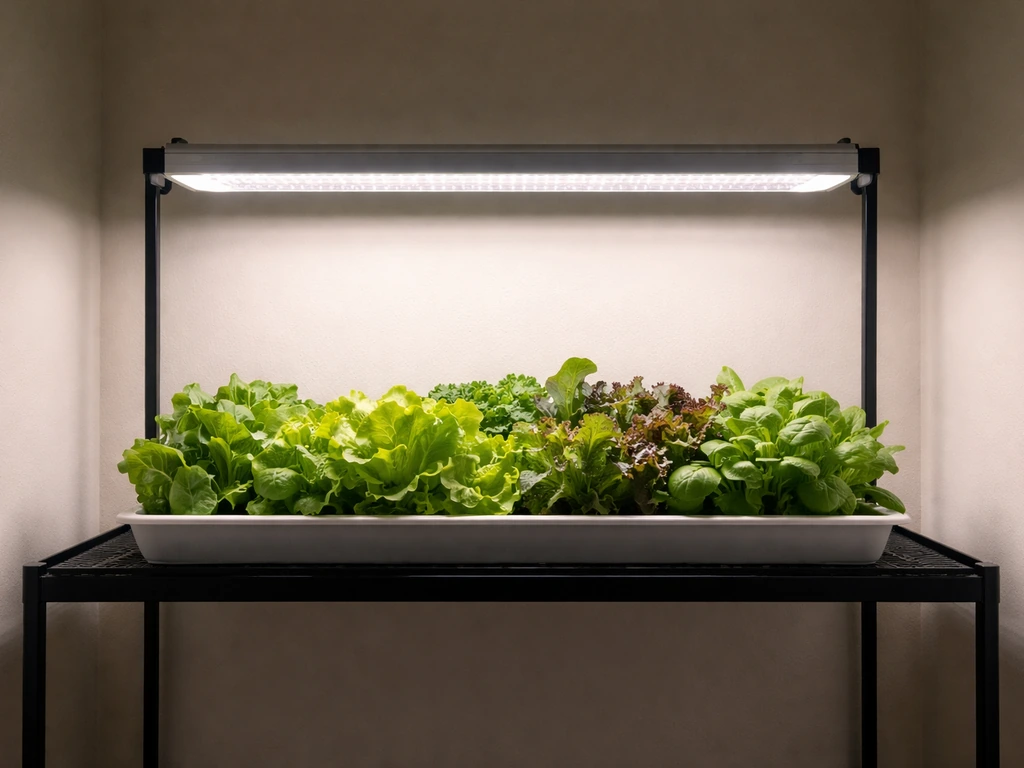
Let's say your space genuinely gets zero natural light. Maybe it's a basement, an interior closet, or a room with blacked-out windows. You can still grow most of the crops above, but you'll need to provide all the light yourself. The good news is that you don't need expensive equipment to do this well.
What type of light to use
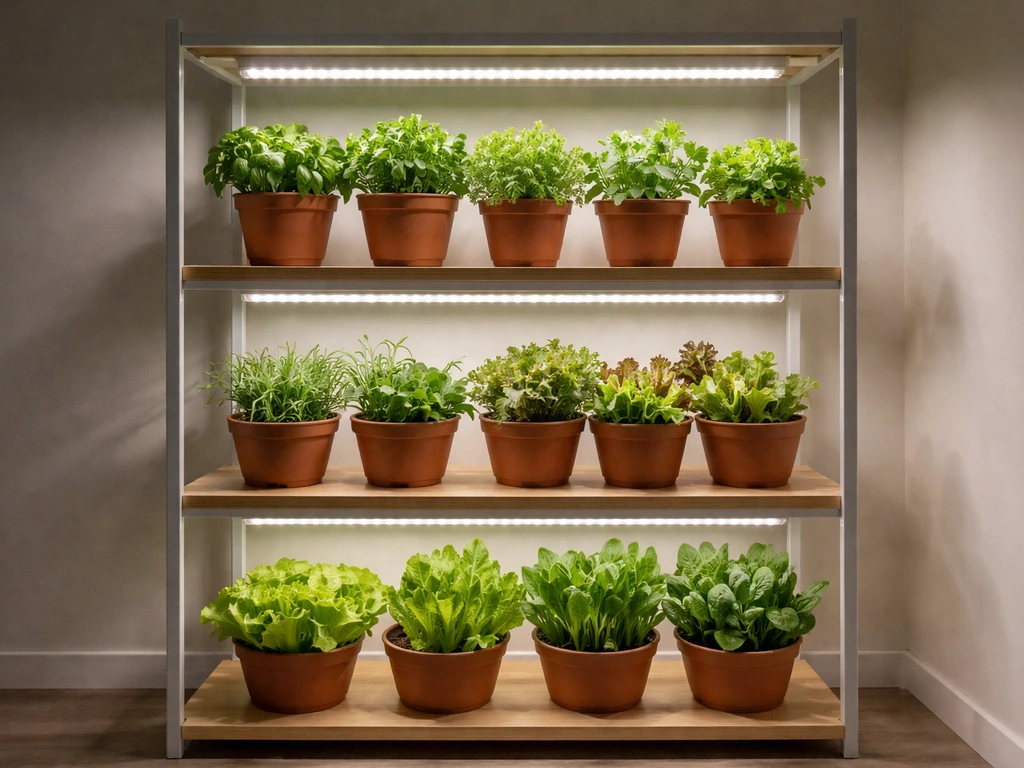
For the crops in this guide, you have two solid, affordable options: full-spectrum LED grow lights and T5 fluorescent tubes. Both deliver the red wavelengths (630–700 nm) your plants' phytochrome receptors need, and both work well for low-light crops like lettuce and microgreens.
| Light Type | Best For | Placement Height | Approximate Daily Duration | Cost to Run |
|---|---|---|---|---|
| Full-spectrum LED grow light (panel or strip) | Lettuce, herbs, kale, microgreens | 6–12 inches above canopy | 14–16 hours/day | Very low; LEDs are energy-efficient |
| T5 fluorescent tube | Microgreens, sprouts, lettuce seedlings | 2–4 inches above canopy | 14–16 hours/day | Low; slightly higher than LED |
| Standard CFL bulb (6500K) | Sprouts, very small microgreen trays | 4–6 inches above plant | 14–16 hours/day | Low; less coverage area than panel |
For a single tray of microgreens or a small lettuce container, a $15–25 LED grow light strip is honestly all you need. For a 2x2-foot grow rack with multiple trays, a 45–65 watt full-spectrum LED panel gives much better coverage. Keep the light on a timer set to 14–16 hours on, 8–10 hours off. Plants need that dark period: continuous light stresses most crops and disrupts their internal cycles.
Distance matters more than most people think
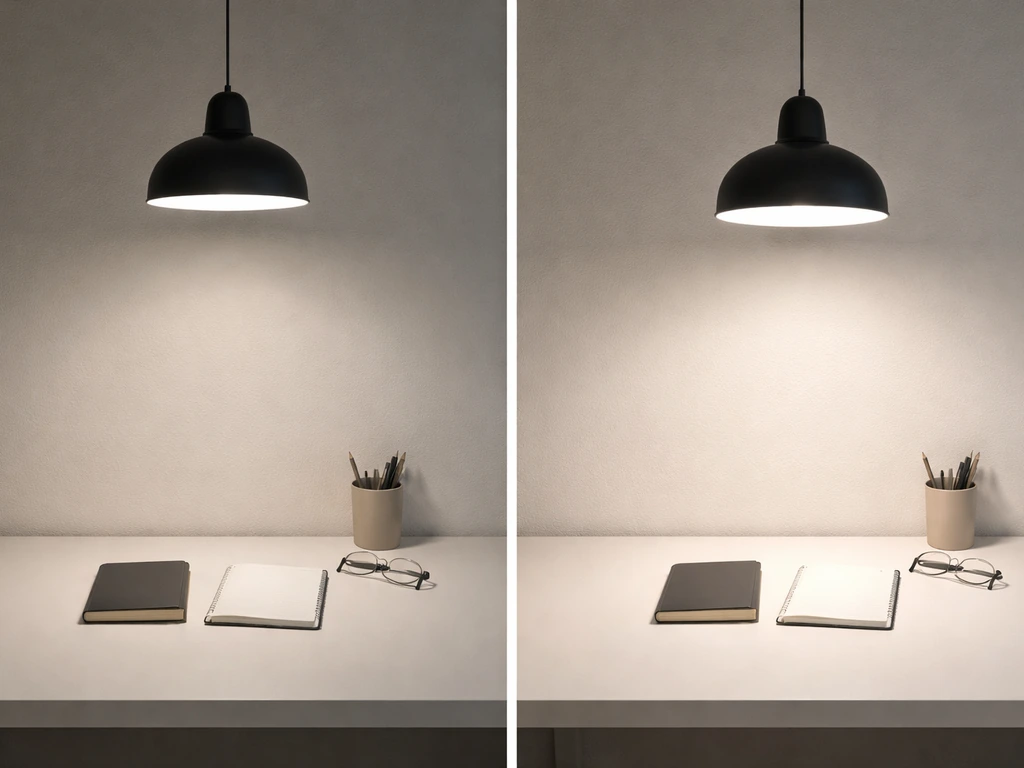
The most common lighting mistake is hanging the light too high. Light intensity drops off sharply with distance (following roughly the inverse-square law), so doubling the distance between your light and your plants doesn't halve the intensity, it reduces it to about a quarter. For low-light crops like lettuce and microgreens, keep LEDs 6–10 inches above the top of the plant canopy. T5 fluorescents can sit even closer, 2–4 inches, without burning the plants. As your plants grow, raise the light to maintain that distance.
How to actually grow these crops: containers, medium, water, and timing
Sprouts
- Rinse seeds thoroughly and soak in a jar of cool water for 8–12 hours.
- Drain and transfer to a sprouting jar with a mesh lid, or a tiered sprouting tray.
- Rinse twice daily with cool water and drain completely. Standing water causes mold.
- Keep at room temperature (65–75°F) in a spot with indirect light or a dark cabinet.
- Harvest at day 2–5 when tails are 1–2 cm long. Rinse, drain, and refrigerate for up to 5 days.
Microgreens
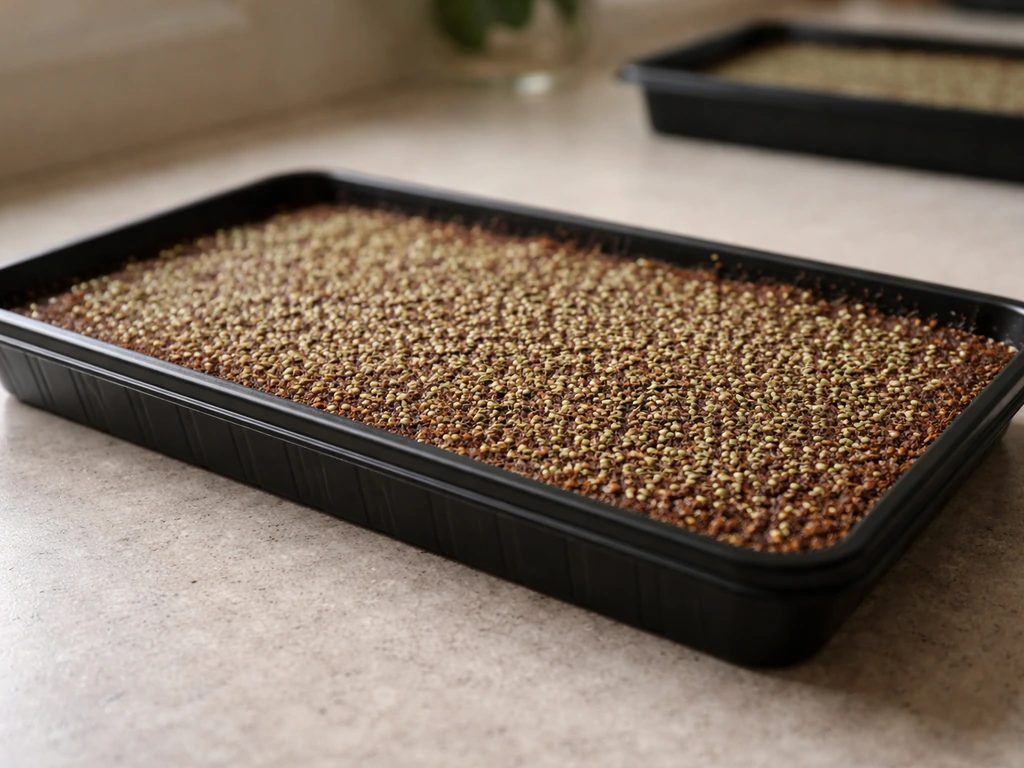
- Fill a shallow tray (1020 size or smaller) with 1–1.5 inches of a fine growing medium: coconut coir, a seedling mix, or a reusable microgreen mat.
- Broadcast seeds densely and evenly across the surface. Mist well with a spray bottle.
- Stack a second tray on top as a blackout lid and leave in a dark, warm spot (70–75°F) for 2–4 days. This mimics soil pressure and improves germination rates.
- Once most seeds have sprouted and are lifting the top tray, remove the lid and move under your grow light (2–4 inches below a T5 or 6–8 inches below an LED).
- Water from the bottom: fill the bottom tray with a small amount of water every 1–2 days instead of top-watering, which can cause mold on dense plantings.
- Harvest with scissors at the soil line once the first true leaves start to emerge, usually 7–14 days from sow date.
Lettuce and leafy greens
- Use a container at least 4–6 inches deep with drainage holes. A standard plastic window box works perfectly for cut-and-come-again lettuce.
- Fill with a lightweight potting mix. Avoid heavy garden soil, which compacts and drains poorly indoors.
- Scatter seeds on the surface and press gently. Lettuce needs light to germinate well, so don't bury seeds more than 1/8 inch deep.
- Water gently to keep the surface moist until germination (usually 3–7 days). Once established, water when the top inch of soil is dry.
- Keep temperatures between 60–70°F. Lettuce bolts in heat above 75°F, so avoid placing it near heat vents.
- Begin harvesting outer leaves once plants reach 4–6 inches tall, usually 25–40 days from sowing depending on variety. Leave the center growth point intact for continuous harvest.
Quick reference: timeline expectations
| Crop | Days to First Harvest | Regrows After Harvest? | Difficulty for Beginners |
|---|---|---|---|
| Sprouts (radish, mung bean, lentil) | 2–5 days | No (single harvest) | Very easy |
| Microgreens (sunflower, peas, radish) | 7–14 days | No (single harvest) | Easy |
| Arugula (baby leaf) | 21–28 days | Yes (cut and come again) | Easy |
| Loose-leaf lettuce | 25–40 days | Yes (cut and come again) | Easy |
| Baby kale or chard | 25–35 days | Yes | Easy–Moderate |
| Chives | 30+ days from seed (or buy starts) | Yes (regrows from base) | Easy |
| Spinach | 25–35 days | Yes | Easy–Moderate |
When things go wrong: fixing the most common indoor crop problems
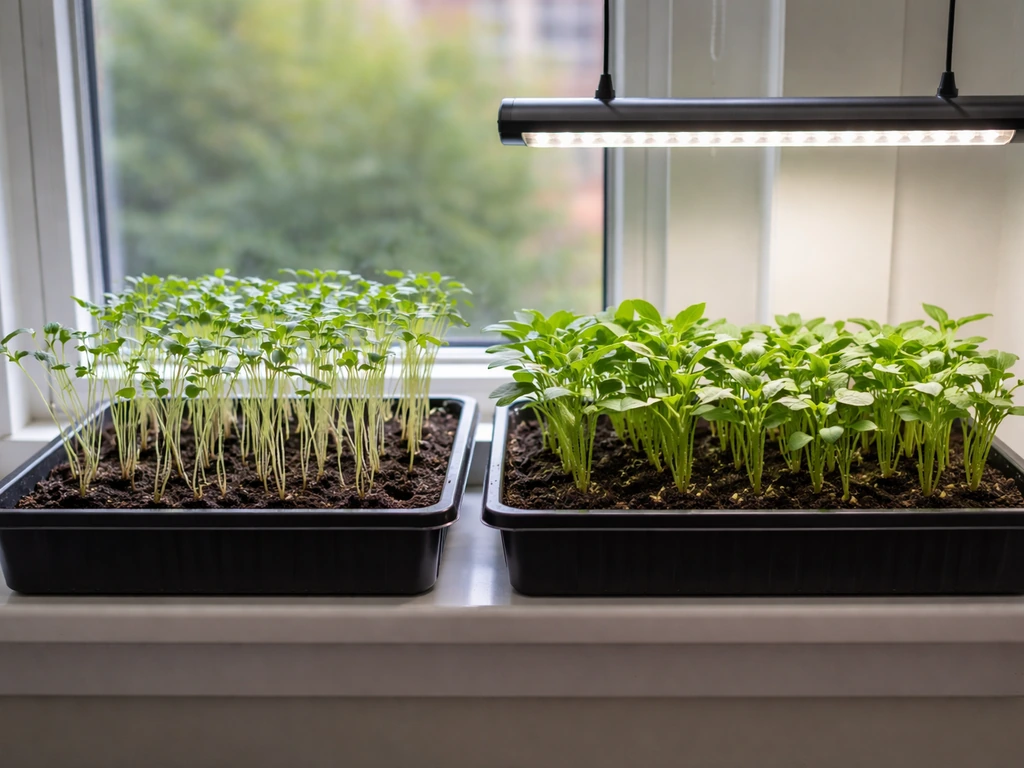
Leggy, stretched-out seedlings
If your seedlings are tall, thin, and flopping over, they're stretching toward more light than they're getting. This is the most common problem in low-light setups. The fix is almost always to move the light closer (within safe distance for your bulb type) or to increase the daily light duration up to 16 hours. If you're relying on ambient natural light alone and the plants are leggy, it's a clear sign that ambient light isn't enough and you need supplemental grow lighting.
Pale or yellow leaves
Yellowing can come from two different directions: too little light (the plant can't produce enough chlorophyll) or overwatering (roots sitting in wet soil can't absorb nutrients properly, leading to yellow leaves). Check the soil first. If it's soggy, ease off watering and ensure good drainage. If the soil is fine and watering is on point, move the plant closer to the light or upgrade the light source.
Slow growth
Slow growth is usually a combination of insufficient light and temperatures that are too cool. Lettuce and greens are happy at 60–70°F but slow down significantly below 55°F. If you're in a basement or garage setup in winter, a small seedling heat mat under the tray can make a noticeable difference, especially for germination. Once plants are established, consistent light duration matters as much as intensity: 14–16 hours of moderate artificial light outperforms 8 hours of brighter light for most of these crops.
Mold and fungal problems
Mold is the other classic failure mode, especially with microgreens and sprouts grown in dense plantings. The cause is almost always one of three things: overwatering, poor airflow, or too-cool temperatures that slow drying. Bottom-watering microgreens (instead of misting from above) removes most of the mold risk immediately. A small USB fan running at low speed improves airflow dramatically and is worth the few dollars. For sprouts, the fix is rigorous twice-daily rinsing and draining so water never sits in the jar or tray.
Seeds not germinating
If your seeds aren't coming up, first check the obvious: are they in contact with moist growing medium? Are temperatures warm enough (most seeds germinate best between 65–75°F)? For light-sensitive seeds like lettuce, remember that they need light at the soil surface to trigger germination, so don't bury them deep. Old seeds with poor viability are another common culprit. A quick float test (viable seeds sink, duds float in water) can save you a week of waiting on seed stock that was never going to sprout.
Putting it all together: which setup is right for you
If your space gets a bit of ambient light but no direct sun, start with loose-leaf lettuce or arugula in a window box and add a low-cost LED strip to extend your light hours if growth feels slow. If you have no natural light at all, sprouts and microgreens are the most reliable no-fuss entry point, and a single T5 or LED panel gives you everything you need to grow lettuce and greens on top of that. You don't need a complicated or expensive setup to get real results. A $20 grow light, a bag of potting mix, a window box, and the right seed variety is genuinely all it takes to be harvesting salad greens indoors within a month.
It's also worth noting that if you're curious about expanding beyond food crops, many ornamental plants tolerate low light well too. And if you're interested in how different plant types handle complete light deprivation, topics like whether trees can grow without sunlight or how shade-tolerant houseplants behave indoors explore some of the same underlying biology from different angles. If you want to go beyond sprouts and microgreens, look for plants that can grow indoors without sunlight by relying on ambient light or using grow lights. Algae generally requires light for sustained growth, so growing without sunlight is much harder than it sounds. But for practical edible crops you can start today? The list above is where to begin.
FAQ
Can plants grow in complete darkness if I just keep watering them?
No. Complete, permanent darkness prevents photosynthesis, so even shade-tolerant greens only do well when they still receive some light energy (ambient room light or a light on a timer). If your setup truly has zero light, you must use grow lighting.
How many hours of light are enough for low-light greens indoors?
For most lettuce-style crops and microgreens, aim for roughly 14 to 16 hours of artificial light per day, followed by 8 to 10 hours of dark. If you reduce the hours significantly, growth slows and plants get leggier even when the bulb is bright.
Will window light through blinds or overhang count as “no direct sunlight”?
Yes, as long as your plants still receive some measurable light throughout the day. The key is consistency, if the leaves only see light intermittently, they stretch and yields drop. A simple check is to track whether the plants slowly become greener and more compact over a week.
Do sprouts really need light at all?
Most of the sprout cycle can happen with indirect light or even in a darker cabinet, because you are eating the seed’s stored energy. Adding light near the end helps them green up, but you should not expect them to behave like leafy greens that need ongoing photosynthesis.
Why did my microgreens get tall and thin instead of forming a dense mat?
Usually the light is too far away, the timer hours are too short, or airflow is low. Adjust the fixture distance to keep LEDs about 6 to 10 inches above the canopy (T5 2 to 4 inches), then confirm you are running 14 to 16 hours daily.
What’s the safest way to position a grow light so I don’t overheat or burn plants?
Start at the recommended distance for your bulb type and observe for a week. If leaves show bleaching or curling, raise the light slightly or reduce daily duration. Also avoid placing lights in contact with shelving materials that can trap heat.
Is it okay to run grow lights 24/7 to speed things up?
Generally no. Continuous light increases stress and can disrupt growth cycles, leading to weaker plants and poorer texture. Keep a daily dark period, the same reason seedlings need rest is tied to internal plant rhythms.
How can I tell whether yellowing is from too little light versus overwatering?
Check the growing medium first. If it feels soggy, yellowing is often from root stress, fix drainage and reduce watering. If the soil is dry enough and the stems are also stretching, the more likely cause is insufficient light, move the light closer or extend the timer.
What’s the best low-light option if I’m prone to mold or forget to rinse?
Sprouts are often more forgiving than dense microgreen mats if you follow strict rinsing and draining twice daily. For microgreens, use bottom-watering when possible and add gentle airflow (like a small low-speed fan) to keep surfaces from staying wet.
How do I prevent leggy seedlings when using only fluorescent or LED strips?
Legginess usually means light intensity at the leaf surface is too low. The most effective fixes are reducing the light-to-canopy distance and increasing daily hours, then raising the light as seedlings grow so the distance stays consistent.
Can I grow herbs without direct sunlight, or will they get too spindly?
Many herbs can survive in low-light conditions, but they are more sensitive to extended low intensity than lettuce. If you want reliable harvests, combine your ambient light with a small LED strip and keep temperatures in the recommended range to reduce stretching.
If my seeds won’t sprout, does “light” matter for all varieties?
Light needs vary by seed type. Lettuce and some similar seeds are light-triggered and should not be buried deeply, while other seeds may sprout fine in darkness if temperatures and moisture are right. When in doubt, follow the seed depth guidance and ensure surface seeds get light near germination.
Do I need full-spectrum bulbs for low-light indoor crops?
Full-spectrum is convenient because it includes key wavelengths (including red), but what matters most is providing enough usable intensity at the leaf surface. If your plants are stretching or staying pale, the bulb may be fine but the coverage or distance is not.
What temperature range should I aim for when growing in a basement or cold room?
Greens generally perform best around 60 to 70°F, growth slows noticeably below about 55°F. If your room is colder, a small heat mat under the tray can improve germination and early vigor, especially for sprouts and microgreens.