
Beans, including mung beans, grow better in light once they have sprouted. During the very first stage of germination (the first 2 to 4 days, before any green shows), darkness is actually fine and sometimes preferred. But the moment cotyledons or true leaves start to open, light becomes essential. Without it, you get etiolated, leggy, pale sprouts that are weak and nutritionally limited. So the real answer is: dark to start, then light as soon as green appears.
Do Beans Grow Better in Light or Dark Indoors?
Marcus Hartley
24 May 2026
The quick answer for mung beans specifically
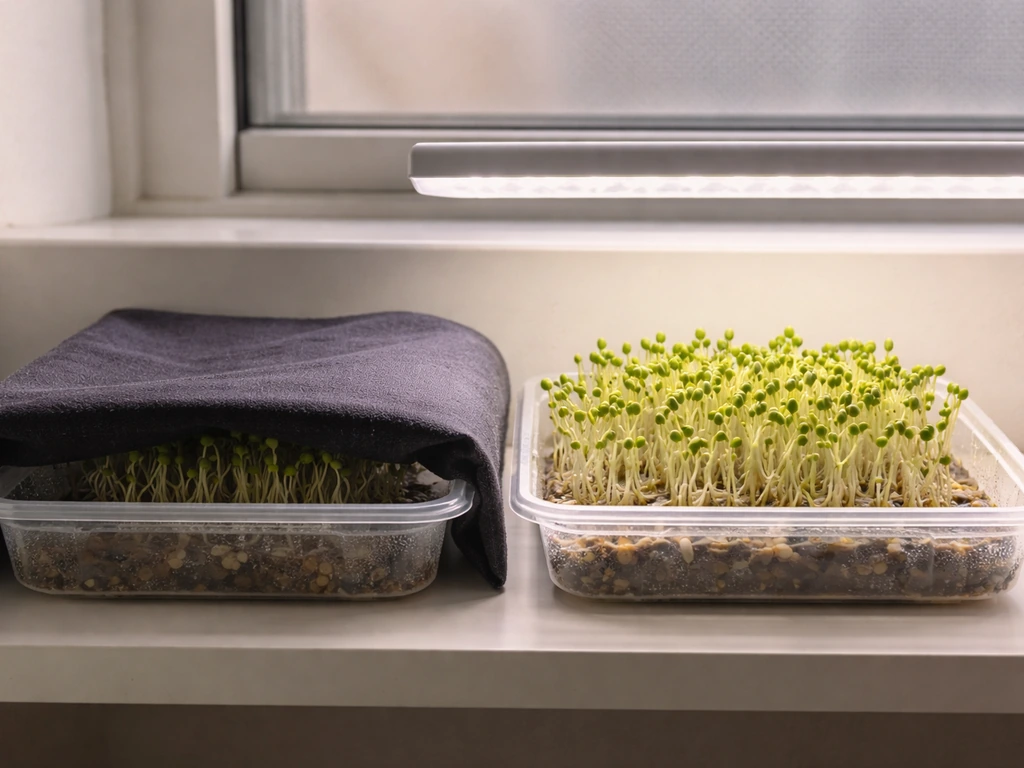
Mung beans are one of the most researched sprouting legumes out there, and the science backs up what experienced growers already know from practice. Studies comparing mung bean sprouts grown in darkness versus under defined light conditions consistently show that light exposure during and after germination changes the sprouts significantly: more chlorophyll, higher antioxidant content, better carotenoid development, and stronger photosynthetic function. Dark-grown mung bean sprouts are pale and etiolated (that yellowish, stretched-out look), while light-exposed sprouts green up and develop more robustly. If you are eating the sprouts raw or in a salad, greening them under light also increases their nutritional value. If you are growing mung beans all the way to leafy seedlings or full plants, light is non-negotiable after day four or five.
One nuance worth knowing: mung beans grown under continuous artificial light do show some stress in their photosynthetic performance compared to beans given a normal light-dark cycle. So the goal is not maximum light at all times, but the right amount of light at the right time, with a proper dark period built in.
Why light matters so much after germination
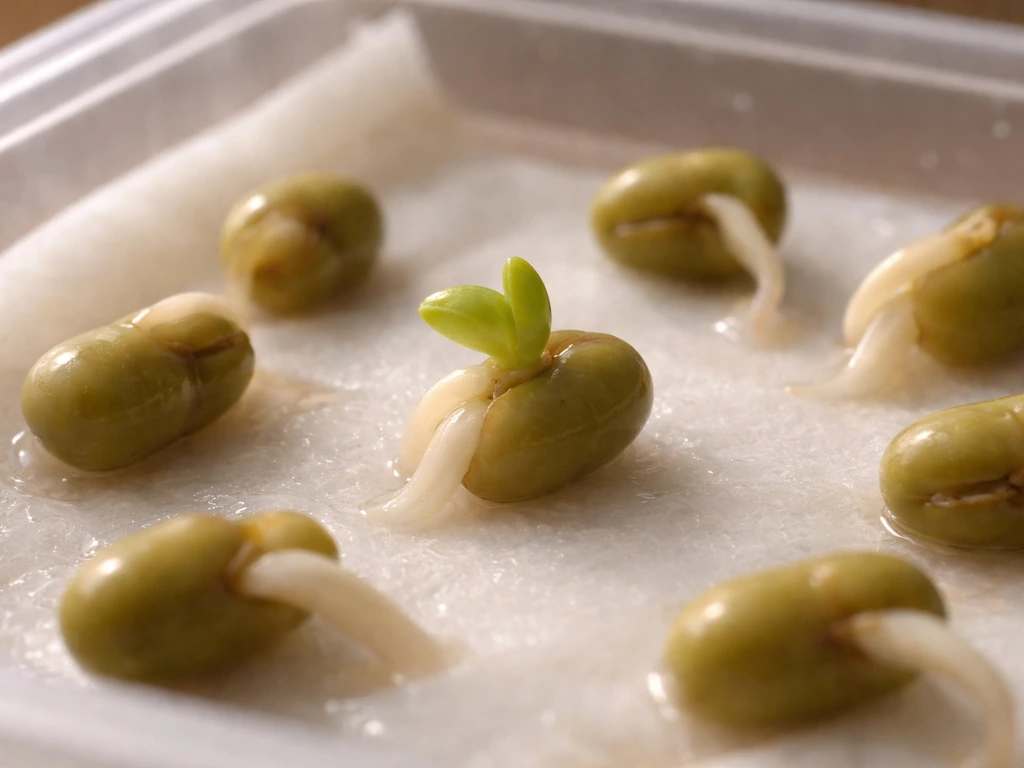
Here is the simple biology without the textbook language. When a mung bean seed first germinates, it runs on stored energy from the seed itself. It does not need light to crack open and push out a root. In fact, seeds typically germinate in soil (which is dark), so dark conditions during that first push are completely natural. But the second any green tissue appears, the plant needs to start making its own food through photosynthesis, and that requires light.
Chlorophyll, the pigment that makes leaves green, is what captures light energy and converts it into sugars the plant can use to grow. Without adequate light, chlorophyll does not develop properly and the plant starts stretching toward any available light source instead of putting energy into healthy, compact growth. This stretching response is called etiolation, and you have probably seen it: tall, spindly, pale stems that flop over easily. Beyond just looking sad, etiolated plants are structurally weaker and produce less over time.
Light also plays a role in hormone signaling in mung beans. Research on mung bean seedlings shows that light inhibits certain growth-regulatory hormones that can cause stress responses when left unchecked in the dark. In other words, light keeps the plant's internal chemistry more balanced. For indoor growers, this is why getting the light transition right (dark during germination, light once sprouts emerge) makes such a practical difference.
Germination vs. sprout growth: a step-by-step plan
The workflow breaks cleanly into two phases. Follow this and you will avoid most of the common confusion around whether to use light or darkness for beans.
Phase 1: Germination (days 1 to 3 or 4)
- Soak your mung beans for 8 to 12 hours in room-temperature water before planting. This speeds germination noticeably.
- Plant or place the soaked beans in your growing medium or sprouting tray. A thin layer of potting mix, coco coir, or a damp paper towel all work.
- Cover the tray with a dark lid, an inverted tray, or a thick cloth to block light. This mimics the natural dark soil environment and keeps moisture from evaporating too fast.
- Keep the environment warm (around 65 to 75 degrees Fahrenheit is ideal) and mist the surface lightly once or twice a day to keep it moist but not waterlogged.
- Check on day 3. If you see tiny white roots or the seed coat splitting, germination is underway. Wait until you see the first hint of green shoot or cotyledon before moving to Phase 2.
Phase 2: Sprout and leaf growth (day 4 onward)
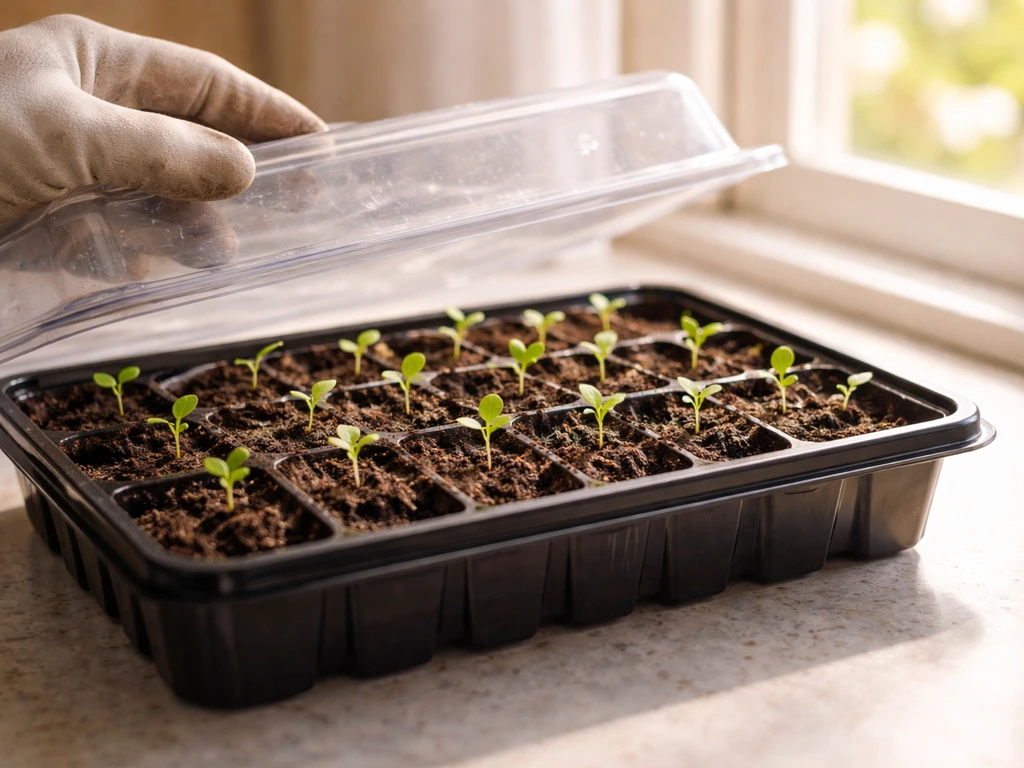
- Remove the cover as soon as you see green tissue starting to emerge. This is the signal that the plant is ready to photosynthesize.
- Move the tray to your light source immediately. Every day under a cover past this point causes unnecessary etiolation.
- Start with lower light intensity for the first day or two to let the sprouts adjust, then increase to your normal growing light level.
- Continue misting or switch to bottom watering (setting the tray in a shallow pan of water) to keep moisture consistent without soaking the surface.
- Maintain a 16 to 18 hour light period per day using a timer if you are using grow lights. A dark rest period overnight is important for healthy growth.
Setting up your indoor light: grow lights, distance, and timing
A bright south-facing window can work for mung beans, but it is rarely consistent enough indoors, especially in apartments or during winter. A dedicated grow light gives you control over intensity, duration, and placement. Here is what actually works.
Which type of grow light to use
For mung beans and sprouts, you do not need anything fancy or expensive. A basic LED grow light or a T5 fluorescent strip light will handle the job well. LEDs are more energy-efficient and run cooler, which matters when lights are on 16 to 18 hours a day. Full-spectrum LEDs (white light with a mix of red and blue wavelengths) are the most versatile and work well from germination through to mature leaf growth. Research on mung beans specifically shows that light quality, including blue and red wavelengths, affects how pigments and bioactive compounds develop in the sprouts, so full-spectrum is a better choice than a single-color bulb.
How far to place the light
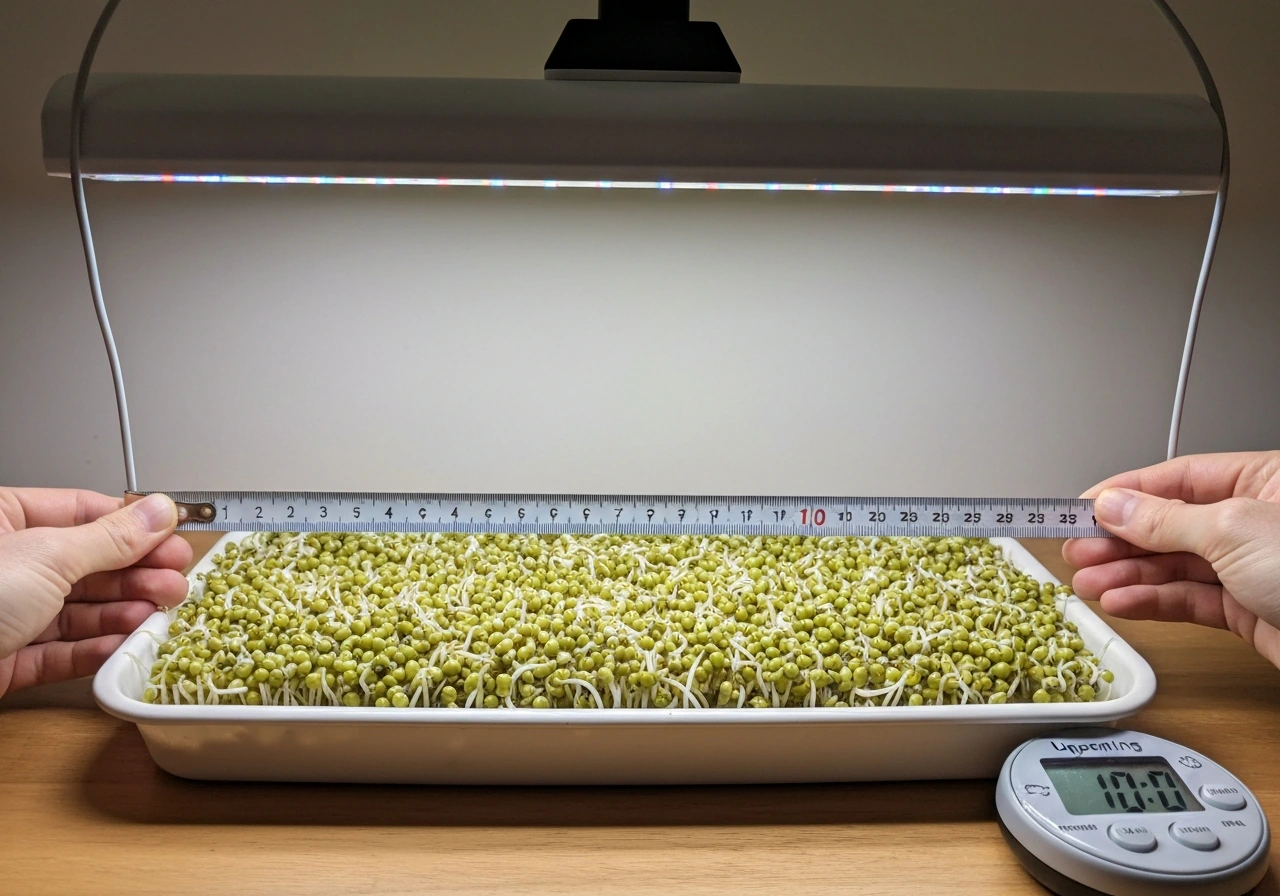
Distance depends on the light's intensity, but a practical starting point for freshly sprouted mung beans is 6 to 12 inches from a standard LED grow light or 4 to 6 inches from a T5 fluorescent. The target light intensity for seedlings and sprouts is roughly 100 to 250 micromoles per square meter per second (μmol/m²/s), which is a moderate, non-stressful level. For indoor lighting settings, that means you can use these seedling PPFD ranges as a practical starting point as long as you measure your PPFD 100 to 250 micromoles per square meter per second (μmol/m²/s). If you do not have a meter, use your sprouts as your guide: if they stretch toward the light, move it closer; if leaves look bleached or the tips dry out, pull it back.
Daily light timing
Set a timer for 16 to 18 hours of light per day during the sprout and seedling stage. University extension microgreens programs use 18 hours on as a standard indoor workflow for edible seedling production, and it works well for mung beans too. The dark period overnight is not just a break for you, it matters for the plant. Continuous light (24 hours) has been shown to stress mung bean photosynthetic function, so do not skip the rest period even if you think more light equals faster growth.
| Light source | Recommended distance | Daily duration | Best for |
|---|---|---|---|
| Full-spectrum LED grow light | 6 to 12 inches | 16 to 18 hours | All stages after germination |
| T5 fluorescent strip | 4 to 6 inches | 16 to 18 hours | Sprouts and early seedlings |
| South-facing window (bright) | Place tray directly on sill | Natural daylight (supplement in winter) | Early seedlings if light is strong enough |
| Incandescent bulb | Not recommended | N/A | Too much heat, wrong spectrum |
How to tell if your beans are getting too much or too little light
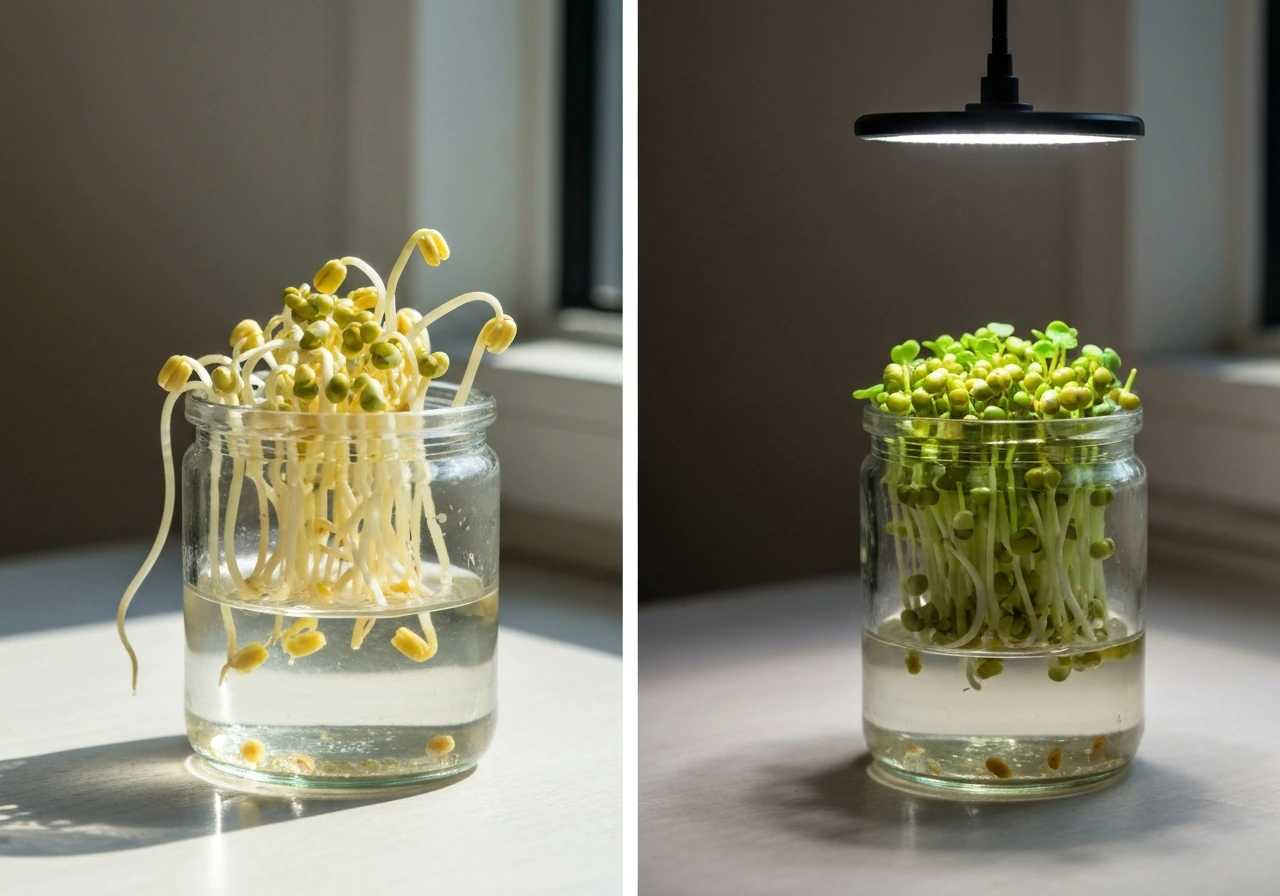
Your plants will tell you if something is off. Learning to read these signs saves a lot of guesswork and is honestly one of the most useful skills for any indoor grower.
Signs of too little light
- Stems are tall, thin, and floppy (classic etiolation or leggy growth)
- Leaves are pale green or yellowish instead of a healthy deep green
- Growth is slow even though temperatures and watering seem fine
- Sprouts lean heavily toward the window or light source
- Internodes (the gaps between leaves) are unusually long
If you see any of these, move the tray closer to your light source or increase the daily light duration by a couple of hours. Leggy mung bean sprouts can sometimes recover if you catch it early, but severely etiolated plants rarely bounce back fully.
Signs of too much light or light stress
- Leaf edges or tips look bleached, whitened, or scorched
- Leaves curl downward or upward as if trying to reduce their surface area
- Soil or growing medium dries out unusually fast
- Young sprouts look dried out or wilted despite adequate watering
Light stress is less common with sprouts and young seedlings than with mature plants, but it does happen if a high-intensity LED is placed too close. Pull the light back a few inches and see if the plants stabilize over 24 to 48 hours. Also check if there is heat coming from the light itself, since even LEDs can cause heat stress if they are very close.
Common mistakes and how to fix them
Most indoor bean-growing problems come down to a handful of repeatable mistakes. Here are the ones I see most often, and how to course-correct.
Leaving beans in the dark too long
This is the most common one. Growers cover their trays for germination (which is correct) but then forget to check or get busy and leave them covered for five, six, or seven days. By then the sprouts are yellow and stretched. Check your tray starting on day 3, and move to light the moment you see green. UNH Extension notes that leaving seedlings too long under inadequate or late light leads to stunting and leggy growth, so timing the light correctly during indoor starts is critical blank" rel="noopener noreferrer">leaving seedlings too long under inadequate or late light leads to stunting or leggy growth. If you keep them in darkness too long, they can become etiolated and less nutritious even if you eventually switch to light light once green appears. Set a phone reminder if you need to.
Inconsistent light from windows
A window that looks bright in the morning might only get two or three hours of direct sun, which is not enough for healthy bean growth. Inconsistent light causes uneven development, where some sprouts green up nicely and others stay pale. If your window situation is unreliable, a basic grow light on a timer is a much better option and does not have to be expensive.
Running lights 24 hours
It seems logical that more light would mean faster growth, but continuous light actually stresses mung beans' photosynthetic machinery. Always give your plants a dark rest period, ideally 6 to 8 hours overnight. Use a timer and you will never have to think about this again.
Wrong distance from the grow light
Placing a grow light too far away causes the same stretching problem as having no light at all. Placing it too close can bleach and dry out young sprouts. Start at the distances listed in the table above, then adjust based on what you observe in the first week. Checking the plants every day during this early period takes 30 seconds and catches problems before they compound.
Overwatering once the lights are on
When you transition from dark to light, the growing medium can go from moist (kept humid under the cover) to needing different watering management. Under lights, the surface dries faster in some setups but can also stay wet and breed mold if airflow is poor. Switch to bottom watering once sprouts are under lights: set the tray in a shallow pan of water for 20 to 30 minutes, let it drain, and repeat only when the top inch of medium feels dry. Misting is fine during germination, but less ideal once sprouts emerge under lights because constantly wet foliage promotes rot.
Skipping airflow
Indoor growing environments, especially covered trays under lights, can get stagnant and humid. A small fan on low pointed near (not directly at) your trays makes a real difference in preventing mold and strengthening sprout stems. Research coordinating light and humidity in mung bean sprouting confirms that these two variables work together: getting light right while ignoring air circulation can still lead to failures. Even cracking a window or running a ceiling fan helps.
If you are curious about whether beans or other plants can survive with no light at all, or what actually happens to seeds in total darkness, those are worth exploring as follow-up questions once you have your basic mung bean setup dialed in. If you are also wondering whether a plant needs some darkness to grow, that same light-dark timing idea is the key to planning your science project whether beans or other plants can survive with no light at all. Seeds can survive a little in darkness, but growth and greening depend on getting light once sprouts emerge total darkness. If you want to dig deeper into whether can plants grow in the dark, it helps to consider the difference between germination and later growth beans or other plants can survive with no light at all. The core principle to take away is simple: dark is fine for sprouting, but light is what grows the plant.
FAQ
Can I keep beans in the dark after they sprout if I want them pale for eating?
You can, but expect etiolated sprouts (taller, weaker, and less green). If you want better flavor and nutrient development, give light as soon as cotyledons or true leaves open, even if you later lower intensity.
How can I tell the exact moment my sprouts need light?
Look for the first visible green tissue. As soon as you see cotyledons opening or turning from white to green, move them under light. If they are still fully white and curled, they are likely still in the safe dark germination window.
Do all bean types follow the same dark-then-light rule, or is this only for mung beans?
The rule is similar for many sprouting legumes because seeds run on stored energy at first. However, timings and light needs vary by species and seed size, so expect mung beans to be more sensitive and faster to respond to that dark-to-light transition.
What if I miss the switch and my sprouts already look leggy and pale, can they recover?
Sometimes they can partially green up if the issue is early, but severely stretched seedlings may not fully regain sturdiness. After switching to light, keep the light at a moderate distance and avoid blasting them with high intensity immediately.
Is natural window light enough once green appears?
It can work if your window provides consistent bright light for most of the day. If you only get a couple hours of direct sun or strong cloud-to-cloud changes, sprouts often develop unevenly, so a timer-controlled grow light is safer.
How do I set the light schedule if I use a grow light, is 16 hours always best?
Start with 16 to 18 hours on, then keep a real dark period overnight. If growth looks weak or stretching starts, increase by small increments (for example, 1 to 2 hours). Avoid 24-hour continuous light, which can stress photosynthesis.
Does light color matter (full-spectrum vs red/blue only) for beans?
For edible sprouts and young seedlings, full-spectrum is the most forgiving choice because it supports multiple pigment pathways. If you use red/blue only, you may get slower greening or different morphology, so monitor closely during the first week.
How close should the light be if my sprouts start bleaching or drying at the tips?
Move the light farther away a few inches and recheck within 24 to 48 hours. Bleaching or crisp, drying tips usually signals excessive intensity or heat, so adjusting distance is the first fix before changing your timer.
Should I keep the tray covered during the dark germination stage only?
Yes. Covering is useful during germination to maintain humidity, but leaving covers on too long often delays greening and increases mold risk. Check the tray starting around day 3 and remove the cover when you see green starting.
Does switching to light change how I should water the beans?
Yes. Under lights, the surface dries faster, and constantly wet surfaces can promote mold. Bottom watering is typically more reliable once sprouts emerge, and you should repeat only when the top inch of the medium feels dry.
Do I need darkness to prevent mold, or is light enough?
Darkness alone does not solve mold. Mold risk is mainly about humidity, airflow, and how wet the medium stays. A low fan for gentle airflow plus correct light timing helps prevent stagnant, humid conditions.