More light generally means more growth, but not always more height in the way you're picturing. Give a plant the right amount of intense, full-spectrum light and it grows stockier, healthier, and taller over time. Give it too little light and it stretches fast and thin, reaching desperately toward the source. So the real answer is: more quality light promotes real growth, while less light (or the wrong kind) causes that lanky, leggy look that people sometimes mistake for the plant 'growing well.'
Will a Plant Grow Higher With More Light? How to Optimize
Marcus Hartley
12 Jun 2026
More light vs. taller growth: what's actually happening
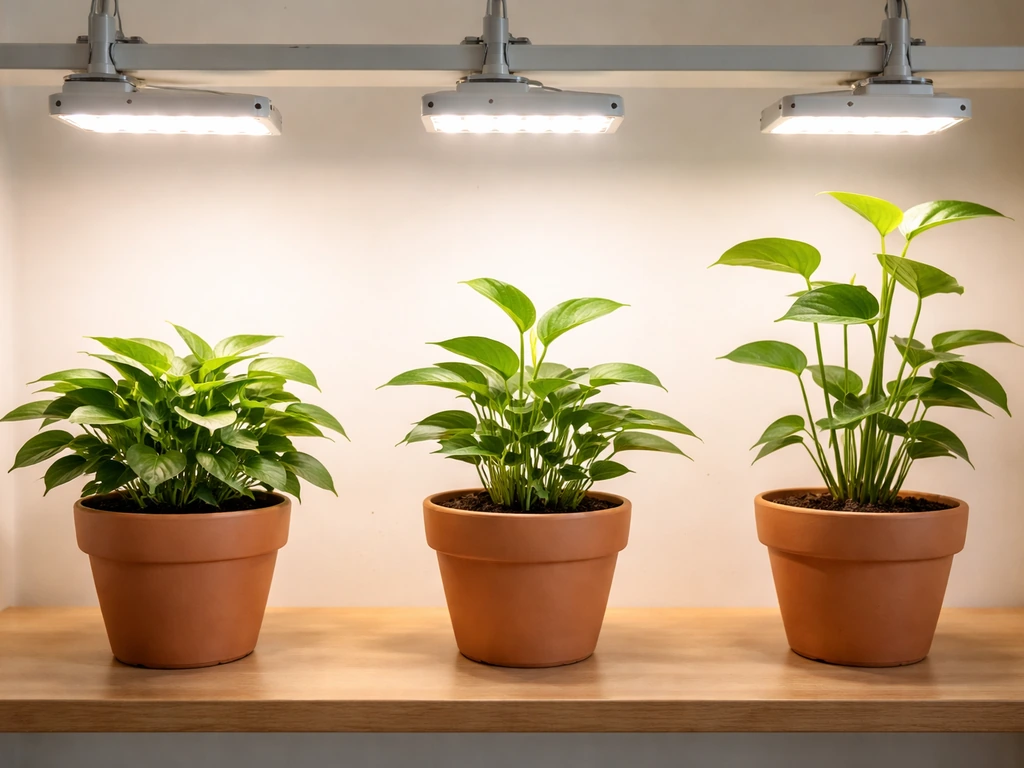
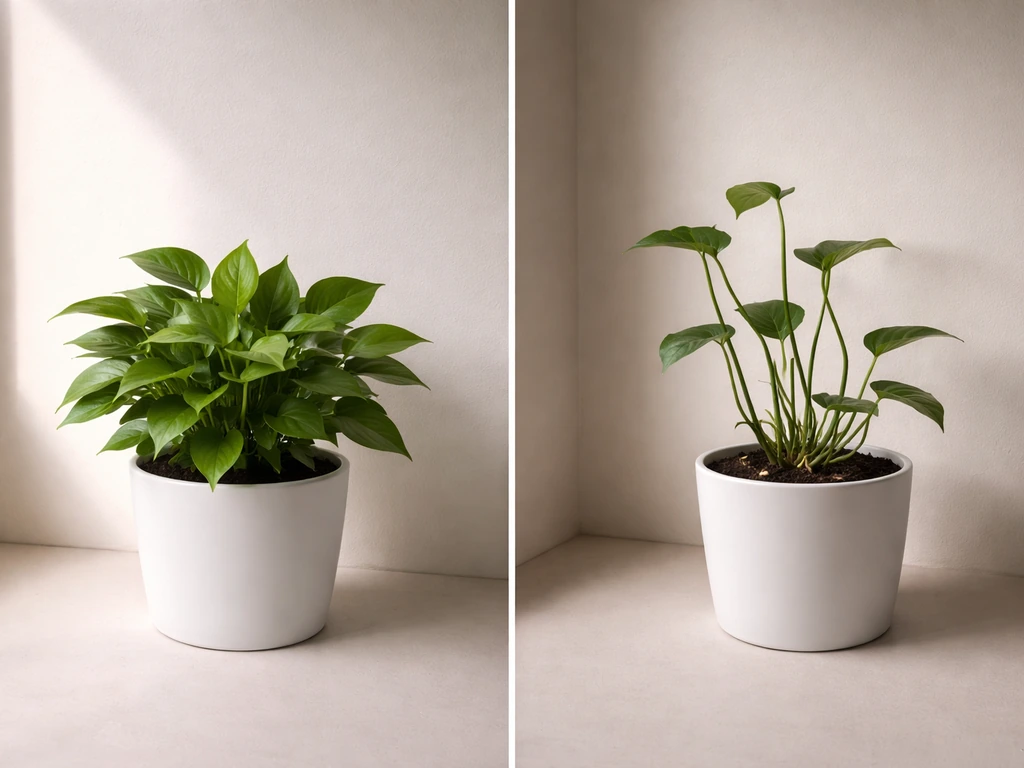
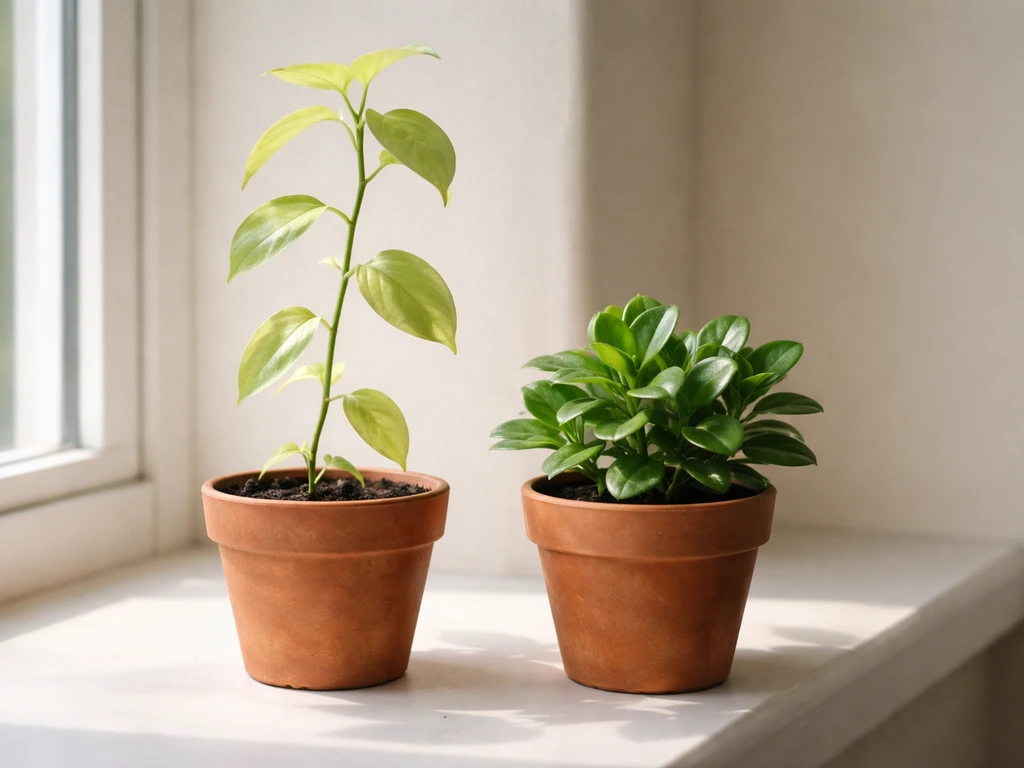
When you increase the intensity of light hitting your plant, you're giving it more raw material to run photosynthesis. More photosynthesis means more sugars, more energy, and more cell production. That translates to actual growth: thicker stems, bigger leaves, and yes, more height over time. But here's the twist: a plant growing in dim conditions can also get taller, fast. It just does it by stretching its internodes (the gaps between leaves) rather than building real tissue. That stretched, weak growth is called etiolation or 'legginess,' and it's a stress response, not healthy development.
So if your goal is a taller, fuller, healthier plant, more light is your friend. If your plant is already tall and spindly, adding more light won't undo the stretching that's already happened, but it will stop new growth from continuing in that direction.
How plants use light: photosynthesis, stem elongation, and photoperiod
Plants use light in three distinct ways that all affect how they grow. First, there's photosynthesis: the process of turning light energy (specifically wavelengths in the 400–700 nm range, called PAR or photosynthetically active radiation) into sugars. Researchers first showed that plants need light for photosynthesis, which is required for strong growth. The more photons a plant catches in that range, the more it can grow. Second, there's photomorphogenesis: the way light signals shape the plant's physical structure. Specific wavelengths trigger specific responses, including how tall or compact the plant gets. Third, there's photoperiodism: how the total hours of light per day influence whether a plant flowers, stays in vegetative growth, or goes dormant.
For indoor growers, photoperiod matters a lot practically. Most plants need 12 to 16 hours of light per day for healthy indoor growth. Running your grow light for only 8 hours at medium intensity can leave a plant starved even if the fixture looks bright to your eyes. This is where the concept of DLI (daily light integral) comes in: it's the total dose of plant-usable photons a plant receives in a day, combining both intensity and duration. You can get the same DLI by running a bright light for fewer hours or a dimmer light for longer. Extension research from UNH found that the same LED bar needed only 8 hours per day at 8 inches above seedlings but required 16 hours per day when moved to 20 inches, because the PPFD dropped significantly with distance.
Why 'higher' sometimes just means stretching
This is the part most people get surprised by. If your plant is shooting upward fast with long gaps between leaves and thin, floppy stems, that's not thriving. That's your plant triggering a shade-avoidance response, a survival mechanism where it senses low-quality or low-quantity light and rapidly extends its stem to try to get above whatever is blocking it. In nature, this helps a seedling overtop competing plants. Indoors, it just means your light isn't cutting it.
The signal plants use to detect shade is the ratio of red to far-red light (R:FR ratio). In open sunlight, red light dominates. In shade, or under many cheap bulbs, far-red light makes up a larger proportion, and phytochrome proteins in the plant detect this shift and trigger elongation. Interestingly, research shows this elongation response is strongest at dusk and is tied to the plant's internal circadian clock. Even at the same overall PAR intensity, a light source with too much far-red relative to red can trigger stretching.
Spectrum also plays a big role in compactness. Blue light (roughly 400–500 nm) actively suppresses internode elongation, which is why plants grown under blue-heavy light tend to be shorter and stockier. Blue and red are only part of the story because plants can respond very differently to a narrow spectrum, too Blue light. If you're wondering what color light plants grow best in, aim for a balanced mix like blue plus red (often delivered as full-spectrum) to avoid stretching while still supporting strong growth. Red light (roughly 600–700 nm) promotes elongation. Studies on coriander and other crops show that plants grown under monochromatic red light are measurably taller than those grown under red-blue mixes, and blank" rel="noopener noreferrer">at PPFD levels around 30–50 µmol/m²/s, pure blue light consistently produces more compact plants than red. If you’re wondering how well a plant would grow in pure yellow light, the key is how that spectrum matches photosynthesis and whether it causes extra stretching pure blue light. This is directly relevant when you're choosing a grow light: a light that skews heavily red or has a warm color tone may encourage more stretching than a balanced full-spectrum LED. This ties into the plants grow best in white light hypothesis, since balanced spectra can better support healthier, more compact growth a balanced full-spectrum LED.
Choosing the right light: sunlight, LEDs, fluorescents, and bulbs
Not all light sources are created equal for plants, and what looks bright to you might be nearly useless to your plant. Human lighting is measured in lux or footcandles, which are tuned to how the human eye perceives brightness. Plants care about PPFD, which measures the photosynthetically active portion of light, and it is more plant-usable than lux or footcandles. Plants care about PPFD (photosynthetic photon flux density), measured in µmol/m²/s, which counts actual plant-usable photons. A warm incandescent bulb can look very bright but deliver almost no useful PPFD. That mismatch is why relying on regular household bulbs for growing is usually disappointing.
| Light Source | Typical PPFD Output | Spectrum Quality | Best For | Notes |
|---|---|---|---|---|
| Direct sunlight (south window) | 500–2,000+ µmol/m²/s | Full spectrum, balanced R:FR | Most plants, high-light species | Free and ideal, but inconsistent indoors |
| Full-spectrum LED grow light | 200–1,500+ µmol/m²/s (adjustable) | Broad, tunable, good R:FR | Seedlings to fruiting plants | Best overall choice for indoor growers |
| T5 fluorescent | 100–300 µmol/m²/s close-up | Decent, but weaker far-red | Seedlings, low-light plants, herbs | Must be kept very close (6–12 inches) |
| T8 shop light fluorescent | 50–150 µmol/m²/s close-up | Limited spectrum | Basic seedlings only | Needs 22+ hrs/day for sun-loving plants |
| Regular incandescent/warm bulb | Very low (under 30 µmol/m²/s) | Heavy far-red, poor PAR | Not recommended for growing | Triggers shade-avoidance stretching |
For most indoor gardeners, a full-spectrum LED grow light is the practical winner. Oklahoma State University Extension recommends targeting 400–800 µmol/m²/s PPFD for improved plant growth, and modern LEDs can hit that range efficiently at a reasonable cost. T5 fluorescents are a solid budget option for seedlings and low-light plants like herbs, as long as you keep them close (under 12 inches). T8 shop lights can technically grow seedlings to transplant stage, but you'd need to run them nearly 22 hours a day to deliver adequate DLI for sun-loving plants, which makes them inefficient. Standard household bulbs are really a last resort and will almost certainly cause leggy growth.
Sunlight through a window is still the gold standard if you can get it. A bright south-facing window in summer can provide plenty of light for many houseplants without any supplemental lighting. The problem is that most indoor spaces cut available PAR dramatically, and window light drops off fast once you're more than a few feet from the glass.
How to set up your grow light: distance, duration, and placement
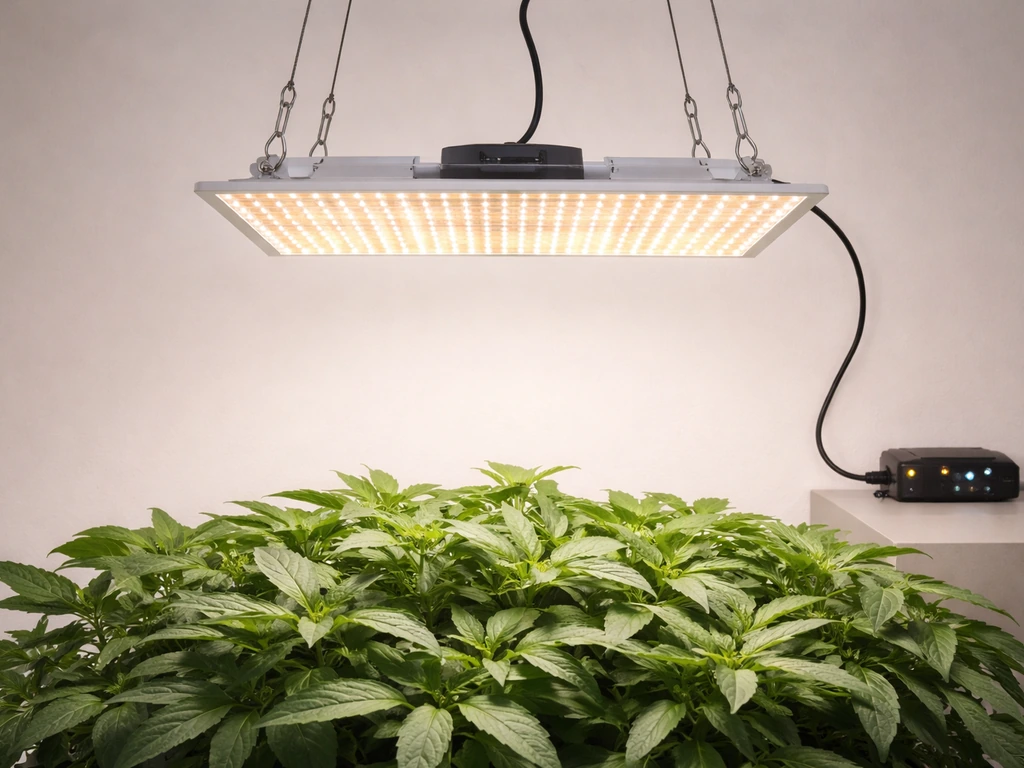
Getting your setup right comes down to three variables: how far the light is from the plant, how many hours per day it runs, and whether it's positioned directly above the canopy. Get these wrong and even a great light won't perform. PPFD drops significantly as you move a light further away (roughly following an inverse-square relationship), so a light that delivers 600 µmol/m²/s at 12 inches might only deliver 150 µmol/m²/s at 24 inches. That difference means the difference between healthy growth and stretching.
PPFD targets by growth stage
| Growth Stage / Plant Type | Target PPFD (µmol/m²/s) |
|---|---|
| Seedlings and cuttings | Under 100 |
| Vegetative growth (most houseplants) | 100–500 |
| Flowering and fruiting plants | 400–1,200 |
| African violets | 50–150 |
| Succulents and cacti | 100–200 |
Practical setup steps
- Start with the light 12–18 inches above the canopy for most LED grow lights, then adjust based on how the plant responds over the first 1–2 weeks.
- Run the light 14–16 hours per day for most vegetative growth. Use a timer so you don't have to think about it. Consistency matters as much as intensity.
- If you move the light further away (say, to cover more plants), compensate by adding more hours to maintain the same daily light dose.
- Position the light directly overhead, not at an angle. Plants grow toward their light source, so a light off to one side will cause leaning and uneven growth.
- Watch your plants for feedback: short, crunchy, or crinkled leaves with very short petioles mean the light is too close or too intense. Long, pale, floppy stems mean too little light or the light is too far away.
- If you can, use a PAR meter or an app that estimates PPFD to check what your plant is actually receiving at canopy level. Eye-checking light intensity is unreliable since human vision isn't calibrated to PAR.
One thing worth knowing: if your plant has already stretched (long bare stem, sparse leaves), more light won't reverse that existing growth. You can prune the leggy stems, adjust your light setup, and let new growth come in properly. Some plants, like basil or tomato seedlings, can be buried deeper to hide the leggy stem and encourage new root growth from it. Others you just have to start fresh with better light from the beginning.
Reading your plant's signals
Plants are pretty honest about what they need once you know what to look for. Here's a quick reference for diagnosing your current light situation:
- Long internodes, pale color, leaning toward the light: not enough intensity or light is too far away
- Dark green, slow growth, no new leaves: likely insufficient light overall, possibly also low DLI from short photoperiod
- Compact, slightly slower growth but deep green leaves: probably a good light level for that plant type
- Crispy leaf edges or bleached patches near the light: intensity is too high, move the light up or dim it
- Short petioles and crinkled leaves: also a sign of excessive intensity, especially in lower-light species
Light spectrum affects these symptoms too, so if you're curious about going deeper, it's worth understanding how specific wavelengths like blue, red, and far-red each trigger different plant responses. The relationship between light color and plant morphology (including whether growth is compact or stretched) is closely tied to the topics of what color light plants grow best in and why plants sometimes grow taller with less light, both of which explain the phytochrome and blue-light signaling behind what you're seeing.
Your next steps, depending on where you're starting
If your plant is currently leggy, the fastest fix is to move your light source closer (within the safe range for your fixture) and increase your photoperiod to 14–16 hours. If you're using a basic fluorescent or a standard bulb, upgrading to a full-spectrum LED is a genuine game changer and doesn't have to be expensive. Entry-level LED bars with good spectrum coverage are widely available for under $40–60 and will outperform a T8 shop light for most indoor plant setups.
If your plant is growing well but you want to encourage more height and volume, focus on DLI: either bump up your hours per day, lower the light slightly to increase PPFD at the canopy, or both. Just watch for signs of light stress (bleaching, crinkling) and back off if you see them. The goal is the sweet spot where the plant is using all the light you're giving it without being overwhelmed, and that's different for every species.
The bottom line: more light, used correctly, absolutely supports taller and healthier plant growth. But 'more light' means more intensity at the right distance, the right spectrum, and for enough hours per day. A bright light placed too far away, or a warm bulb with poor PAR output, can actually make things worse by triggering the shade-avoidance stretching you're trying to avoid.
FAQ
If my plant is already leggy, should I keep increasing light intensity to “fix” the height?
Increasing intensity can prevent more stretching, but it usually will not shorten the existing bare stem. Focus on stopping new internode elongation by raising PPFD at the canopy (often by moving the light closer) and keep a steady photoperiod, then prune and let new compact growth form. For very stretched seedlings, consider burying stems (if the species tolerates it) to encourage new roots.
How can I tell whether my plant is stretching because of low light quantity or the wrong spectrum (too much far-red)?
If leaves are small, stems are thin, and internodes are long, it often points to low usable photons or low PPFD at the canopy. If plants show elongation even when the fixture seems bright, check for warm bulbs or light sources with a high far-red content, or poor red-to-far-red balance. A practical test is moving to a balanced full-spectrum LED and keeping distance constant, then observing new growth over 1 to 2 weeks.
Can I use lux or footcandles to set my grow light, since manufacturers list those ratings?
Lux-based ratings reflect human vision, not plant-usable photons. Two lights can look equally bright to you but deliver very different PPFD. For indoor plants, target PPFD (µmol/m²/s) at the canopy and ensure enough hours to reach the right DLI for the plant, especially for sun-loving species.
What’s the best way to adjust distance if I don’t have a PPFD meter?
Use distance as your main control, because PPFD drops quickly with height. Make one change at a time, such as moving the light closer in small increments, then look for visual cues within several days (thicker leaves and slower stretching are good signs). Avoid moving so close that you cause bleaching or leaf curling, which can indicate light stress.
Is “more hours” always better if I’m trying to grow taller or faster?
Not always. Plants need enough light for DLI, but exceeding a species’ preferred photoperiod can reduce quality, interfere with flowering timing, or increase stress. A safer approach is to match typical day length for the species (often 12 to 16 hours indoors) and then adjust intensity and distance to reach the desired daily light dose.
Why does a plant sometimes grow taller even when I think I increased the light?
This usually happens when the plant’s shade-avoidance response is triggered, even if your setup seems bright. Common causes include insufficient PPFD at the leaves, the light being too far away, and a spectrum that skews warm or has a less favorable red-to-far-red balance. Also, plants do not instantly respond, so what looks like “taller” may be a continuation of the prior stretch pattern unless your changes are maintained.
If blue light keeps plants compact, should I avoid blue when I want height?
Not necessarily. You usually want a balance. Blue can suppress excessive internode elongation while red supports growth, and plants typically need both for healthy development. If your goal is a taller but still sturdy plant, use a balanced full-spectrum light rather than going purely red or purely blue.
What are the first signs I’m giving too much light, even if the plant is leggy?
The earliest common signs are bleaching (light or white patches on leaves), leaf crinkling or curling, and a slowdown in growth coupled with stress discoloration. If you see these, back off by increasing distance slightly or reducing hours, then re-evaluate after several days.
How close should lights be for seedlings versus mature plants?
Seedlings generally need closer placement to achieve sufficient PPFD without overheating, but the exact distance depends on the fixture output and spectrum. As a rule of thumb from common indoor setups, many fluorescent systems need to be kept relatively close (around under 12 inches for T5-style seedlings), while LEDs can often be adjusted more precisely using canopy PPFD or careful observation to avoid bleaching.
Can I grow a plant taller with only window light instead of a grow light?
Yes for some plants, but it depends on how much PAR reaches the canopy. Window light drops off quickly with distance from the glass and can change with season, so plants may stretch toward the window. If your plant is leaning or becoming sparse, supplement with a full-spectrum grow light positioned directly above the canopy to reduce asymmetric stretching.