
Philodendrons genuinely do well under grow lights, and in most low-light homes or apartments, a grow light can make the difference between a plant that slowly declines and one that pushes out big, healthy new leaves every few weeks. Jade plants can also respond well to grow lights when a bright window is not enough, especially in darker winter months. They are not sun-worshippers, so you do not need a powerful setup.
Do Philodendrons Like Grow Lights? Setup, Distance, Duration
Marcus Hartley
9 Jun 2026
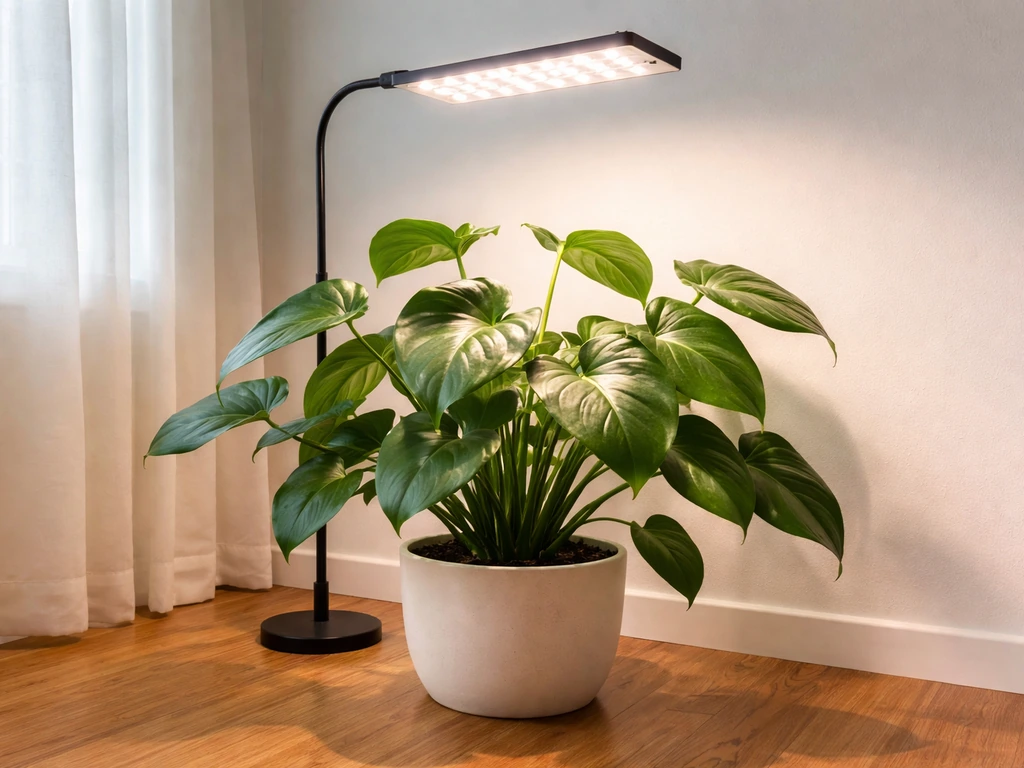
Most philodendrons thrive at a PPFD (photosynthetic photon flux density) of just 50 to 250 micromoles per square meter per second, which is on the lower end of the houseplant spectrum. A modest LED panel or even a full-spectrum fluorescent tube placed at the right distance will cover that range easily.
Do philodendrons actually need grow lights?
Technically, no. Philodendrons evolved on the forest floor and in the understory of tropical rainforests, which means they are built to handle lower, filtered light. Near a bright window with indirect sun, most will do just fine without any artificial help. The RHS and Illinois Extension both recommend bright, indirect light as the sweet spot, and a north or east-facing window can get you there if you live somewhere with decent natural light.
But here is where it gets real: most of us do not have ideal windows. Apartments with small windows, rooms that face the wrong direction, or homes in climates with short winter days often cannot deliver enough light to keep a philodendron genuinely thriving. That is when a grow light stops being optional and starts being the reason your plant stays alive and grows. You can use a grow light for a bonsai tree too, but the setup needs to match the tree’s lighting and distance needs. If you have ever watched a philodendron slowly stretch toward the nearest window and produce tiny, pale new leaves, you already know what insufficient light looks like.
Iowa State Extension also points out that variety matters here. The heartleaf philodendron (Philodendron hederaceum) is one of the most low-light-tolerant houseplants you can own and will muddle along in dim conditions where others would fail. But philodendrons with bright or variegated foliage, like the White Wizard or Brasil, need more light to maintain their color and will lose their variegation in low-light conditions. For those, a grow light is almost always a good idea indoors.
How to tell if your philodendron is not getting enough light
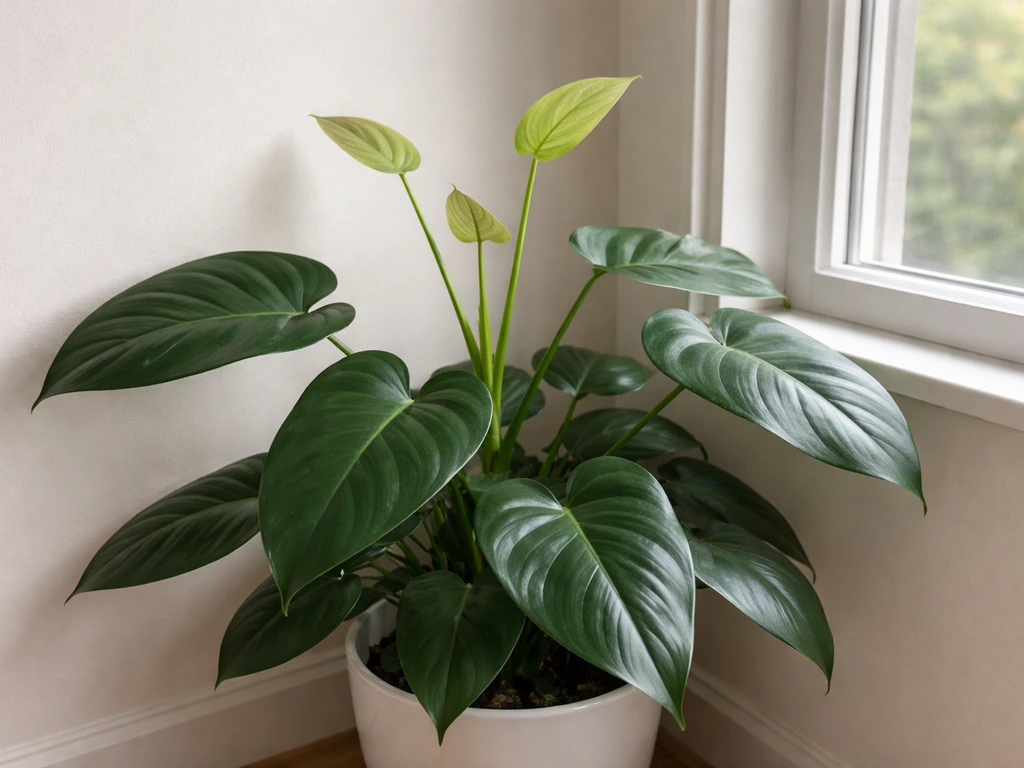
The plant will tell you before you need any equipment. The clearest signal is new growth that looks different from the older leaves: smaller than expected, lighter green, with unusually long petioles (the stems connecting leaves to the vine or trunk). University of Maine Extension specifically flags this combination as the classic response to a grow light placed too far away or a window that is just not cutting it. The internodes, meaning the spaces between leaves along the stem, also stretch out noticeably when light is insufficient.
If things get worse before you catch it, you may start seeing leaf drop, which University of Nebraska-Lincoln Extension notes as a symptom of prolonged low-light stress in houseplants. Basically the plant is cutting its losses and shedding older leaves it can no longer support. At that stage the plant is telling you it has been struggling for a while, not just a few days.
- New leaves are noticeably smaller than older ones on the same plant
- Fresh leaves are pale or yellowish-green instead of a rich, deep green
- Long gaps (internodes) between leaves along the stem, giving the plant a leggy, stretched look
- Long, thin petioles on new growth
- Older leaves dropping off for no obvious reason (not from underwatering or pests)
- Variegated varieties losing their patterning and reverting to plain green
LED vs fluorescent: which grow light works best for philodendrons
Both work. University of Maine Extension lists LEDs, fluorescents, and HIDs as the three main categories of grow lights used indoors, and for philodendrons specifically, HIDs (high-intensity discharge) are complete overkill. You do not need that kind of power for a plant with such a modest light appetite. The real decision for most home growers is LED versus fluorescent, and here is how they stack up:
| Factor | LED Grow Lights | Fluorescent (T5/T8) |
|---|---|---|
| Energy efficiency | Very high, uses less electricity for same output | Moderate, decent but less efficient than LED |
| Heat output | Low, rarely a placement issue | Low to moderate, generally safe close to plants |
| Spectrum | Full spectrum or targeted red/blue available | Full spectrum available; white tubes work well for most plants |
| Lifespan | 50,000+ hours typical | 10,000–20,000 hours typical |
| Upfront cost | Higher initial cost | Lower initial cost |
| Best use | Long-term setups, multiple plants, shelving systems | Budget setups, seedlings, small spaces |
| Distance from plant | Varies by model; check manufacturer specs | Under 12 inches for T8 shop lights |
University of Minnesota Extension notes that white or balanced-spectrum bulbs are suitable for most plants, which is good news because it means you do not need to obsess over specialized red/blue-only grow panels. A quality white full-spectrum LED or a T5/T8 fluorescent tube does the job for philodendrons without any drama. University of Vermont Extension also emphasizes choosing lights that imitate natural sunlight closely without generating excessive heat, which again points toward LEDs or fluorescents over HIDs for this use case.
One practical note on spectrum: University of Missouri Extension points out that plants absorb green light the least, which is why dedicated horticultural grow lights emphasize red and blue wavelengths. That said, a quality full-spectrum white LED covers all the bases and does not require you to think too hard about spectral ratios.
How far away and how long to run your grow light
Distance
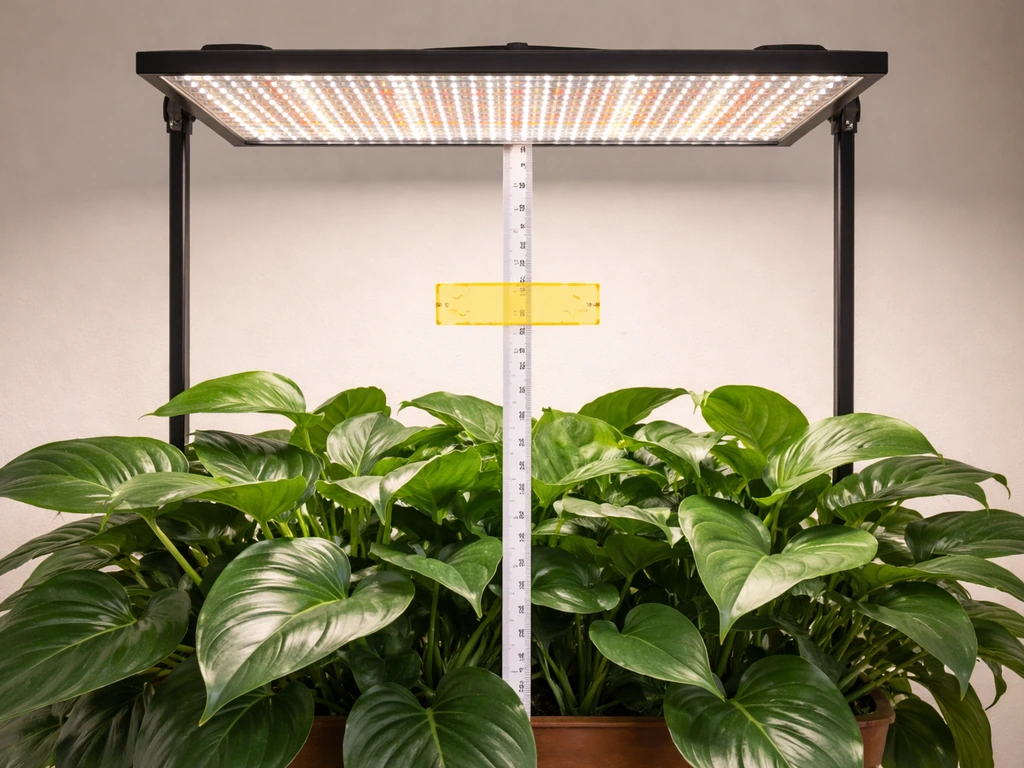
Distance is the single biggest variable most people get wrong. University of Maryland Extension makes it simple: light intensity decreases as the distance from the source increases. Moving a light a few inches closer can dramatically increase the PPFD hitting the leaves, while pushing it too far away drops you below what the plant can use. For philodendrons, which only need a PPFD of 50 to 250, you have a forgiving range, but the placement still matters.
- LED panels (full-spectrum, mid-range): 12 to 24 inches above the plant canopy is a good starting point; check your specific model's manufacturer specs since outputs vary widely
- T8 fluorescent shop lights: University of New Hampshire Extension recommends keeping them less than 12 inches away to deliver adequate intensity, so place them close
- T5 high-output fluorescents: similar to T8 but slightly more powerful; 6 to 12 inches works well
- HID lights: University of Maine Extension recommends at least 3 feet above the canopy to avoid heat stress, but these are genuinely not necessary for philodendrons
Iowa State Extension adds a useful caution: if your fixture produces significant heat, moving it closer to hit the right PPFD can also raise air and leaf temperatures enough to cause damage. LEDs sidestep this problem almost entirely, which is another reason they are the better pick for most home setups.
Daily run time
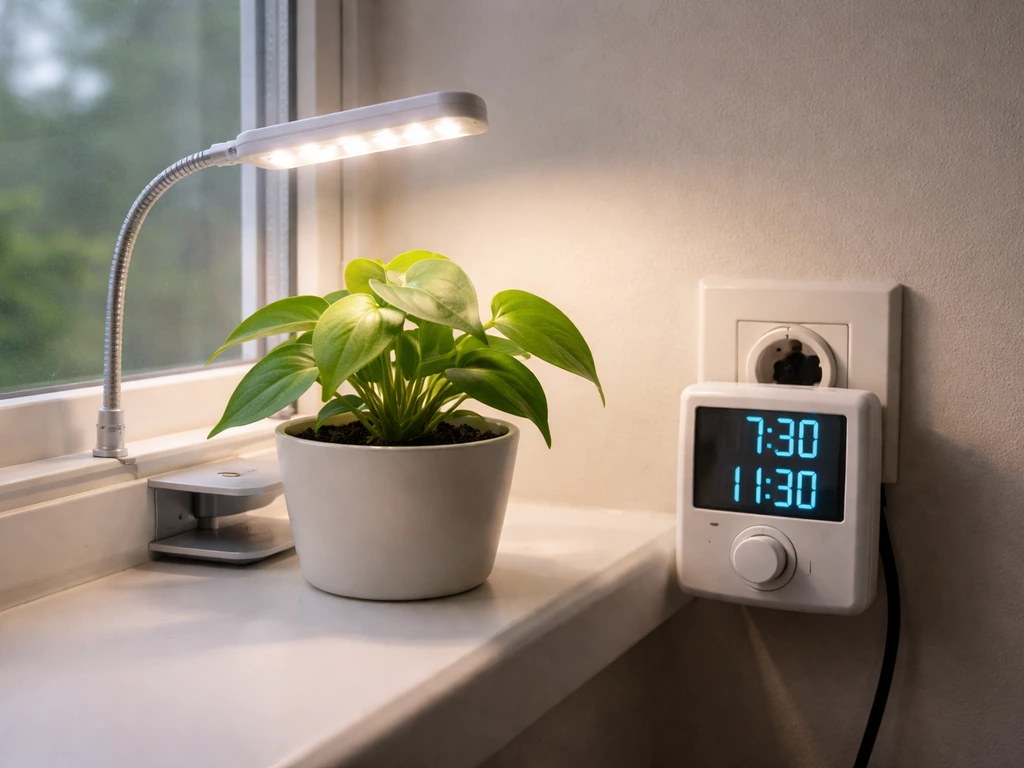
Philodendrons do not need marathon light sessions. A photoperiod (the daily hours of light exposure) of 10 to 14 hours is appropriate for most philodendrons. University of Maine Extension explains that DLI, the daily light integral, is the total amount of photosynthetically active light a plant receives over the course of a day, calculated by combining PPFD intensity with photoperiod duration. If your grow light delivers a lower PPFD, you can compensate slightly by running it longer, but going past 16 hours starts to stress the plant and offers diminishing returns. A simple outlet timer set to 12 hours is the easiest starting point and you can adjust from there based on what you observe.
Too little light vs too much light: spot the difference and fix it
Both extremes cause problems, but they look different and the fixes are straightforward once you know what you are looking at.
| Symptom | Likely Cause | What to Do |
|---|---|---|
| Small, pale new leaves | Too little light | Move light 2 to 4 inches closer, or increase daily run time by 1 to 2 hours |
| Long internodes (leggy stem) | Too little light | Move light closer to the canopy |
| Long thin petioles on new growth | Too little light | Move light closer; check distance against your fixture's specs |
| Leaf drop (older leaves falling) | Prolonged low light stress | Increase light immediately; remove dead foliage and monitor for new growth |
| Brown, crispy patches on leaves | Too much light or heat stress | Move light farther away or reduce daily run time by 1 to 2 hours |
| Yellowing or bleached-looking leaves | Excess light intensity | Increase distance from light source; if near a window, add a sheer curtain |
| Wilting despite adequate watering | Heat from light too close | Move light farther, check canopy temperature with a thermometer |
University of Maryland Extension explains that strong light and heat cause chlorophyll breakdown, which shows up as bleaching or scorching on leaves. If you catch burn early and move the light back, the existing damaged leaves will not recover but new growth should come in healthy. University of Vermont Extension recommends monitoring temperature at canopy level with a thermometer if you suspect heat stress, especially with brighter or older fluorescent fixtures.
Setting up your grow light today: practical steps by space
You do not need a complicated or expensive setup for philodendrons. Their low-to-moderate light requirements make them one of the easier houseplants to support with artificial lighting. Here is how to get started based on your situation:
Dark room or no useful windows
- Get a mid-range full-spectrum LED panel rated for a small grow area (something in the 15 to 45 watt range covers a couple of plants easily) or a T5 fluorescent strip light
- Hang or position it 12 to 18 inches above the top of your philodendron
- Set a plug-in outlet timer for 12 hours on, 12 hours off
- Check the plant after 2 to 3 weeks: new leaves should be the same size as or larger than older leaves, and the stem should not be stretching
- If leaves still look pale or leggy, move the light 2 to 3 inches closer and reassess
Low-light room with some natural light (dim window)
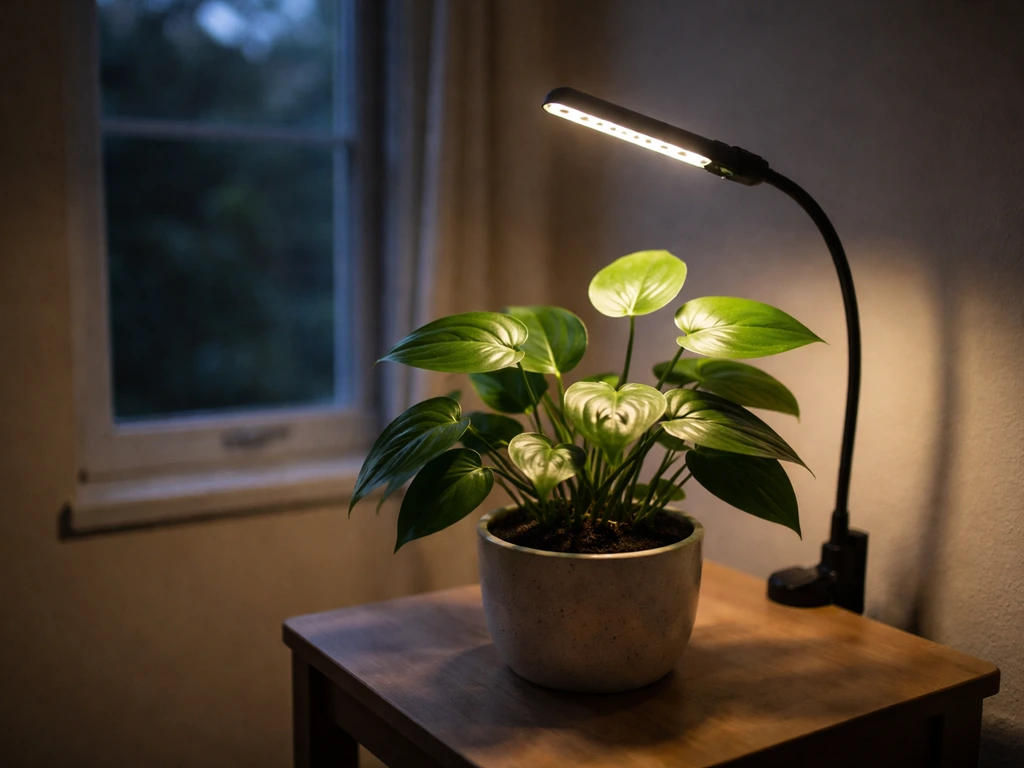
- A supplemental LED or fluorescent positioned to the side or slightly above the plant works well here since you are topping up rather than replacing natural light
- Start with 8 to 10 hours of artificial light per day; the natural window light counts toward the plant's daily total
- In winter months when natural light drops, increase the timer to 12 hours
- Rotate the plant a quarter turn every week or two so all sides get even exposure to both the window and the grow light
Shelving or bookshelf setups
Clip-on LED grow light bars or panel-style LEDs mounted under the shelf above work great for philodendrons in shelf displays. T8 shop lights suspended with adjustable chains give you the flexibility to lower them as needed. Keep them within 6 to 12 inches of the foliage for T8 tubes. For a fiddle leaf fig, you will want similar placement principles but a little more direct intensity, so keep the fixture close enough to reach the canopy without overheating the leaves where to place grow light for fiddle leaf fig. For LEDs, start at the manufacturer's recommended distance and adjust based on plant response.
Light needs vary by philodendron type and growth stage
Not every philodendron has the same light appetite, and the same plant at different stages of its life will respond differently to your setup. If you are also growing aquarium corals, learning what light corals need to grow will help you match the intensity and spectrum to their species. Here is what to keep in mind: For chaetomorpha, the best light is typically higher intensity than most houseplants, often delivered with a full-spectrum LED and adjusted by measured growth and color best light to grow chaetomorpha.
By variety
- Heartleaf philodendron (P. hederaceum): the most low-light tolerant of the group; will survive in dim conditions, though it will still look better with a modest grow light
- Variegated cultivars (Brasil, White Wizard, White Princess): need more light to maintain their leaf patterning; keep at the higher end of the PPFD range (150 to 250) or they will revert toward solid green
- Large-leaf climbing types (P. gloriosum, P. melanochrysum, P. micans): appreciate moderate indirect light and benefit from a grow light in darker rooms, though they are not as demanding as aroids like monsteras or fiddle leaf figs
- Upright/self-heading types (P. selloum / P. bipinnatifidum): naturally adapted to brighter forest edges and appreciate slightly more light than the trailing heartleaf varieties
By growth stage
- New cuttings and young plants: keep light moderate and consistent; avoid placing a fresh cutting directly under a high-output light while it is still establishing roots, as the stress can slow rooting
- Actively growing mature plants: this is when adequate light pays off most; philodendrons pushing out new leaves every few weeks need consistent light to produce healthy, full-sized foliage
- Dormant or slow-growth periods (typically winter): you can reduce daily run time slightly to 10 hours, but do not cut the light entirely or you risk triggering the leggy, pale growth pattern
If you have grown other common houseplants under grow lights, you will find philodendrons one of the more forgiving subjects. They sit in a similar light-need range to calatheas and are significantly less demanding than fiddle leaf figs, which require brighter and more precisely placed light sources. Do calatheas like grow lights too, and how you position the fixture matters for keeping their leaves looking their best.
Fiddle leaf figs often want brighter, more consistent lighting than many other houseplants, which is why grow lights can be a practical solution. For fiddle leaf figs specifically, place the grow light so it delivers strong, consistent light to the upper canopy without overheating the leaves.
That makes them a great starting point if you are new to grow light setups, and a reliable choice if you are building a diverse indoor plant collection and want most things on the same light timer.
FAQ
Do philodendrons need a special spectrum, like red and blue only?
Not all grow lights are equal for philodendrons. If you want an easy match, choose a quality white full-spectrum LED (or a T5/T8 fluorescent tube) and avoid very narrow “red only” or “blue only” fixtures. Also check that the light is actually reaching the leaves, since many small LEDs look bright to your eyes but deliver less PPFD at the canopy.
How can I tell if my grow light is too weak versus too strong?
It depends on what your philodendron is already doing. If you see stretching, pale new leaves, and long gaps between leaves, that usually means the light is too weak or too far. If you see bleaching, dark scorching patches, or crispy edges, the light may be too intense or too hot, so you should move it back and check the temperature near the canopy.
Can I leave a grow light on for longer than 14 hours to speed growth?
Yes, but set expectations. Most philodendrons prefer steady light and are not helped by leaving lights on all day. A timer set around 12 hours is a good starting point, then fine-tune based on growth rate and leaf color, aiming to stay within roughly 10 to 14 hours.
How far should I place the grow light if I do not have a PPFD meter?
For many homes, you do not need to measure PPFD to succeed, but you should avoid the two biggest placement mistakes: too far away (insufficient intensity) and too close with a hot fixture (heat stress). If you do not have a PPFD meter, start at the manufacturer’s recommended distance, then adjust a few inches at a time while watching new growth.
Do variegated philodendrons require grow lights differently than non-variegated ones?
Variegated and bright-foliage philodendrons usually need more consistent light than heartleaf types to maintain pattern and color. If your plant is a White Wizard, Brasil, or another variegated variety, a grow light often helps prevent fading, but you still want to avoid overheating or intense exposure that can bleach leaves.
How long does it take to see results after I add a grow light?
Track symptoms over time. New growth that changes first is the earliest clue, but stretching and paleness can take a few weeks to become obvious. Leaf drop can indicate prolonged low-light stress, so if you only start adjusting after leaves are falling, you may need several cycles of new growth for the plant to look “normal” again.
What if my philodendron is tall or growing on a shelf, can one light cover it?
You can, but prioritize canopy coverage rather than total brightness. A single small light aimed at one side may cause uneven growth, with one side thicker and the other side stretching. For trailing or vining philodendrons, you may need to reposition the light periodically or use a bar or panel that covers a broader area.
Will using a grow light change how often I should water my philodendron?
Yes. Philodendrons can do well with a grow light but the plant still needs proper watering and drainage. Use a timer for the light, not for watering, and make sure pots have drainage so you do not accidentally keep the mix too wet during slower-growth winter periods.