
Photosynthetic corals need light in three specific ways: the right intensity (measured in PAR, not just watts), the right spectrum (heavy on blue wavelengths, roughly 420–490 nm), and a consistent daily schedule of around 8–10 hours with a peak window of 6–8 hours. If you are also growing a snake plant indoors, its grow light requirements are different from reef corals, so adjust intensity and schedule accordingly snake plant grow light requirements. Get those three things dialed in and your corals will grow. A good reference point is picking the brightest, most evenly distributed light setup you can manage safely for the chaetomorpha you want to grow best light to grow chaetomorpha. Miss on any one of them and you'll be scratching your head wondering why a coral that looked fine at the store is now pale, retracted, or just sitting there doing nothing.
What Light Do Corals Need to Grow Indoors: Setup Guide
Why light is everything for coral growth
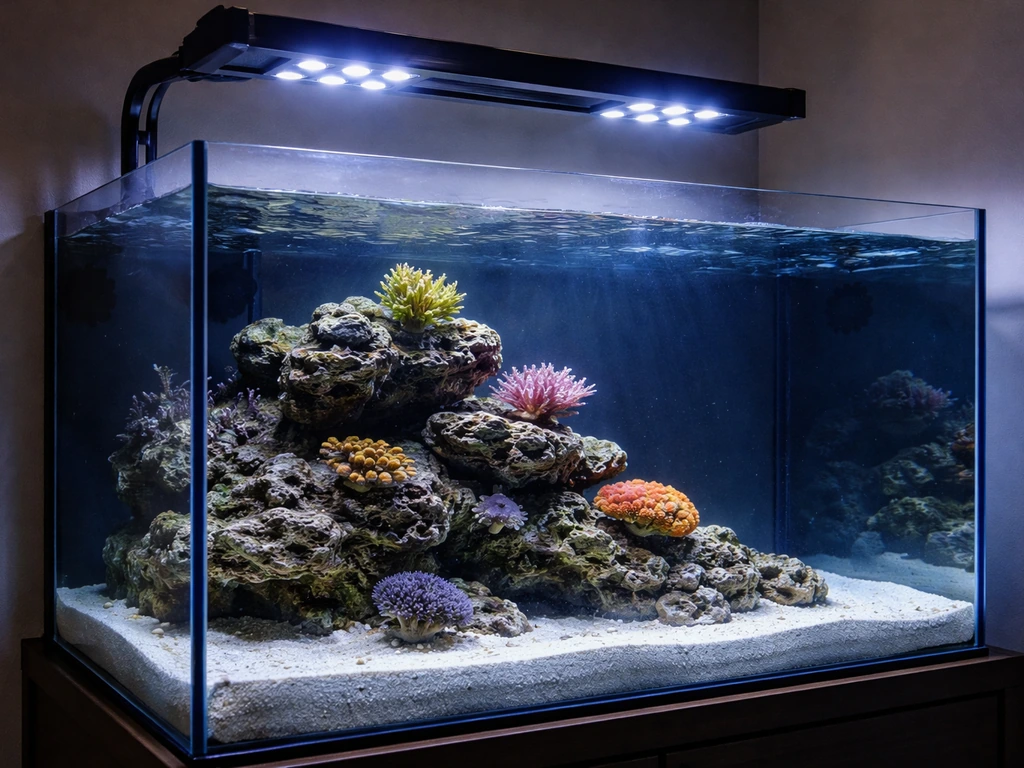
Most reef-building corals you'll keep in a home aquarium are zooxanthellate, meaning they host symbiotic algae called zooxanthellae inside their tissue. These algae do the heavy lifting: they photosynthesize light into sugars and nutrients that feed the coral. These algae do the heavy lifting: they photosynthesize light into sugars and nutrients that feed the coral do fiddle leaf figs like grow lights? (related option) and grow-light-style lighting considerations for photosynthesis-focused plants vs corals. Without adequate light, the coral's primary food source dries up. It's not a slow decline either. Corals can start looking stressed within days of being under the wrong light. So unlike a houseplant that just grows slowly in low light, a zooxanthellate coral can actually starve.
There's also a layer of complexity that makes coral lighting more nuanced than growing tomatoes under a grow light. Coral tissue has optical microniches: light gradients within the coral's own body where the zooxanthellae sit at specific depths to capture the right amount of light. The coral's geometry, surface texture, and even its fluorescent proteins all influence how light reaches its symbionts. That's why placing a coral at the right depth in the tank and getting the angle of your light fixture correct matters beyond just hitting a PAR number.
How much light corals actually need (PAR targets by type)
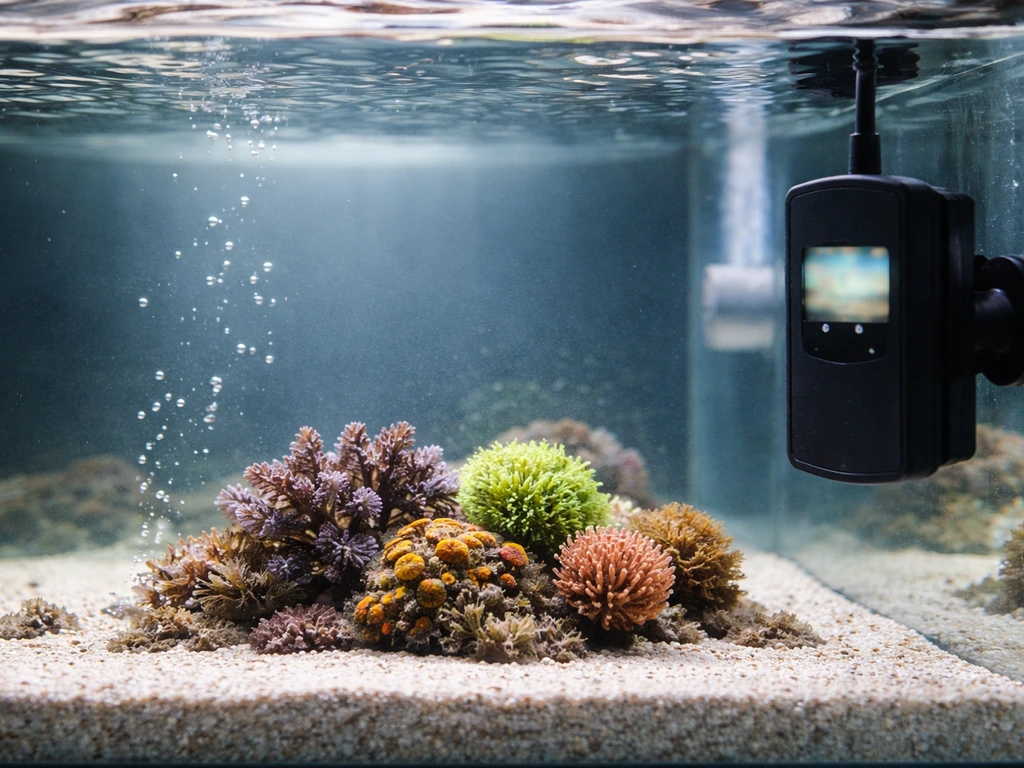
Forget wattage as your primary metric. A 100W LED and a 100W fluorescent will deliver very different amounts of usable light to a coral. The number that matters is PAR (photosynthetically active radiation), specifically measured as PPFD (photosynthetic photon flux density) in µmol/m²/s, taken at coral level in your tank. Apps like Photone can give you a reasonable estimate if you don't have a dedicated PAR meter.
| Coral Type | PAR Target Range (µmol/m²/s) | Placement Zone |
|---|---|---|
| Soft corals (leathers, mushrooms, zoanthids) | 50–150 | Lower to mid tank |
| LPS corals (torch, Euphyllia, duncan, acan) | 50–250 (most do well at 100–200) | Mid tank |
| SPS corals (Montipora, most Acropora) | 200–400 | Upper tank / high flow areas |
| Non-photosynthetic corals (sun corals, etc.) | No PAR requirement | Any depth; feed heavily instead |
These are starting zones, not rigid rules. A torch coral placed at 100 PAR and a torch coral at 200 PAR can both do fine, but the one at 200 needs to be acclimated there gradually. SPS corals like Acropora are the demanding ones: aim for 250–400 PAR at coral level, with some higher-light Acropora tolerating up to 400+ once fully acclimated. For general SPS zones, 180–300 PAR is a practical target. Montipora tends to be more forgiving and can handle the lower end of that range.
The spectrum that actually drives coral photosynthesis
Blue light is the workhorse for coral photosynthesis. Wavelengths in the 420–490 nm range penetrate water most efficiently and target the absorption peaks of the zooxanthellae's chlorophyll and accessory pigments. Research on corals like Stylophora pistillata shows that blue light drives photophysiology in ways red light simply doesn't, and in some cases red light can actually repress aspects of photosynthetic function in coral tissue. This is fundamentally different from growing terrestrial plants, where red-heavy spectra are often preferred.
Studies on Goniopora columna specifically found that blue and violet/purple LED treatments outperformed other single-color LEDs in promoting coral growth, survival, and protein-related outcomes over an 8-week captive trial. That lines up with what experienced reef keepers observe: a good reef LED fixture should have a strong blue channel, often supplemented with violet (around 405–420 nm) and white channels for visual appeal and broad coverage. The blue-dominated spectrum that looks almost purple in a reef tank isn't just for aesthetics, it's the spectrum corals evolved under.
When you're evaluating a light fixture, look for one that lets you tune the blue-to-white ratio independently. A fixture that only offers a single warm-white or full-spectrum channel (like many grow lights designed for terrestrial plants) is not ideal for corals even if the PAR numbers look right on paper. If you want to use a grow light for corals, focus on reef-appropriate spectrum and control rather than treating it like a standard plant light grow lights designed for terrestrial plants. The quality of that light matters as much as the quantity.
How many hours of light per day (and how to schedule it)
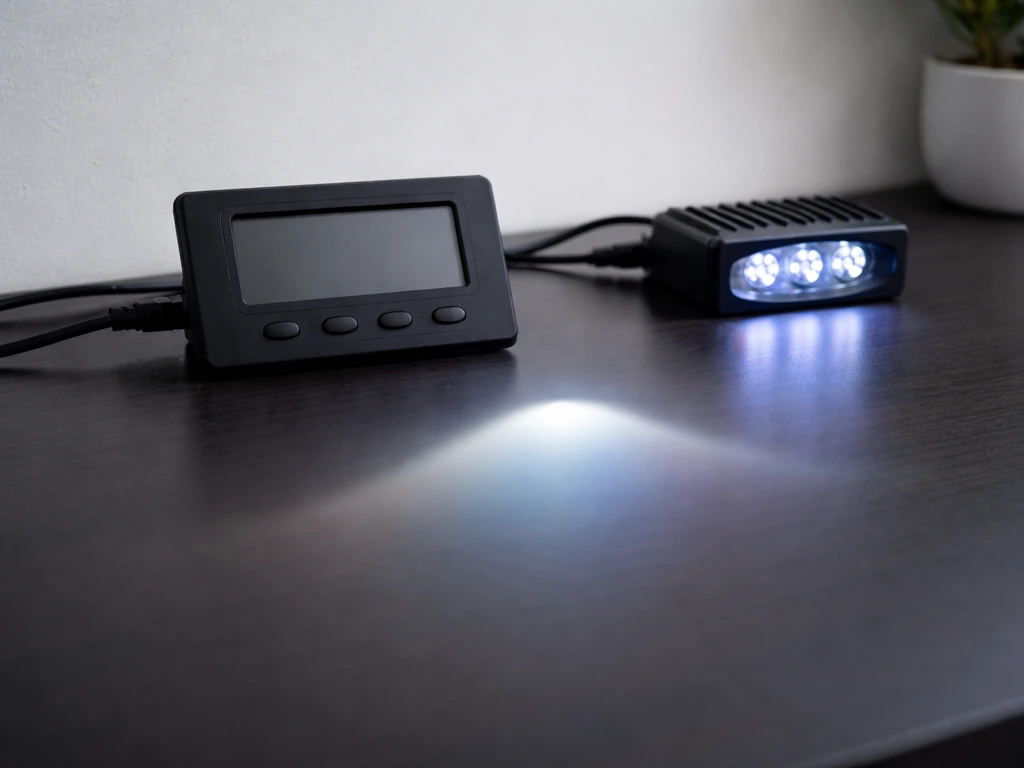
Most reef tanks run well on 8–10 hours of total light per day, with a peak window of 6–8 hours at full intensity. Beyond that, once photosynthesis saturates, extending the photoperiod mostly just feeds algae. A typical schedule looks like this: lights ramp up over 30–60 minutes in the morning, hold at peak intensity for 6–8 hours, then ramp back down in the evening. Many hobbyists also run a short blue-only or actinic period (1–2 hours) before and after the main peak for a simulated dawn/dusk effect and better viewing.
The Goniopora study mentioned earlier ran photoperiods of 6 or 12 hours per day over 8 weeks, and both worked. But for a mixed reef tank with varied coral types, the 8–10 hour window is the practical sweet spot that supports photosynthetic corals without creating a runaway algae problem. Consistency matters too. Corals respond to predictable cycles, so use a timer or a controller rather than manually switching lights on and off.
- Total photoperiod: 8–10 hours per day
- Peak intensity window: 6–8 hours in the middle of the day
- Morning ramp-up: 30–60 minutes
- Evening ramp-down: 30–60 minutes
- Optional blue/actinic hour before and after the peak for dawn/dusk effect
- Use a timer or smart controller to keep the schedule consistent
Matching light to your coral type
Soft corals
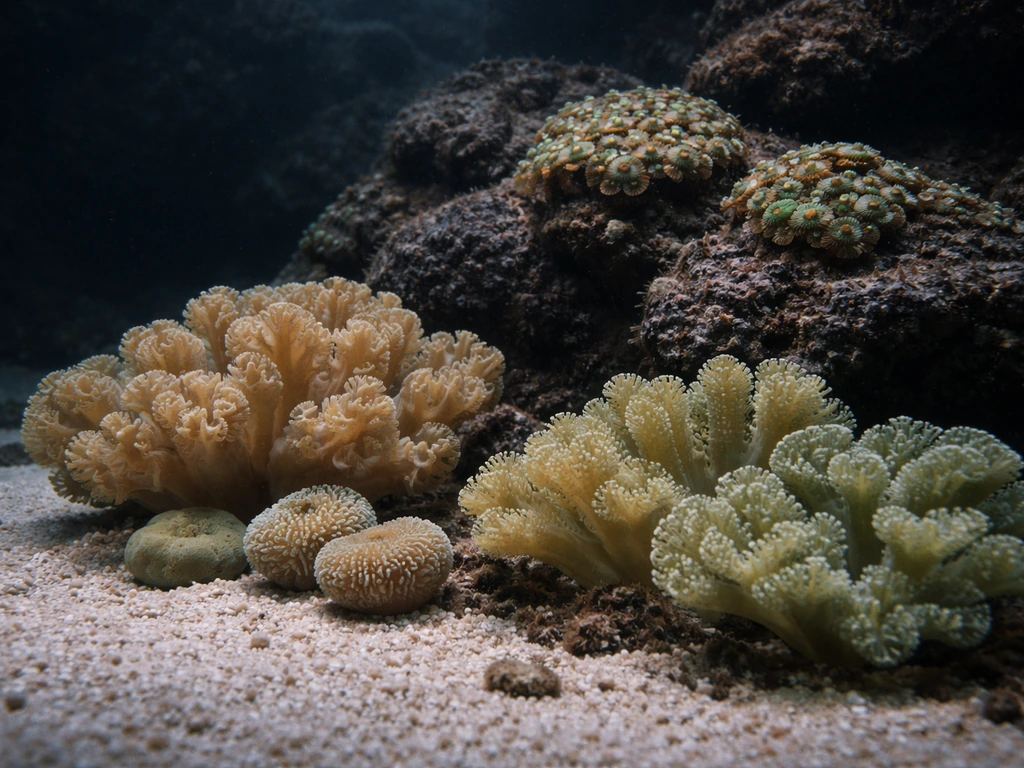
Soft corals like leathers, mushrooms, and zoanthids are your most forgiving reef animals. They're happy in the 50–150 PAR range, which means they can go on the sand bed or lower rock work without needing to be in the direct beam of your main fixture. Zoanthids in particular do well at 50–100 PAR and are a great starting point for a new reef tank because they're tolerant of moderate-intensity lighting and imperfect schedules.
LPS corals
Large polyp stony (LPS) corals like torch corals, Euphyllia, acans, and duncan corals sit in the middle of the intensity range, typically 100–250 PAR. Torch and Euphyllia species tend to do well around 125–200 PAR on mid-level rockwork. They're more light-hungry than softies but nowhere near as demanding as SPS. They also tend to extend their polyps more visibly under the right light, which is a great behavioral cue that your setup is working.
SPS corals
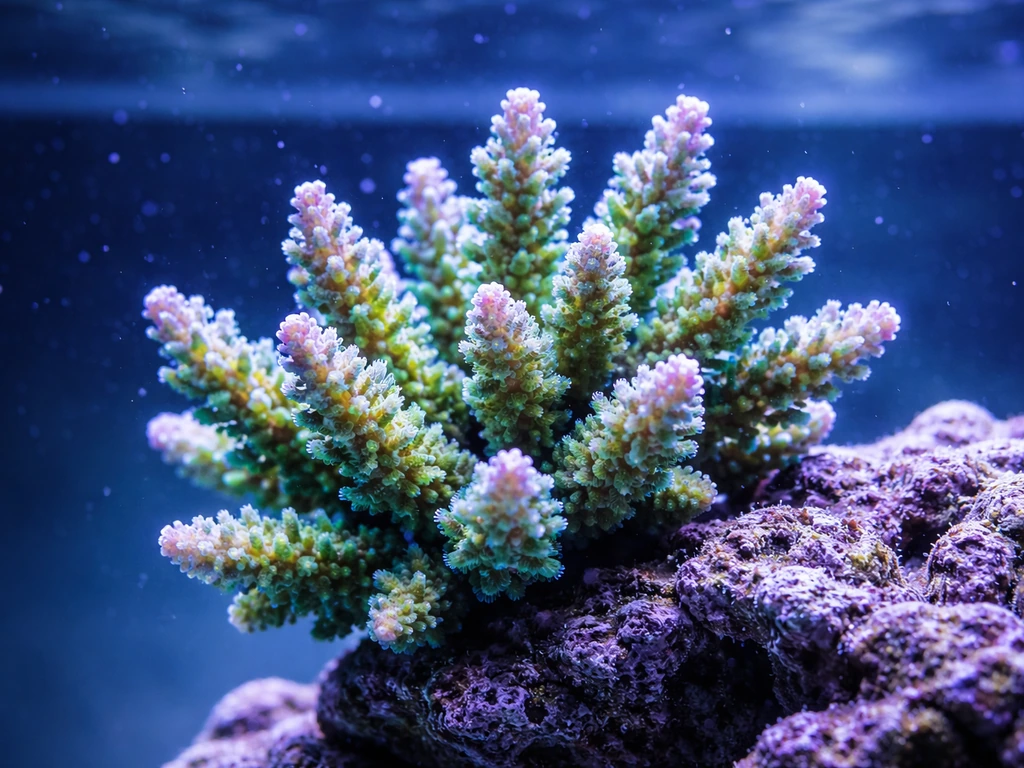
Small polyp stony (SPS) corals, especially Acropora, are the high-maintenance end of the spectrum. They need 200–400 PAR at coral level, strong flow, stable water chemistry, and a well-established tank. Don't place SPS at the top of a new tank under a new light without going through a proper acclimation ramp. The intensity requirement also means your fixture choice matters more for SPS: you need a light that can actually deliver those numbers at the depth where the coral sits.
Non-photosynthetic corals
Non-photosynthetic corals like sun corals (Tubastrea) and some carnation corals don't rely on zooxanthellae for energy. They need direct feeding several times per week instead of light-driven nutrition. You can place them in low-light or shaded areas of the tank. One important caveat: some corals labeled as azooxanthellate (like certain black corals) have been found to host Symbiodinium after all, so even with 'non-photosynthetic' species, a bit of ambient light rarely hurts. But for classic sun corals, light intensity is not a growth driver.
Sunlight vs LED vs fluorescent for a home reef
If your tank is near a window, you might wonder whether natural sunlight is enough. The honest answer is: probably not on its own, and it comes with real risks. Sunlight intensity varies hour by hour and season to season, and direct sun on glass can cause algae explosions. Most indoor aquariums don't get consistent, high-PAR natural light at coral level anyway. Sunlight can supplement, but it's not a substitute for a dedicated reef fixture.
| Light Type | PAR Delivery | Spectrum Quality | Controllability | Verdict for Corals |
|---|---|---|---|---|
| Natural sunlight | Variable, often low indoors | Excellent full spectrum | None | Useful as a supplement only; not reliable as primary source |
| LED reef fixtures | High; measurable at coral level | Excellent; blue-heavy options available | Full dimming, scheduling, spectrum tuning | Best choice for most home reef tanks |
| T5 fluorescent | Moderate to high with multiple bulbs | Good with reef bulbs (blue/actinic) | Limited; no dimming or scheduling | Solid secondary option; works well combined with LED |
| Standard grow lights (terrestrial) | Moderate PAR | Red-heavy; not ideal for corals | Some dimming available | Not recommended; wrong spectrum for zooxanthellae |
LED fixtures designed specifically for reef tanks are the clear winner for home aquariums. Look for fixtures with adjustable blue and white channels (independently controlled), a PAR output spec at your tank depth, and ideally a built-in ramp/timer function or compatibility with a smart controller. Brands like AI (Aqua Illumination), Kessil, Radion, and budget options like the Viparspectra S series are commonly used, but what matters more than brand is whether the fixture can deliver the PAR target for your coral type at the depth of your tank.
T5 fluorescent fixtures with reef-specific bulbs (blue plus, actinic) can work well, especially in combination with LED. The spectrum from a quality T5 reef bulb is actually excellent for corals. The limitation is that T5 can't be dimmed or programmed the way LED can, and bulbs degrade over time, meaning you need to replace them roughly every 10–12 months even if they still appear bright.
Fixture placement and height
The distance between your light fixture and the water surface directly affects how much PAR reaches each depth in the tank. Most reef LED fixtures are designed to hang or mount 6–12 inches above the water surface. That same logic applies when you’re figuring out where to place a grow light for a fiddle leaf fig so the leaves get the right amount of light without scorching or stretching fixture placement and height. Moving a fixture closer increases PAR at the top of the tank but can create hot spots and reduce spread. Moving it higher reduces intensity but gives broader, more even coverage. If you're getting bleaching near the top of the tank but good color lower down, raising the fixture 2–3 inches is often the first fix to try before reducing intensity.
Angle also matters. Pointing a narrow-beam fixture straight down concentrates light in the center and leaves the edges darker. Reef fixtures with wider beam angles (or multiple point sources) give more even distribution. For SPS-heavy setups, some hobbyists angle secondary fixtures or use multiple units to eliminate shadow zones, since even a slight shadow from a rock can create a low-PAR microniche right where a coral is sitting.
Reading your coral: signs of too much or too little light
Signs your coral is getting too much light
- Bleaching: coral turns white or pale as zooxanthellae are expelled from tissue; this is a stress response and can be fatal if it continues
- Tissue recession from the top or edges, especially on SPS
- Persistent polyp retraction during peak light hours
- Browning out, then rapid bleaching if intensity is suddenly increased
- Coral moving or leaning away from the light source (if it has any ability to retract or reposition)
Signs your coral is getting too little light
- Stretching or elongating polyps toward the light source
- Browning: the zooxanthellae density increases as the coral tries to capture more light, making a normally colorful coral look brown or dull
- Slow or no growth over weeks to months
- Poor polyp extension even during the main photoperiod
- For LPS, tentacles may stay partially retracted even when water flow is calm
The key with troubleshooting is to wait 2–4 weeks after any adjustment before drawing conclusions. If you can, use a PAR meter to verify your actual LPS light levels, and evaluate any changes over about 2 to 4 weeks while watching for bleaching, pale tissue, or persistent retraction during peak intensity so you can adjust downward use a PAR meter if possible and evaluate changes over about 2 to 4 weeks. Corals acclimate slowly. If you raise or lower intensity, give the coral a full evaluation period before tweaking again. Rapid back-and-forth adjustments are more stressful than sitting at slightly the wrong PAR for a few extra weeks.
Acclimating corals to a new light: the simple ramp plan
Whether you're adding a new coral to an established tank or switching to a new fixture, never blast corals with full-intensity light from day one. A coral kept under one intensity or spectrum for weeks is photoadapted to those conditions. Shocking it with 400 PAR when it was sitting at 150 PAR at the store is one of the most common causes of light-induced bleaching in home reefs.
- Start at 30–40% of your target intensity for the first week
- Increase intensity by 5–10% per week over 4–6 weeks until you reach your target PAR
- Keep the photoperiod consistent throughout the acclimation period (don't shorten days; just reduce peak intensity)
- Watch for bleaching or persistent retraction as cues to pause the ramp or step back slightly
- Once you've hit target PAR with stable, healthy coral behavior, you're done acclimating
If you're switching from an old fixture to a new one, run both simultaneously for a week if your setup allows, with the new fixture at low intensity, then transition over. If that's not possible, drop the new fixture to 30% and ramp from there. Spectrum changes are just as disorienting for corals as intensity changes, so don't assume that 'same wattage' means 'same experience' for the coral.
Your practical coral lighting checklist
Here's everything you need to confirm before assuming your lighting is dialed in. A grow light can work for a bonsai tree, but you still need the right intensity, spectrum, and an appropriate daily schedule can you use a grow light for a bonsai tree. Run through this list when setting up a new tank or diagnosing a coral that isn't thriving. If you want to use grow lights for calatheas, the key is choosing a light level and spectrum that match what the plant can use, then keeping it consistent with a timer.
- Measure PAR at coral level with a meter or app, not from fixture wattage or manufacturer claims
- Confirm your PAR target matches coral type: 50–150 for soft corals, 50–250 for LPS, 200–400 for SPS
- Verify your fixture has a strong blue channel (420–490 nm), not just warm white or red-heavy spectrum
- Set total photoperiod to 8–10 hours with a 6–8 hour peak; use a timer or controller
- Mount your fixture at the manufacturer's recommended height above the water surface (usually 6–12 inches) and adjust for even coverage
- Start new corals (or new fixtures) at 30–40% intensity and ramp up 5–10% per week over 4–6 weeks
- Check for bleaching (too much light), browning/stretching (too little light), or persistent polyp retraction (stress from any source) and adjust accordingly
- Wait 2–4 weeks after any adjustment before evaluating whether it worked
- Replace T5 bulbs every 10–12 months even if they still look bright; PAR output degrades before the visible light does
- Keep non-photosynthetic corals in lower-light zones and focus on feeding rather than intensity
FAQ
If I already have a fixture with a stated PAR number, how do I confirm it is correct for my coral’s exact depth?
Use PPFD (µmol/m²/s) or PAR at the coral’s actual position, then make sure you’re matching the spectrum you can tune (blue plus, often with violet, not just bright white). A quick sanity check is to compare the fixture’s stated PAR spread at your mounting height, not its wattage spec, and verify with a meter if you can.
What’s the fastest safe way to troubleshoot bleaching or paling after changing coral lighting?
If your coral looks pale or the tissue retracts, lower intensity first (for example, drop by 20 to 30 percent) and keep the photoperiod the same for at least 2 to 4 weeks. Then reassess. Changing spectrum and intensity at the same time makes it hard to know what caused improvement or decline.
Why can my PAR be “in range,” but some corals still struggle (like only one piece on the rock)?
Even if two fixtures both list similar “reef PAR,” differences in lens angle, reflector design, and LED spacing can change how much light the coral receives at the edges and around rock shadows. For SPS, prioritize even coverage (wider beam or multiple sources) and verify you do not have low-PAR zones directly on or behind the rock.
How should I adjust the timer if my fixture has ramp-up and ramp-down (and not a fixed on/off schedule)?
Don’t treat “same number of hours” as the same light exposure if ramping is different. A ramp-heavy setup can reduce peak stress, but if your peak window suddenly lengthens, you may get algae growth without a proportional coral benefit. Keep total daily time and peak duration consistent, then adjust in small steps.
What acclimation ramp should I use when moving a coral to a new tank or a new fixture?
Acclimation depends on how big the change is. If you’re moving from store lighting to your home reef, a common approach is to start at 30 to 50 percent intensity for about 1 to 2 weeks, then increase gradually every 1 to 2 weeks while observing polyp extension and color. Hard jumps are much more likely to cause bleaching.
Can I replace the main light period with a longer actinic (blue-only) schedule to help corals?
“Actinic” or “blue-only” periods are mainly for viewing and can slightly influence behavior, but they generally do not replace the main peak required for photosynthesis. If you cut the main photoperiod too short, SPS and other higher-light corals often lose color even if your blue-only time remains long.
Is natural sunlight through a window enough for corals, and what are the risks if I rely on it?
Window sunlight can add useful brightness, but glass, cloud cover, and seasonal changes make intensity inconsistent. Also, direct sun can create unpredictable hot spots and rapid algae blooms. If you use it, treat sunlight as an occasional supplement, and still run your reef fixture on a controlled schedule.
Where should I place a true non-photosynthetic coral (like Tubastrea) regarding light intensity and tank location?
For non-photosynthetic corals like Tubastrea, light is usually not the driver, but they still need good husbandry. Put them where they receive minimal harsh light and avoid stings or smothering from aggressive neighbors. Feed on schedule because growth is driven by direct nutrition, not light.
Do “azooxanthellate” corals really need zero light?
Yes, consider ambient light as a background variable. Even species labeled “azooxanthellate” can sometimes host symbionts, or partially benefit from light. That means putting them in total darkness is usually unnecessary, and very low light is safer than zero light if your goal is stability.
Should I run SPS lighting targets from day one in a new aquarium?
If your tank is new, avoid high-light placement for SPS before stability improves. Use lower-light corals first (softies or zoanthids), then gradually move up in intensity and depth once water chemistry and feeding are stable. Tank maturity affects how well corals can handle the light stress.
What is the best first adjustment if the top of my tank looks bleached but the lower areas look fine?
Fixture height affects intensity and uniformity, so instead of only lowering intensity, try improving distribution first when possible. Raising the fixture by a couple inches can reduce top bleaching, while keeping spread more even. If you see strong center growth and weak edges, you likely need wider coverage or more source overlap.
How long should I wait after changing light intensity before deciding it worked or failed?
Corals adapt over weeks, so you should wait 2 to 4 weeks after an adjustment before changing again. If you move quickly, you can “chase” symptoms and keep the coral in constant stress. Keep notes on intensity percentage, photoperiod, and fixture changes so you can correlate results.